
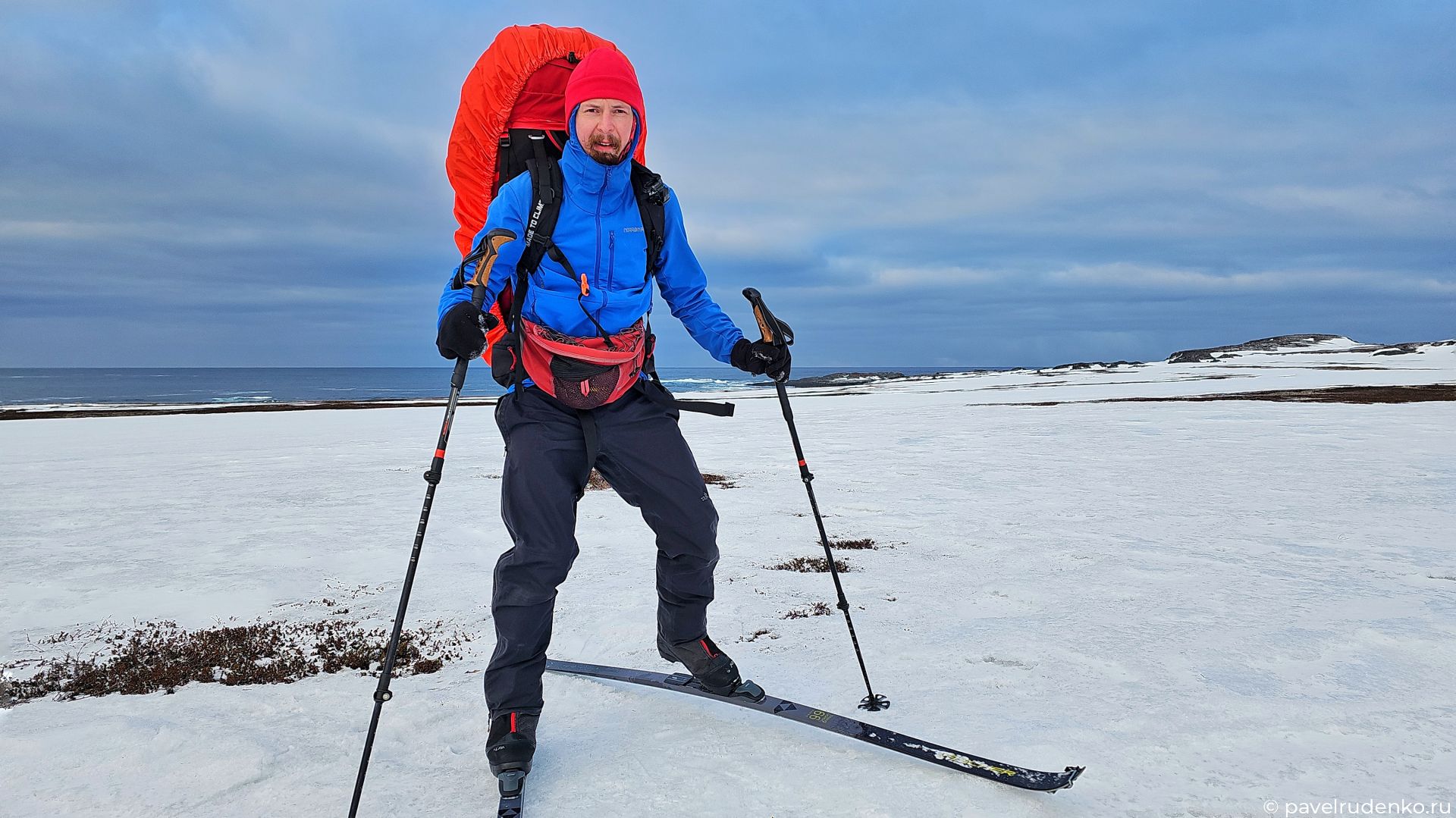
Alone at the Edge of the World
115 km and 7 days in the High North.
The minibus stops at the checkpoint; the Norwegian border is just an hour's drive away. Border guards routinely detained and questioned me; this time I'm prepared with everything needed to confirm my route plan.
One of them recognized me:
— "Heading to Rybachy again?"
— "Yes, the tundra calls."
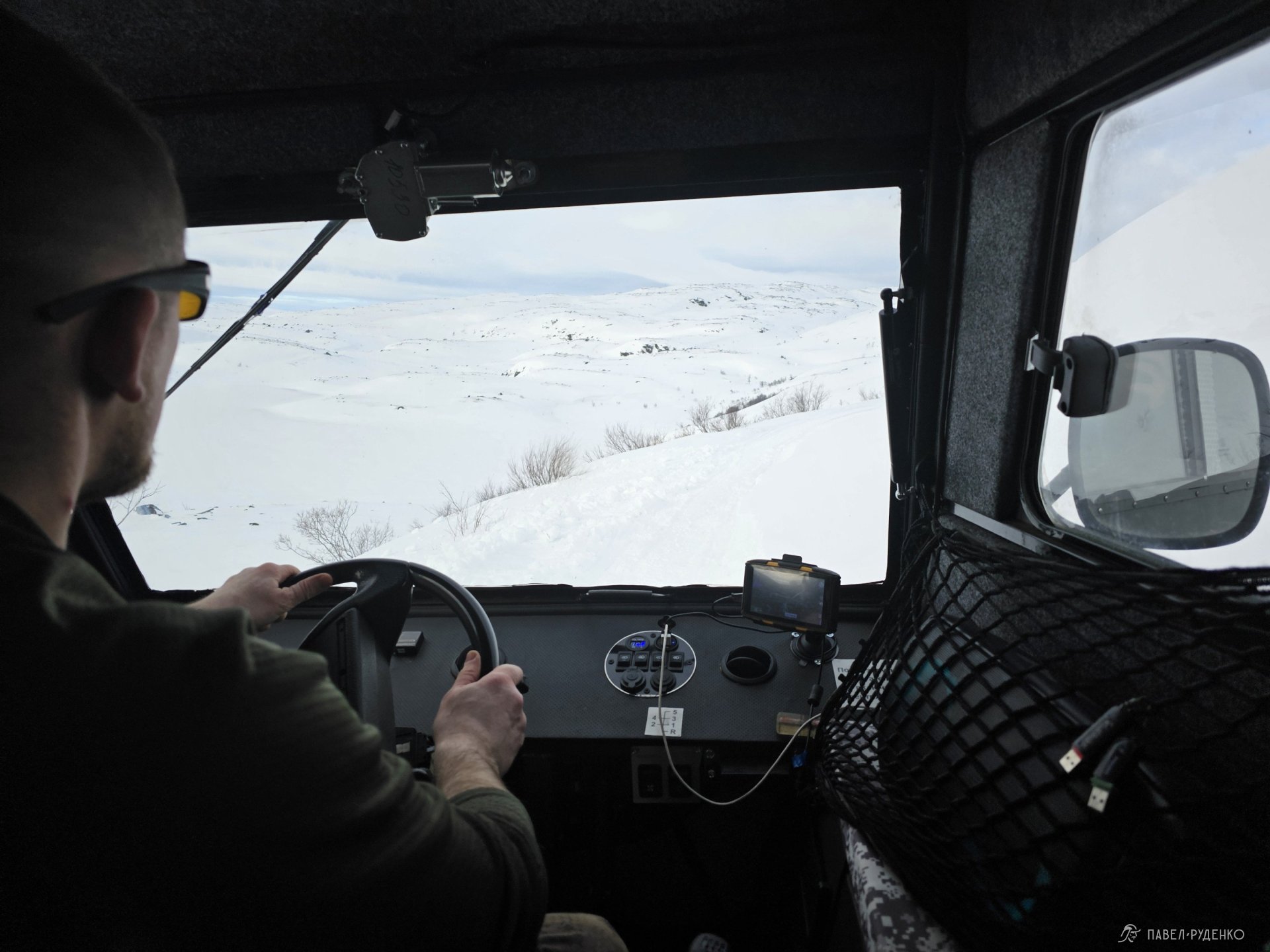
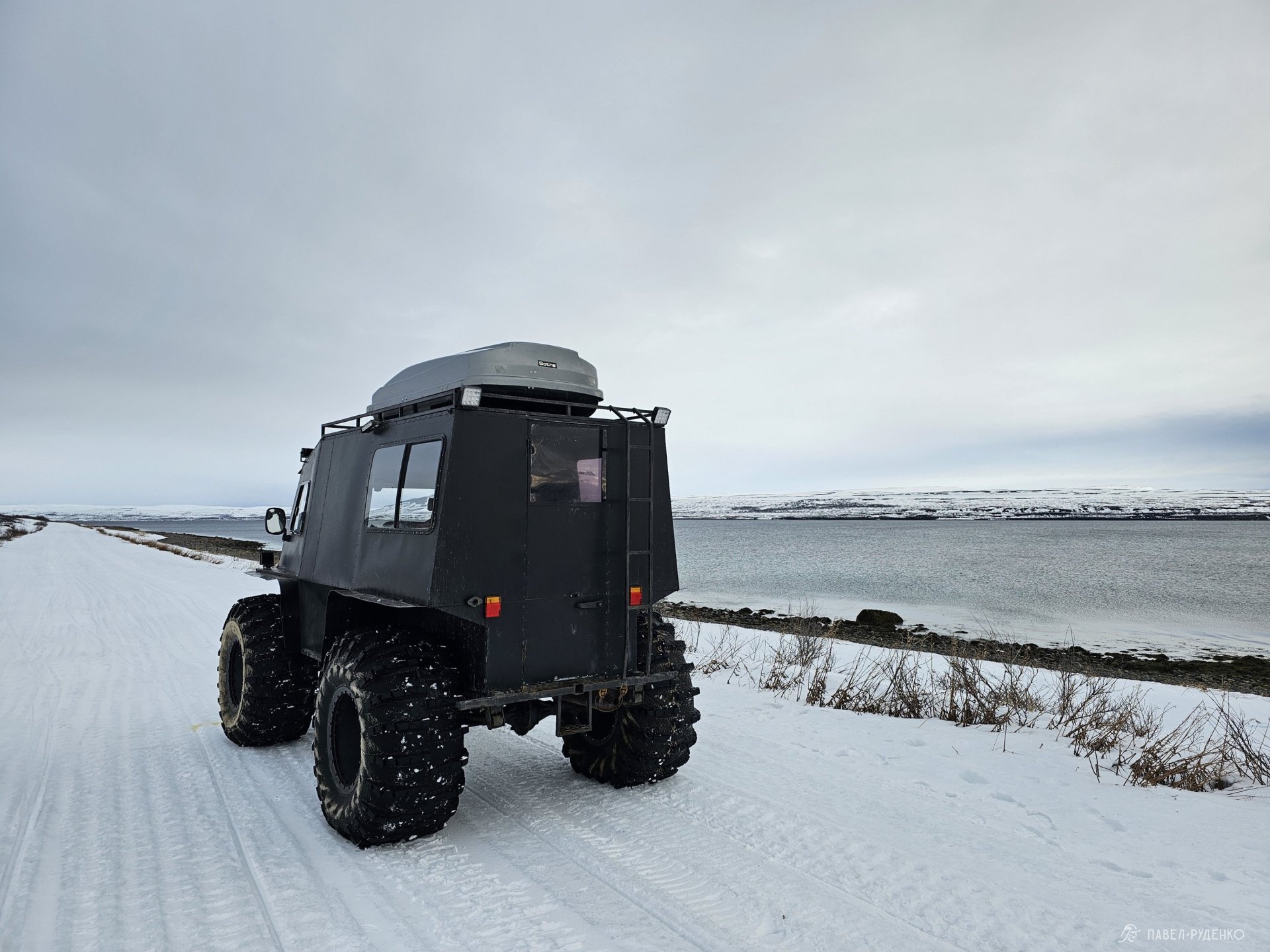
An hour later, I'm riding in an all-terrain vehicle tilting on the snow-covered track, carrying me into the white silence of the peninsula.
Realm of Ice
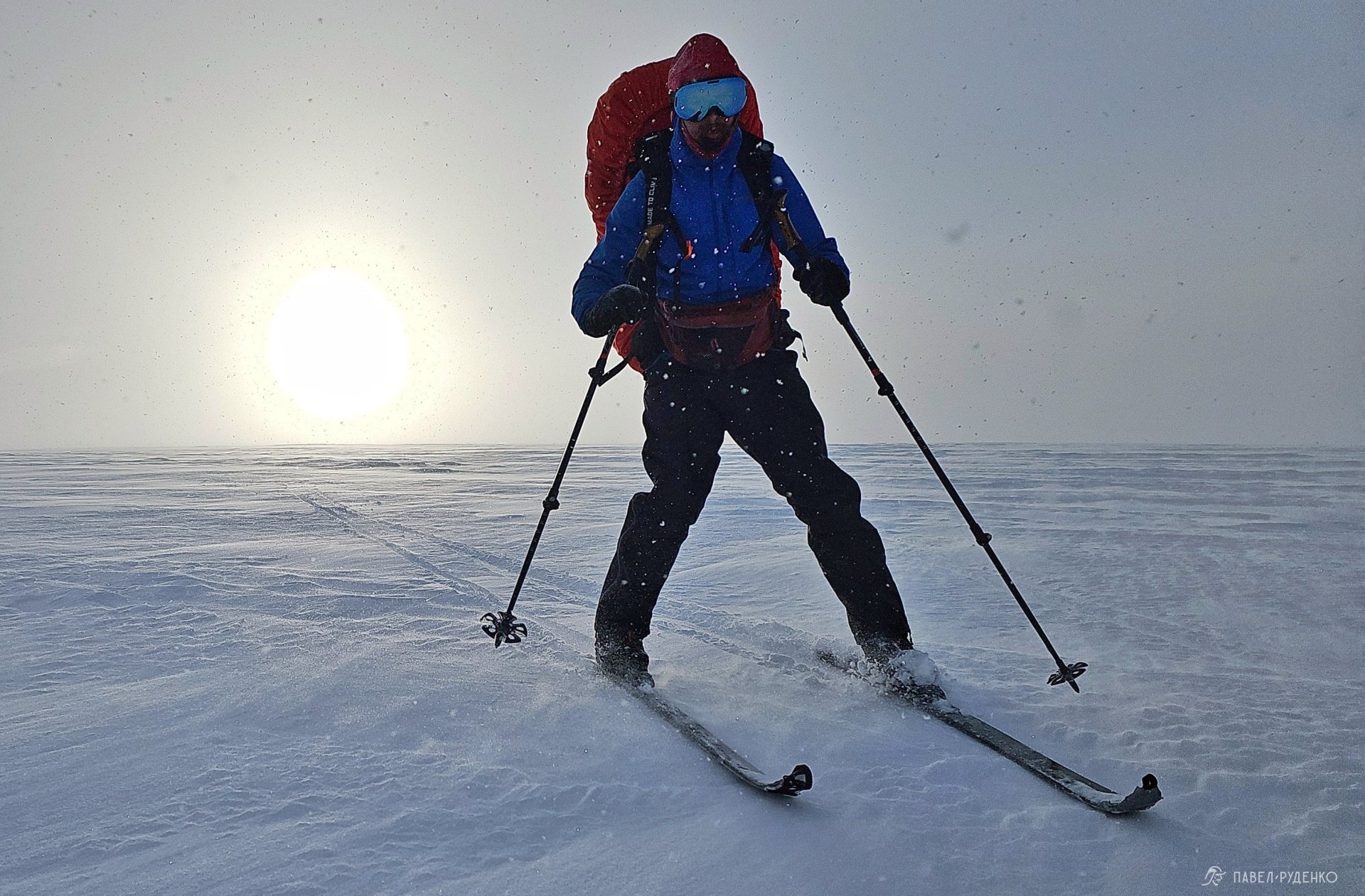
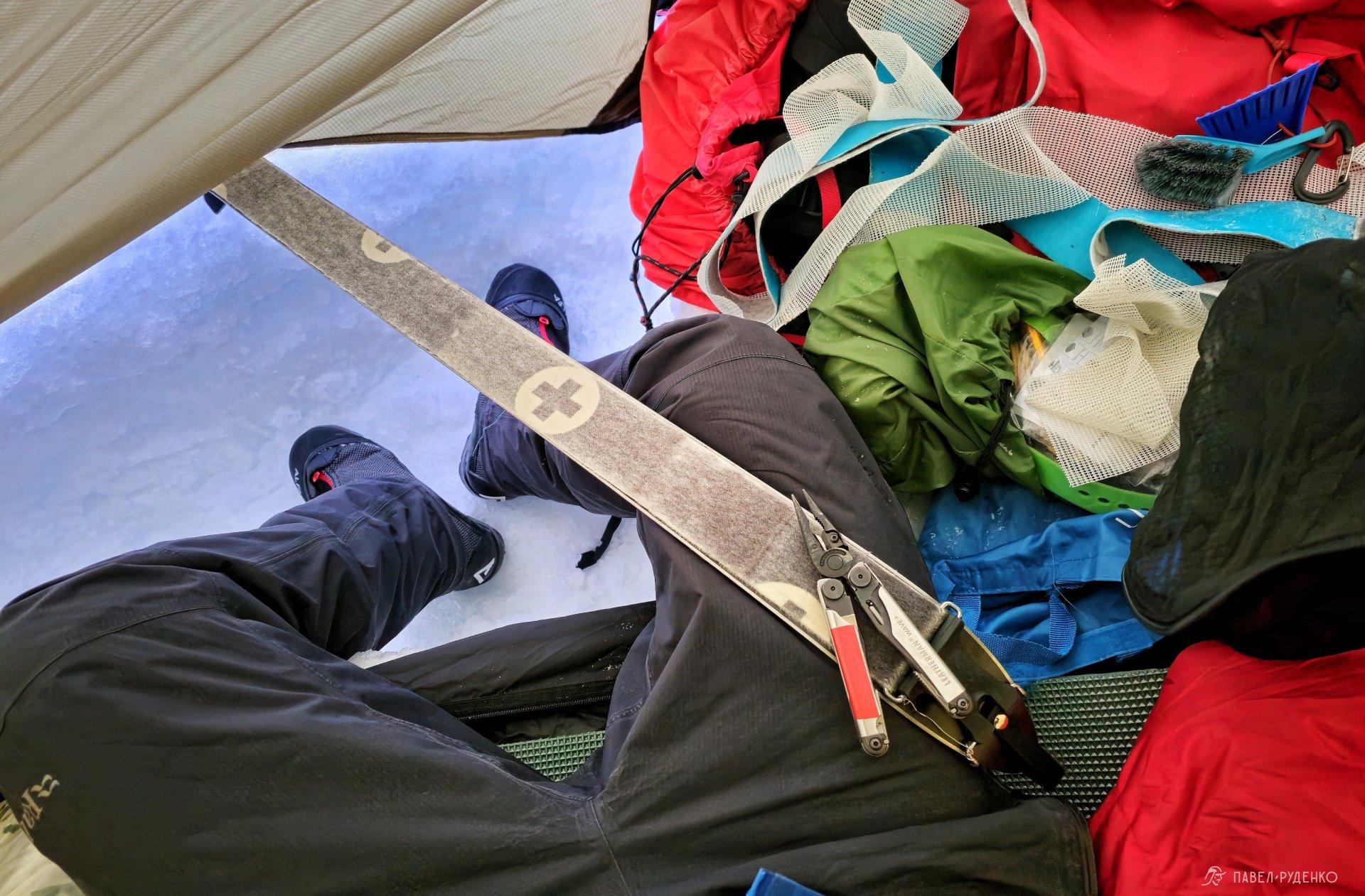
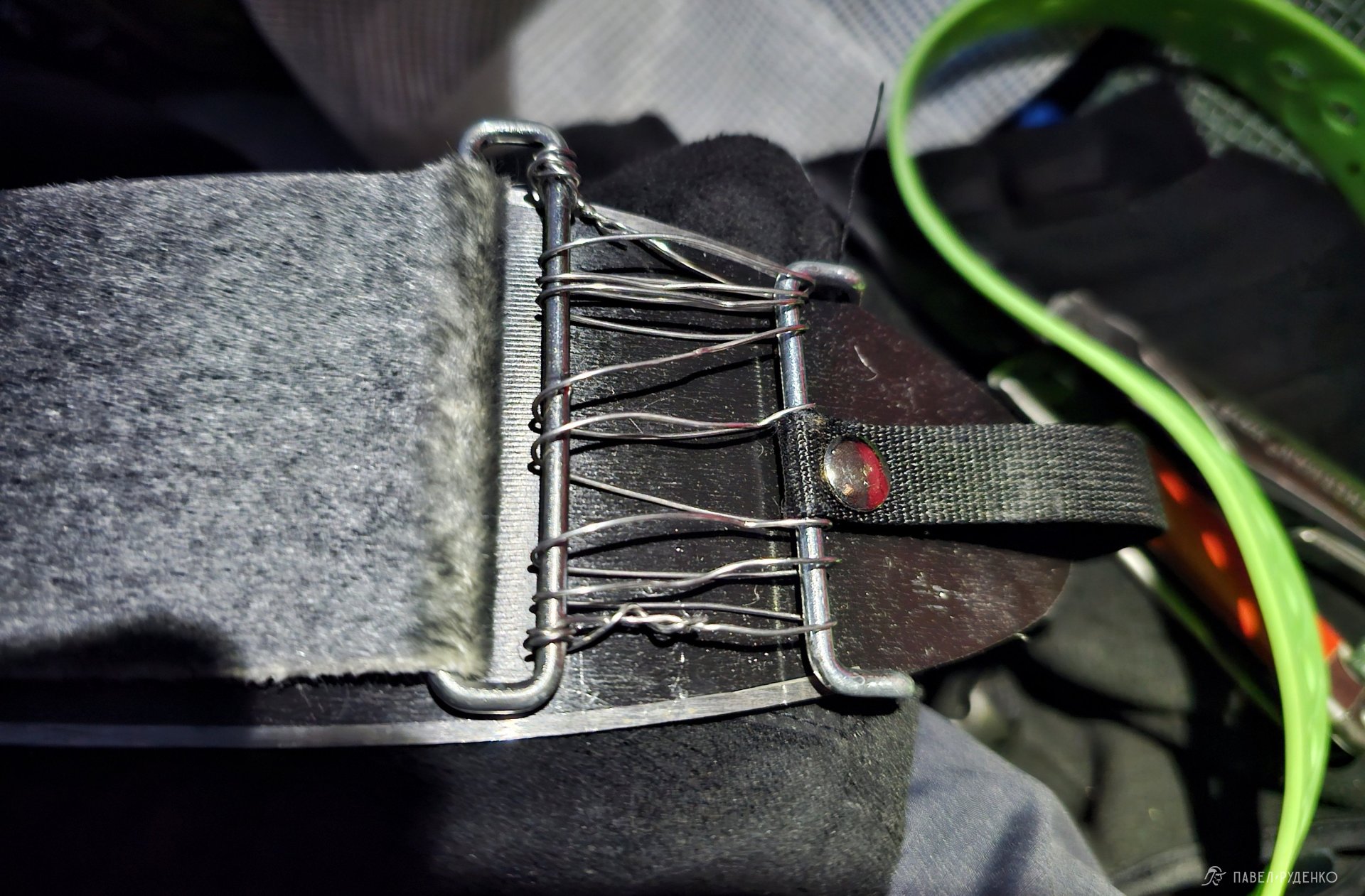
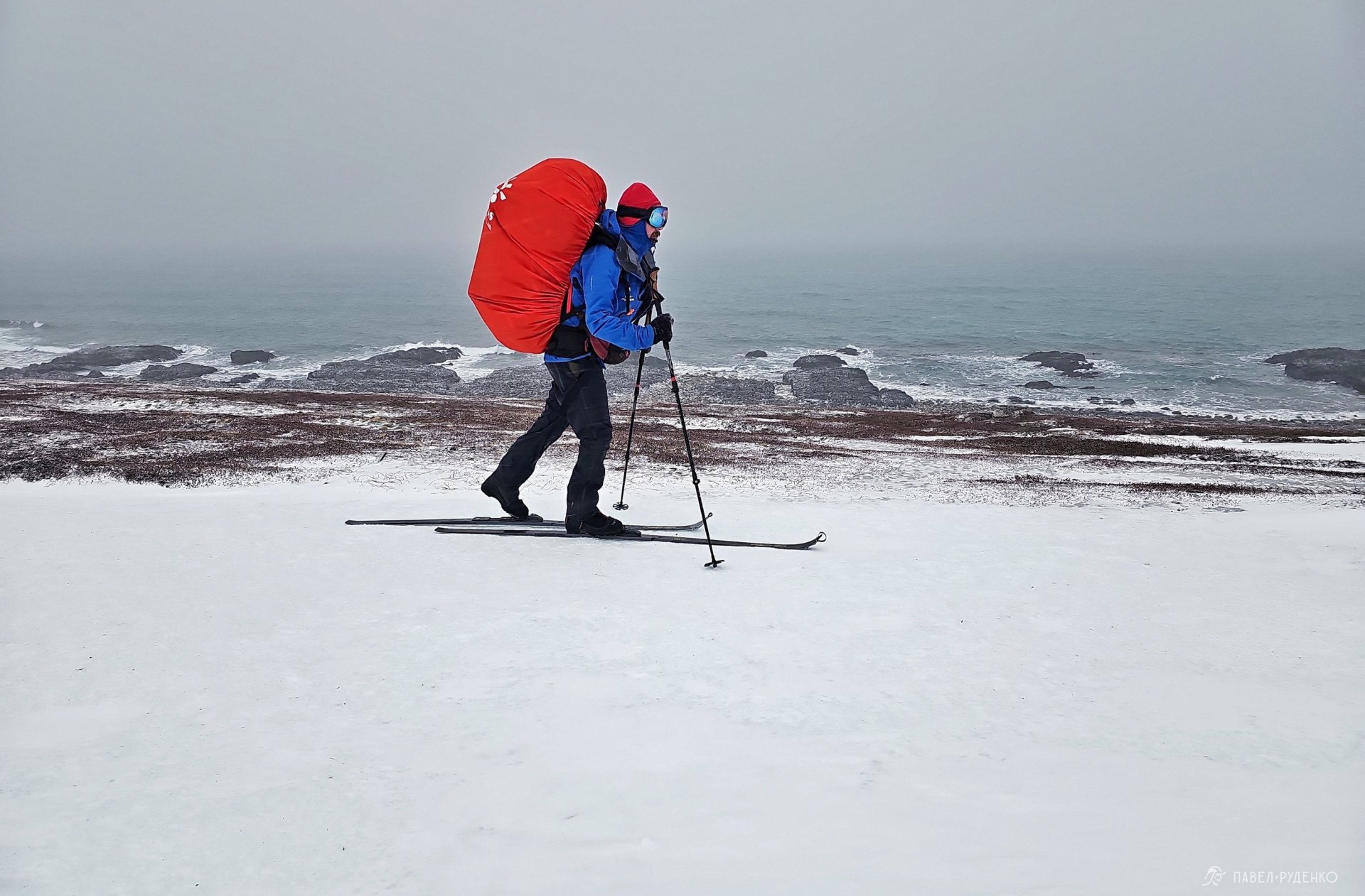
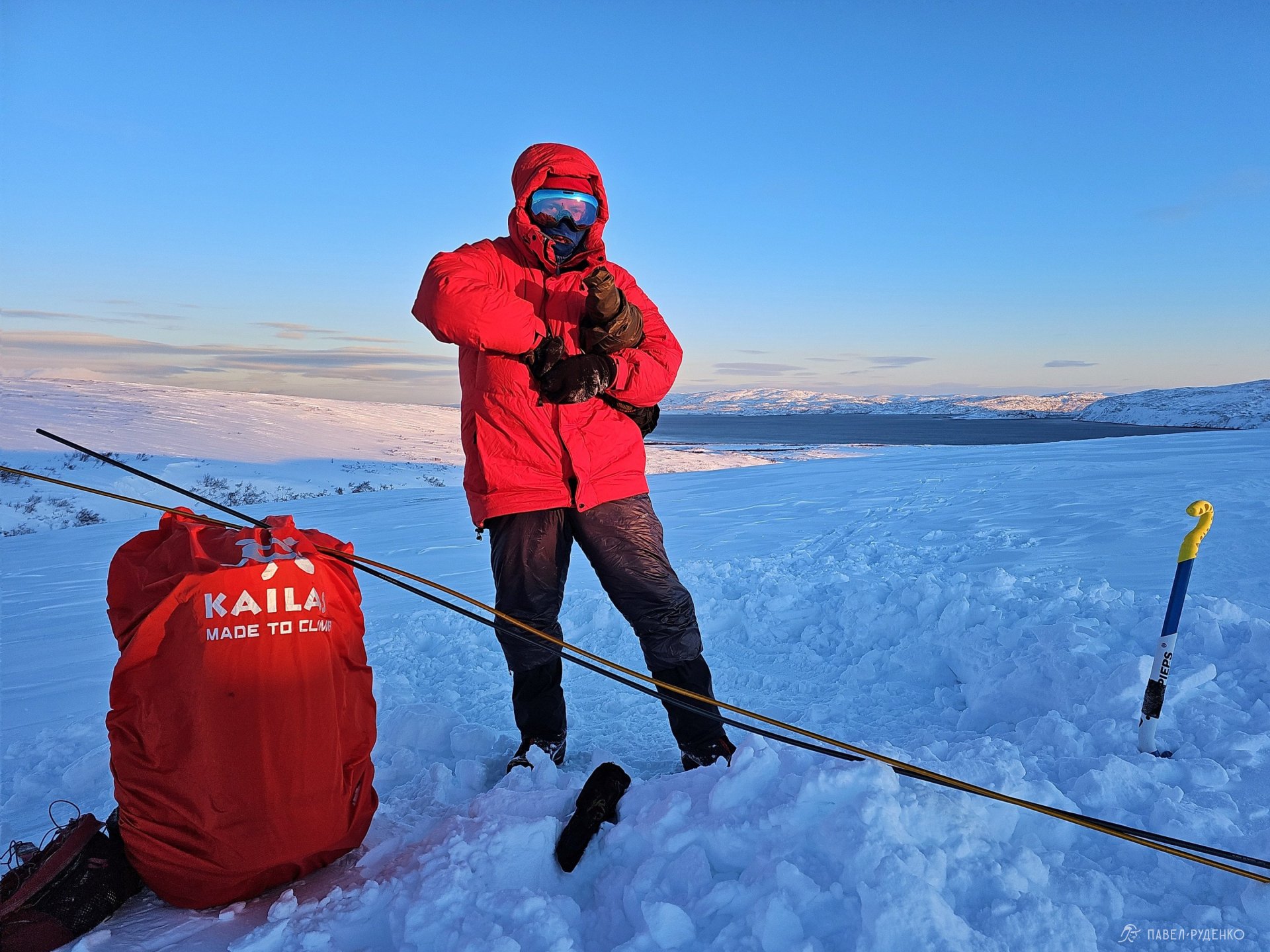
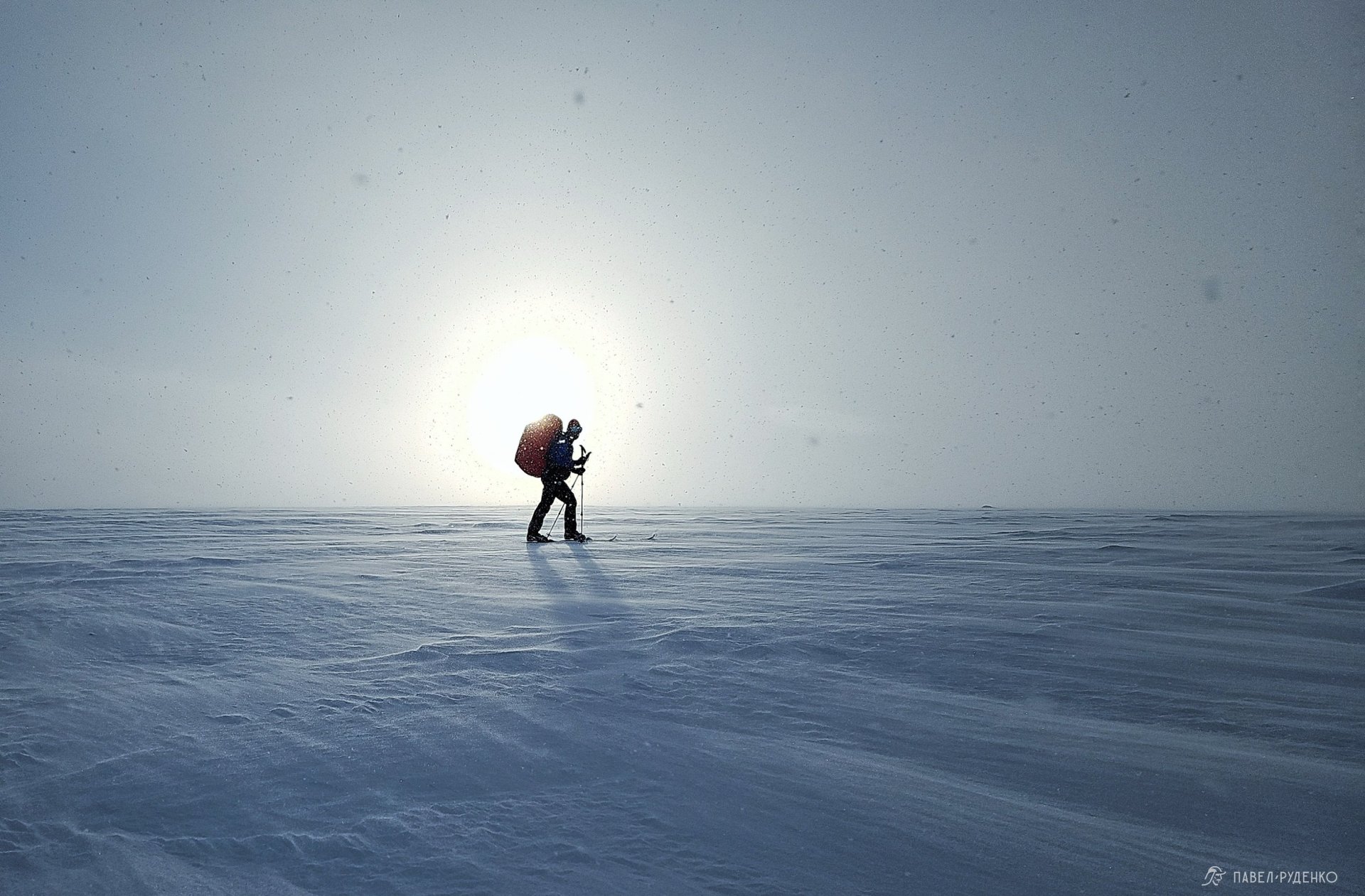
I'm at the starting point, clicking into brand-new, two-meter Fischer Transnordic 66 skis, and seconds later I'm flying down the slope like a bullet. The snow turned out to be covered in a crust of ice, my skis sliding around like a cow on an ice rink. I immediately put on full-length climbing skins, but my muscles burn with tension—every stride is a battle for balance. The coastline, as ever, surprises with its unpredictability. Later, an icy sastrugi tears the skin attachment strap—a quick field repair with wire, wrapped with duct tape over the top for glide.
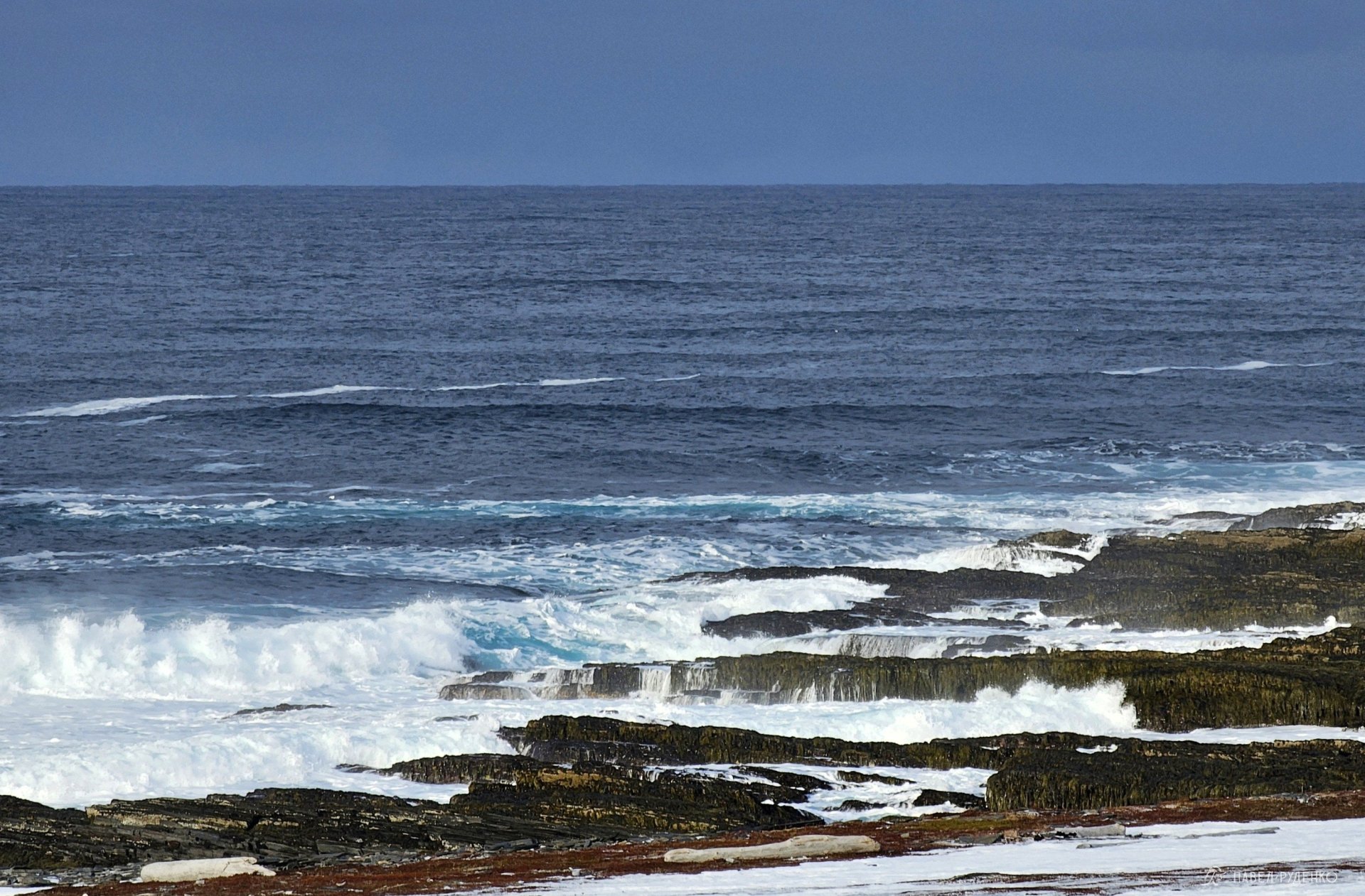
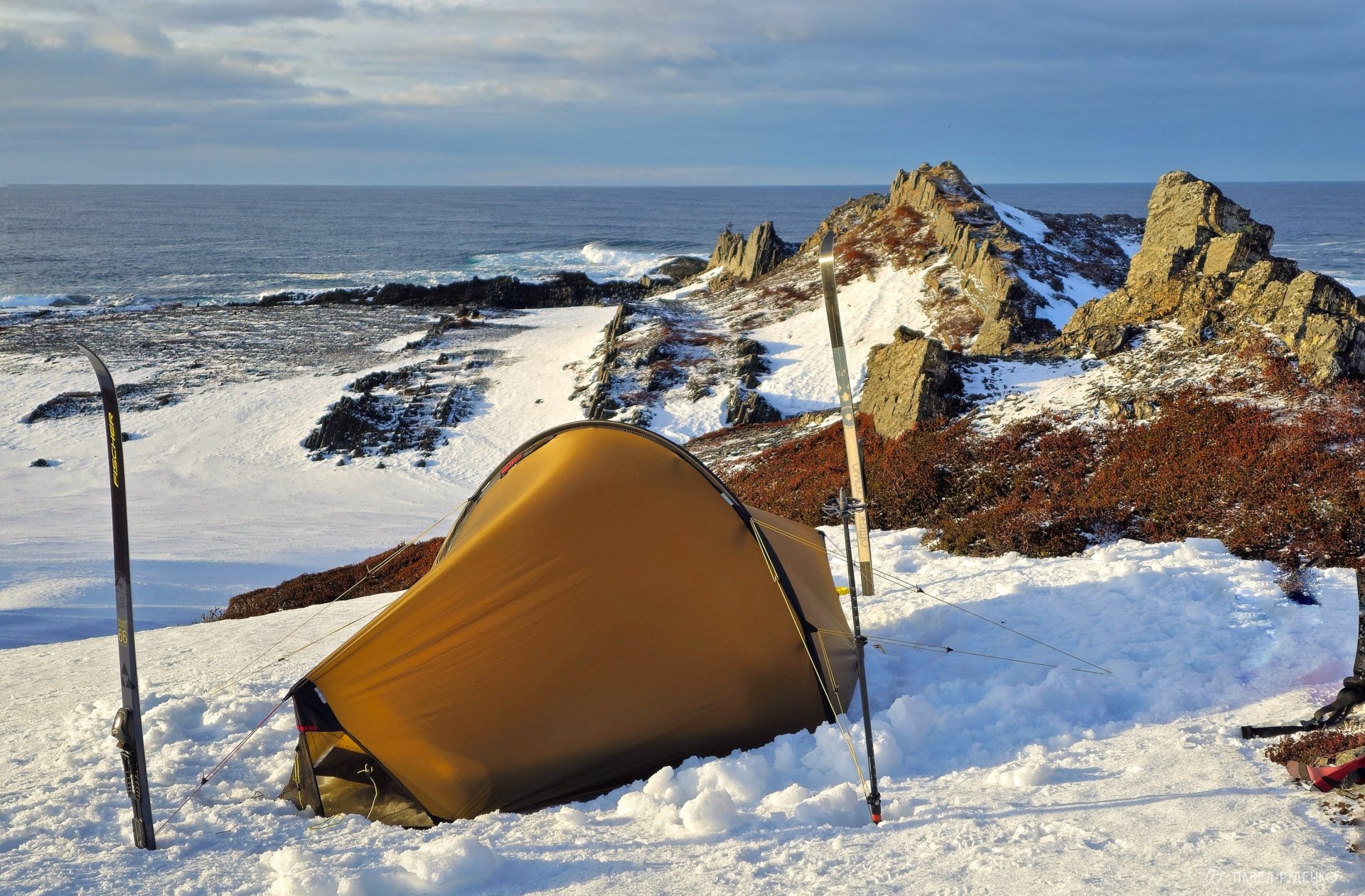
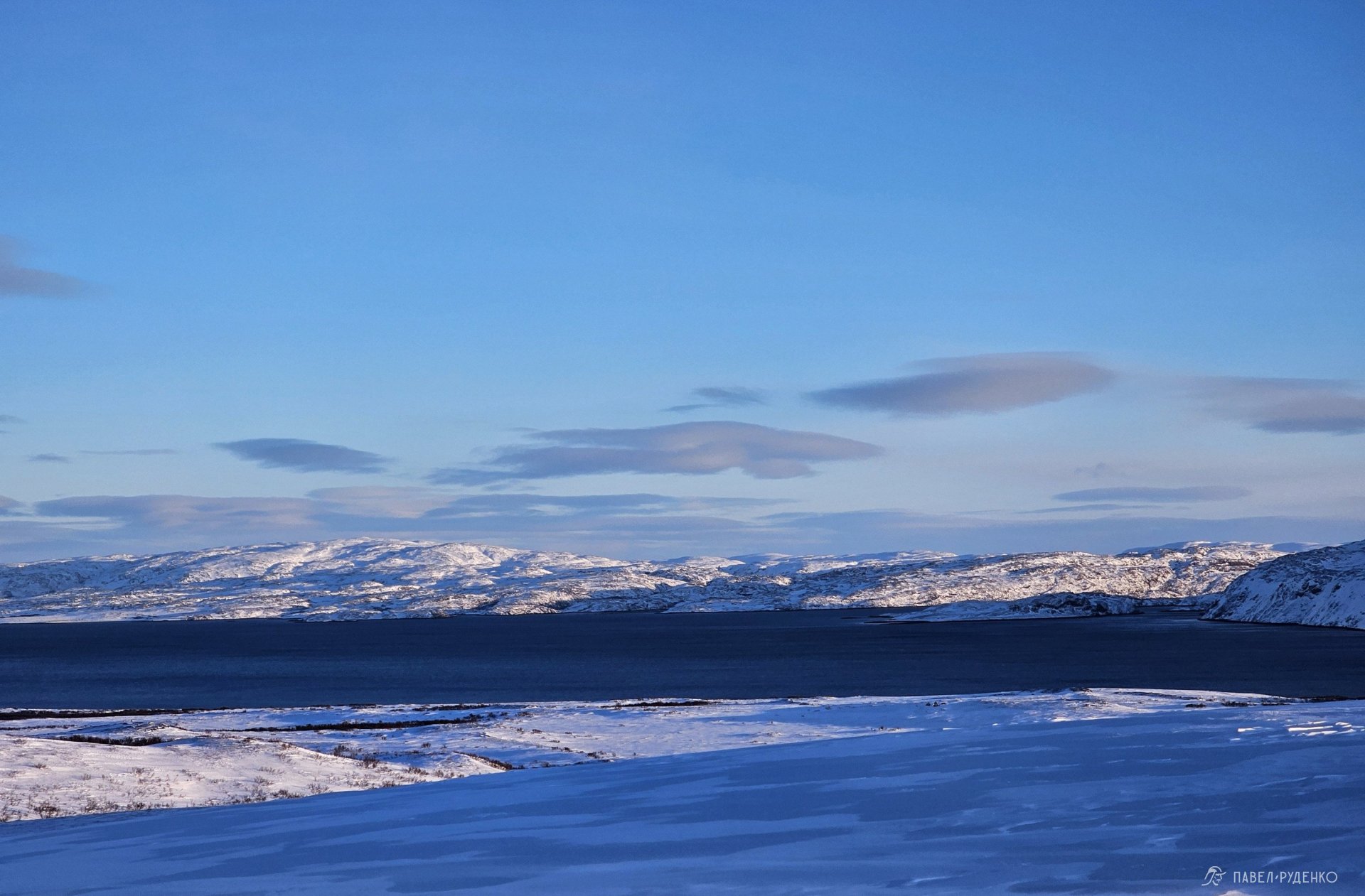
The following night I reach Cape Kekursky—the most stunning northern continental spot of European Russia. The northernmost point is Cape Nemetsky nearby, but the path there passes a military base and the view is less dramatic. Being indifferent to "checking boxes," I skip it and head for pure beauty. The Arctic Ocean crashes against the cliffs, and the sun suddenly breaks through, illuminating my campsite. High time to walk to the shore, scout the surroundings, and then fix the binding.
Ghost Reindeer
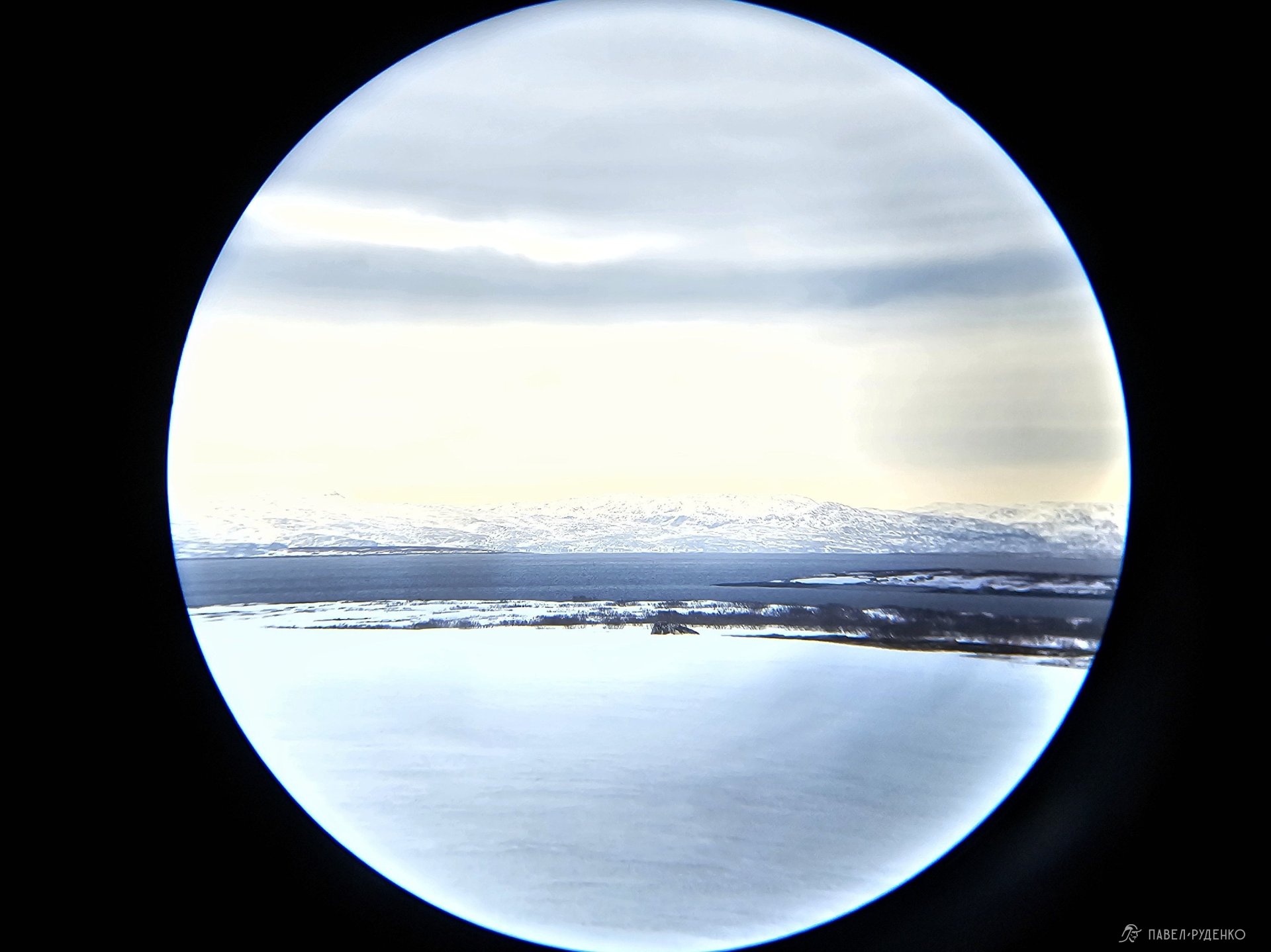
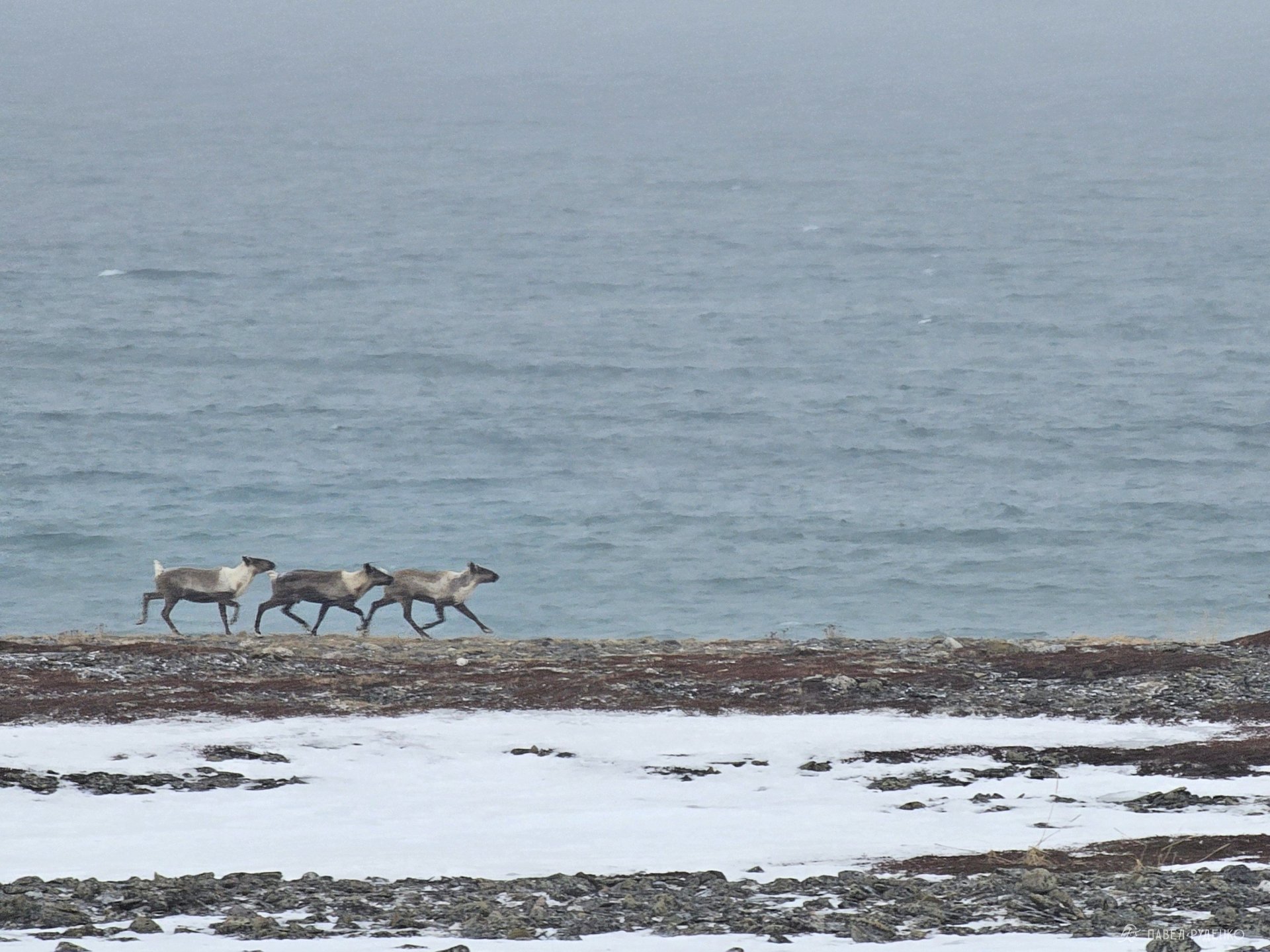
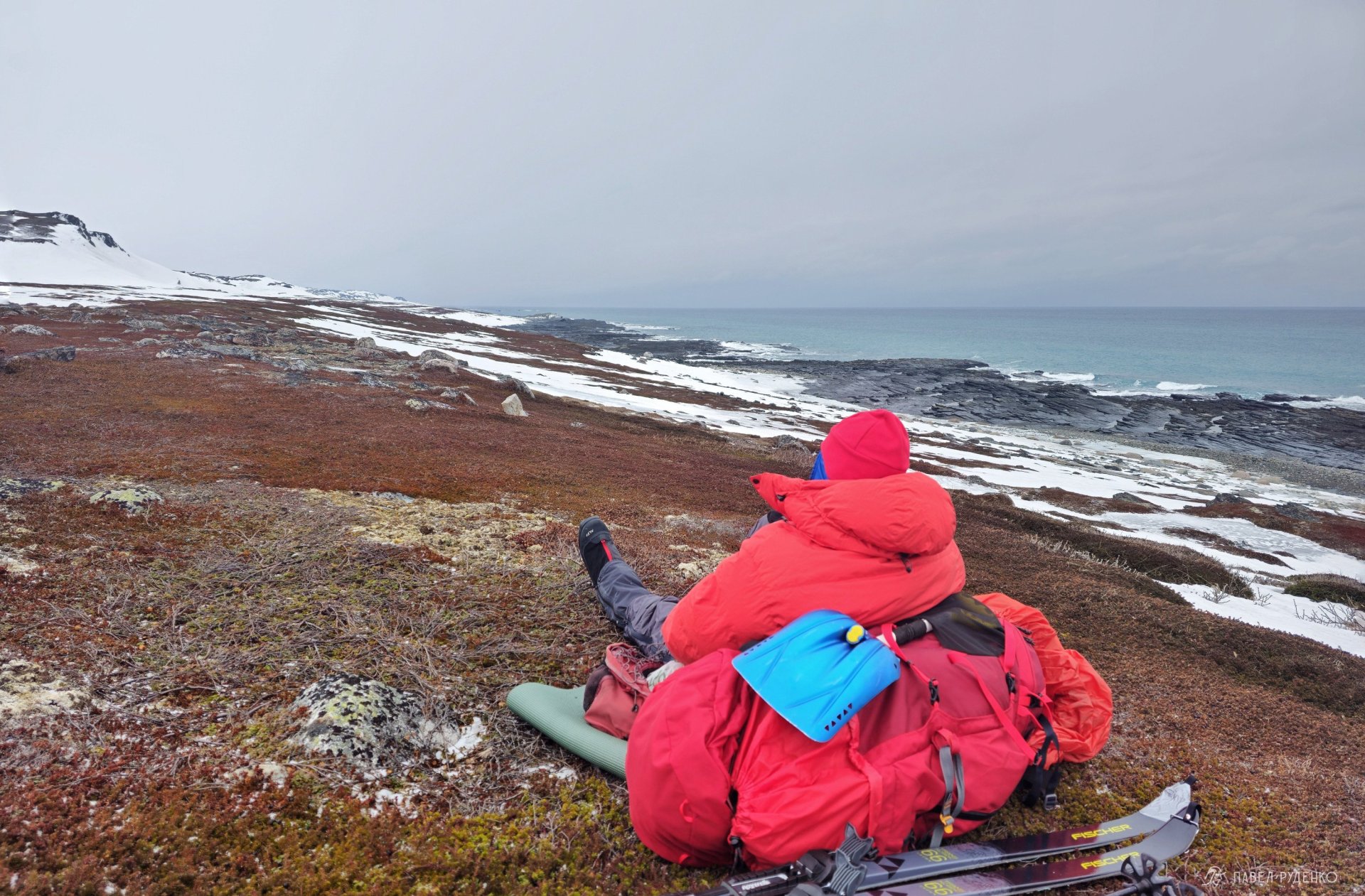
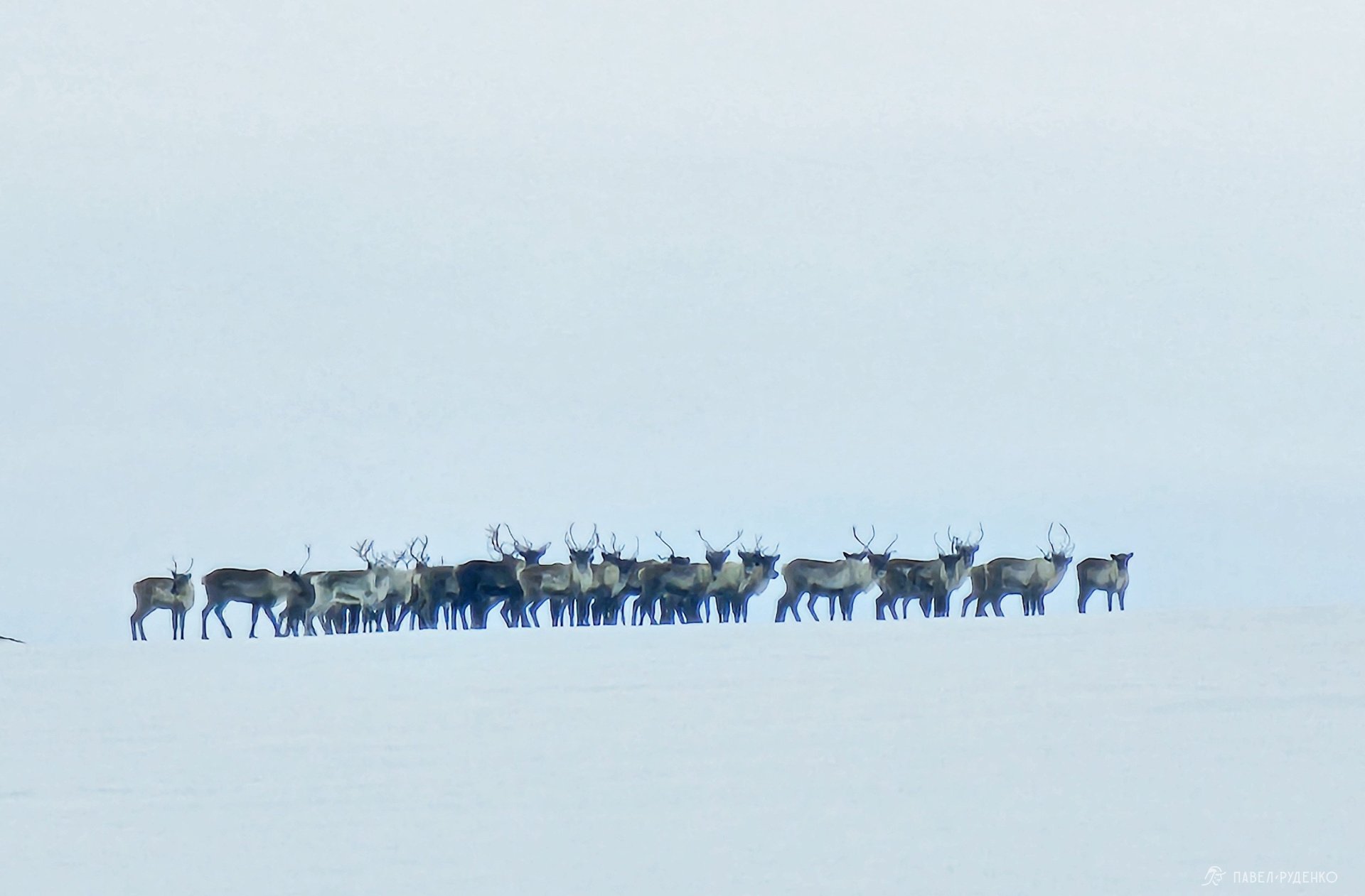
Morning greets me with silhouettes in the white haze. Three young reindeer are resting on the shore; I pull out my monocular and watch them for a long time. We are chance companions on this frozen planet. They trot along the coast, and I follow them all day like a shadow. By evening they vanish behind a fell, leaving only tracks in the snow.
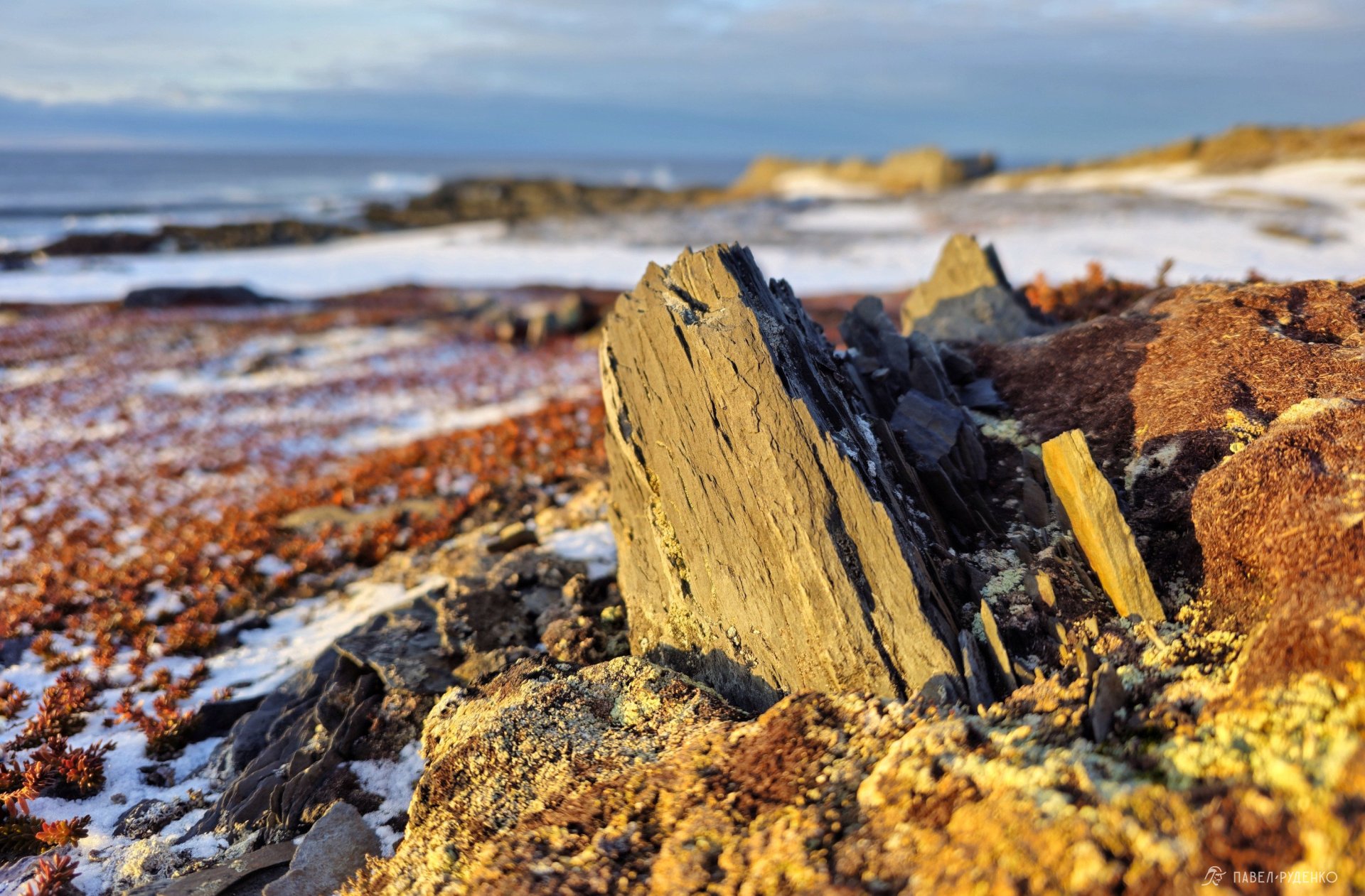
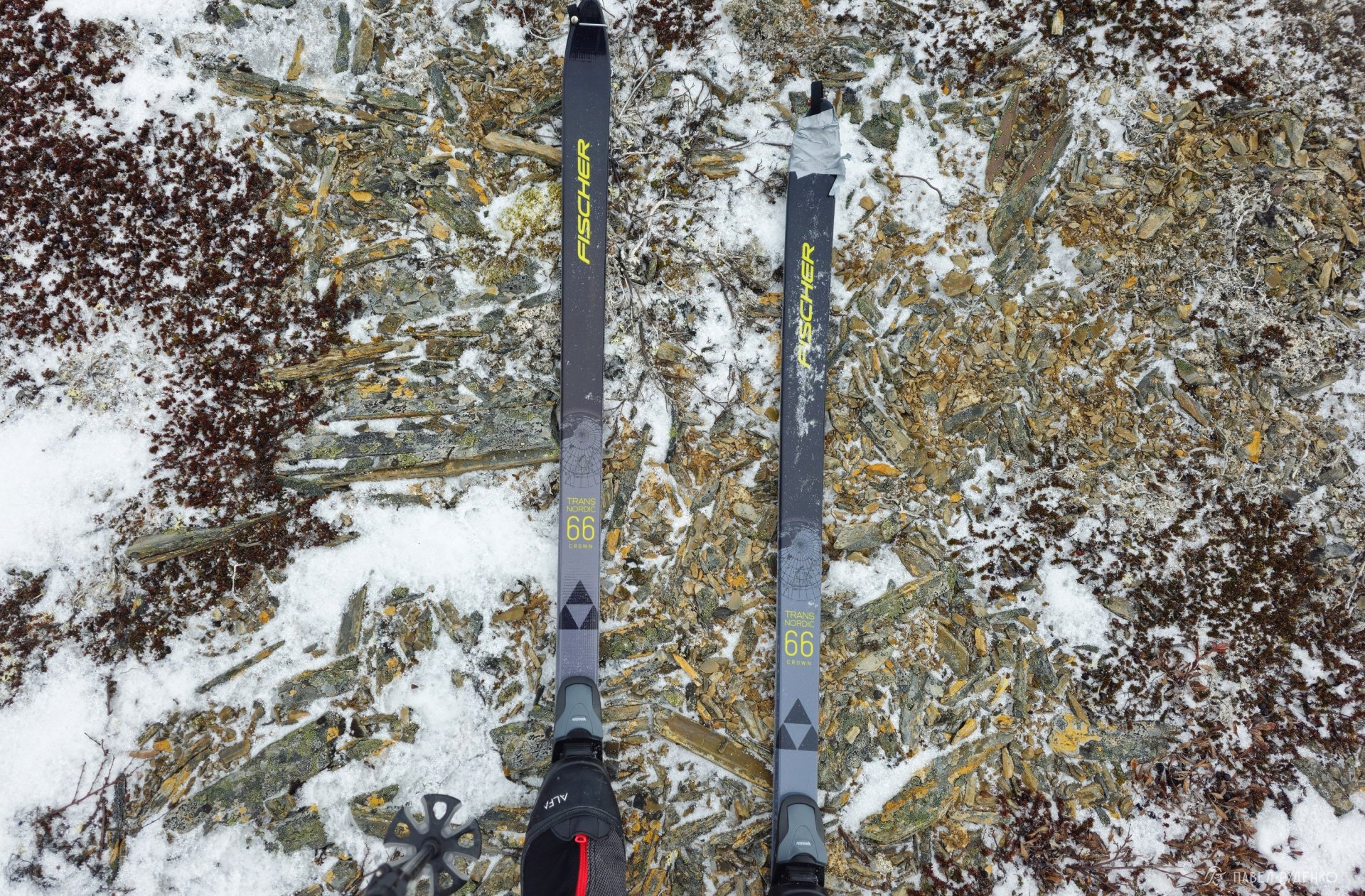
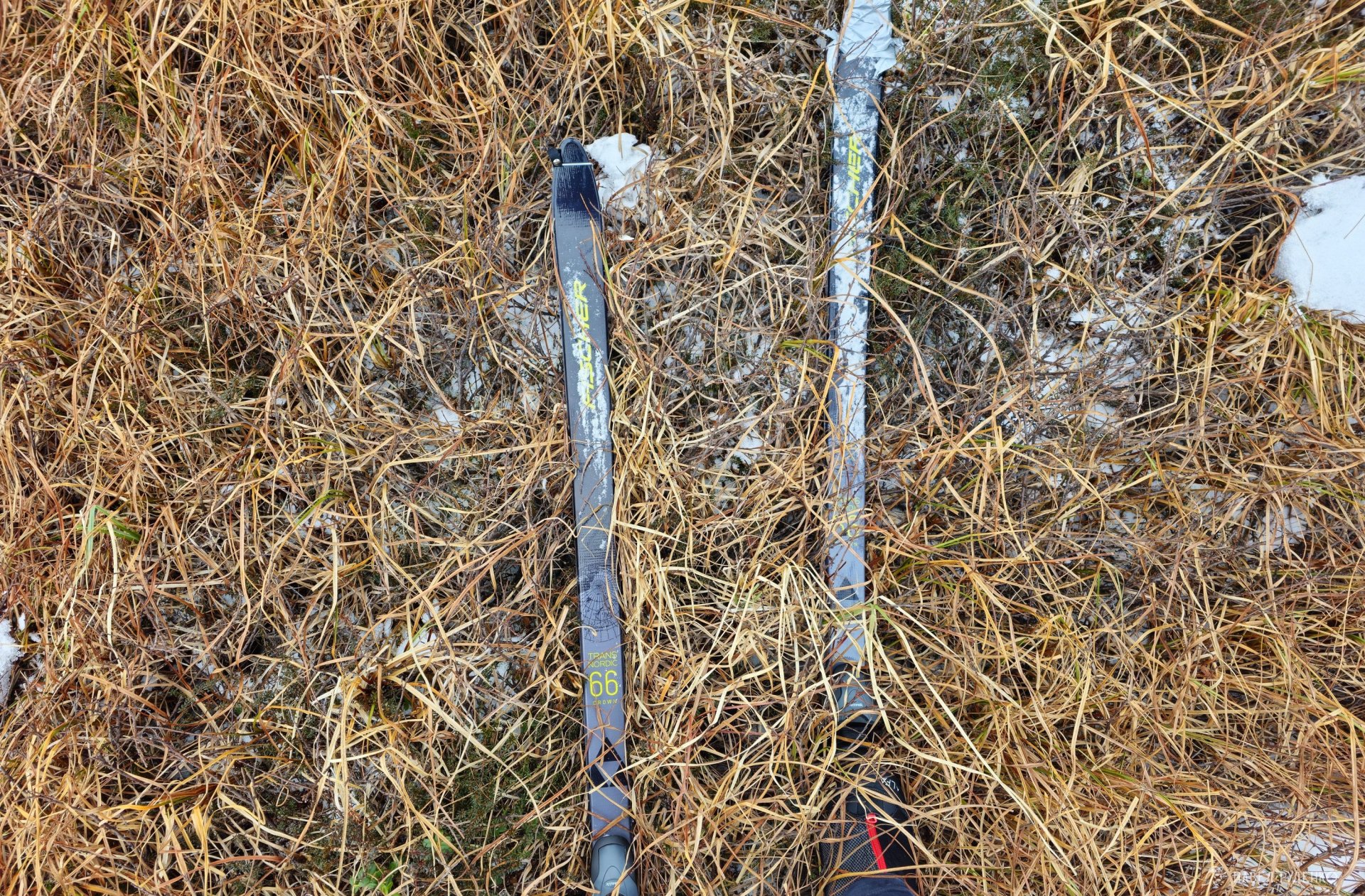
The movement is broken up by exposed patches of tundra—skiing over moss and rocks feels amusing. And having lunch in winter while sitting on dry lichen is doubly cozy and warm.
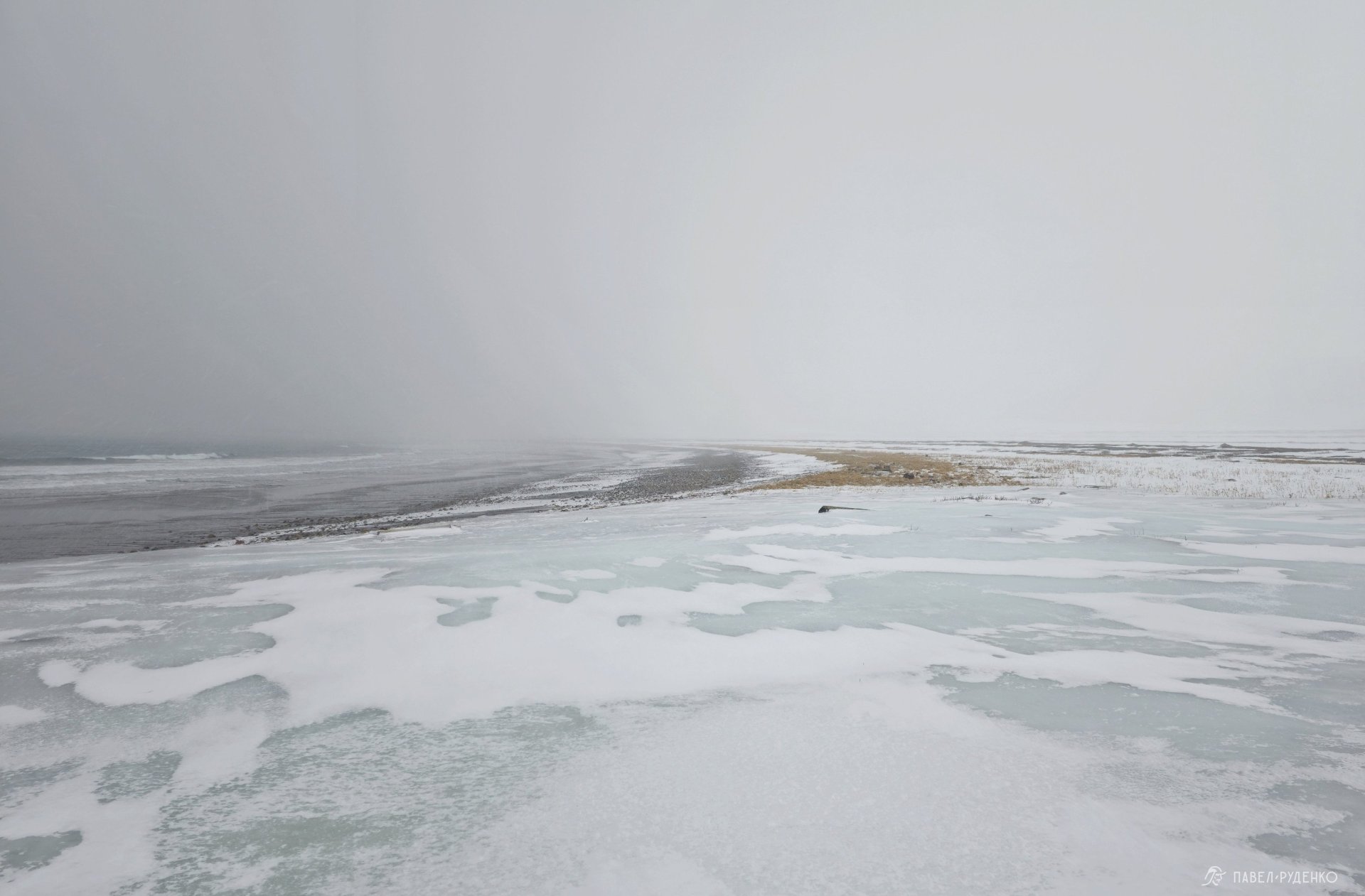
Through a raging blizzard in the bay, I find shelter behind the crags and pitch camp.
The Storm
My satellite communicator pings with the night forecast: 17 m/s, North wind, but the Arctic is about to laugh at the forecast.
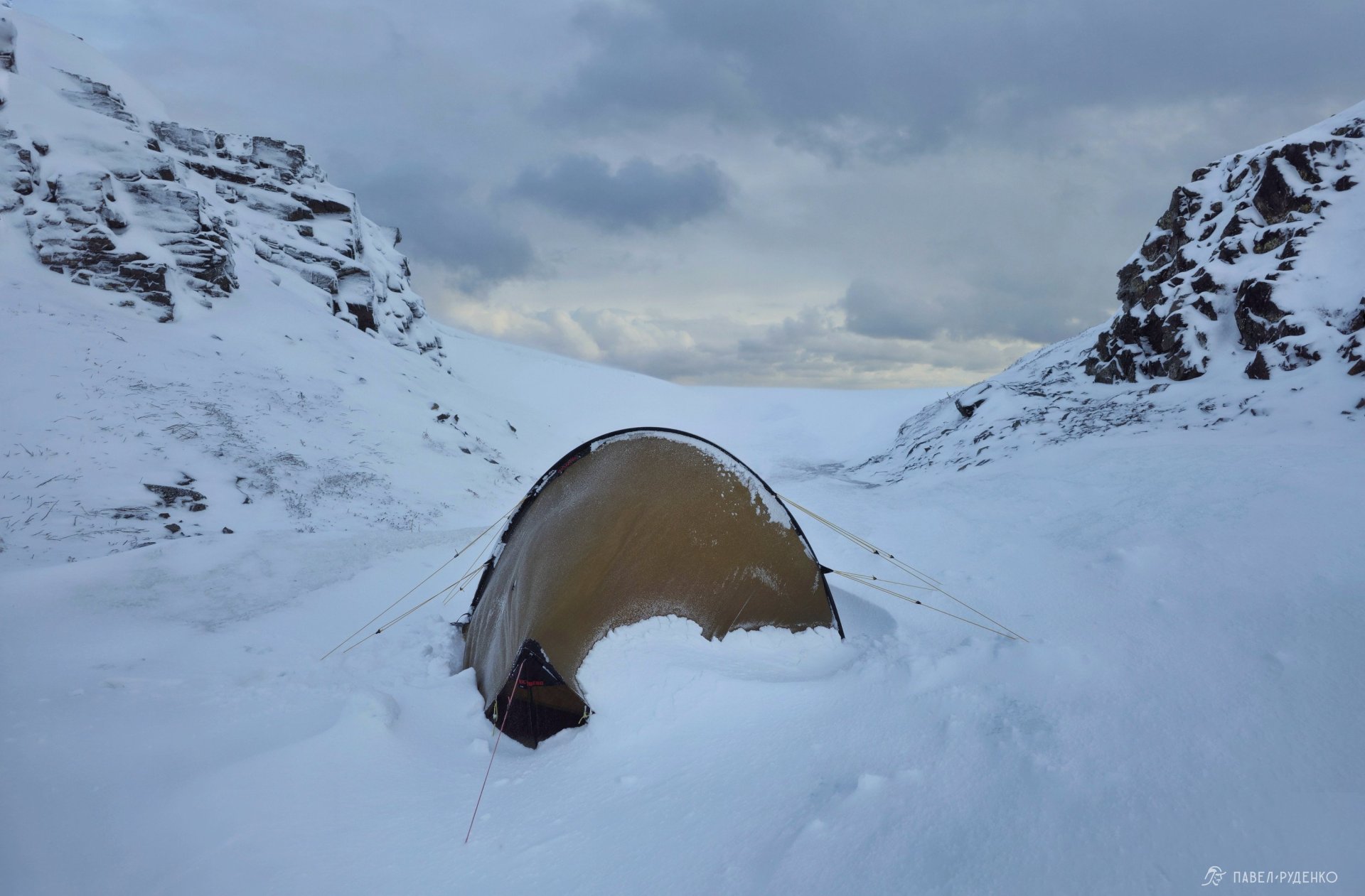
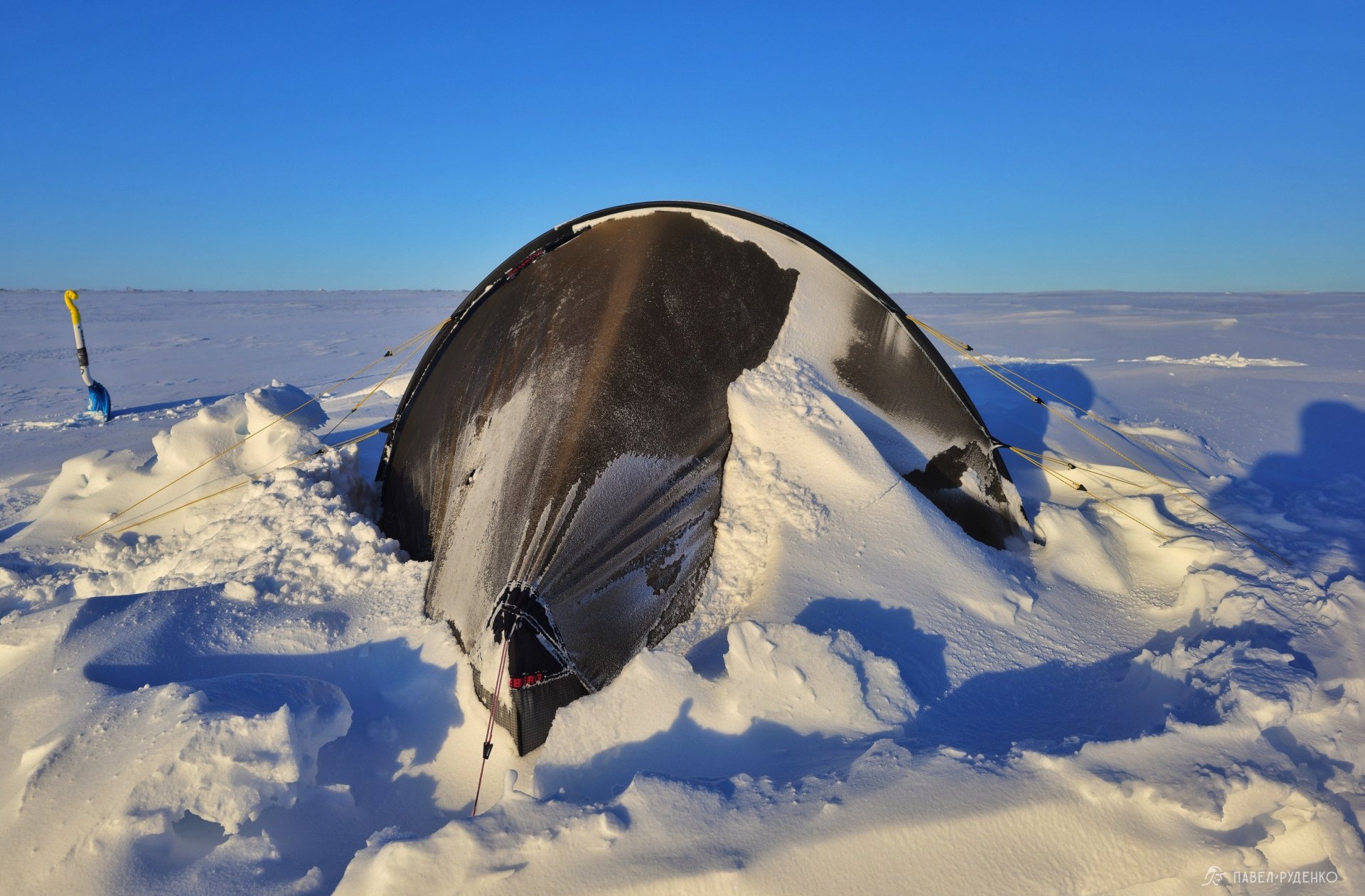
I pitched the tent on a fell in the open tundra, dug in slightly, leveled the platform, and securely anchored it with snow stakes and buried ski poles, building a low snow wall.
Boots off, crawled into the sleeping bag, enjoying dinner of pasta with cured pork and cheese while watching a 1956 Soviet cartoon playing in the background—"A Fire Burns in the Yaranga," where a fierce blizzard snatches the children's mother away. At that very moment, the storm slammed into the tent from the west, violent and abrupt, as if a meteorite had landed nearby. Snow began to whirl, and dinner had to wait.
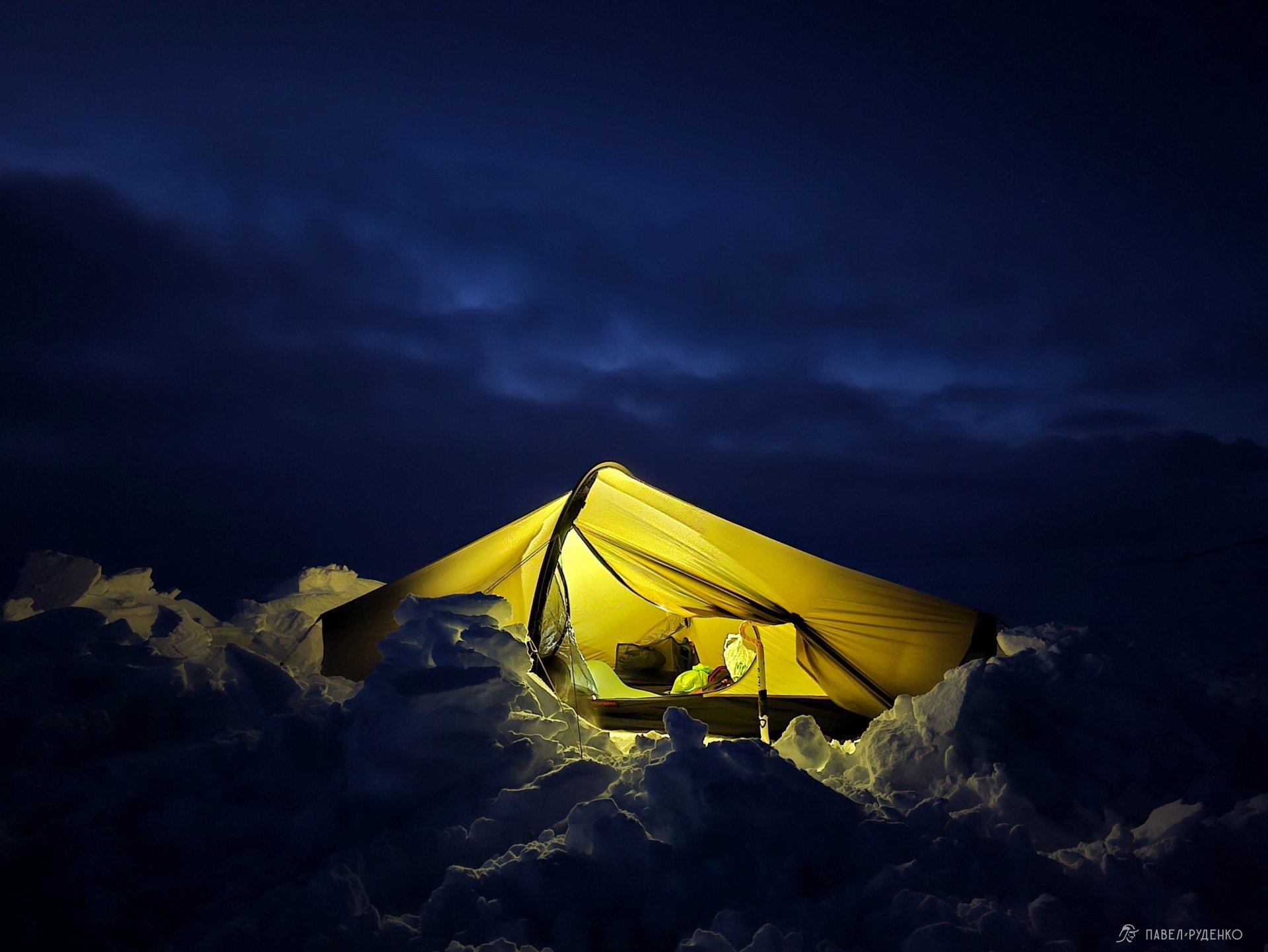
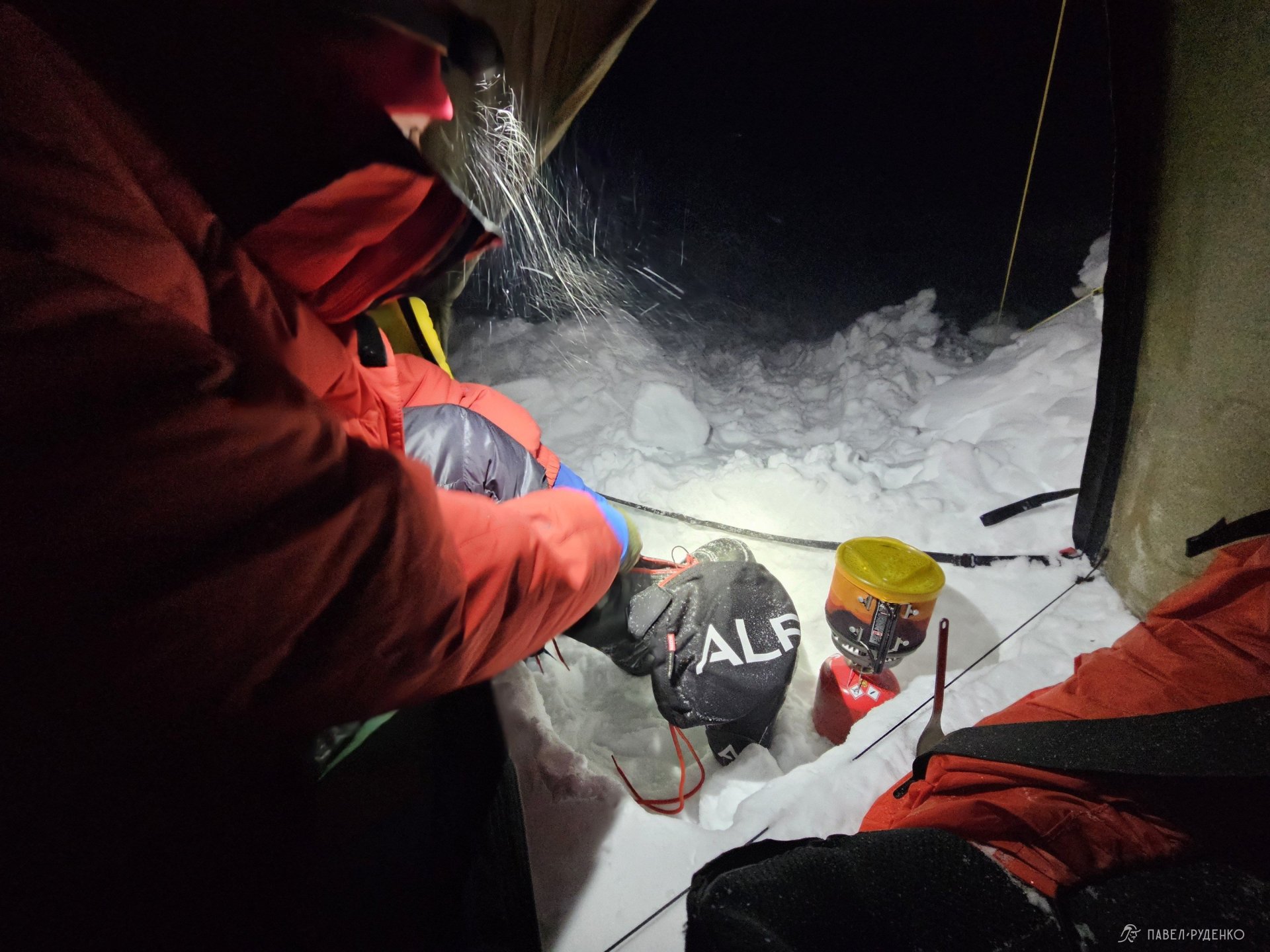
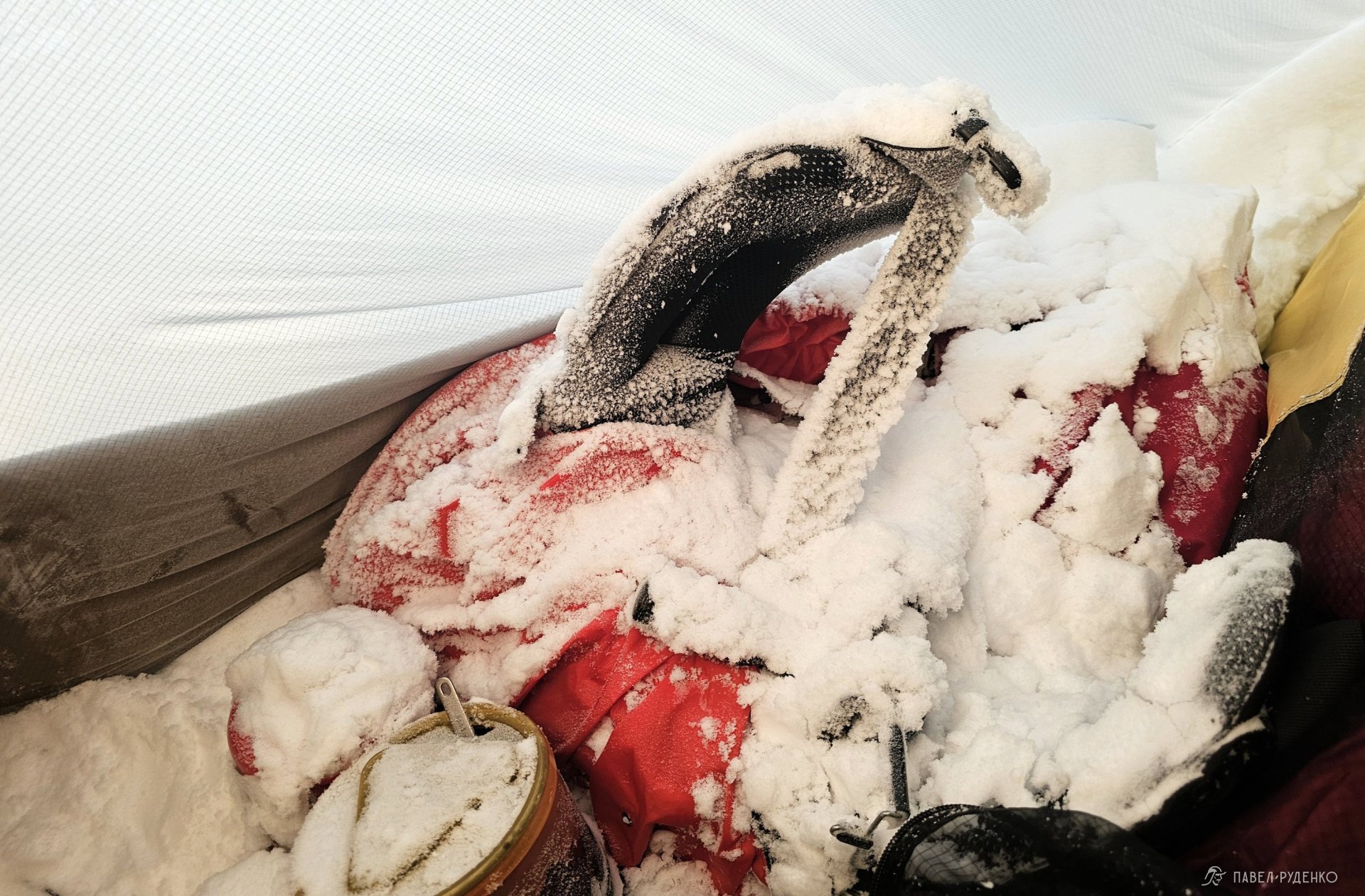
Spindrift began driving through micro-gaps under the fly, burying everything in the vestibule. I dress hastily and head out with a shovel to check conditions outside. Visibility is down to 1–2 meters; even in the blazing 1,000-lumen headlamp beam, the tent is nearly swallowed by the blizzard. As I build up the snow wall, I keep my eyes locked on the tent—lose sight of it in these conditions, and you'll never find it again.
At one point, instead of landing by the tent, a heavy snow block simply took flight into the black void. Realization struck: there is nothing more I can do, and it's time to retreat from this hostile cosmos into my survival capsule.
Right at the vestibule entrance, my heart nearly leaped out of my chest—there's something alive here. I stepped on a ptarmigan; it had taken shelter by the vestibule, the tent being the only cover around.
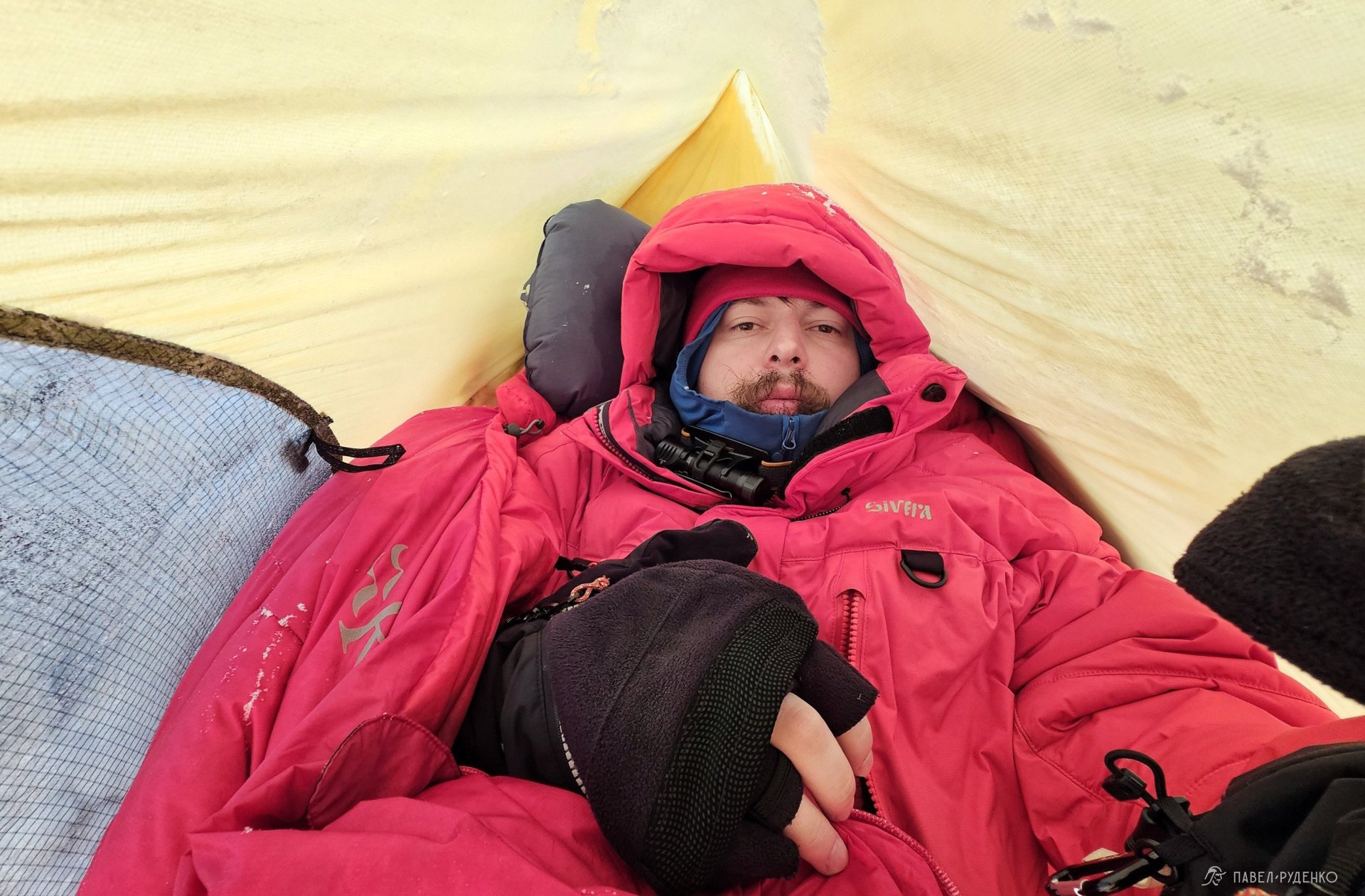
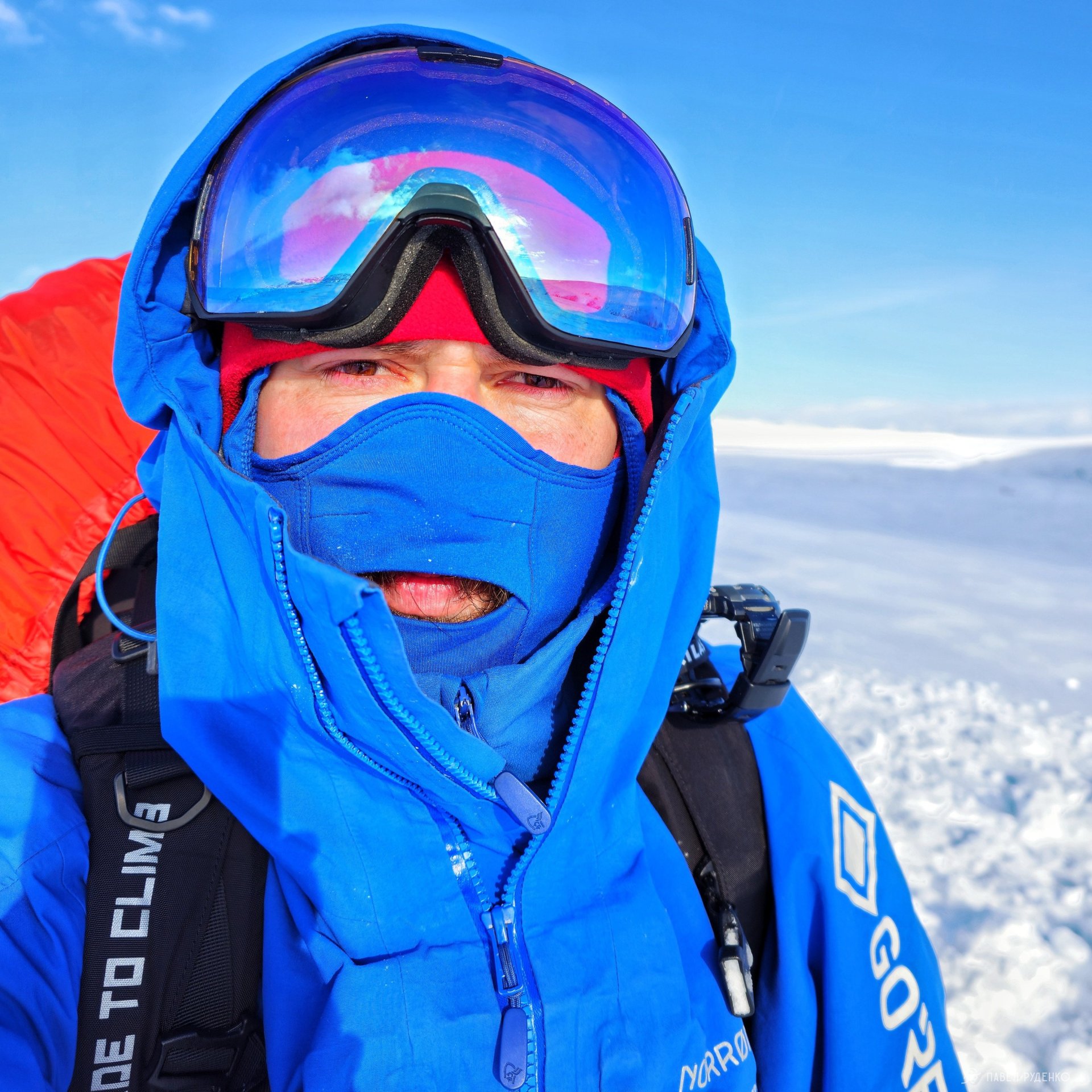
Back inside. Within minutes my goggles froze over, completely blinding me, and wind was forcing its way under my Sivera Arkuda down parka despite the built-in snow skirt. Quite a situation... After this trip, I'll sew on a crotch strap.

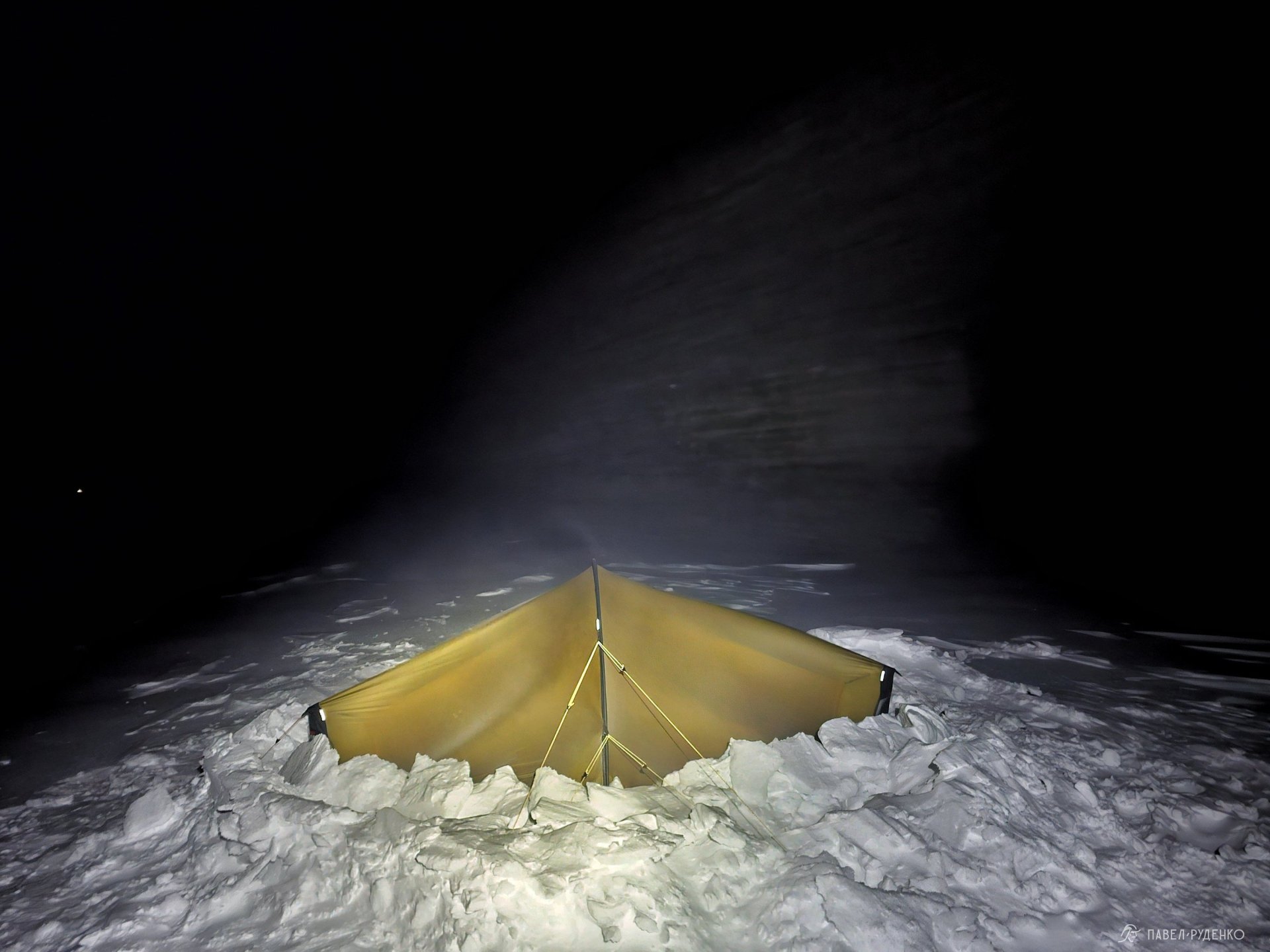
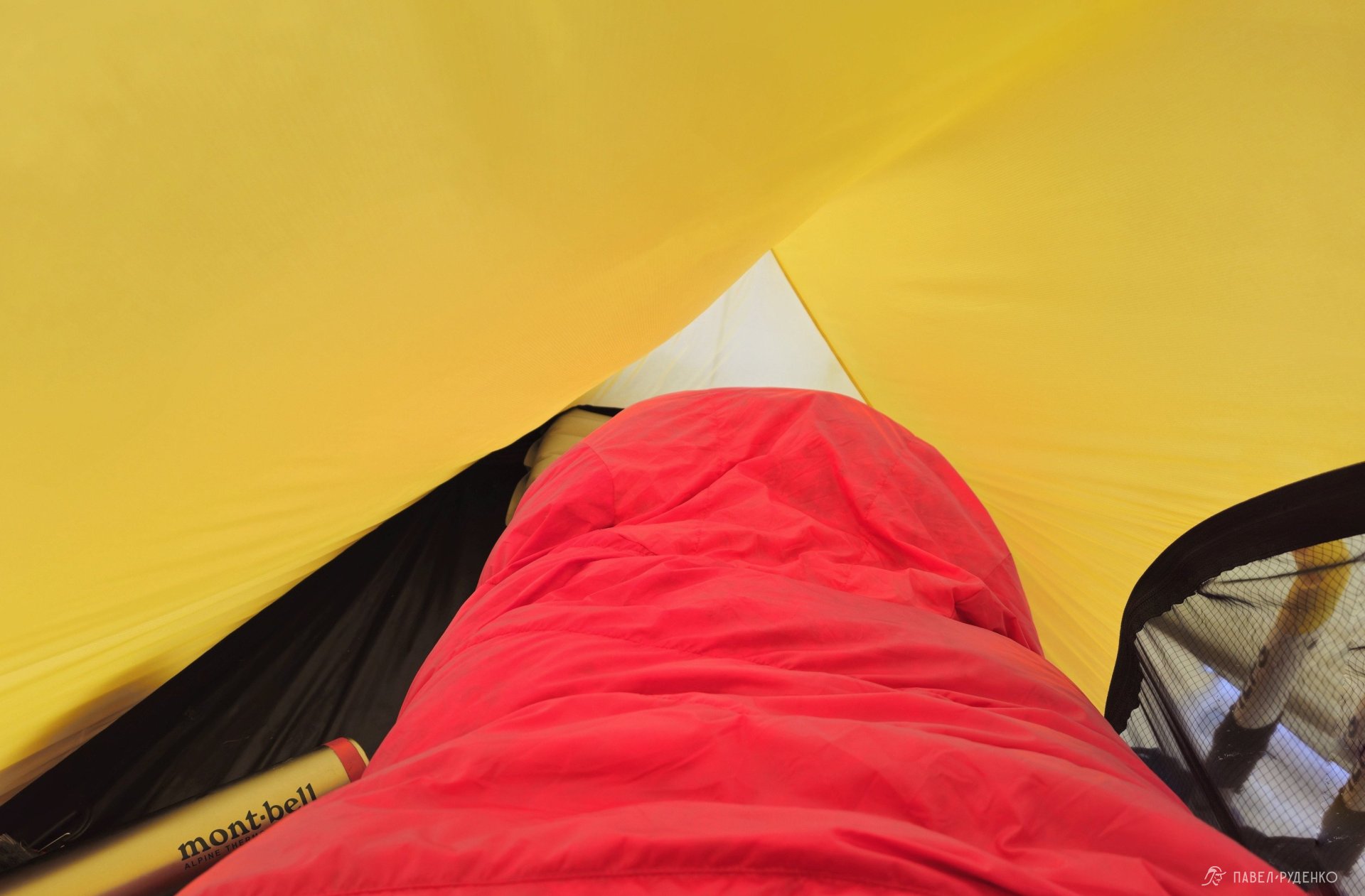
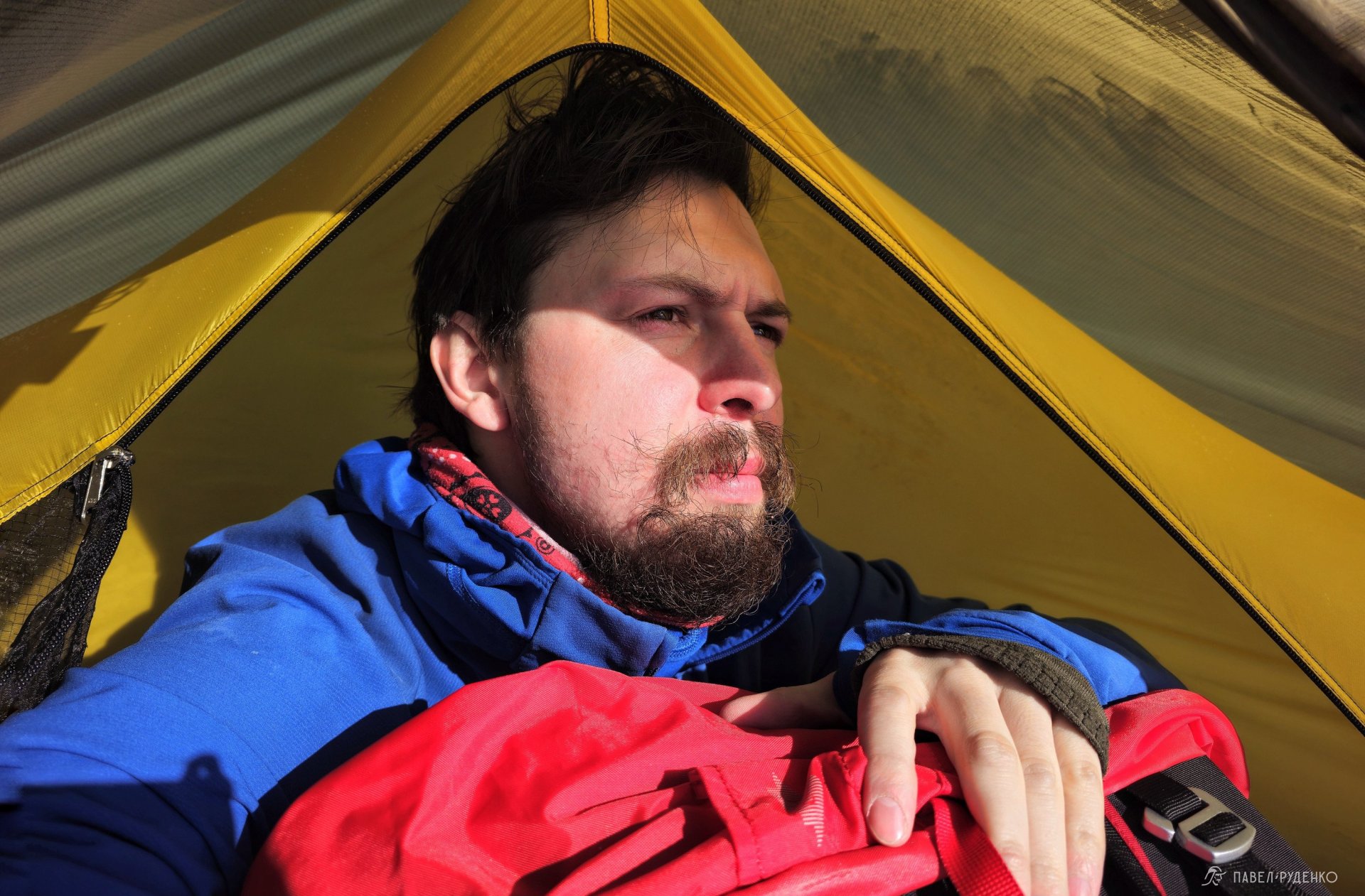
Inside it feels comfortable, though unnerving at first. The Hilleberg Enan is a three-season tent with a 9 mm pole, which I reinforced by adding a second 10 mm pole into the same sleeve, alongside extra guy lines. As the storm proved, this setup turned out to be so rock-solid that the tent didn't bend under 32 m/s crosswinds—the fabric merely pushed inward. This is one of the lightest tents capable of weathering such conditions unscathed. All that was left was to trust that every seam and guy line knot was secure, and the stakes were buried deep enough.
In the vestibule, I dug out the drift-covered pot with my cold dinner, ate it, and crawled into my sleeping bag fully dressed in my jacket and snowy boots, slipping dry bags over my feet. Placed the satellite communicator on my chest, the shovel beside me, and drifted off with a silent prayer.
The Arctic winter is magnificent and unforgiving; next morning, I woke to sunshine and a fleeting calm.
Storm Takeaways
1. What you do beforehand is paramount; once it hits, it's too late.
2. Every single knot matters and must be uncompromisingly secure. A 2 mm guy line might work below the treeline, but in the tundra, 3 mm is mandatory.
3. With compact tents, it is best to trench in about 1/3 of the tent height; excavated snow serves as a protective wall, though storm winds will scour and smooth it down.
4. In open terrain, never use skis as tent anchor points.
5. Stop cutting weight on solo trips by skimping on snow stakes. It costs far more time and energy during pitching than the weight saved.
6. In the tundra, 40 cm stakes without carabiners, using just cord loops, work best.
7. Storms often strike without warning, so only a thorough, diligent camp setup at the end of every day—with all guy lines deployed—can provide adequate shelter when the weather turns.
Pulkas
I spot more reindeer — if only I could harness them and speed ahead. There were 3 treks this winter season, almost back-to-back. Logistics forced me to give up pulkas and carry a backpack instead, even though local conditions are ideal for pulkas and I would have preferred using them. I tested a new backpack, the Kailas Alpine 80+20. The materials are top-notch, and the back stays are nice and rigid. However, the webbing straps and buckles on the load lifters and hip belt are poorly matched; they slip during the day and require constant adjusting. The lumbar fit is rather peculiar and lacks sufficient anatomical contouring for my liking. It comfortably carries loads up to 21 kg, distributing the weight evenly across the shoulders.
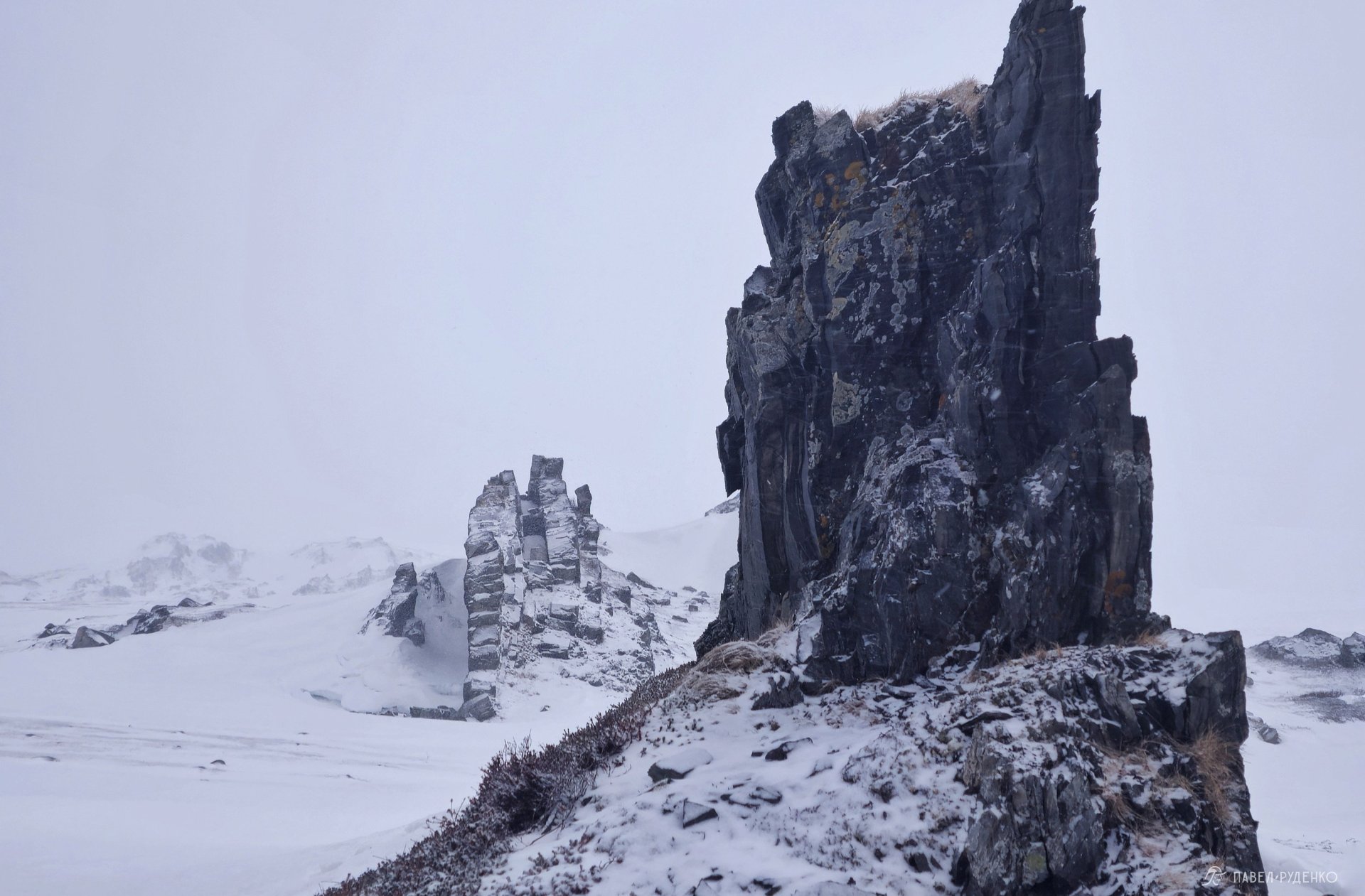
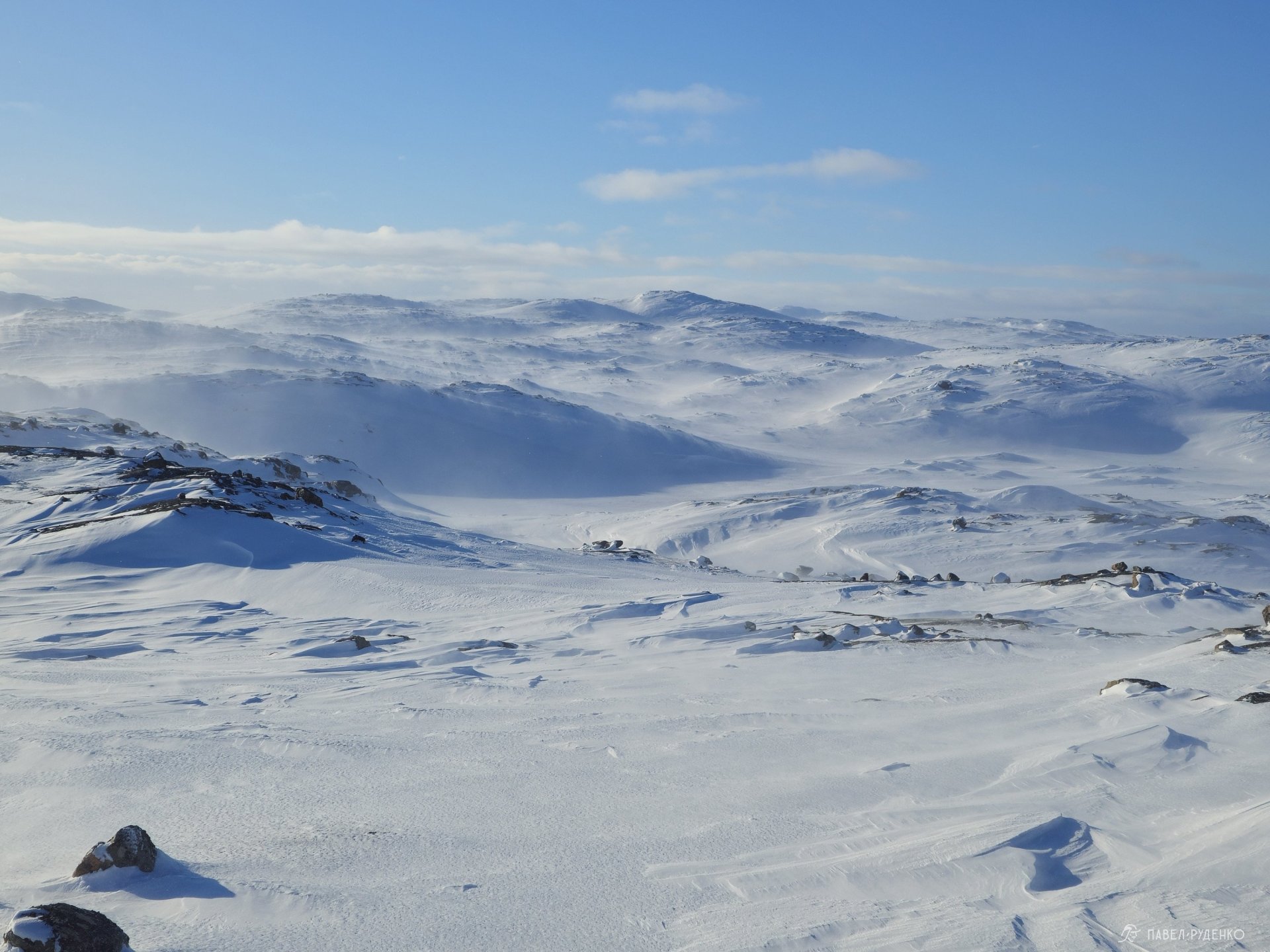
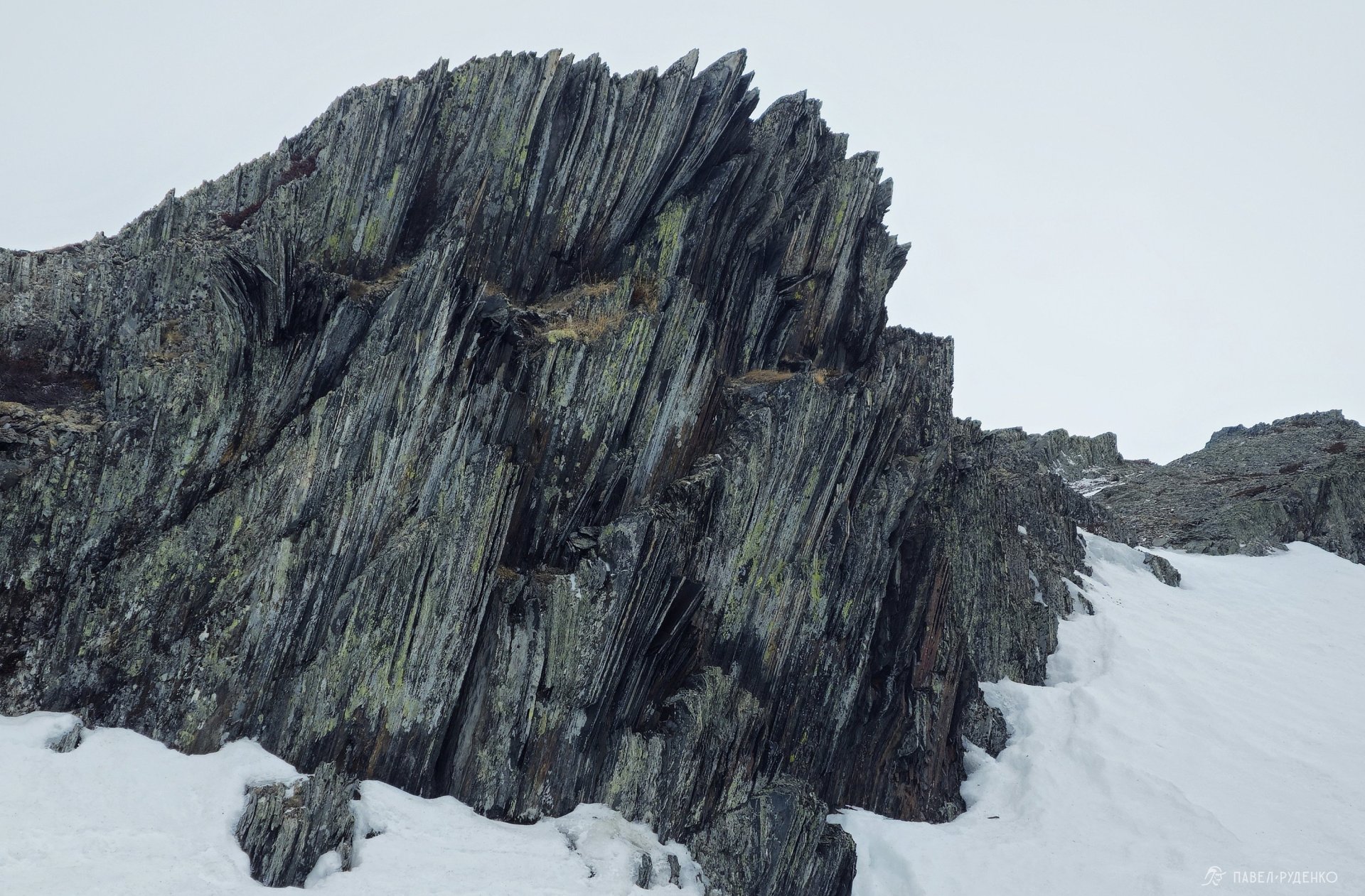
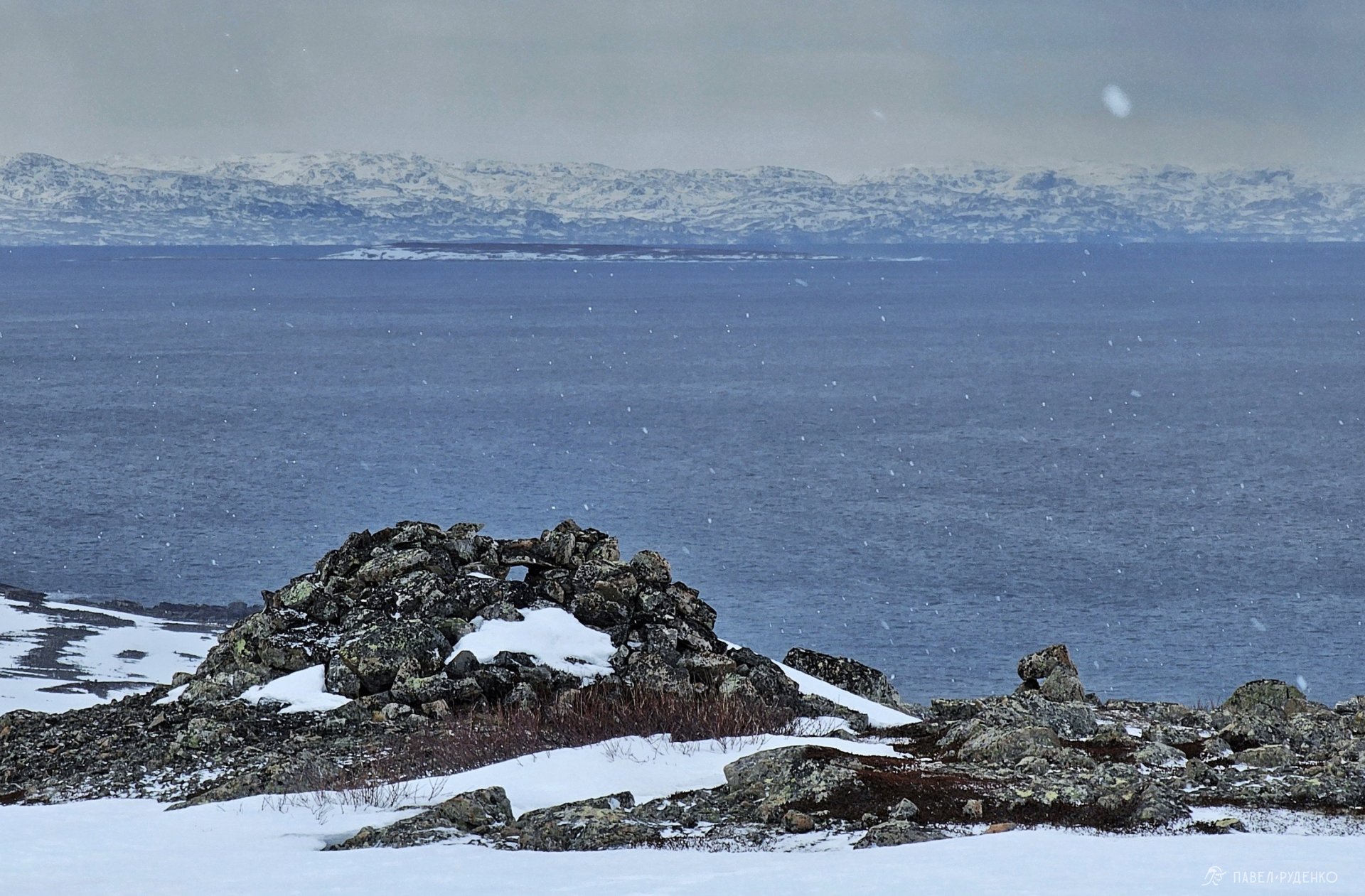
I absolutely loved Rybachy Peninsula, with its high plateaus, bizarre rock formations, and sheer sea cliffs plunging straight into the ocean. The terrain is quite distinct from what you usually see along the rest of the Murman Coast. After trekking across the Kola Peninsula for years, I still discover new, breathtaking places every time. I will definitely organize a group expedition here — keep an eye on the announcements in the schedule and sign up!
Return
I am back, yet the silhouettes of reindeer keep drifting through my mind. Freezing for a brief second to take each other in, then moving onward, vanishing into the snow.
The ice-free waters of the Arctic Ocean, dictating the pace of the journey with their wild scents.
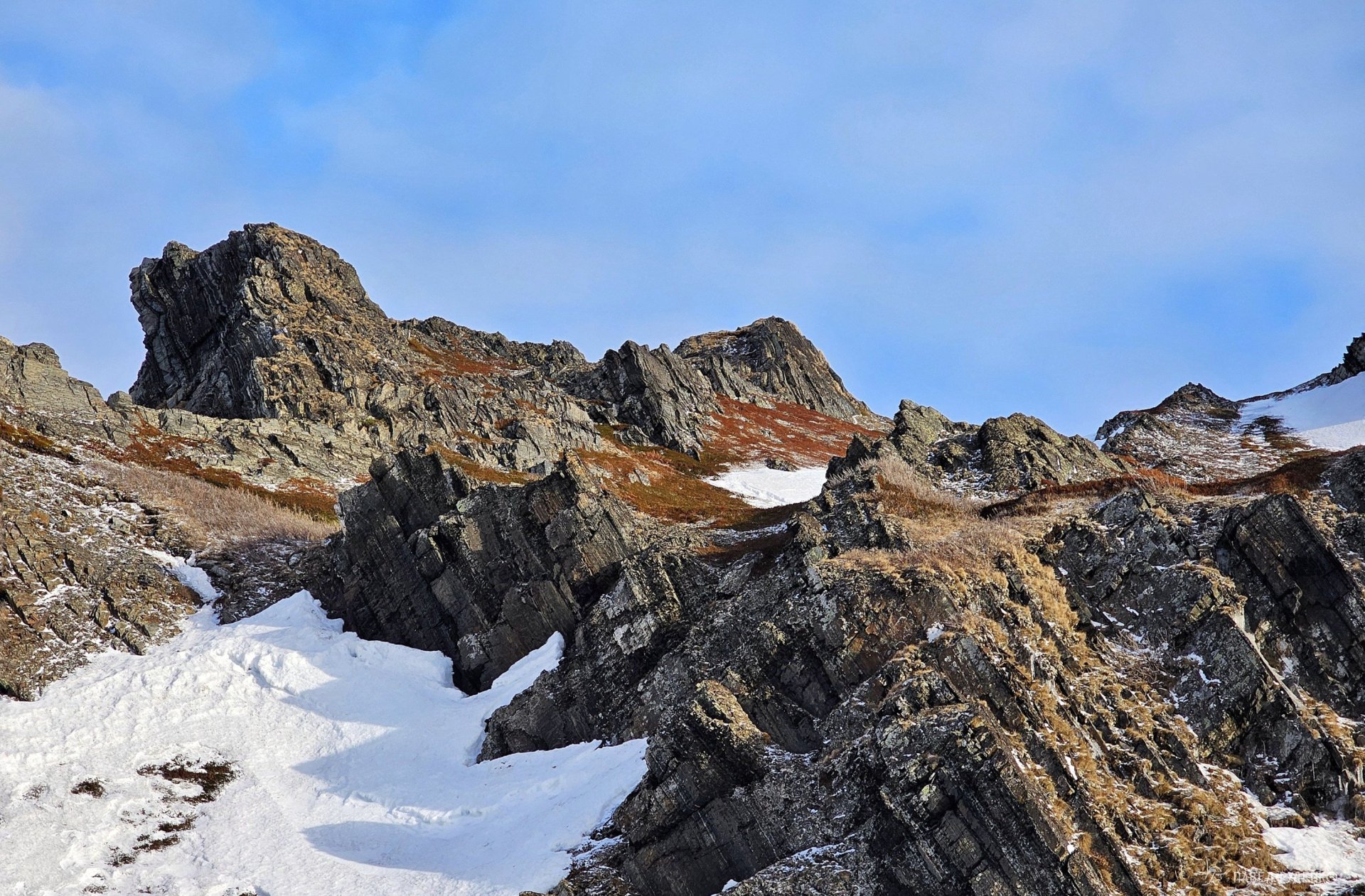
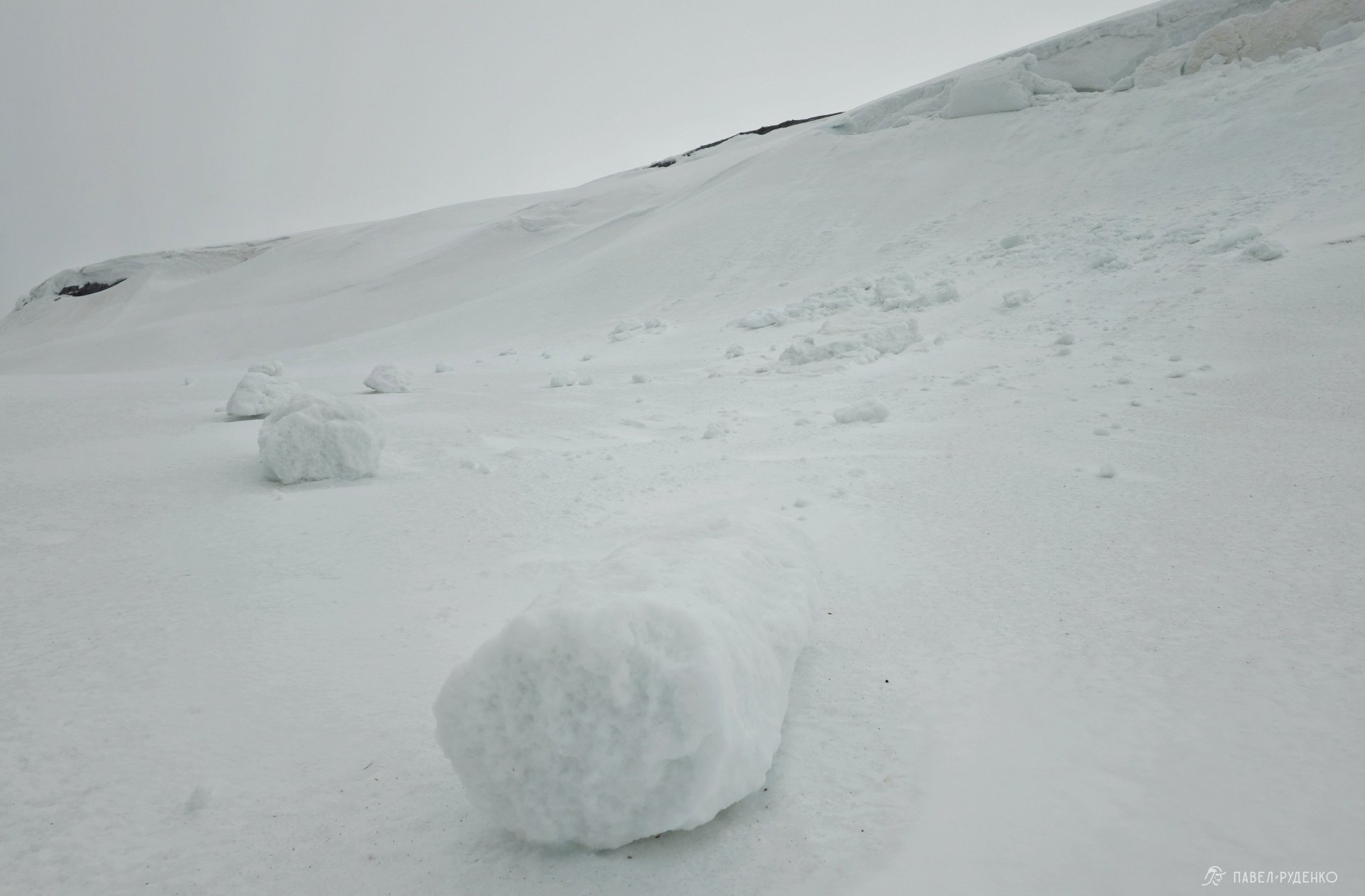
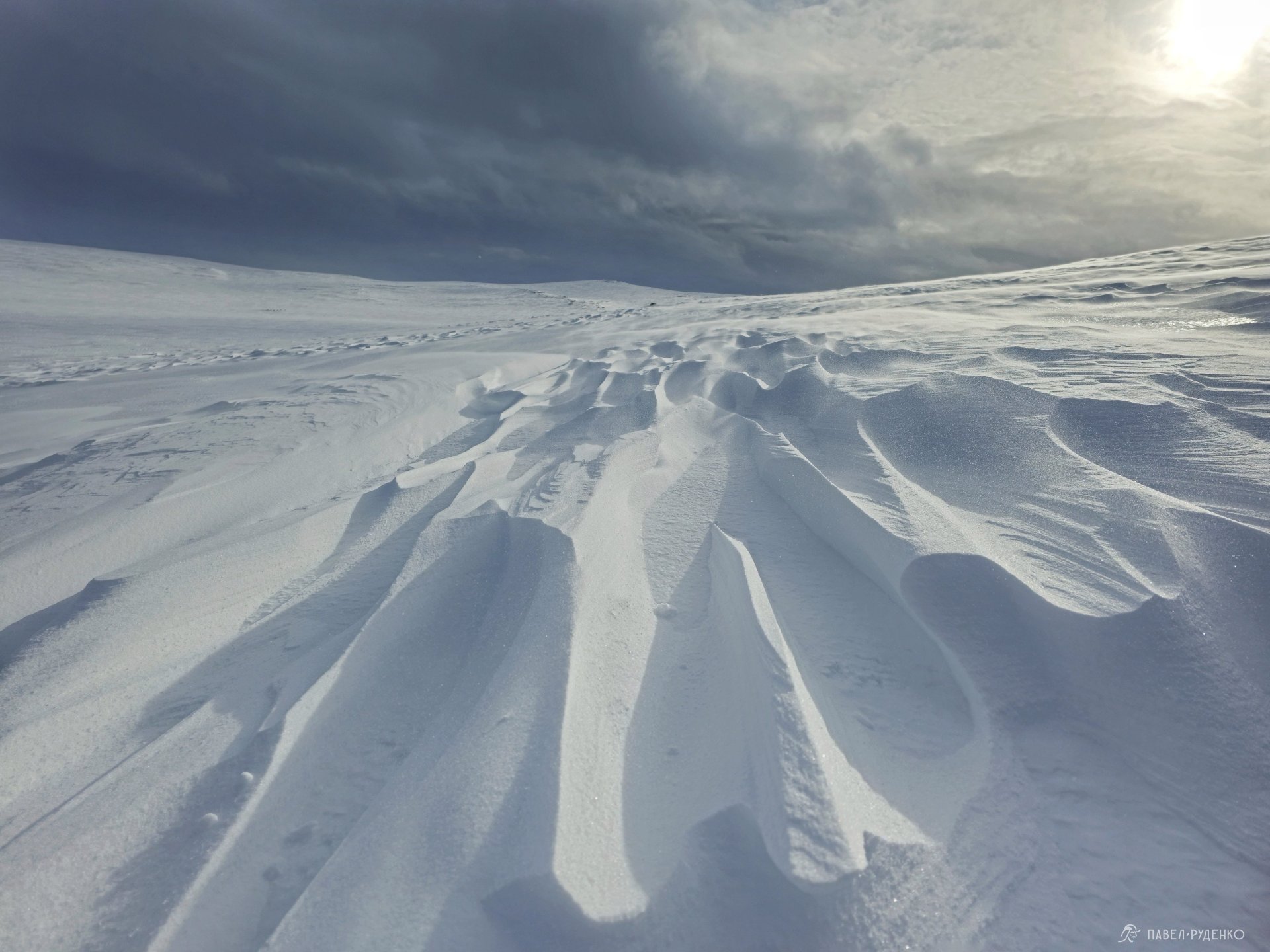
Crusty tundra snow in all its shapes and forms, windswept down to bare patches of moss and lichen. The dramatic, rugged cliffs of the Rybachy Peninsula.
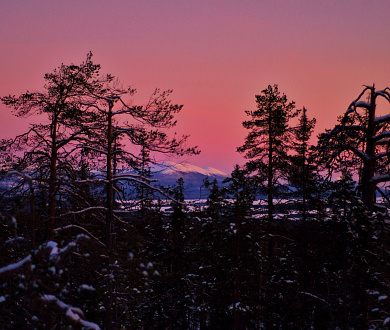
A storm that strikes a deep chord in the soul, bringing vibrant colors into life.
If you are ready to hear the call of the tundra, reach out. Next year I will return with a team.
Two months later, I returned to the Rybachy Peninsula to complete a 180 km trek around it on foot.




Comments (0)