
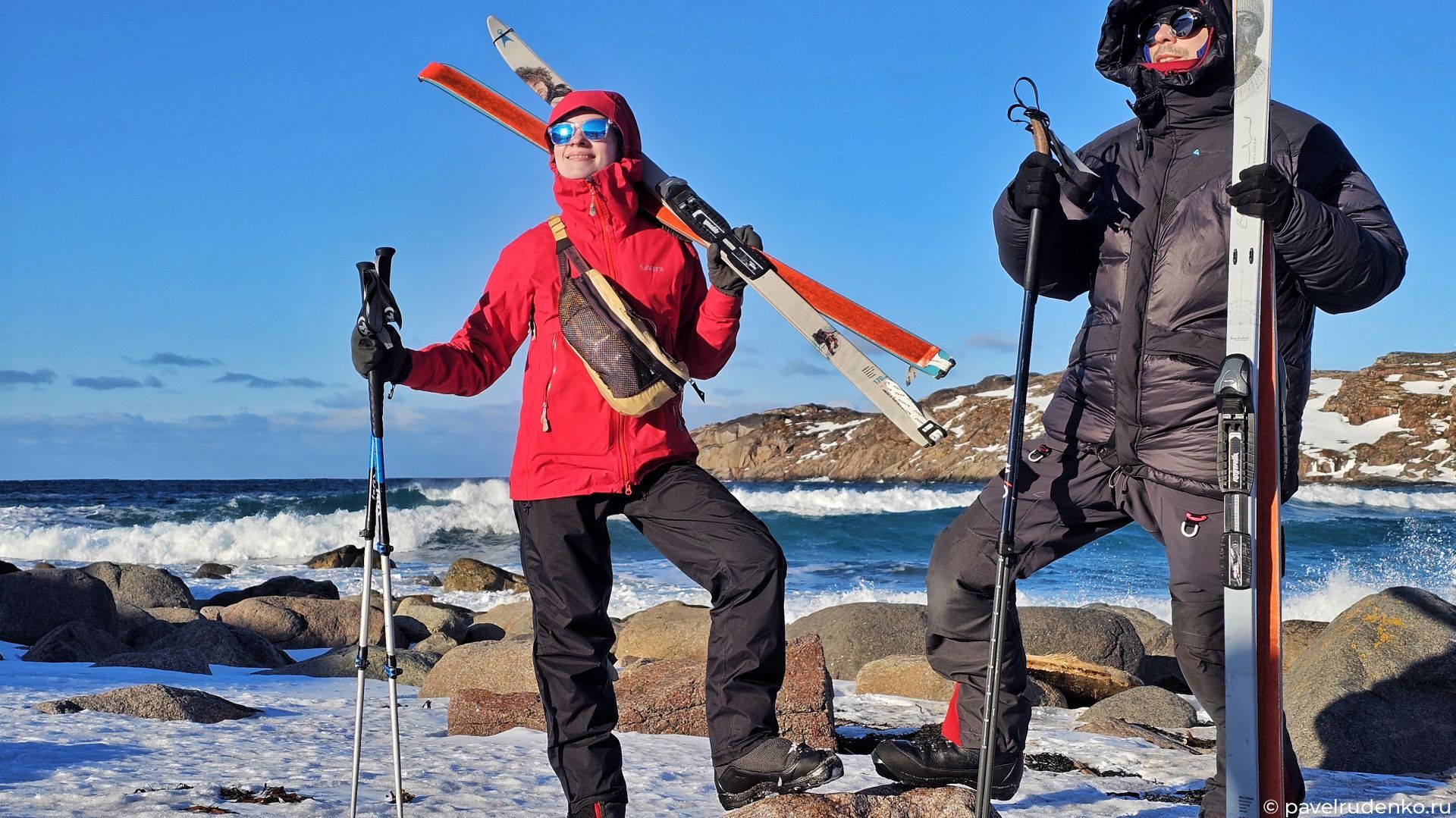
Ski Expedition with Pulkas to the Barents Sea
Once again, we are heading north into the winter tundra. Murmansk is the gateway to this world, the largest city above the Arctic Circle not just in Russia, but on the planet.
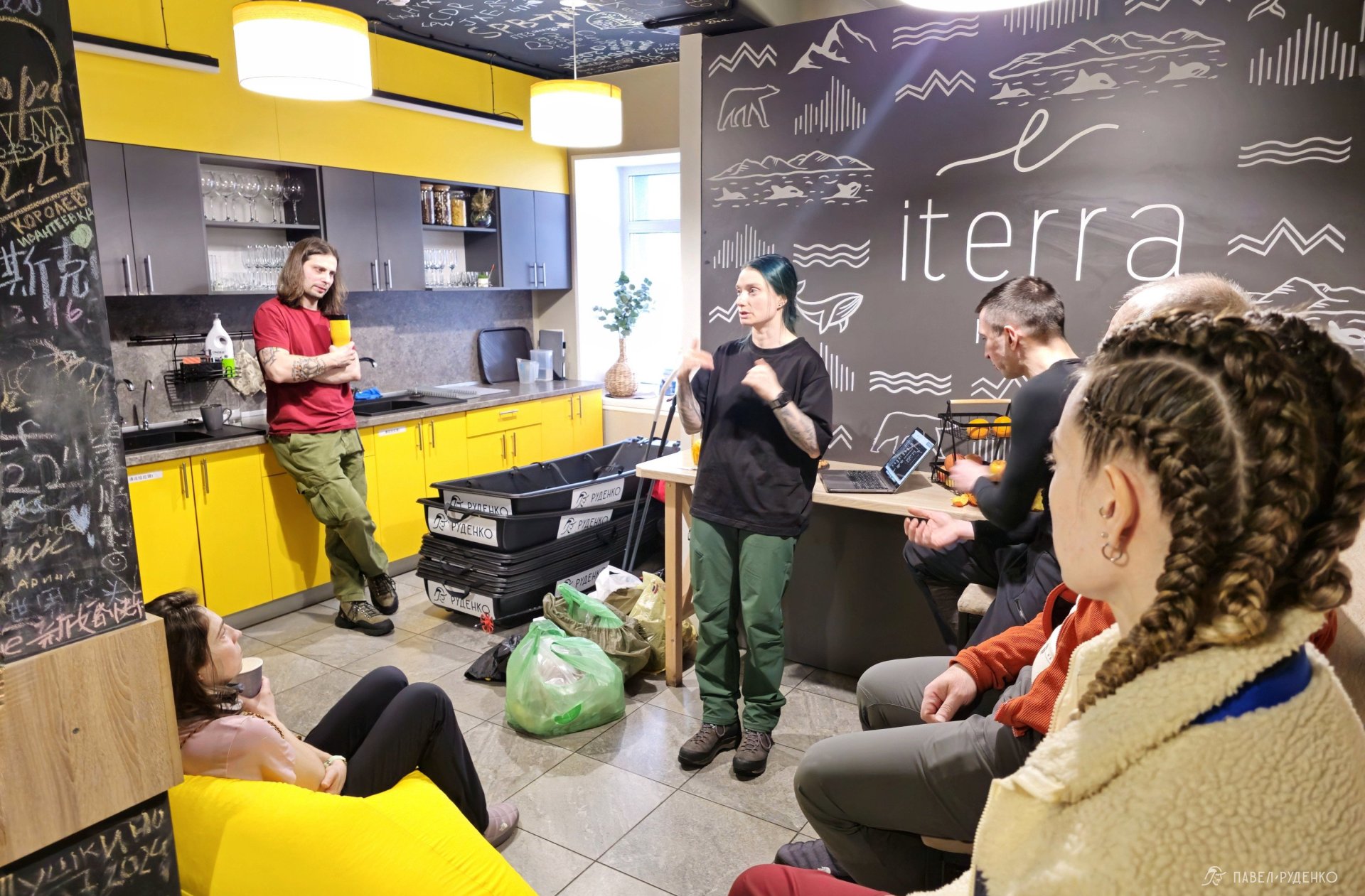
Before heading out into the tundra for a week, we check into a cozy Murmansk hotel and gather in the kitchen. I like meeting everyone before the trek to connect, get into the expedition mindset, and pack the pulkas. It’s the perfect time to double-check our gear and pick up any last-minute essentials. I lead a safety briefing covering expedition rules and protocols, sharing the nuances of ski touring, how climbing skins work, pulka harness systems, and more.
The Wait
We are heading to a truly unique place where alpine tundra meets the Barents Sea — the Murman Coast!
The North Cape Current warms the waters off the Kola coast, creating the mildest climate of any polar region in Russia. This allows us to ski right up to the open Arctic Ocean, camp in tents lulled by the sound of the surf, and take in the raw, breathtaking dark blue horizon against snow-white fells — absolutely magnificent.Who rules the tundra? That’s right — the wind. It blows frequently and fiercely, burying roads under snow for a day or two, sometimes even longer. On our departure day, the road was already shut, and we were waiting on news of a potential convoy. That unpredictability adds genuine adventure and value to our journey.You have to plan every detail meticulously, include buffer days, and keep your finger on the pulse — a challenge I genuinely enjoy.
I monitor reports from road maintenance crews, while EMERCOM rescue services check in every 3 hours to coordinate on their end. Working with emergency services gets smoother every year; this time they took extraordinary care of us, which was wonderful).
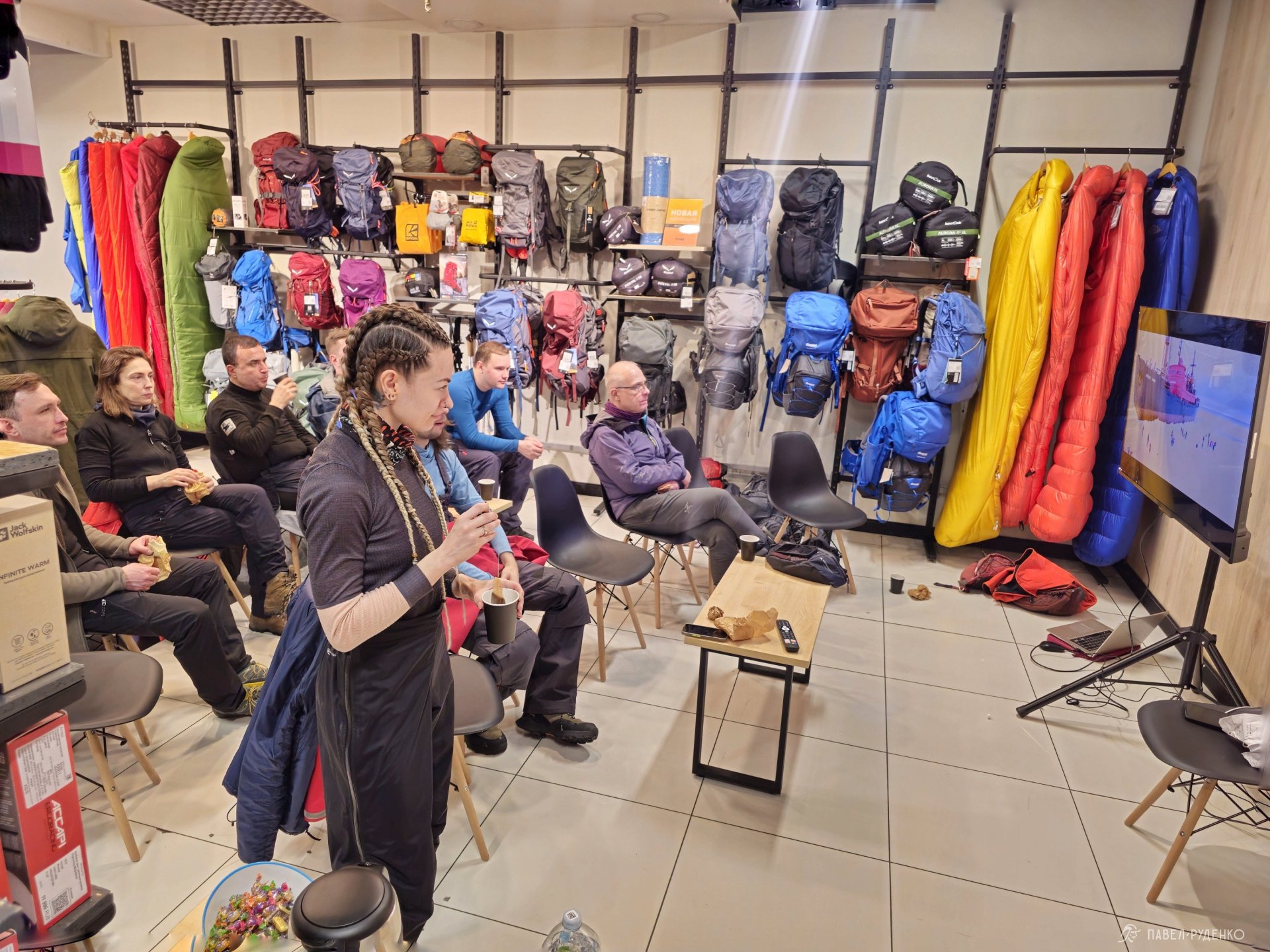
We spend the anticipatory hours watching the documentary film “Into the Arctic” — highly recommended. We watch it at my friends’ outdoor store, ProHiker. If you’re ever in Murmansk, definitely drop by: it’s the finest outdoor gear shop in the region.
The call comes — the road has been cleared and a convoy is rolling out at 18:30. HOORAY! We hop into the van and set off for Teriberka.
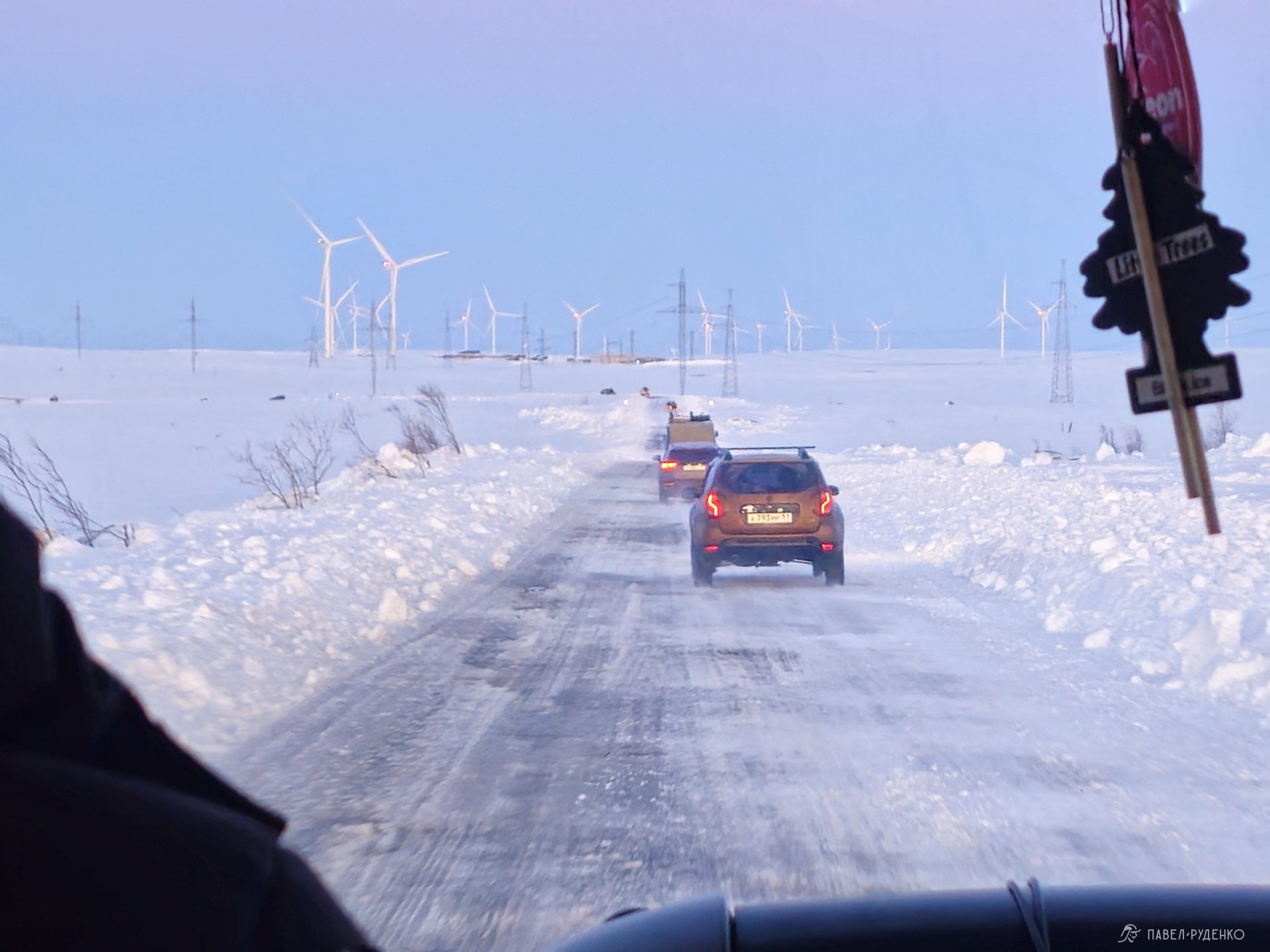
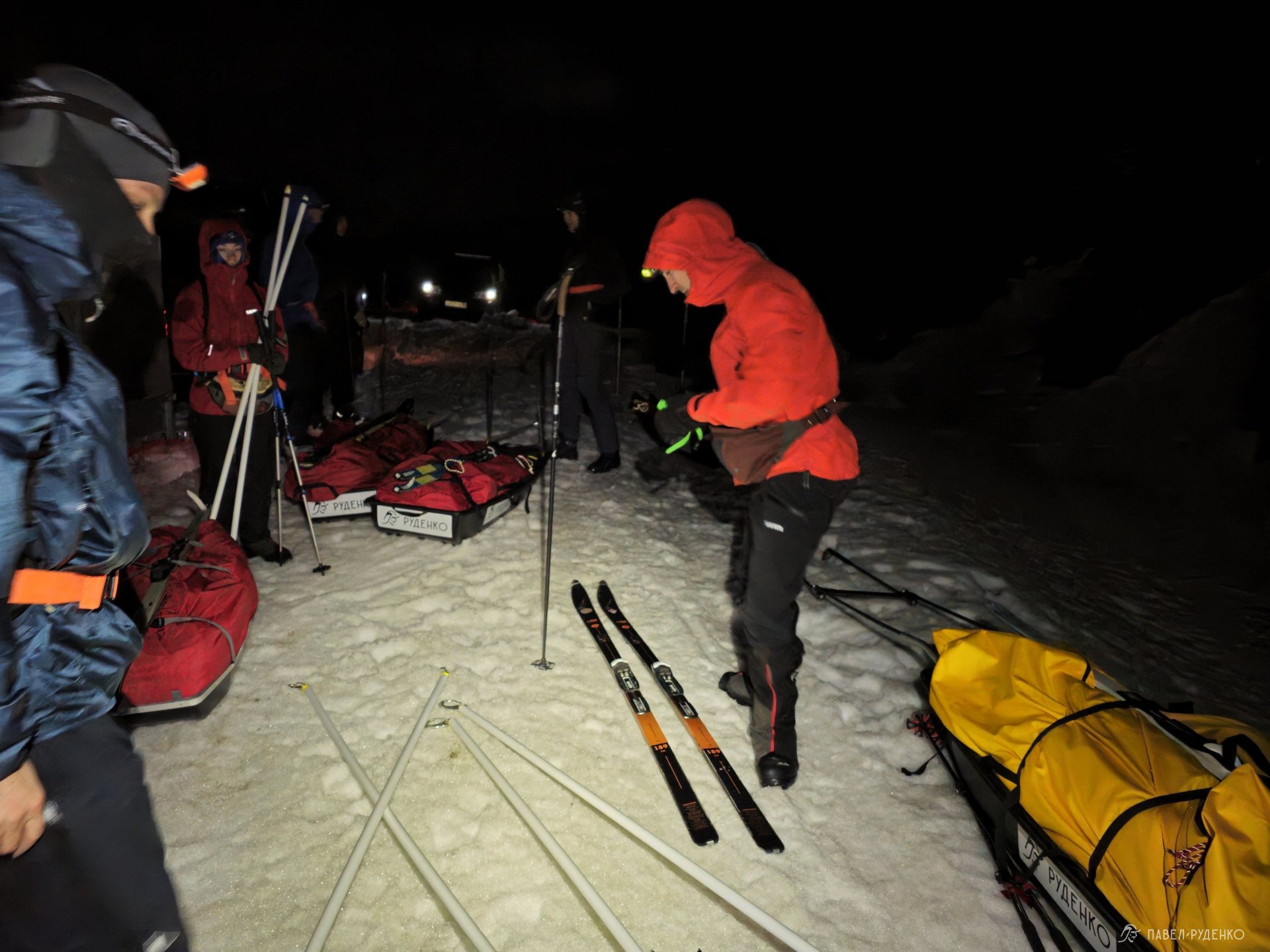
We arrive in the evening. I jump out of the warm vehicle, and a violent gust of wind slams into my chest; I struggle against the gale just to shut the car door. One breath — and the scent of the frigid ocean fills my lungs: finally, I am home. I had planned to make camp nearby, but it proved impossible. The wind had scoured the coastal snow bare, leaving the ground rock-hard like concrete — impossible to anchor. No worries though: I know a small valley where there is plenty of snow.
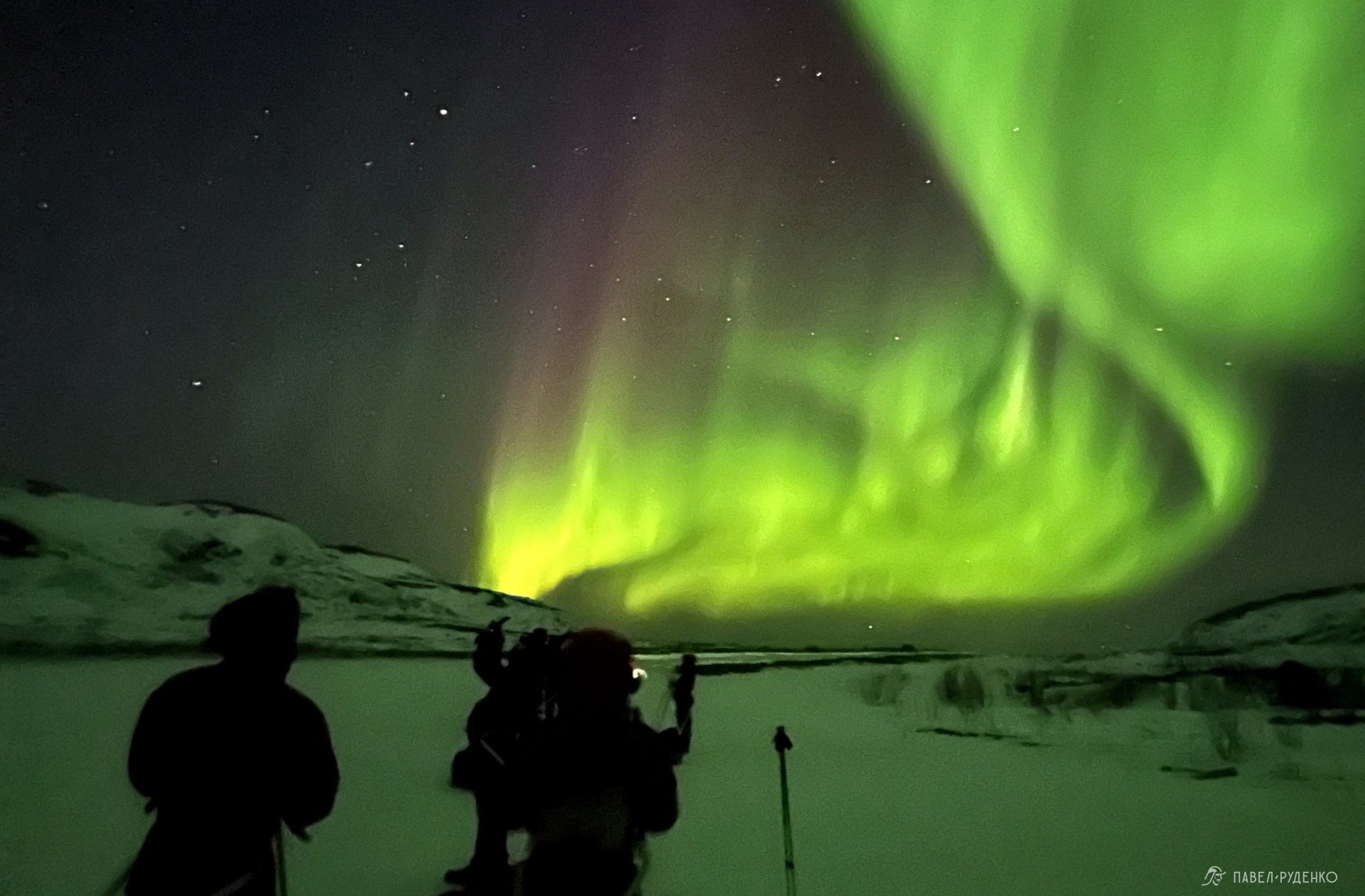
The sky suddenly erupts in a blaze of emerald light, and we trek with our headlamps switched off under the living glow, like figures in a Nordic fairy tale. Have you ever seen the aurora reflected in the eyes of someone witnessing the Northern Lights for the first time? A purely magical moment. An aurora storm at Kp 6 treated us to an uninterrupted 4-hour display.
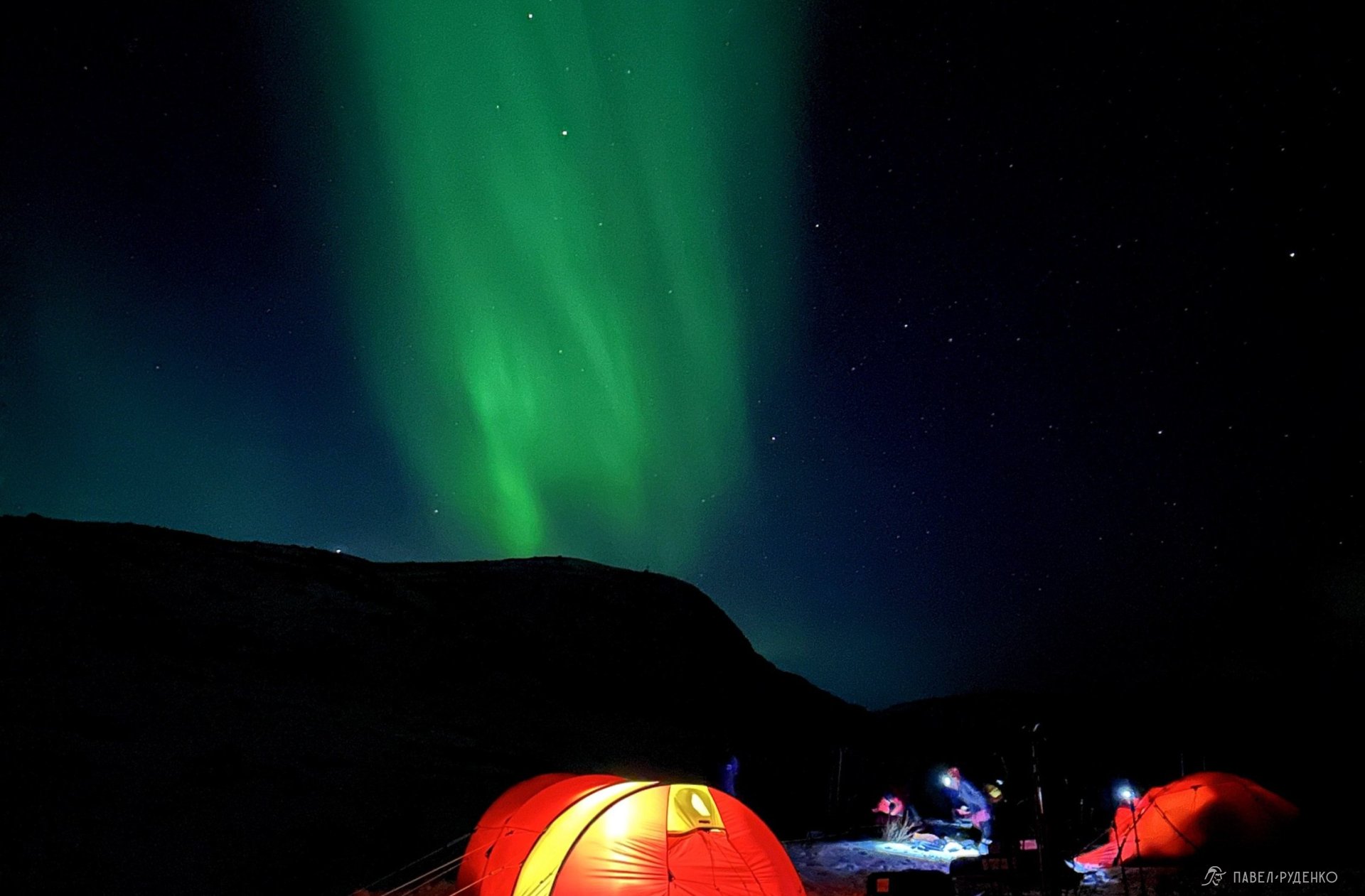
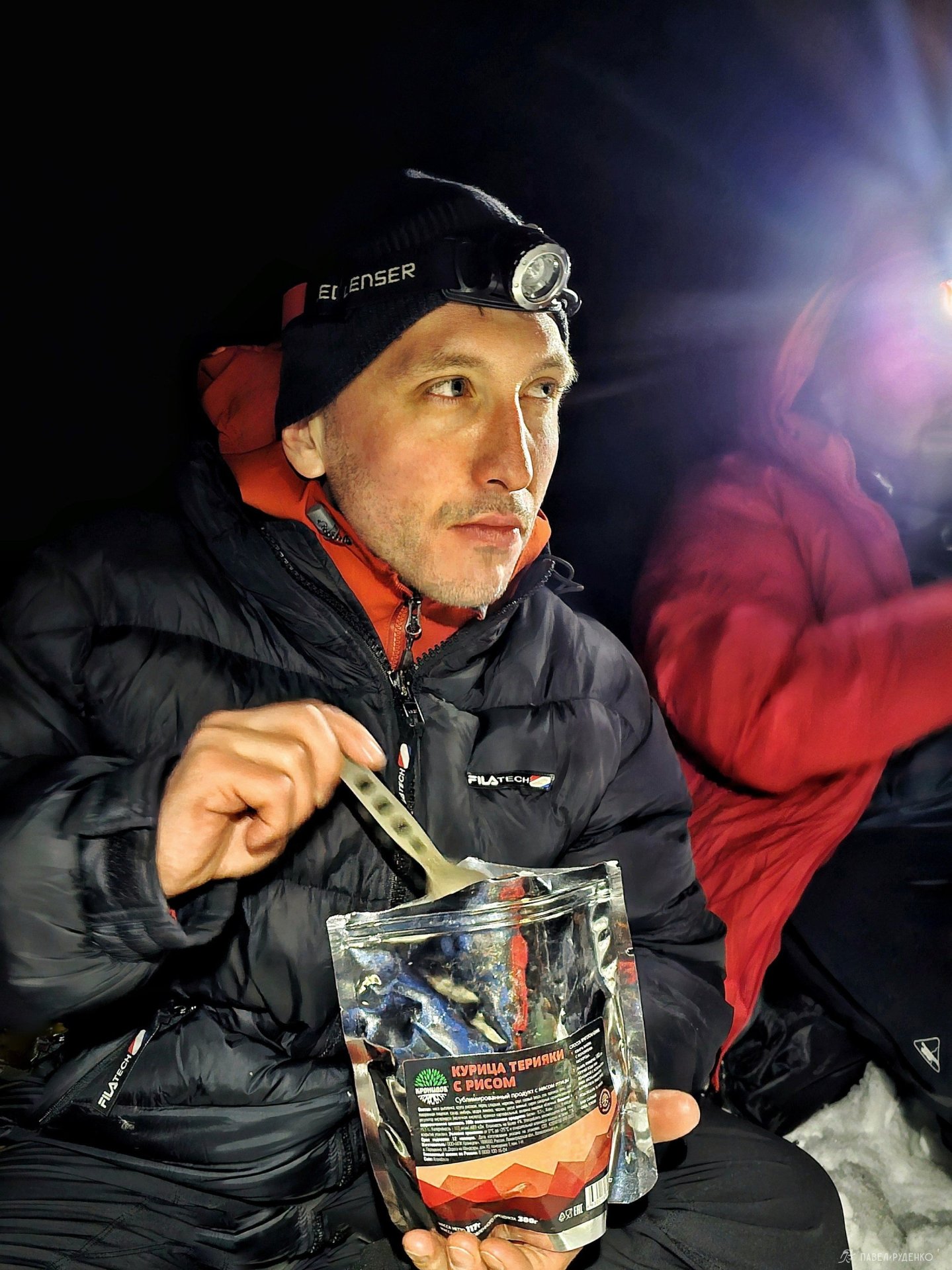
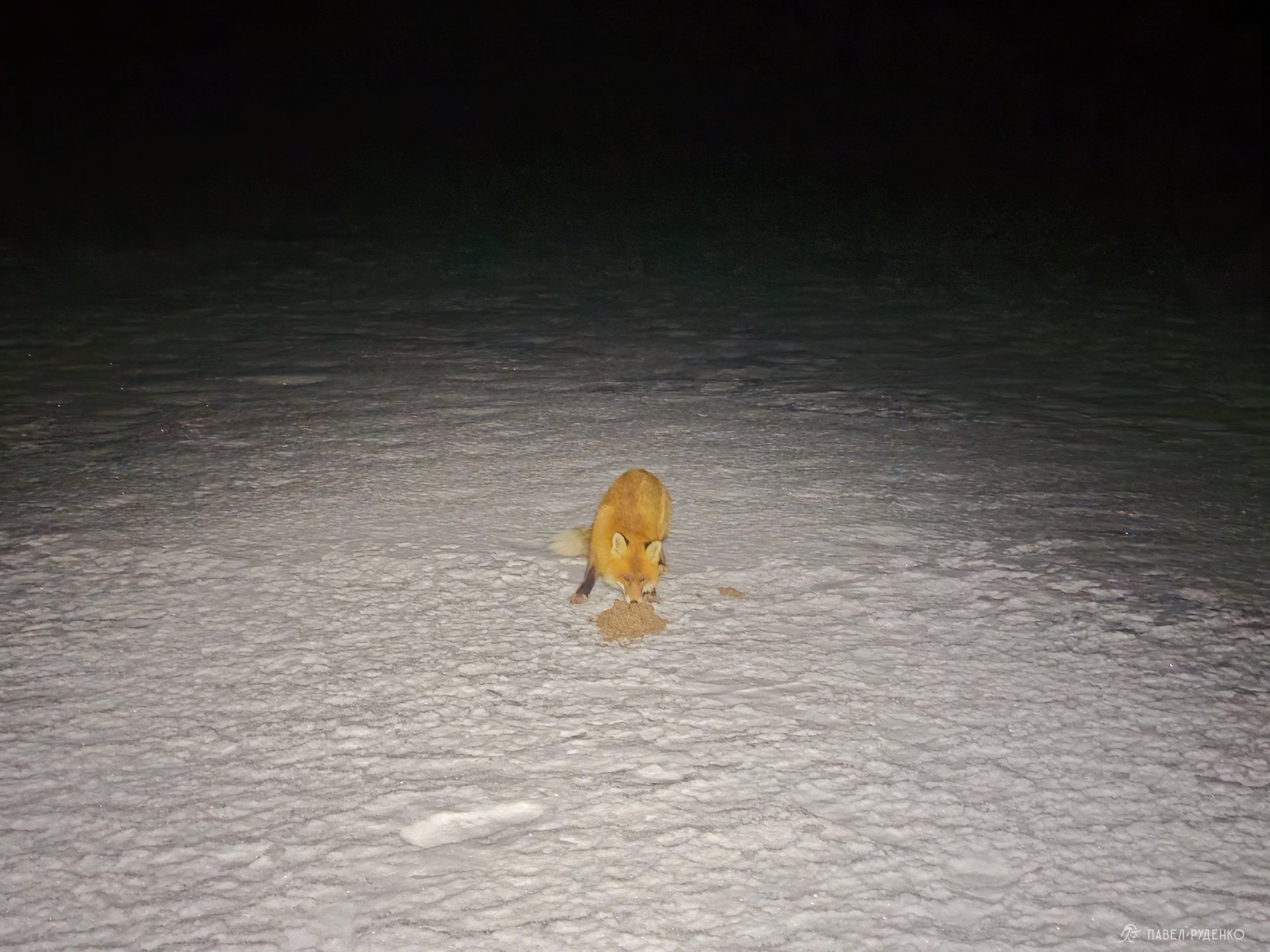
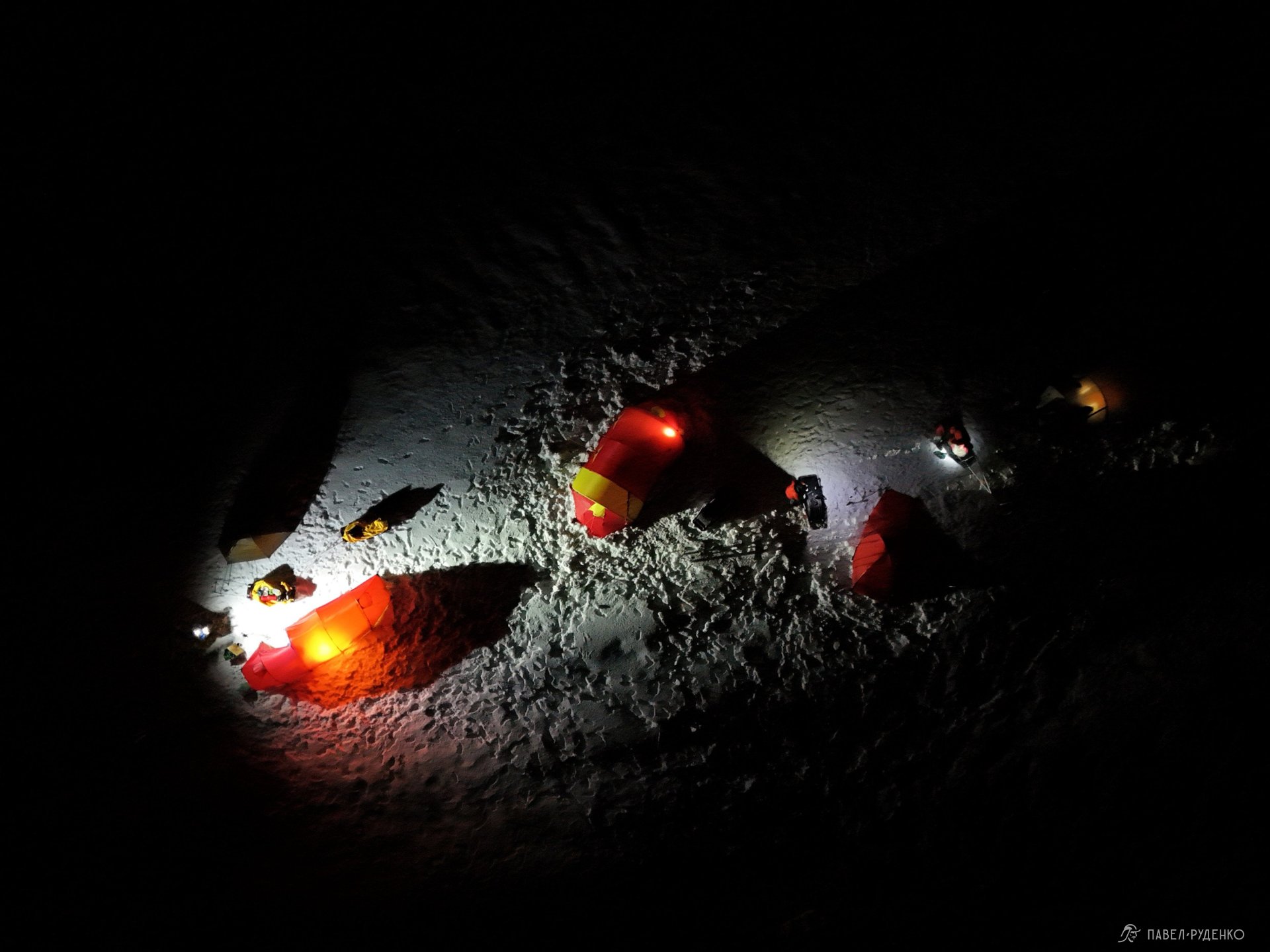
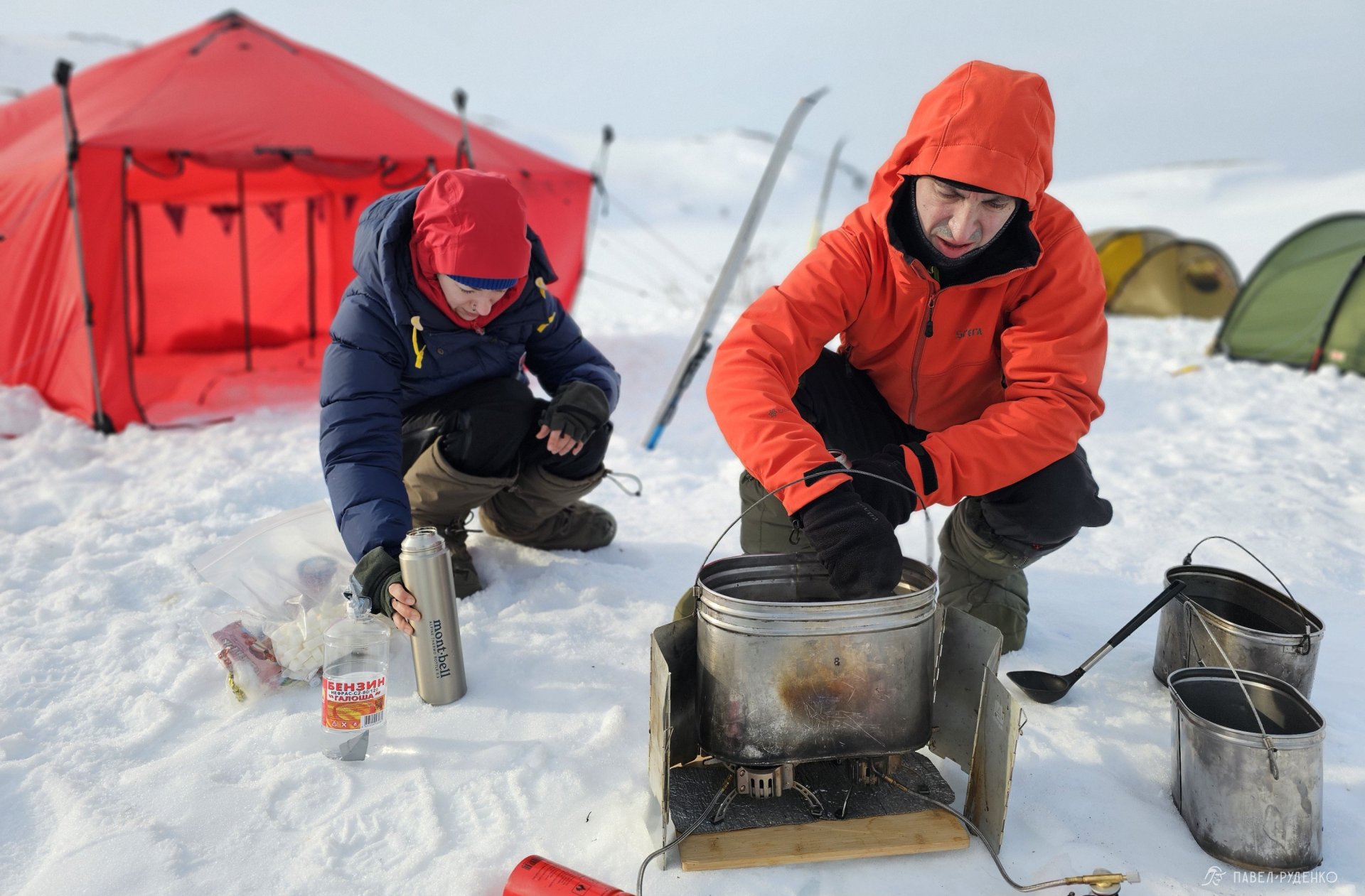
We pitch the tents, melt snow on liquid-fuel stoves, and dig into freeze-dried meals from Kronidov — teriyaki chicken with rice. In winter, I rely on freeze-dried food for part of our meals: it’s a classic approach that is quick, practical, and flavorful. Everyone loved the portions, the taste is natural, and you can salt to taste. Even a fox wandered into camp, drawn by the aroma.
First Morning in the Tundra
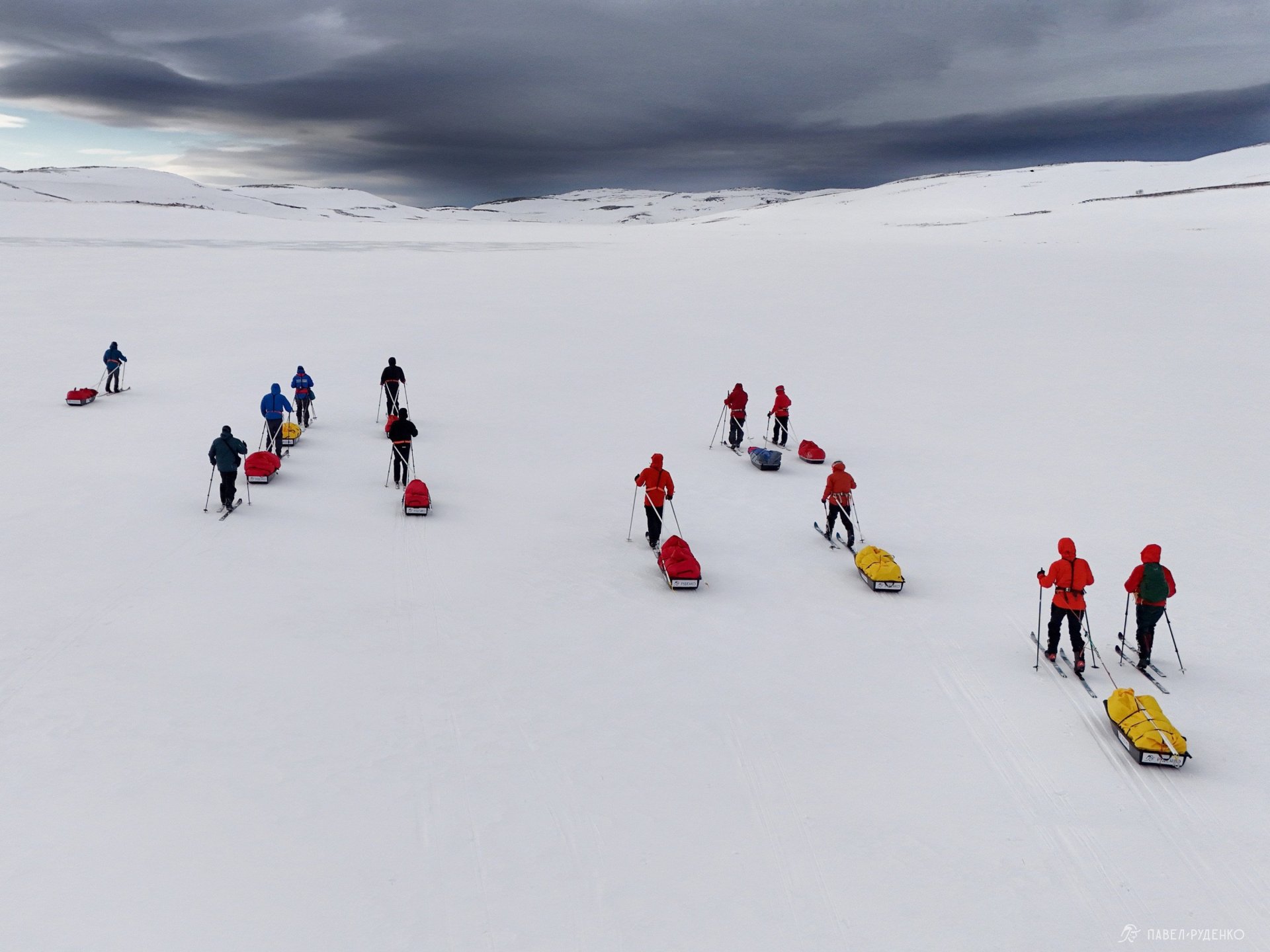
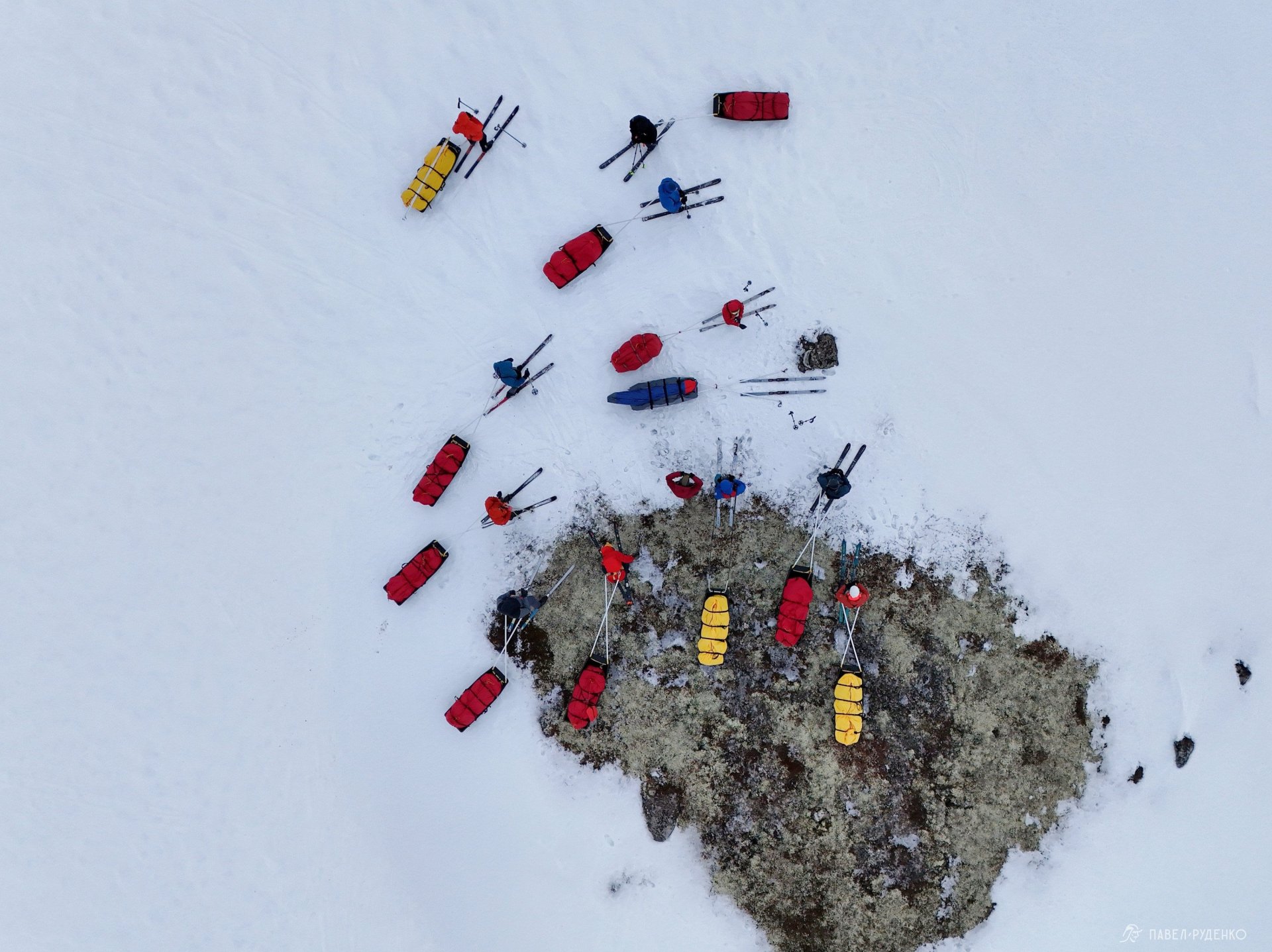
We have 90 km to cover over 7 days; the winter tundra is a test for anyone. But proper preparation allows you to truly enjoy nature even in these harsh conditions, which is exactly what we did. During prep, I speak with every participant by phone, discussing every single piece of gear. That is the key to a successful expedition.Today, the skis glide effortlessly over a firm crust formed by near-zero temperature swings earlier this season. The lack of recent snowfall preserved these ideal conditions for us. I caught myself dreaming of getting snow this good on my upcoming solo expedition along the coast. Gliding across such hard crust without having to break trail is pure joy — zero fatigue.
On our previous expedition, weather conditions were completely different. Colder, with fresh snow driven low across the ground like sand dunes, creating the distinct feeling of rolling waves underfoot. Back then, Anya and I scouted this route as a duo.
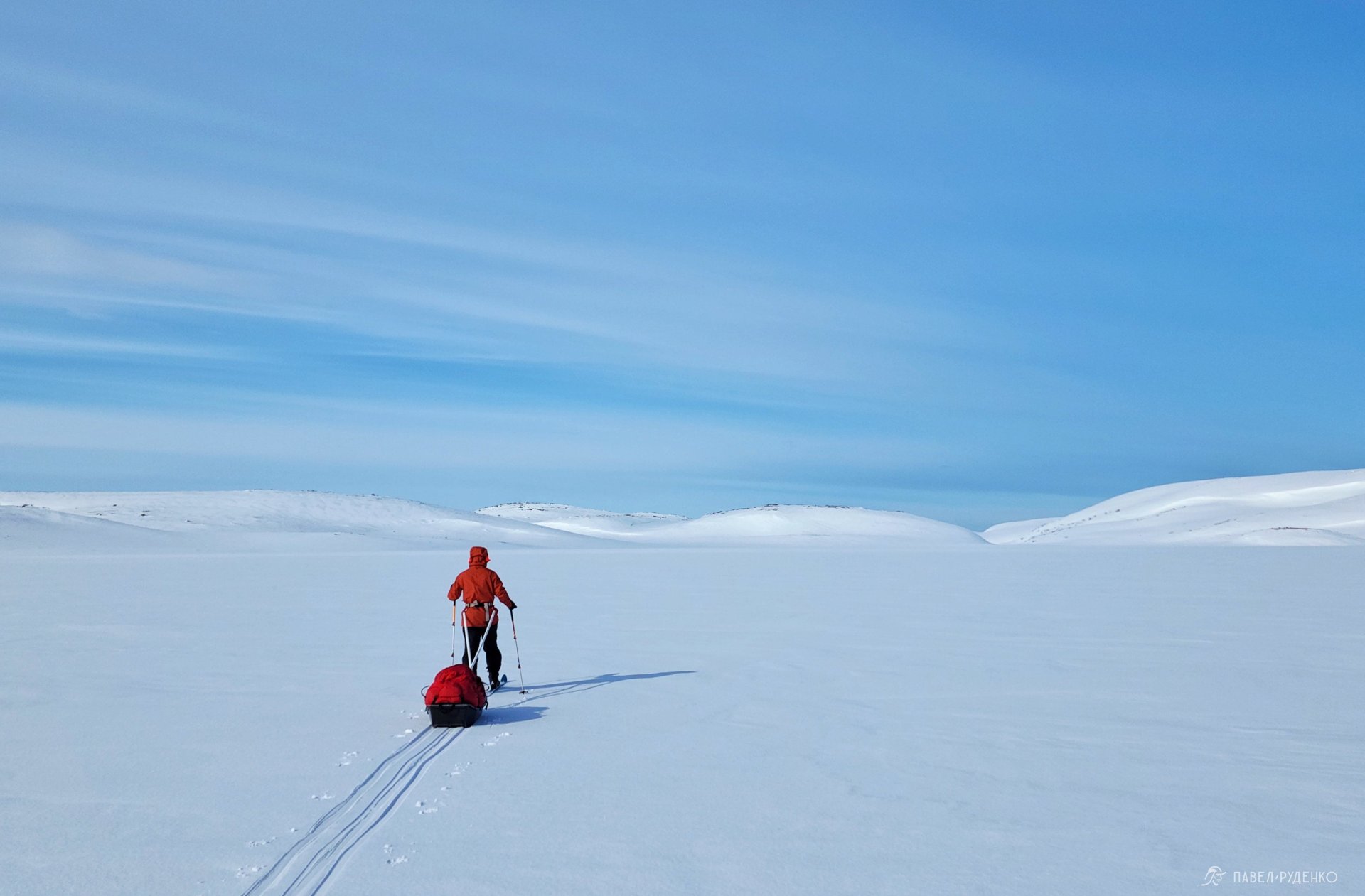
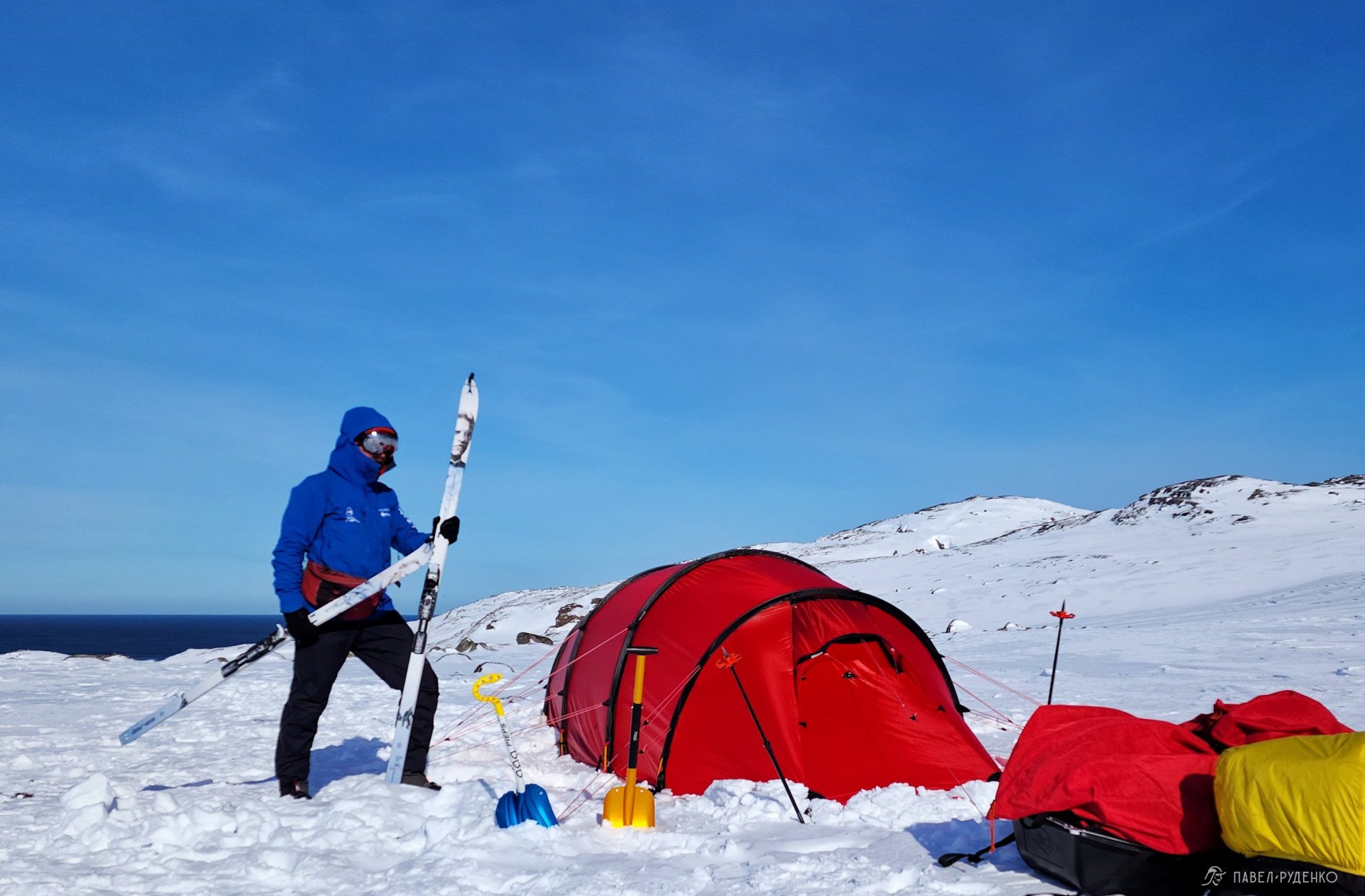
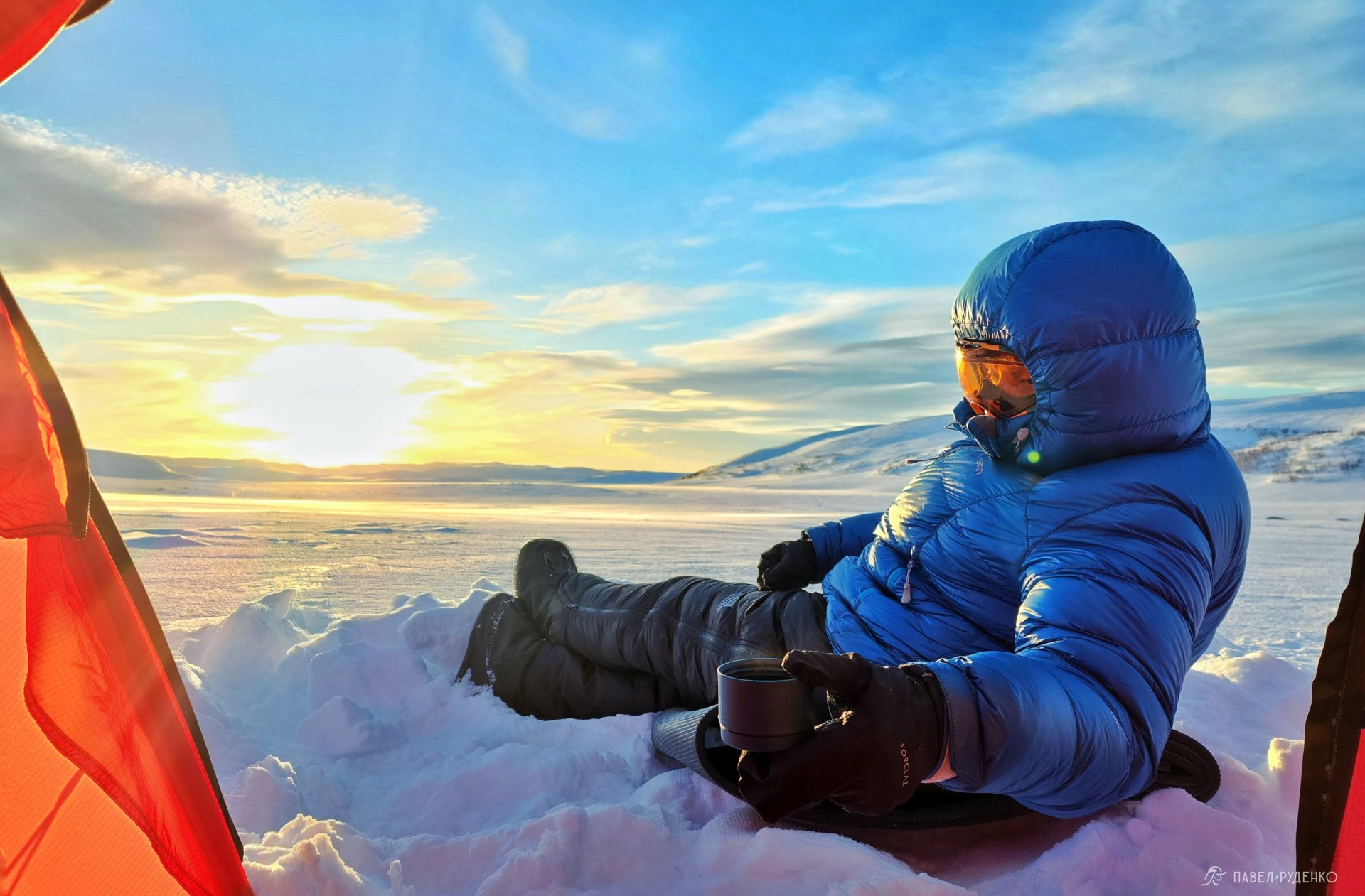
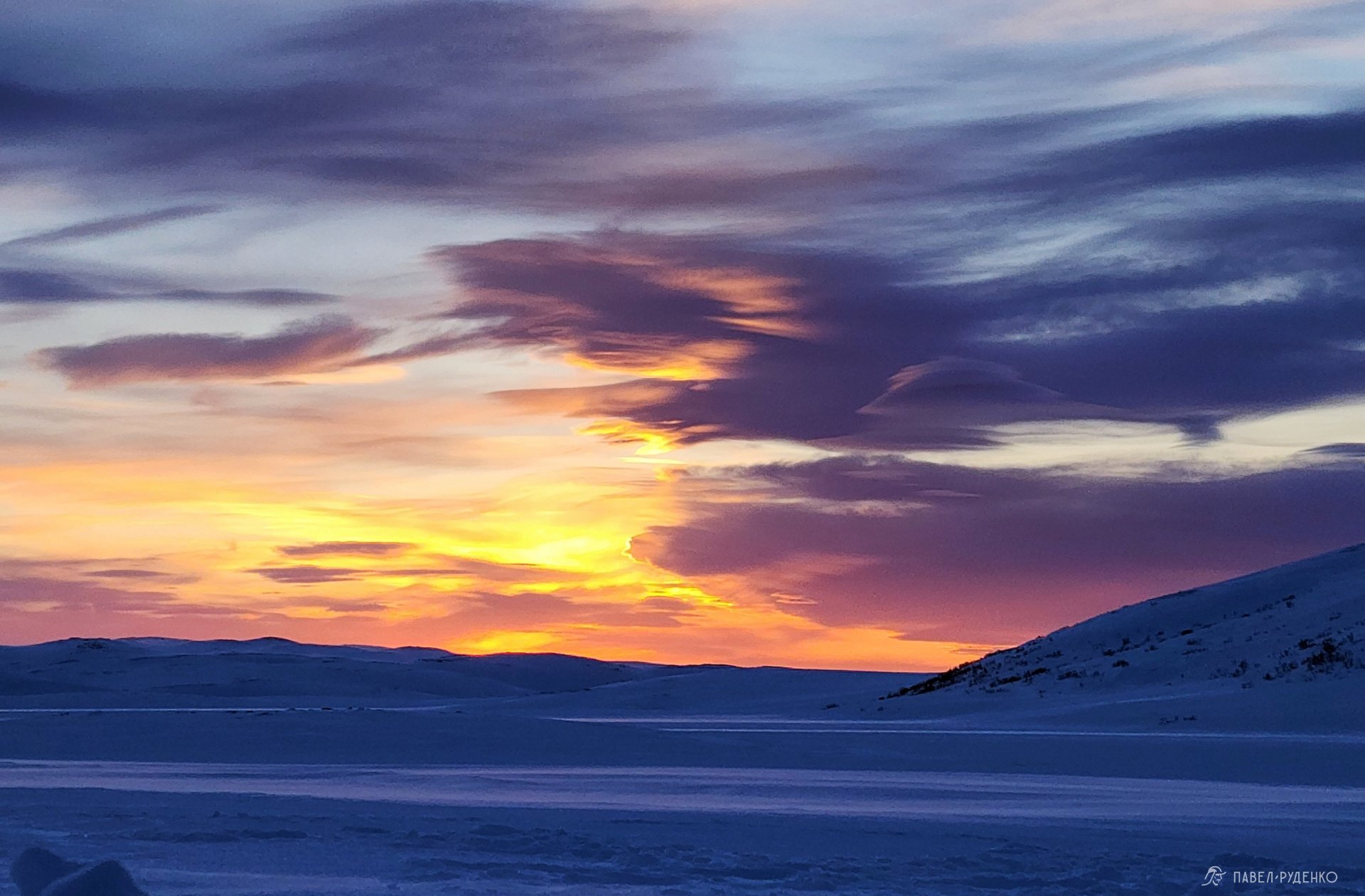
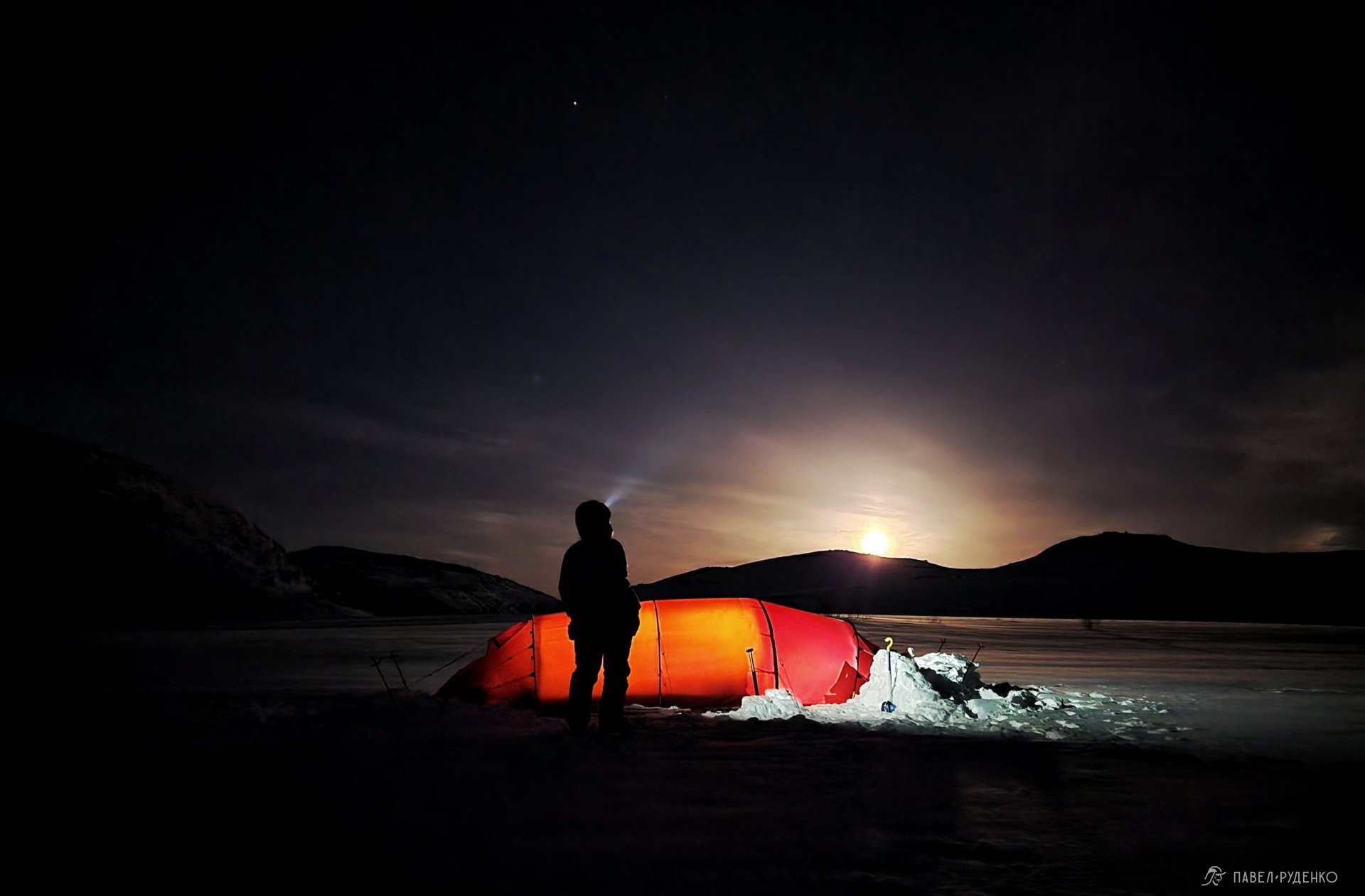
Photo from our previous expedition as a duo with Anya Migalina.
Descents and Ascents
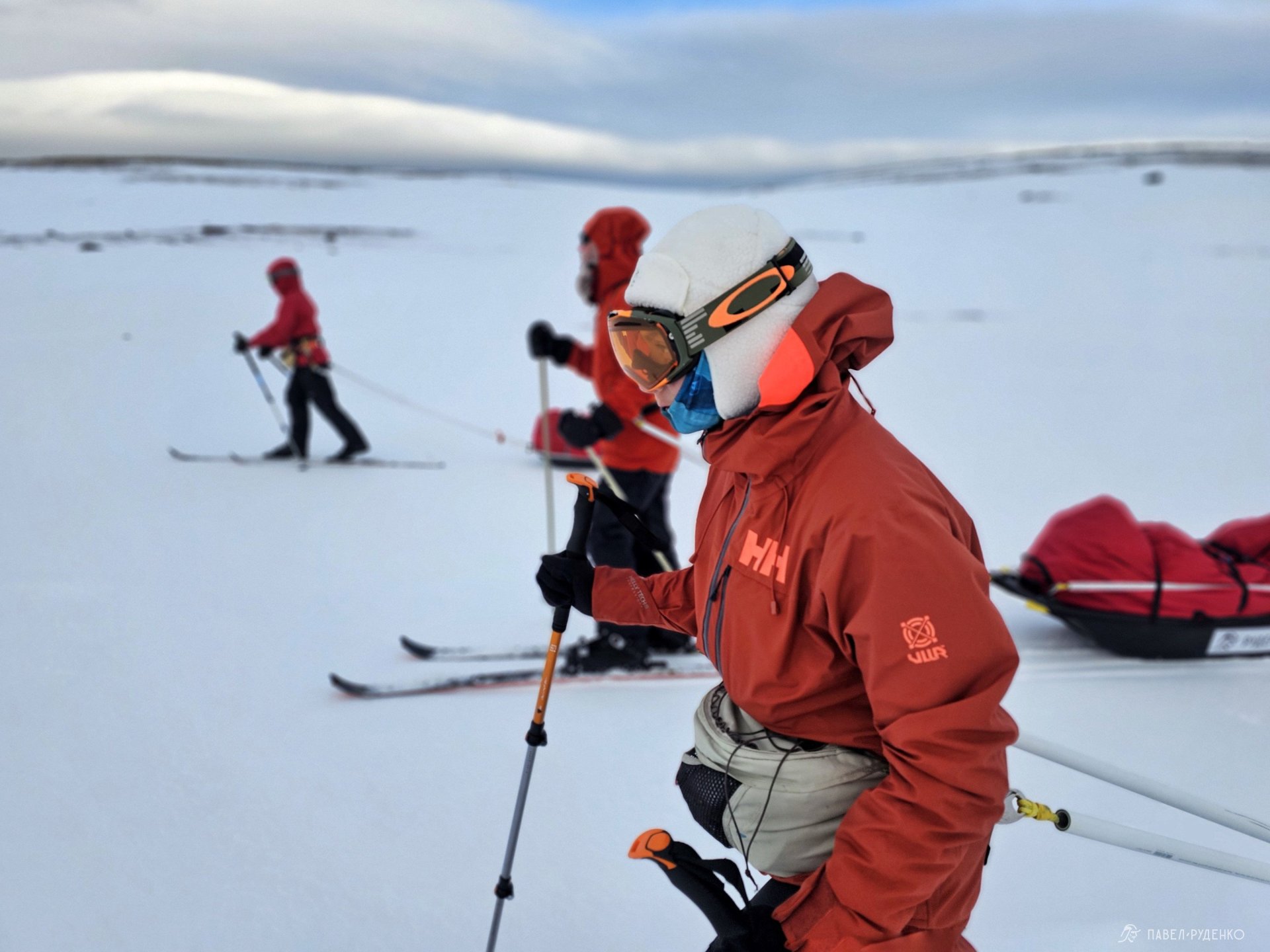
The first downhill — oh, those descents! Some are still dialing in their technique, while others pick up downhill skiing right away with total confidence. The pulka either nudges you gently forward or tracks alongside. Once you master the skill, you start experiencing an incredible feeling of flight.I am constantly refining the pulka setup. This time, I realized I need to stitch leg loops onto the harness for added stability, lock down the pulka towbar crossover, and add bungee shock-absorbers for a smoother glide, along with a few other details. For the next expedition, I’ll also provide a flexible rope-and-swivel harness for each pulka so everyone can try both systems and choose what fits best. I tested the Fjellpulken Expedition harness myself this year — pure quality!
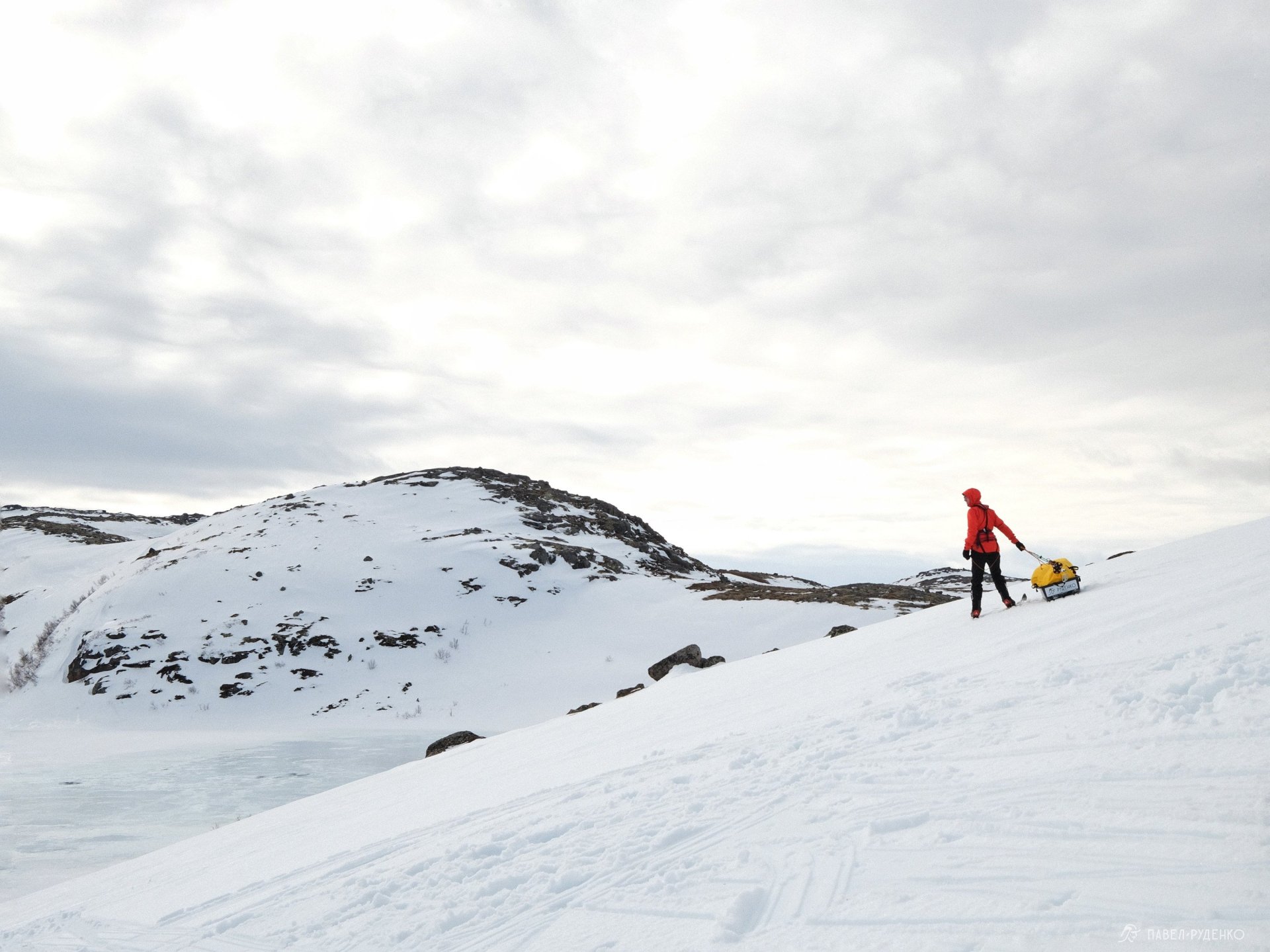
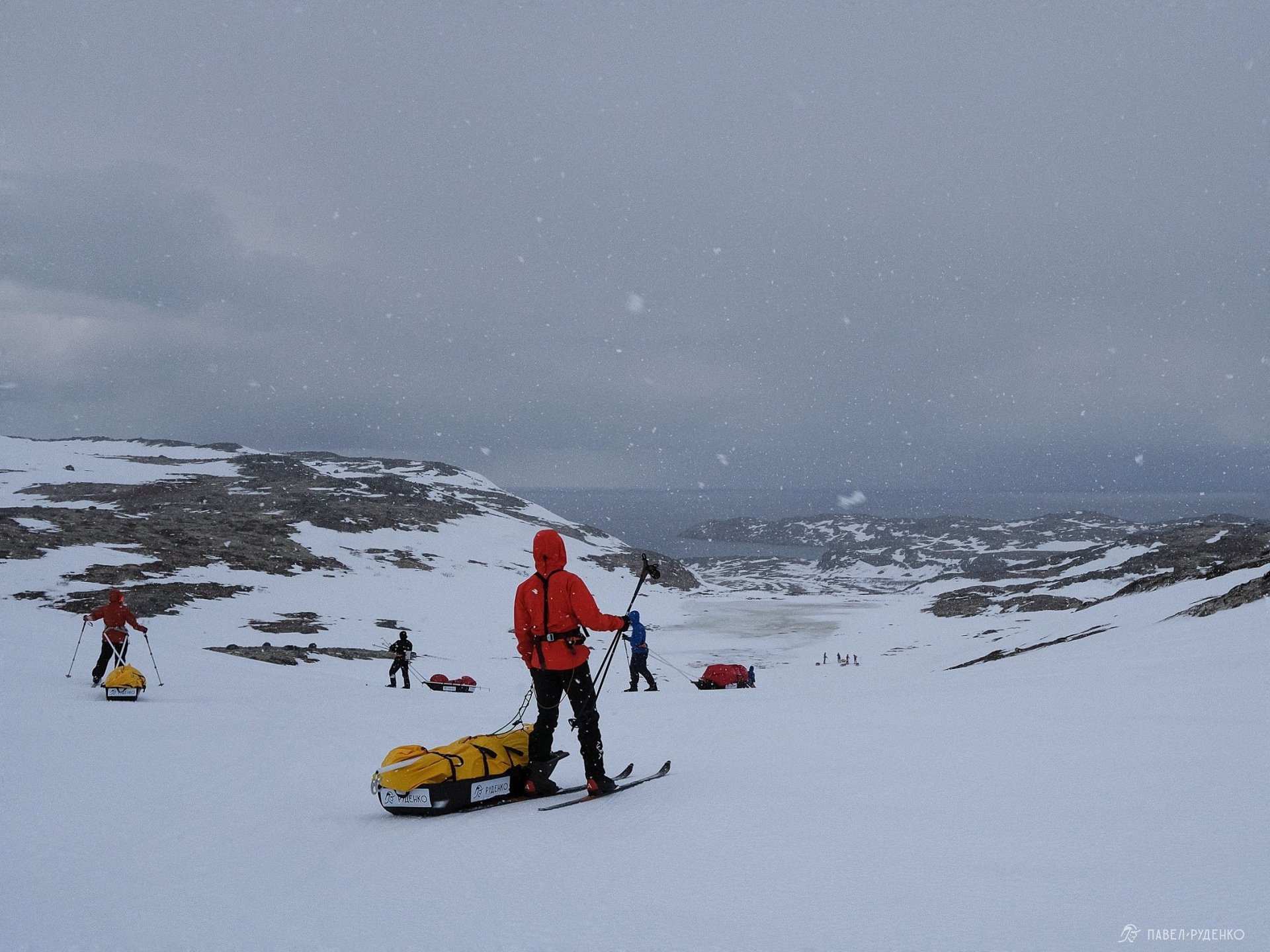
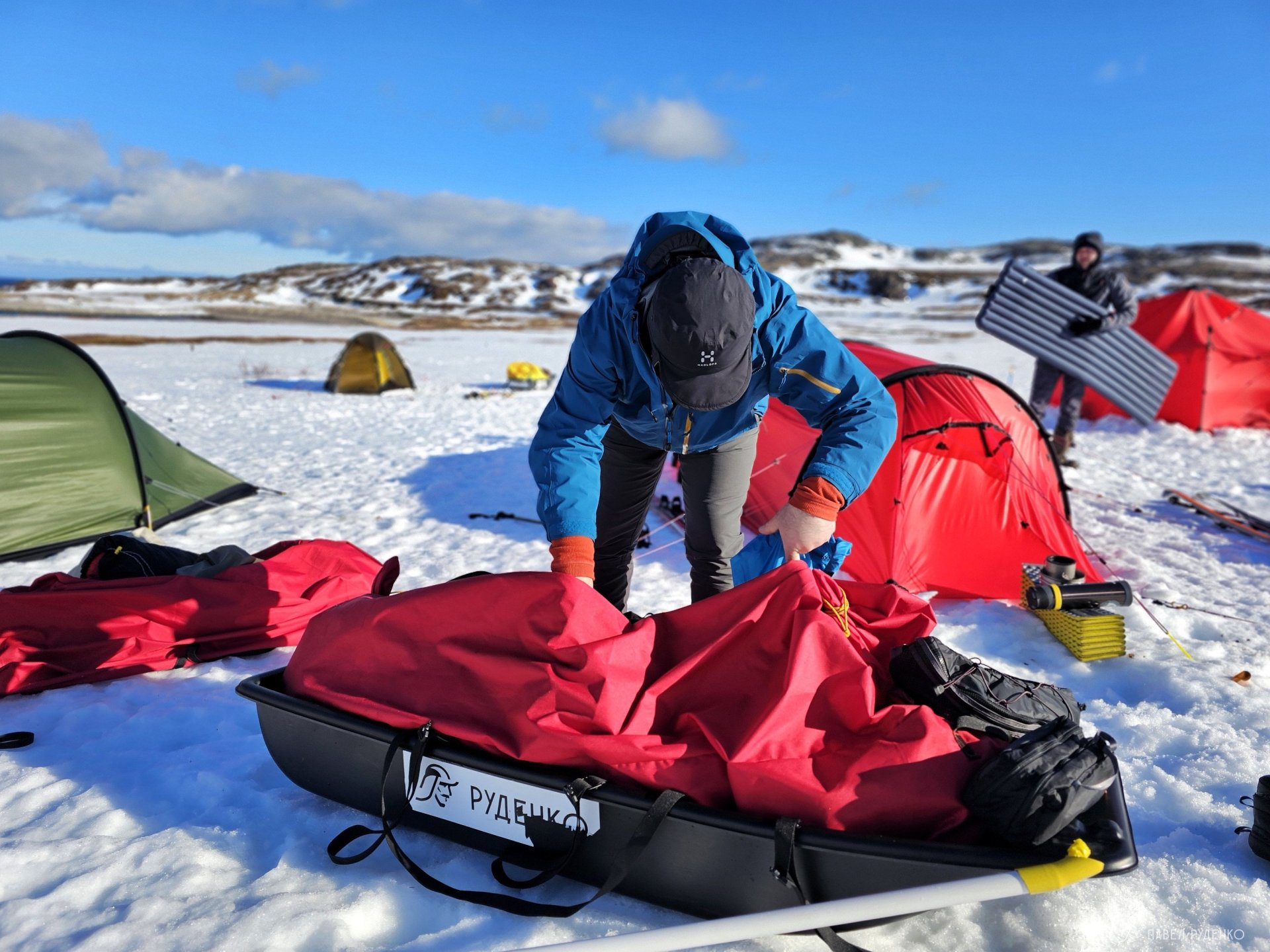
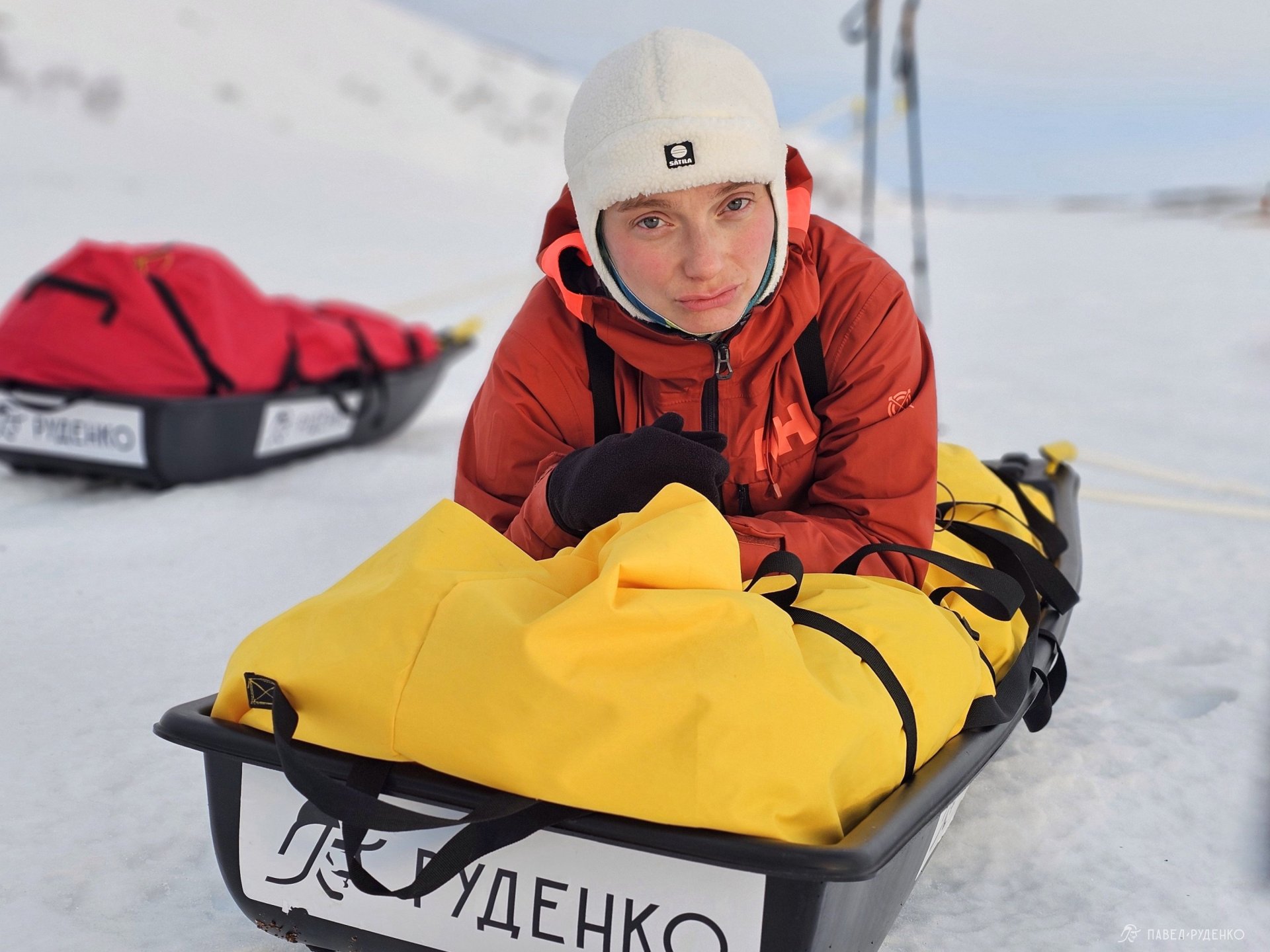
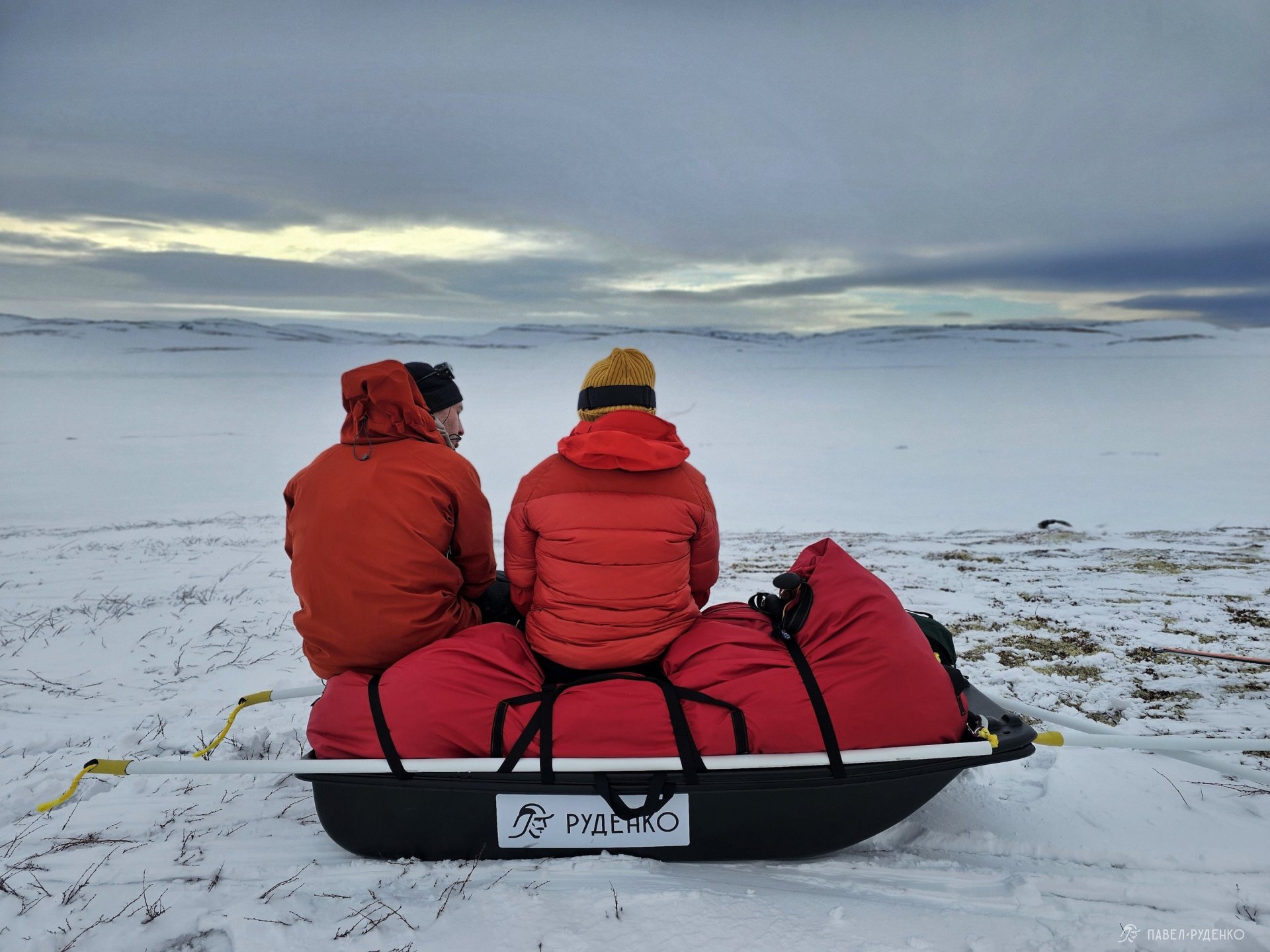
I designed the pulka bags myself, and Anya stitched them — she is skilled at tailoring and crafts silicone bags, duffels, and more. I knew who to marry — a trekker’s clever master plan, just like Bo Hilleberg, founder of the tent brand, whose wife sewed the very first tent prototypes in the 1970s)).I plan to run most future expeditions with arctic pulkas.I love that your back and legs don't get worn out the way they do under a heavy pack. The bag has a volume of about 300 liters, which means packing is lightning-fast and effortless. The load feels significantly lighter on snow, so you can bring extra warm layers and creature comforts. Next time, I’m bringing the reindeer hide that hangs on my wall in summer. Sitting on it at camp will be wonderfully warm and soft.
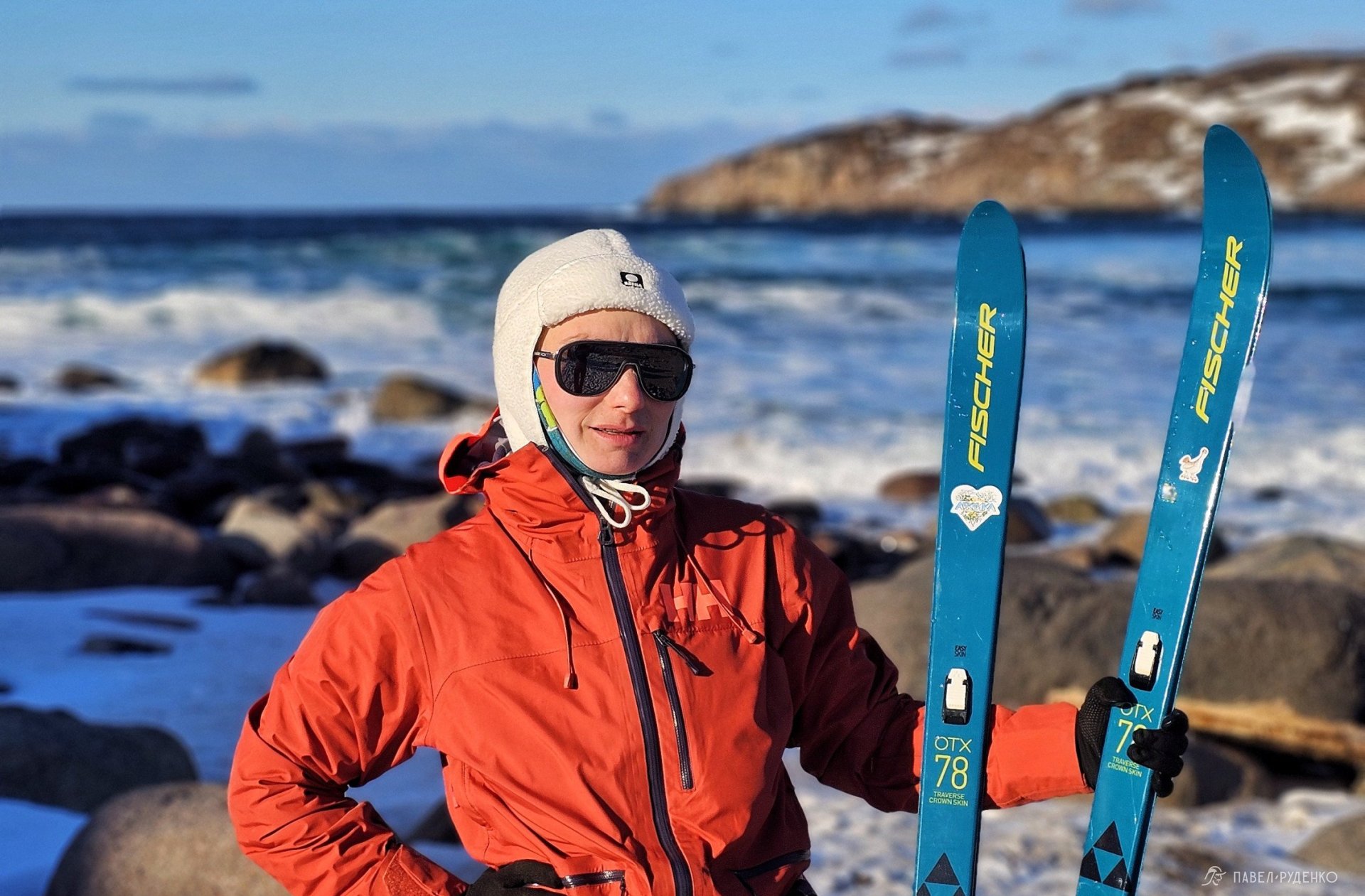
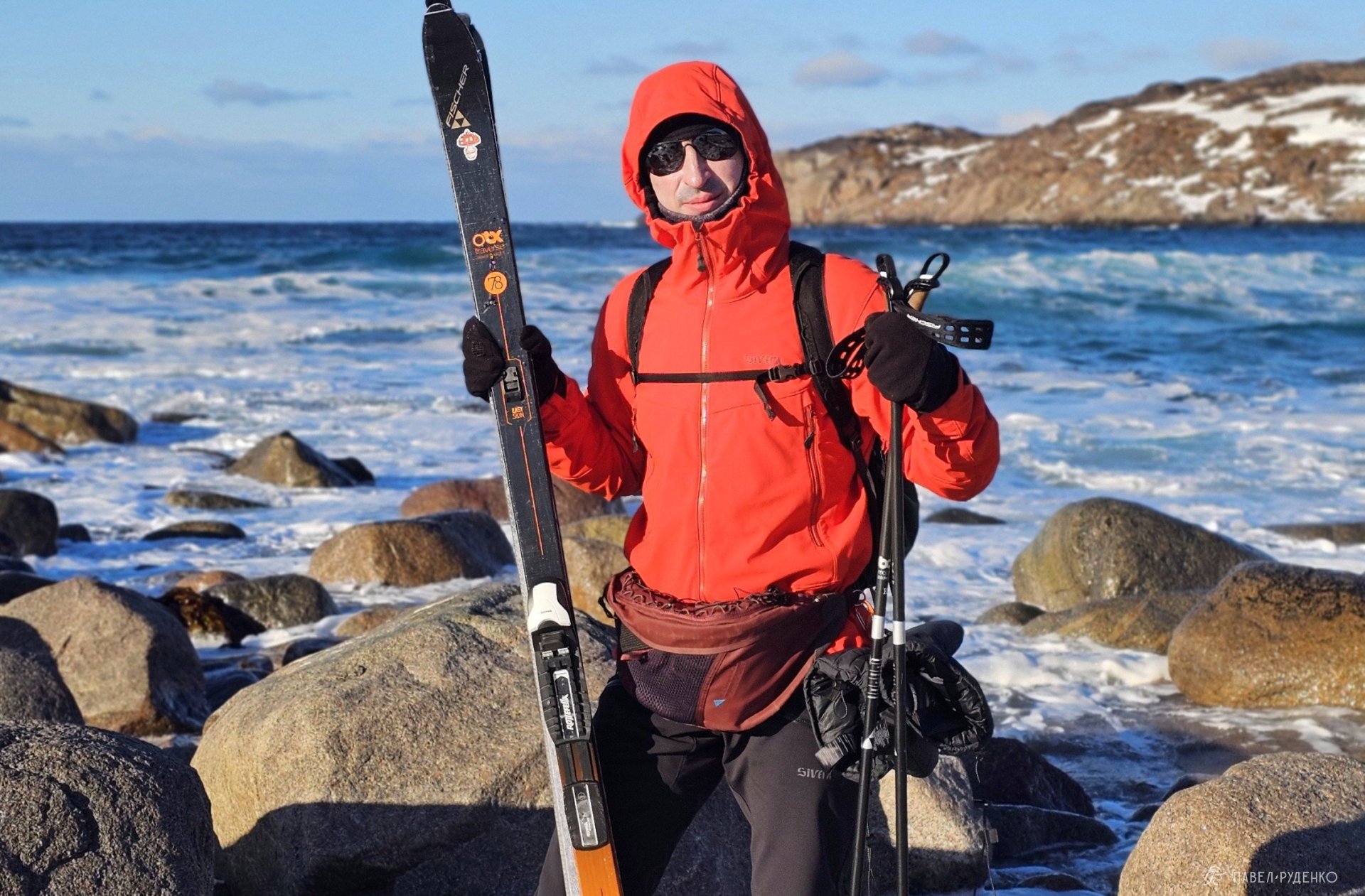
Climbing uphill on climbing skins. This is a special plush glued to the base of the ski to increase friction and ascend without slipping backwards. I make sure the entire team uses skins so our pace stays uniform.
Depending on the conditions, we switch between full-length and kicker skins when possible, or sometimes just rely on fishscales. I love tailoring everything to the conditions, putting in minimal physical effort for maximum efficiency. That's why I never hesitate to put skins on or take them off throughout the trek. The sweet spot: skin width 45–60 mm, no more. A 65/35 synthetic/mohair mix provides the best glide.
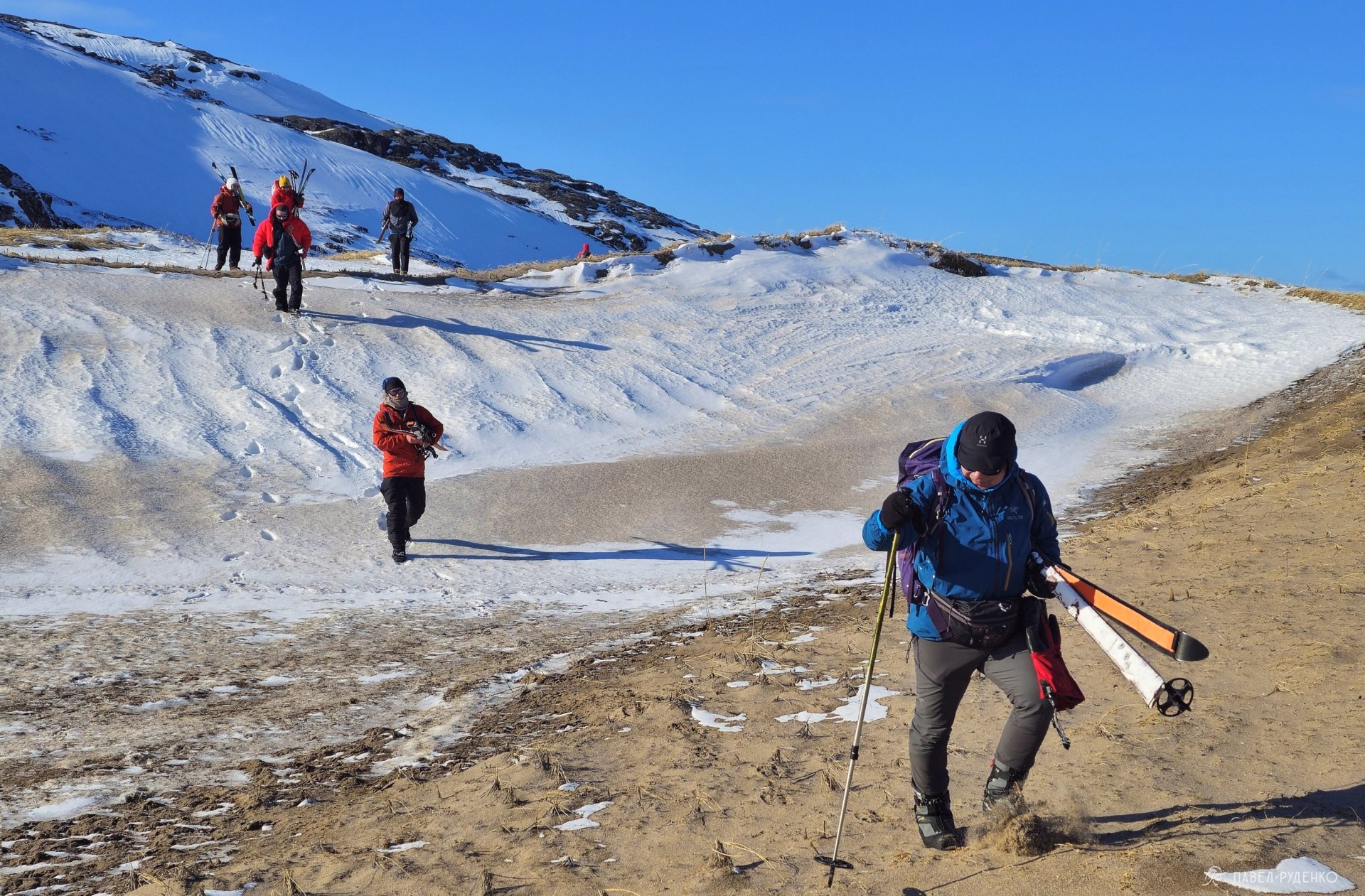
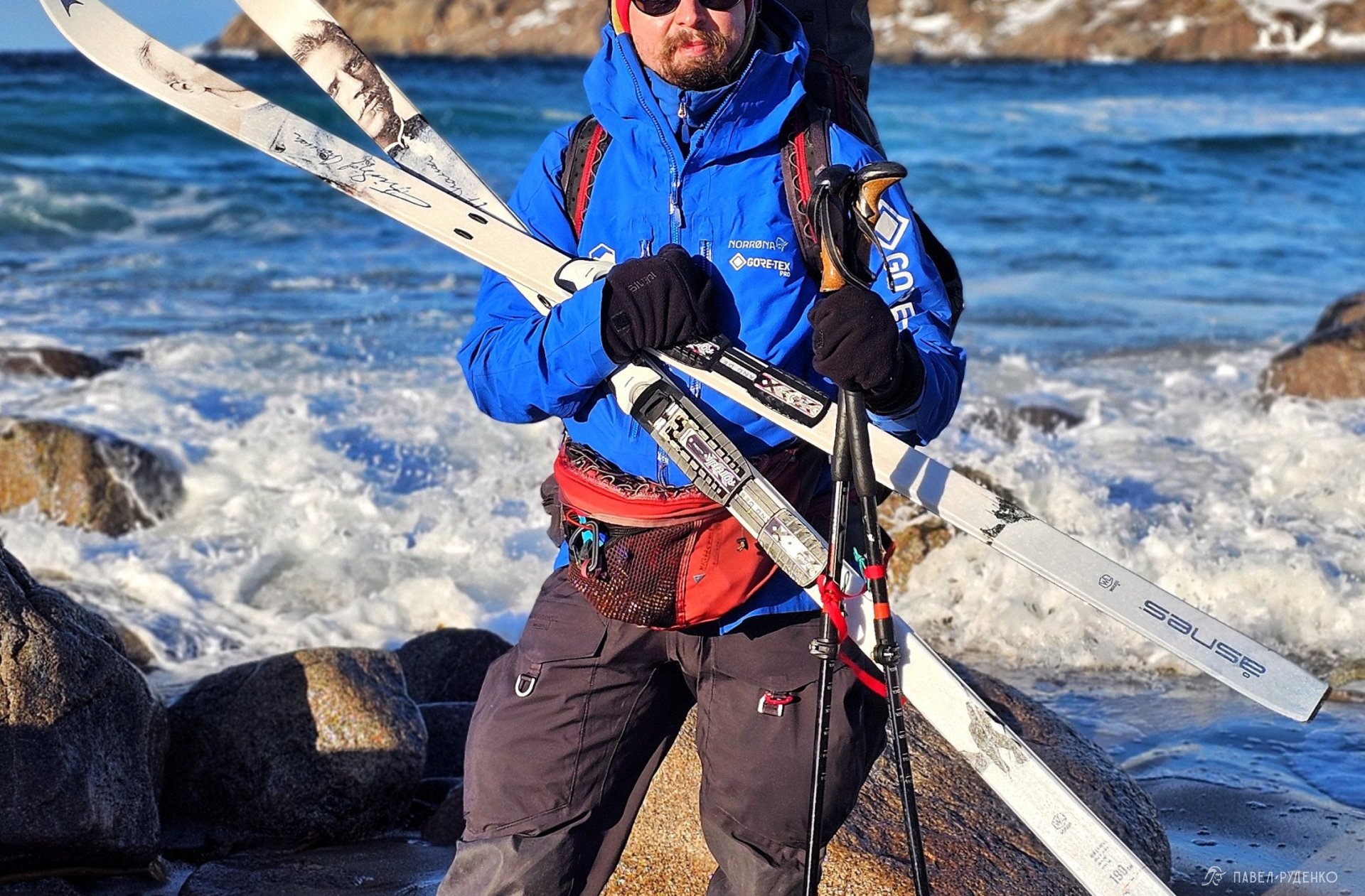
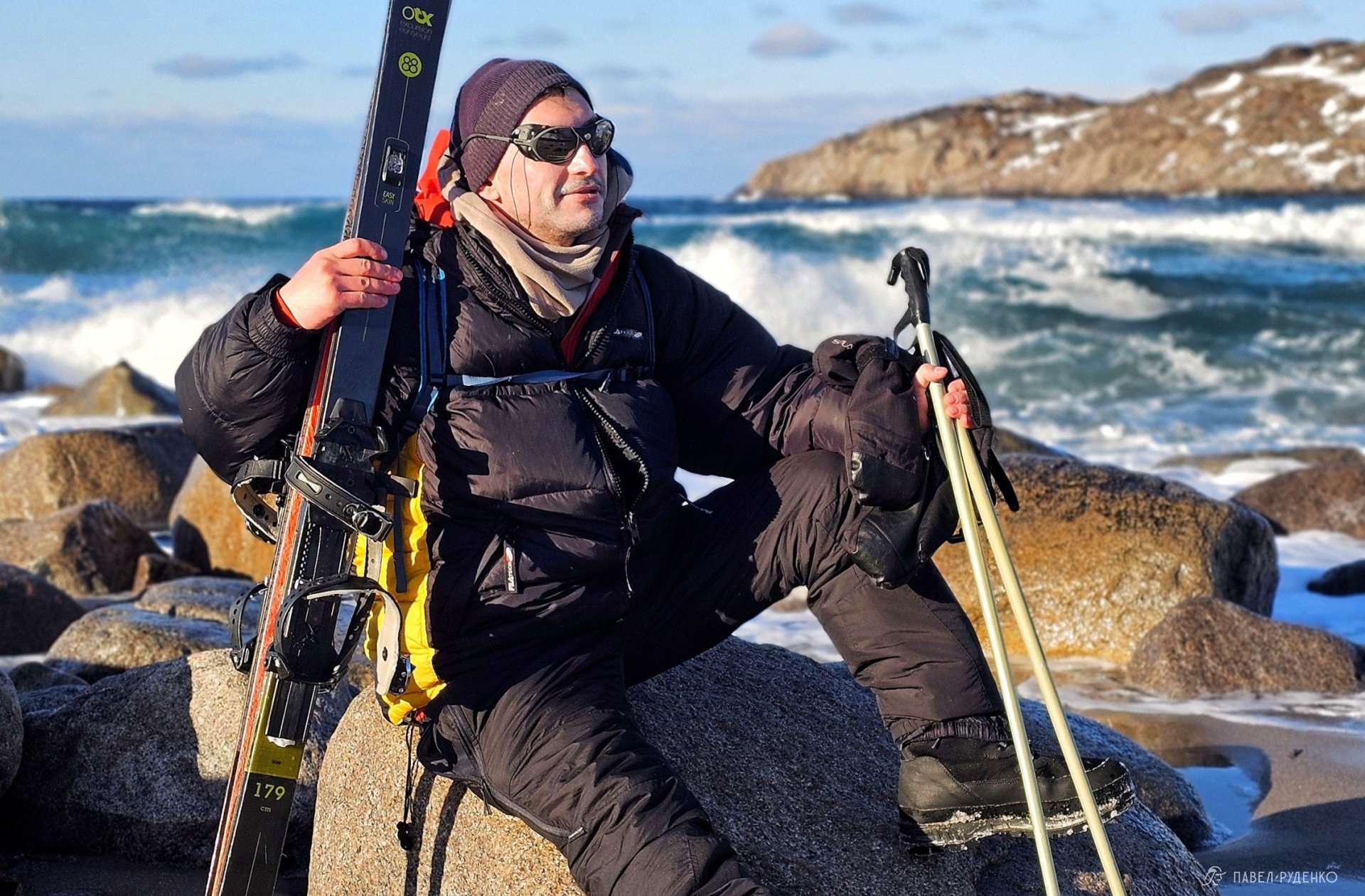
The feeling of gliding is the best part of a ski trek. Descending some fells made us feel like alpine skiers, and even though backcountry touring skis lack rigid alpine bindings, our touring boots and NNN BC bindings deliver great downhill control.
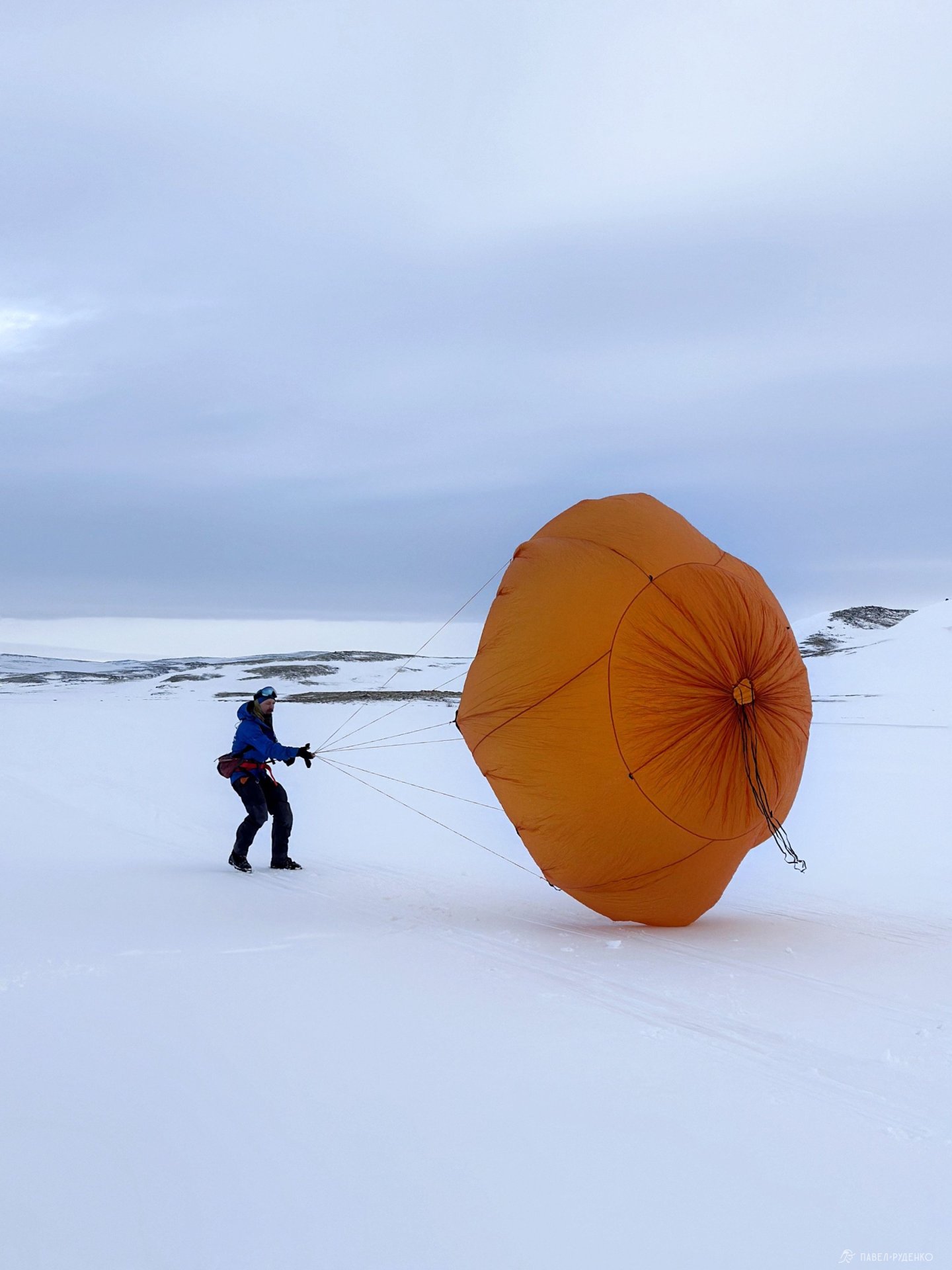
This winter I took a North Pole ski guide training course, where a fellow guide told amazing stories about using traction kites in ski touring, and I immediately jumped on the idea. I ordered a VEK hybrid traction parachute and brought it along on this trek; it weighs just 1 kg. With a tailwind of 5 m/s and above, it helps cover distances with much less effort, though I didn't get a chance to test the full setup this time. It's a promising concept, and I'll definitely experiment with it on future tundra pulka expeditions.
On the shores of the Barents Sea
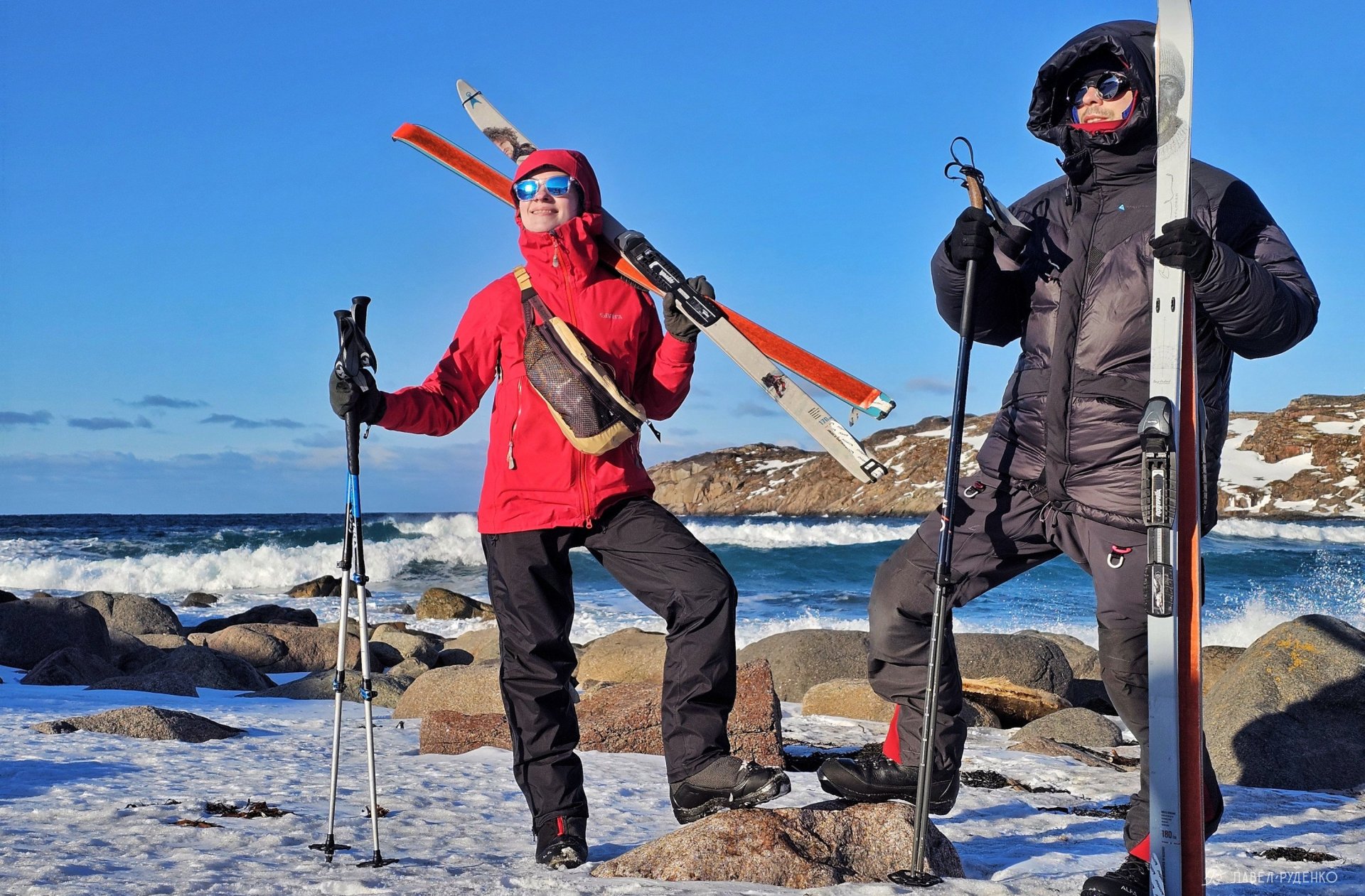
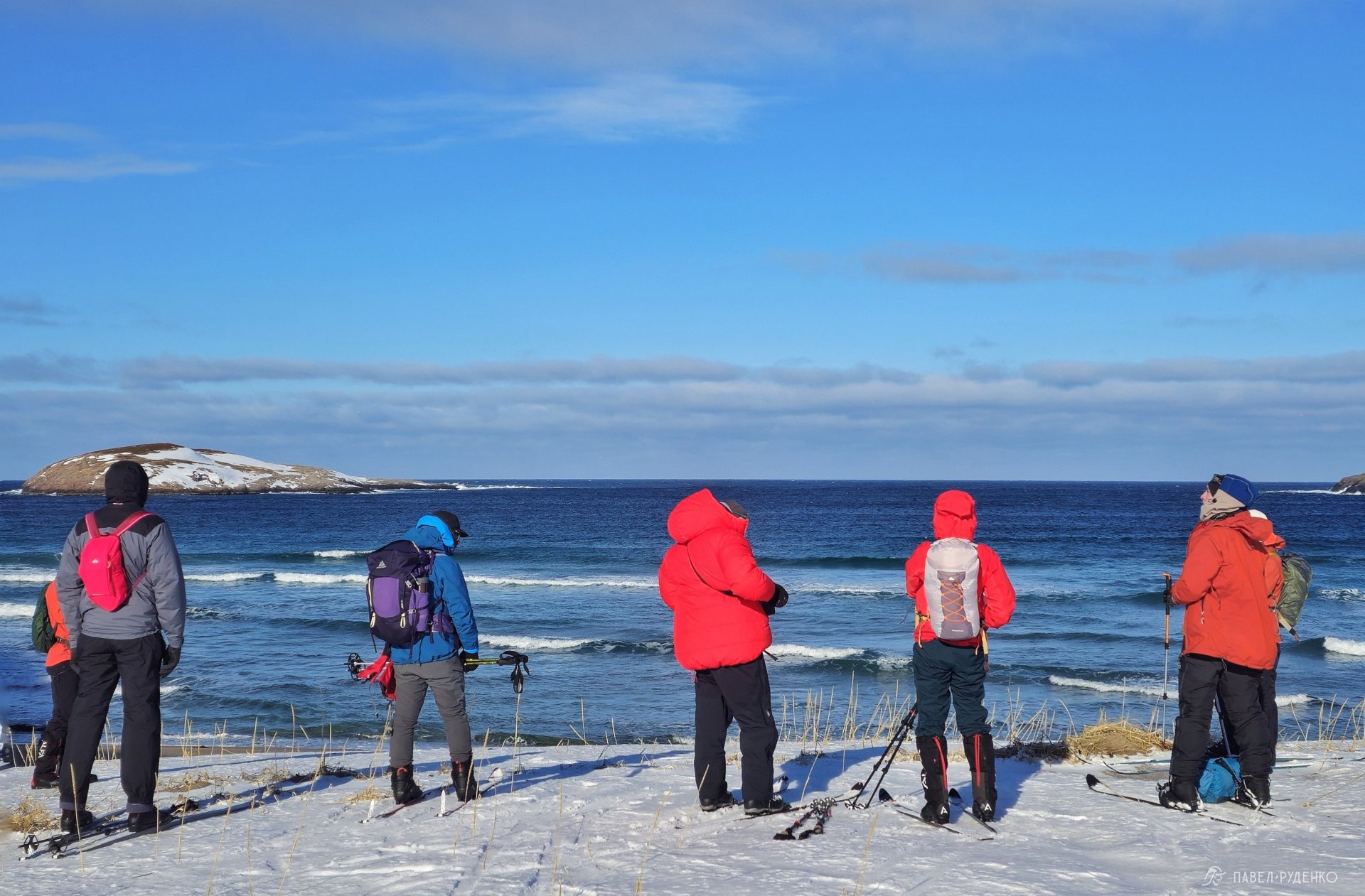
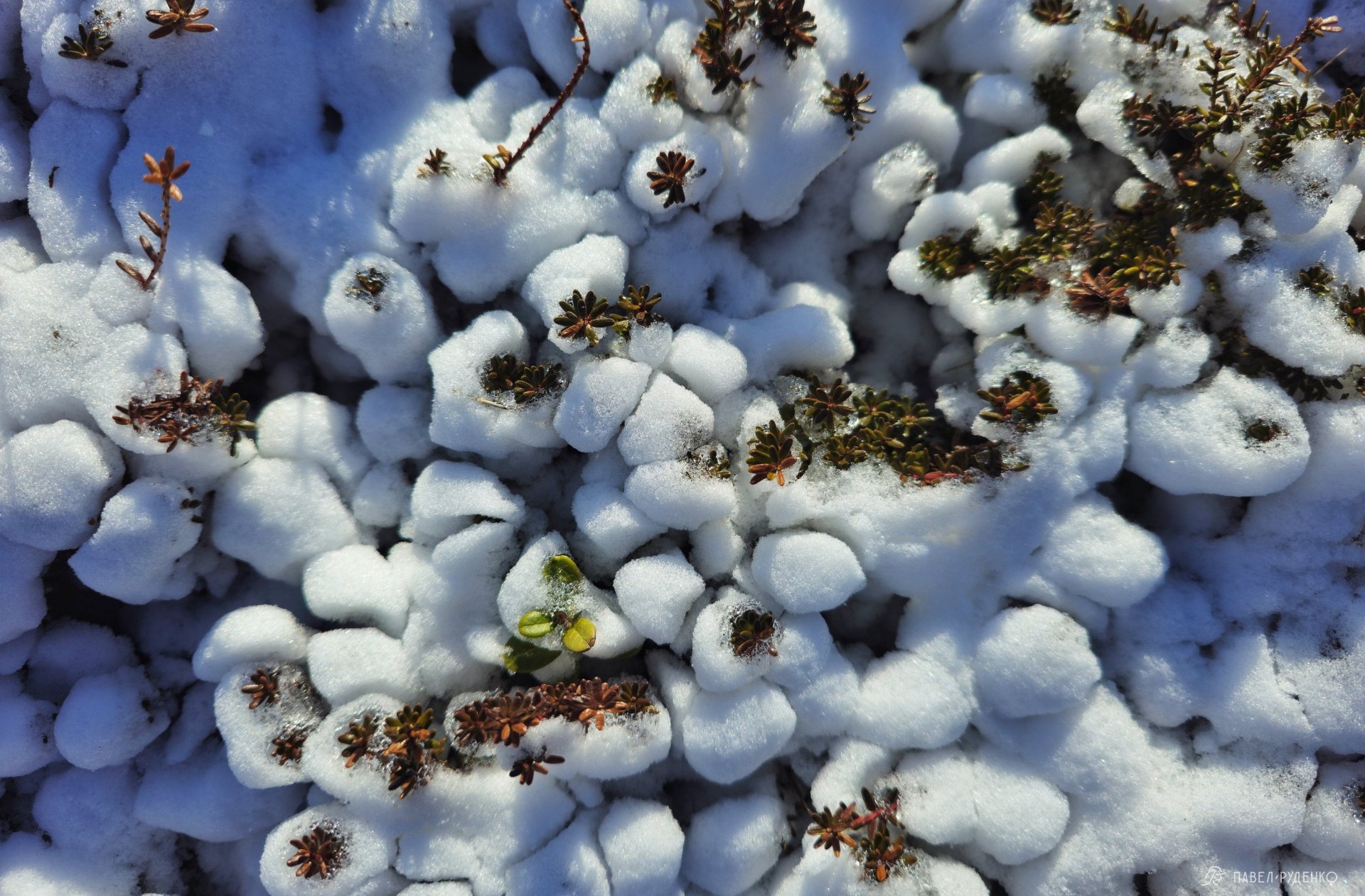
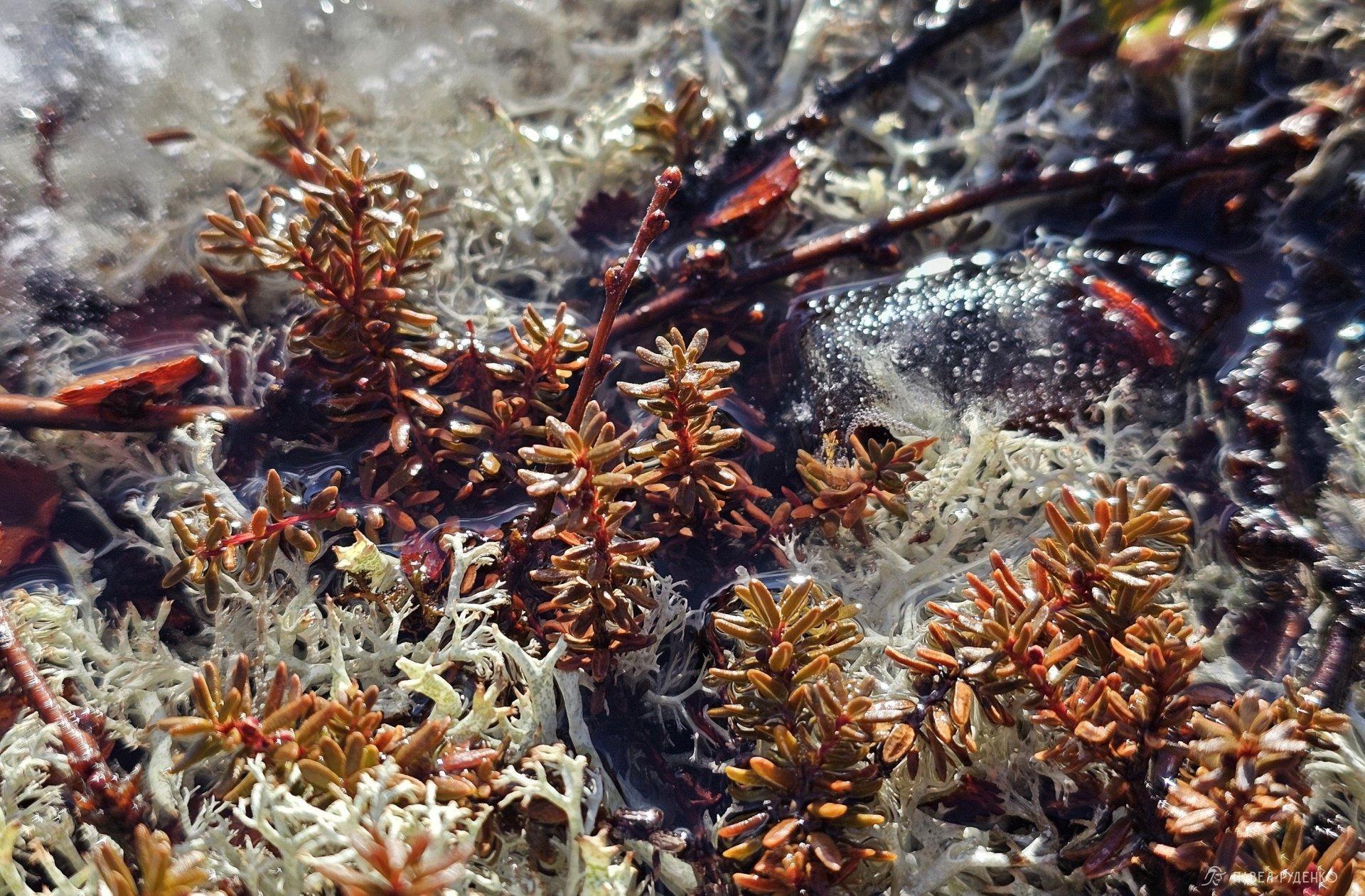
Beyond one of the rises, the Barents Sea came into view — deep blue, vibrant, and mesmerizing. Just a little further, and on a side trip we'll take off our skis to walk along the sandy shore at low tide. It's pure magic: dressed like polar explorers in ski boots, stepping onto green moss, lingering berries from last autumn, sand, and seaweed. An instant transition from winter to summer. The deep-blue waters contrast with the snow-white fells like a drop of ink on clean paper.
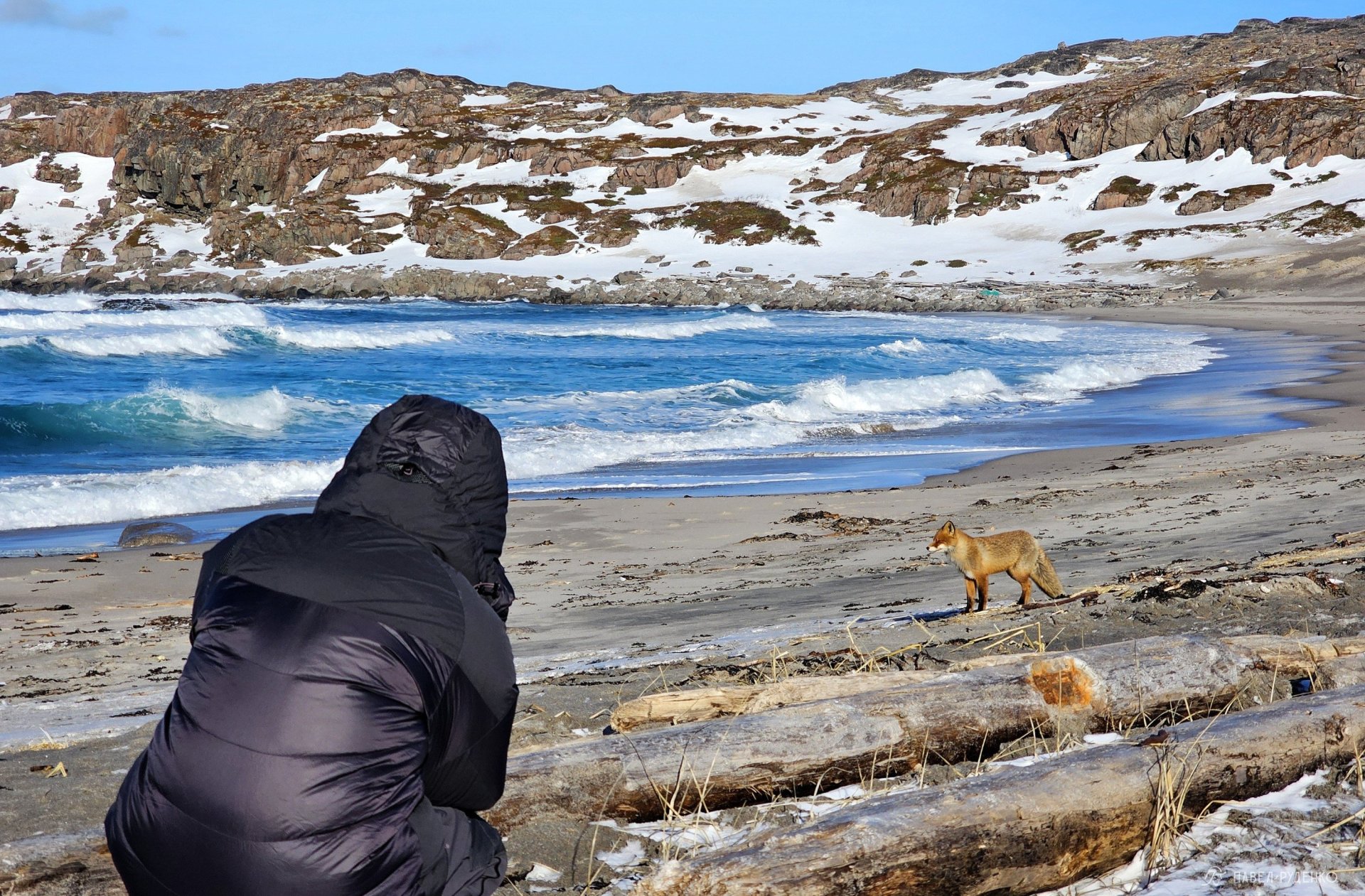
Standing at the edge of the continent. Overhead soars a white-tailed eagle, an endangered species. Nearby sits a fox, its thick fur rippling in the wind; it yawns, reflecting the slow, timeless rhythm of the North. The sea is mesmerizing; I love all of this. The crew is thrilled.
Tents: reliable protection in the tundra
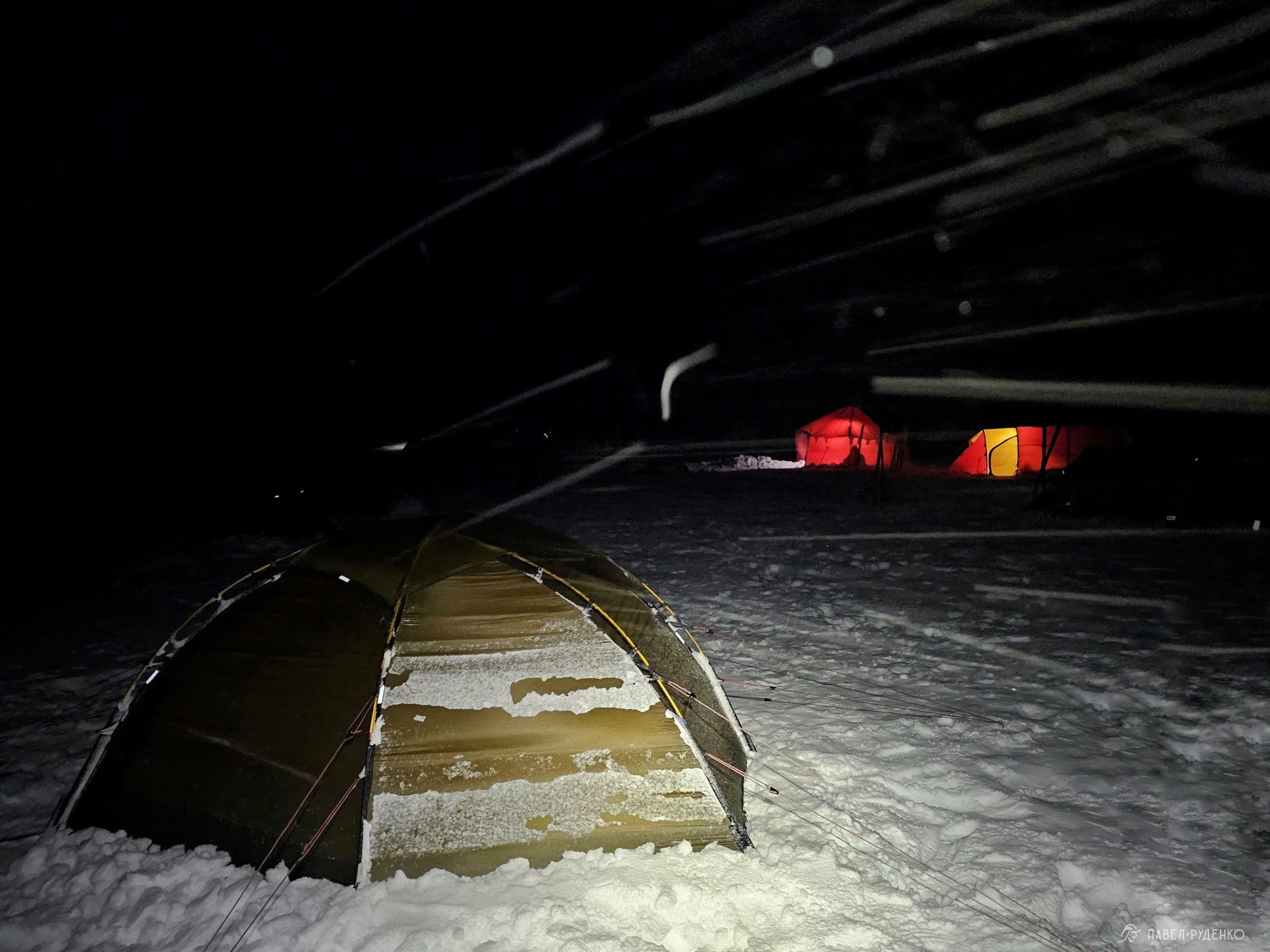
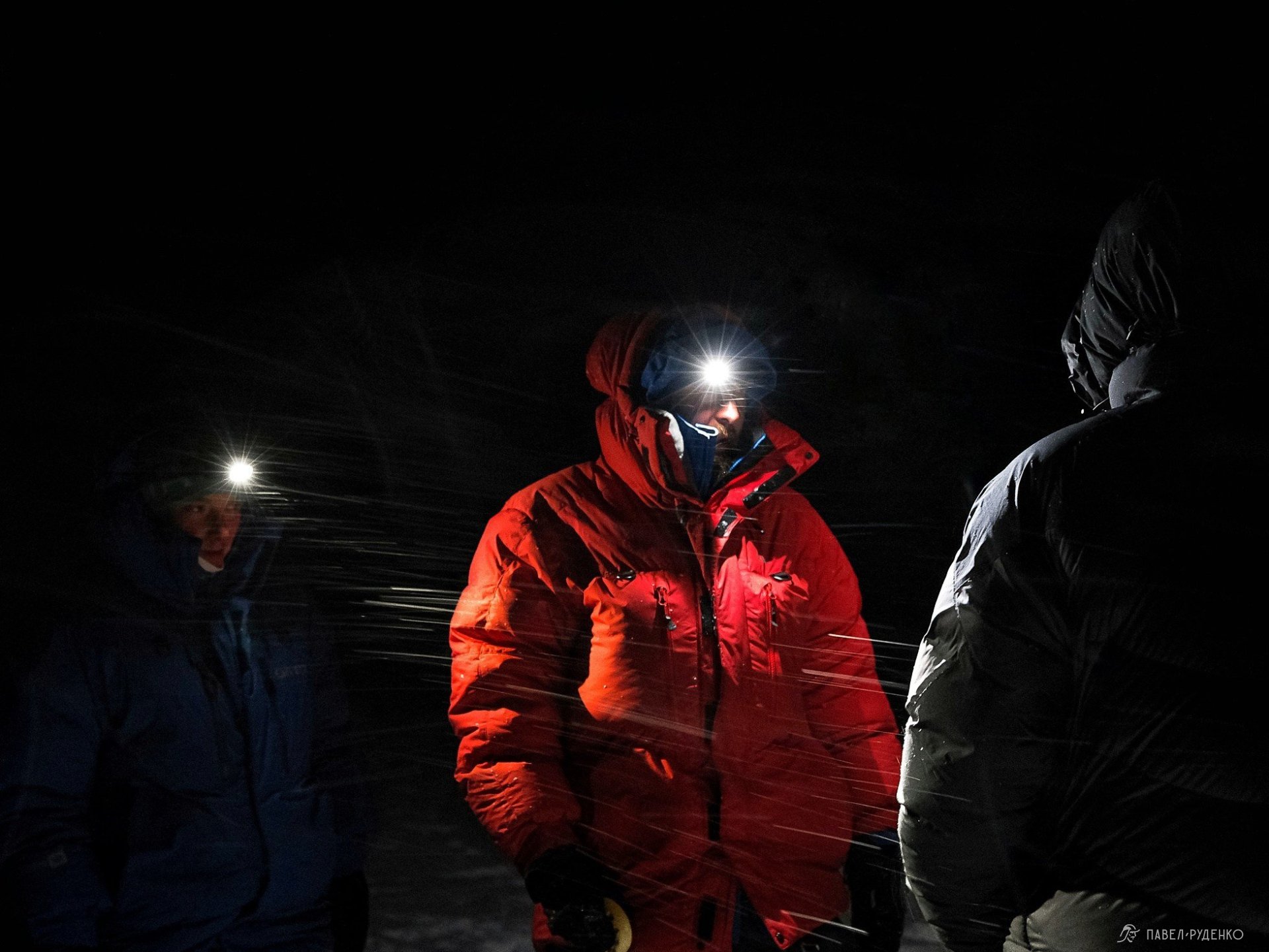
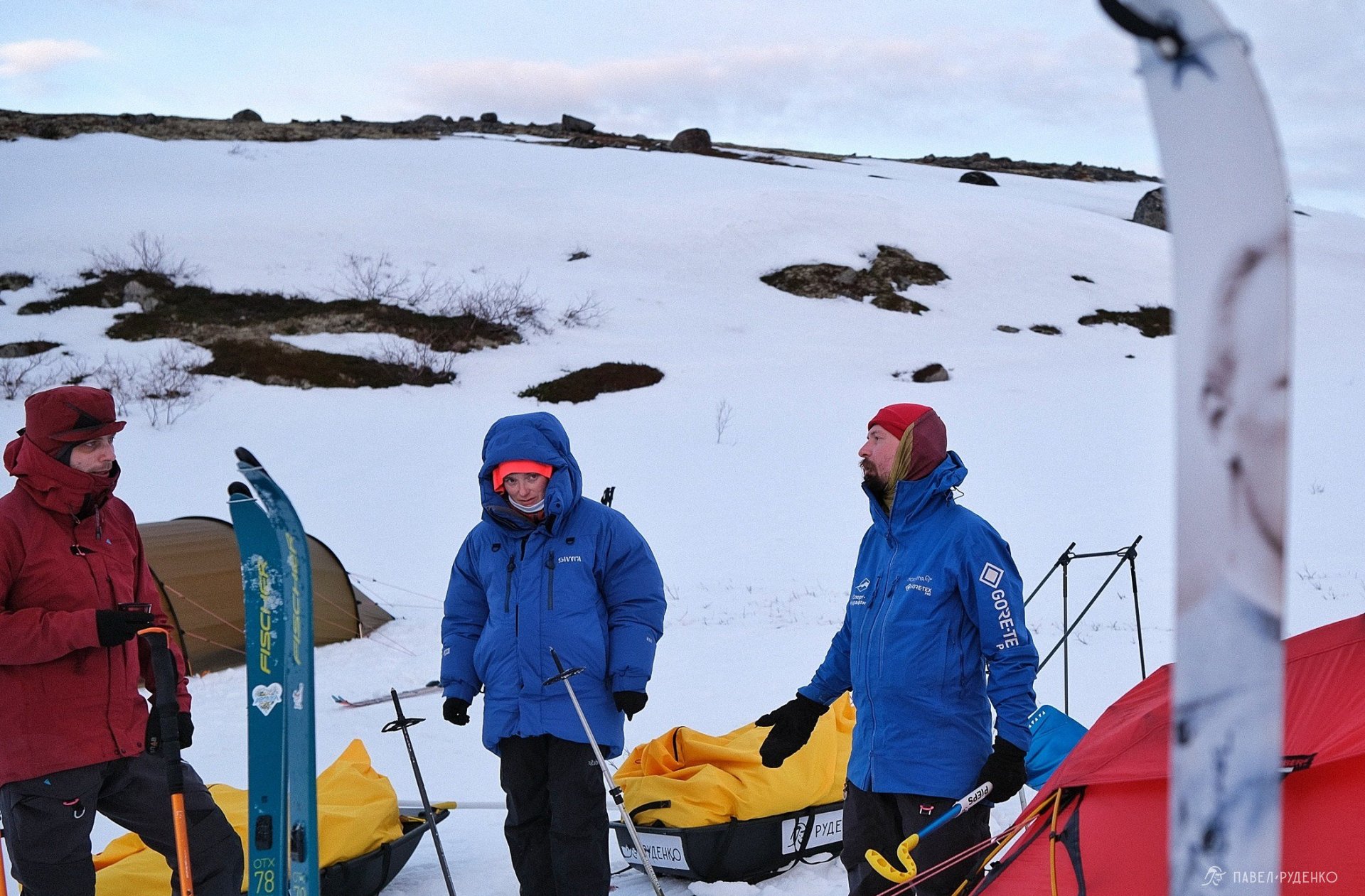
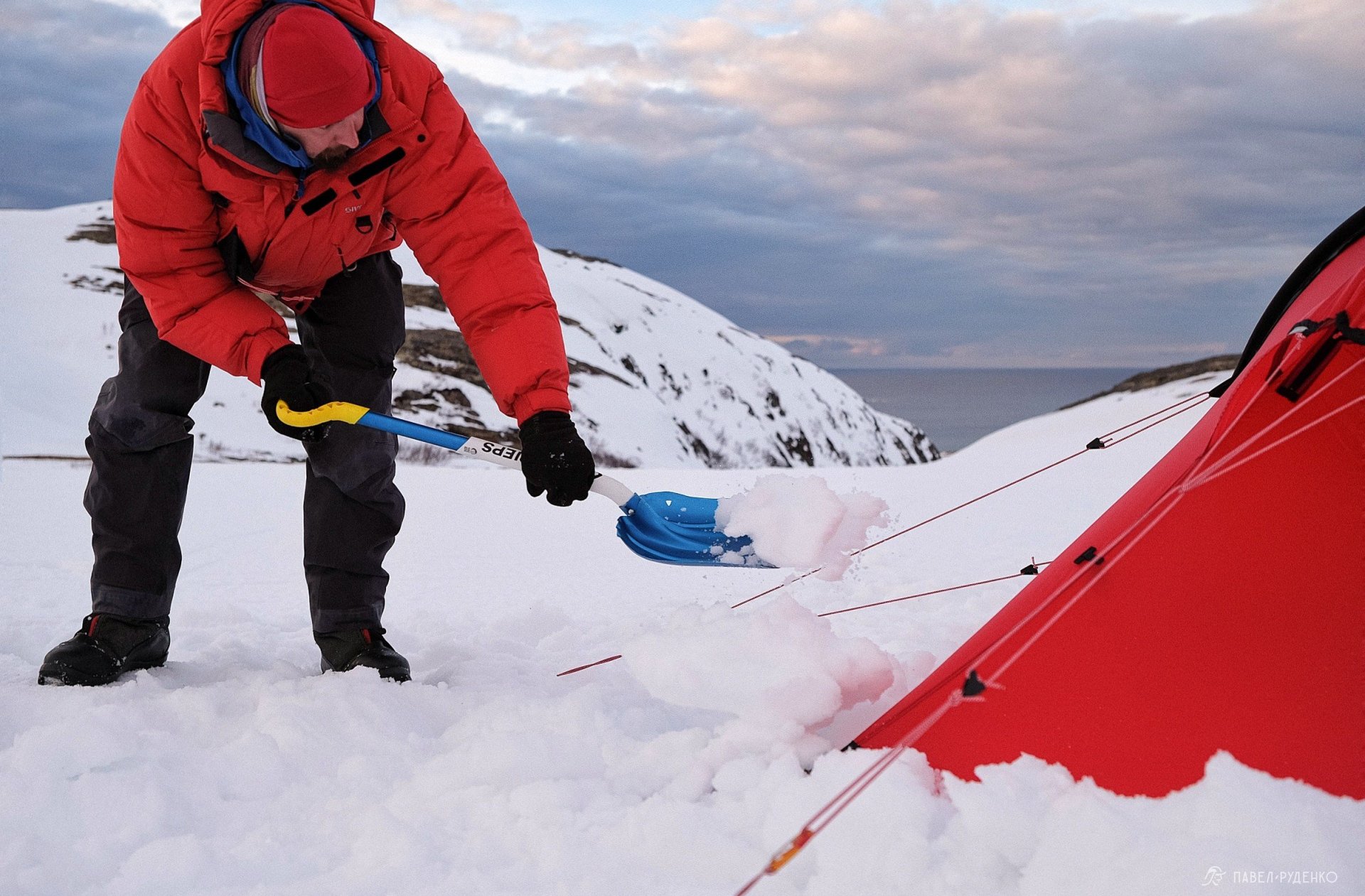
The Arctic is unpredictable, and winds can pick up to 25 m/s. That sheer power can knock you off your feet and forces you to shout just to be heard. Every evening I solve the puzzle of picking a campsite. Relying on daily satellite forecasts and visualizing wind currents, I search for a spot that is both scenic and sheltered by fells, on flat ground. Years spent in the tundra have given me a keen instinct for the weather, often allowing me to time oncoming storms to the minute.
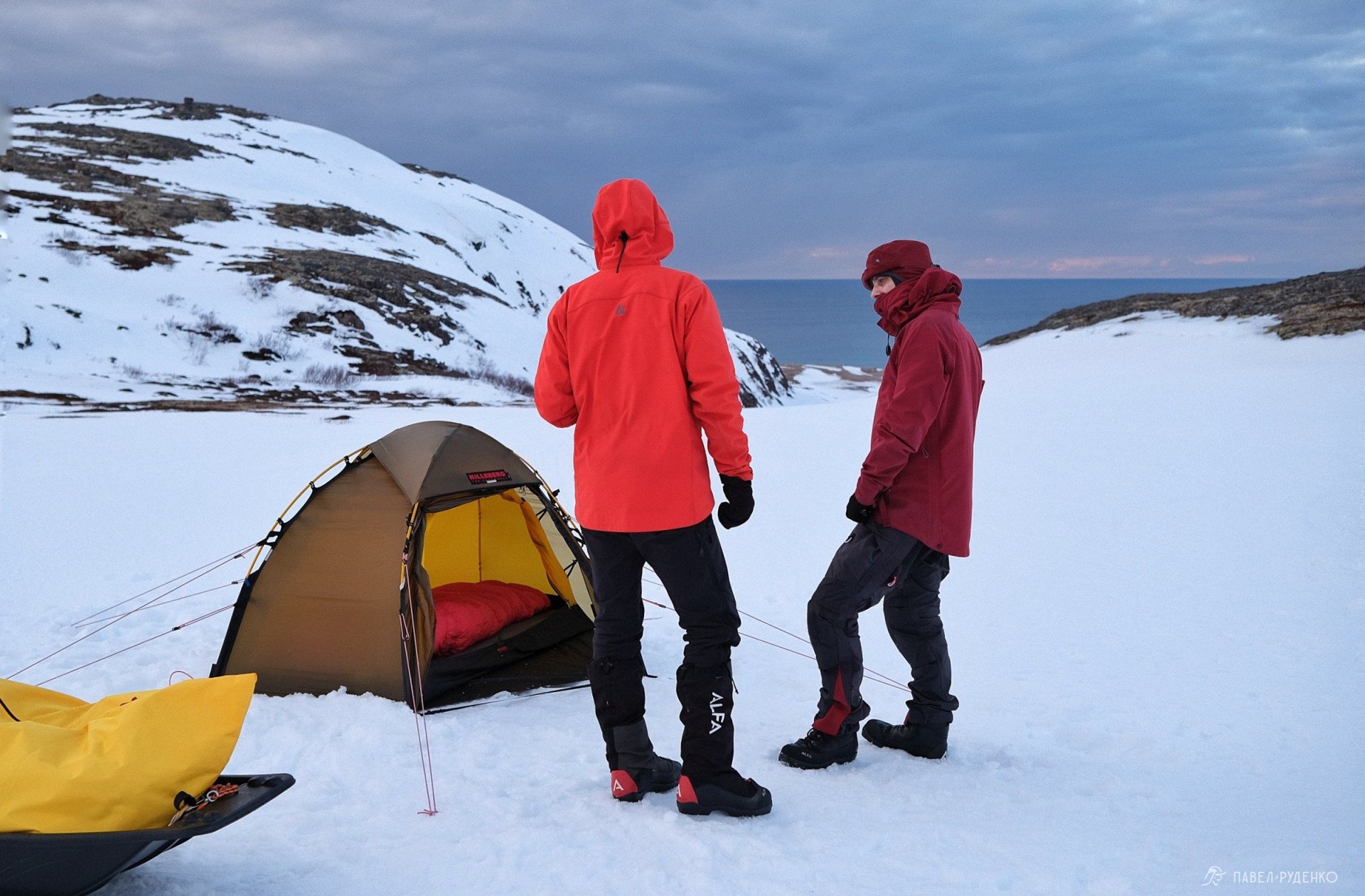
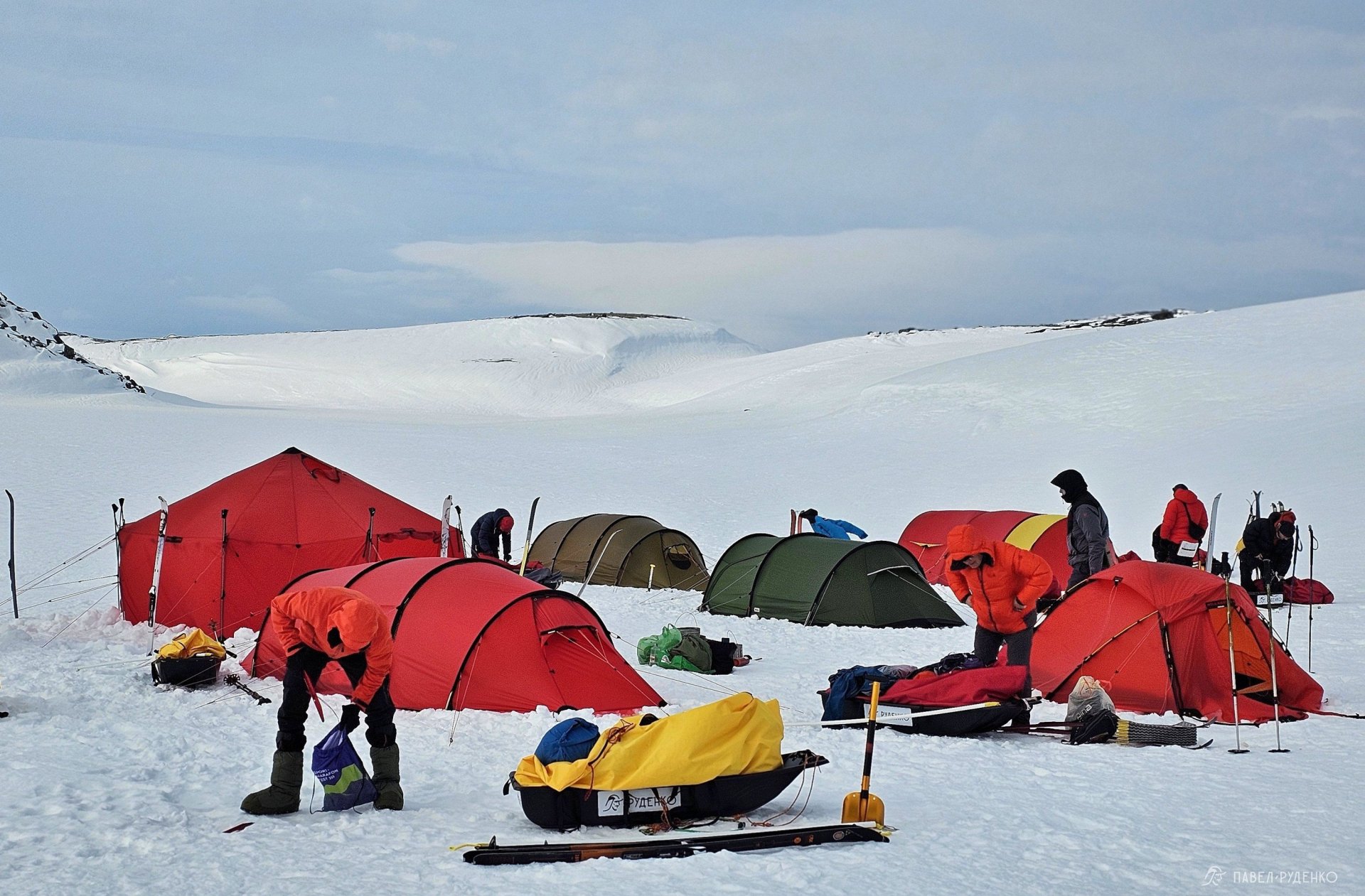
I give the call: "Pitch the tents facing the NE wind! Stake out every single guyline!"
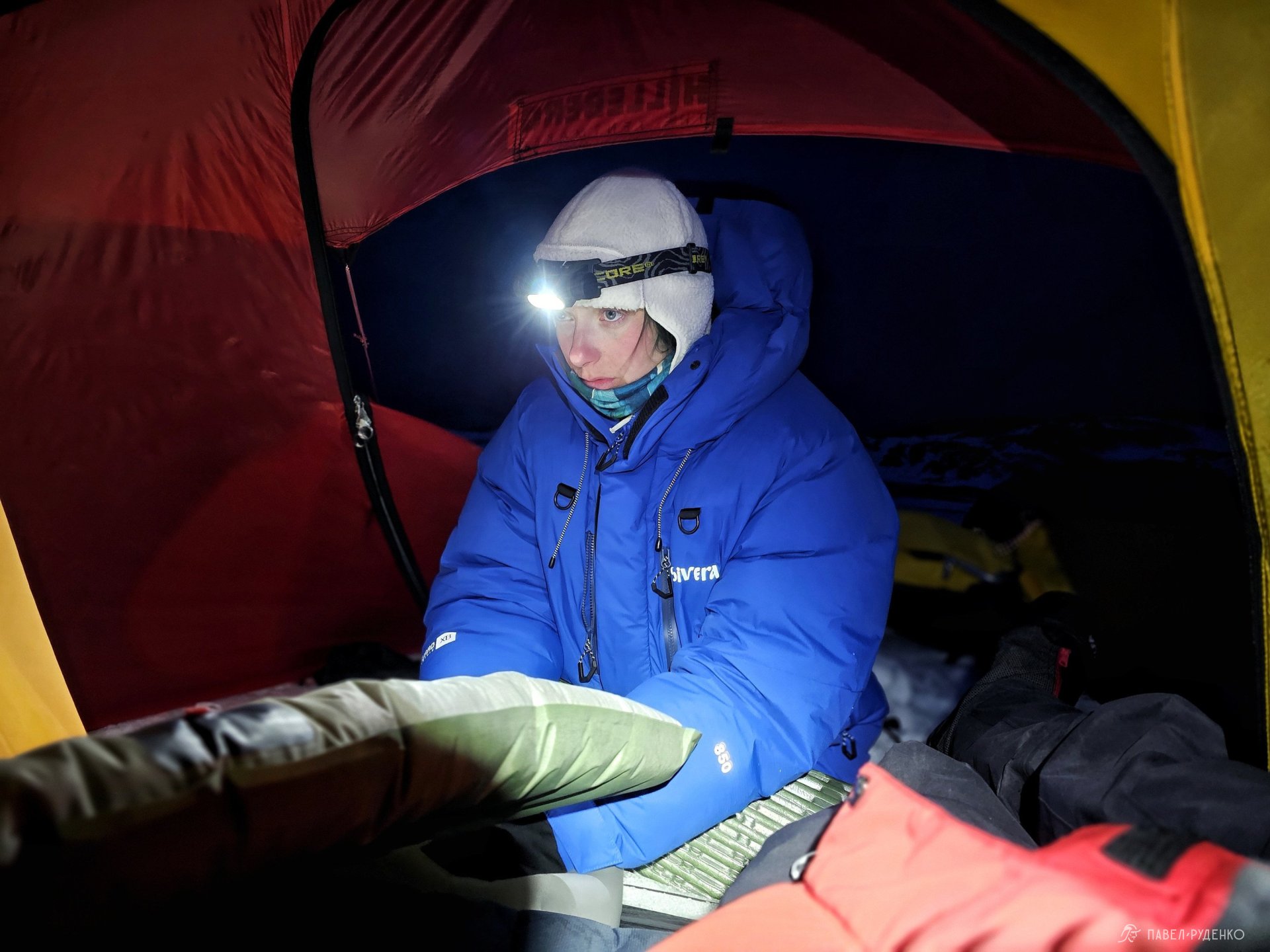
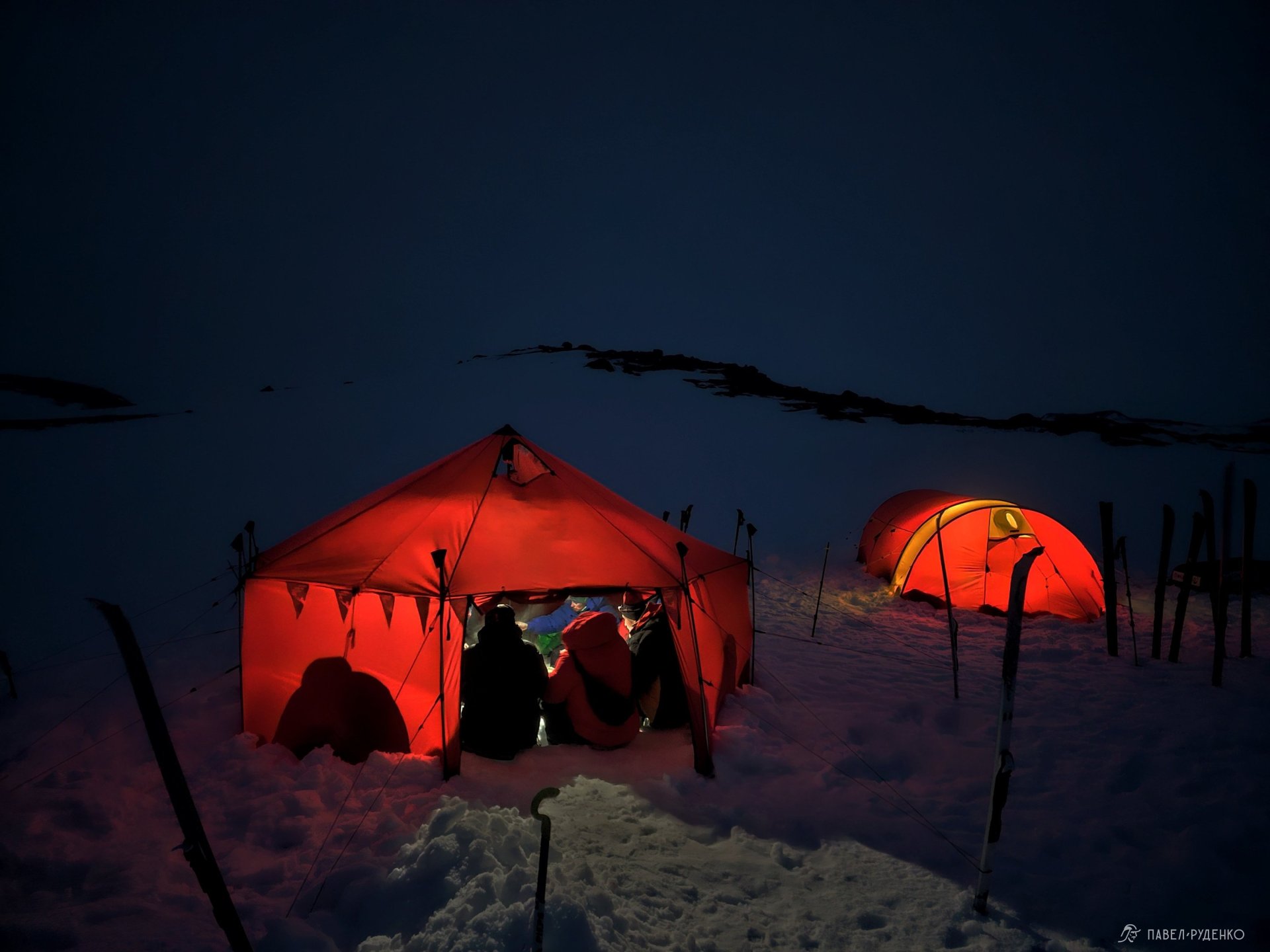
We have dinner in a Hilleberg Altai group tent, which we fondly call our vezha, after traditional Sámi dwellings. Inside, there's no wind, we're warm in our down jackets, and the stoves radiate comforting heat. I recently discovered a heat reflector for white gas stoves: it weighs just 100 g and delivers a noticeable boost of warmth. You live and learn — I've already ordered two more. Now our vezha feels cozier than ever. For dinner, we enjoy lentil soup with venison, sip sweet tea, and fill our thermoses for the night.
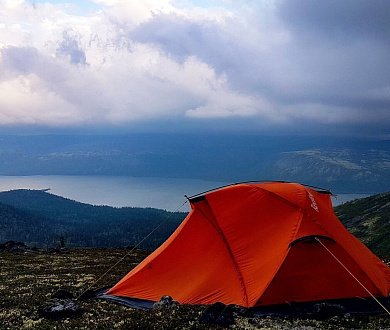
I provide expedition-grade tents built for polar journeys. My inventory includes the Hilleberg Kaitum 2 GT, Hilleberg Nallo 2, Helsport Spitsbergen 4 XTherm, and Fjällräven Keb 3 GT reinforced with double poles, with more on the way. Some participants bring their own shelters; on this trip, teammates used the Hilleberg Soulo, Hilleberg Kaitum 3 GT, and Hilleberg Jannu. It was great to compare different models in action.
At night, gusts buffet the flysheet, and in weather like this, sleep is exceptionally sound. I stepped out at 02:00 to check on the team and the tents: everything was rock-solid, so I could turn in with peace of mind. Listening to the roaring storm, I thought:
"This is why we journey north — to feel this raw power and meet it face to face."
Taking a rest
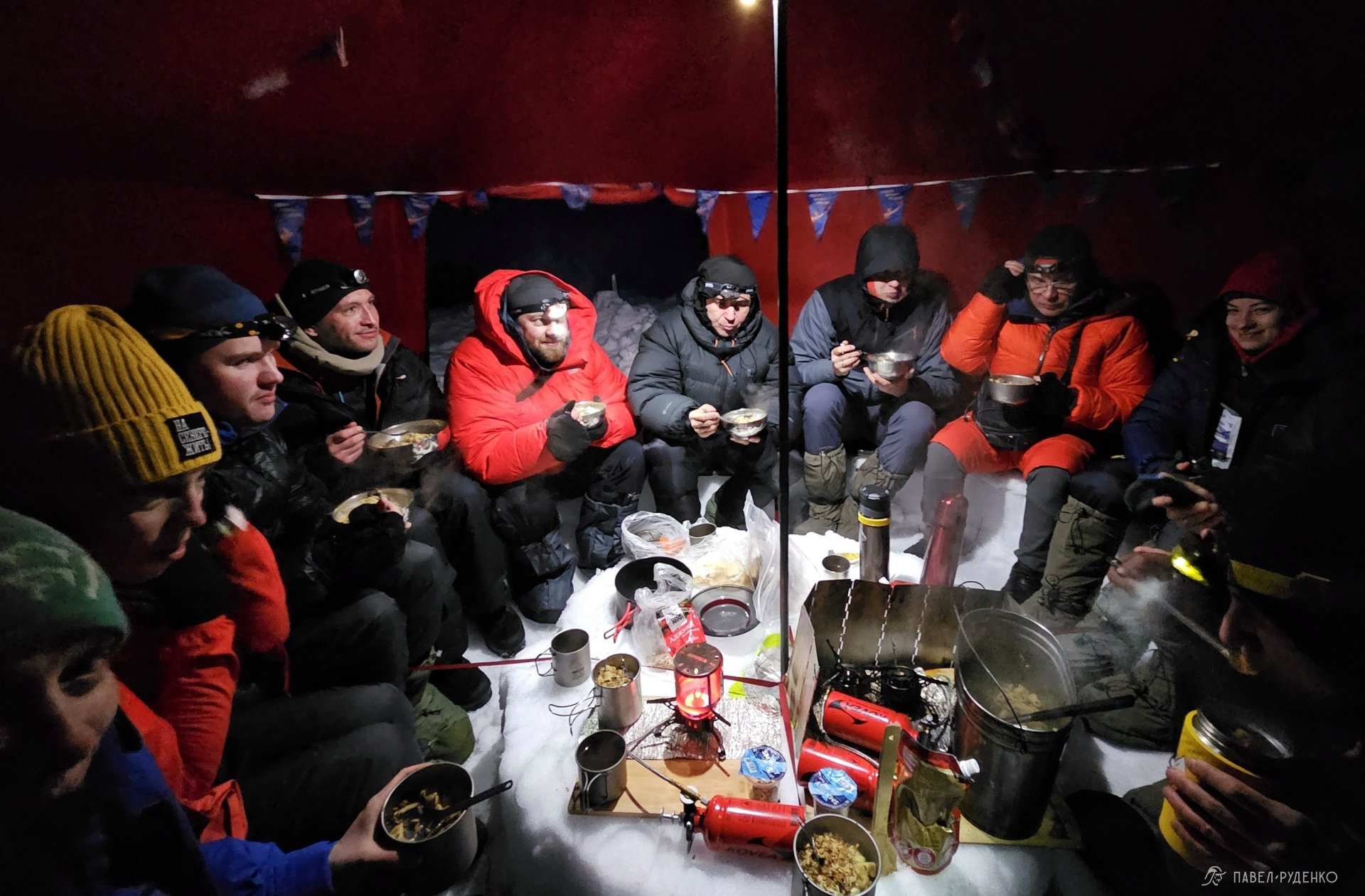
It's rewarding to see how our pre-trip videos and articles help everyone pack the right gear. Everyone is well protected against wind and cold. Perfecting your personal ski setup takes more than one expedition. For instance, one of the guys developed blisters from his Fischer Transnordic boots — thick ankle padding can pinch many people. Blister pads didn't solve it, even though I carry plenty, from kinesiology tape to Compeed. No problem, though: we took over his pulka and completed the entire route.
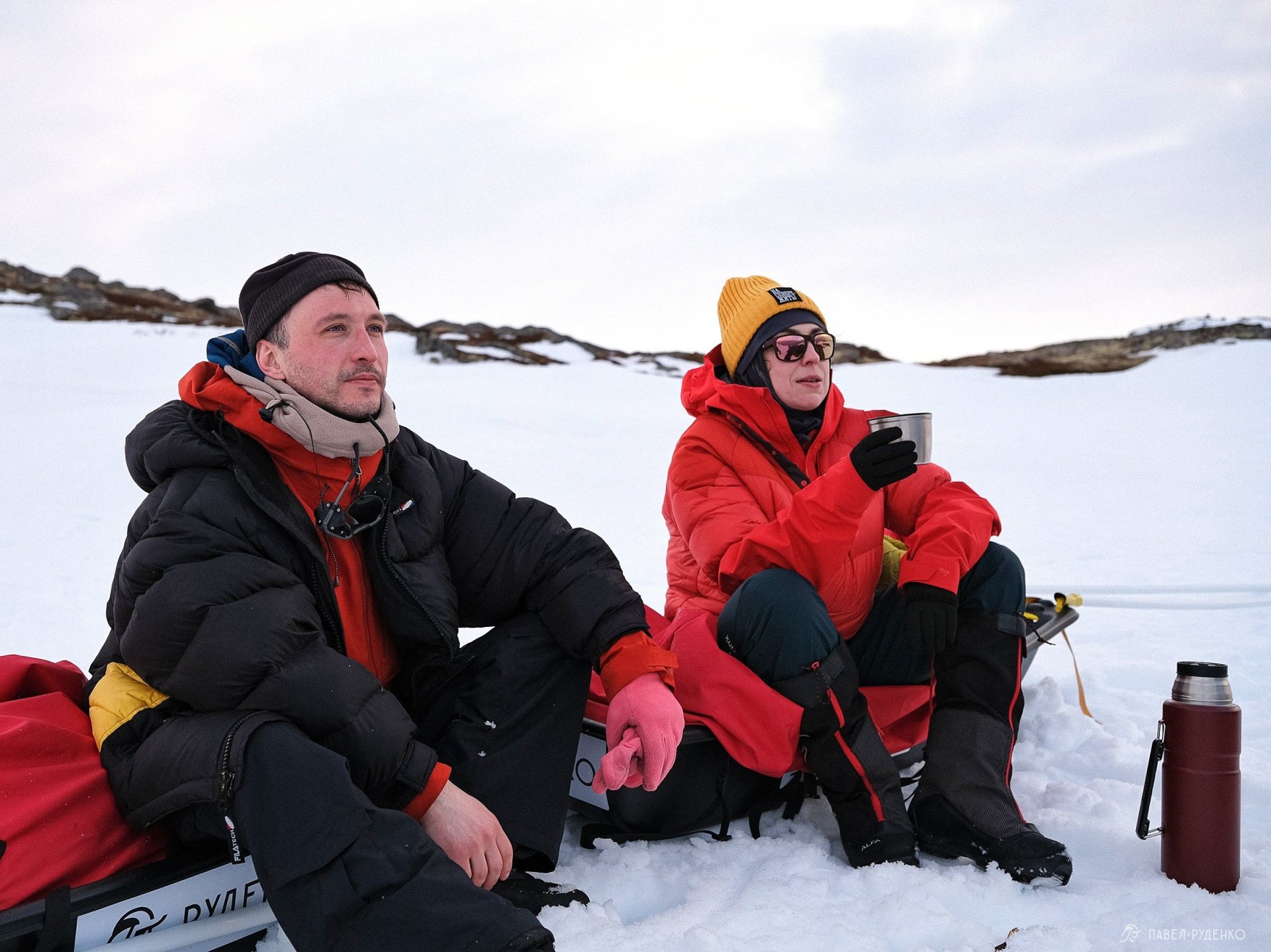
We stop along the way for lunch; today it's burritos wrapped in flatbread. Everyone carries a 0.7–1 L thermos filled each morning. On this trip, I was impressed by the Thermos FFX: a brilliantly designed freeze-proof stopper that opens effortlessly, plus a weight of just 390 g for 0.9 L. I'm going to replace my Montbell with one.
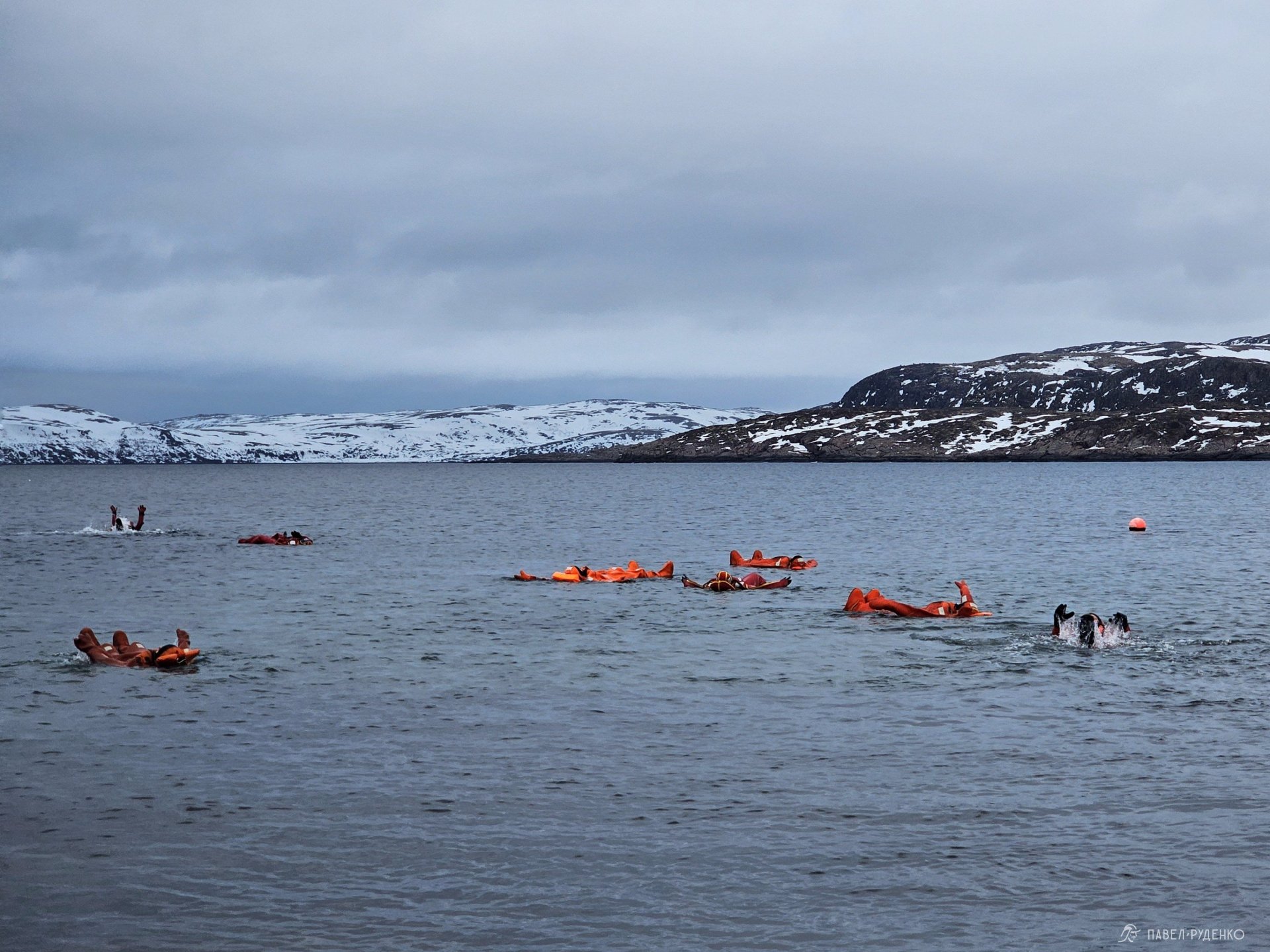
Ice floating in the Barents Sea
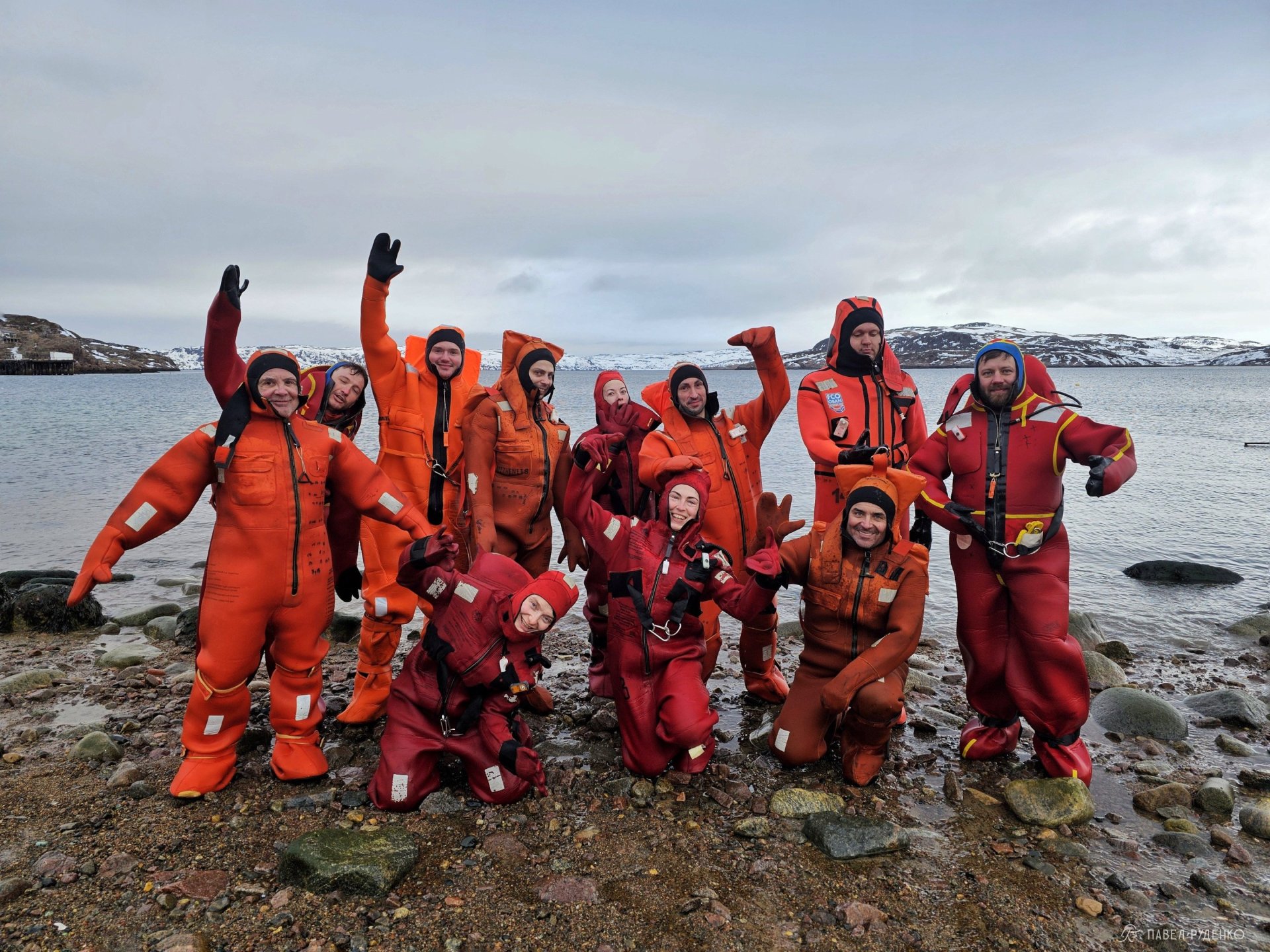
A dip in the Barents Sea in winter — challenge accepted! At the end of the route, we go ice floating, suit up in special drysuits, and step into the water. It feels like outer space, only surrounded by snow-white fells. Unlike in Kandalaksha, the service here fell short, and a couple of suits leaked, dampening some clothes. That doesn't meet our standards; I've ruled out ice floating in Teriberka for future trips.
Heading back to Murmansk. The team doesn't want to leave, and I'm already planning where we'll venture next year to explore new mesmerizing spots. Our soul belongs to the tundra, where the wind carves its lines and the horizon stretches into infinity.
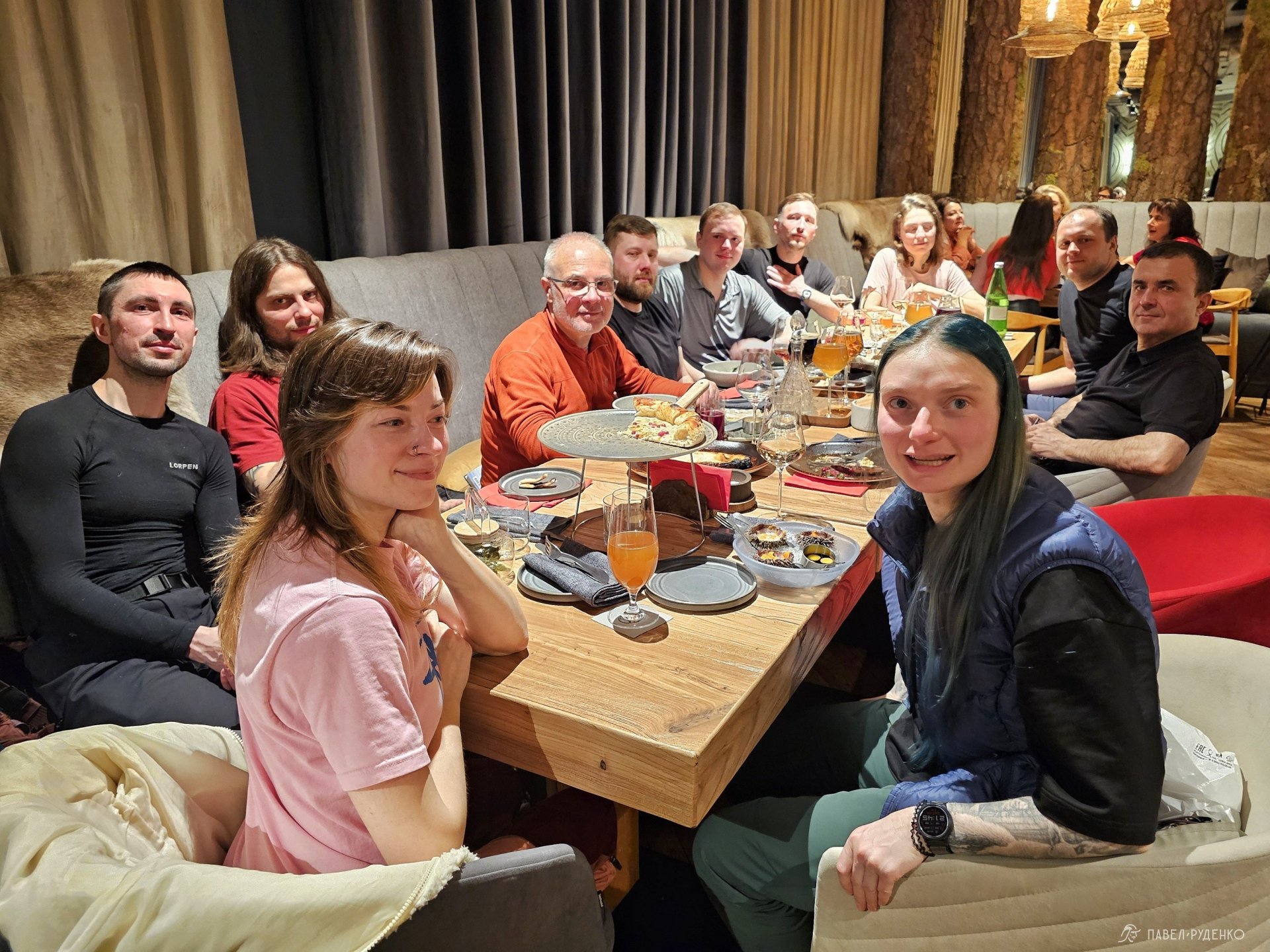
For now, we head to Murmansk's newly opened restaurant — Sampo. A stunning interior with plenty of pelts, antlers, and woodwork — what more could you ask for? The food is delicious; I ordered the venison in a berry demi-glace with pine nut porridge — highly recommend both the venue and the dish.
A week later, the first participant messaged me: "Put me on the priority list for the next ski trek." Then the second, the third… Because the Arctic is like a great book: you want to read it again and again.
If you share that spark of curiosity and passion, join us and let's explore together!




Comments (0)