
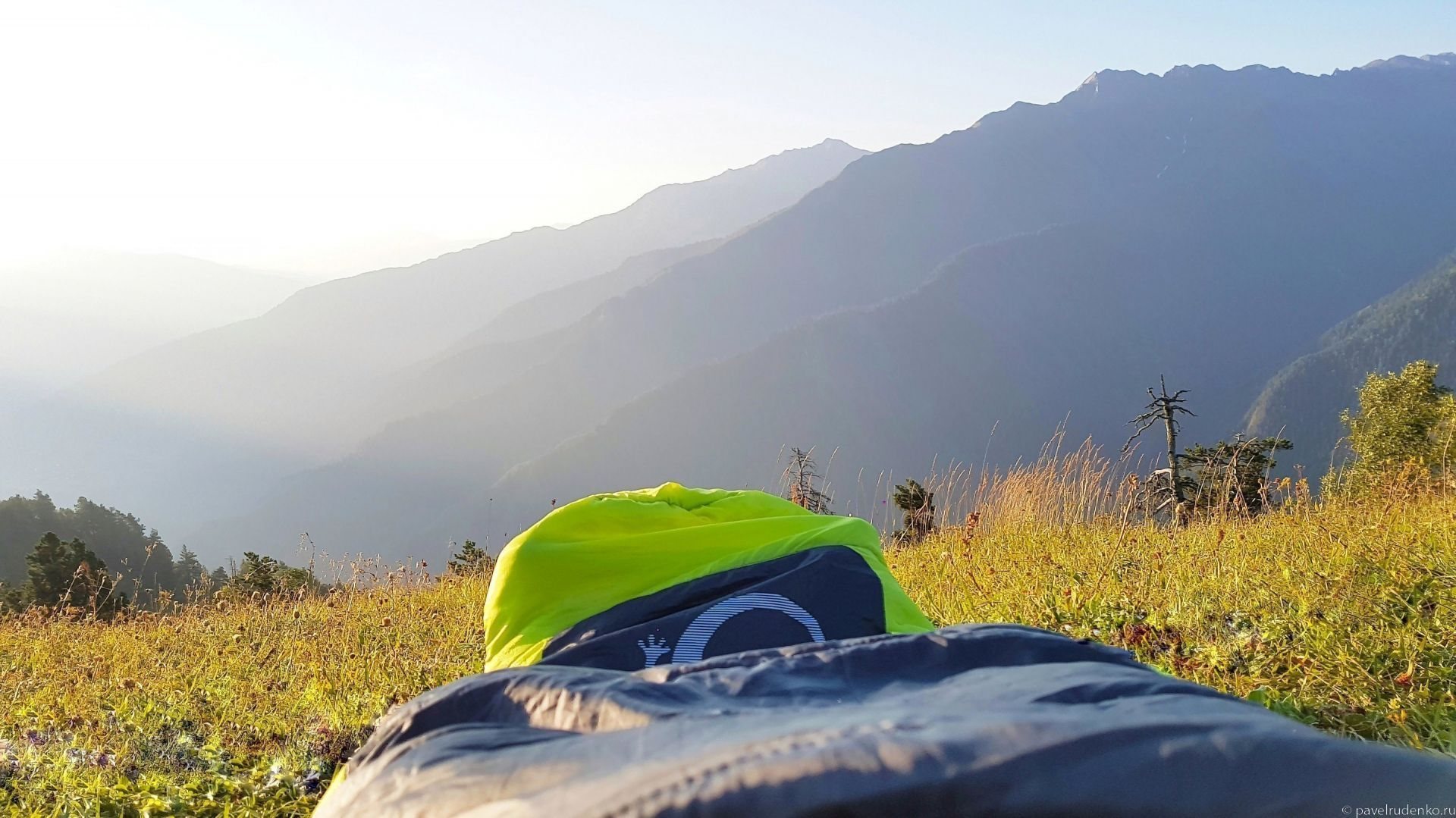
| Comfort rating (°C): | +7° |
|---|---|
| Extreme rating (°C): | -4° |
| Fill weight (g/sq.m): | 1 x 200 |
| Insulation: | Hollow Fiber |
| Outer fabric: | 190T Polyester + 210T Diamond Ripstop Poly |
| Inner fabric: | Freesoft 190T |
| total weight: | 1.4 kg. |
This is my first sleeping bag. I bought the cheapest one available since I had spent everything on boots and a tent :))
The main advantage is the price: 2,000 RUB with a 50% discount at Trial-Sport.
Naturally, at this price point, nobody tested it according to EN 13537. That means the only way to test it is in the field. The experience below is based on roughly 110 nights in the bag at altitudes from 0 to 3,000 meters above sea level at temperatures from +2°C to +27°C on a 10 mm foam pad, in a tent with snow skirts, mostly solo. Height: 177 cm, weight: 65 kg.
The stated comfort rating of +7°C, provided you sleep in thermal base layers, is accurate for a man.
HOWEVER, +7°C is also the absolute limit of comfort. During an unexpected drop down to +3°C, with the tent skirts pegged down, wearing base layers, a fleece, socks, gloves, and a balaclava, I felt constantly cold and had restless sleep.
Towards morning, I tossed extra clothes and a jacket over the bag and slipped my feet into my backpack; it helped noticeably, but the overall discomfort remained.

A major downside of this bag is the single “one-size-fits-all” length of 220 cm. For my height, 20–25 cm is excess — that means dead weight and a cold void. Warming up that extra space in the footbox at around +7°C is impossible. I felt a “wall” of cold air around my feet. Stuffing clothes down there helped partially, but honestly, it was far from an ideal solution.

When outside temperatures rise above +10°C, I shed layers accordingly and unzip it, using it like a quilt. +7°C is a solid upper temperature benchmark. I see little point in sleeping bags with comfort ratings of +10°C to +20°C: nights at 15°C are already warm, but there is always a risk of a cold snap, and in bags rated that high you could easily freeze.
When sleeping without clothes, the inner lining feels average — not irritating, but not particularly cozy either. I initially liked the white color because bugs and spiders were easy to spot, but over time it got quite soiled around the collar. I machine-washed it once, and it retained its thermal properties.
The compression sack is solid: even though all the prints rubbed off, it never tore and does its job well. It packs down quite compactly.
A couple of times I used the Freetime LITE TECH 200 as an overbag over my primary sleeping bag in winter, and even then, it remained too long.
Conclusion: this is a summer, well-stitched, ultra-budget sleeping bag with the main drawback of being oversized. That means an extra 200–300 g of dead weight and heat loss, but the price offsets all shortcomings. Looking back, I would buy it again. I have not seen a decent alternative at this price point. If you have used it, share your thoughts in the comments.



Comments (0)