
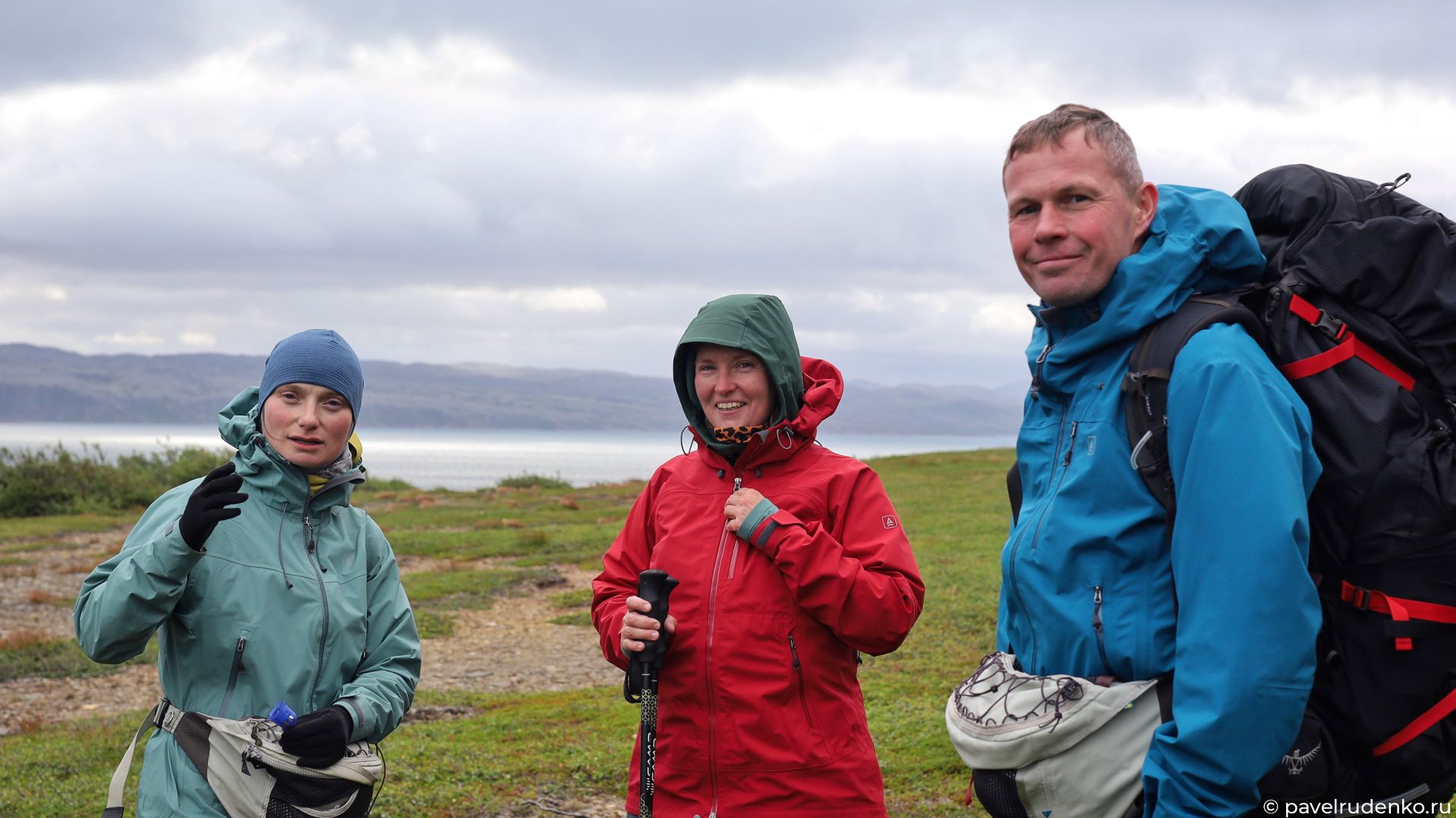
Complete outdoor clothing system
A properly selected hiking clothing system will keep you warm and comfortable regardless of heat, torrential rain, and gale-force winds. To adapt to the varying conditions encountered during a single trek, I use a 5-layer system.
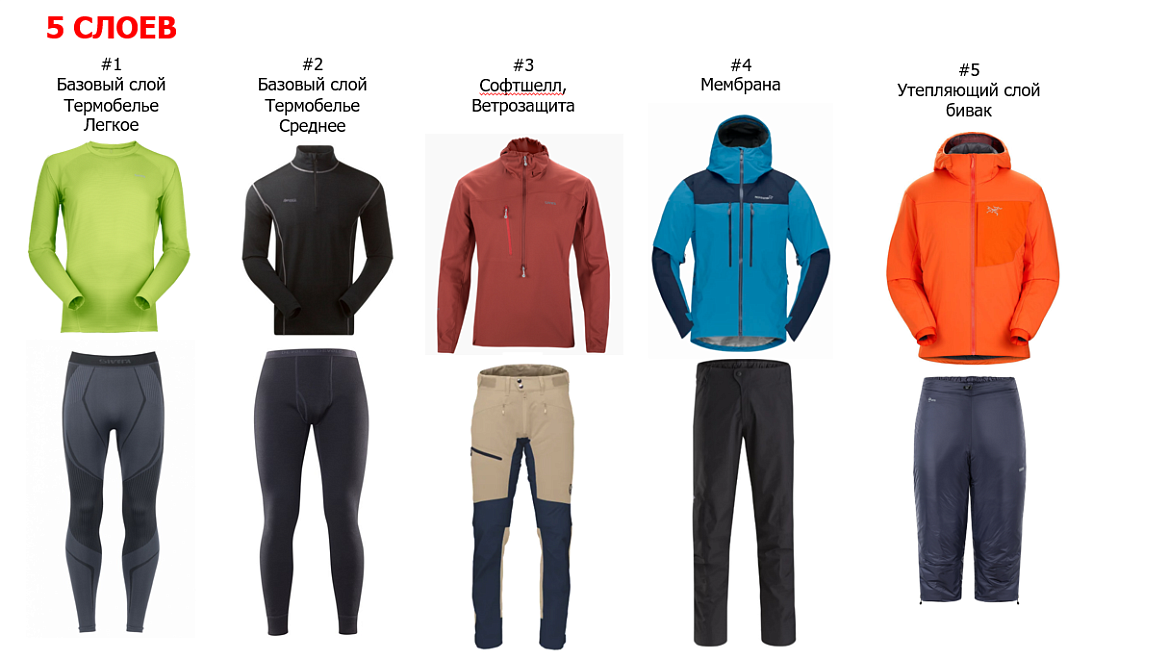
1 Base layer, thermal underwear.
Top, long sleeve, i.e., a long-sleeved shirt. Forget short sleeves—long sleeves perform much better in hiking across absolutely all regions and routes.
- Protects arms from sunburn and overheating in the sun
- Protects against wind, reducing wind chill.Physically shields from branches, brush, thorns, and scrapes in case of a fall.
- Protects skin from mosquito bites, midges, and other insects.
- Sleeping in a sleeping bag with long sleeves is much more comfortable, preventing bare skin from sticking to the fabric.
A hooded long sleeve isn't strictly mandatory, but it's definitely even more practical. If needed, the hood covers your neck and head from picking-up wind, sun, and insects. During sleep, it keeps your sleeping bag clean around the collar—my definite personal recommendation.
Bottoms, thermal leggings / long johns.
Top and bottom are ideal for warm yet overcast weather and rain. Just wear a hardshell jacket and waterproof pants over them. Layer #1 wicks moisture, layer #5 protects against rain and wind. In my experience, this setup is optimal at temperatures above +15°C.
Layer #1 can also be used as sleepwear inside the sleeping bag in warm weather to keep the liner clean from body oils, plus it feels much better against the skin.
Material: synthetics or synthetic/merino blend
Fabric weight: 80–110 g/m², prioritizing the thinnest, ultralight, and most breathable fabrics.
Color: prioritize light colors and pale shades. They absorb significantly less heat and attract fewer mosquitoes and midges.
It should fit snugly like a second skin to wick and evaporate moisture, but without constricting—especially at the armpits, knees, and elbows—to avoid hindering blood circulation.


Comments (0)