
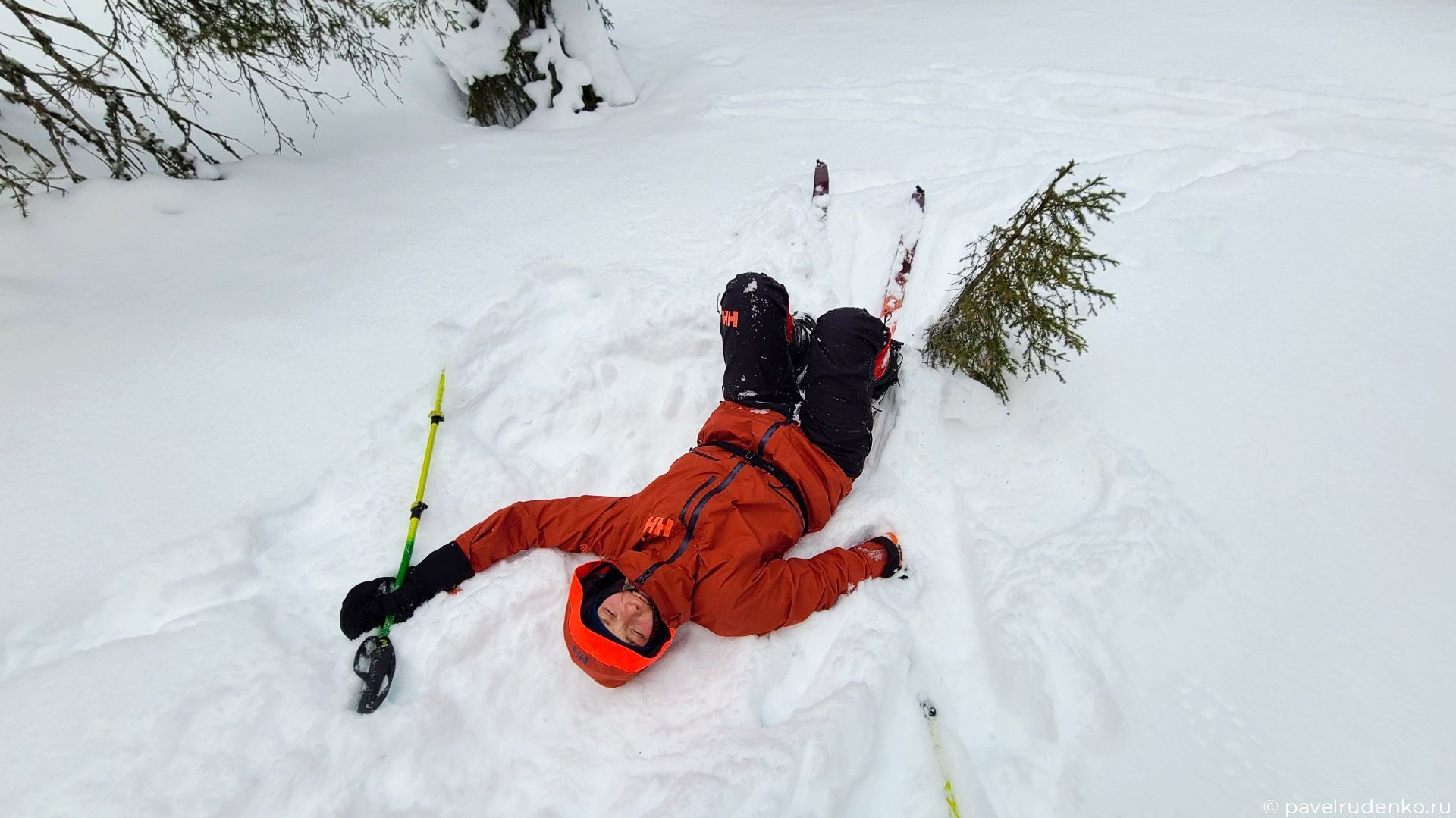
Backcountry Touring Skis for Winter Expeditions
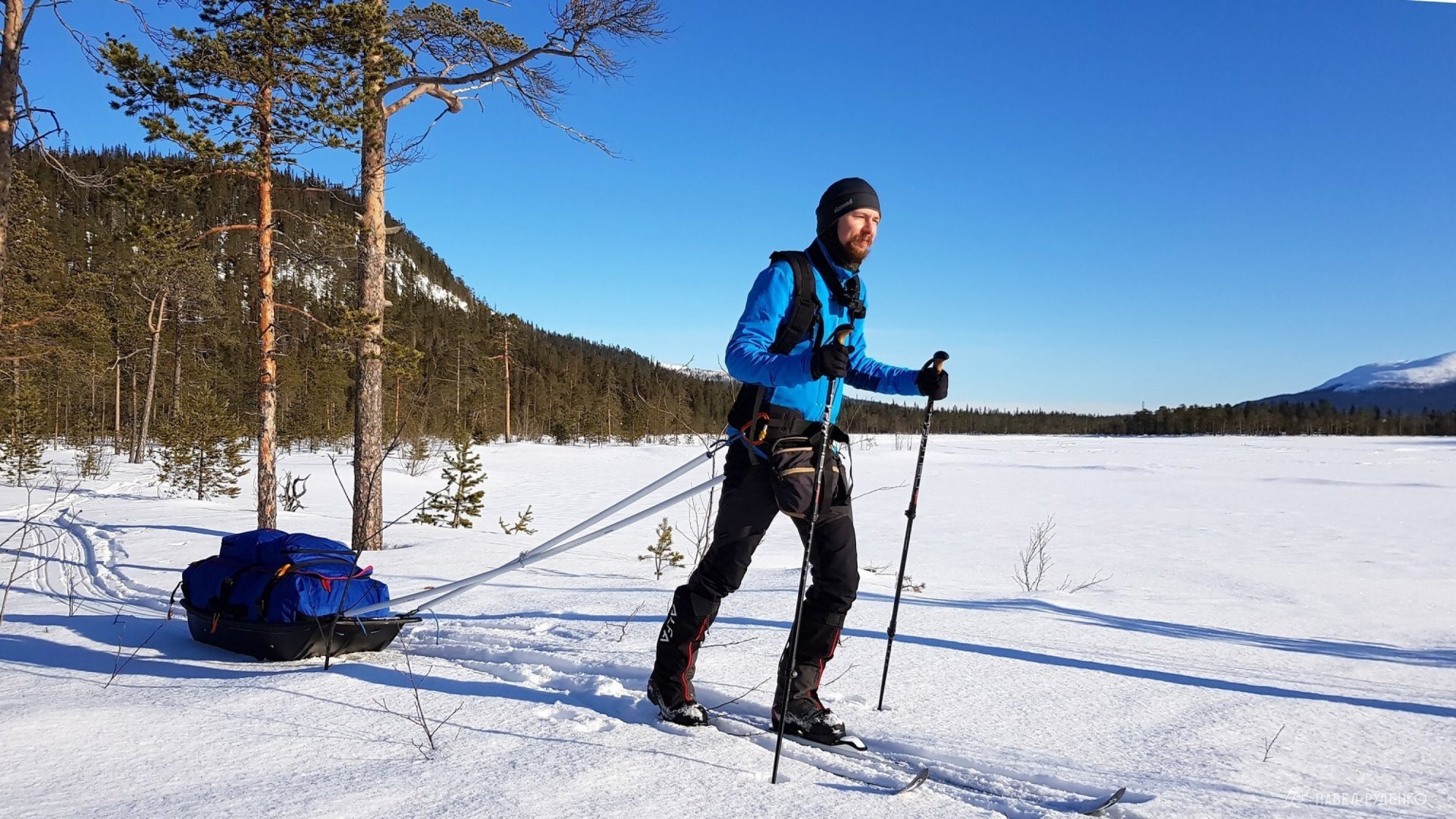
I love ski expeditions and frequently embark on both short trips and extended routes across the North. In solo winter treks, where the stakes are exceptionally high, every piece of gear is critical. That's why I've tested numerous models in search of the truth—discovering which skis perform best and under what conditions.
After all, skis differ in sidecut, scales, durability, and behavior in expedition environments. My experience with backcountry touring skis is based on the following models:
Asnes, Norway: Nansen 190, Ingstad 185, Amundsen 187 and 207.
Fischer, Austria: Transnordic66 Crown 195, E66 205, Traverse 186, Excursion88 189, Sbound98 179, Sbound112 189,
Sporten, Czech Republic: Ranger 160, 170, 180, Expedition 180, 190, Free Walk 120.
Altai Skis, USA: Hok 145
Handcrafted, Russia: Hunting skis 150
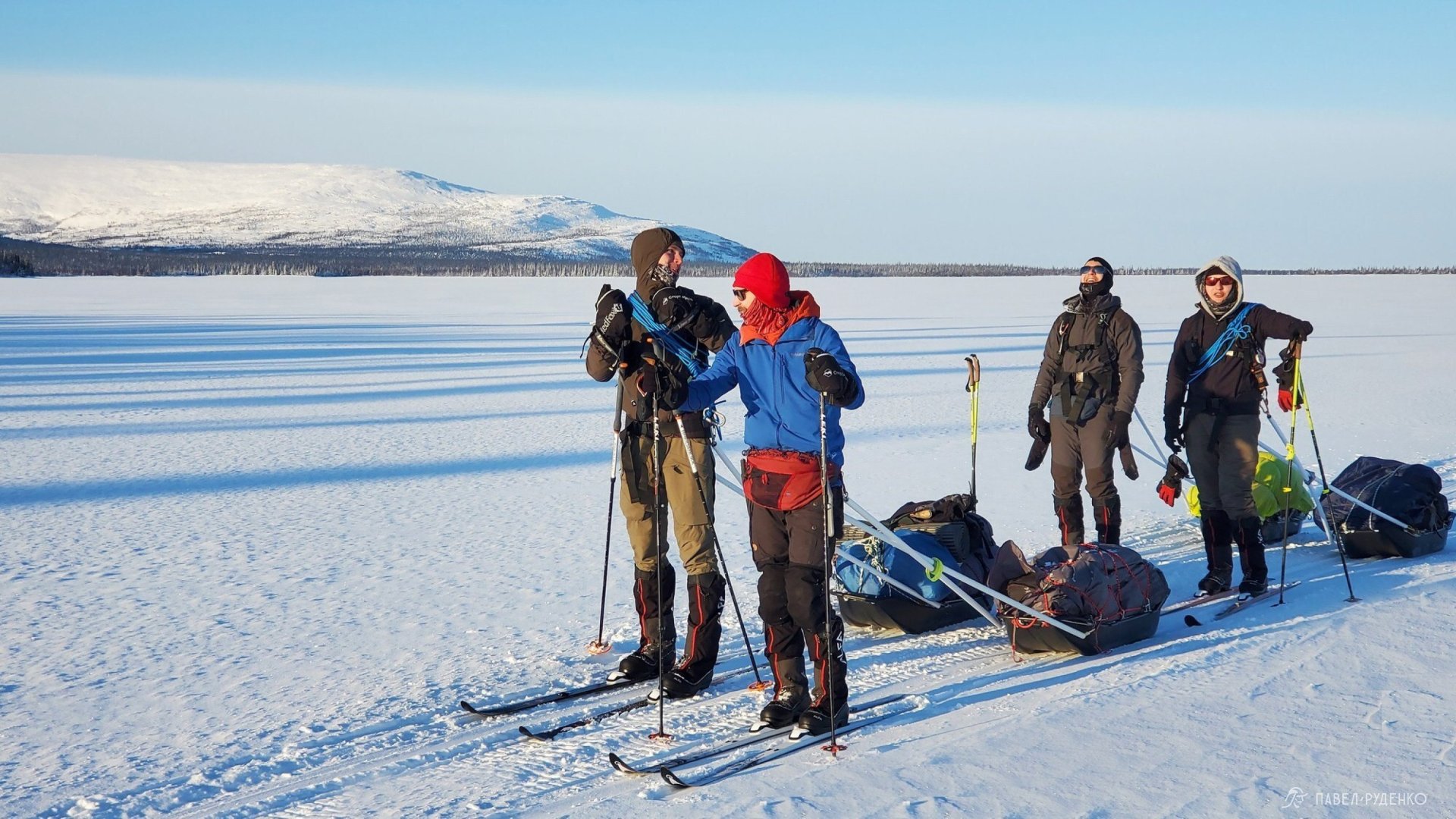
Three Types of Backcountry Touring Skis
First and foremost, skis differ in their geometry:
Length, width, and sidecut—your choice depends on the terrain and expedition goals.
We can break them down into three main categories:
- Narrow skis — for flat terrain. For example: Asnes: Amundsen, Børge Ousland, Gamma. Fischer: Transnordic 66, Outback 68, Adventure 62, Spider 62.
- All-round skis — a balanced middle ground, versatile across most conditions. For example: Asnes: Nansen, Ingstad. Fischer: Traverse, Excursion.
- Wide skis — built for steep terrain, frequent descents, and deep powder. For example: Asnes: Falketind 62, Rabb 68. Fischer: Sbound 98, 112.
If you love ski expeditions too, join one of my winter treks across the Kola Peninsula. We'll explore stunning northern landscapes and test our limits on exciting new routes. Check the schedule and sign up!
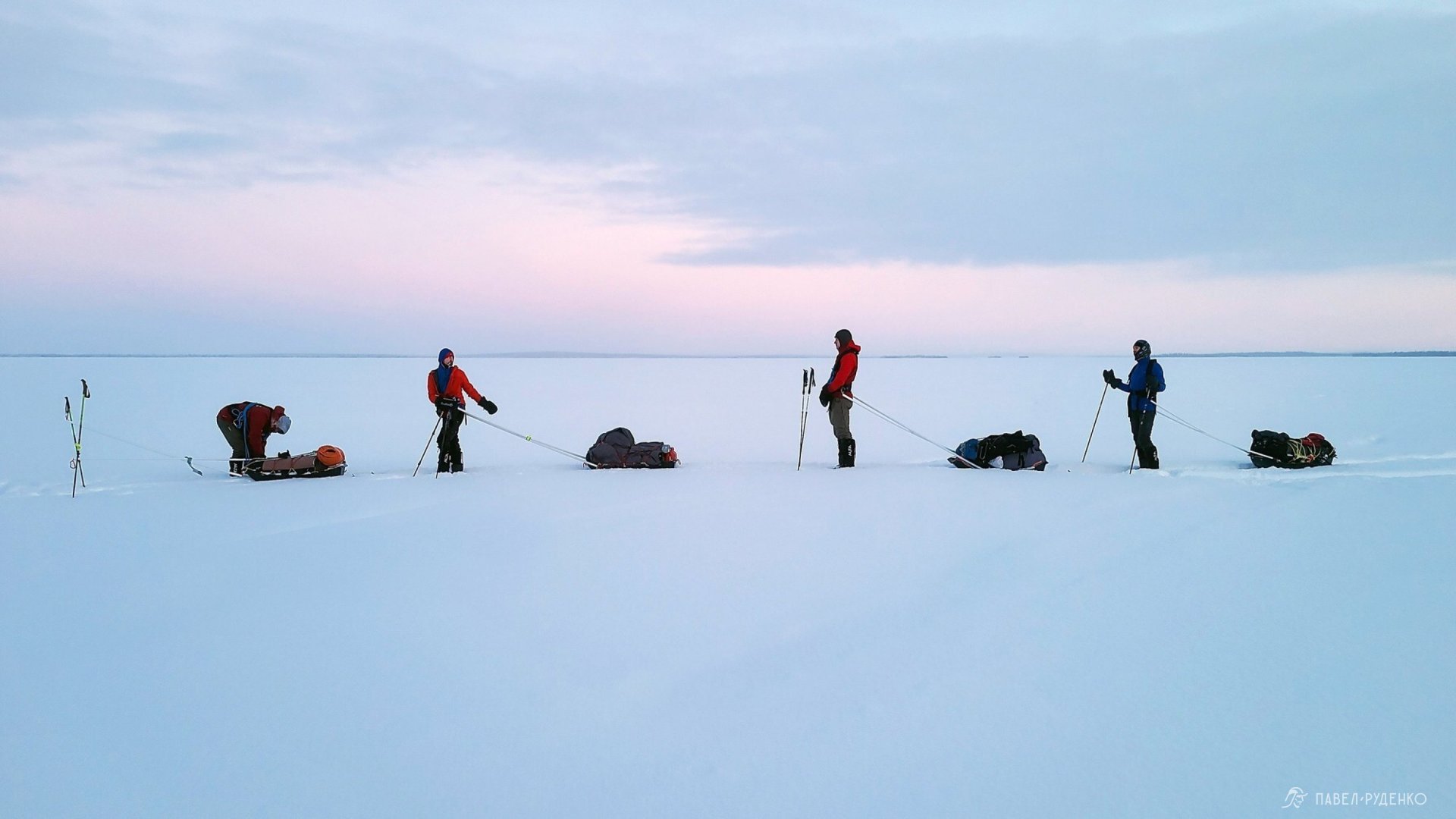
Narrow Skis
Ideal for flat terrain: Central Russia, weekend routes, or vast, flat Arctic expanses like Chukotka, the Indigirka, and the North or South Poles. Narrow, straight skis feature directional sidecut and track exceptionally well in a straight line, requiring minimal effort to stay on course. It feels fantastic and lets you channel all your energy into propulsion, gliding swiftly as if on rails. They perform brilliantly on wind-packed snow, groomed tracks, or snowmobile trails. Typical sidecut (e.g., Asnes Amundsen): 67-57-62 mm.
Pros: Superb directional stability. High cruising speed on flat stretches. With their subtle sidecut, they grip firmly along the entire edge when traversing hard-packed snow. Being narrower, they use less material and are noticeably lighter, reducing leg fatigue. Average weight per pair (e.g., Fischer Transnordic): 1,860 g.
Cons: With little to no sidecut, they don't carve downhill turns. You have to step around corners like on classic cross-country skis. Descents where you can't run straight become a challenge, forcing you to snowplow or zigzag.
They are usually sized longer than all-round or wide skis, which makes navigating dense forests with heavy underbrush, branches, and tight winding tracks much harder.
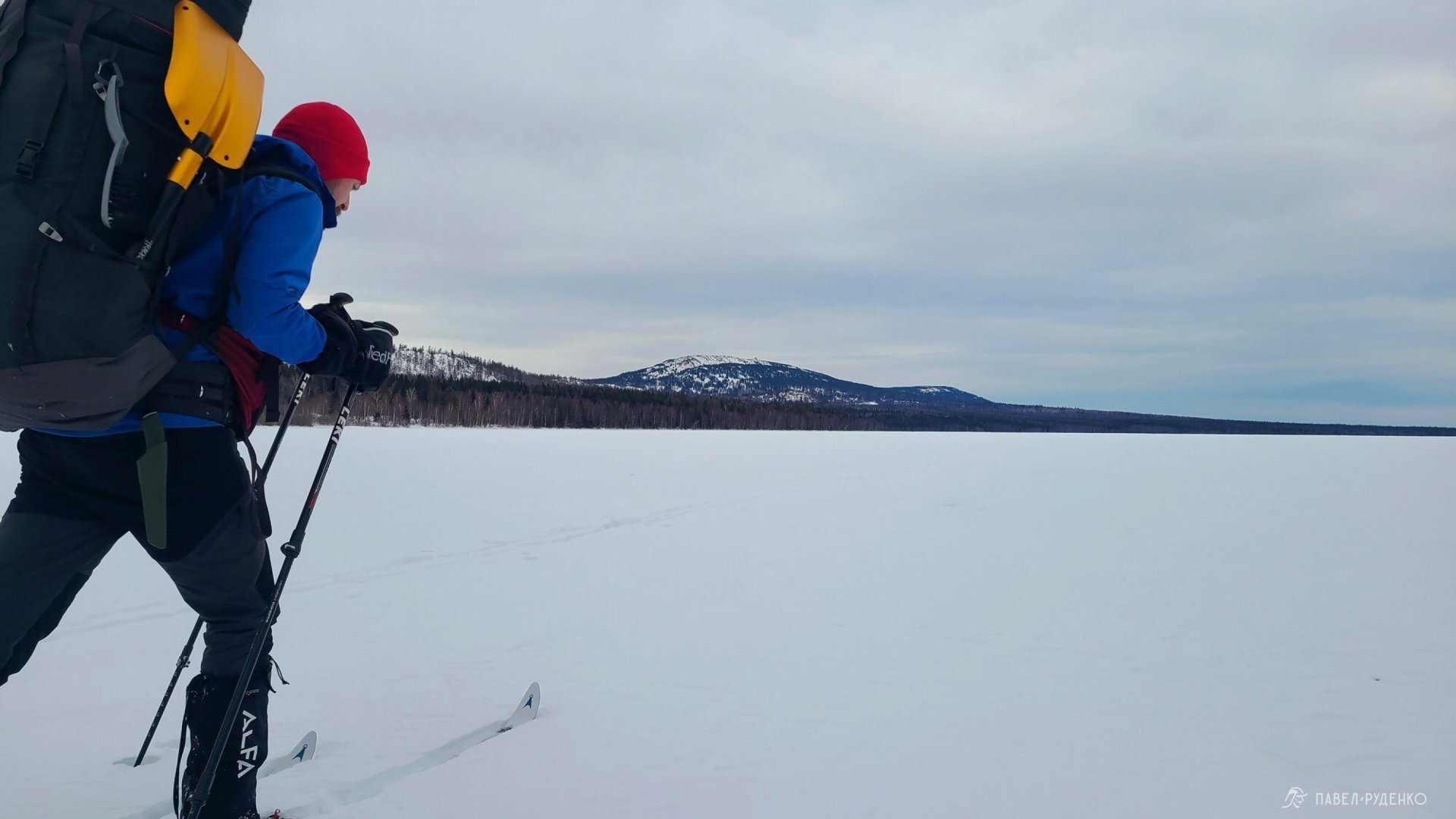
All-Round Touring Skis
There is no one-size-fits-all in winter trekking, so ideally you'd have several pairs. If that's not an option, this category—narrower skis with a broader tip—offers the best compromise. An extra ~10 mm at the tip helps the ski float in deep snow, while a more pronounced sidecut allows you to carve gentle arcs and initiate turns on descents. It might seem like just 10 mm, but it delivers a tangible boost in maneuverability and floatation. Typical sidecut (e.g., Fischer Traverse): 78-61-69 mm.
Pros: Versatile. They still track decently on flat stretches—only slightly less straight than dedicated narrow models, requiring minor directional control, yet far more stable than wide skis. They float better than straight skis, though not as well as wide ones. Plus, they actually let you turn.
Cons: Versatility means performing well in diverse conditions, but mastering none. That's the trade-off. Average weight per pair (e.g., Asnes Nansen): 2,025 g.
Wide Skis
Designed for mid- and high-mountain terrain, these offer outstanding control on descents. Skiing on the Fischer Sbound 112 gave me genuine alpine ski vibes—the sidecut practically begs you to carve down the next slope. They float effortlessly in powder and, thanks to their larger surface area, sometimes provide better purchase on soft snow, though not always. Based on my current experience, I wouldn't say they make breaking trail any easier: they are noticeably heavier, and since width isn't magic, you usually sink right down to the firmer snow layer regardless of ski width. Typical sidecut (e.g., Fischer Sbound 98): 98-69-88 mm.
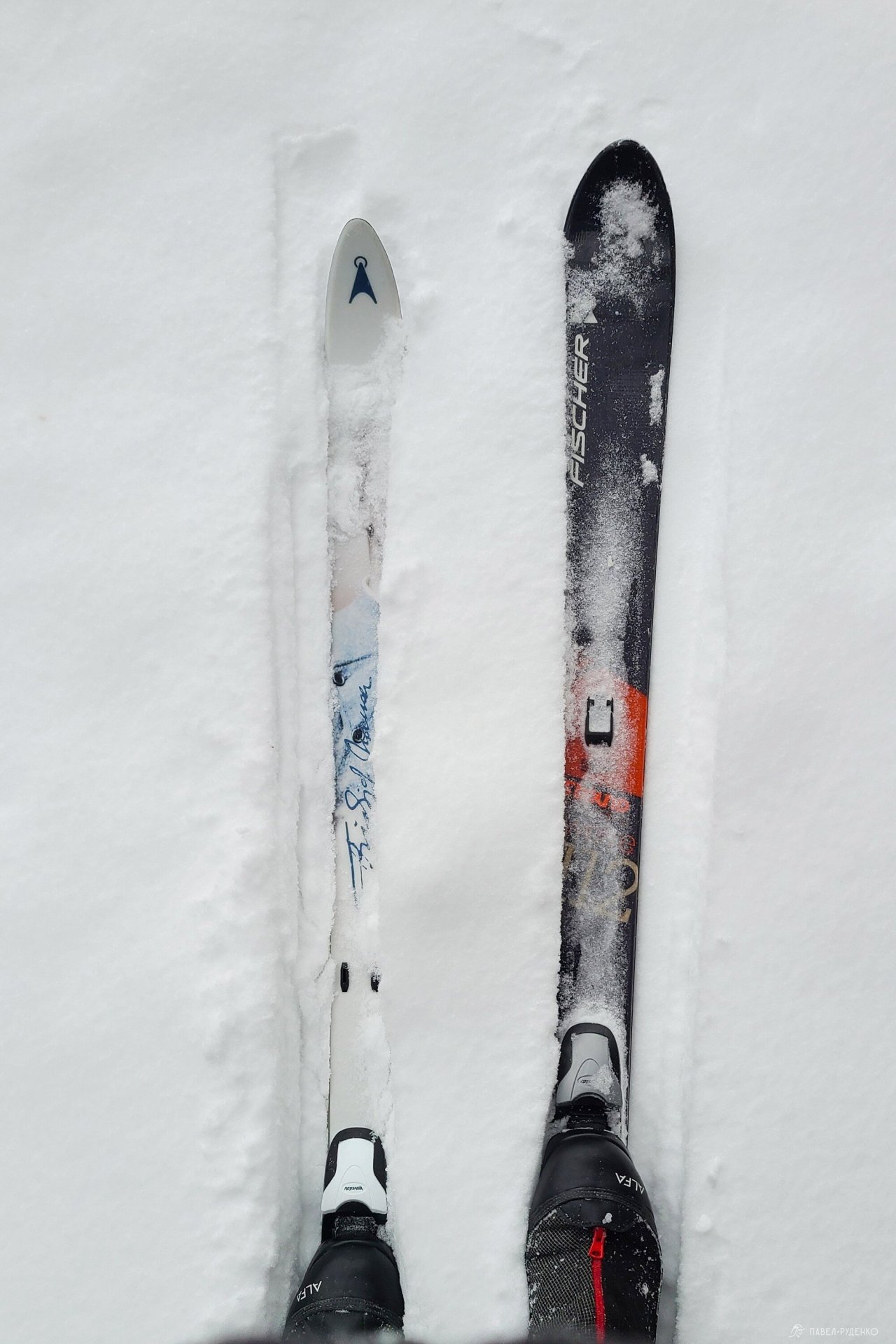
The best way to understand the difference between narrow and wide skis is to test them back-to-back. First, you usually sink just as deep through unconsolidated powder down to the harder crust, meaning ski width rarely makes breaking trail significantly easier. Second, weight and shape heavily influence your travel speed, and narrow skis cause far less leg fatigue.
Pros: Exceptional maneuverability with tight turns. While the primary goal on an expedition is simply to get down safely, with proper technique they allow for graceful descents. If waxless (scaled), they grip better on climbs than narrow or all-round skis thanks to the larger pattern area. Superior floatation in powder. They are typically sized shorter—around body height—which enhances maneuverability in forested areas.
Cons: Their shorter length and wider profile create a larger base contact area, which noticeably drags down speed on flat terrain, hard-packed crust, or snowmobile trails. Due to the deep sidecut and shorter length, they tend to wander on flats, demanding extra effort to hold a straight line. They usually lack significant camber and are relatively flat underfoot, meaning you end up walking rather than gliding. Average weight per pair (e.g., Asnes Rabb): 2,360 g. Side-stepping up steep slopes in deep snow is much more exhausting because massive amounts of snow pile onto the wide topsheets. They also struggle when traversing wind-scoured slopes: the edges only bite at the tip and tail while the narrow waist lacks contact, causing them to slip downhill.
Choosing Ski Length
Ski length is determined based on the user's height and weight. Manufacturers provide sizing charts as a guide, but they are merely a reference, as many factors must be taken into account. Skiing experience, terrain, weight, pack volume, and personal preferences/habits all influence the choice of length.Guidelines for ski length:
- Narrow, straight skis: height + 20 cm.
- All-round / versatile skis: height + 10 to + 15 cm.
- Wide skis: equal to body height.
Skis have camber, but unlike cross-country racing skis, touring skis don't require obsessive camber matching. The camber is usually standard: a stiff core underfoot and softer tips and tails, which helps you float better in deep snow.
They are designed so that when you glide the ski forward, the waxless pattern under the binding does not drag or create extra friction. This saves energy and reduces wear on skins.
The stiffness underfoot can vary, but my experience shows that choosing the correct length is what matters most.
General selection principles are as follows:
- Beginners will often find it easier on shorter skis.
- Navigating rolling, rugged terrain requires shorter skis than wide-open plains and mountains.
- If you are lighter than the average user, consider shorter skis, and vice versa if you are heavier.
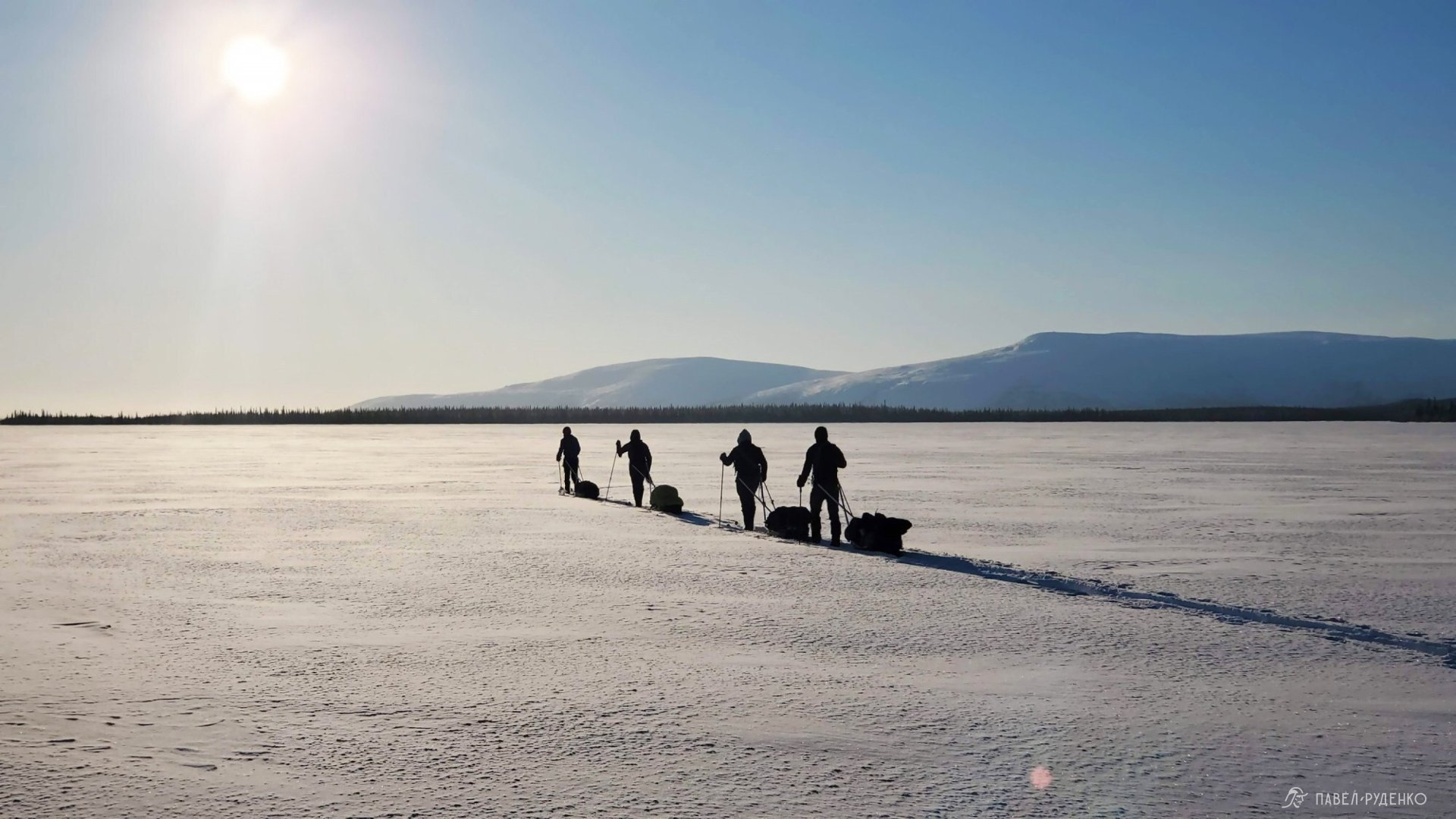
- If you carry a heavy backpack, choose slightly longer skis. If you use skis with heavy pulkas, the same logic applies, though the load on the camber underfoot is not as direct as with a backpack. If you make a mistake and go too long—or, for instance, take off your pack—you won't be able to compress the camber under the binding, causing the skis to slip without the pattern gripping the snow.
Follow our social media channels to learn more about ski expeditions.
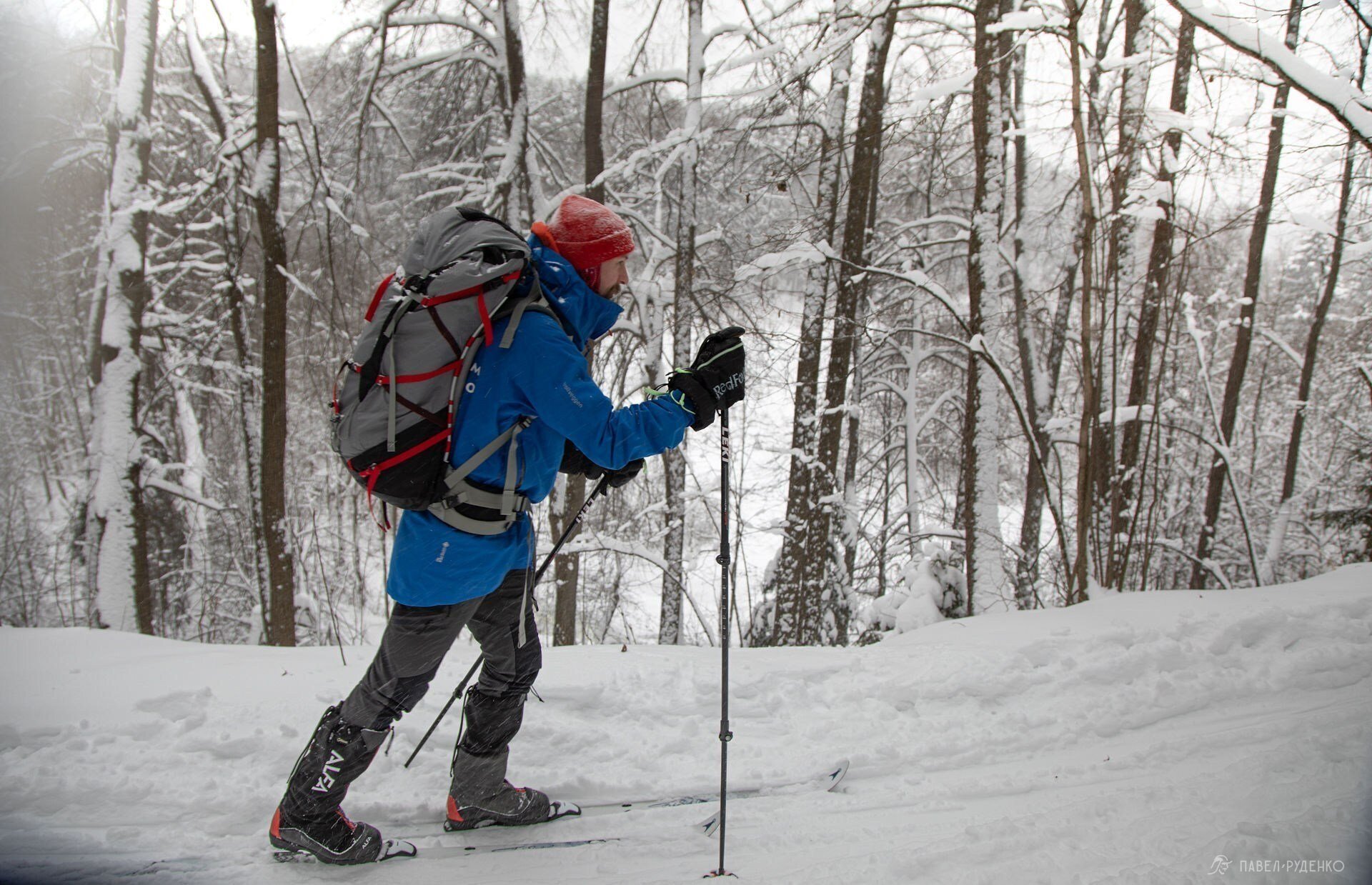
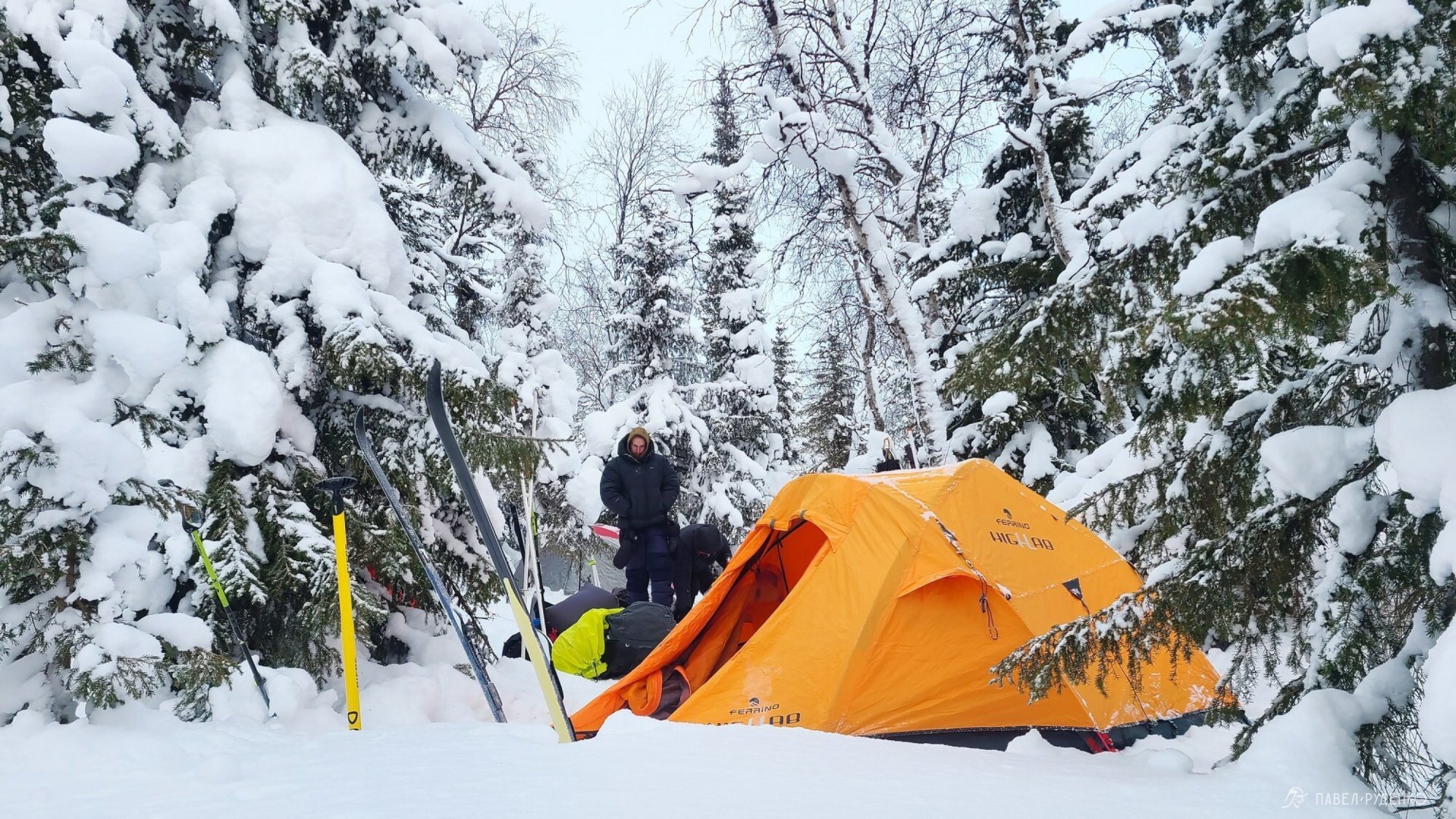
Skis unlock new horizons: you can cross frozen lakes or bogs, traverse rivers, and experience wilderness in a completely transformed state. If you are already an experienced summer trekker, winter touring offers entirely new emotions that make winter expeditions truly worth it.
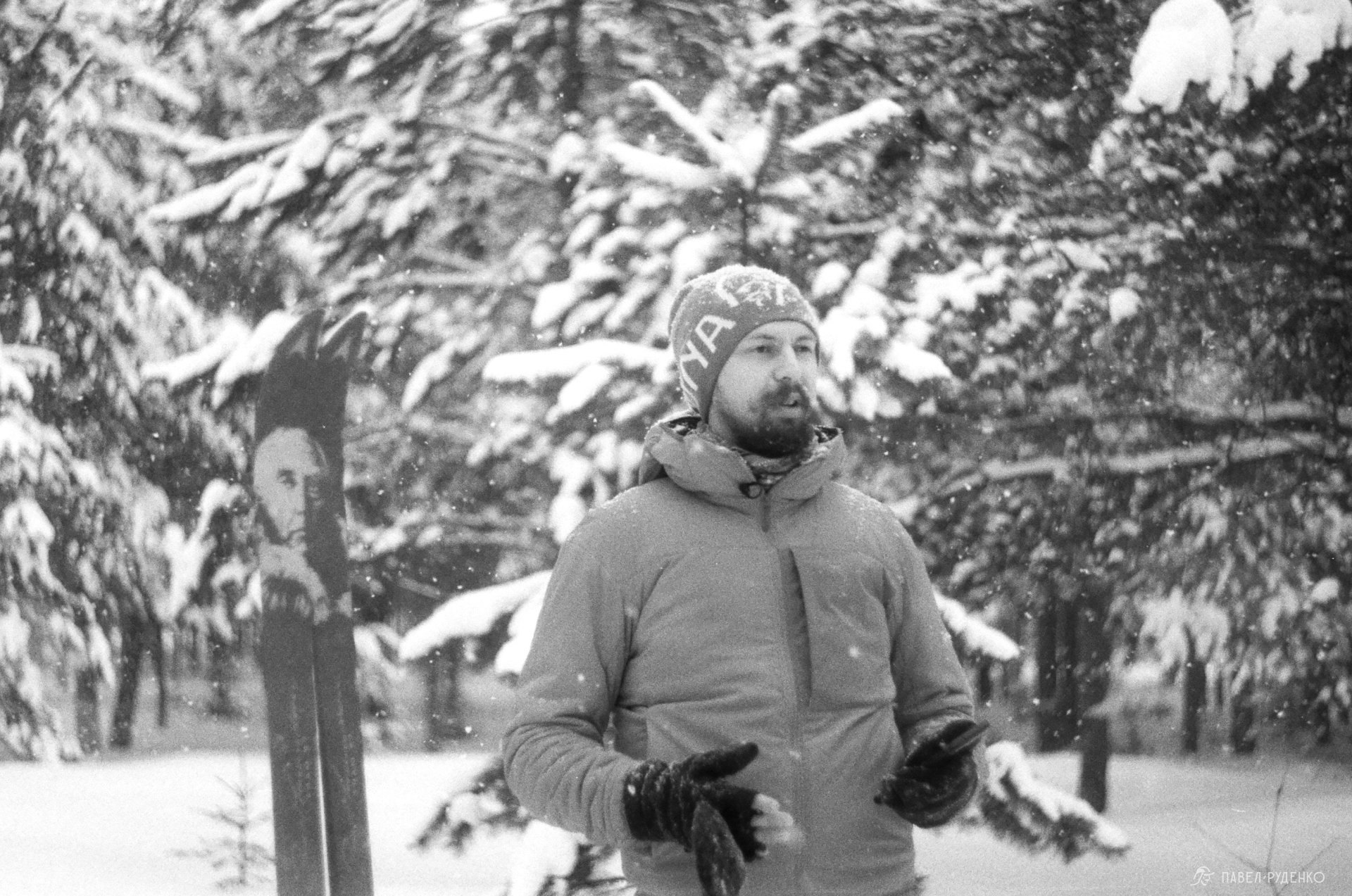
Touring Ski Brands and Manufacturers
Åsnes, Norway. When selecting any gear, remember that every brand designs for its home region and target audience. Understanding this allows you to spot brand features immediately and choose the right gear. Norway’s northern geography leads to a predominance of long, narrow skis built for arctic conditions. Arctic zones feature windblown, hard-packed crust, so all their Backcountry models come with a full steel edge around the tip to handle sastrugi. Many models are waxable (without fish scales), allowing fast movement across the tundra. A key feature is their fast, high-quality base. The durability is top-tier, as these skis are routinely used for autonomous polar crossings. They offer a vast lineup, including edge-free skis designed for dog sledding/trekking to prevent injury to paws. Aesthetically beautiful skis. In my opinion, the most notable models are the Nansen and Ingstad.
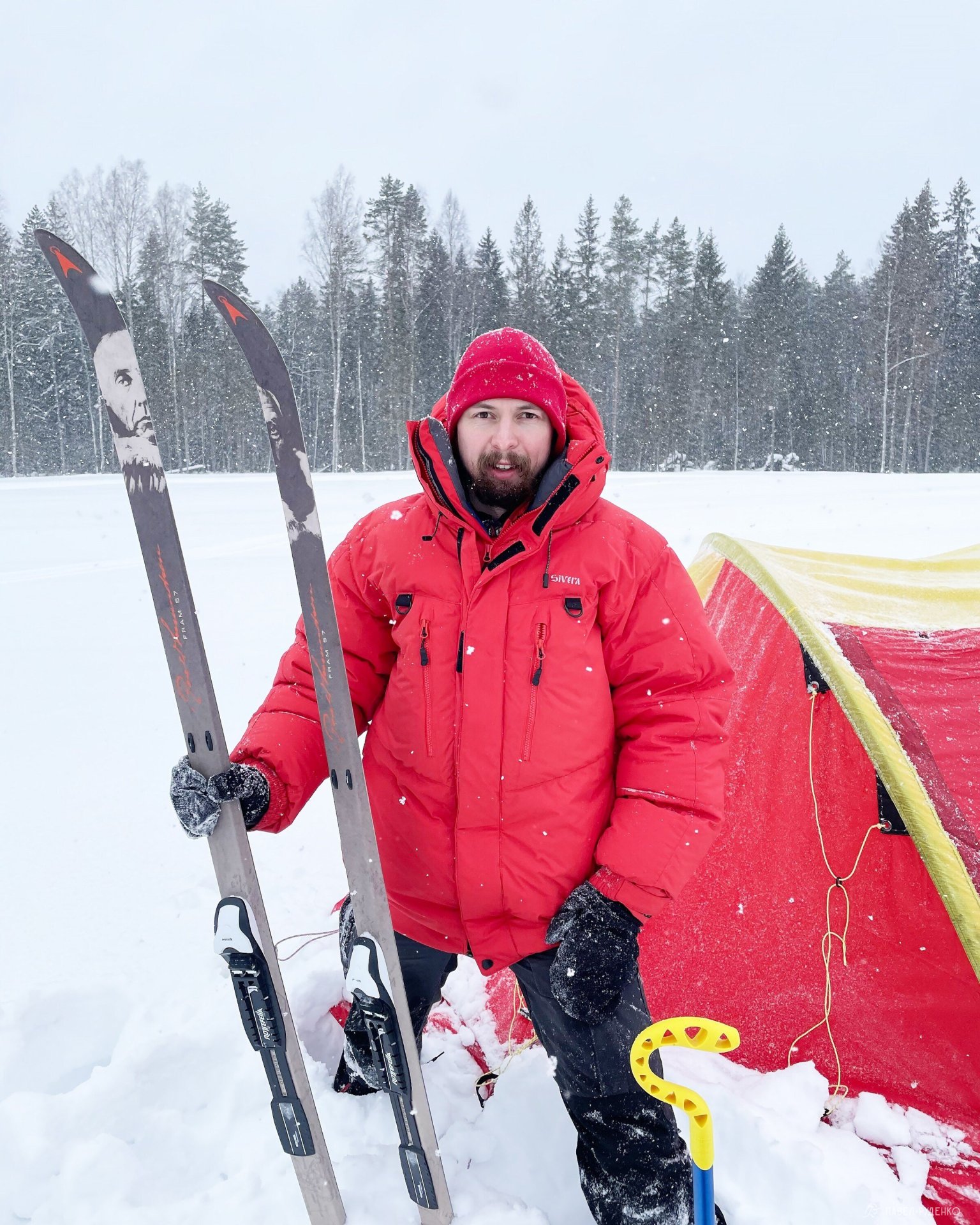
Fischer, Austria. The most widely known ski brand in Russia, with the S-Bound model being practically a household name—which is ironic, as it isn't ideal for every task. One standout feature is the generous Offtrack Crown waxless pattern, which is roughly 35% larger than Åsnes’ pattern and provides exceptional grip, especially on wider profiles. They feature short, quick-attach Easy Skin climbing skins, similar to Åsnes. I have heard reports of edges delaminating under heavy use, though whether this is occasional defect or widespread issue is hard to say. The Fischer pairs in my active rotation (around 5 models) have had zero issues. In my view, the standout models are the Transnordic 66 Offtrack Crown, Traverse, Excursion, and S-Bound 98.
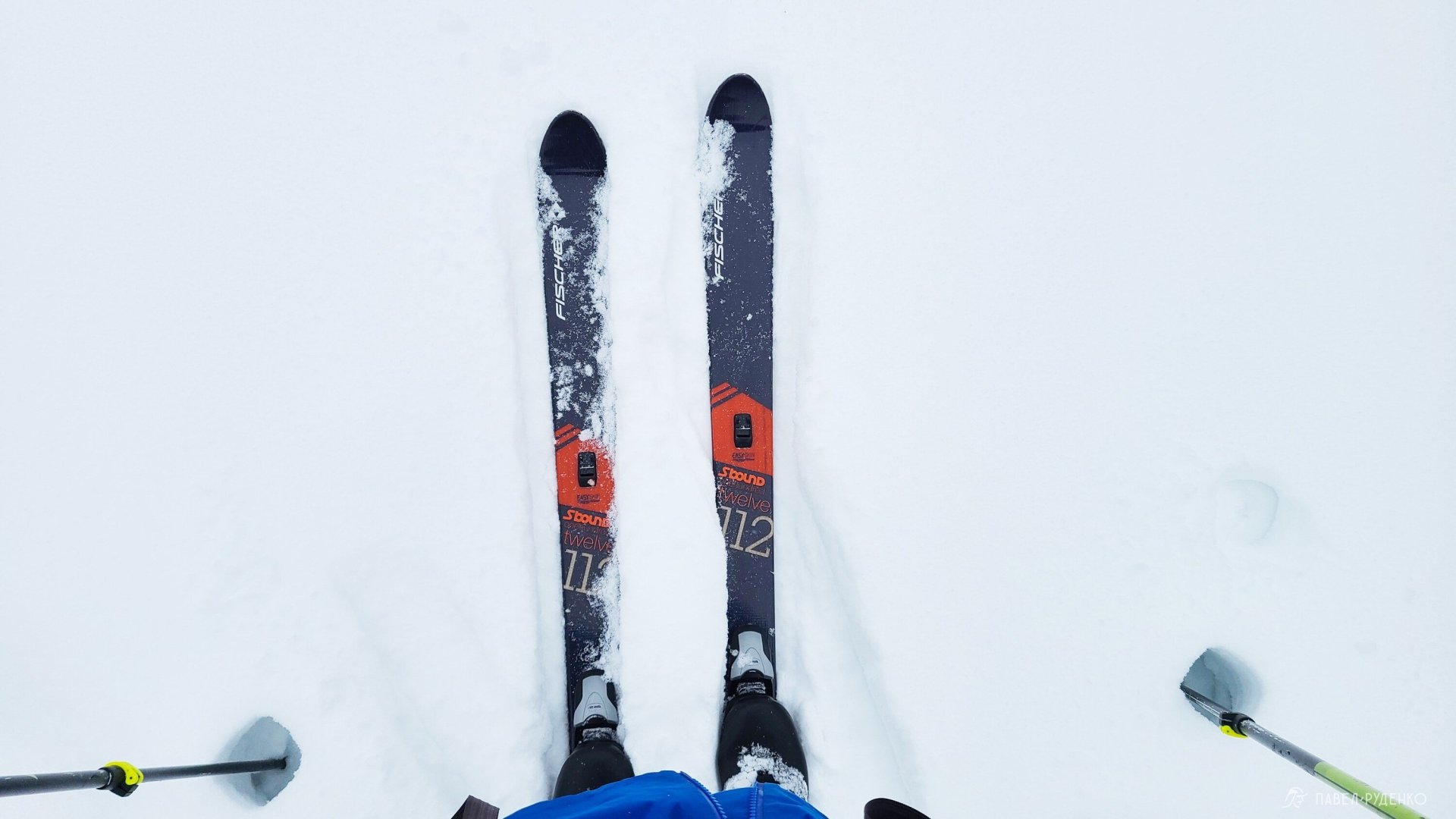
The S-Bound 112 feels almost like an alpine ski; it makes you want to charge down deep powder slopes. However, climbing uphill sideways or herringbone-style is genuine hard work: they are heavy and collect a massive amount of snow due to their width.
Sporten, Czech Republic. I used these skis extensively while developing the Sport-Marafon Outdoor School project, managing 18 pairs of Sporten Ranger and Expedition across all lengths. Their build quality is noticeably lower than Fischer and well below Åsnes. This is understandable given that they cost about half as much as Fischer equivalents. The price tag of ~€180 is fair for what you get. The steel edges dull quickly, requiring frequent sharpening which cuts into the ski's lifespan. The topsheet scratches easily, quickly losing its clean aesthetic. The sidecut geometry is straight and basic, as are the materials used. It is worth noting that their Outlander universal bindings are complete garbage :) The base glides slower than Fischer. Despite these drawbacks, the lower price justifies them for low-budget, non-technical treks of up to 7 days. However, I wouldn't recommend them to close friends—you get what you pay for. In my opinion, the most interesting model is the Forester 60–50–55.
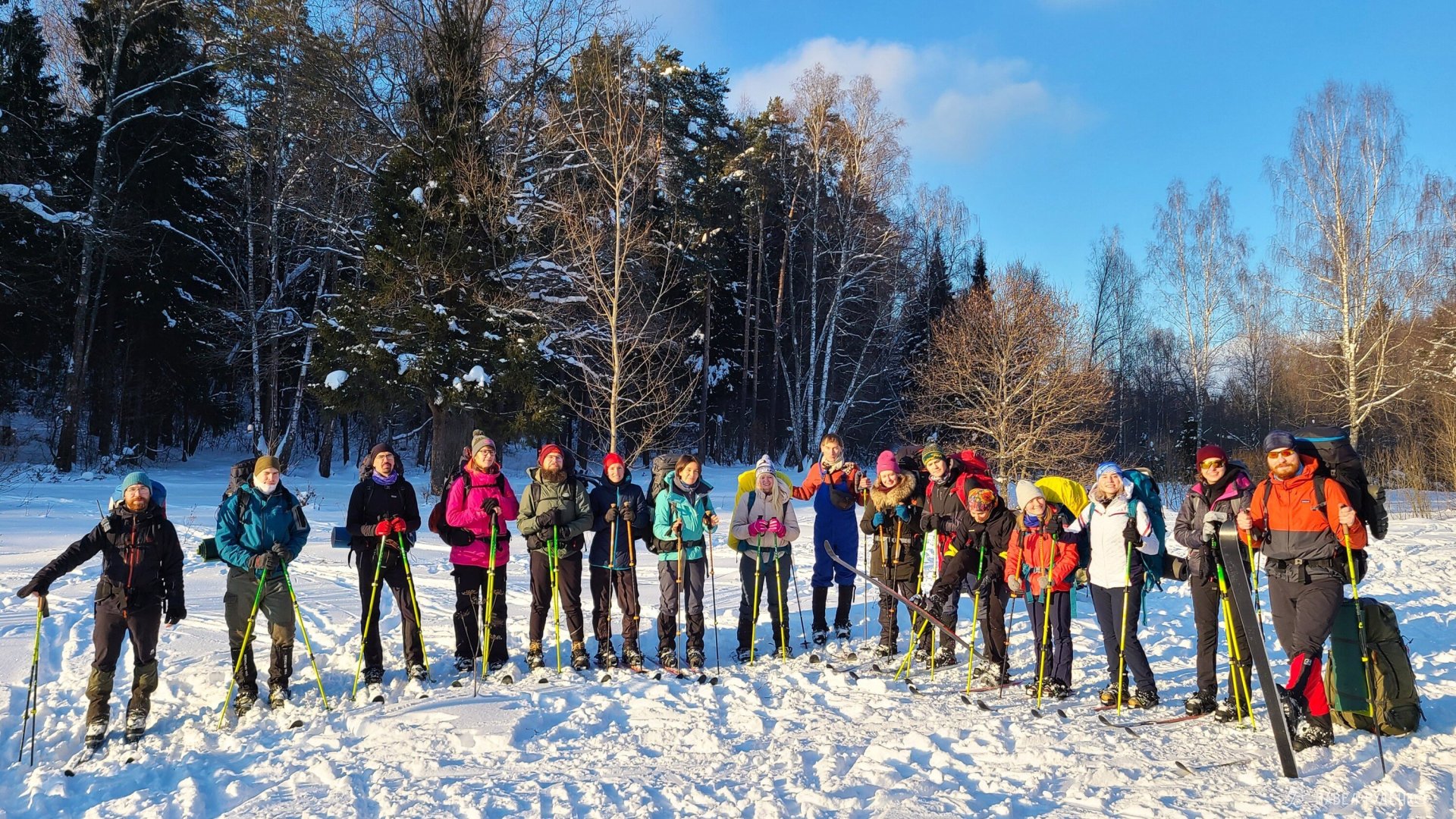
Another group I guided using Sporten skis and bindings.
Madshus, Norway. They offer one core touring line, the Panorama, available in different widths—62, 68, and 78—as well as integrated skin models like the T55, T50, Fjelltech M44, and M50. These skis pop up occasionally on secondhand boards and gear reviews.
Rossignol, France. They offer the Backcountry Positrack line in widths of 65, 80, and 100. They lack properly warm BC-standard boots, and my experience with other gear from this brand has not been particularly positive.
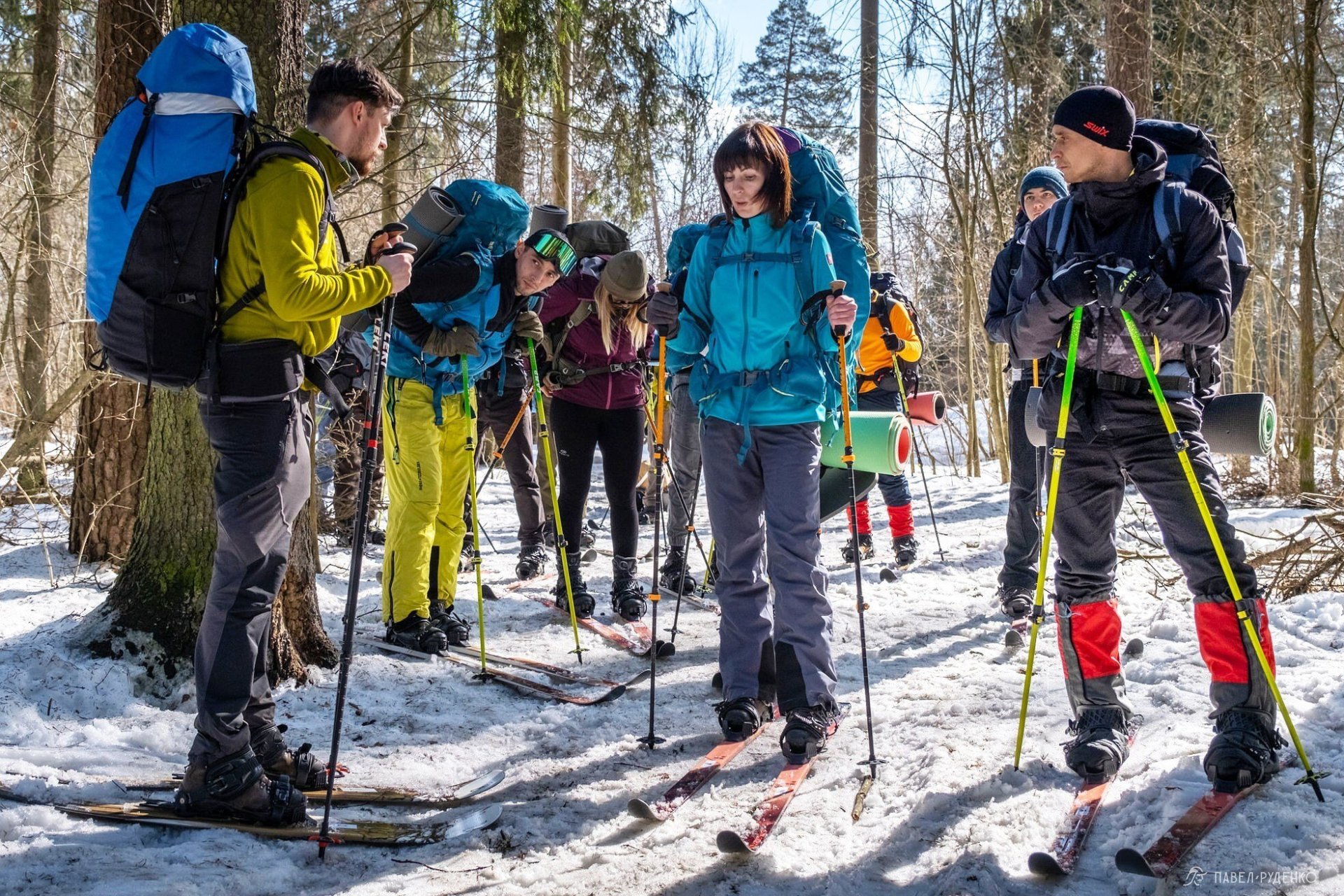
Hagan, Austria. Features only one Backcountry model in its lineup: the Offtrace 68–60–65. Only one person I know skied the previous X-Trace model, but it was redesigned with an integrated skin—a change typically aimed at rental fleets or casual users for easy weekend outings. It might be an option if no alternatives are available. Much better known and practical are Hagan universal bindings, which are genuinely well built.
Alpina, Slovenia. Relatively little-known in Russia, they offer the Discovery backcountry line in widths of 68, 80, and 102. These skis lack camber (they are flat). There is minimal technical detail on the official website, and forum discussions are mostly vague fluff :) They do not support short kick skins—only full-length skins can be used. They do not seem particularly compelling, unlike Alpina's boot collection, which includes boots for the new Rottefella Xplore system.
If you need more details, watch the video on how to choose touring skis and sign up for a ski expedition:




Comments (0)