

Choosing universal bindings for touring skis
A universal binding is a binding that fits almost any boot, such as a regular trekking boot paired with an insulated overboot.
When preparing for your first ski tour, you will generally choose between two options: universal bindings and specialized Rottefella bindings. Among universal options, there are three primary models available in Russia:
- Sporten Outlander
- Hagan X-trace pivot
- OAC EA 2
Sporten Outlander
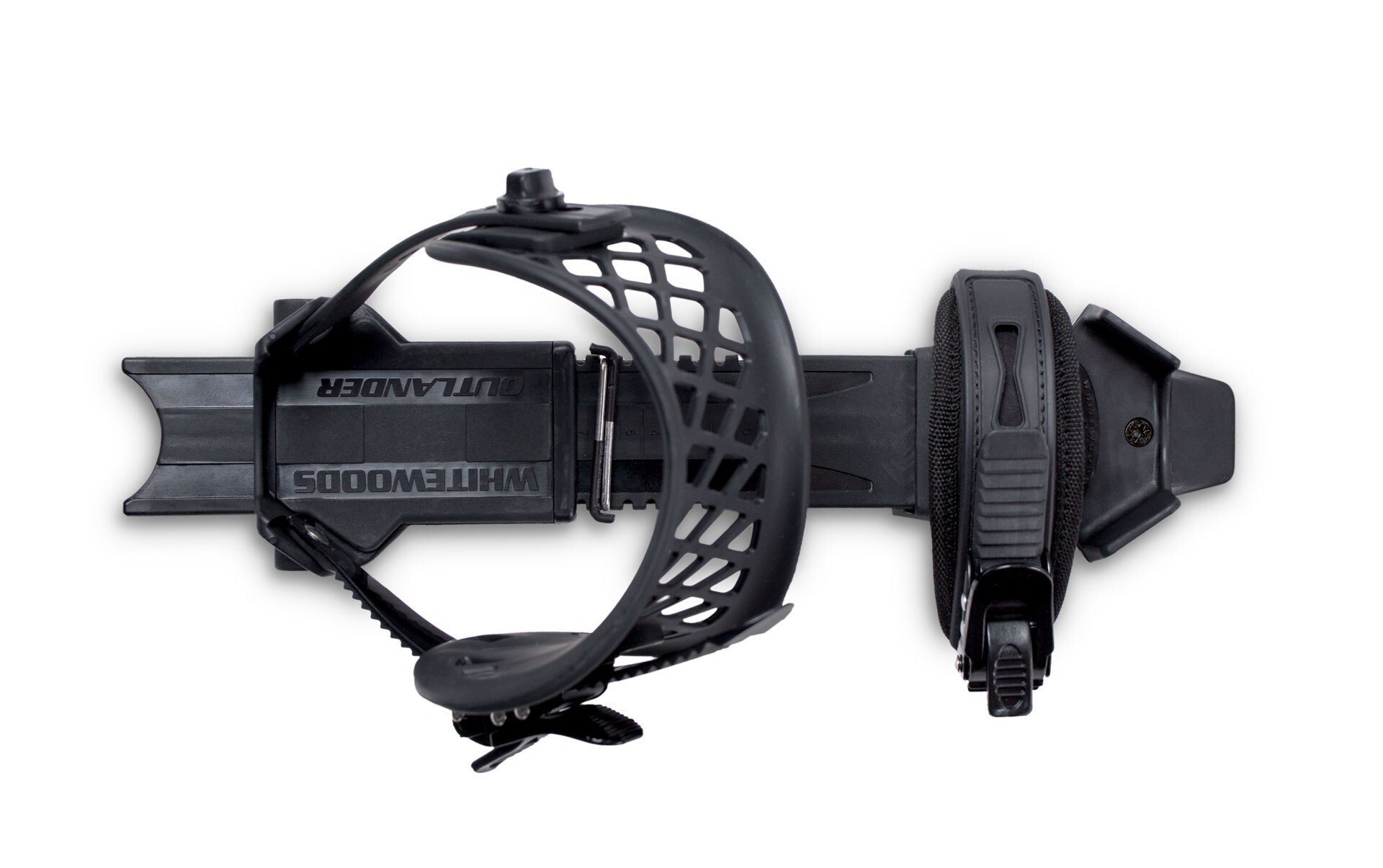
Bindings from the Czech brand Sporten are manufactured at their own factory in the Czech Republic. I have used them extensively. For two winter seasons at our Tourism School, we had 18 pairs of skis equipped with these bindings, which we used and maintained weekly. It is the most budget-friendly option among decent universal bindings on the market. They were once sold at Sport-Marafon, but proved less than ideal, so orders were temporarily halted. Since I frequently check manufacturer websites for work, I draw conclusions about gear based on how brands position and document their products. Well, there is virtually nothing available online regarding the Sporten Outlander.
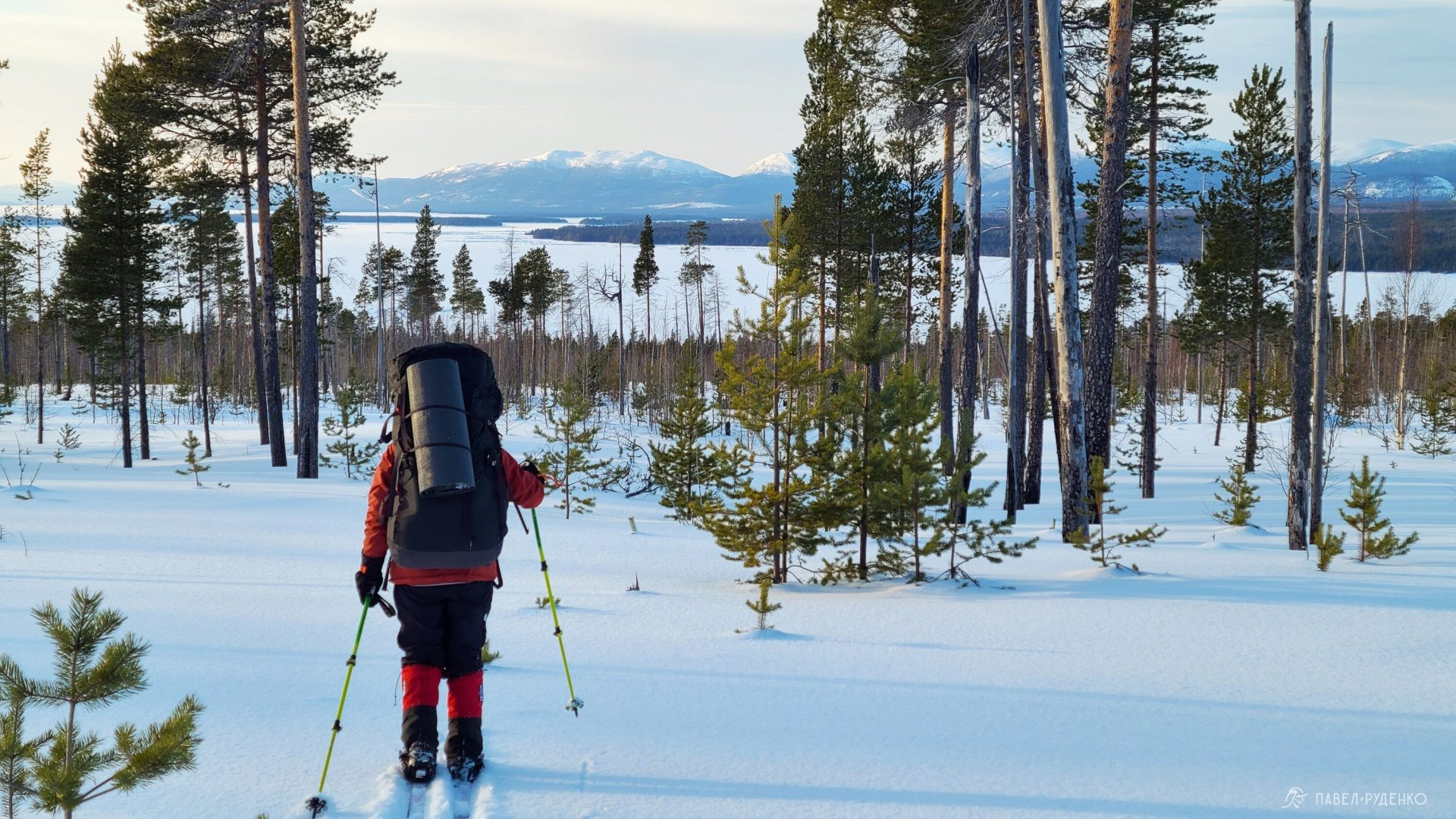
Anya skiing toward the White Sea on Sporten Ranger skis with Sporten Outlander bindings. The trip was a success; I brought along a repair kit with spare plastic straps and silicone tensioners.
What I didn't like is that the ratchet buckle faces downward rather than upward like on Hagan and OAC bindings. Because of this, bindings can unbuckle accidentally, especially when the ski punches through dense snow crust and catches the buckle. The mounting screws are too short: about 7 bindings were ripped out of the skis over two years of intensive, unforgiving use. The platform adjustment mechanism—the wire bail used for sizing—is also not very dependable. Hagan uses the same concept, but executes it much better.
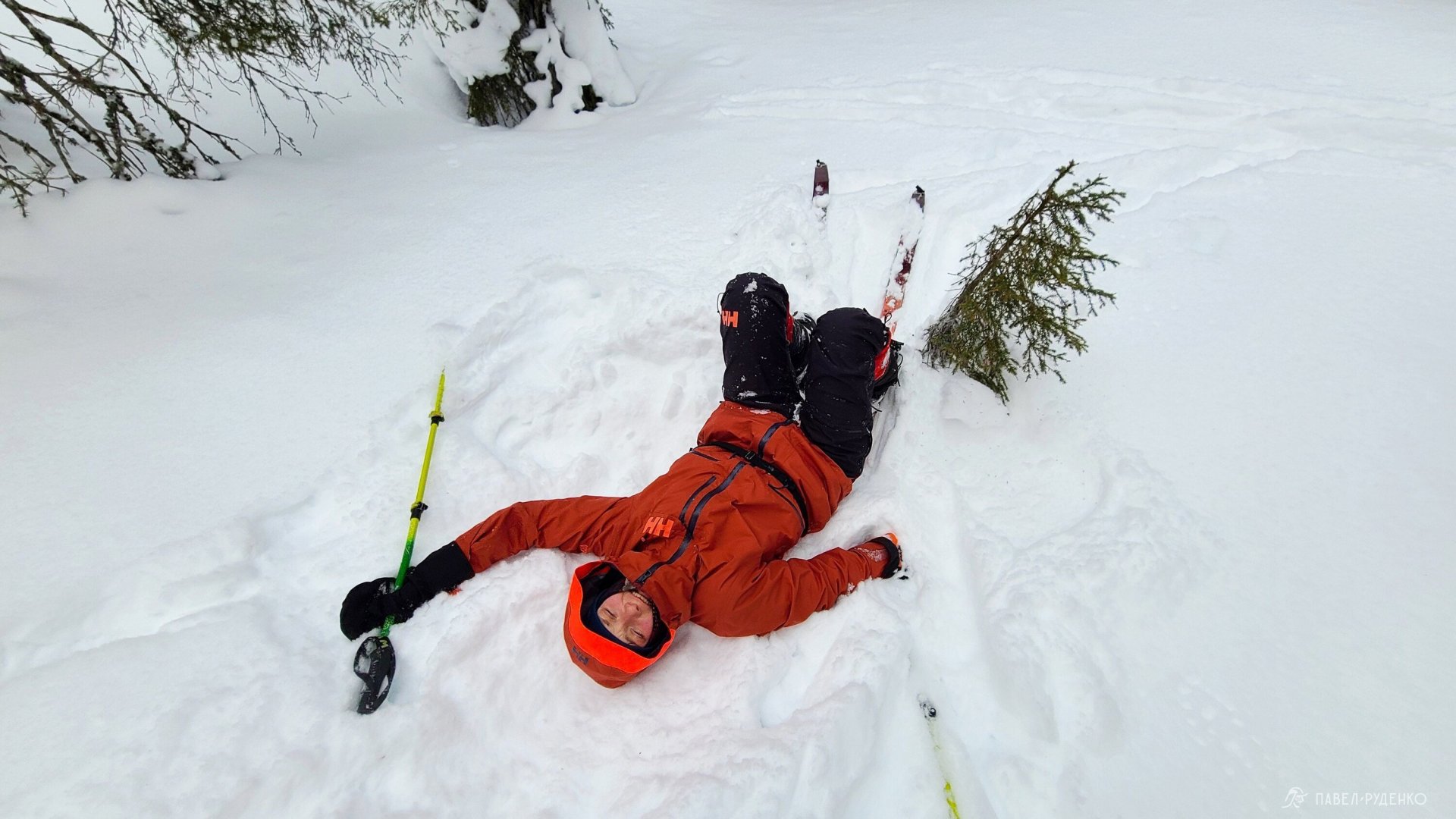
A sneaky spruce tree getting in the way of downhill fun. It is pure joy to set up camp early and enjoy some pack-free skiing around the area. Sporten Ranger skis, Sporten Outlander bindings.
There is no pivot hinge on the baseplate near the toe, which puts more stress on the plastic and limits foot articulation. In other words, it is built just like the older Hagan X-Trace Standard model. While these bindings get the job done, I am not particularly impressed by them.
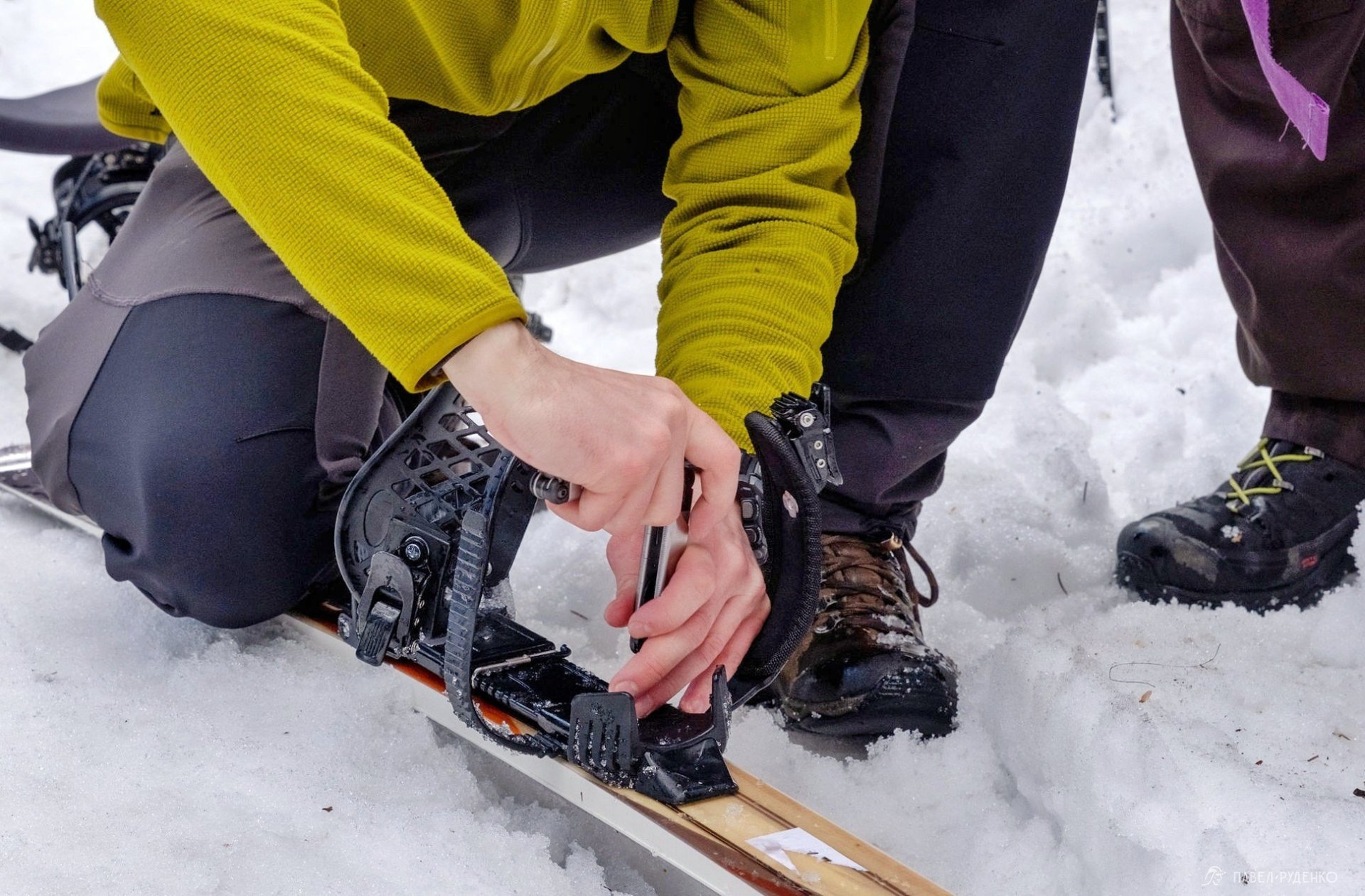
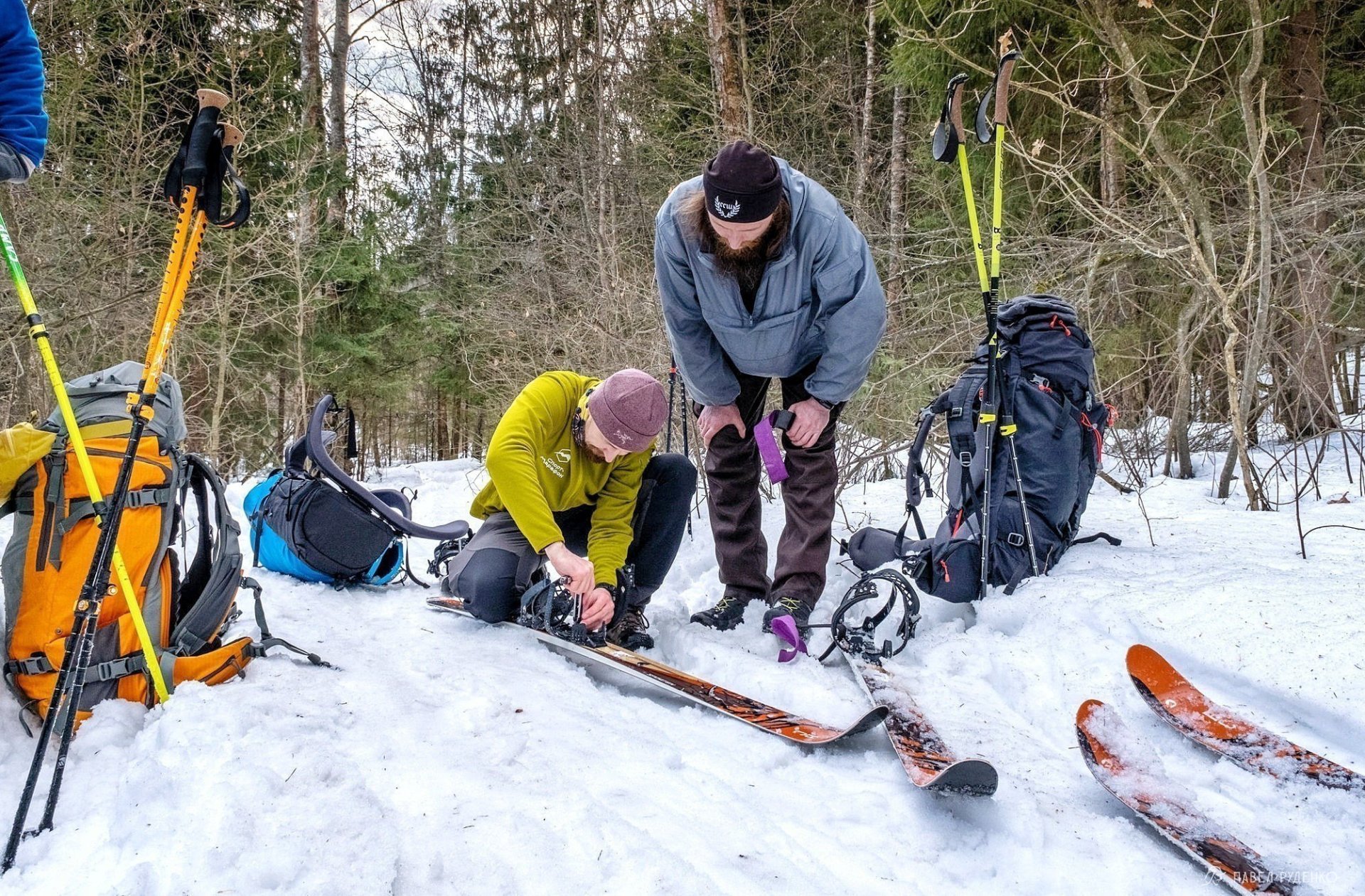
Sporten Ranger skis, Sporten Outlander bindings.
Join one of my ski expeditions to witness the incredible beauty of the Kola North, test your gear, and find a team of like-minded adventurers.
OAC EA 2.0 UNIVERSAL BINDING
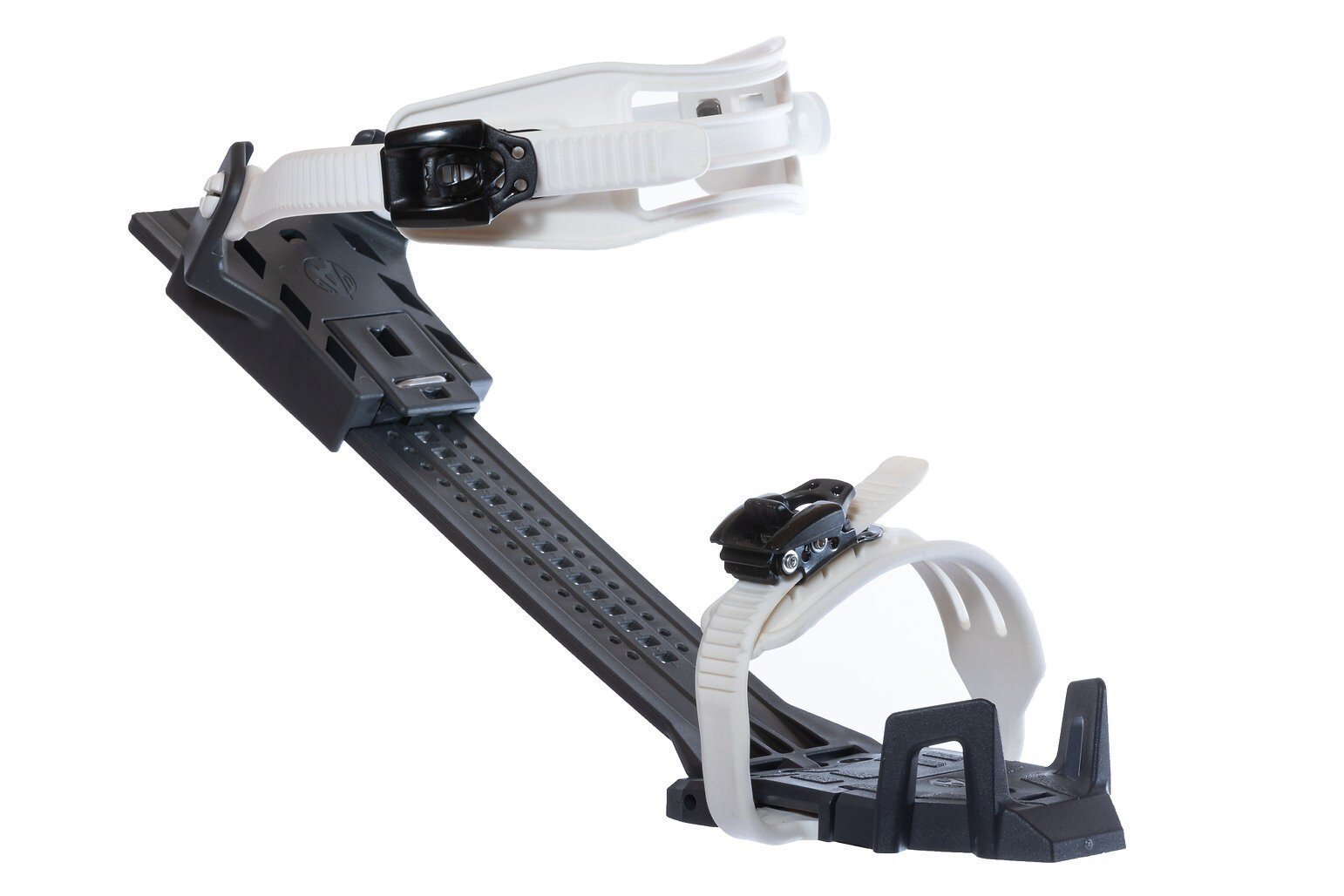
Bindings from the Finnish brand OAC—this is the company site, while gear details can be found via their division Skinbased. Fully assembled in Europe.
Unfortunately, I haven't handled them in person yet since they are not officially distributed in Russia, so my opinion is based on collected data and general backcountry experience. Sergey Savelyev was planning to order them, and hopefully sanctions won't get in the way so we can see them in Russia. They should be on par with the Hagan X-Trace Pivot, or perhaps even better. If anyone owns a pair and lives in Moscow, shoot me a DM—I'd love to check them out and hear some real-world feedback.
- Weight: 1,050 g per pair.
- Compatible boot sole length: 37–48 cm.
- Operating temperature range: down to –30 °C.
- A kids' version with a smaller size range is available.
- Black Diamond produces equivalent GLIDELITE UNIVERSAL BINDINGS under license from OAC.
Mounting OAC bindings uses the exact same hole pattern as NN-75 bindings. If needed, you can easily swap them in the future for Rottefella Super Telemark bindings or their equivalents. Generally, it is safe to remount up to 3 sets of bindings on a single ski by drilling new holes, but keeping hole counts to a minimum is always preferred.
There is plenty of info available abroad: OAC EA 2 bindings are very popular and have received many positive reviews.
Hagan X-Trace Pivot
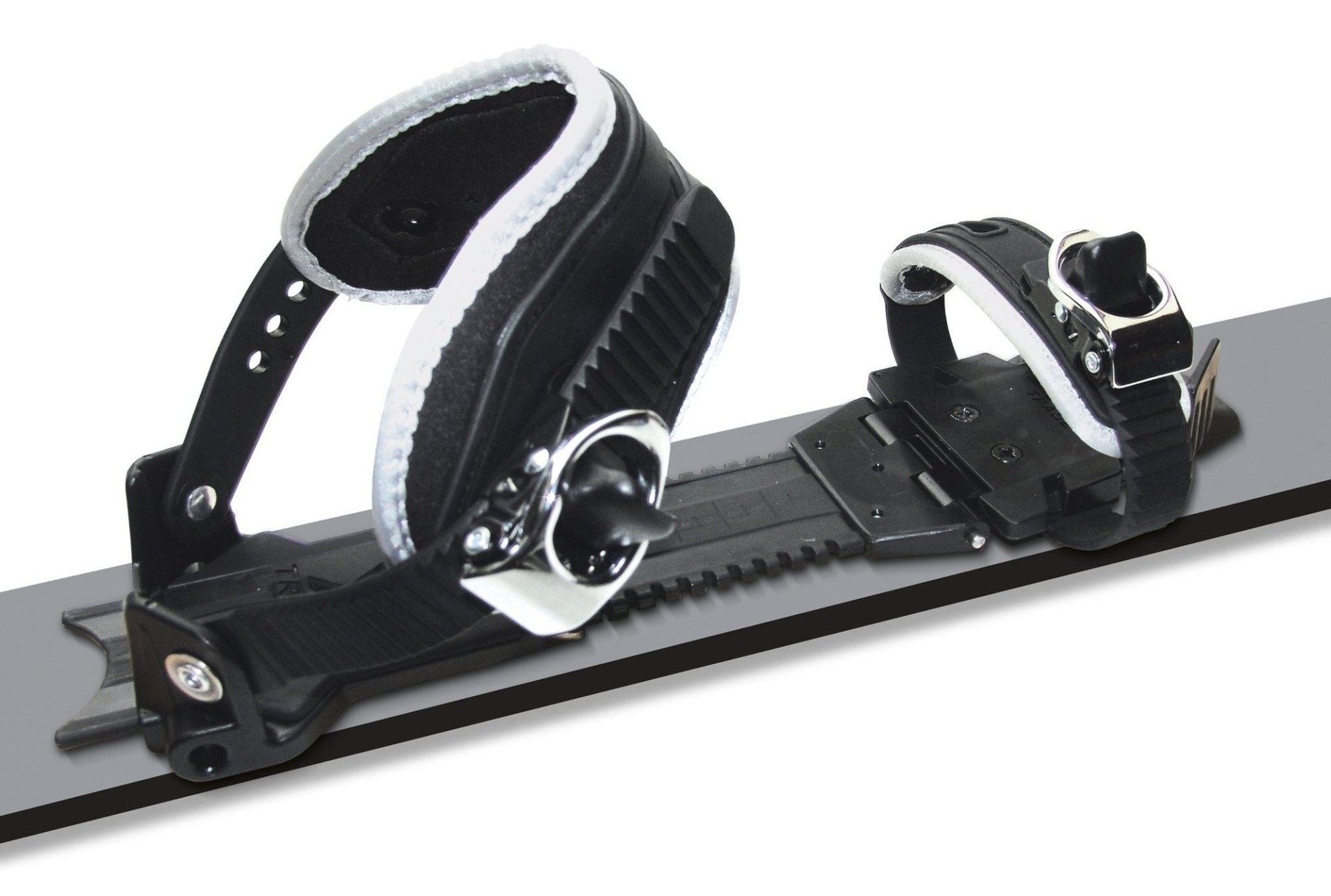
Austrian brand Hagan. They manufacture two types of bindings licensed from OAC: the older X-Trace Standard and the newer X-Trace Pivot Binding. Unlike the Standard, the Pivot features a toe hinge that improves walking stride without stressing the plastic baseplate. The toe wings are wider and taller, securing the boot much better. Given the choice, I would definitely recommend the Pivot solely for the hinge mechanism.
- Weight: 1,150 g per pair.
- Compatible boot sole length: 35–47.5 cm.
- Operating temperature range: down to –30 °C.
- A kids' version with a smaller size range is available.
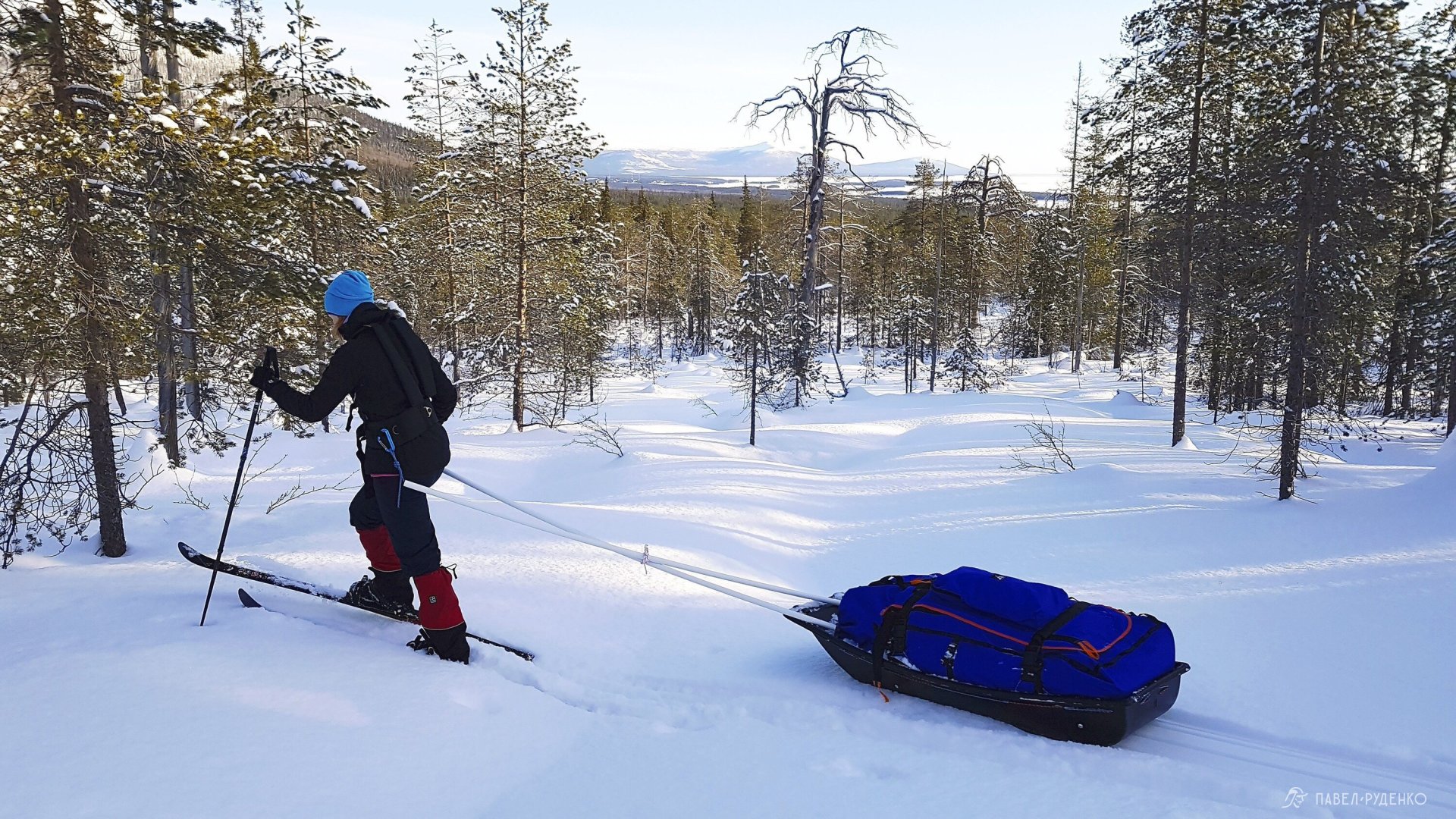
I have used the Hagan X-trace Pivot on ski treks; my companions used them as well, and we had a pair at the Tourism School. It is an excellent, well-known binding that is readily available in Russia. Compared to Sporten and OAC, the instep strap cradle is wider and softer, distributing pressure much better when cinched down tight.
The buckle points in the right direction and does not pop open on its own, unlike on the Sporten. Visually, all components and plastics inspire much more confidence. Friends have tested these bindings in deep freezes down to –40 °C, and they held up, but you must keep in mind that the risk of plastic failure in severe sub-zero cold is significantly higher. If you plan expeditions in such harsh conditions, dedicated backcountry bindings like NNN BC, NN 75, or Xplore are much better suited.
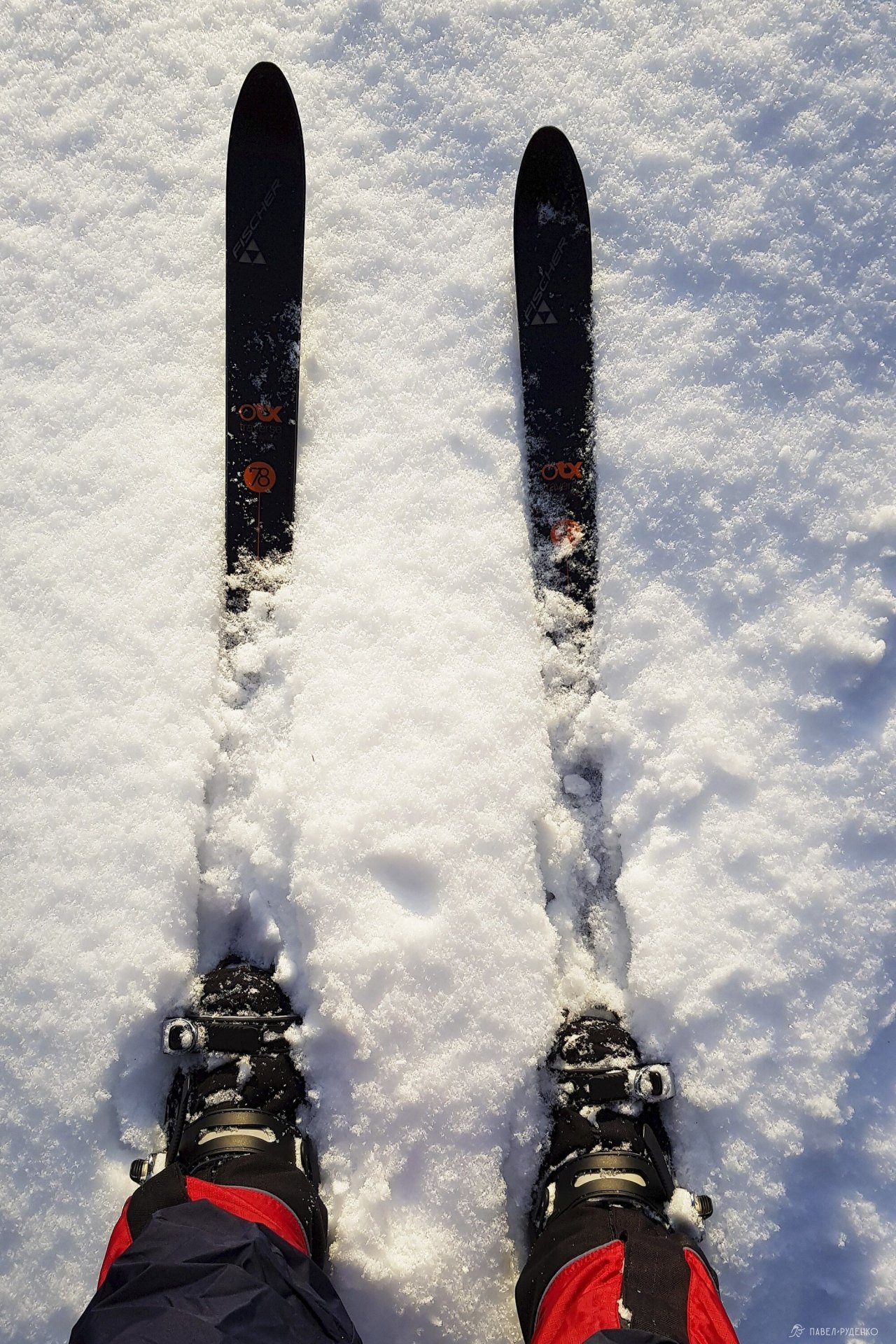
You can often find comments about broken Hagan X-trace Standard bindings following Denis Doropey's video review. One should always look at the details: what footwear was the user wearing? In the video, it is unclear whether the boot sole was rigid—and that is a crucial factor. Was it the user's first ski trek in a mountainous area? As far as I know, yes. Did they have proper Nordic skiing technique? Hard to say, but on a first trek, the risk of user error is high. Was the binding length adjusted correctly? Unknown, and people often set them up incorrectly without pre-tensioning the spring, which leads to failure. Was it bitterly cold?
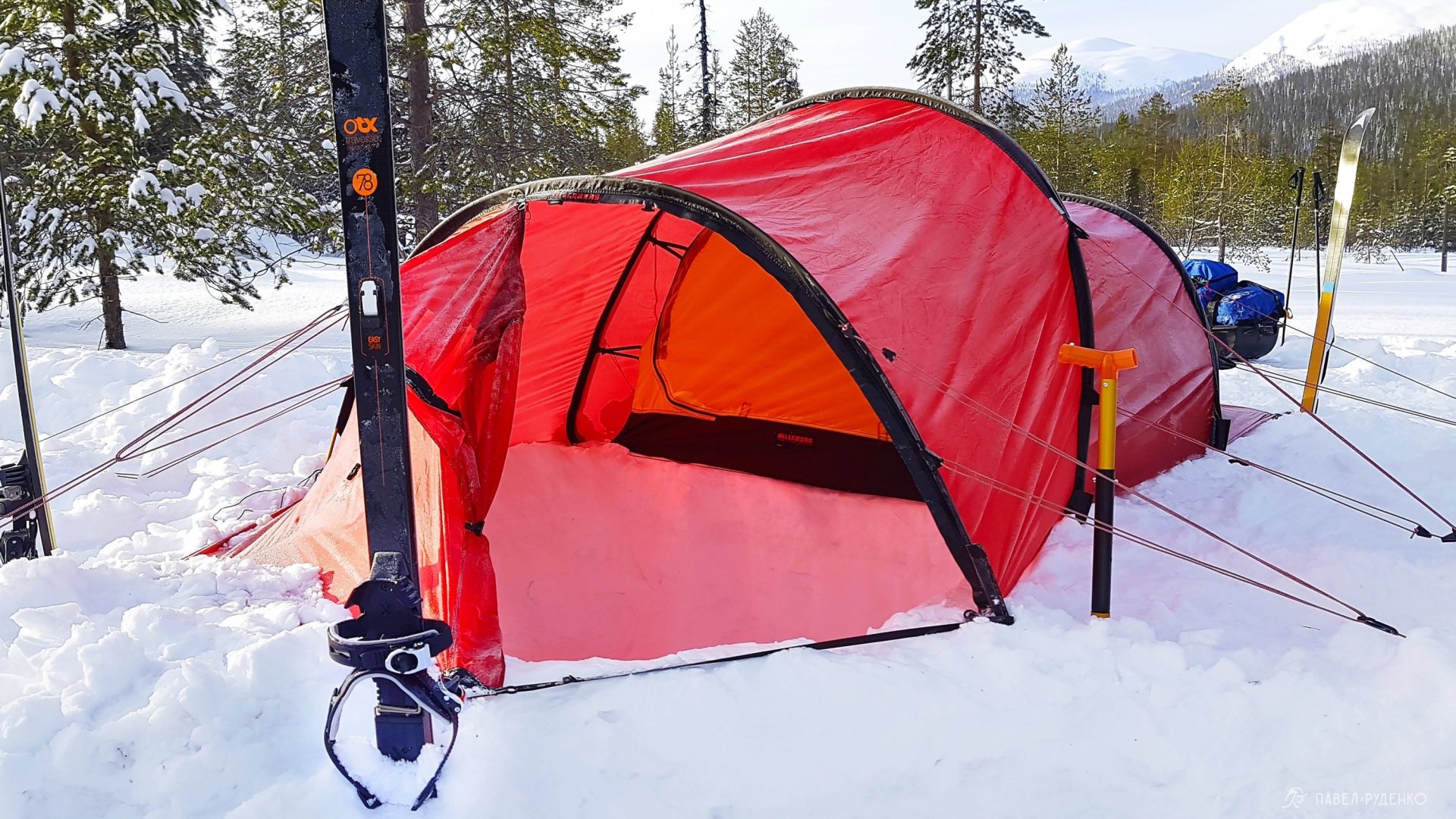
A Hilleberg Nallo 2 GT pitched using Fischer Traverse skis and Hagan X-Trace Pivot bindings. The hinged Pivot model is the best design choice, greatly reducing stress on the plastic baseplate.
Yes. Judging by the comments in the video, the binding failed after a lively downhill descent where everyone skied their own line, which could point to user error or bad luck. Every factor plays a role, so the only real takeaway is that any gear can break. Just like Oleg Chegodaev once ripped the steel bar clean out of an Alfa NNN BC boot—and that is considered the most bombproof system out there. Oleg is tough, of course. Always study usage guidelines, take care of your gear, duplicate critical items, and bring a repair kit. On demanding expeditions, bring a spare ski for the group, and on winter solo treks, a backup pair of snowshoes is standard practice.
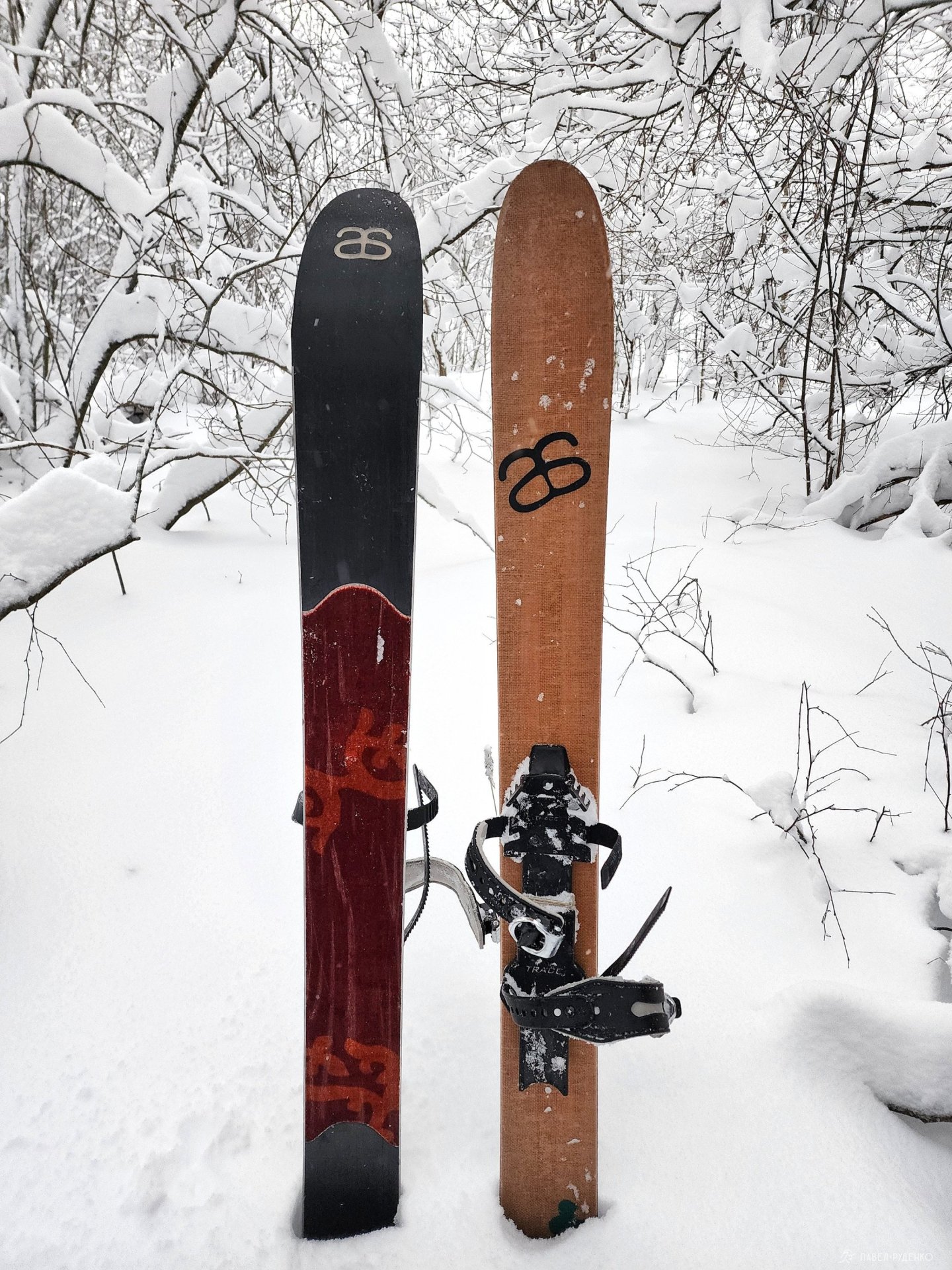
Tested Altai skis with Hagan X-Trace bindings. For short skis, this is by far the most practical setup: slip into comfortable boots and head out for a relaxed forest glide—pure bliss.
Verdict on the models
Here we have three universal bindings. The most affordable option is the Sporten Outlander; it has its quirks and rough edges, but it gets the job done.
OAC and Hagan are manufactured at the same facility, sharing the same build quality and several components. The primary difference lies in the binding baseplate adjustment. Reviews and videos suggest that the OAC is easier to adjust, but that mainly matters for rental shops and outdoor clubs. For instance, back at the Tourism School, I dialed in a couple hundred bindings for participants right out in the snow, and it was never really a hassle. For personal use, you adjust them so rarely that it barely makes a difference. A more crucial detail: under excessive load—especially with stiff-soled boots—the OAC heel lock is designed to slide backward, preventing potential breakage.
Both bindings are class leaders globally with only minor differences, making either a solid choice for moderate treks and daytime temperatures down to –30 °C.
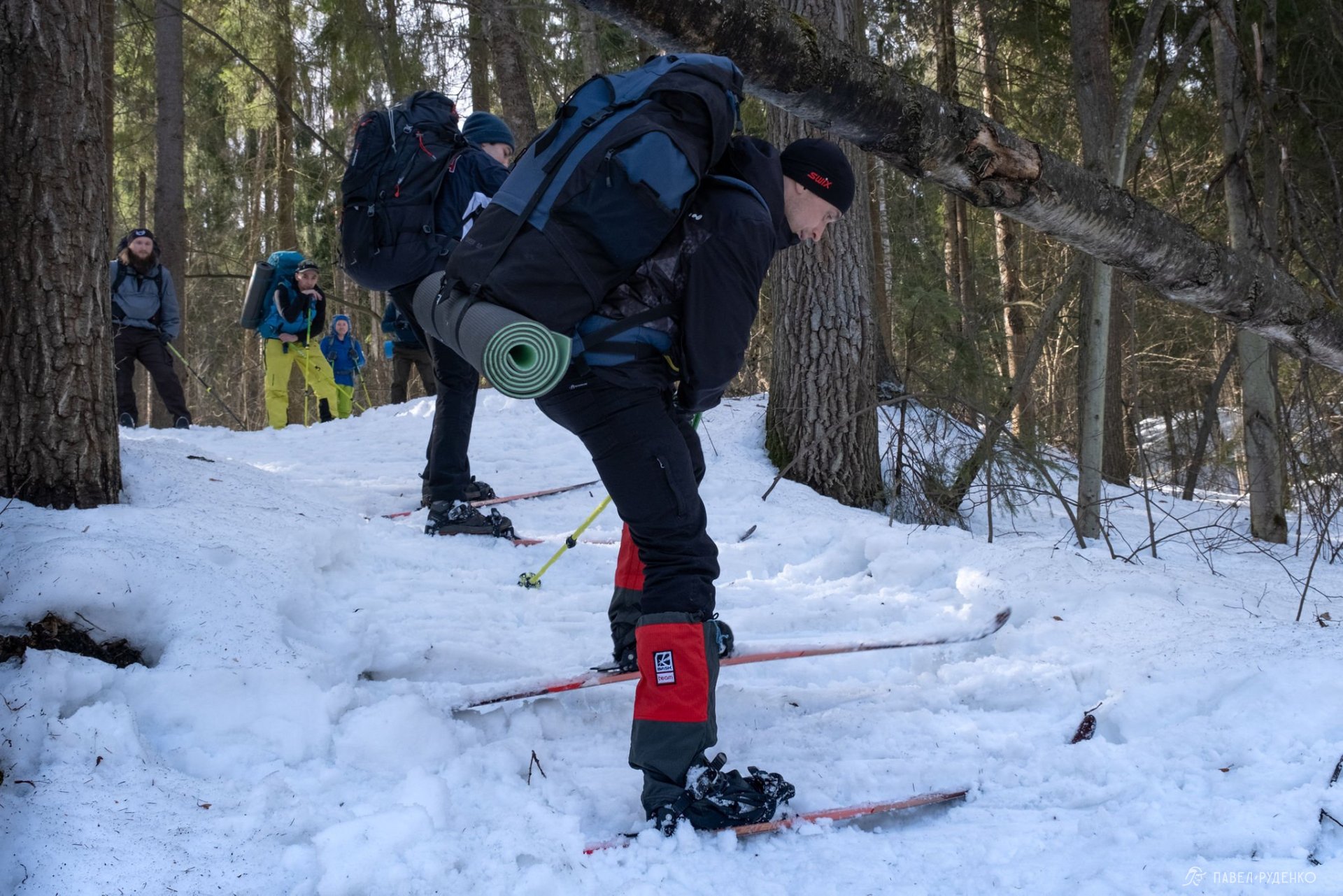
Tips from personal experience
- All universal bindings squeak—just accept it and move on.
- These bindings deliver great torsional and lateral stability. Compared to cable bindings, maneuverability is significantly better. Raised side wings at the toe and heel keep your boot firmly locked in place.
- The skis themselves are symmetrical with no left or right designation, but mounting universal bindings changes that. The strap buckles must face outward; if they face inward, they can catch on each other and release the binding.
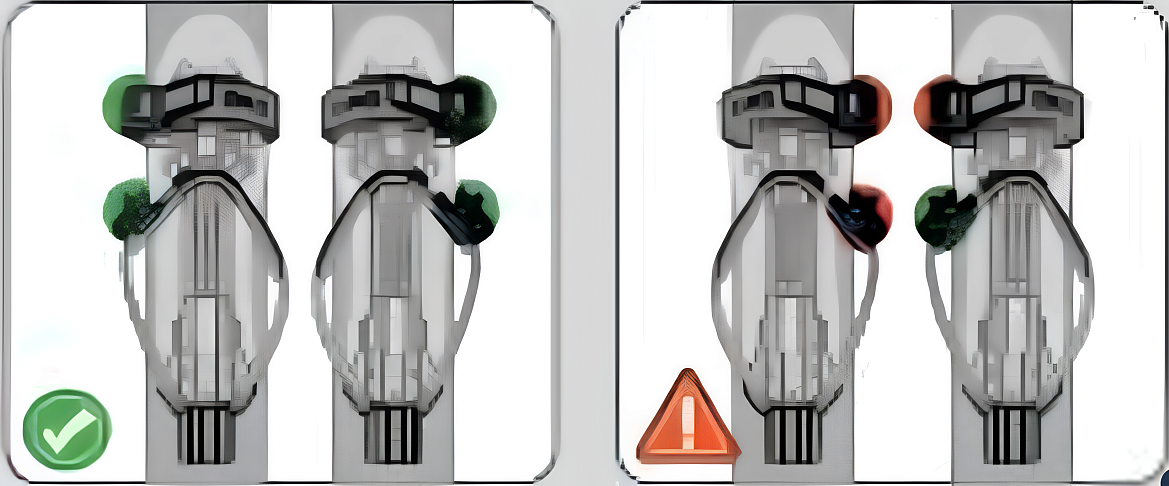
- The straps are height-adjustable. Adjust them so the wide section sits snugly over the middle of your boot. Avoid overtightening, as restricting blood flow to your feet is a serious risk in winter conditions.
- Always carry spare parts on autonomous, self-supported expeditions. For example, I unscrewed plastic ladder straps from my snowboard and packed a spare ratchet buckle, along with screws, a multitool, wire, duct tape, zip ties, and so on. OAC also sells a dedicated repair kit.
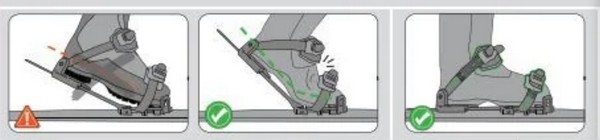
- Never pair these bindings with excessively stiff mountaineering, alpine ski, or ice climbing boots, as the rigid soles can snap the binding's plastic base.
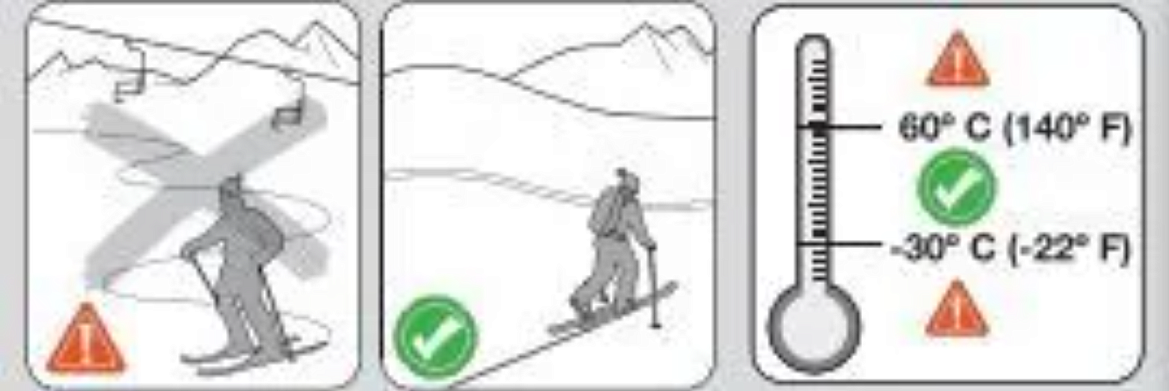
- These bindings are not built for alpine skiing or aggressive downhill descents.
- Regularly check that all mounting screws remain tight. Inspect the spring beneath the binding plate before every trek to catch any signs of wear early.
- Do not use these bindings below –30 °C. If you trek between mid-March and April, daytime temperatures in most regions will remain well within safe limits. The Moscow region rarely sees that kind of extreme cold. However, heading to the Polar Urals in February calls for a different setup. While these bindings have been thoroughly tested in harsh Arctic environments, extreme cold combined with misuse can lead to component failure.
- Experience shows that for shoe sizes EU 46–48, bulky winter boots might not fit into the binding, so it is best to test the fit in-store.
- Proper sizing requires more than just sliding your boot in and bringing the heel piece forward; doing so can cause your toe to pop out on steep climbs and technical terrain. The heel piece is spring-loaded and slides back. First, slot your boot heel in and push backward against the spring tension, then drop your toe into place. The spring will clamp the boot securely, delivering a solid, reliable lock. The tension should be firm—neither too tight nor too loose. This is the most critical adjustment!
Verdict on universal bindings
These bindings are an ideal match for quick outings in a city park, forest trails near your cabin, or longer treks. They allow multiple family members or friends to share the same skis with zero hassle. Universal bindings clearly outperform specialized setups during shoulder seasons, where variable snow cover requires switching between skiing and walking on foot.
They excel on mixed-terrain routes where skis are just one part of your transit. Remember: universal bindings should never be paired with rigid boots. The pivot point sits beneath the ball of the foot rather than the toe tips, meaning stiff soles can overstress or rip the binding off the ski. While we have logged miles in stiff boots on both Sporten Outlander and Hagan X-Trace bindings without issues, pushing your luck in the backcountry is never worth it.
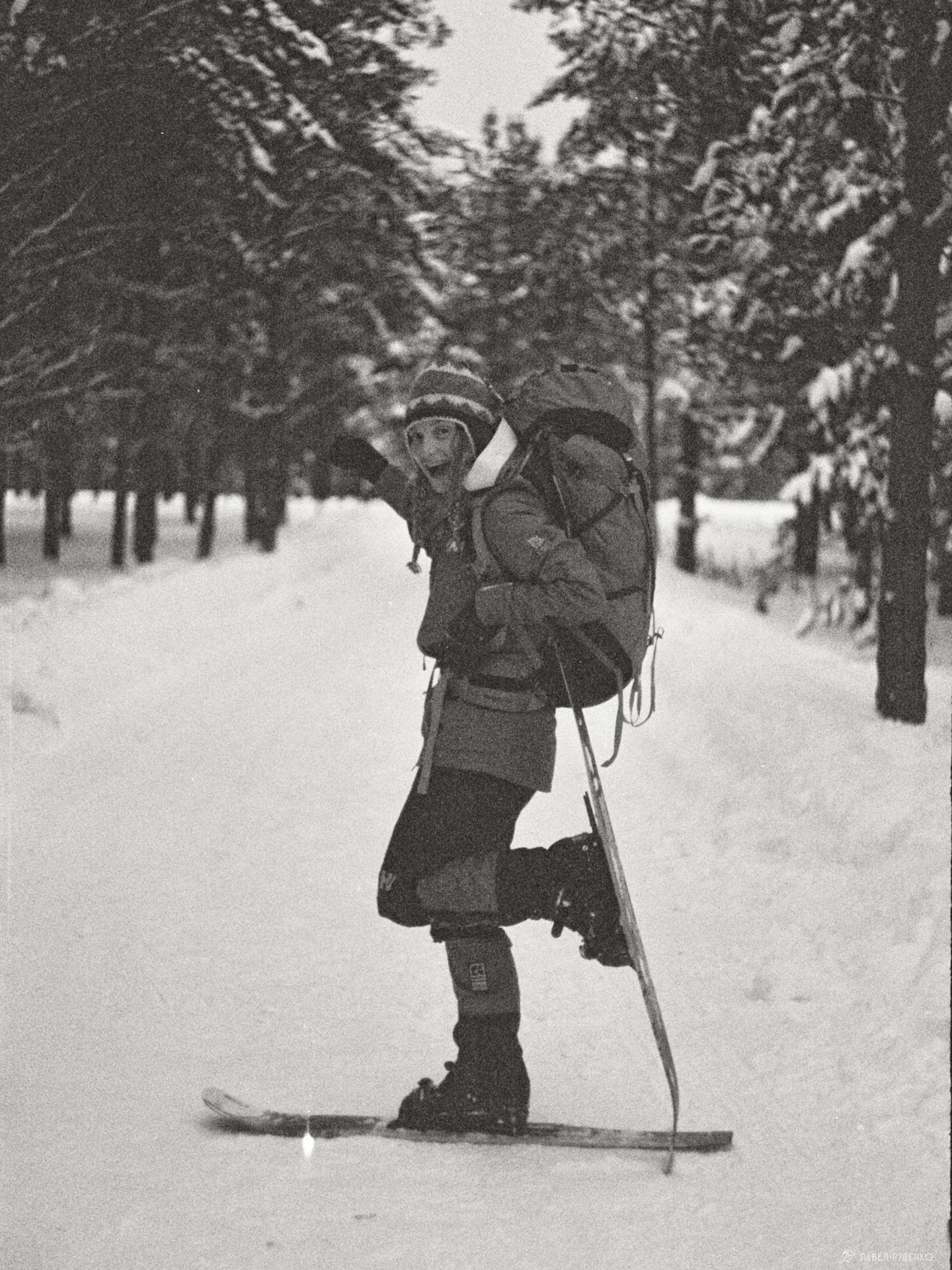
A great setup is pairing the leather trekking boots you use for summer hikes with insulated overboots (gaiters). Make sure the overboot fits snugly around the toe and heel, otherwise your foot will slip out of the binding. An even better choice is a dedicated warm winter boot like the Salomon Toundra, Sorel, or Baffin. Just keep in mind that these boots lack lateral ankle support: on uneven mountain terrain, this places extra strain on your joints and raises the risk of injury.
Universal bindings are a versatile option for all the scenarios above. However, if you are planning serious expeditions with temperatures dropping below –30 °C, rugged mountain terrain, complete autonomy, or simply demand top-tier performance, specialized backcountry ski bindings are the way to go.
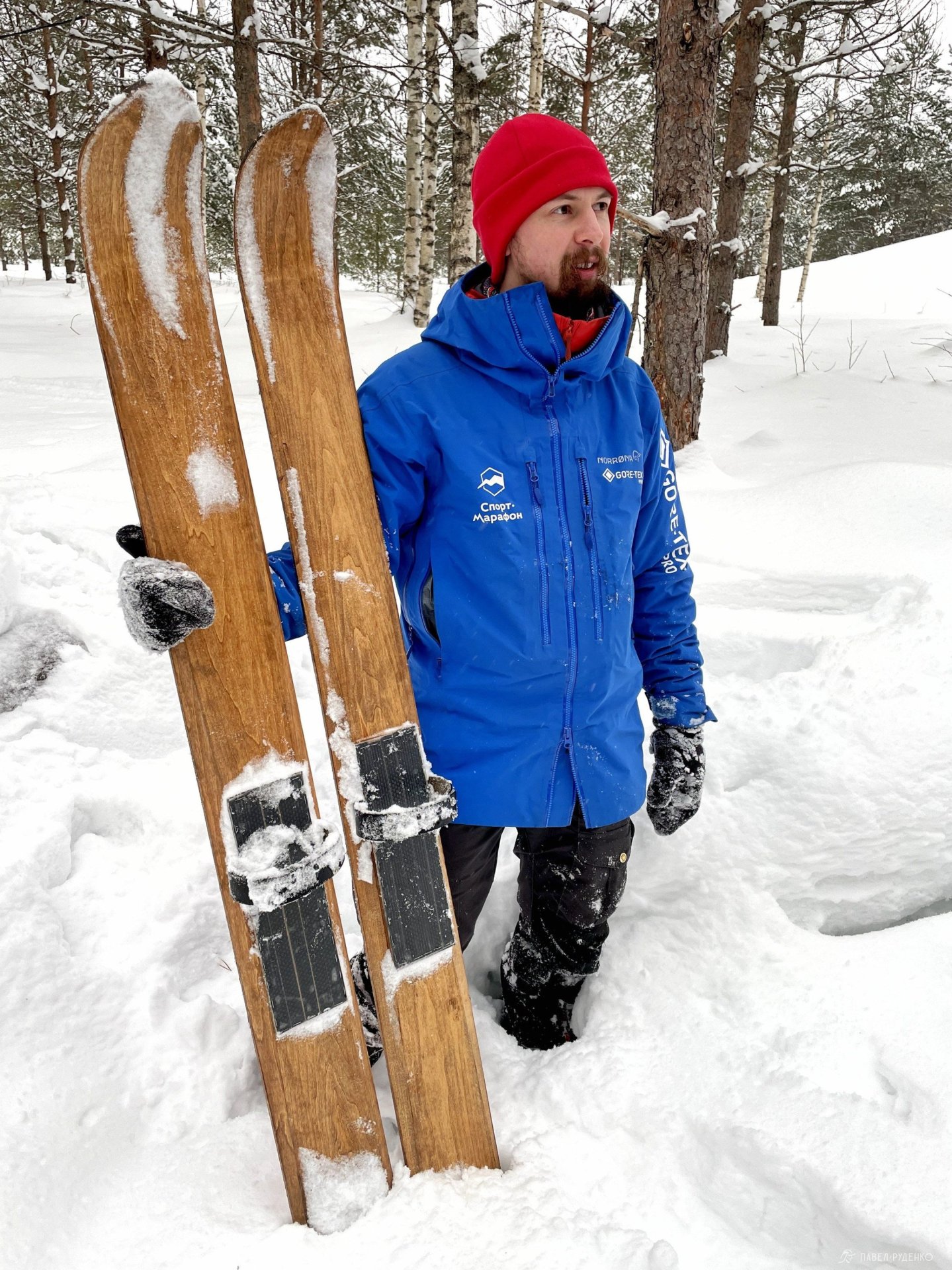
Traditional hunting skis with nailed reindeer skin climbing skins. The single toe-strap feels remarkably primitive and awkward after modern universal or NNN BC bindings—your foot shifts, slips, and takes real practice to handle, but the authentic vibe is unbeatable :)




Comments (0)