Ski trek with pulkas to the Barents Sea
We are heading north again — to the winter tundra. Murmansk is the gateway to this world, the largest city beyond the Arctic Circle, not only in Russia but in the world.
Before heading into the tundra for a week, we check into a cozy hotel in Murmansk and meet up in the kitchen. I like to meet everyone before the trek to chat, get in the mood for the hike and pack the pulkas. This is the perfect moment to check that we haven't forgotten anything and have time to buy it. I conduct a safety briefing and rules of conduct on the trek, talk about the subtleties of ski tourism, how the camus works, the pulka system, etc.

Waiting
We are heading to a unique place where the mountain tundra and the Barents Sea meet — the Murman coast!
The North Cape current warms the local waters of the Kola coast, creating the mildest conditions of all the subpolar regions of Russia, and this makes it possible to reach the open Arctic Ocean on skis, spend the night in tents to the sound of the surf and admire the harsh and beautiful dark blue horizon against the backdrop of snow-white hills — awesome.
Who is the master of the tundra? Right — the wind, it blows often and strongly, covering the roads with snow for a day or two, or even more. On the day of our start, the road was already closed, and we were waiting for information about a possible convoy. This factor adds zest and value to our journey.
We have to think through all the details carefully, have extra days and keep our finger on the pulse; I like this challenge.
I monitor the information from the road workers, and the Ministry of Emergency Situations calls every 3 hours and coordinates from their side. Communication with the Ministry of Emergency Situations is getting better every year, this time they wrapped us in care, nice).
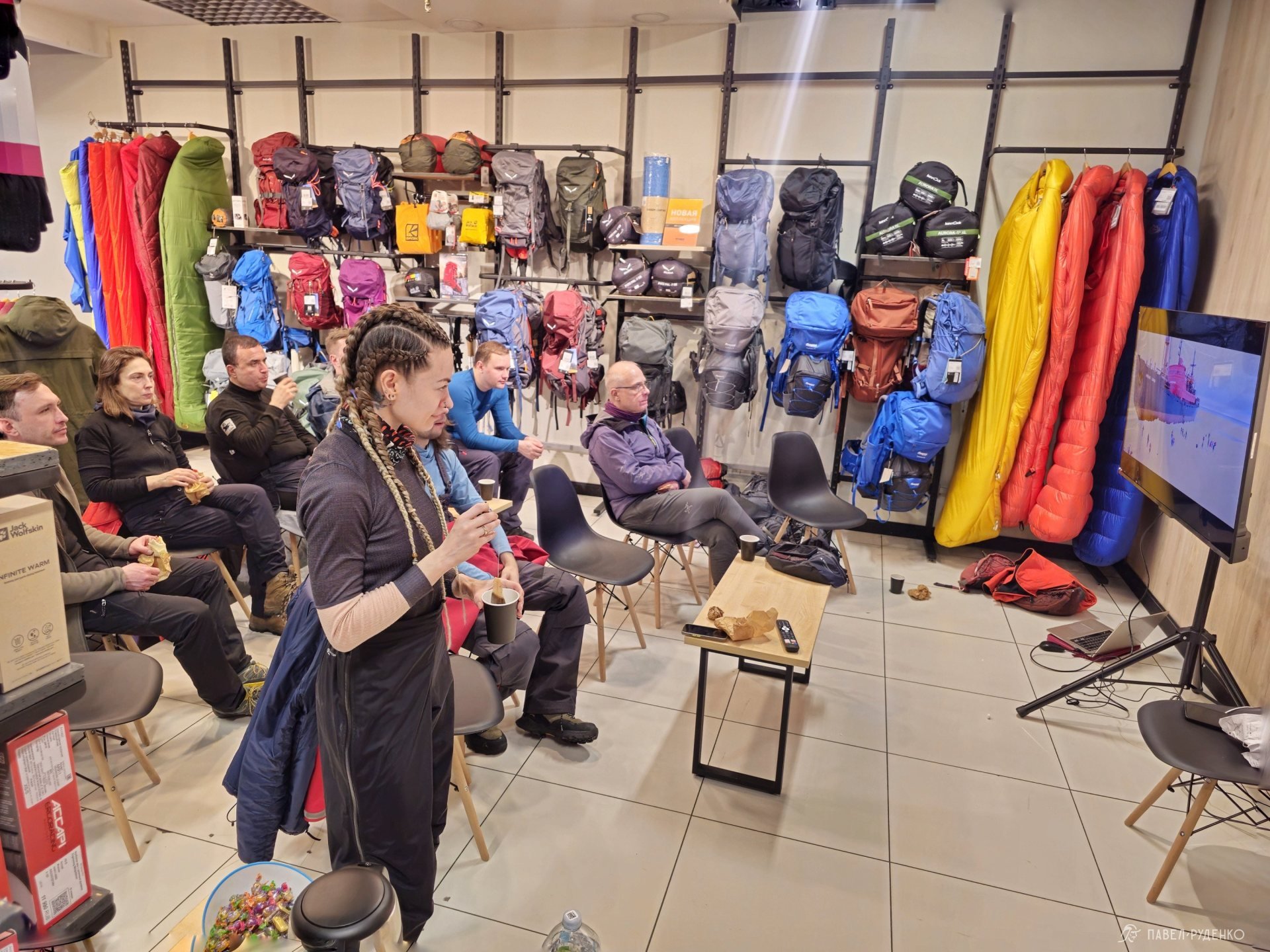
The anxious hours of waiting pass by watching the documentary «To the Arctic», I highly recommend the film. We watch it at my friends' Prohiker outdoor store. If you are in Murmansk, be sure to drop by: it's the best outdoor store in the region.
Call — the road has been cleared and the convoy will start at 18:30. YAY! We jump into the transfer and head to Teriberka.
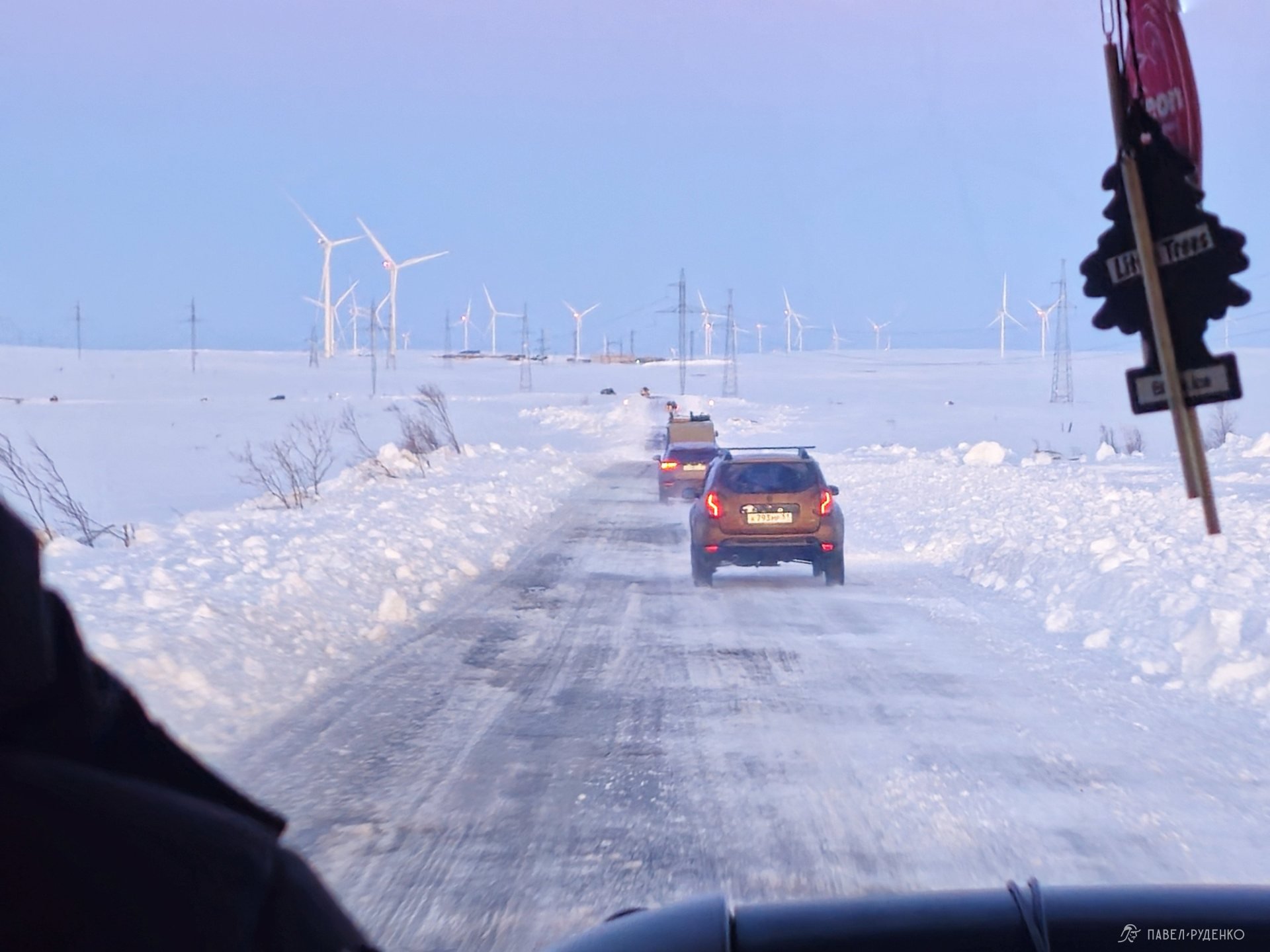
We arrive in the evening. I jump out of the warm car, and a strong gust of wind hits my chest, I close the car door with effort, fighting the wind. Sigh — and my nose fills with the smell of the chilly sea, finally, I'm home. I planned to camp nearby, but it turned out to be impossible. The snow near the shore was blown away more than usual, and the ground was like concrete — no way to anchor, but no problem: I know which valley will have enough snow.
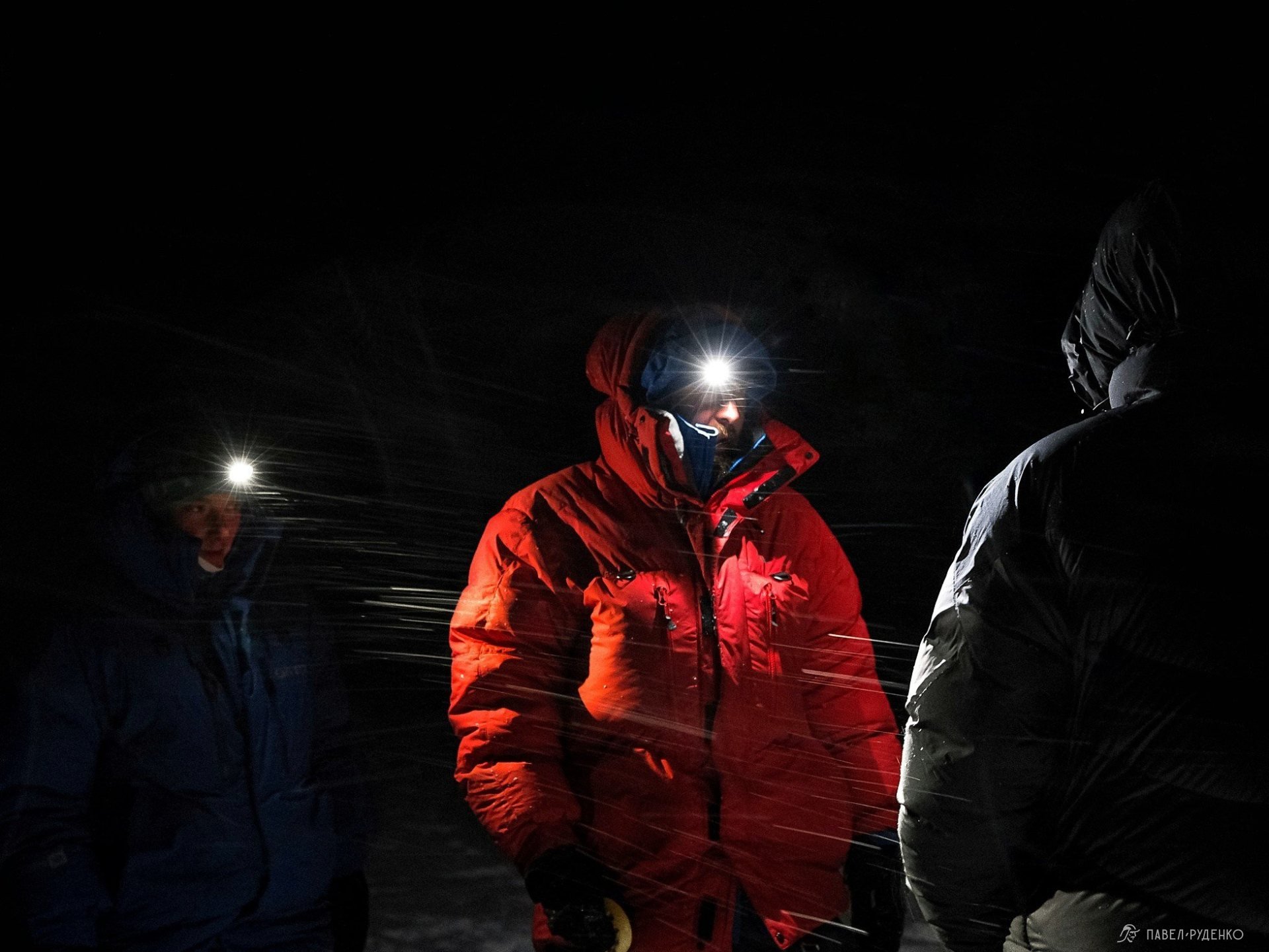
The sky suddenly flashes with a green fire, and we walk with the lights off under the living light, like characters in a northern fairy tale. Have you ever seen how the flashes reflect in the eyes of a person who has seen the aurora for the first time? Damn magical moment. The aurora with a power of Kp 6 pleased us for 4 hours without stopping.


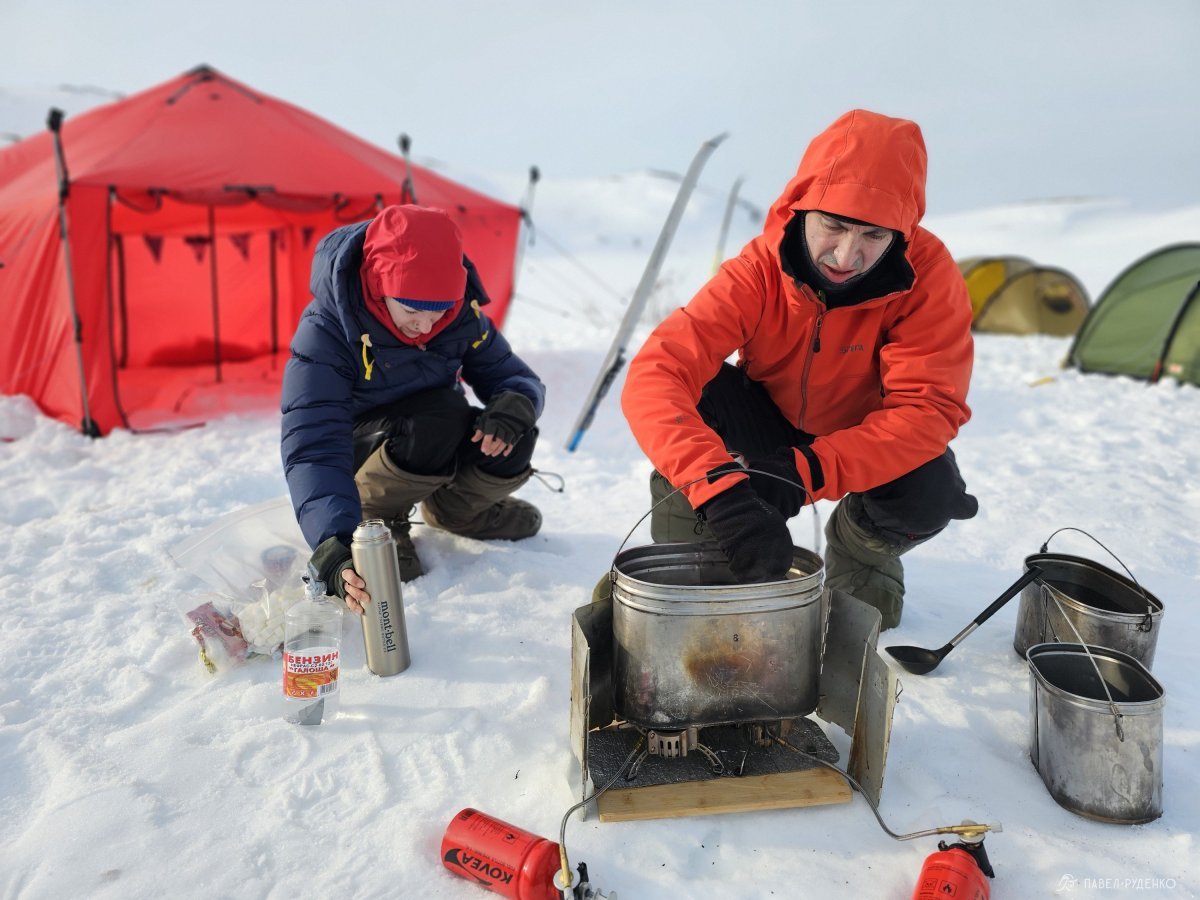
We set up tents, boil snow on gasoline burners and eat Kronidov's space food, teriyaki chicken with rice. In winter, I make some meals with space food, it's classic: quick, convenient and tasty. We liked the portions, the taste is natural, you can add salt to taste. Even a fox came to the smell.


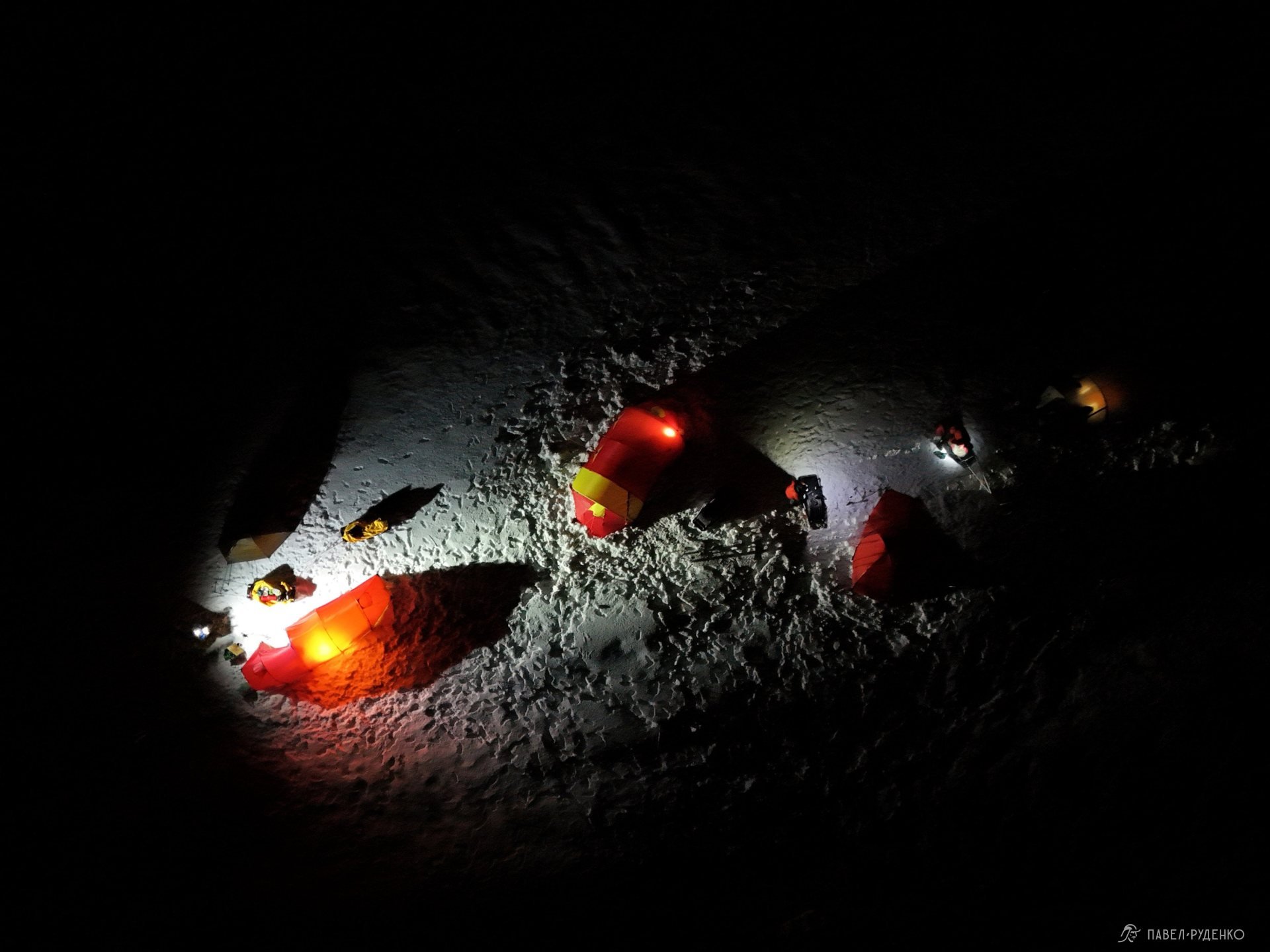
First morning in the tundra
We have to cover 90 km in 7 days, the winter tundra is a challenge for everyone. But proper preparation for the trek allows you to enjoy the nature in these conditions, which is what we did. I talk to the guys on the phone during the preparation, discussing each piece of gear. This is the key to a successful trek.
Today the skis slide incredibly well on the crust of snow that formed due to around-zero temperature fluctuations this year. The lack of precipitation preserved these ideal conditions for us. In my imagination, I dreamed that I would be lucky with such snow on my future solo trek along the coast. Walking on such a crust without breaking the trail is a complete pleasure, I don't get tired at all.
Last time the weather conditions were completely different. Colder, fresh snow was carried by the ground blizzard, like sand in the dunes, creating a complete feeling of waves underfoot. Back then, Anya and I explored the area together.
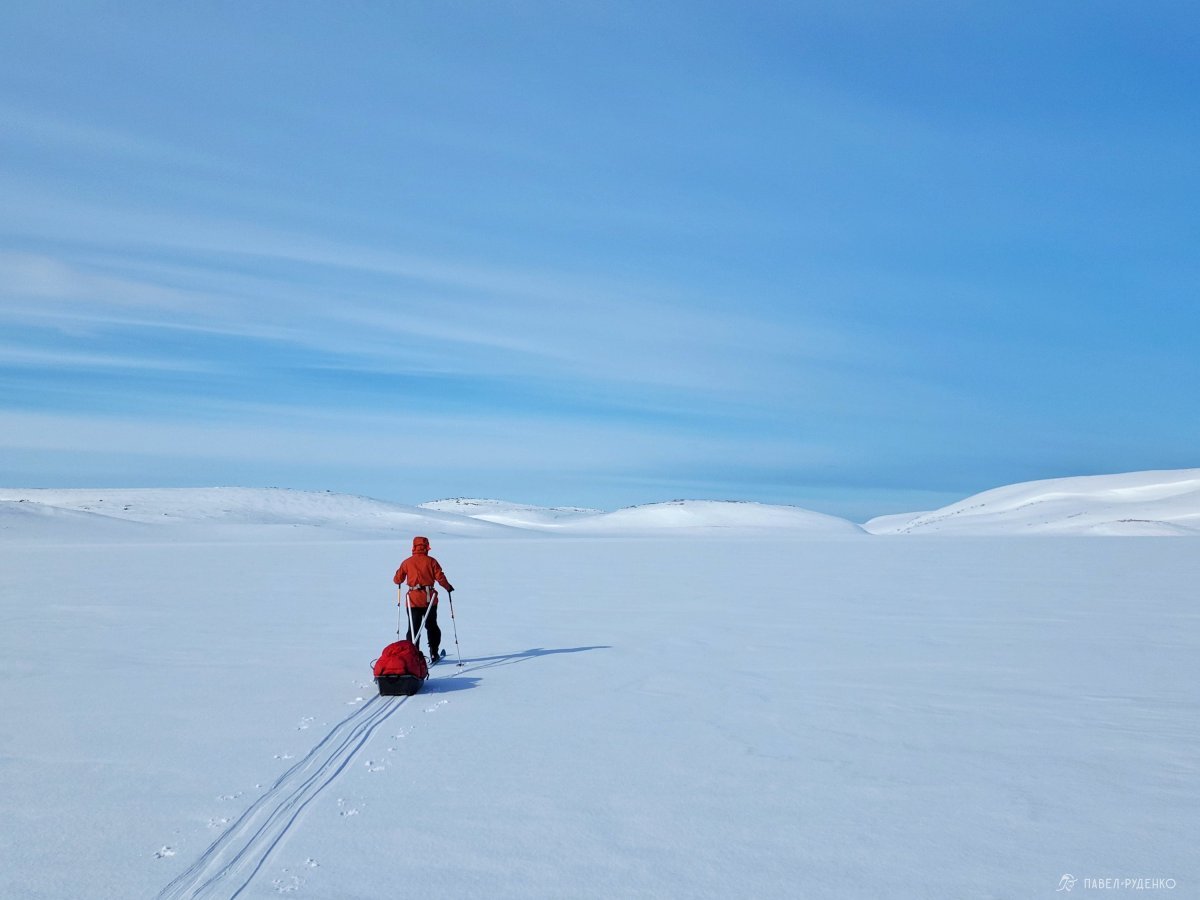
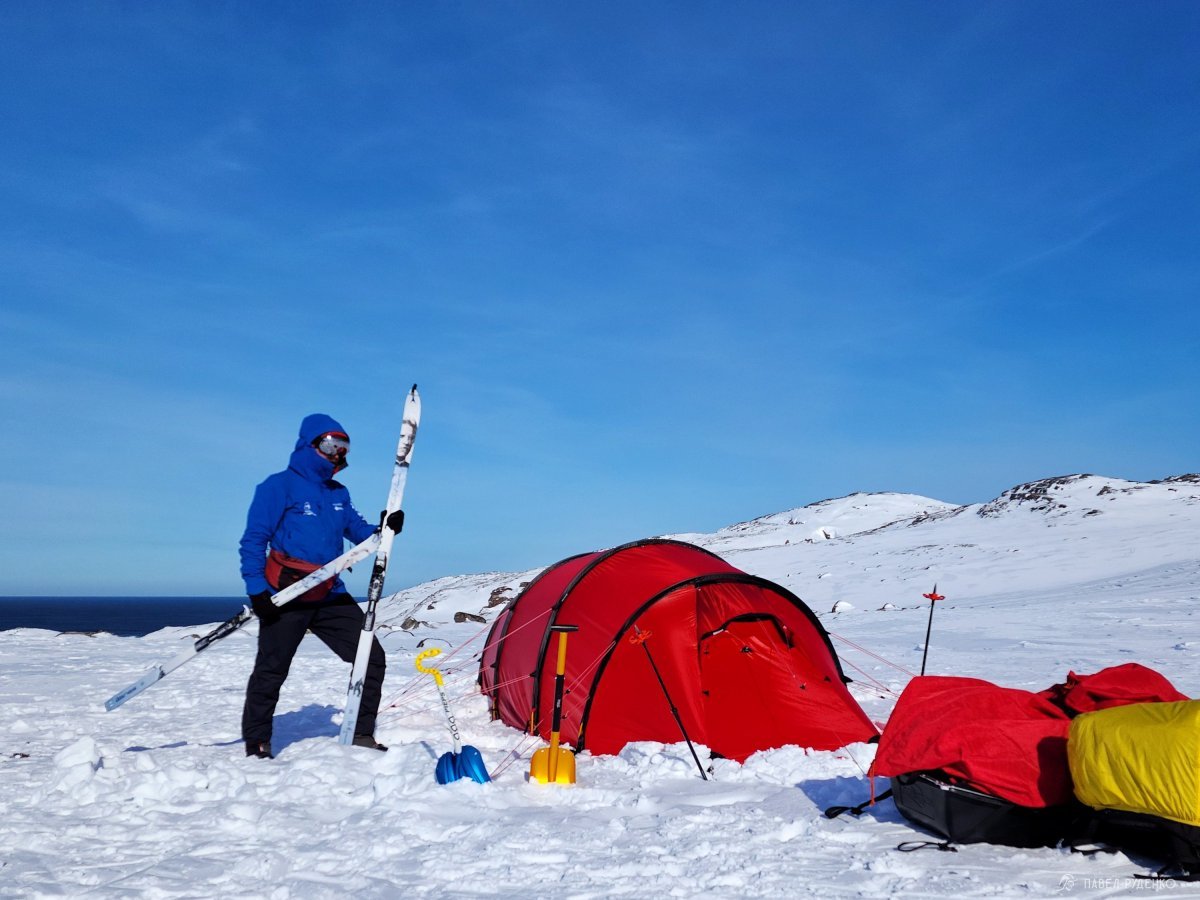
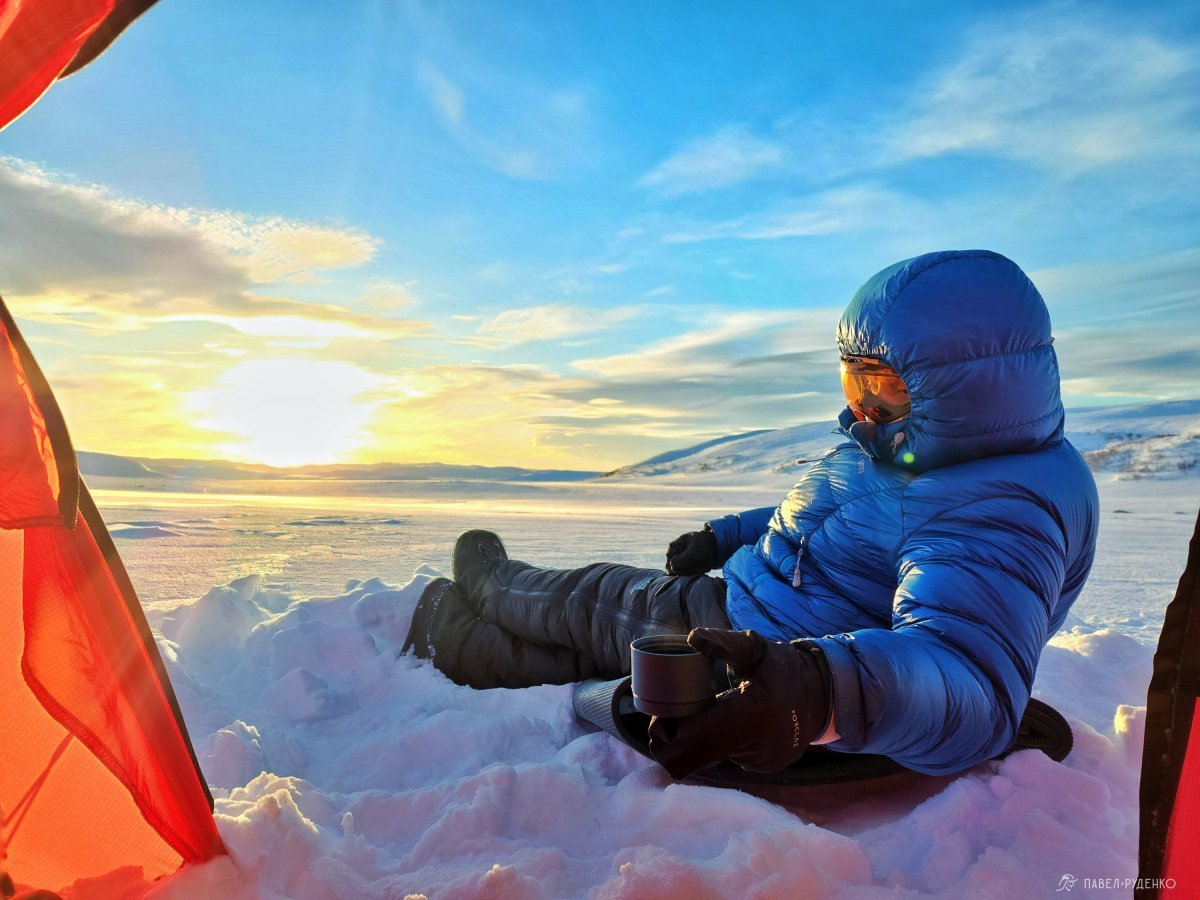
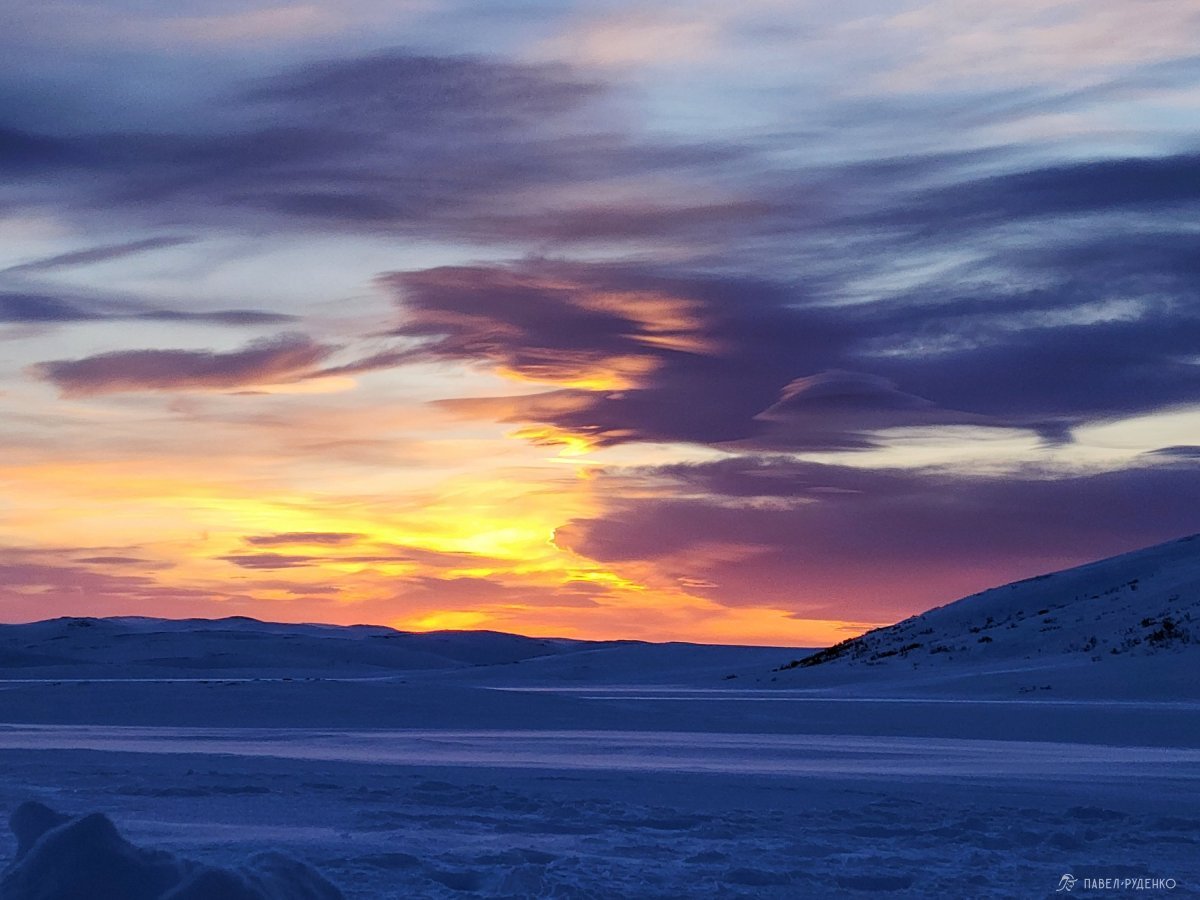

Photo from the last trek with Anya Migalina.
Descents and ascents
First descent, oh these descents! Some people are just honing their skills, others manage to go down confidently right away. The pulkas either gently push or go sideways. As soon as you gain the skill of descending, you begin to enjoy the ultimate pleasure of flying.
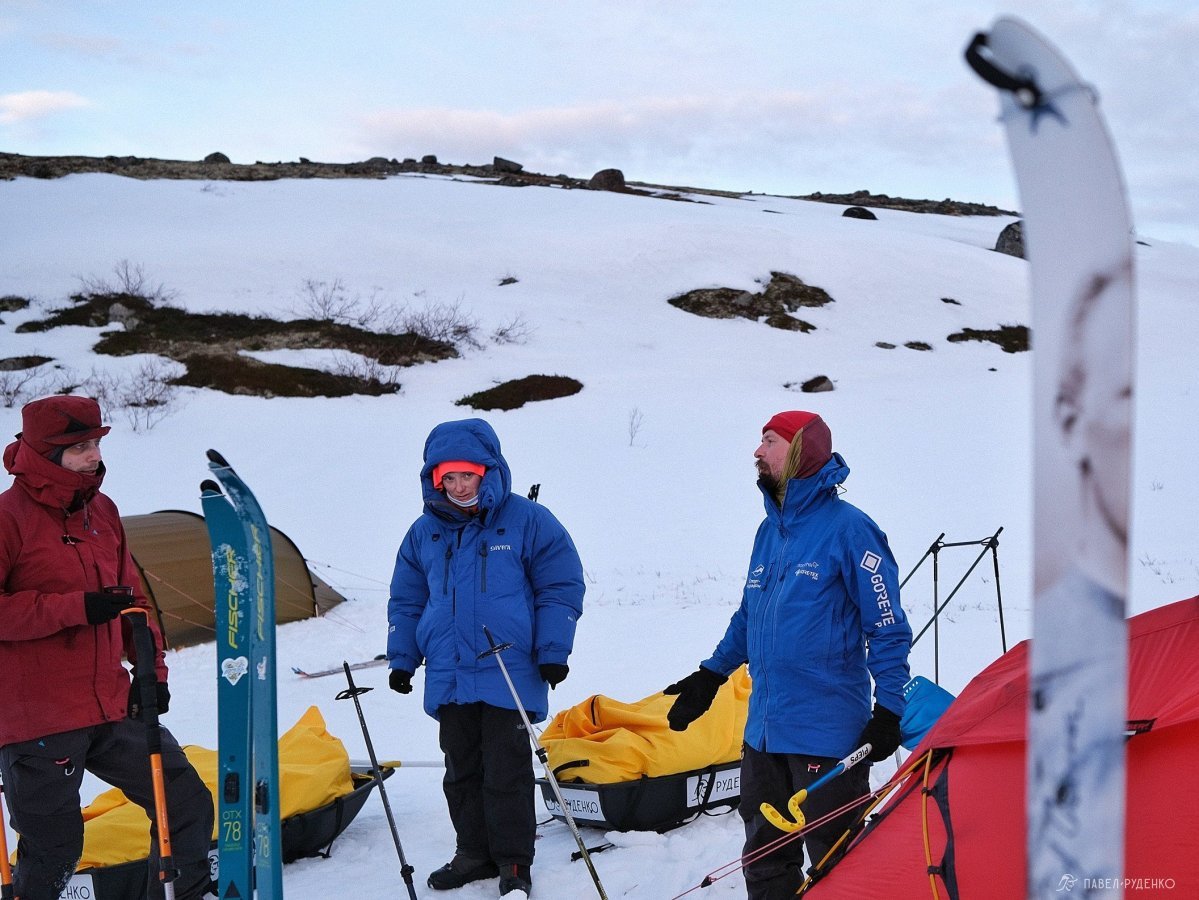
I constantly improve the pulka system, this time I realized that I need to sew leg straps to the harness to increase the stability of its fixation, still need to secure the cross of the pulka tubes and add compensator rubber bands for smooth movement, and a few more details. I will also add a soft coupling with a rope and swivel to each pulka for the next trek, so that at different times you can try different options and choose a convenient one. I tested the Fjallpulken Expedition coupling this year — it's great!
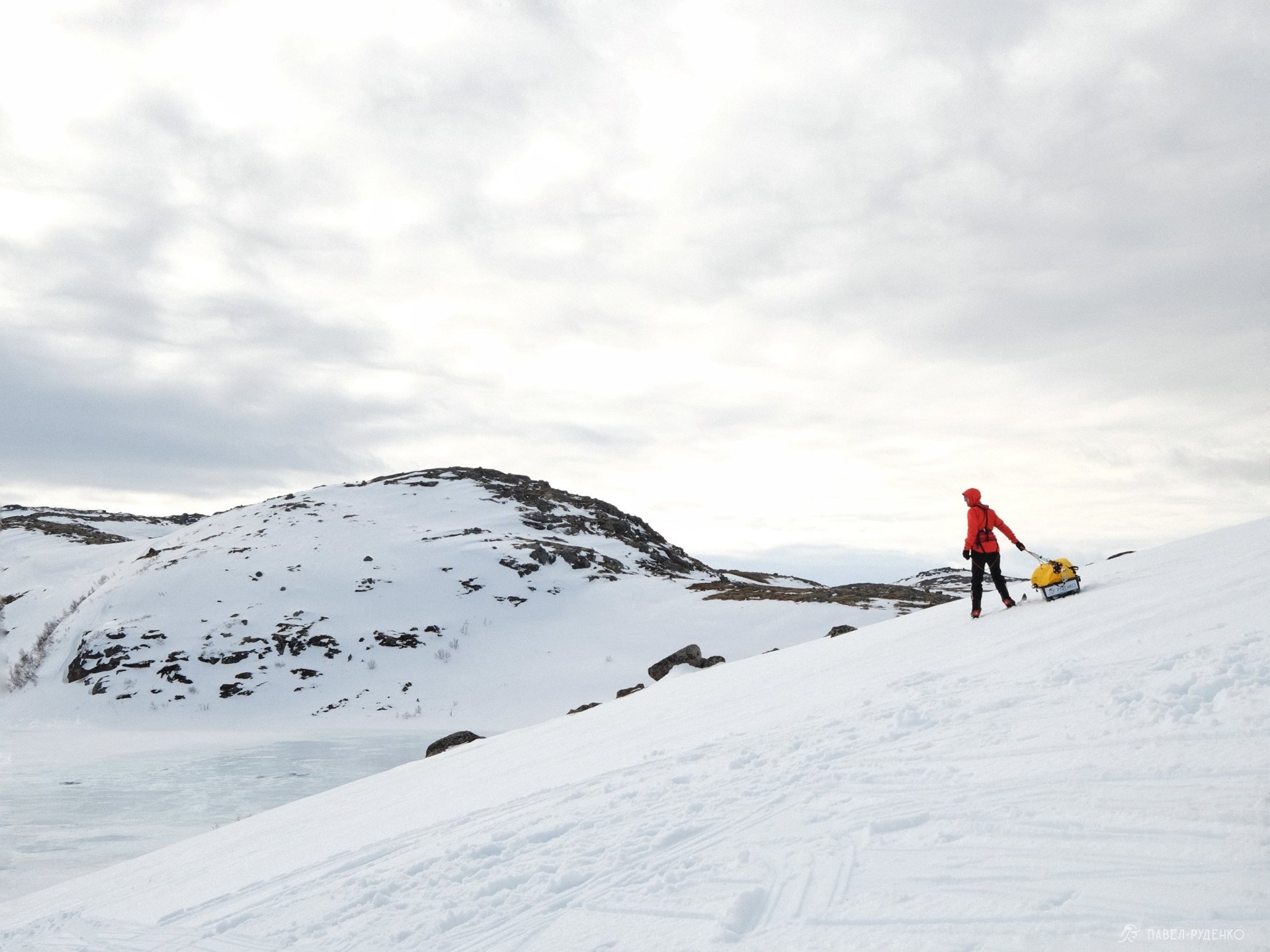
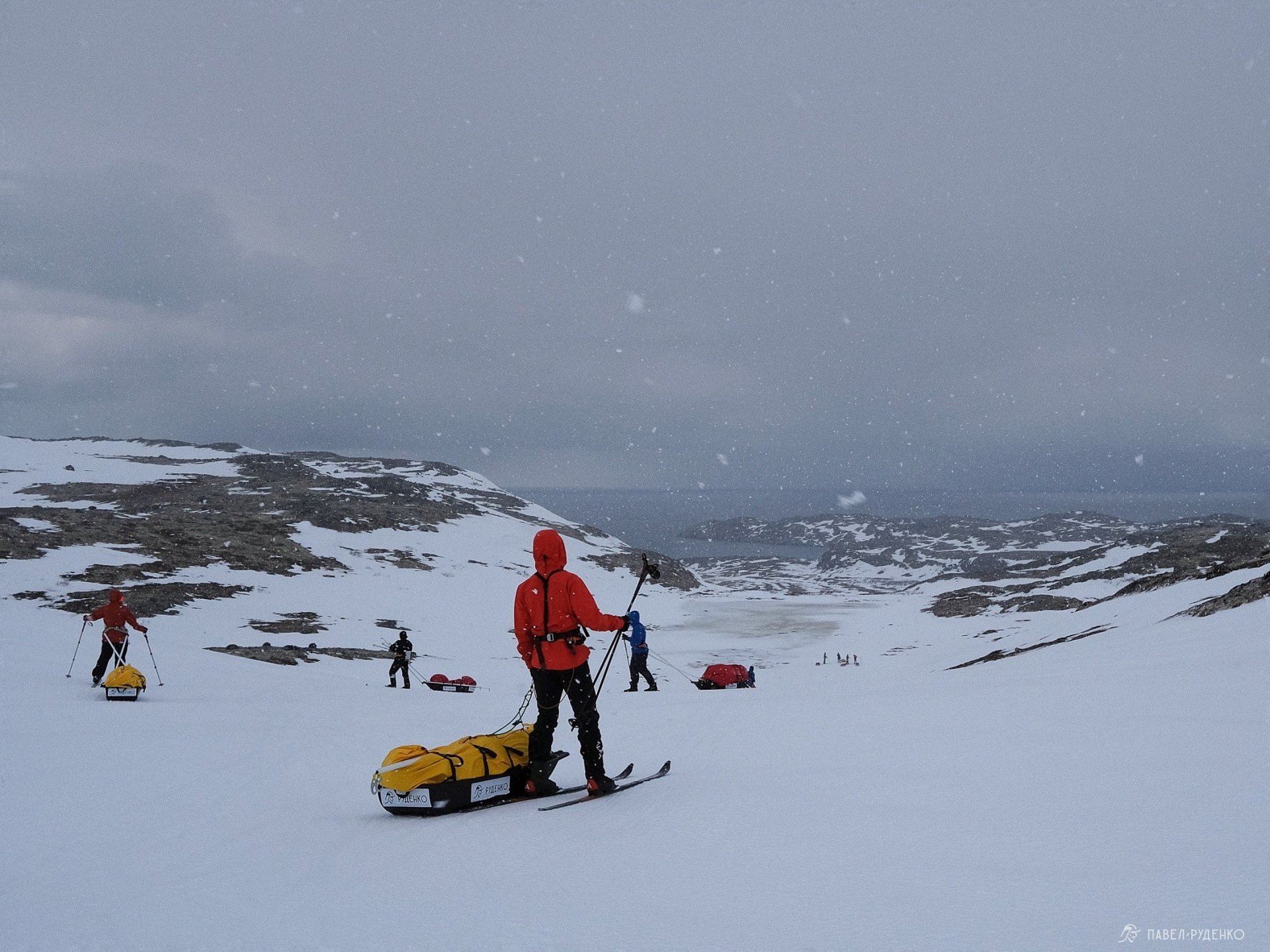
I came up with the bags for the pulkas myself, and Anya sewed them, she is great with the machine and sews silicone bags, bags, etc. I knew who to choose as a wife — a cunning plan of a tourist, like grandfather Hilleberg Bo, the owner of the tent brand, whose first versions of tents were sewn by his wife in the 1970s)).
I plan to do most of my future treks with Arctic pulkas.
I like that my back and legs don't get tired like with a backpack, the volume of the bag is about 300 liters, which means you can pack things very quickly and conveniently. The weight feels lighter, so you can take more warm clothes, something for convenience. Next time I will bring a reindeer skin with me, which hangs on the wall in summer. It should be warm and soft to sit on.


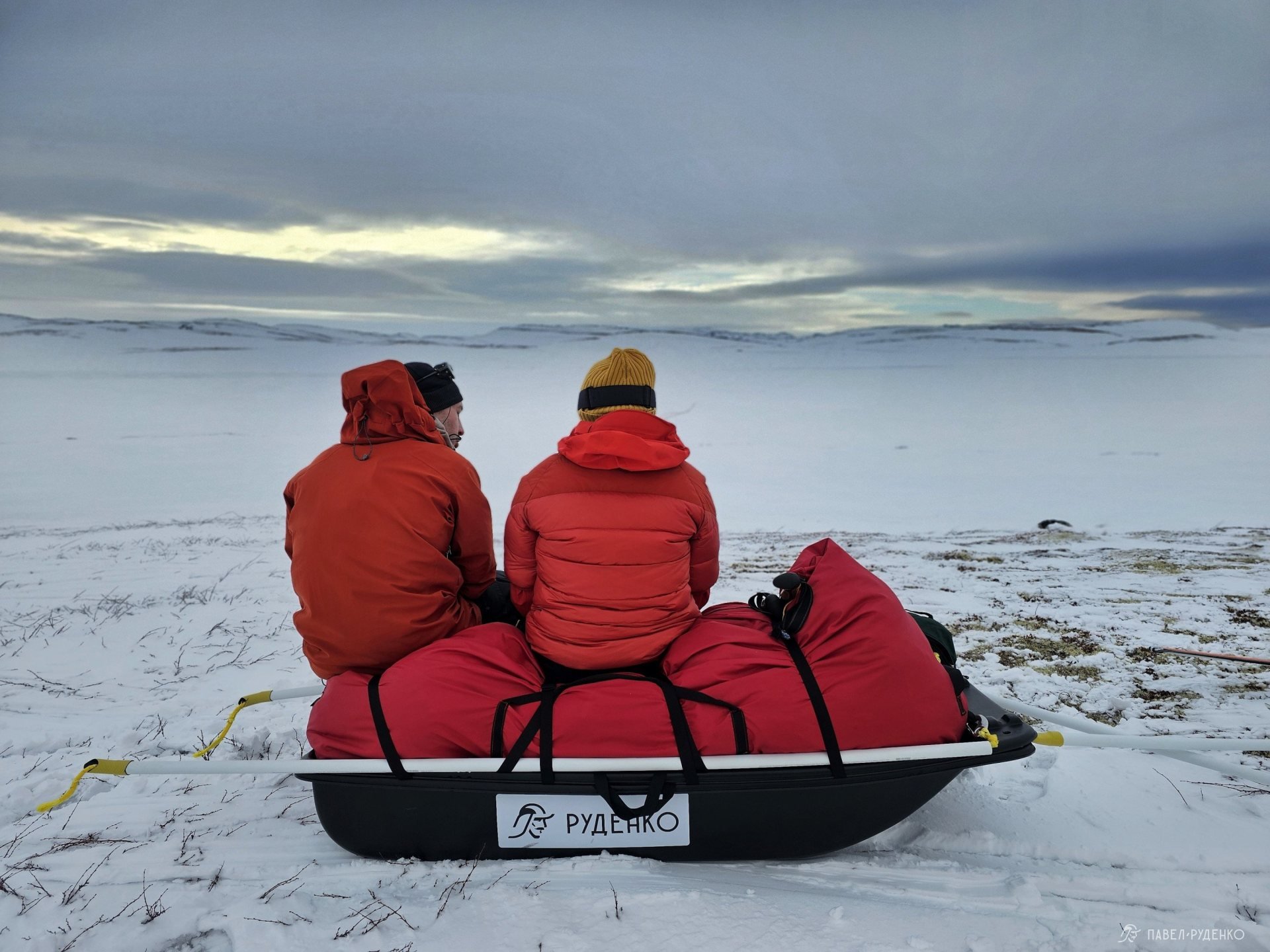
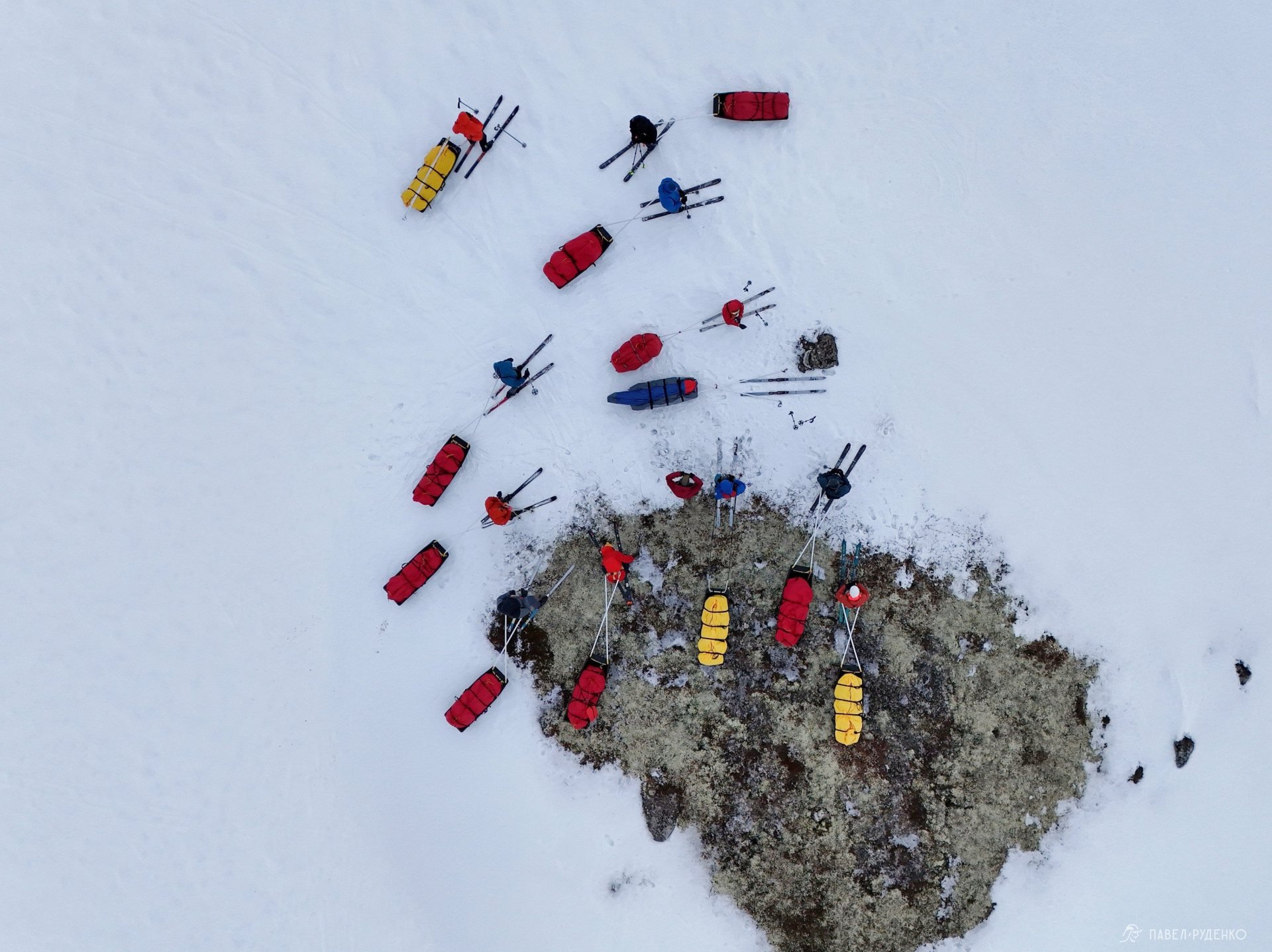
Climbing the hill on camus. This is a special pile that sticks to the ski glide to increase friction and climb the hill without the skis slipping. I make sure that the whole team takes the camus so that the pace of movement is the same.
Depending on the conditions, we change the camus from long to short, where possible, and sometimes you can go on a notch. I like to strive for maximum adaptation to the conditions, spending minimal physical effort to achieve maximum results. That's why I don't hesitate to put on and take off the camus throughout the trek. The optimal option: the width of the camus is 45–60 mm, no more. The composition is a mix, synthetics/mohair 65/35. This is the best sliding.
The feeling of sliding is the most important part of the emotions in a ski trek. From some hills, you could feel like a skier, and although touring skis don't have such a rigid binding as alpine skis, touring boots and NNN BC binding allow you to control the descent.


This winter I took a training course for ski guides to the North Pole and heard cool stories from a friend about a towing parachute in ski tourism and immediately got excited about the idea. I ordered myself a hybrid towing parachute from VEK and took it on this trek, weighs only 1 kg. With a tailwind of 5 m/s, it can allow you to cover the distance with less effort, but I didn't have time to test the combination. The scheme is very interesting, I will experiment with it on future tundra treks with pulkas.

On the shore of the Barents Sea
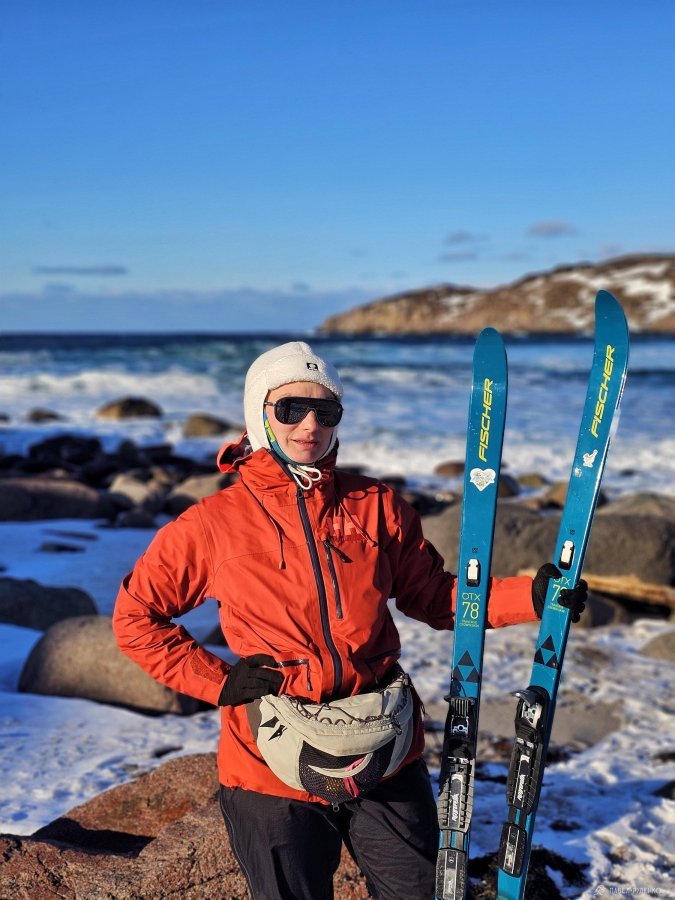
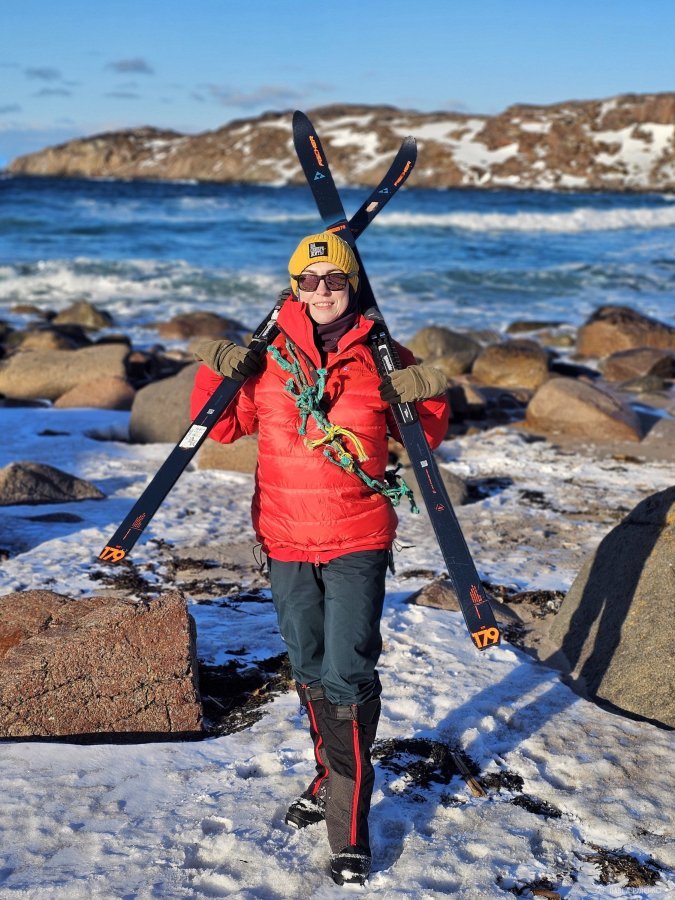
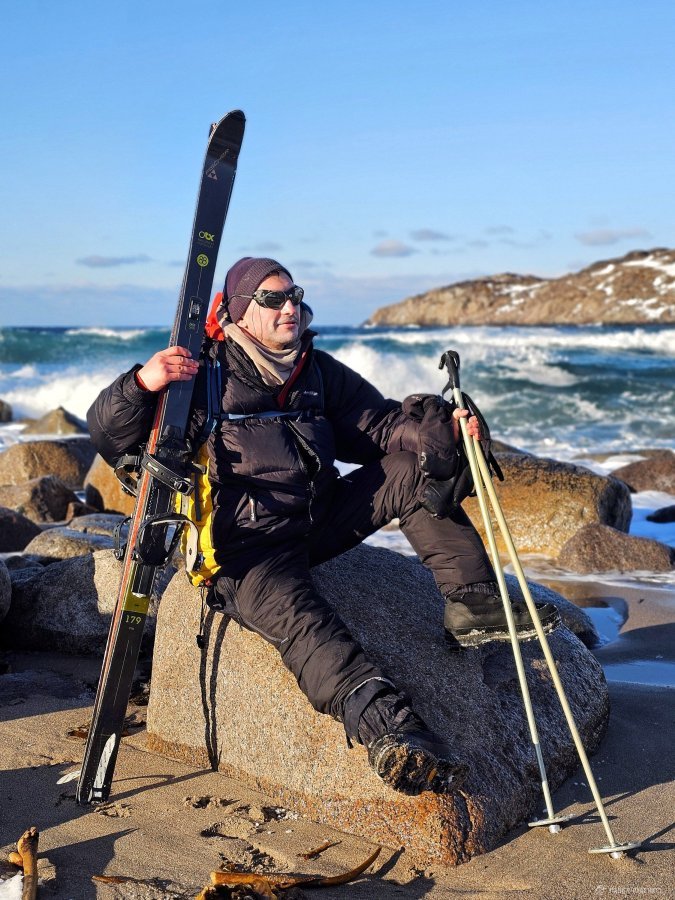
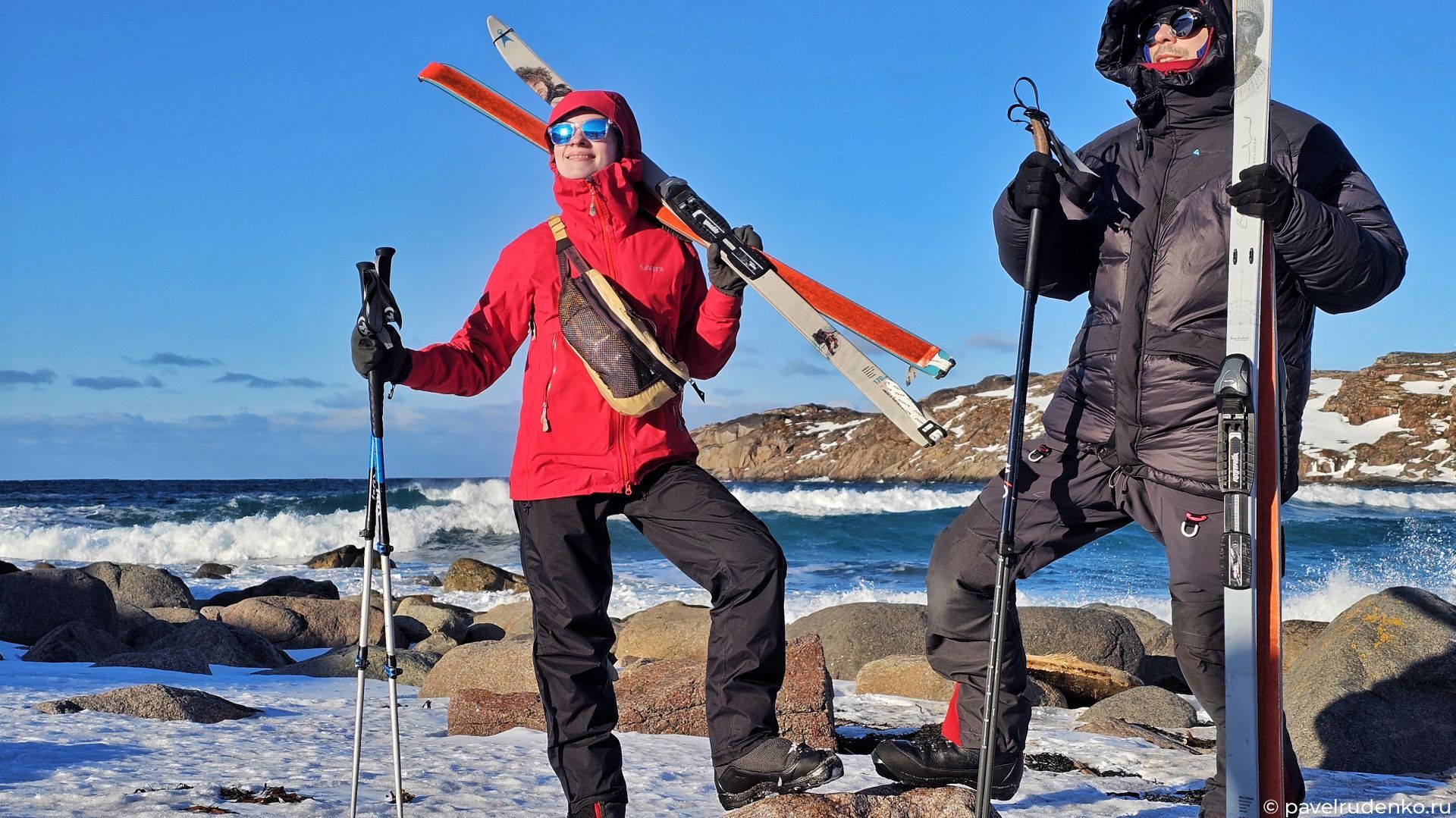
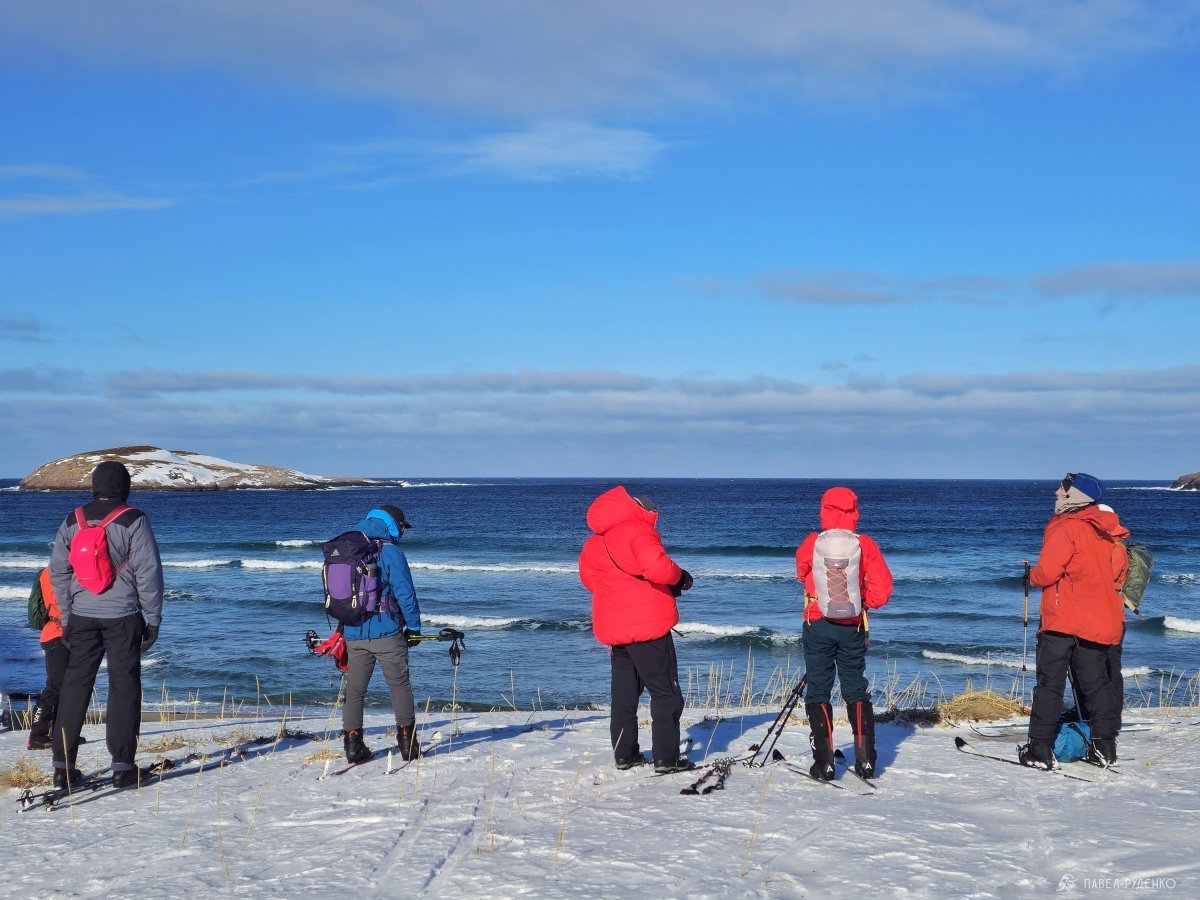
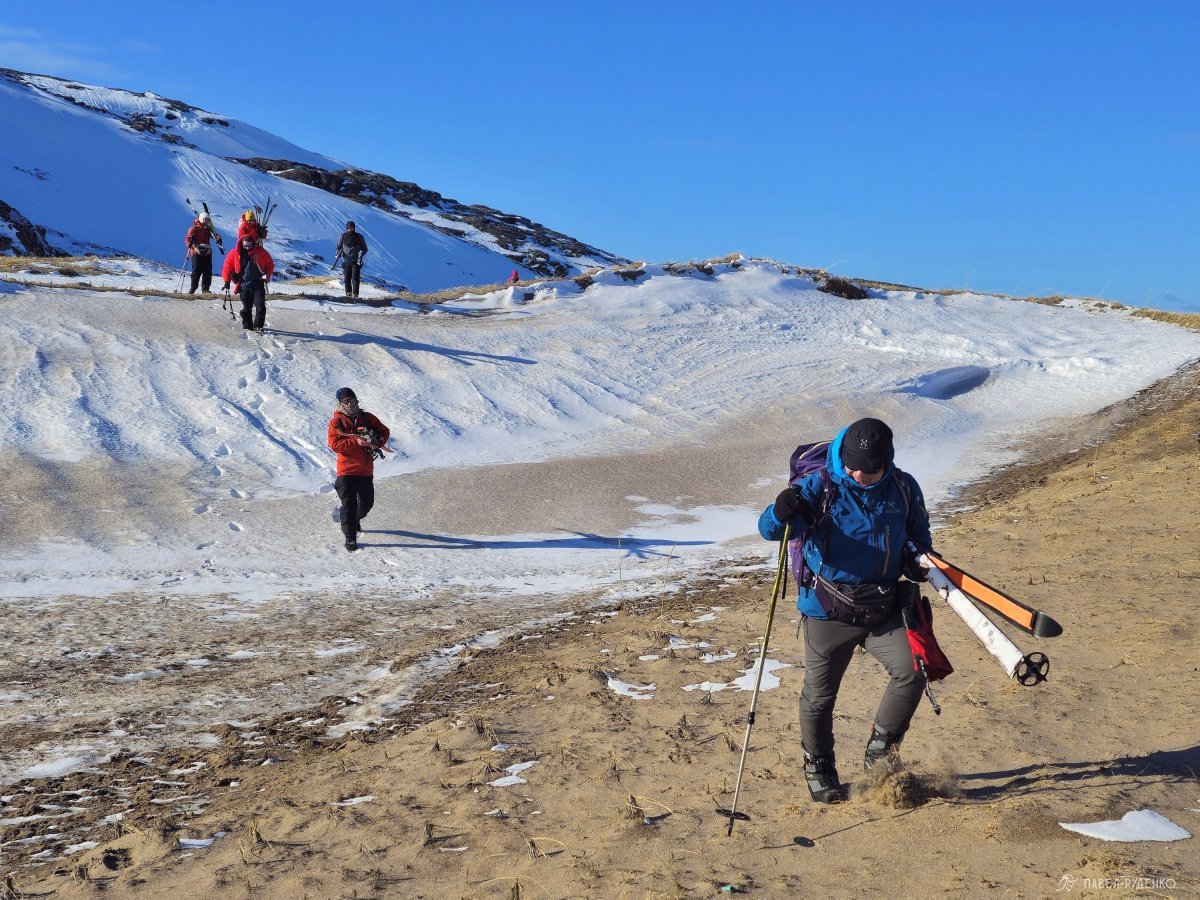
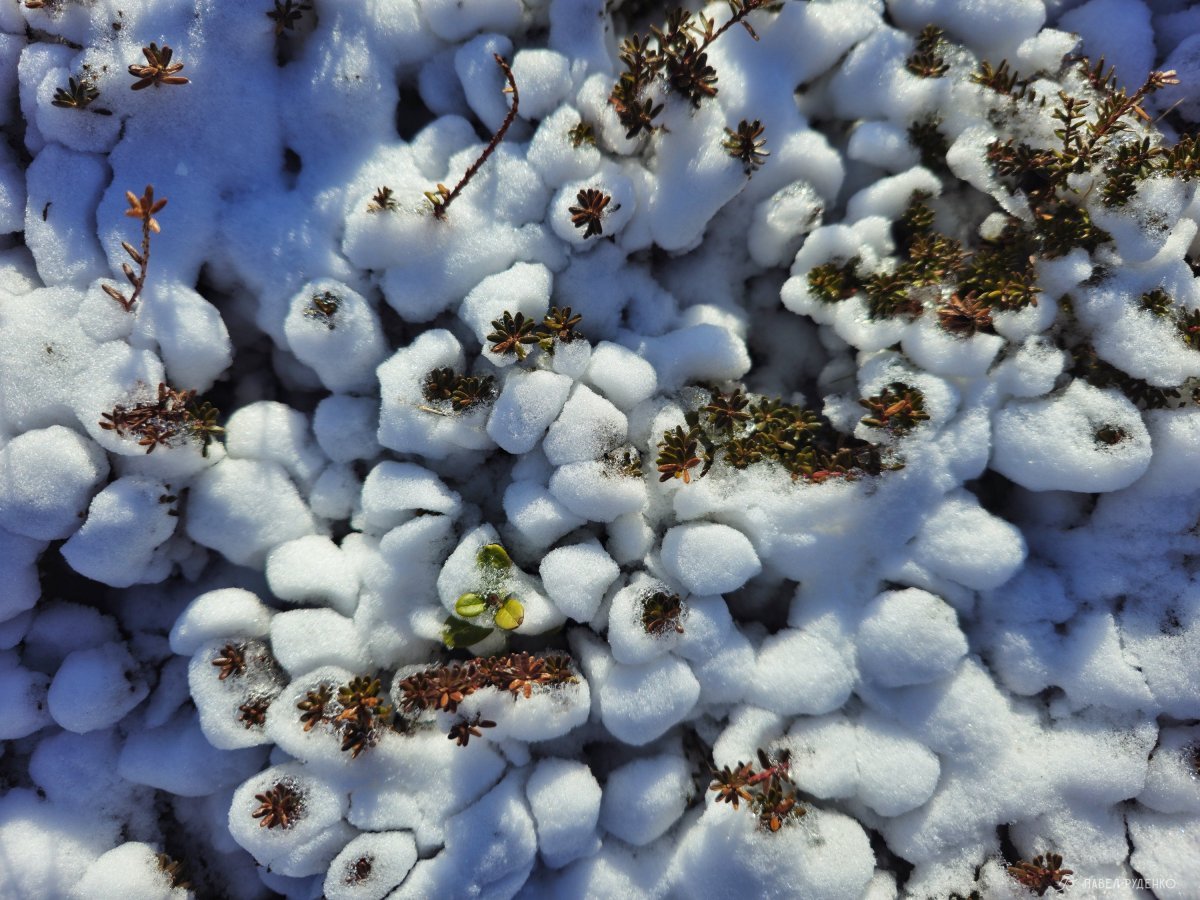
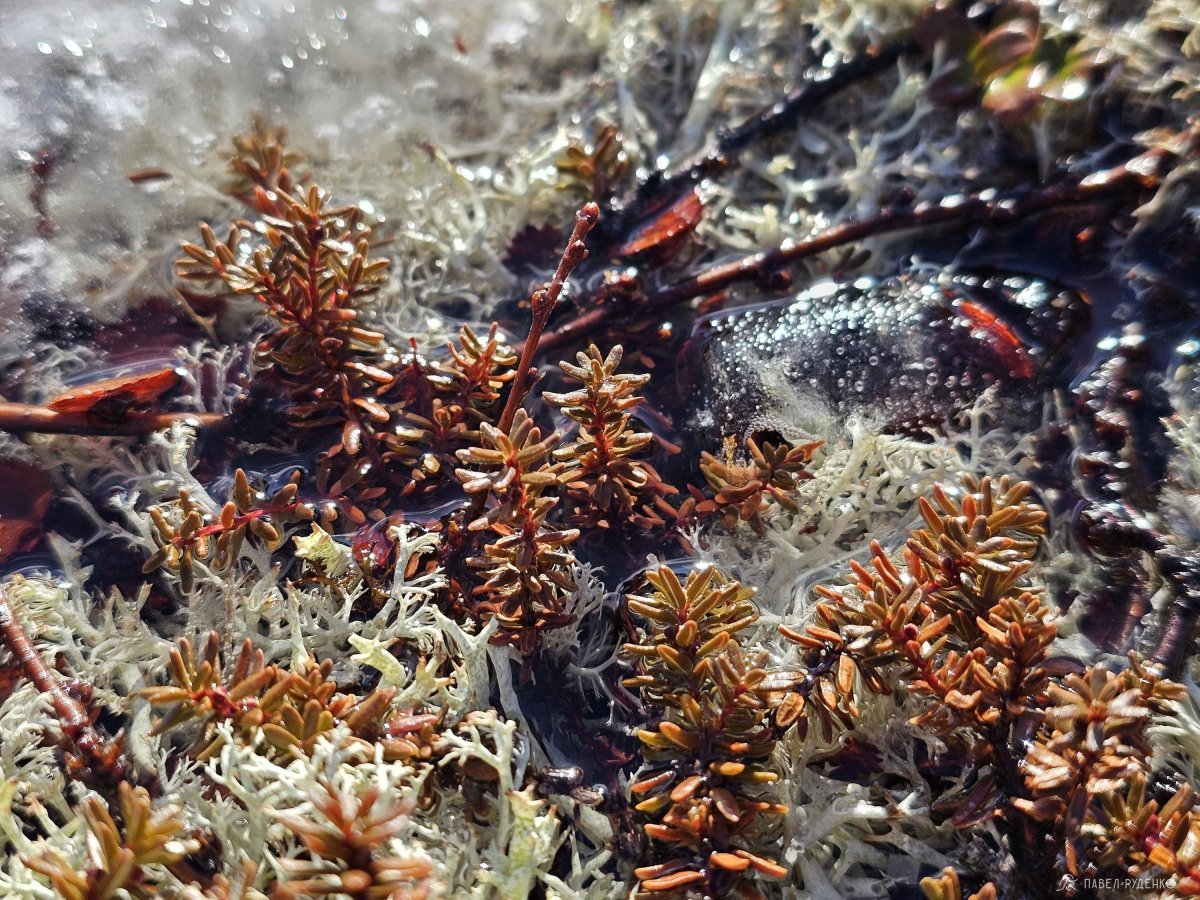
Behind one of the ascents, the Barents Sea appeared — blue, lively, inviting. There's not much left, and on the radial we'll take off our skis to walk along the sandy shore during low tide. It's an absolutely magical moment when, dressed like a polar explorer, in ski boots, you step on green moss, last year's berries, sand, and even seaweed. An instant transition from winter to summer. The dark blue waters contrast with the white hills, like an ink blot on a clean sheet.
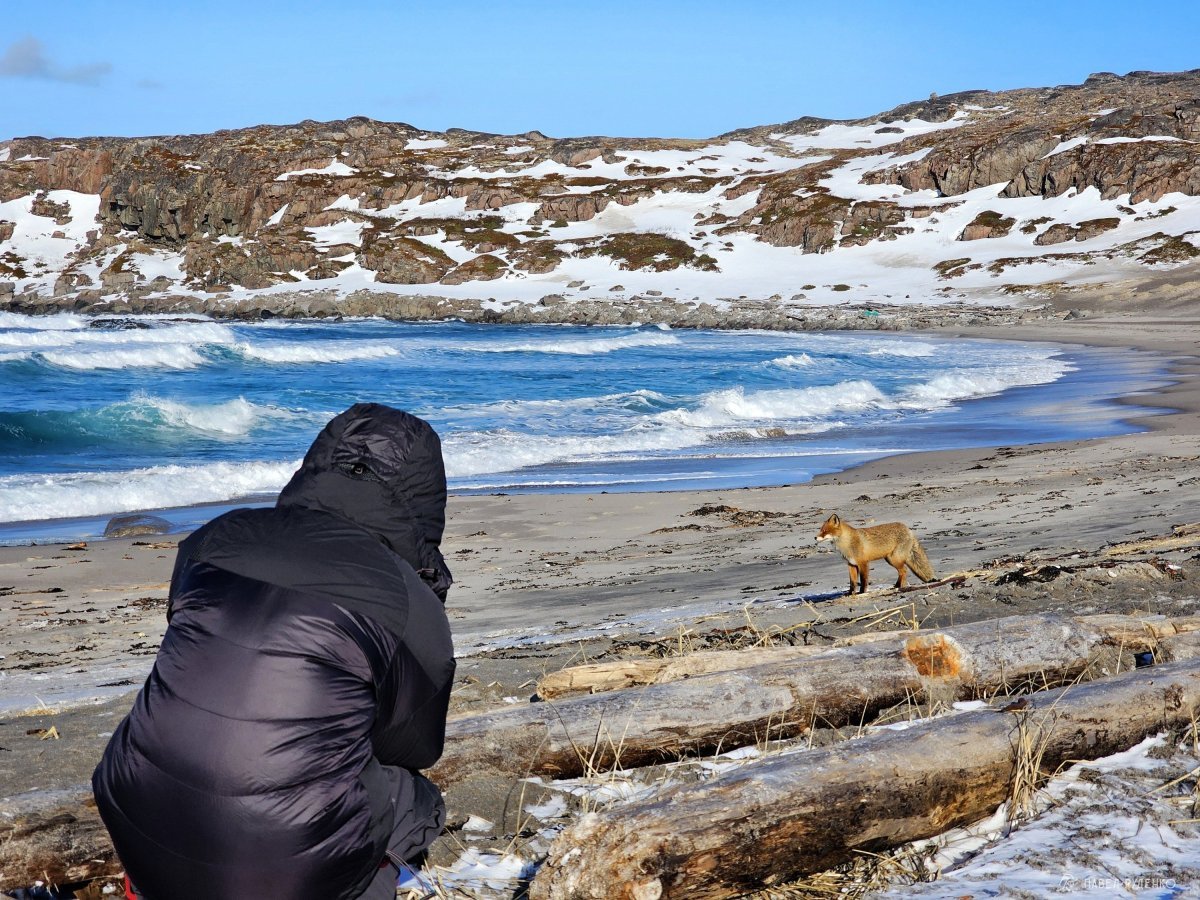
We are standing on the edge of the continent. An white-tailed eagle, listed in the Red Book, hovers overhead. A fox sits nearby, its thick fur gently swaying in the wind, it yawns, emphasizing the northern slowness of the passage of time. The sea is hypnotic, I love all this. The guys are delighted.

Tents are reliable protection in the tundra
The Arctic is changeable, and the wind picks up to 25 m/s. This real power can knock you down and makes you scream to be heard. Every evening I solve the puzzle of choosing a place for the camp. Based on daily satellite weather reports, visualizing the wind eddies, I look for a place that is both beautiful and sheltered by hills from the wind, and flat. Over the years in the tundra, I've become good at sensing the weather, sometimes determining the start of precipitation down to the minute.
I give the command: 'Tents — against the NE wind! Install all the guy lines!'

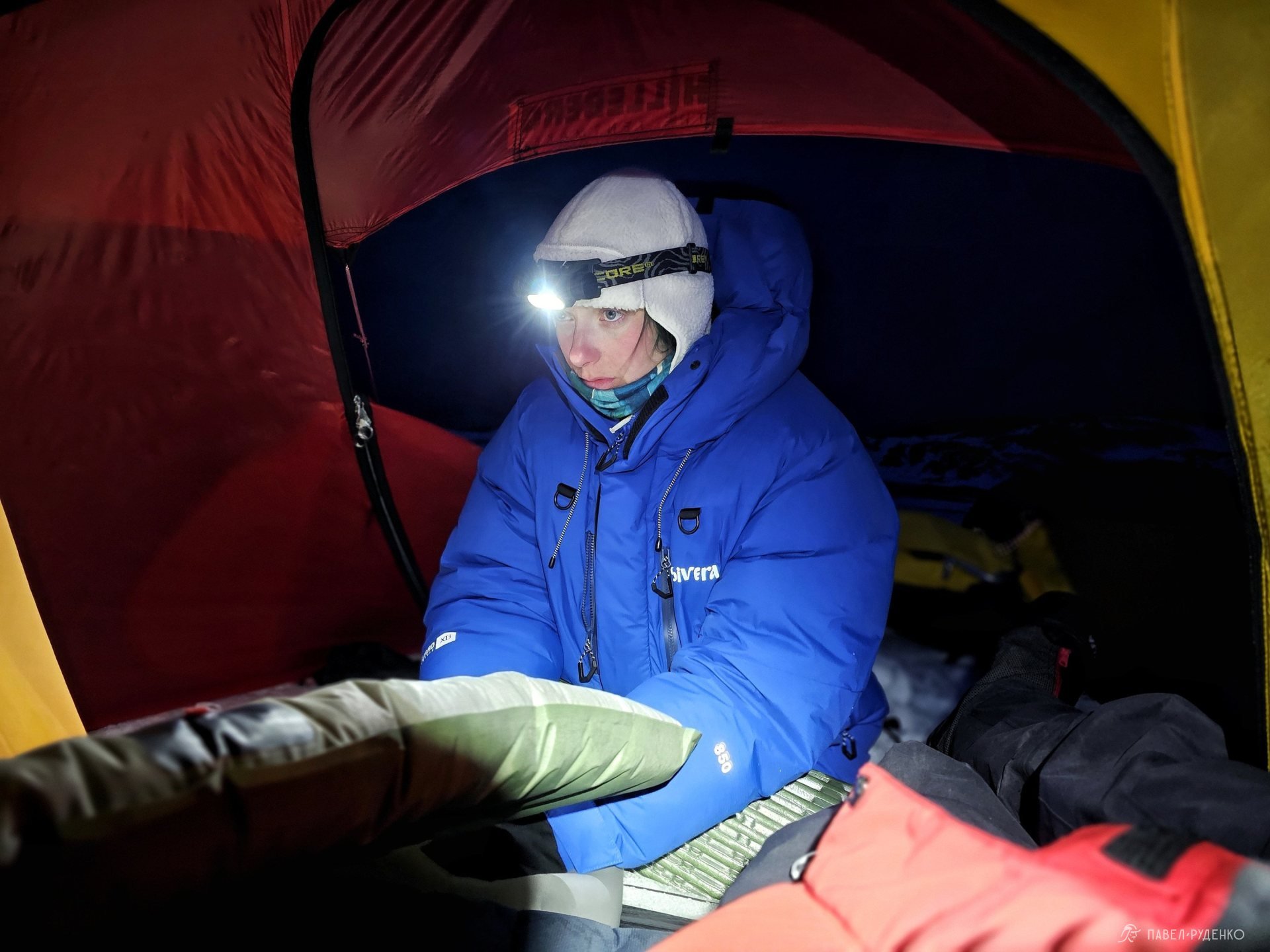

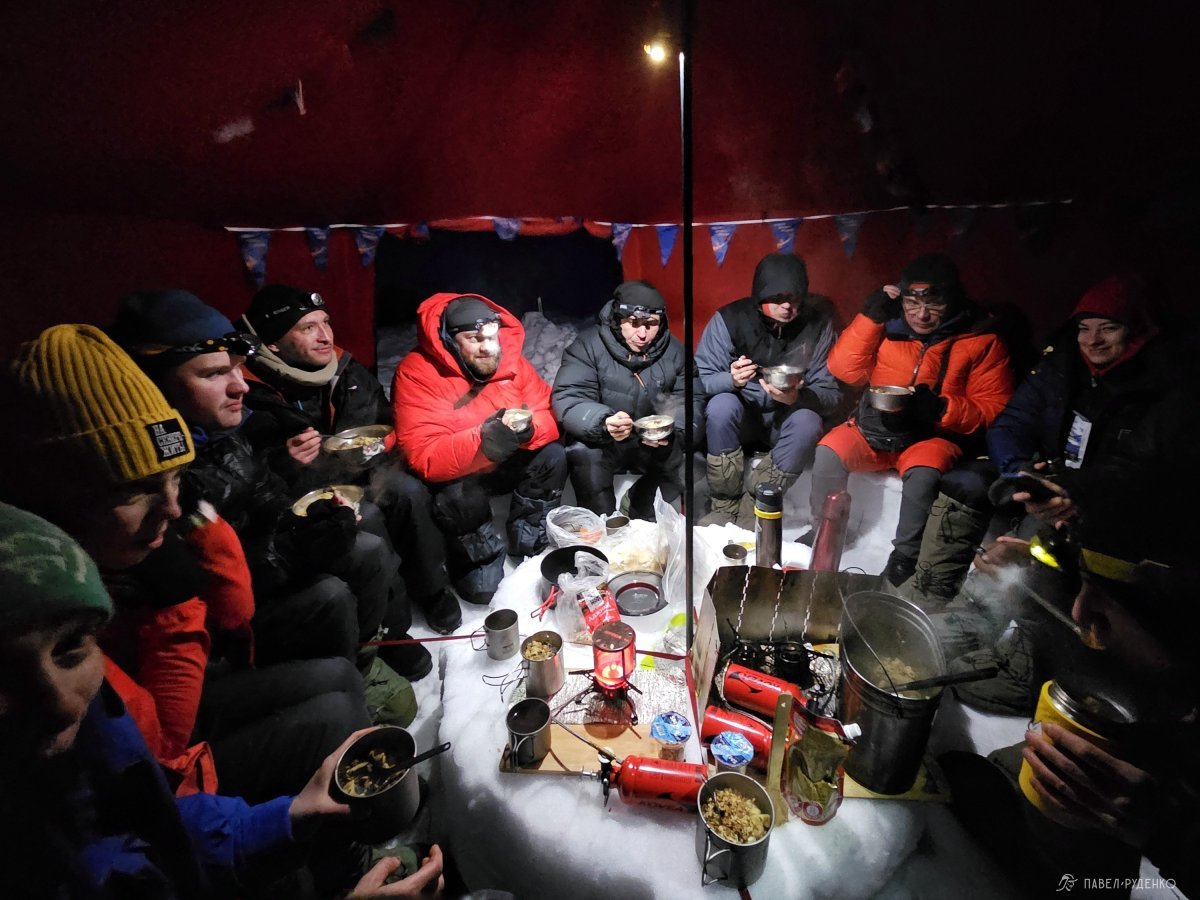
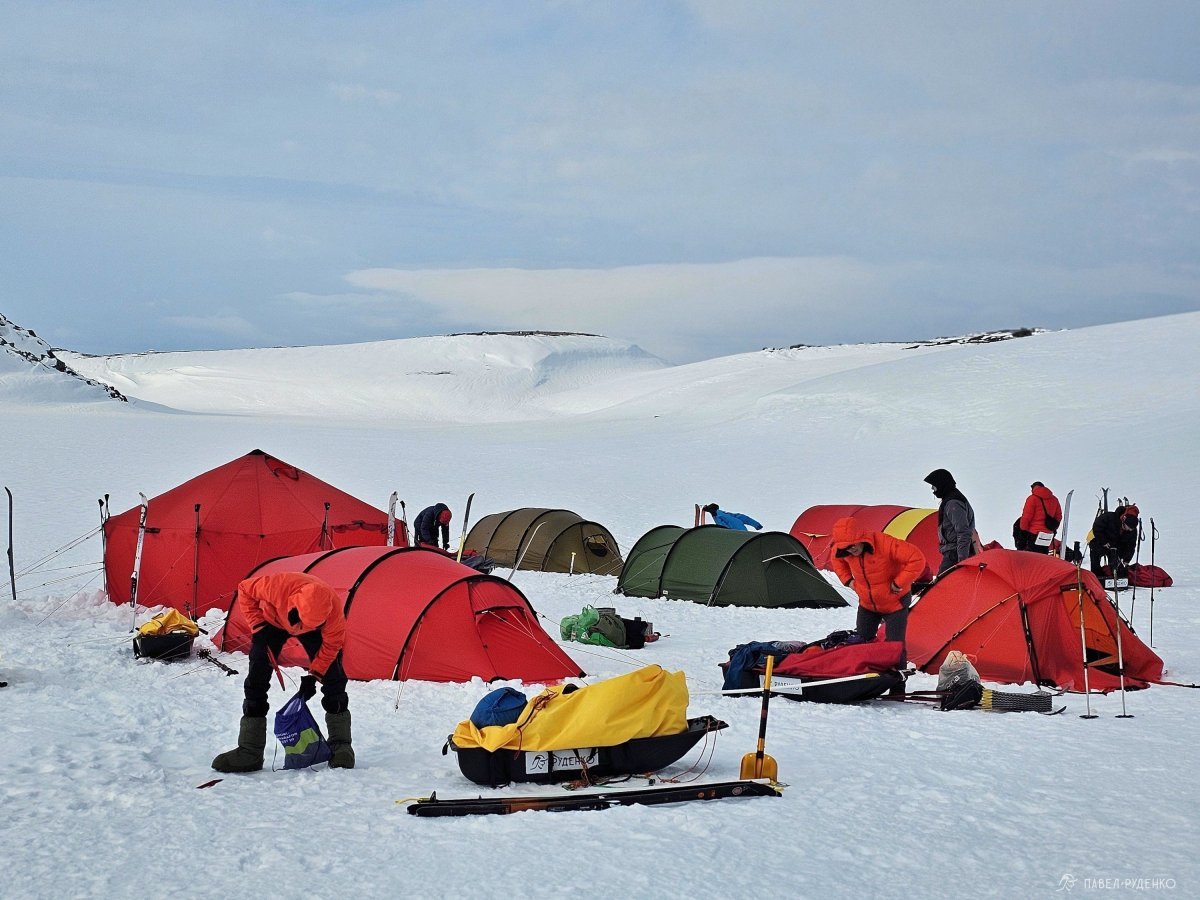
Dining in the Hilleberg Altai tent, affectionately called a 'vezh' like a Sami dwelling. There's no wind inside the tent, it's cozy in down jackets, and the stoves give off heat. I learned about the existence of a reflector heater for a gasoline stove: it weighs 100 g and gives off a lot of heat. Live and learn, I've already ordered two. Now the vezh is even cozier, although how much further. We're having lentil soup with reindeer meat for dinner, drinking tea with sweets, and pouring it into thermoses for the night.
I issue tents, using the most reliable ones, designed for expeditions to the poles, in my assortment I already have Hilleberg Kaitum 2GT, Hilleberg Nallo 2, Helsport Spitsbergen 4 xTherm, Fjällräven Keb 3 GT, reinforced with two arcs, and I'm still buying more. Part of the team uses their own tents, in this trek the guys had Hilleberg Soulo, Hilleberg Kaitum 3GT, and Hilleberg Jannu. It was interesting to see different models in action.
At night, the wind shakes the awning with renewed vigor, it's especially sweet to sleep in such weather. I went out at 02:00 to check the team, the tents: everything's standing, now I can lie down peacefully. I listen to the roar of the elements and think:
'This is why we go north, to feel this power, to face it head on.'


Resting
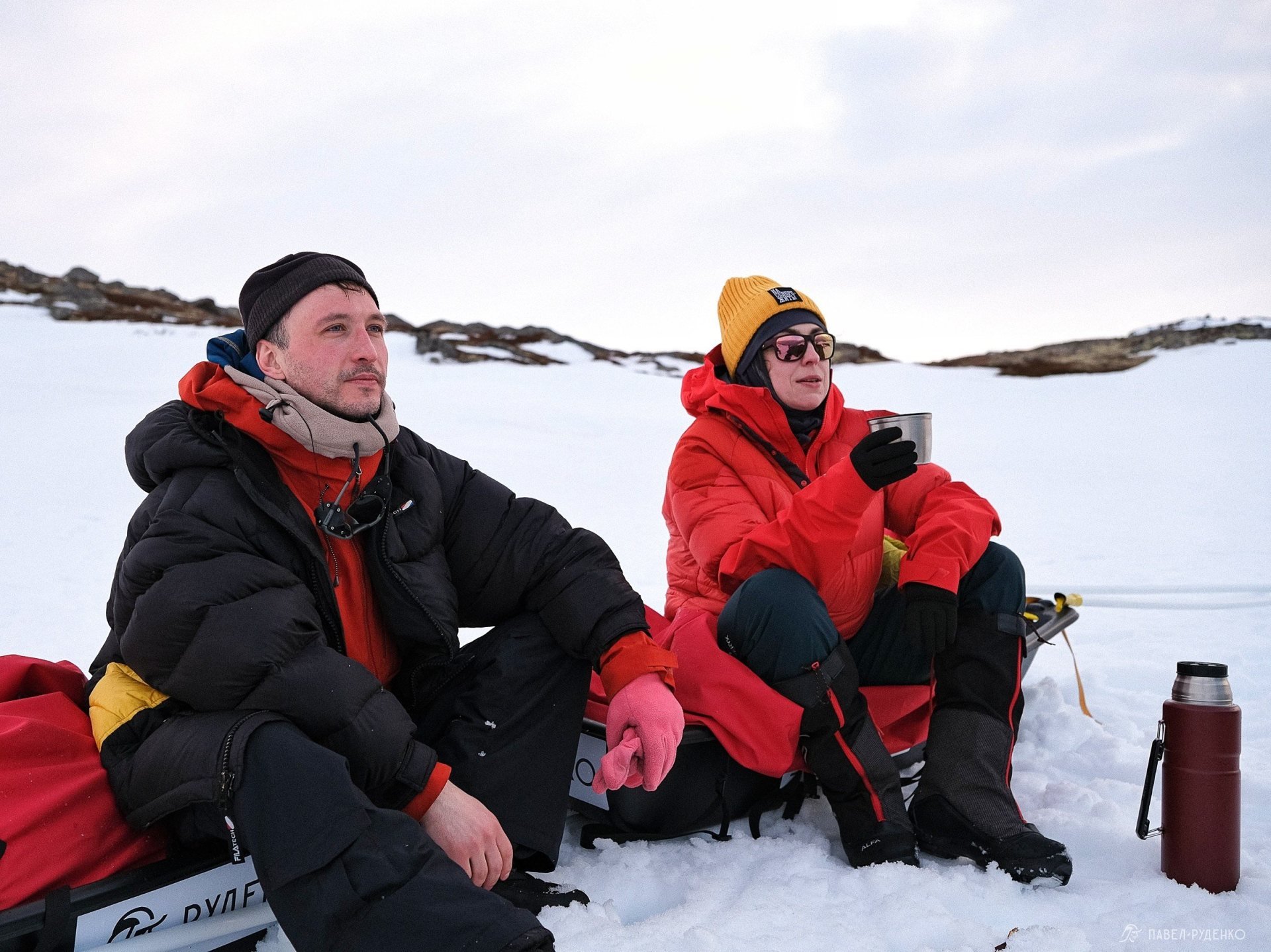
It's nice to see how the recorded videos and articles help everyone to pack properly. Everyone is protected from the wind and cold. You need to break in your ski gear on more than one trek to get close to perfection. So, one of the guys got his foot rubbed by the 'Fischer Transnordic' boot — there are thick inserts in the area of the bones that press on many people. Plasters didn't help, and I take a lot of them: from tapes to 'Compid'. But no problem, we took the pulkas and completed the entire route.
Along the way, we stop for lunch, today it's burrito in pita bread. Everyone has a thermos of 0.7–1 l, which we fill in the morning. On this trek, I appreciated the Thermos FFX model: the lid is perfectly thought out, doesn't freeze, opens so easily; and the weight is 390 g for 0.9 l. I'll be changing my Montbell for it.
Ice floating in the Barents Sea
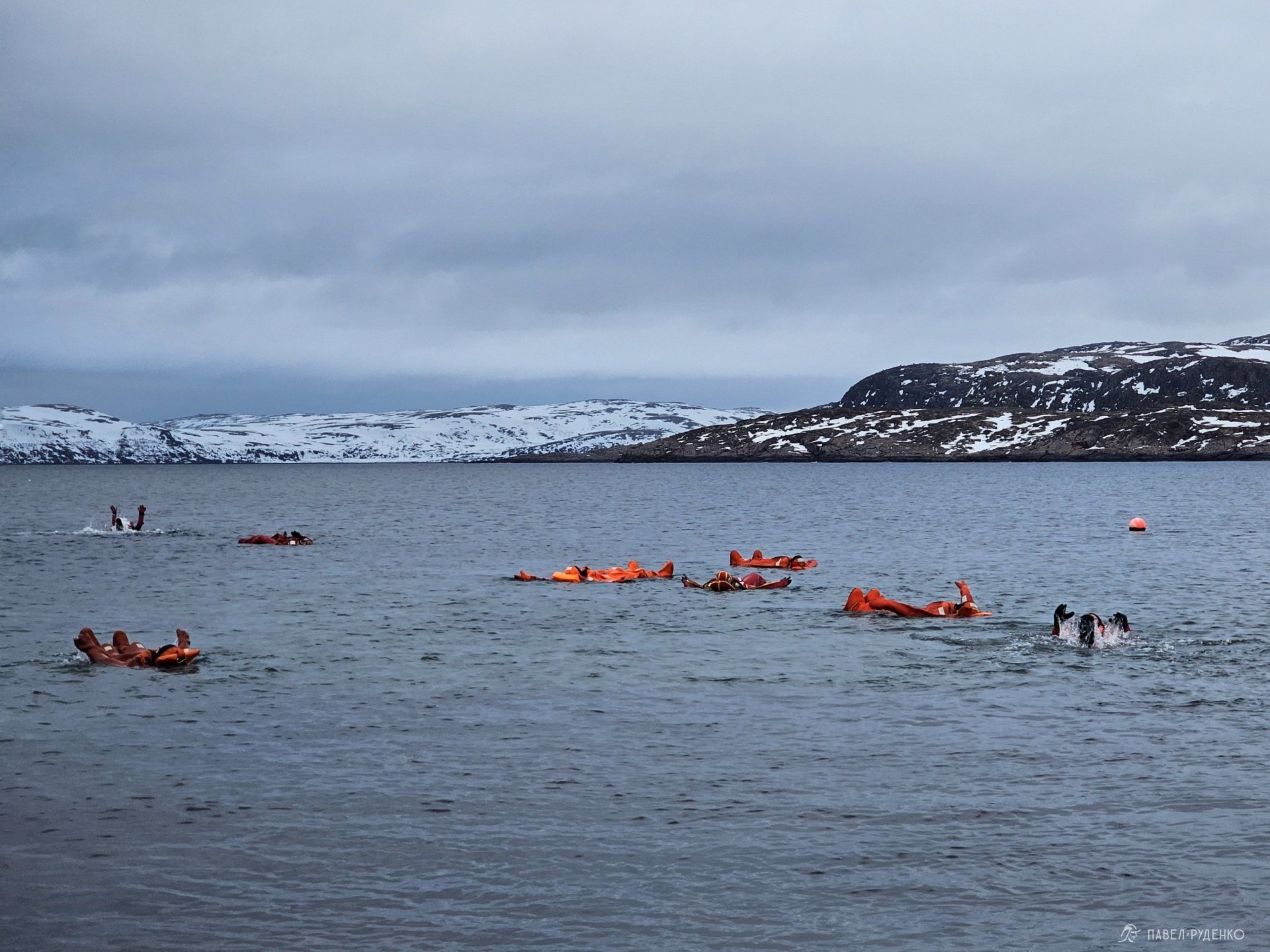
Swimming in the Barents Sea in winter — challenge accepted! At the end of the route, we go ice floating, put on special suits, enter the water. The feeling is like being in space, only the snow-white hills around. Unlike Kandalaksha, the service here is worse, and a couple of suits were not airtight, the clothes got a little wet. This doesn't suit us; I refused ice floating in Teriberka in the future.
We're heading back to Murmansk. The guys don't want to go back, and I've already figured out where we'll go next year to explore new fascinating places. Our soul is in the tundra, where the wind draws its lines, and the horizon goes into infinity.

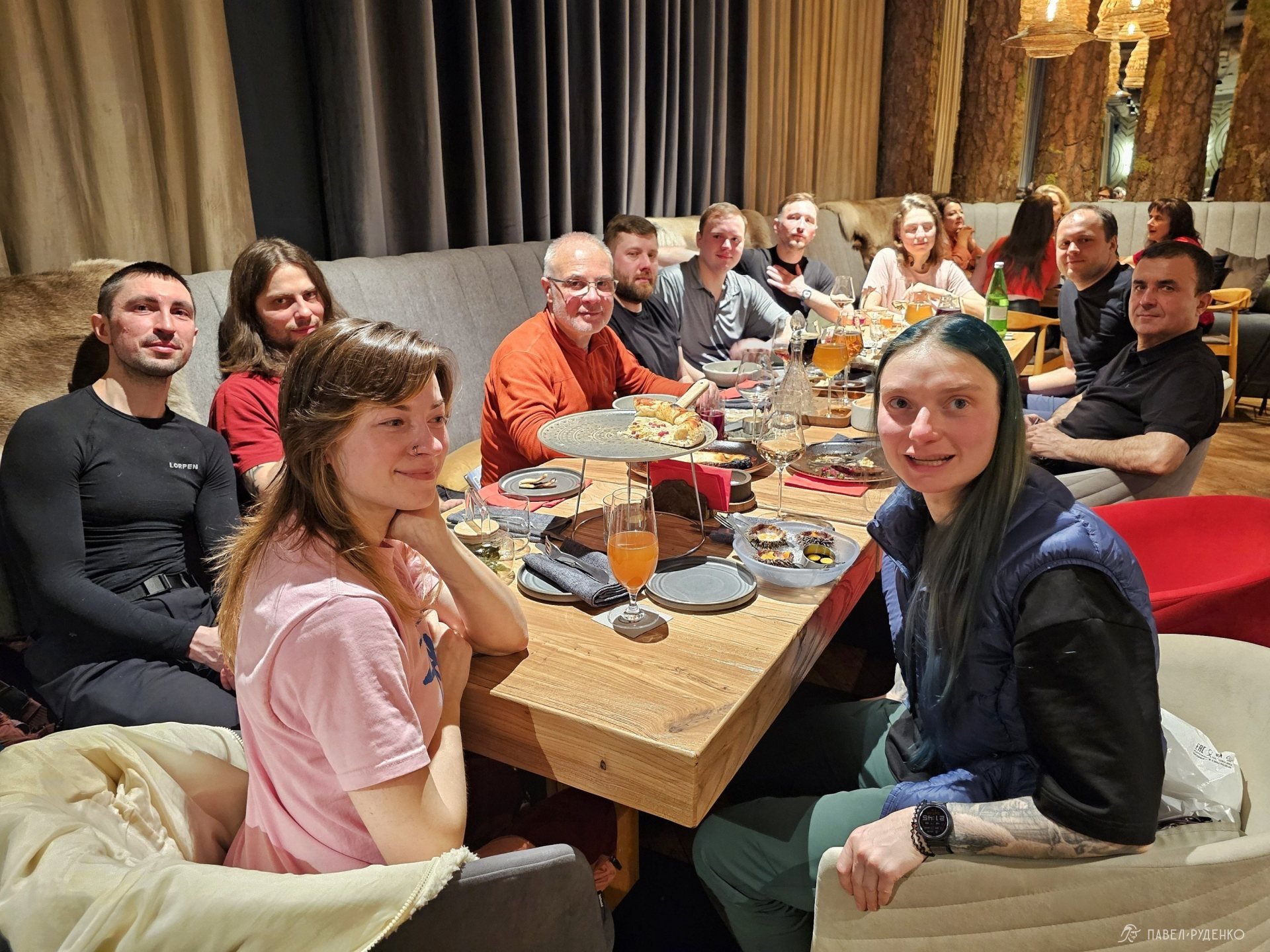
In the meantime, we're going to a newly opened restaurant in Murmansk — 'Sampo'. Very beautiful interior, lots of skins, antlers, and wood, what else do you need. The food is delicious; I ordered reindeer in berry demi-glace with pine nut porridge — I recommend both the restaurant and the dish.
A week later, the first participant will write to me: 'Add me to the pre-registration for the next ski trek.' Then the second, third... Because the Arctic is like a good book: you want to read it again and again.
If your eyes are also shining and curiosity, join us, we'll go together!