
Introduction
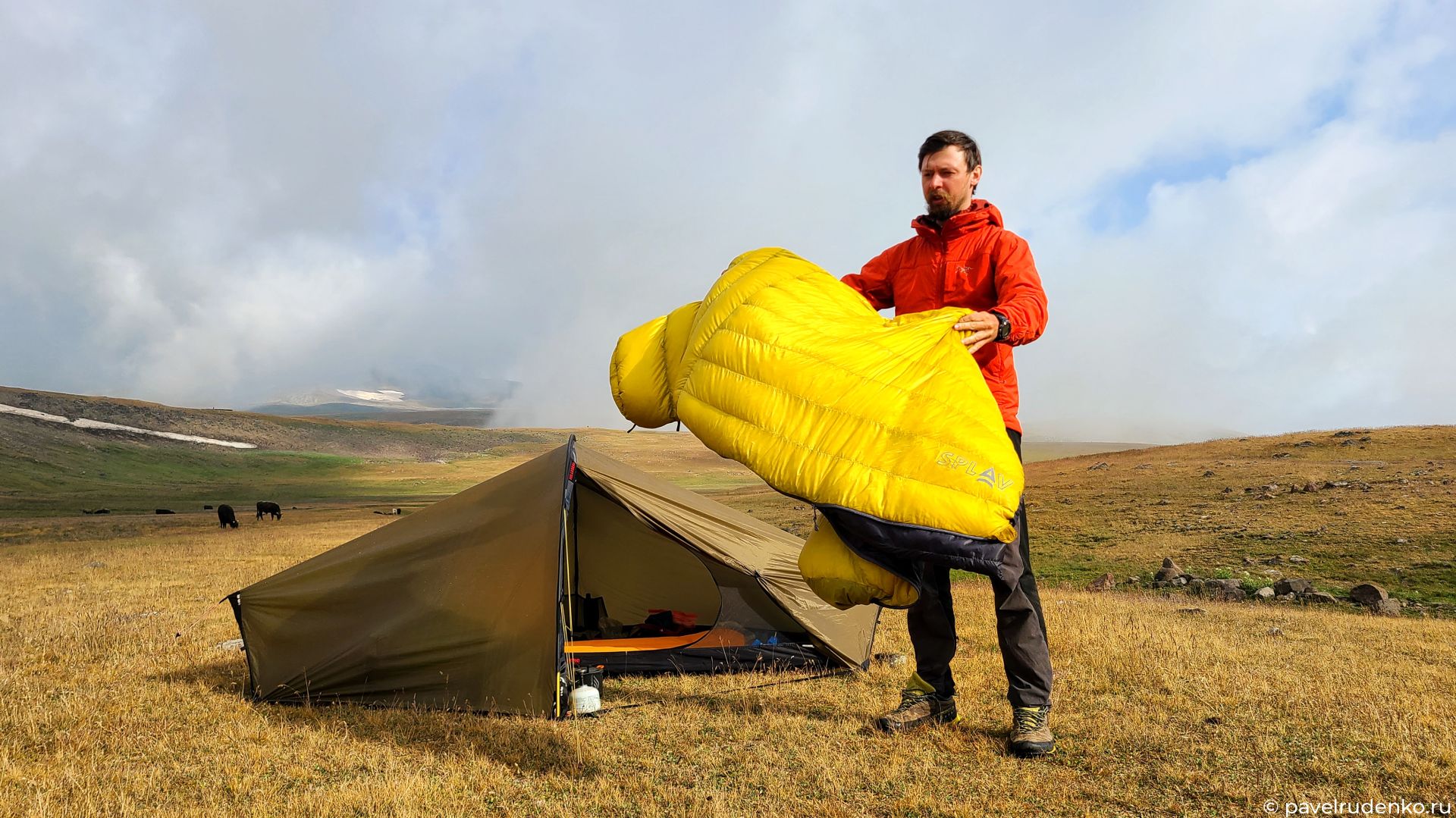
Preparing to hike the 600 km Transcaucasian Trail in ultralight style, I rethought my gear, which was mostly tailored for northern regions. As luck would have it, one of the lightest sleeping bags in Russia and abroad hit the market — the Splav Graviton Light. What a turn of events: an ultralight sleeping bag from Splav! Unexpected, but hopefully a new trend.
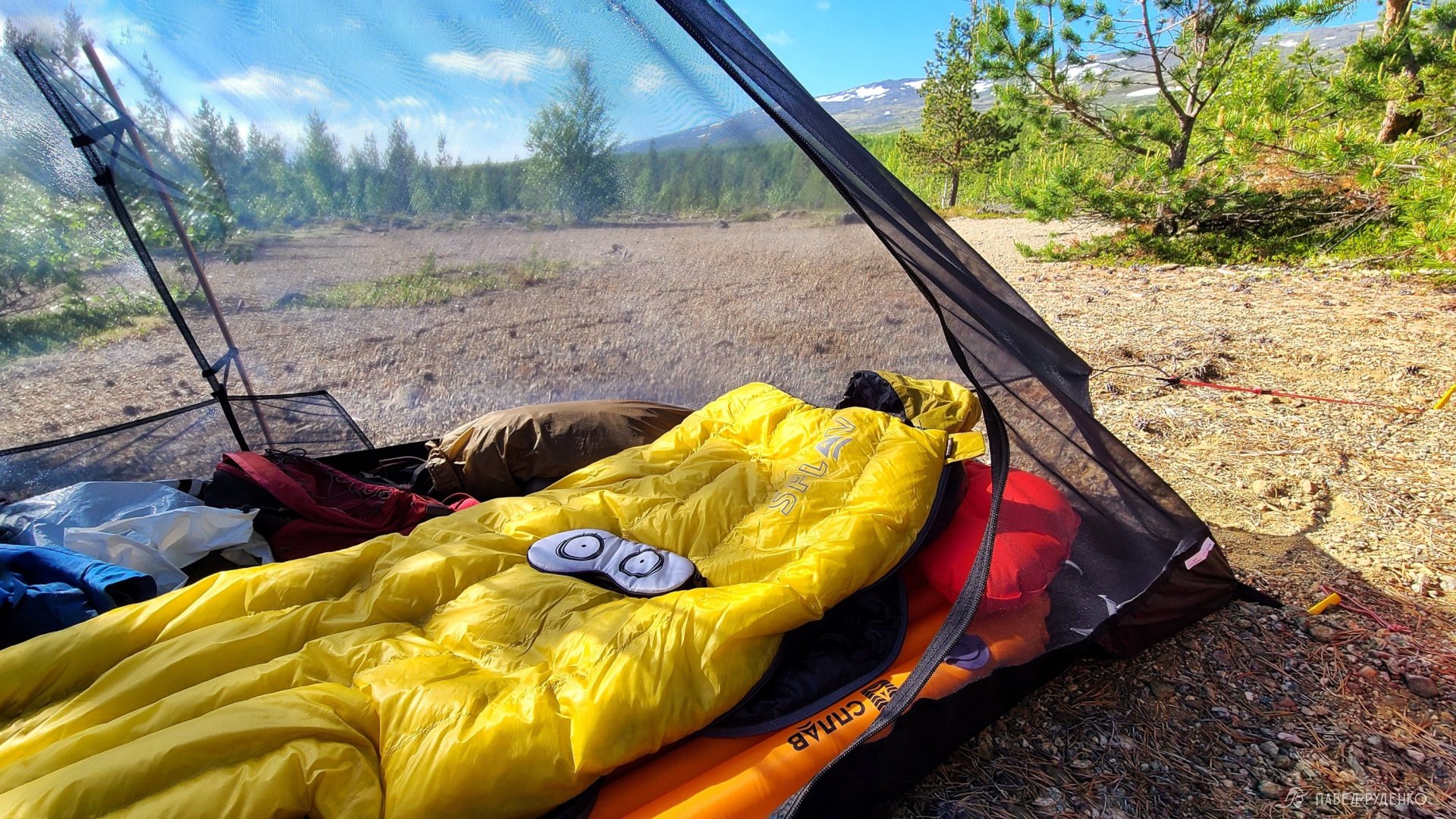
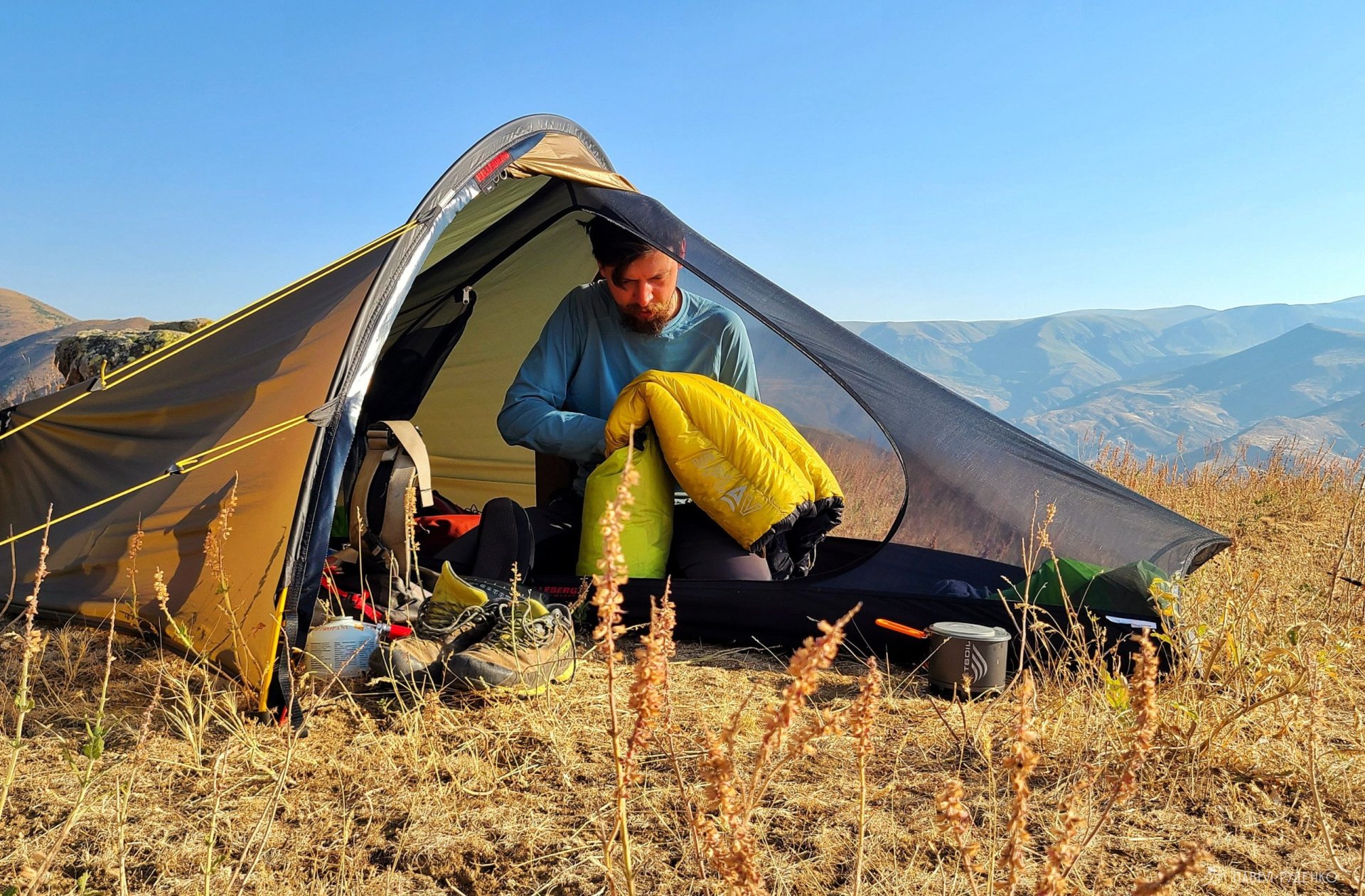
I tested the sleeping bag across vastly different conditions, spending 130 nights in it over two years at nightly temperatures ranging from -4 to +27°C.
18 nights in Arkhyz, Caucasus. May.
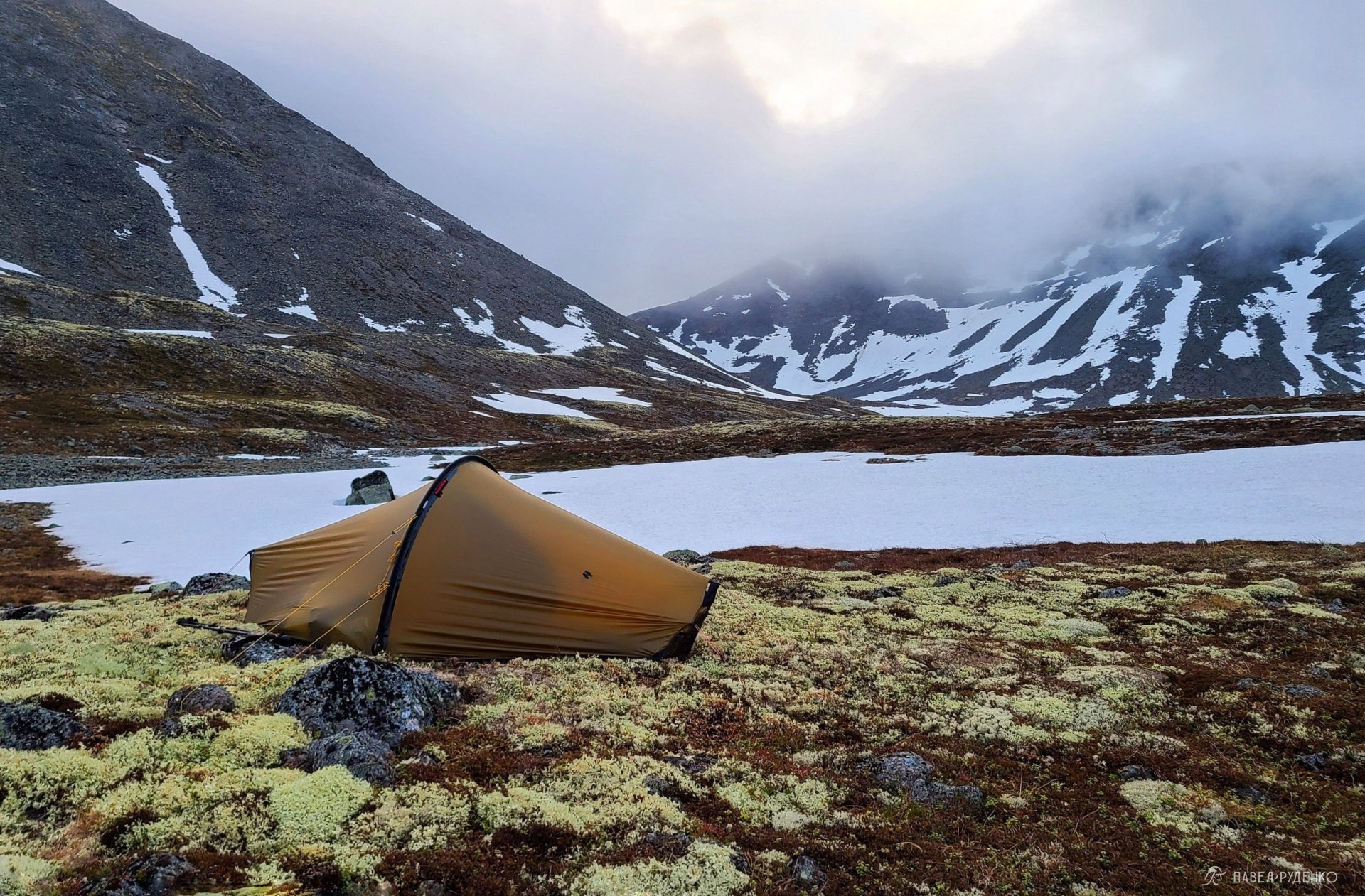
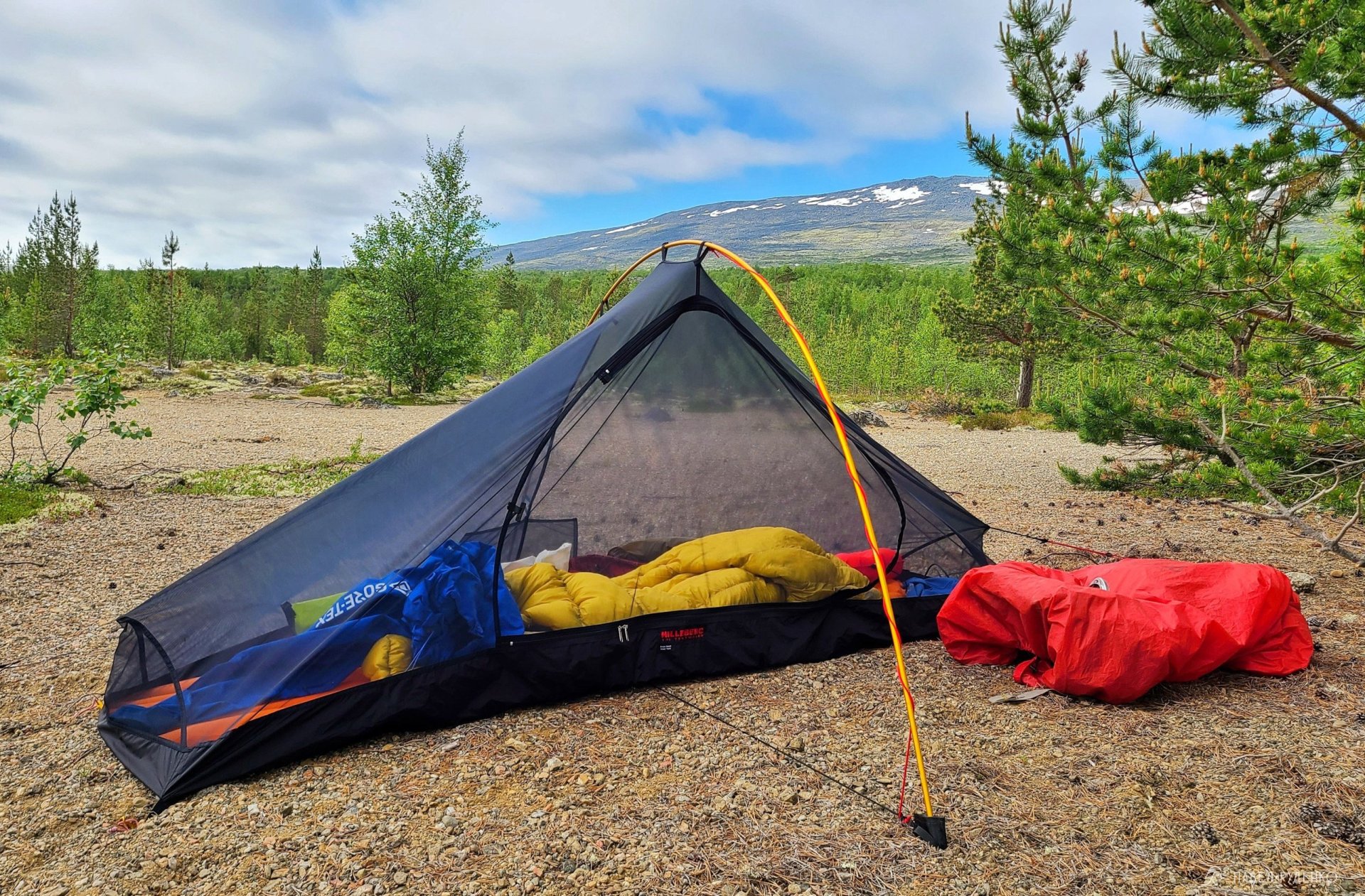
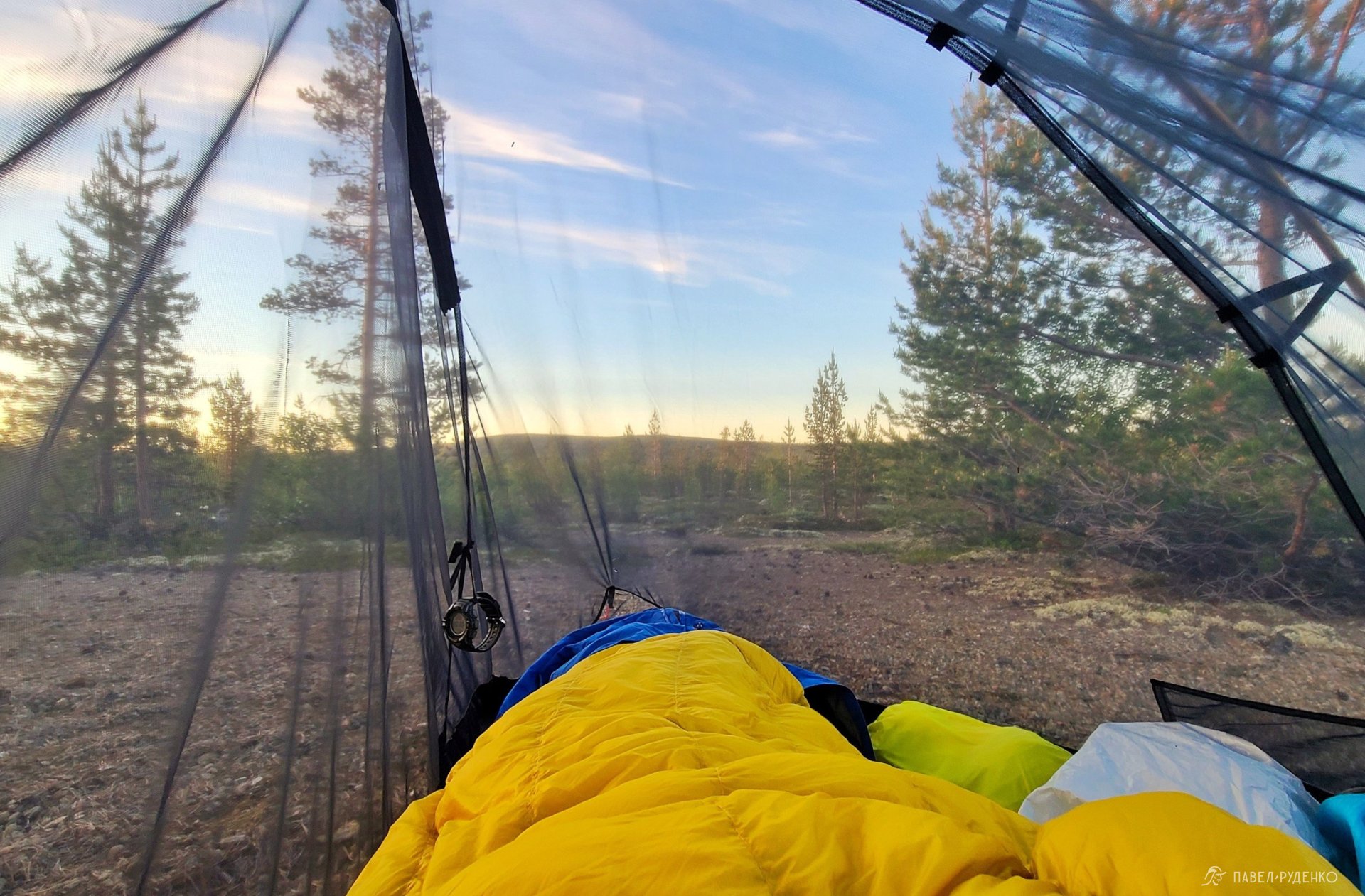
60 nights on the Kola Peninsula.
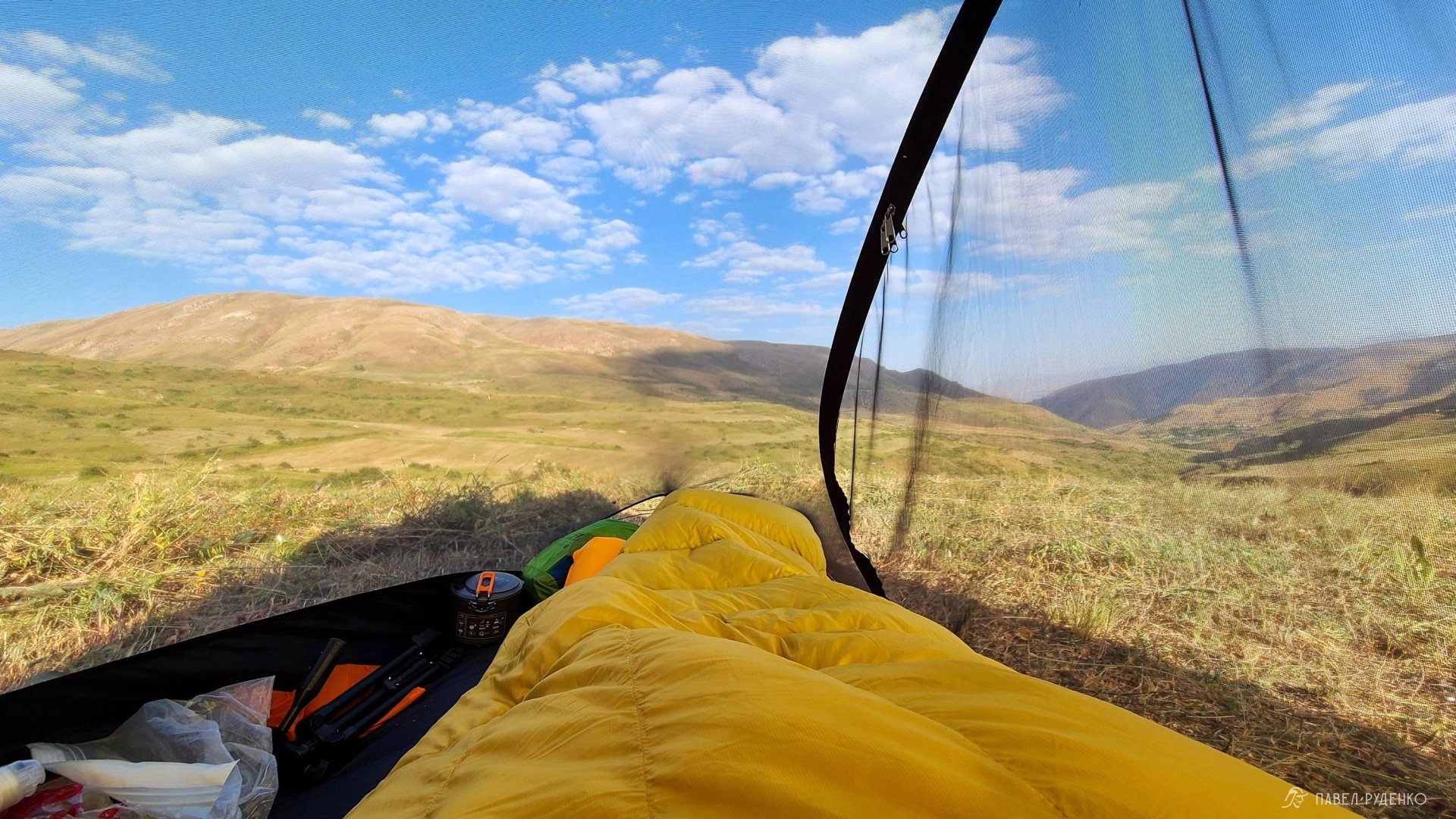
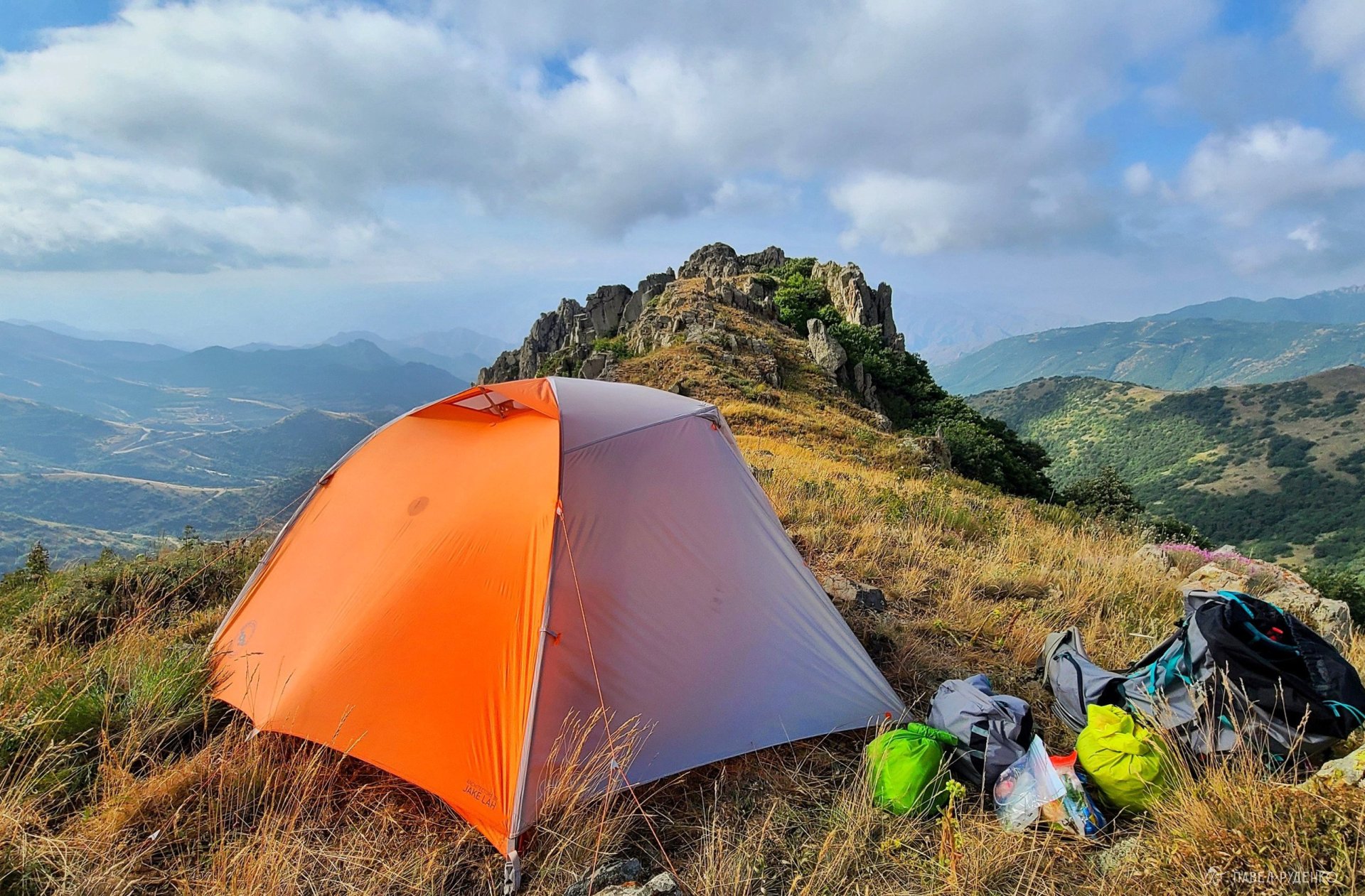
28 nights in Armenia, Transcaucasian Trail (TCT). July.
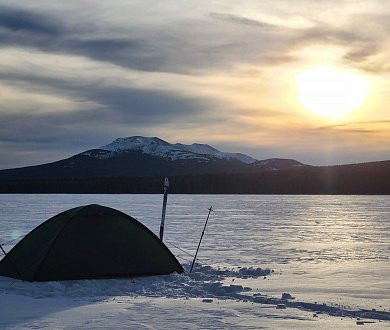
24 nights on the Kola Peninsula in June, July, August, and September.
I continue to use this sleeping bag regularly.
Specifications
Comfort +10.2°C
Comfort Limit +6°C
Extreme -6.7°C
The sleeping bag is tested according to the EN23537 standard.
Outer and inner shell fabric: 10D nylon, 26 g/m², Ripstop, DWR
High-grade white goose down: 850 FP, hydrophobic down treatment.
Weight: 505 g in size Reg.
| Sizing | 190×75×53 cm | 205×80×58 cm |
|---|---|---|
| Height | up to 165 cm | up to 180 cm |
| Packed size | 14×32 cm | 14×34 cm |
| Compressed size | 14×22 cm | 14×24 cm |
| Fill weight | 208 g | 243 g |
| Total weight | 470 g | 505 g |
Down baffles
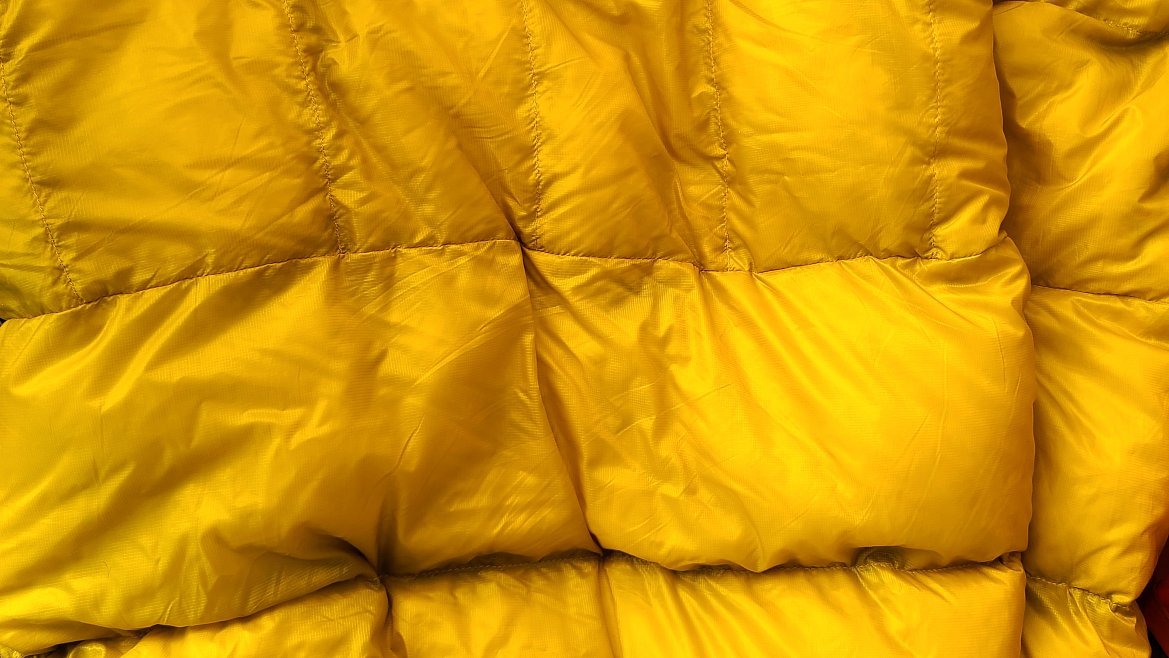
A distinctive feature is the combination of vertical baffles on the chest and horizontal baffles along the legs and back. The vertical chest baffles reach mid-thigh and feature box-wall construction, while the horizontal ones on the legs and back are stitch-through. Using stitch-through construction reduces both the weight and cost of the sleeping bag. By the way, I had long wanted to see how stitch-through seams would perform across varied conditions.
The fill is differentially distributed—meaning there is less insulation along the back, and all seams there are stitch-through. Paired with an insulated inflatable pad, I never once felt cold or uncomfortable.
I used the sleeping bag with the following pads: Big Agnes Air Core Ultra (1.3 R-value), Splav HiLight (2.3), Therm-a-Rest XTherm (6.9 R-value), and Therm-a-Rest XLite (4.2).
For added convenience, attachment loops could be included to strap the sleeping bag to the pad, similar to the Therm-a-Rest Hyperion. This would provide a more comfortable sleep and let you toss and turn inside the bag without exposing your back to drafts.
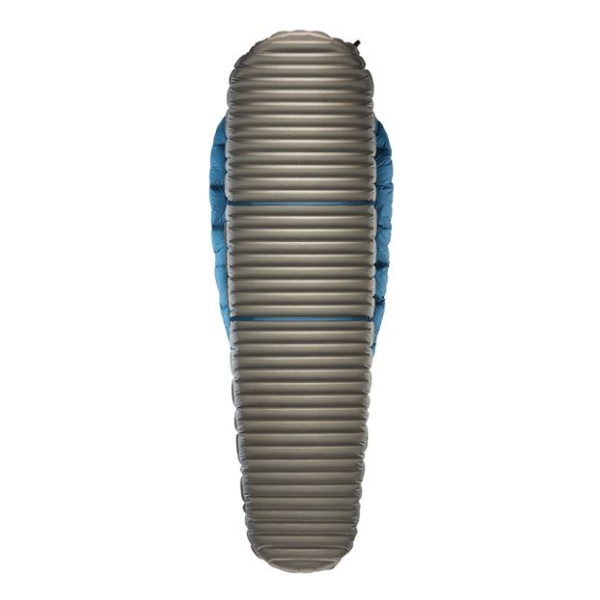
The vertical, box-wall down baffles performed exceptionally well. This construction is more complex than horizontal baffles and is typically found in top-tier international bags like the Sea to Summit Spark Ultralight, Mountain Equipment Iceline, and Rab Expedition.
The horizontal, stitch-through seams from mid-thigh down to the feet were unnoticeable on most nights. In fact, on nights above +15°C, it felt even more comfortable than sleeping in a bag with box-wall baffles because it didn't overheat.
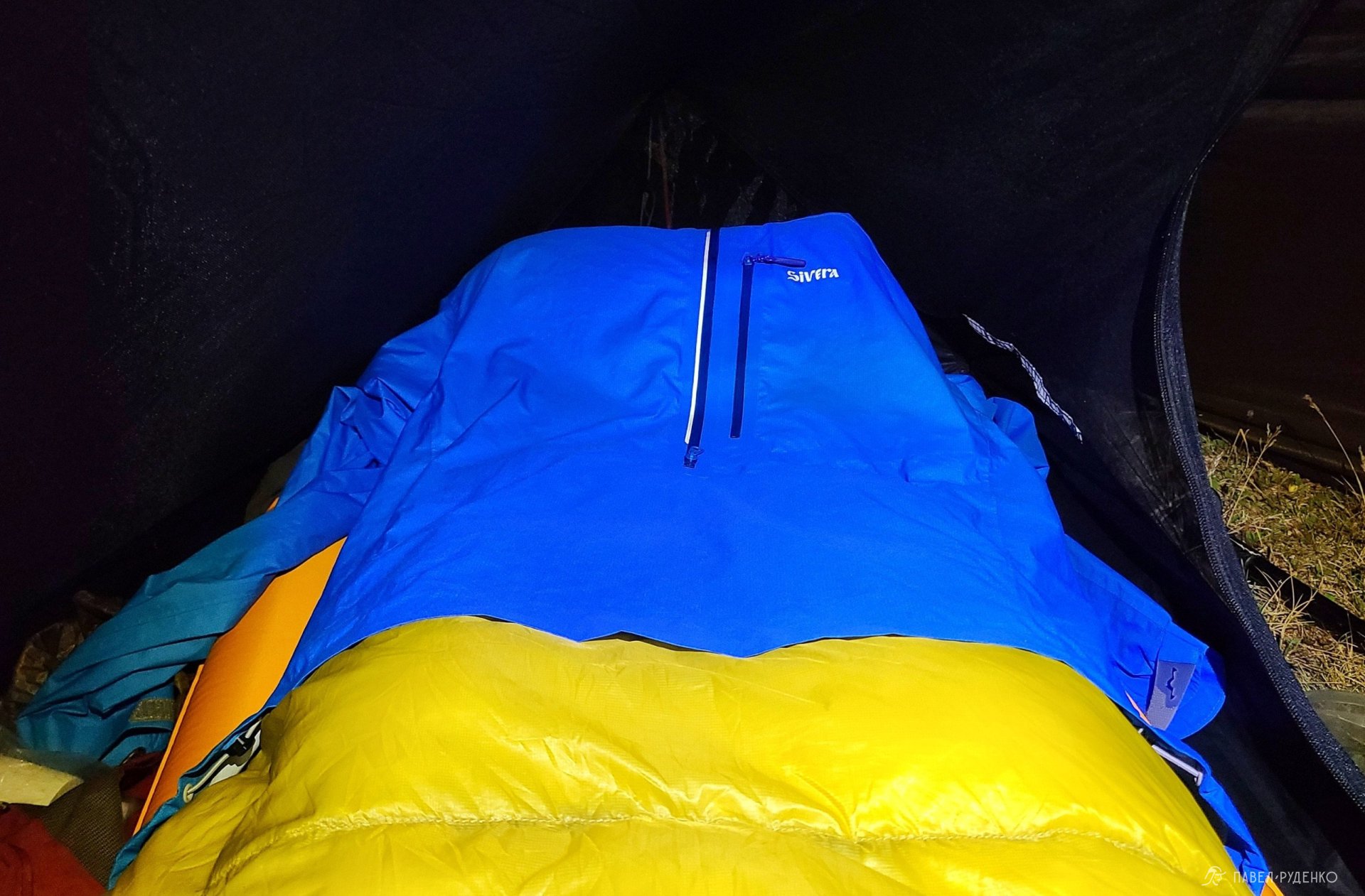
May nights in the Caucasus at an altitude of 2,500 m, with high humidity and damp chill, gave me a run for my money. For a couple of nights, with tent interior temperatures hovering between 0 and +5°C while wearing midweight thermal base layers, I felt cold in the hip and thigh area that woke me up and kept me from sleeping. I resolved the issue by putting on synthetic full-zip insulated pants and pulling my hardshell jacket over the foot of the sleeping bag.
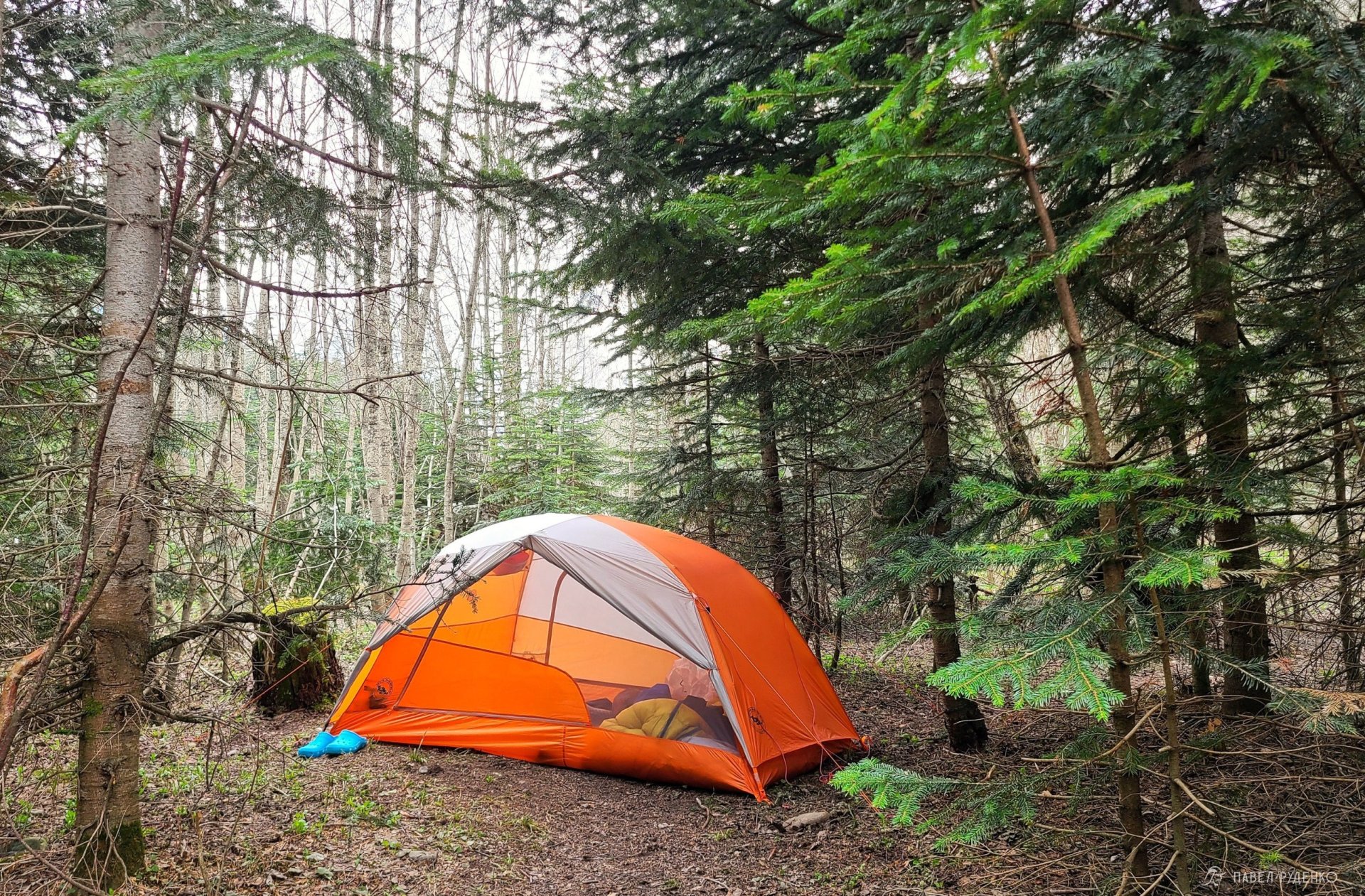
It is worth noting that early May in the Caucasus, when it is snowing just a couple hundred meters higher up, is hardly the ideal use case for this bag. On top of that, I was sleeping alone in a Big Agnes Copper Spur 2 with a full-mesh inner tent, and our camp was just 50 m from a wide, rushing mountain river. I deliberately chose gear that pushed the limits of the conditions to test boundaries and see how it felt))) Later, we camped at a 3,000 m pass in the snow zone; by then, I had moved into a 3-person tent with two lovely ladies. Naturally, it was dramatically warmer, even without the extra Lixada synthetic bivy)) I even had to unzip. The number of people in a tent makes a massive difference after all.
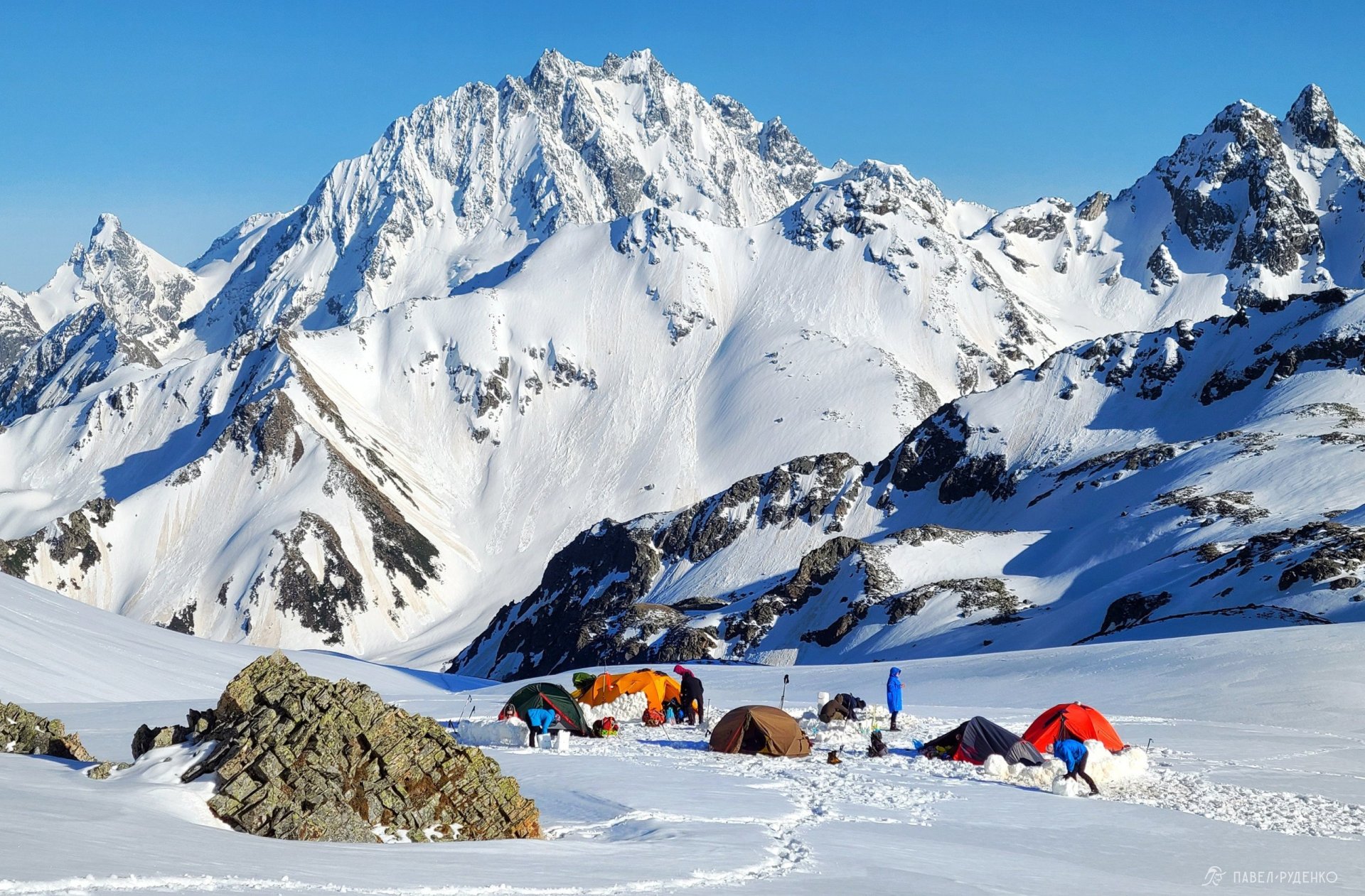
At similar temperatures in a Hilleberg Enan tent on the Kola Peninsula and in a BA Copper Spur in Armenia, I experienced no such issues.
Conclusion: stitch-through baffles perform very well in sleeping bags rated down to 0°C. Using stitch-through construction on the back brings zero downsides when paired with a warm sleeping pad. Just remember to turn inside the bag at night rather than twisting the bag with you. Stitch-through seams in the upper shell cause more heat loss compared to box-wall baffles, but this is easily offset by using the right tent and draping a shell jacket over the top.
Down
Filled with 850 FP goose down. This is a high rating and a benchmark for ultralight sleeping bags in this class. Down from birds raised in harsh, cold climates is prized for its superior loft and performance, with three global leaders currently standing out: Russia, Canada, and Poland. Russian down is used by many international brands, as well as in the Splav Graviton Light.
Today, there is transparent supply-chain tracking and raw-material traceability, much like barcode tracking systems in the apparel and footwear industry. The processing and cleaning of the down are carried out using European machinery, ensuring quality on par with top-tier international standards. That is great news, considering that in the past, you were far more likely to encounter inferior down))
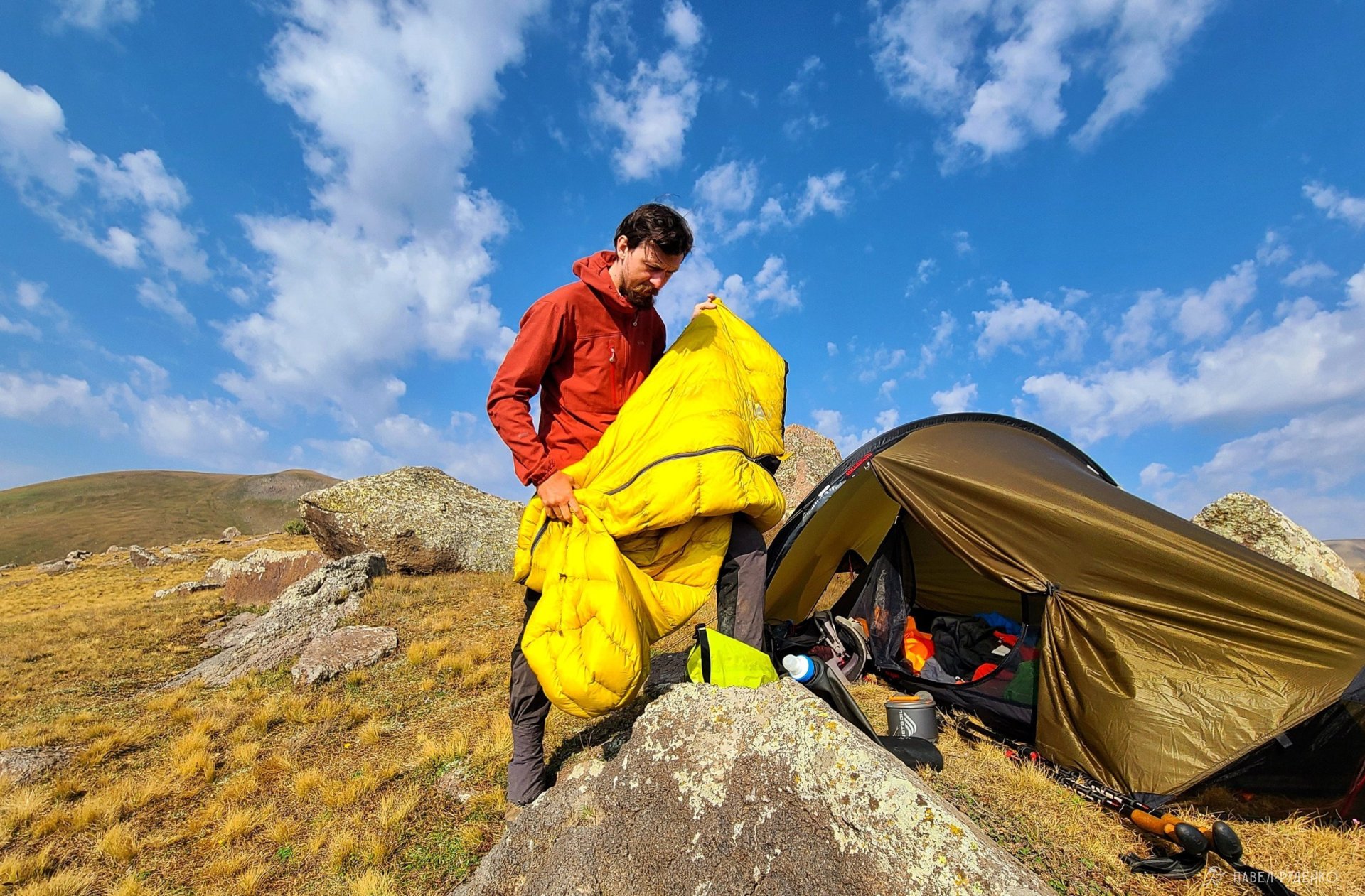
Currently, the Graviton Light features German-made Nacar hydrophobic treatment, an analogue to Nikwax. The down is coated with a water-repellent, antibacterial, low-friction fluorocarbon finish that resists clumping, allowing it to loft and distribute more evenly within the baffles.
In my version, the down was untreated, as it came from the initial production run. Despite lengthy treks lasting 14 and 28 nights, the sleeping bag never lost its loft or became damp. Proper gear care is key. Now the sleeping bag is only produced with treated down, which performs reliably in almost any environment. A message to anyone who is still hesitant about down sleeping bags...
Fabric
10 denier both inside and out. It is an exceptionally light and thin fabric. Lighter fabrics are rare, found only in ultra-premium ultralight models like the Rab Mythic Ultra 360 or Sea to Summit Spark Ultralight (7 denier). However, sourcing quality 7D fabric is tricky, making 10D the sweet spot.
As for durability, my doubts vanished long ago: I have extensively used bags made of 7D, 10D, and 15D fabrics, and from the perspective of an everyday hiker looking to cut pack weight, there are zero issues.
Zippers
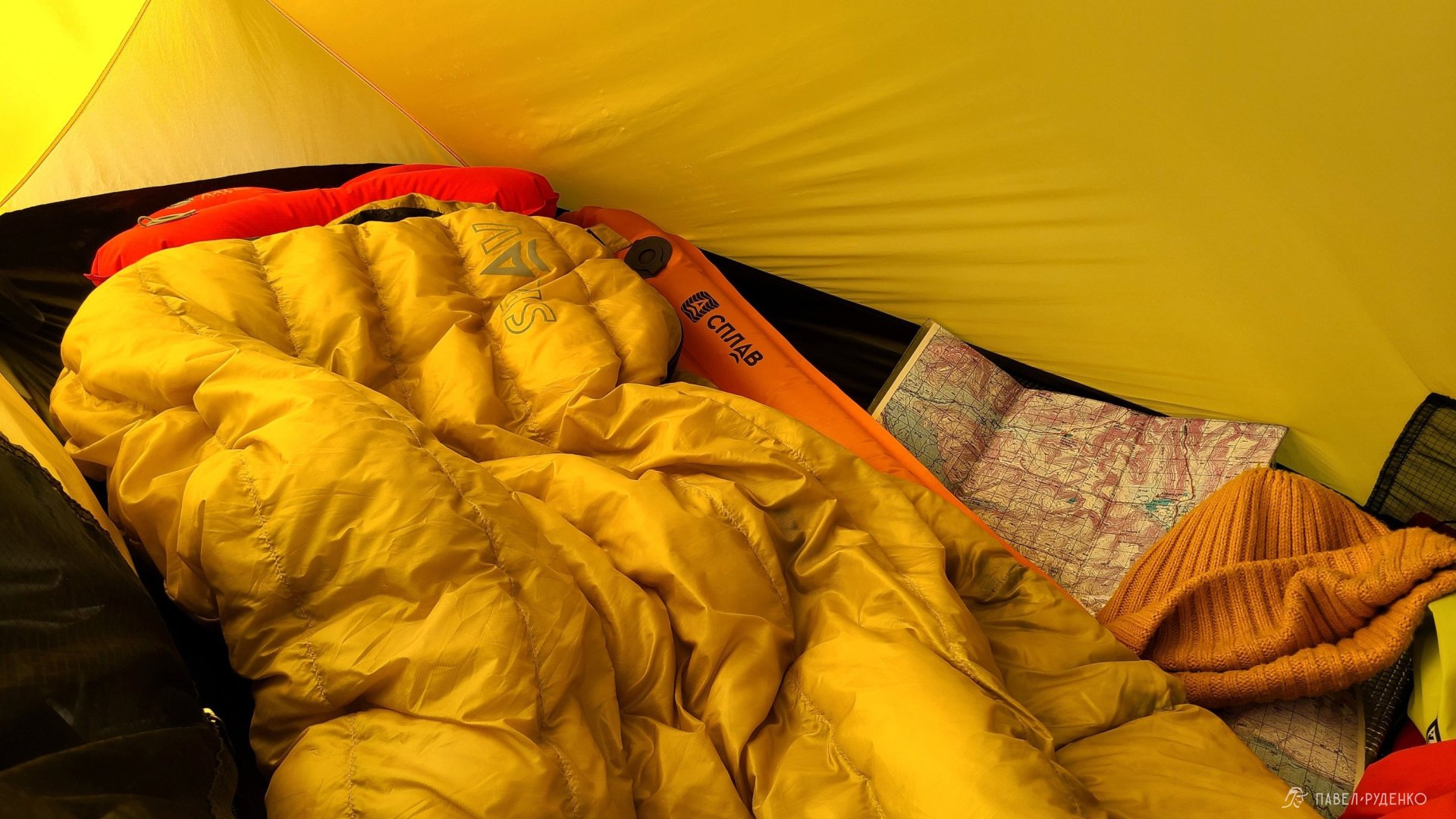
It features an almost full-length #5 zipper. I initially questioned the need for this length and zipper size, as many ultralight sleeping bags use a 1/2 or 2/3 length #3 zipper. However, after speaking with the gear designer, I learned the following:
1. Shortening the zipper saves negligible weight while drastically reducing the bag's versatility. You would no longer be able to open it up like a quilt on warm nights.
2. Downsizing from #5 to #3 saves a mere 15 g at the expense of cutting strength and lifespan in half. As for #4 zippers, they are extremely rare, and even from an aesthetic standpoint, sourcing them for production is very difficult.
Hood
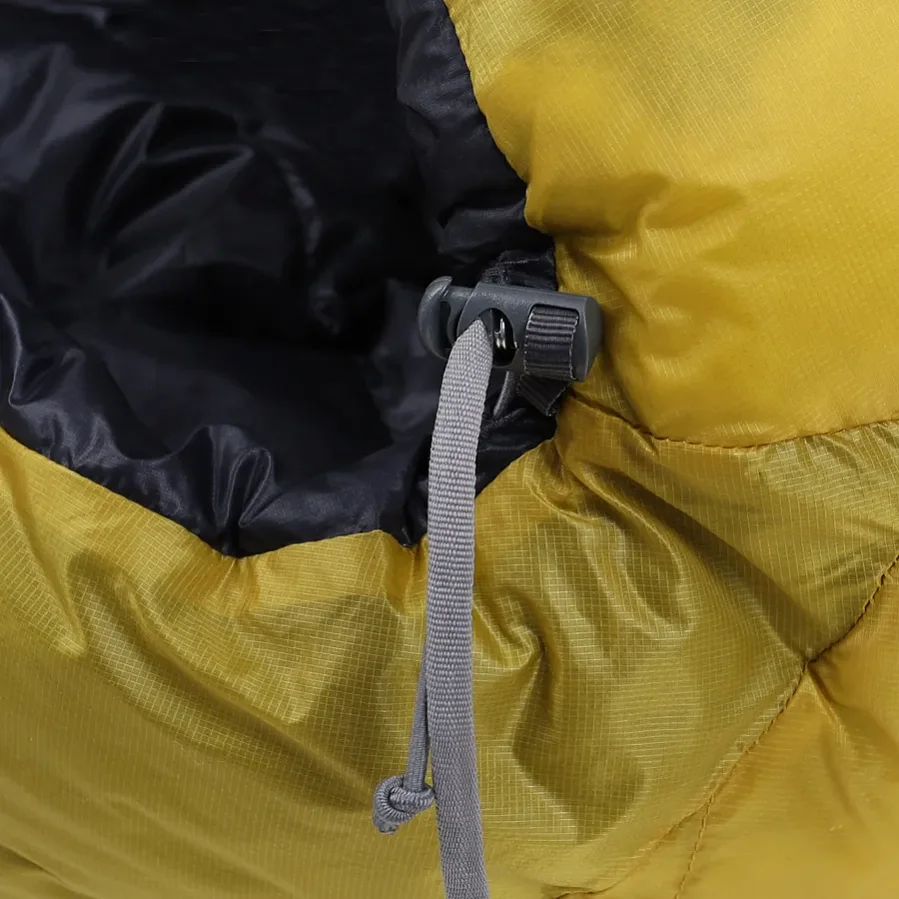
The hood cinch is made of an elastic cord and webbing, allowing you to tell by touch in the dark which part of the hood needs tightening—a very convenient touch, just like Mountain Equipment does it.
On my fourth night, the cord snapped when I tried to cinch it tighter in my sleep due to the cold. I know this happens in some batches despite quality control. I stitched it back on, and now it's completely reliable.
Sizing
The sleeping bag comes in two lengths: the 190 cm version fits heights up to 165 cm; the 205 cm length suits heights up to 180 cm, which is my exact model. At the same time, it boasts a shoulder width of a whopping 80 cm—exceptionally roomy for a bag in this class and weighing just 505 g.
Verdict
The Graviton Light is perfect for anyone looking to cut down on weight. There are very few alternatives offering a comparable warmth-to-weight ratio.
It turned out to be an outstanding model. There is virtually no direct competition, and it clearly outperforms what is available. With results like this, I hope our local manufacturers can catch the wave in light of recent events, establish a strong foothold, and compete head-to-head with global brands in quality and tech. As for us—our job is to trek through the tundra and mountains and enjoy the adventure.
Video review




Comments (0)