
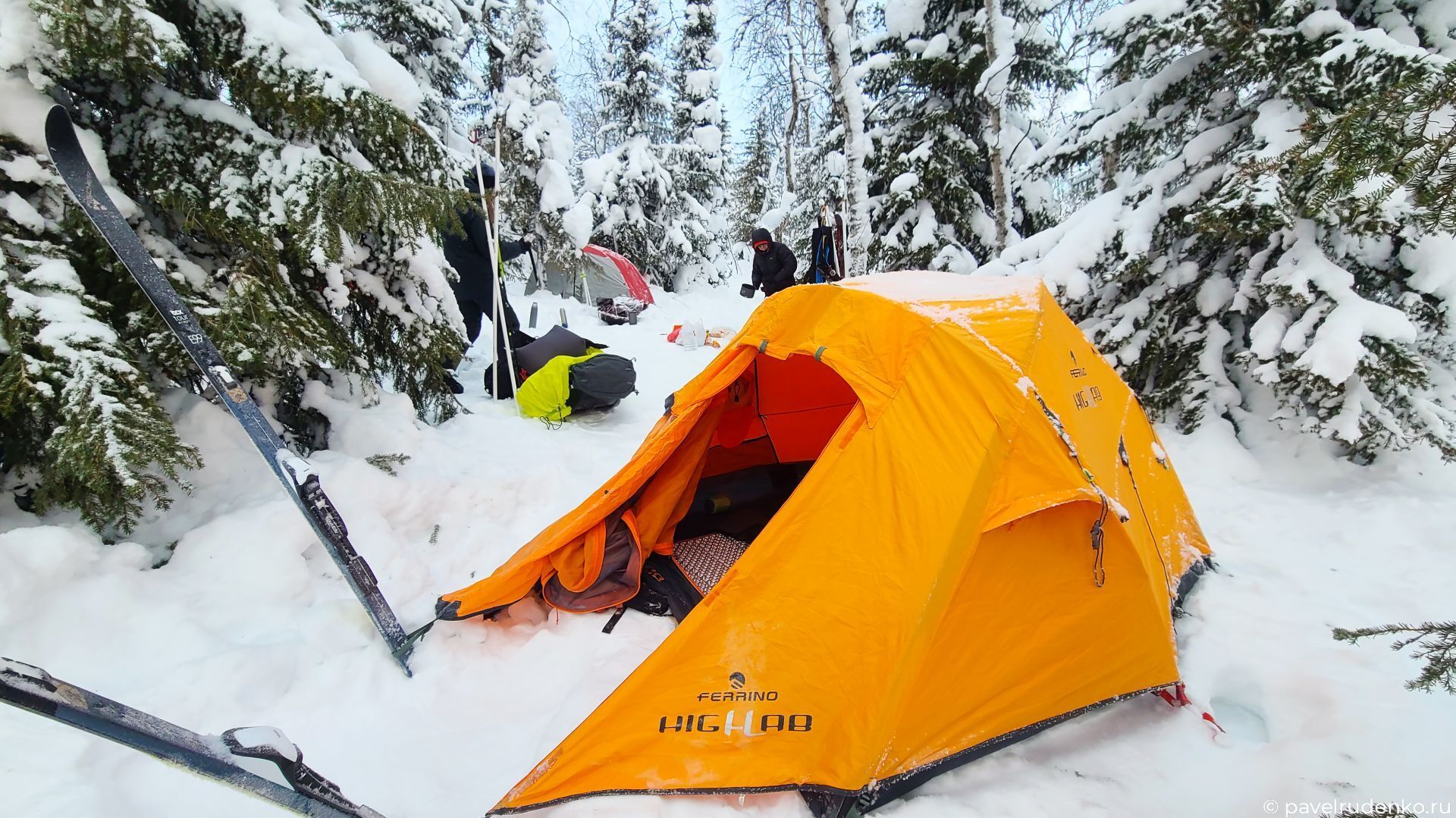
Ferrino Piller 2 Tent Review
Thanks to working in an outdoor gear store, I've used various Ferrino tent models extensively: Piller, Force, Trivor, Tenset, and had the opportunity to pitch and thoroughly examine Ferrino models: SnowBound 3, Maverick 2, Solo, Svalbard 2, LighTent 2, Grit 2, Nemesi 1, Sintesi 2, Manaslu 2, Shaba 3, Flow 4.
I have many questions about Ferrino tents and hadn't planned on taking one on serious treks, but my explorer's spirit prompted me to take the Piller 2 on a ski expedition across the Lovozero Tundras in February.
The Piller 2 was designed as a high-altitude mountaineering tent. It features a classic dome design with 3 poles and a single entrance to minimize weight. After all, 1 entrance means half as many zippers and seams, and requires less footprint space, which is a big advantage in tight high-altitude conditions.
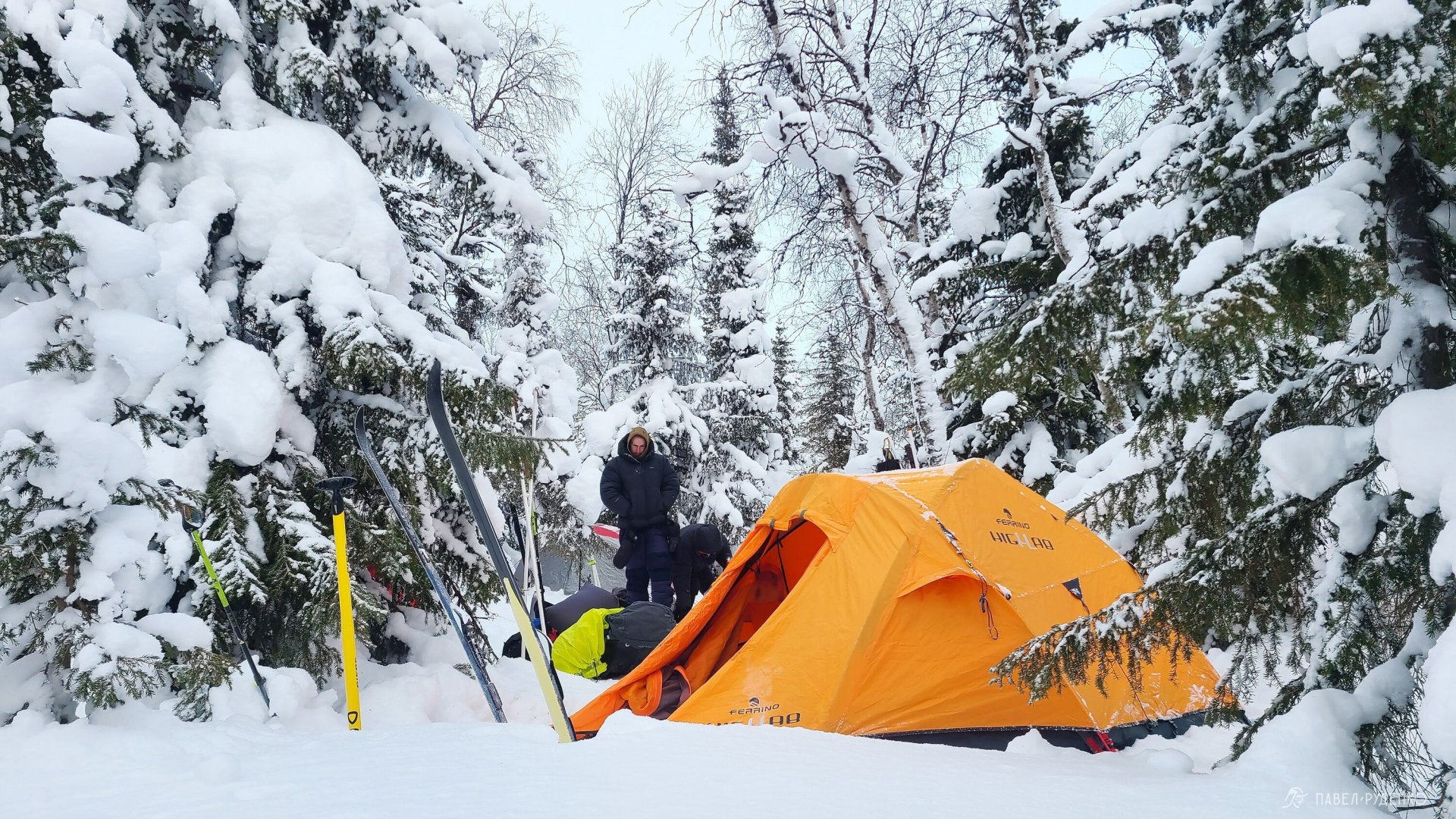
In ski touring with the simple goal of taking in the scenery, this design has a small downside — 1 vestibule means less comfort for two people in winter conditions, and little room for backpacks, boots, and cooking. But mountaineering is a sport, and in sports, that kind of comfort is out of the question. The 3-person version of the Piller already has two entrances and vestibules.
Specifications
| Rainfly | 50D polyester 80 g/m², PU 4,000 mm coated with flame retardant treatment |
|---|---|
| Floor | 70D polyester 95 g/m² PU 8,000 mm |
| Inner Tent | 70D polyester |
| Poles | 7001 T6 alloy aluminum, 8.7 mm. 3 poles. |
| Min. weight | 3.2 kg |
| Weight | 3.450 kg |
Living Space
The interior space is gorgeous: 150 cm at shoulder width in a 2-person model is truly impressive. The walls are fairly vertical with plenty of room, which prevents you from brushing against condensation while moving around inside. Overall, the usable volume left the best impression.
Ventilation is excellent, plentiful, and well-positioned.
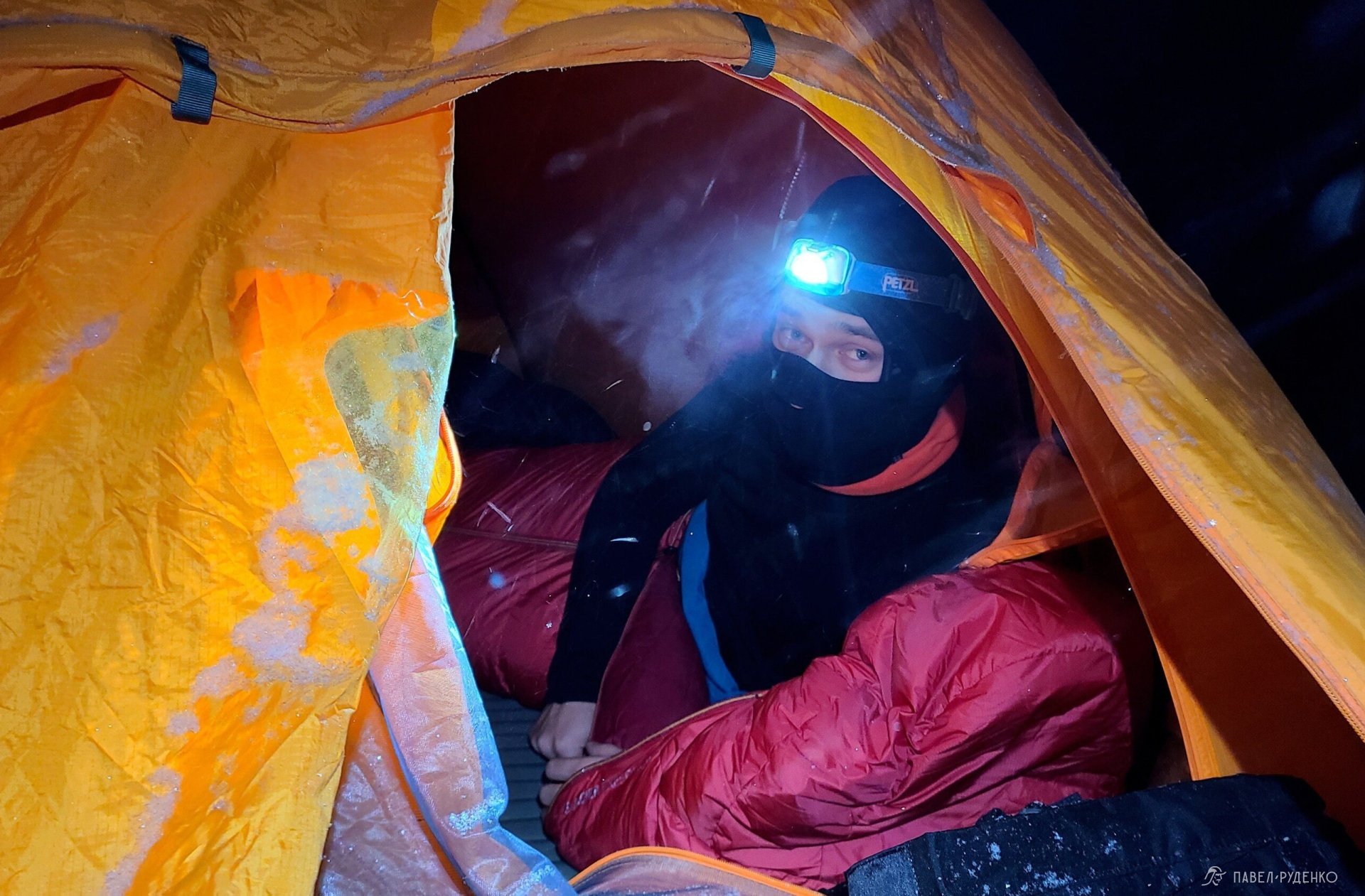
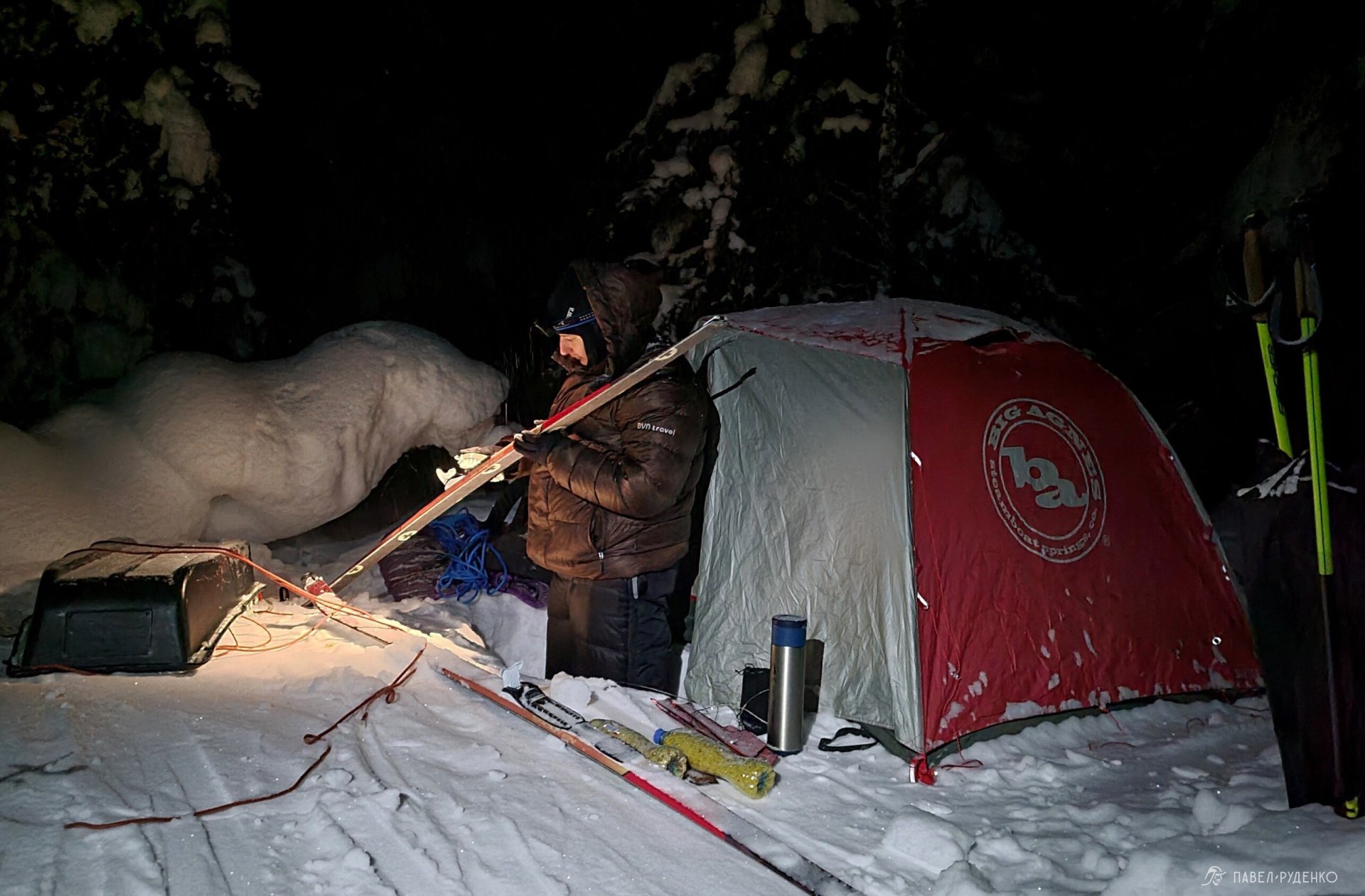
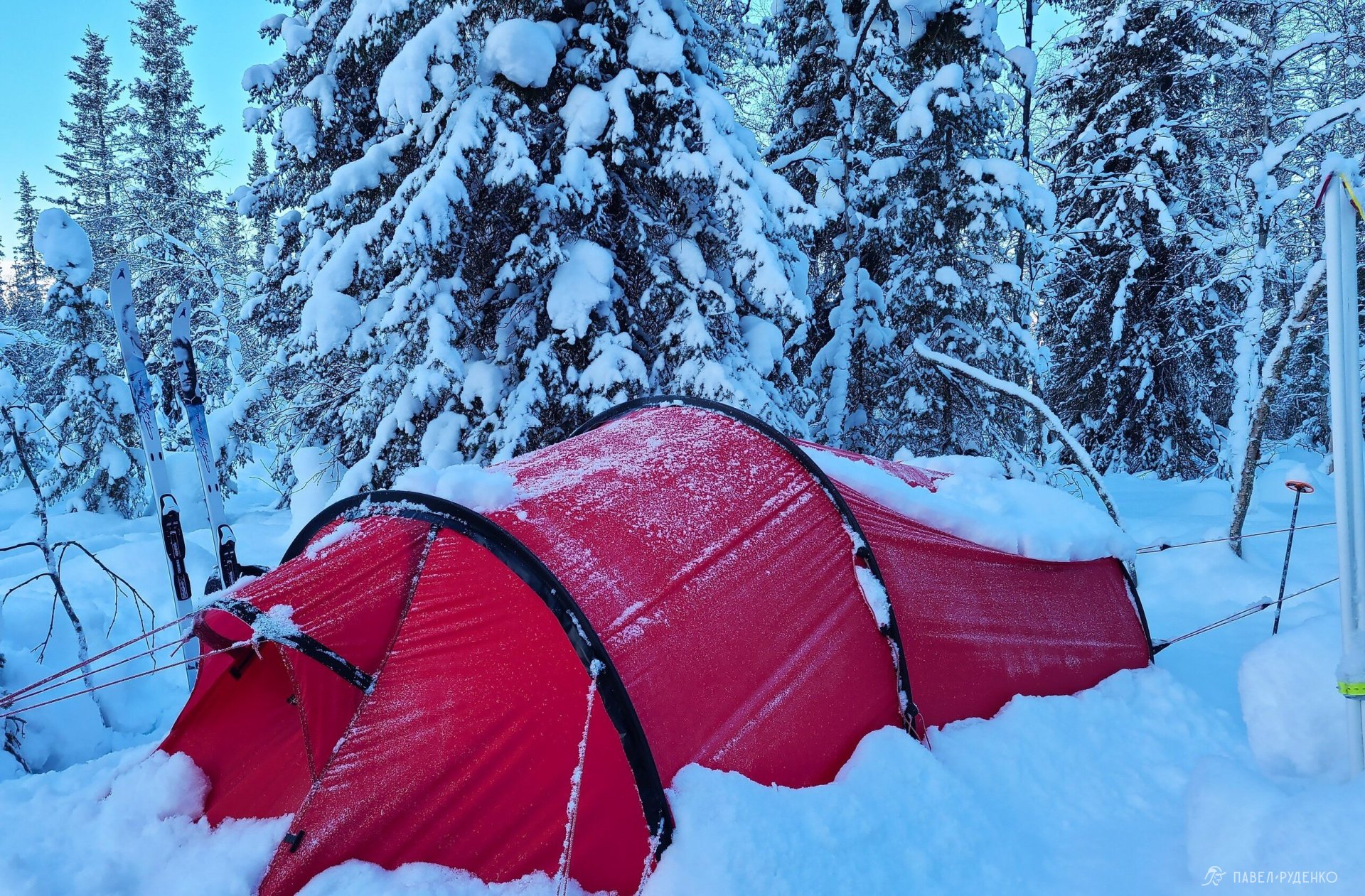
Maxim is watching and waiting for morning to come so we can swap tents) Over the week, everyone got to sleep in and test the Hilleberg Nallo 2 GT, Big Agnes Copper Spur Expedition 2, and of course the Piller.
The decision to take the Ferrino Piller 2 was tough. Like in 'Fear and Loathing in Las Vegas', we had 3 Ferrino Pillers and built one solid tent out of them, taking the best parts from each donor))) The donors came from returns, defects, test samples, and so on.
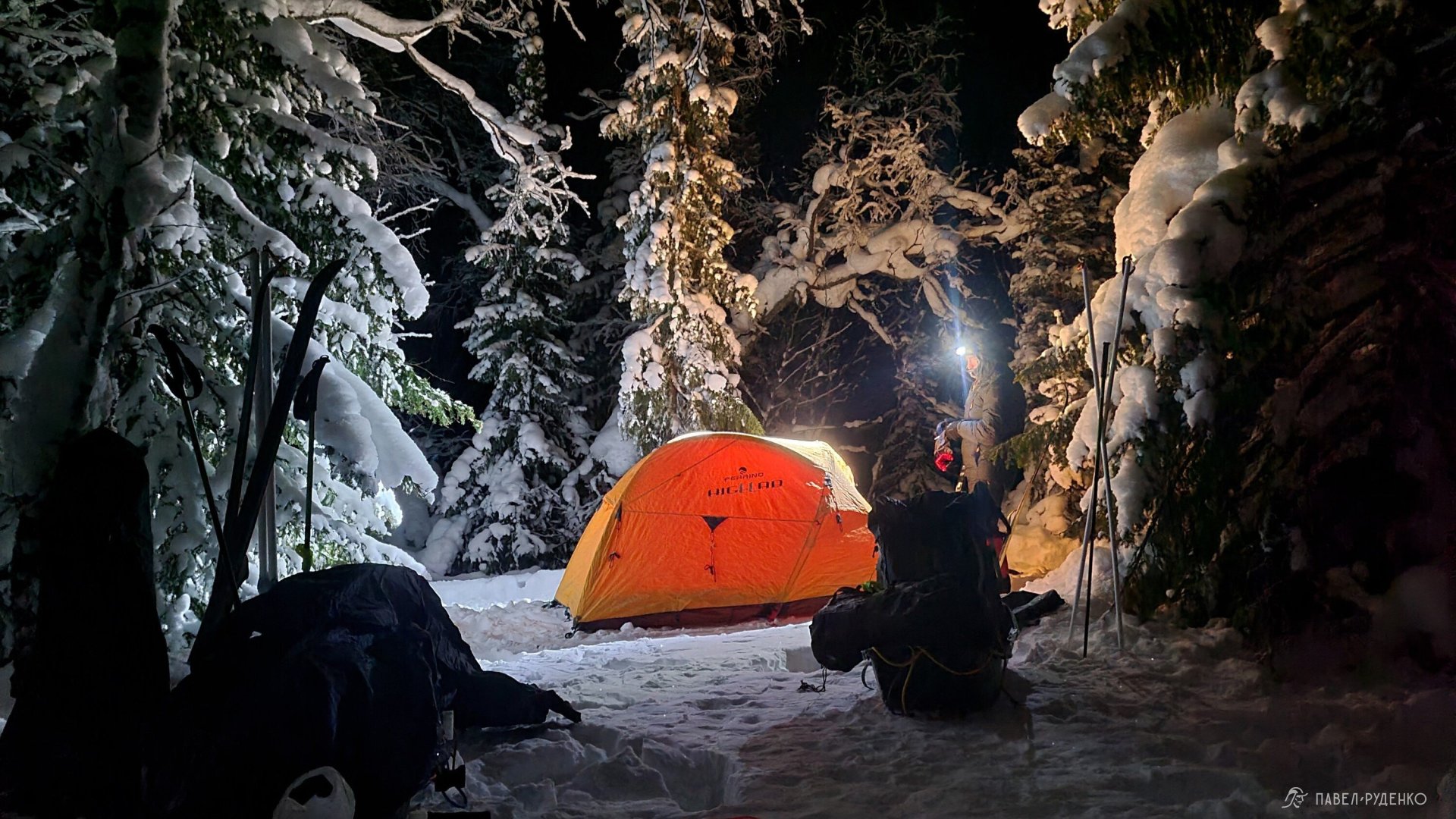
The most magical camp night.
I used the 2020 model, which had pole sleeves on the inner tent, which came in very handy. This distributes the load better, and in case of a pole failure, the aluminum section stays trapped inside the fabric sleeve and doesn't tear the flysheet. The sleeve material was made of mesh — matte, grippy, and stretchy — which made sliding the poles through quite difficult. This is a classic case of the manufacturer trying to make a fancier solution than a standard fabric sleeve, but ending up adding weight and making pole insertion worse.
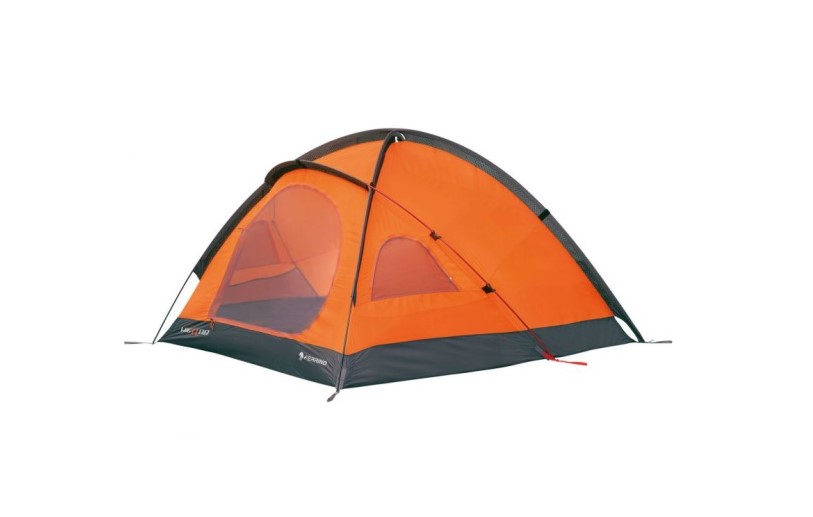
Pole Attachment
At the end, the pole rests in a pocket that is not reinforced in any way and tore on one of the evenings. Repairing it at evening temperatures of -35 °C was far from pleasant and, frankly, quite futile. We rigged something up, the pole barely held, and that’s how we pushed through another 2 nights to the end of the route. Stitching the pole pocket like that is an utterly flawed engineering choice. What's more, this is the second Piller where I’ve witnessed a pole pocket rip before my eyes.
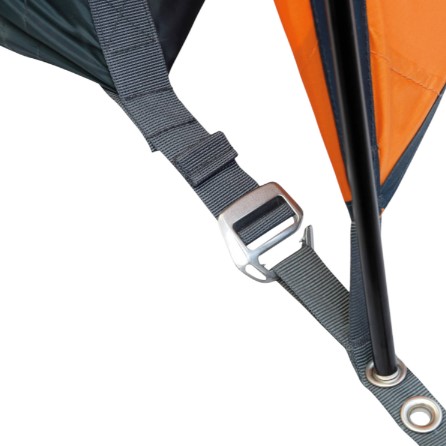
Sometimes in severe cold the fly shrinks, making it tricky to insert the pole into the grommet, but on this trek we didn’t encounter that issue.
On top of that, the pole must be inserted in a specific direction. That is, there is an end cap designed to go into the pocket on one end, and a metal tip for the grommet on the other. This is an utterly absurd design choice, forcing the user in harsh conditions—the very ones the tent was built for—to figure out every time whether they are sliding the pole in the right way. And if you make a mistake and realize it only when the pole won't fit into the grommet, you have to pull it out and start all over again. Zero empathy from the Italians here, what else can you say?))
Other brands share this issue too; off the top of my head: TNF Assault, MSR Advance PRO. The proper solution is to use a pole cup, just like Fjallraven, Helsport, and Hilleberg do. The main drawback is the non-standard nature of this design—a grommet is easy to source, while a pole cup is not. But given Ferrino’s sales volume, that should hardly be an obstacle.
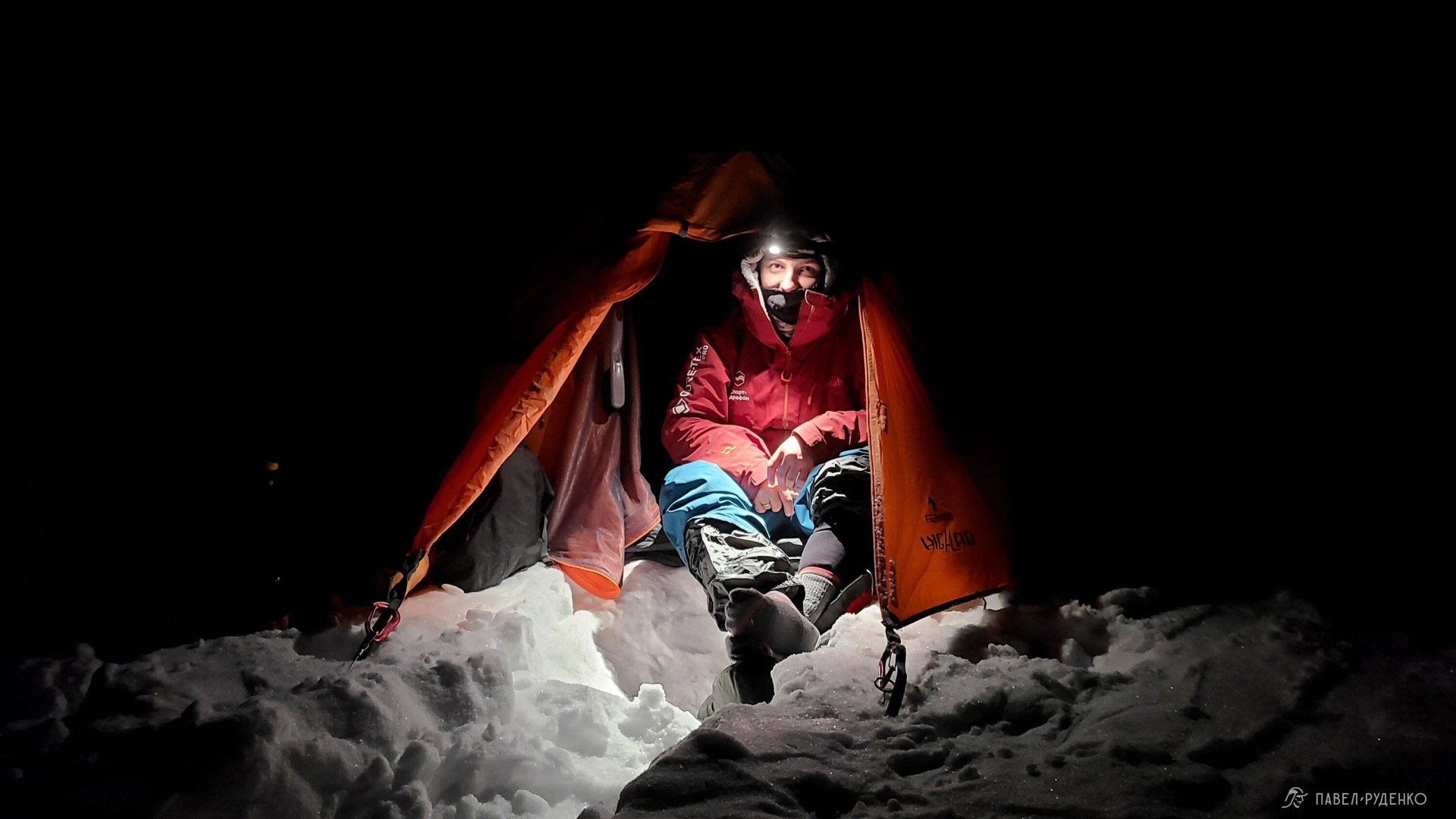
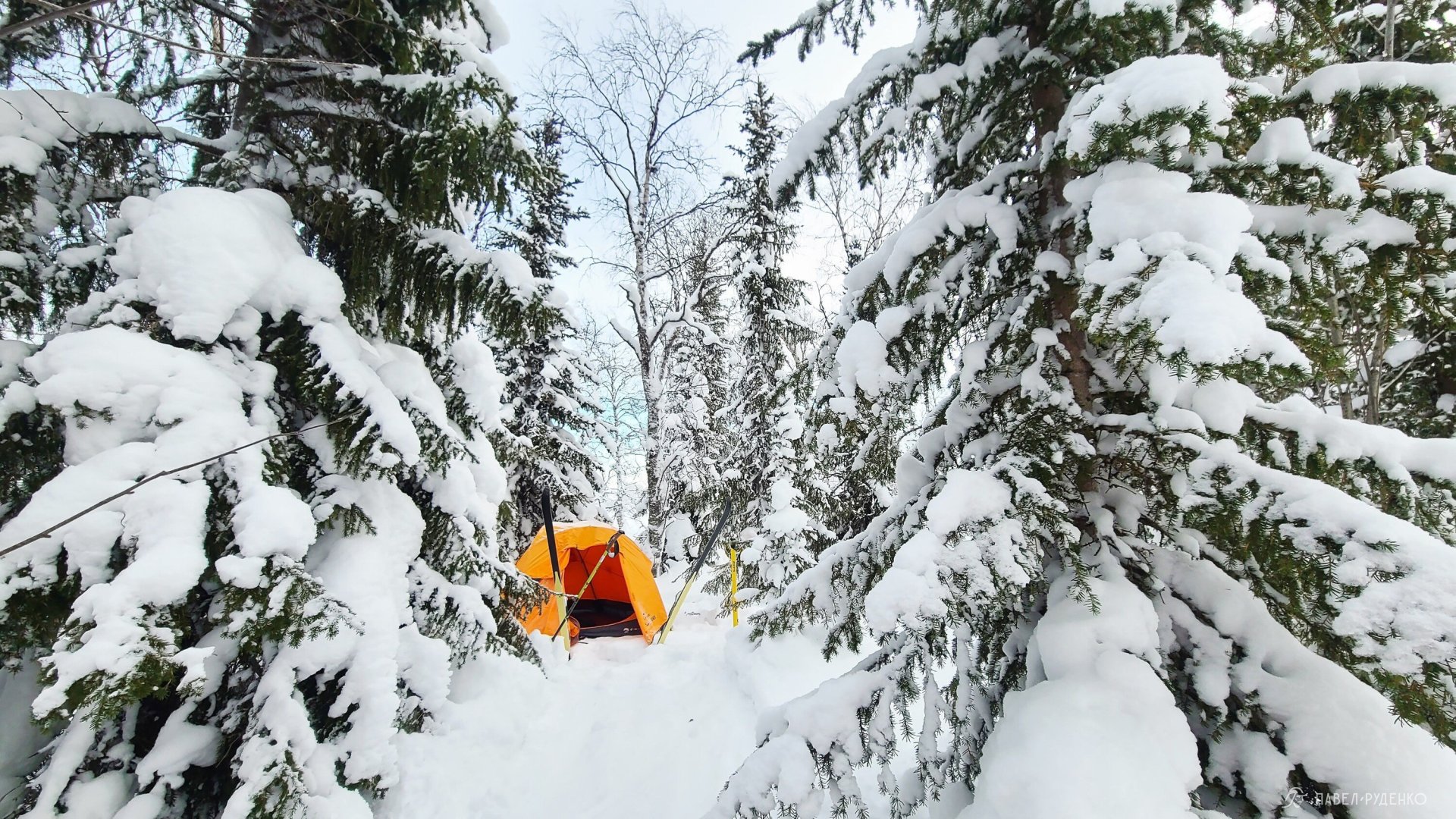
Winter treks are wonderful. Cozy, scenic, quiet)
Updated Piller
Ferrino Piller 2 was updated in 2022, now featuring external pole sleeves on the flysheet, which is an unmistakable plus. This allows for faster pitching, especially in adverse weather conditions.
Double guy lines have appeared, just like on serious Scandinavian gear, although aesthetically it's done rather poorly. The guy line connecting the two attachment points on the fly is so short that under tension it fails to form the familiar sharp triangle.
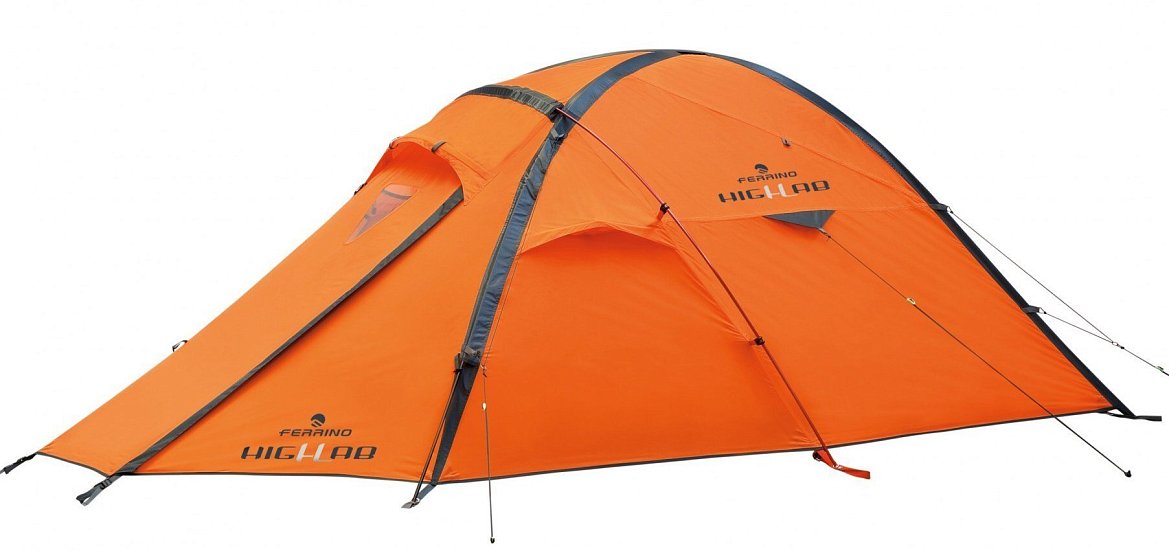
It’s always a mystery to me why place a storm guyline on the fly fabric when there is an unused pole right next to it.
Window
Another absurd feature is the clear TPU window, which tends to delaminate over time on most Ferrino models. Repairing it isn’t easy, and ending up with a hole in your flysheet during an expedition is far from ideal. Why is it even there? No real reason, other than being a cosmetic gimmick for an "expedition" tent.
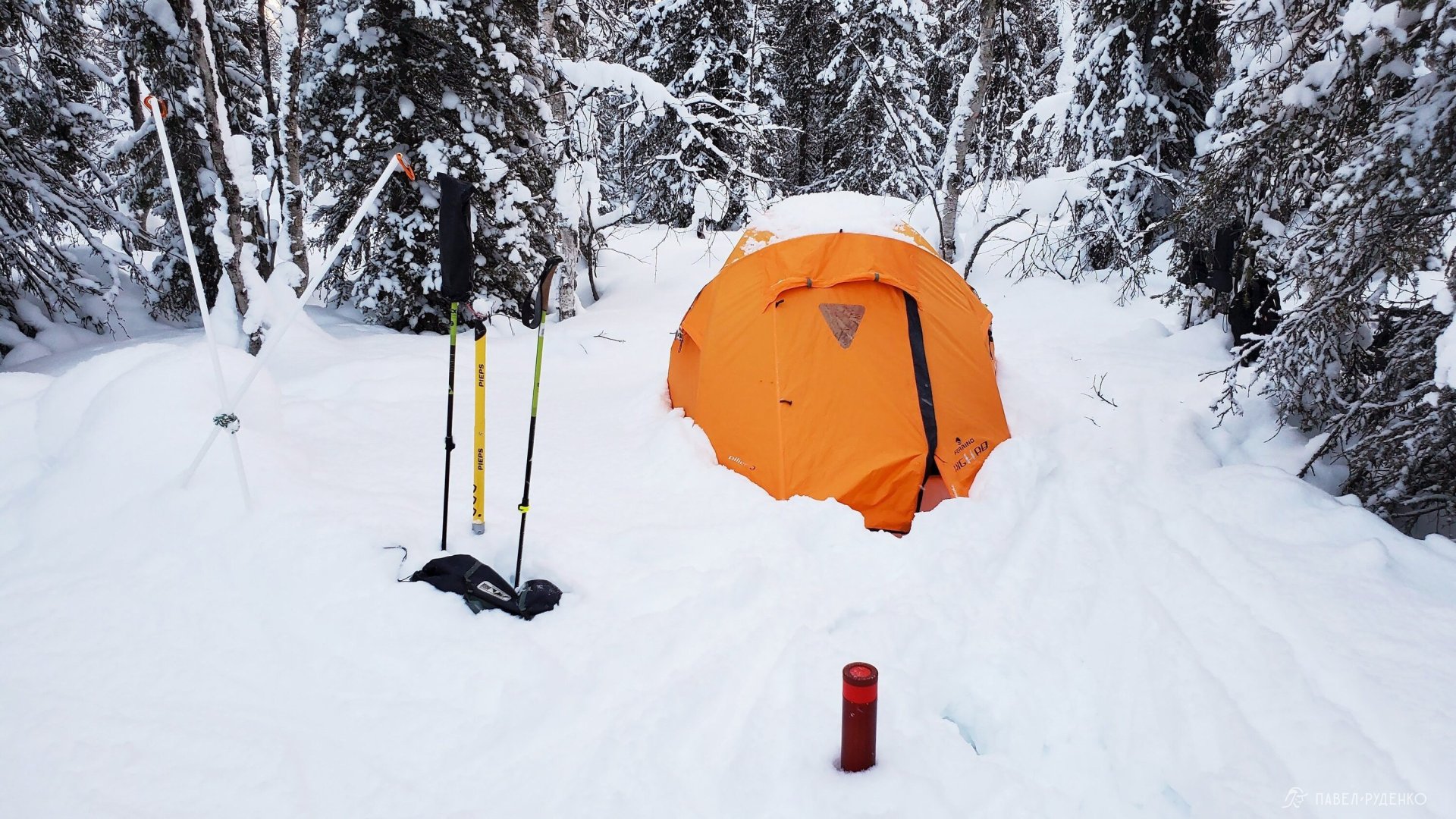
The structure itself handles snow loads well, as long as the flimsy poles don’t let you down))
Flysheet, inner tent, floor
Now for the most important part—the tent materials.
Let’s look straight at the updated Piller model: the flysheet is made of 50D 80 g/m² polyester with a 4,000 mm PU coating and flame retardant treatment. Using such cheap materials like polyester and a PU coating on a $670 tent is outright shameless.
The floor is 70D 95 g/m² polyester PU 8,000 mm. A PU coating makes more sense on the tent floor because it handles abrasion better, but why polyester of all things?
The inner tent is made of 70D polyester, which raises eyebrows: using such a thick and heavy yarn on an inner tent makes no sense—its only virtue is the low cost. The thicker the yarn, the easier and cheaper it is to weave.
The weight of 3,450 g is understandable given the construction and materials.
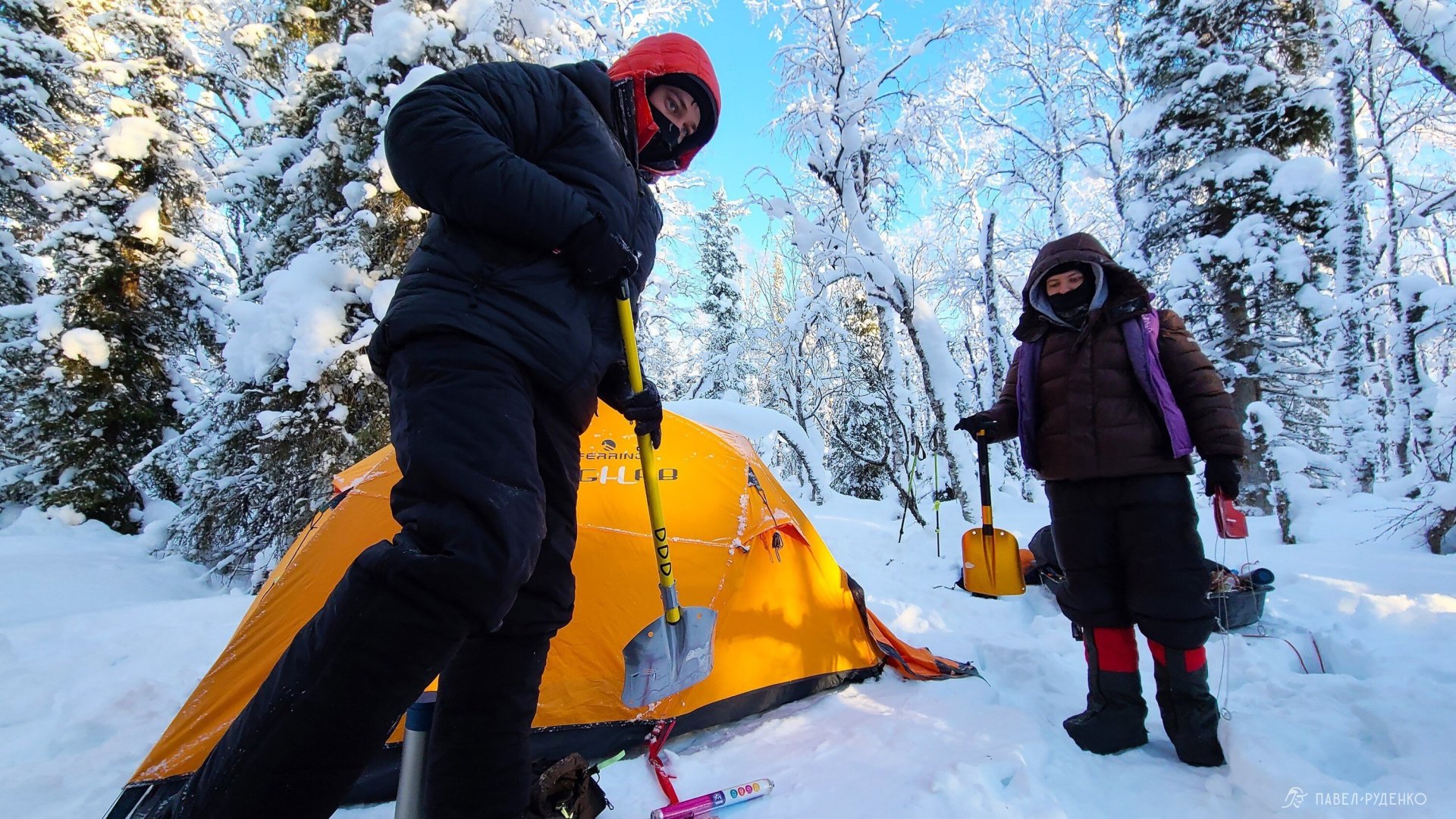
You can never have too many snow shovels in winter; we brought 3 for a team of 5 people sleeping in 3 tents.
Poles
Poles made of 7001 T6 aluminum alloy. This alloy is mostly used in 3-season tents; it is quite lightweight and flexible, and isn't designed for heavy wind and snow loads. On top of that, these are generic no-name poles of mediocre quality for a tent in this class and price range.
The poles are 8.7 mm in diameter, which is also typical for lightweight 3-season tents. One pole section snapped during our trek; we fixed it with a repair sleeve and wrapped it with duct tape. All of that in a single trek without any extreme abuse...
Unfortunately, for some reason the brand fails to switch even to pole sets from the Korean manufacturer Yunan, whereas other brands in this price bracket typically use premium DAC Featherlite NSL poles. Even something like the MSR Elixir uses more dependable Yunan poles.
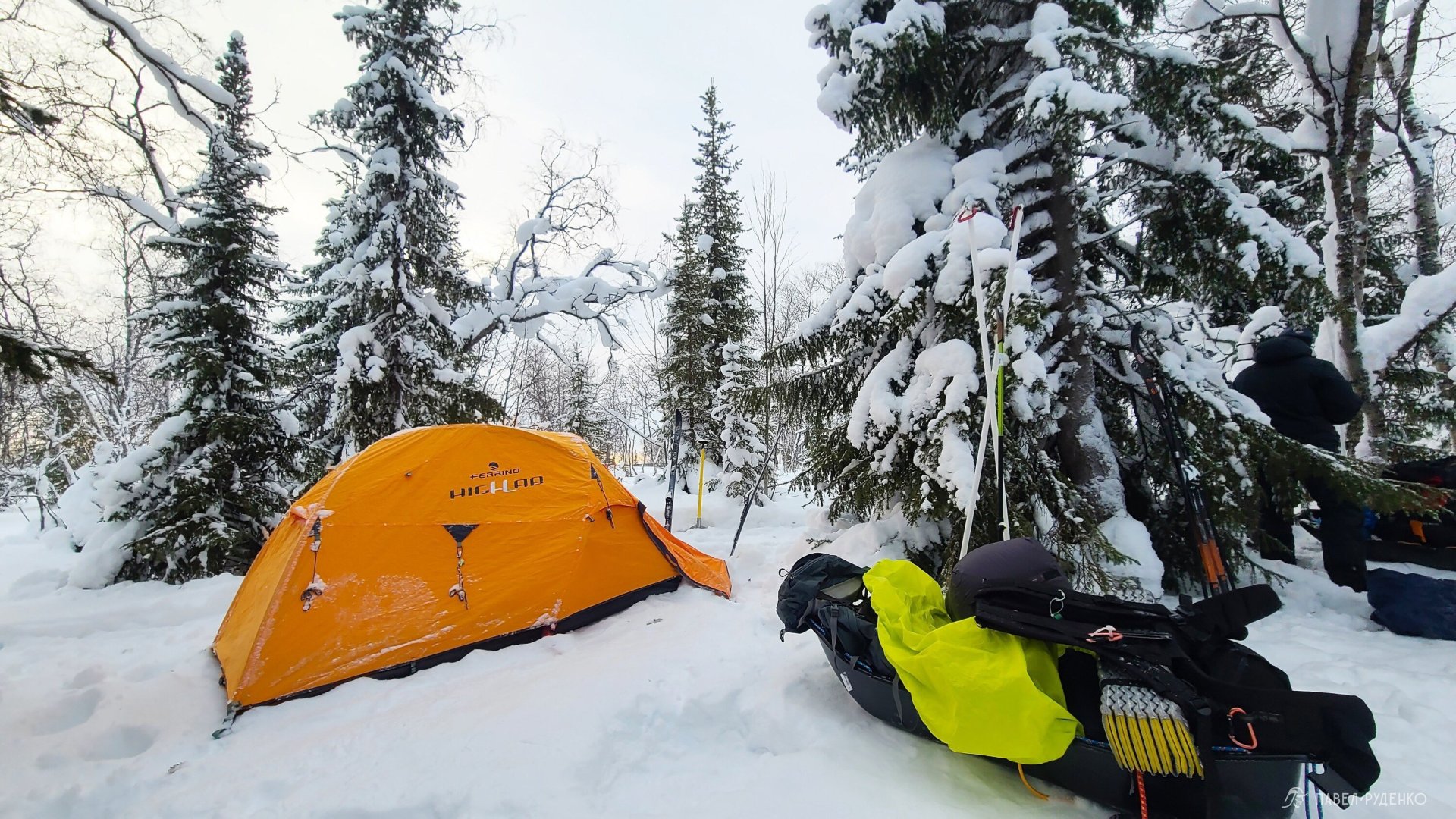
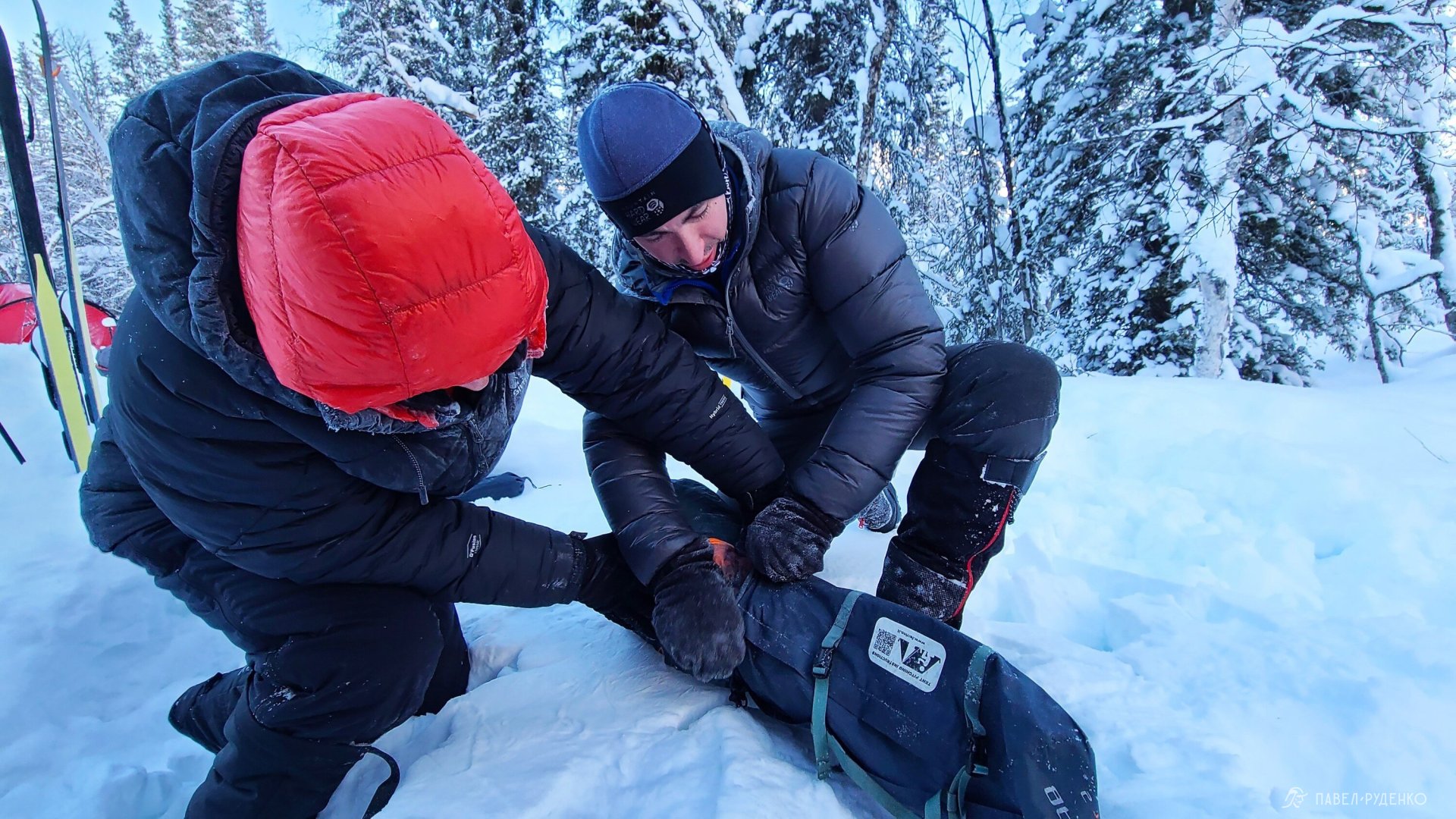
These guys in the photo send their warmest regards to the Italians from Russia after spending 15 minutes freezing their fingers off trying to stuff the tent into this stuff sack, which is as impossibly tight as Italian trousers. Grazie, miei cari italiani!
Undersized stuff sacks are the modern curse of tent manufacturers. Personally, I like the sacks by Hilleberg, MSR, and Fjällräven the most — roomy and convenient.
Verdict
The Piller 2 tent has an interesting architecture and is one of the best in the Ferrino lineup, but I have serious reservations about it — primarily due to cheap materials despite the high price tag. Secondly, the craftsmanship: certain details are poorly executed, which is baffling for a brand with such a rich heritage.
The explanation lies in that very history: losing out in competition, Ferrino — once a top-quality brand that used DAC poles and PU/SI coating on the flysheet — shifted its strategy, cutting corners on materials and build quality just to survive, coasting on past glory for a while.
That is what causes such a dissonance between an otherwise solid concept and such a shoddy implementation. Which is unfortunate, of course, because having plenty of competing outdoor gear brands to choose from is always a good thing.
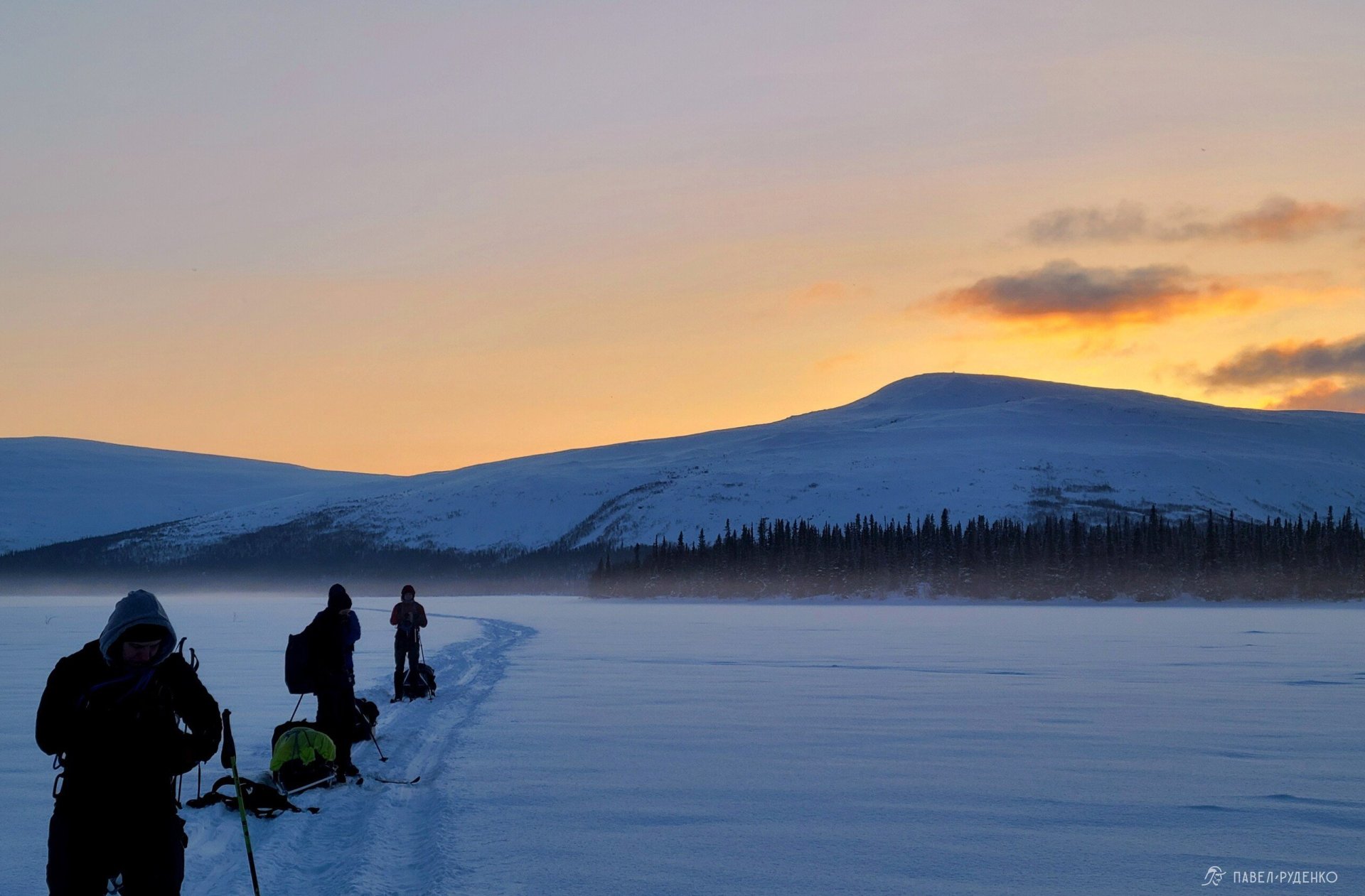
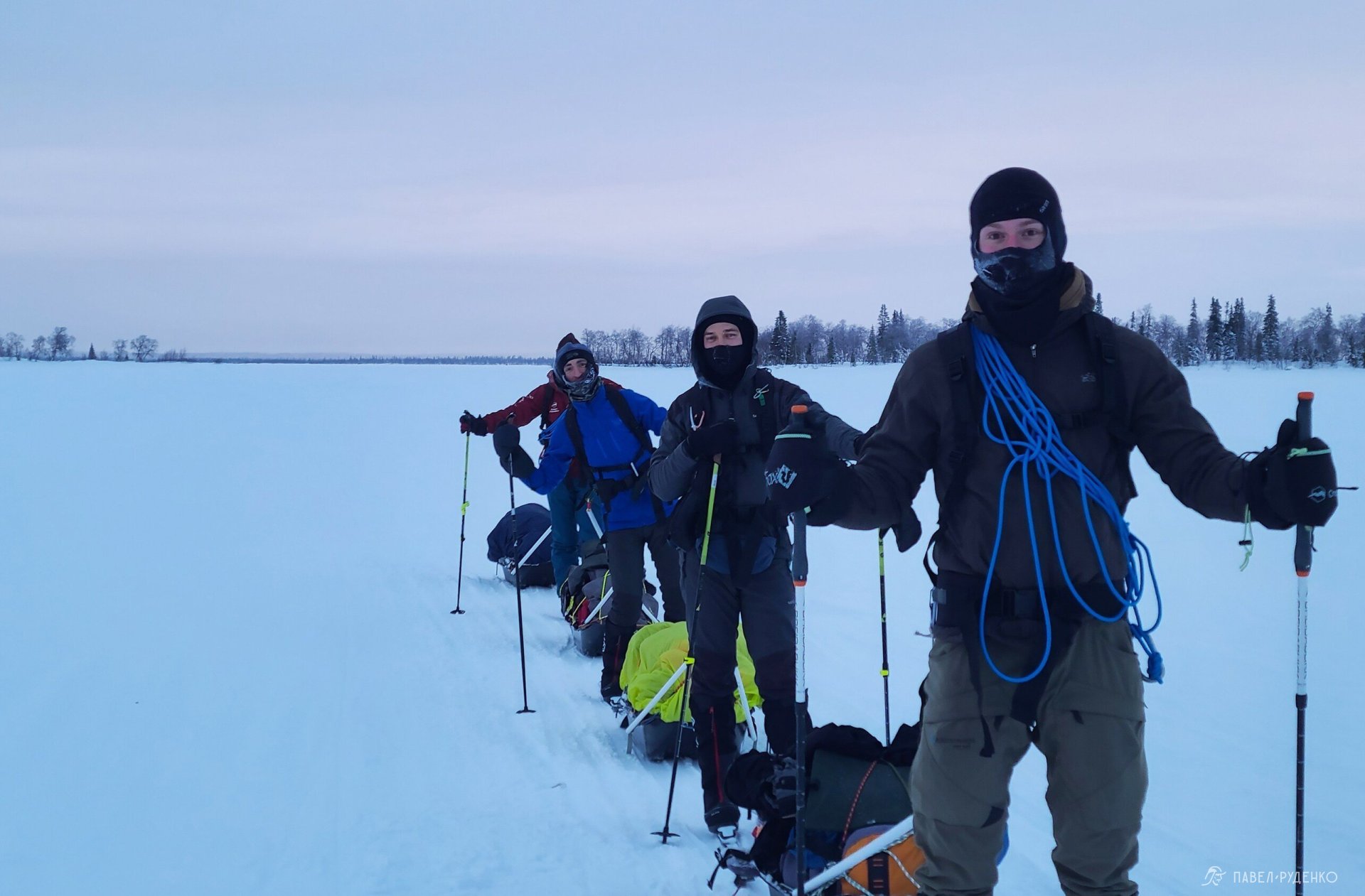
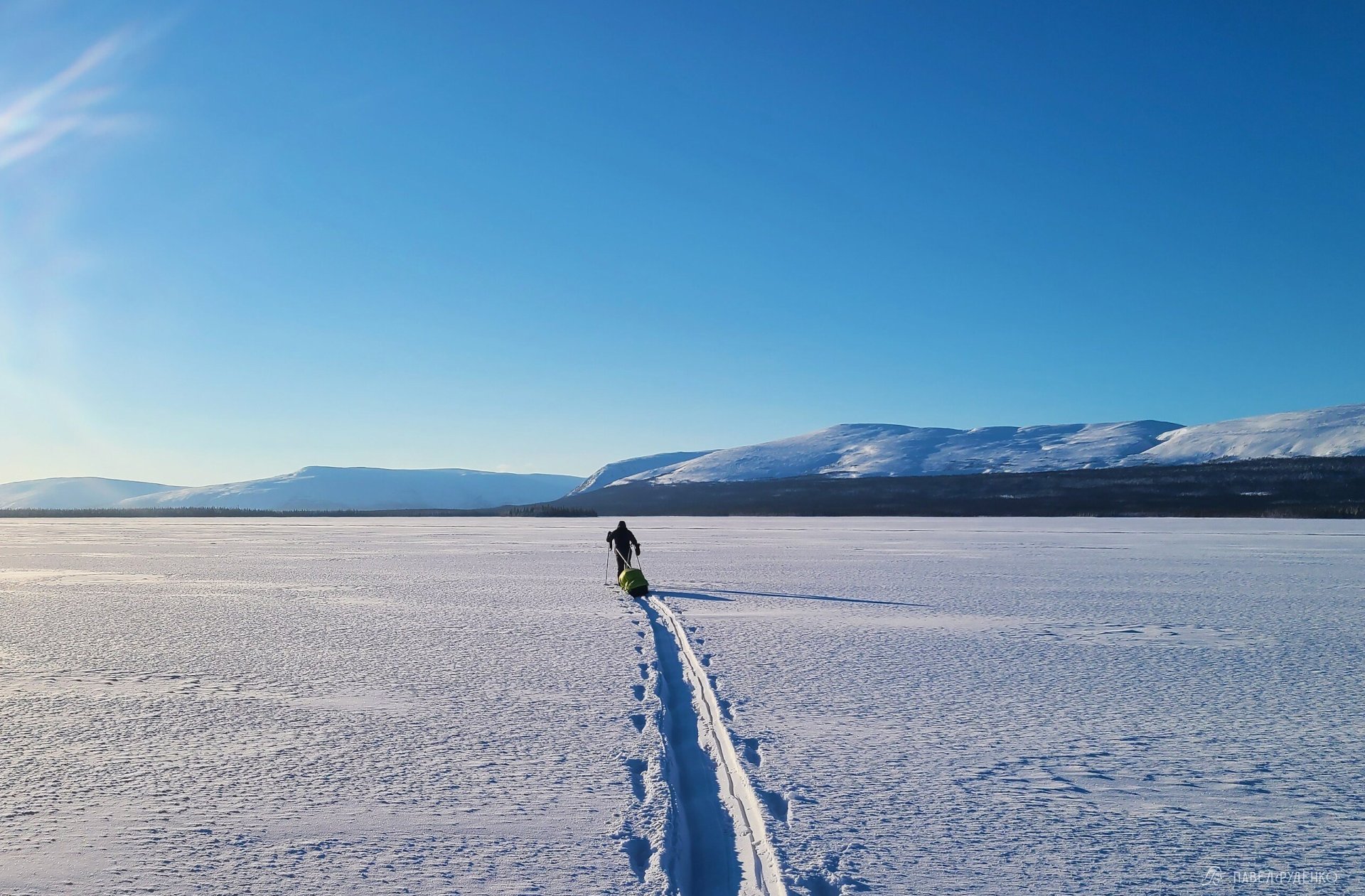
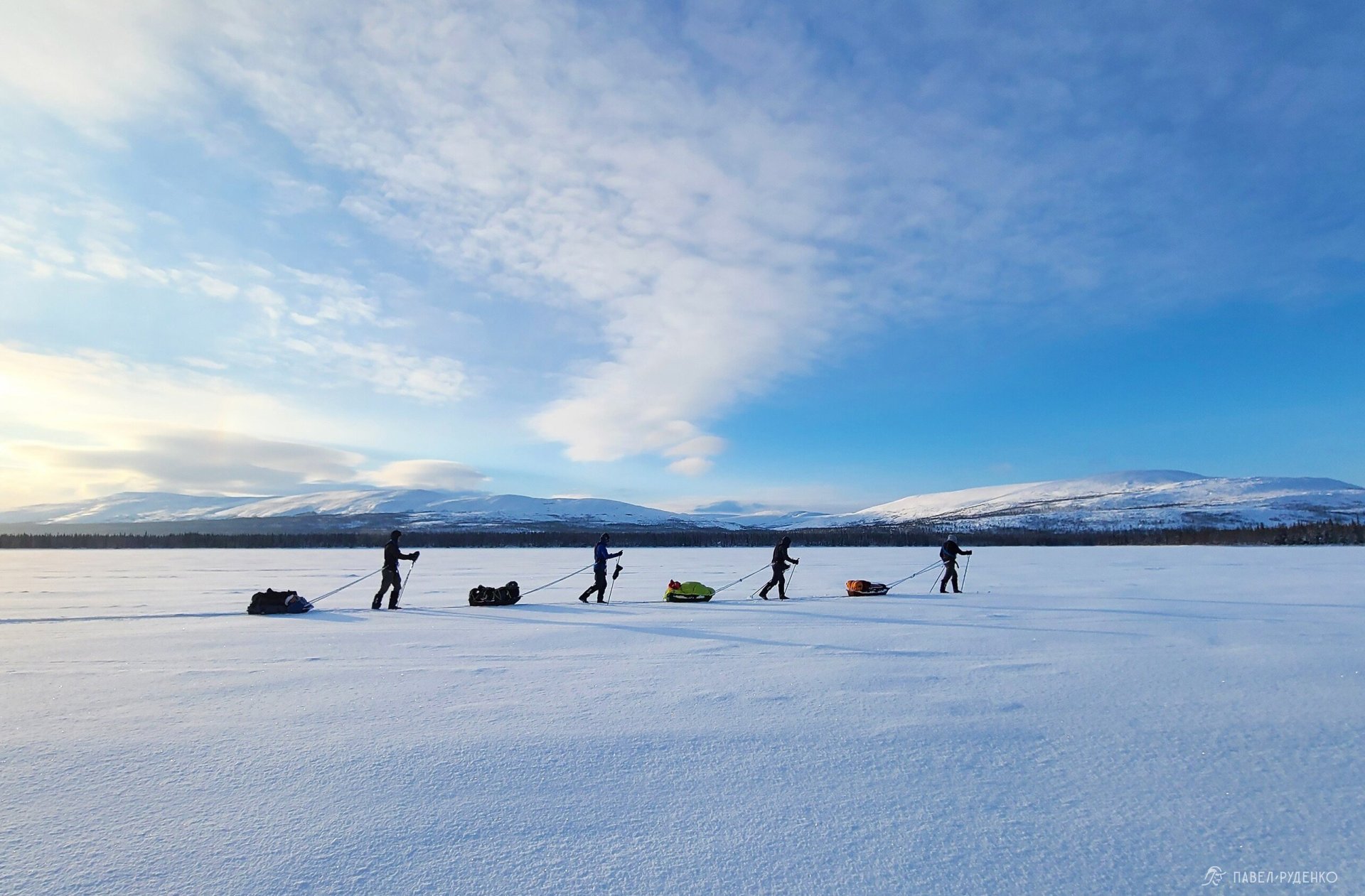
On the ice of Lake Lovozero. The ice was thick and there was a packed snowmobile trail, but just in case of an accidental plunge, we carried a safety rope and moved with pulkas on rigid tow bars.
I cannot recommend Ferrino tents — the materials are too cheap and unreliable for their price point, and there are plenty of design flaws. But if I had to single out the best of the worst: Piller, Snowbound, Maverick, Force, and the camping model Flow 4 with inflatable beams))
I frequently head out on treks, so make sure to follow my social channels for lots of awesome content))




Comments (0)