Content
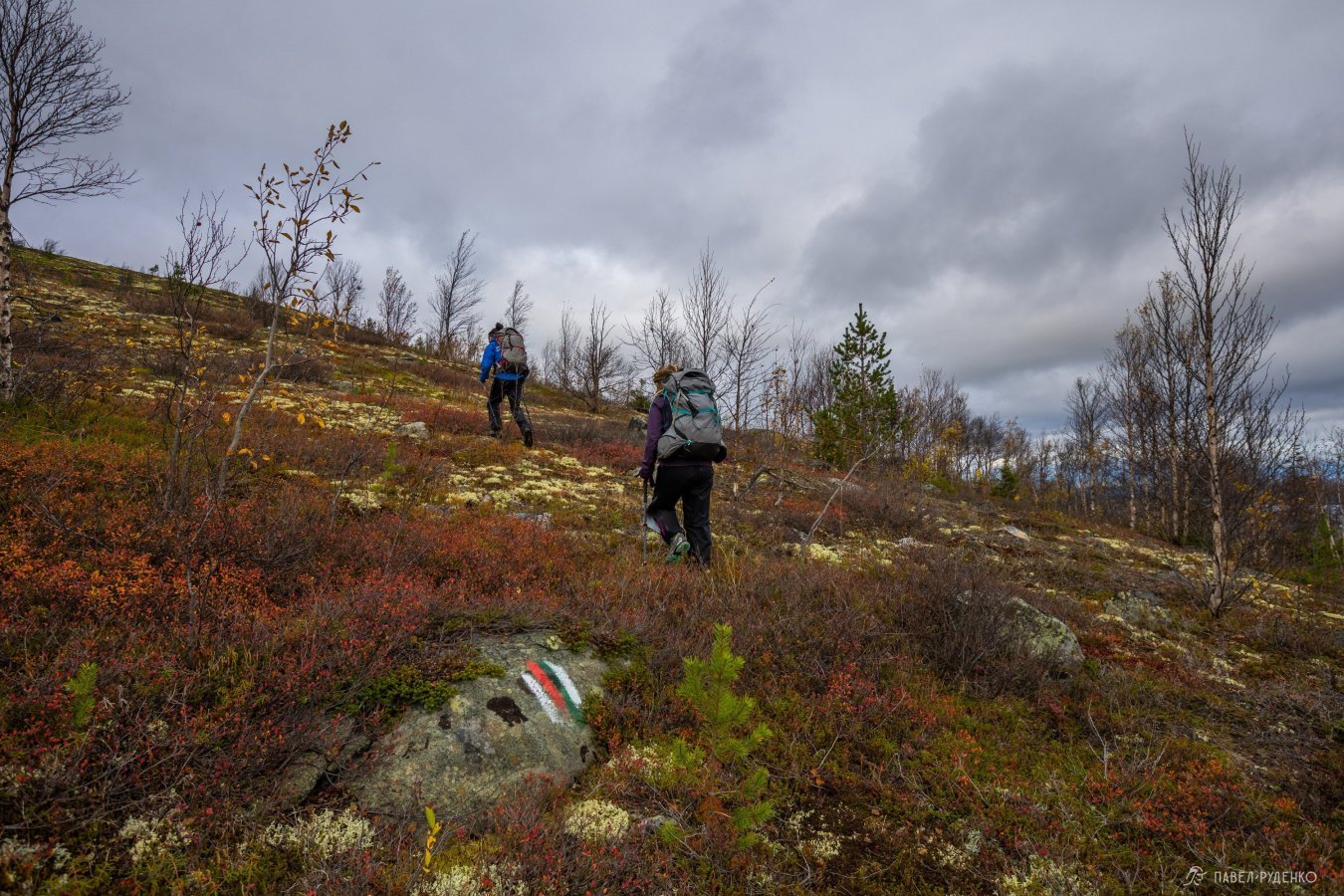
For a beginner tourist planning an independent trek, the most important thing is a prepared route. Marked trails significantly simplify navigation, thanks to markers on the trail every 100-200 meters, and a detailed route description that accompanies such trails makes it much easier to go on a hike. Such trails greatly contribute to the development of tourism in Russia.
To better imagine the beauty that awaits you, watch the video!
The largest marking project in Russia is Rutrail. In 2022, it marked the most northern trails beyond the Arctic Circle, near Lake Imandra, on the Kola Peninsula. In 2023, I spent 5 months on the Kola, exploring the region, and hiked the marked trails 4 times. In March on skis and in early July and twice in September on foot.
My global goal is to develop the Kola North and tourism in the Russian-speaking community, so I collaborate with friends from Visit.Imandra, a project for the development of the region, they also initiated the marking of the trails, for which big respect.



Routes
Rutrail marked 6 trails. 5 of them are south of the city of Monchegorsk, lasting from 1 to 3 days, and one is 5 km west of the city. Some routes start right from the city, while others can be reached by taxi for 200-500 rubles.
Viking Trail 48 km, elevation gain 1176m up and 1176m down, 1-3 days on foot, two mountains Vuréchuayvench 470m and Nyuduayvench 465m.
Power Trail 12.4 km, elevation gain 433m up and 433m down, 5-8 hours on foot, highest point Mount Nyuduayvench 465m.
Geologists' Trail 4.9 km, elevation gain 68m up and 68m down, 2-3 hours on foot.
Health Trail 7 km, elevation gain 350m up and 350m down, 3-5 hours on foot, highest point Mount Nyuduayvench 465m.
Raven Trail 5.7 km, elevation gain 310m up and 310m down, 3-5 hours on foot, highest point Mount Vuréchuayvench 470m.
Nitтис Trail 5 km, elevation gain 359m up and 359m down, 3-5 hours on foot, highest point Mount Nittis 618m.
Information on how to get there can be conveniently viewed on the info portal Visit.Imandra.


1 day, Viking Trail
Viking Trail 48 km, elevation gain 1176m up and 1176m down, 1-3 days on foot, two mountains Vuréchuayvench 470m and Nyuduayvench 465m.
July 3, 2023.
Average temperature: +15 to +20°C during the day, +10 to +15°C at night.
Wind: calm to gusts up to 12 m/s.
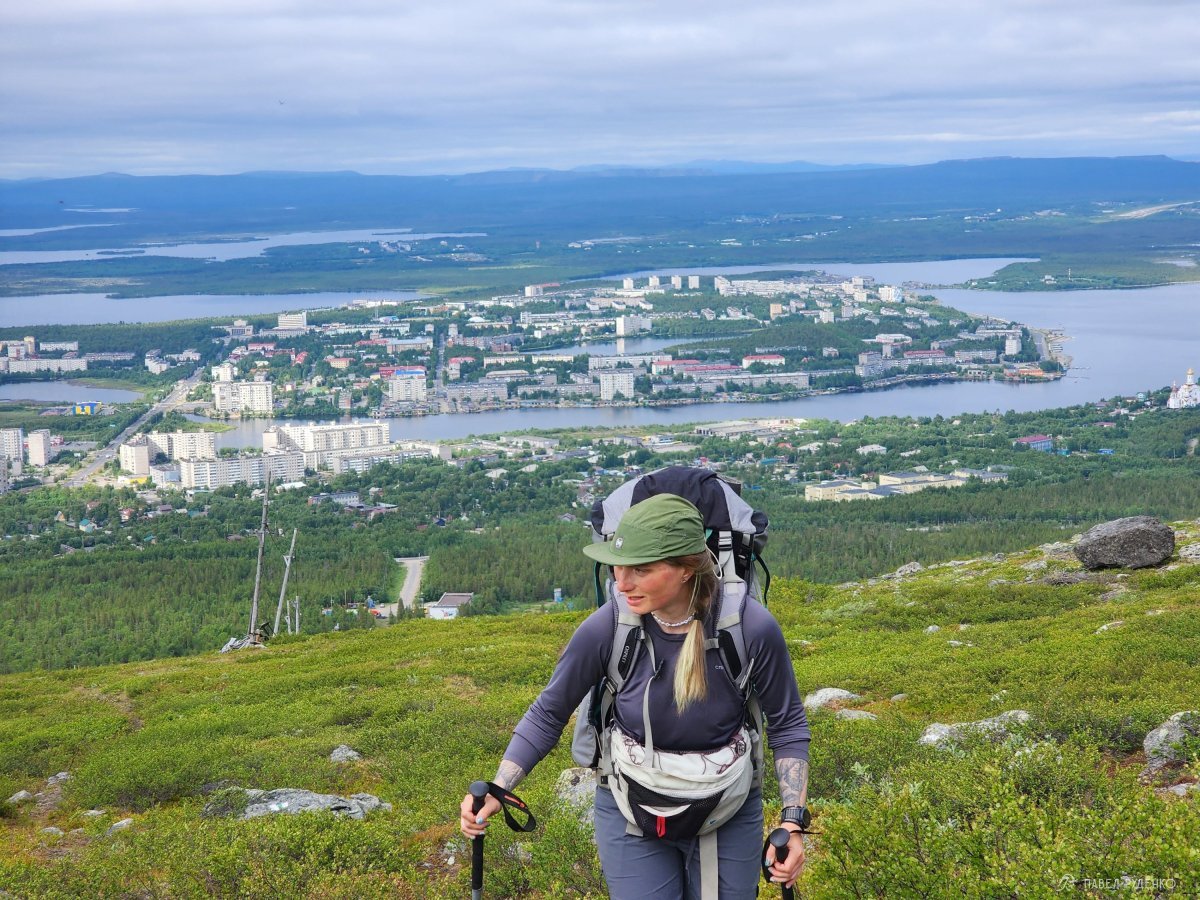

Despite the cloudy sky and wind, the weather is warm +18°C. Taking only warm clothes and not being prepared for the heat in the Arctic is a common mistake, as is not preparing for the cold. Such is the climate in the north, changeable. You need to bring a set of clothes for a wide range of temperatures, regardless of the month and forecast.
We took water for the first 5 km to replenish the supply from a small stream along the way, marked on the map.
The view from the top is stunning of the city, 2 ski slopes, and the Norilsk Nickel plant. The plant is the main enterprise here, thanks to which Monchegorsk was created from once scattered villages around. In the 90s, the environmental situation was poor, and nature within a 5 km radius was damaged, but the plant installed new filters, and nature has заметно recovered over the past 7 years. Near the slopes close to the plant, it's not worth picking berries and mushrooms, otherwise, the nature is clean.
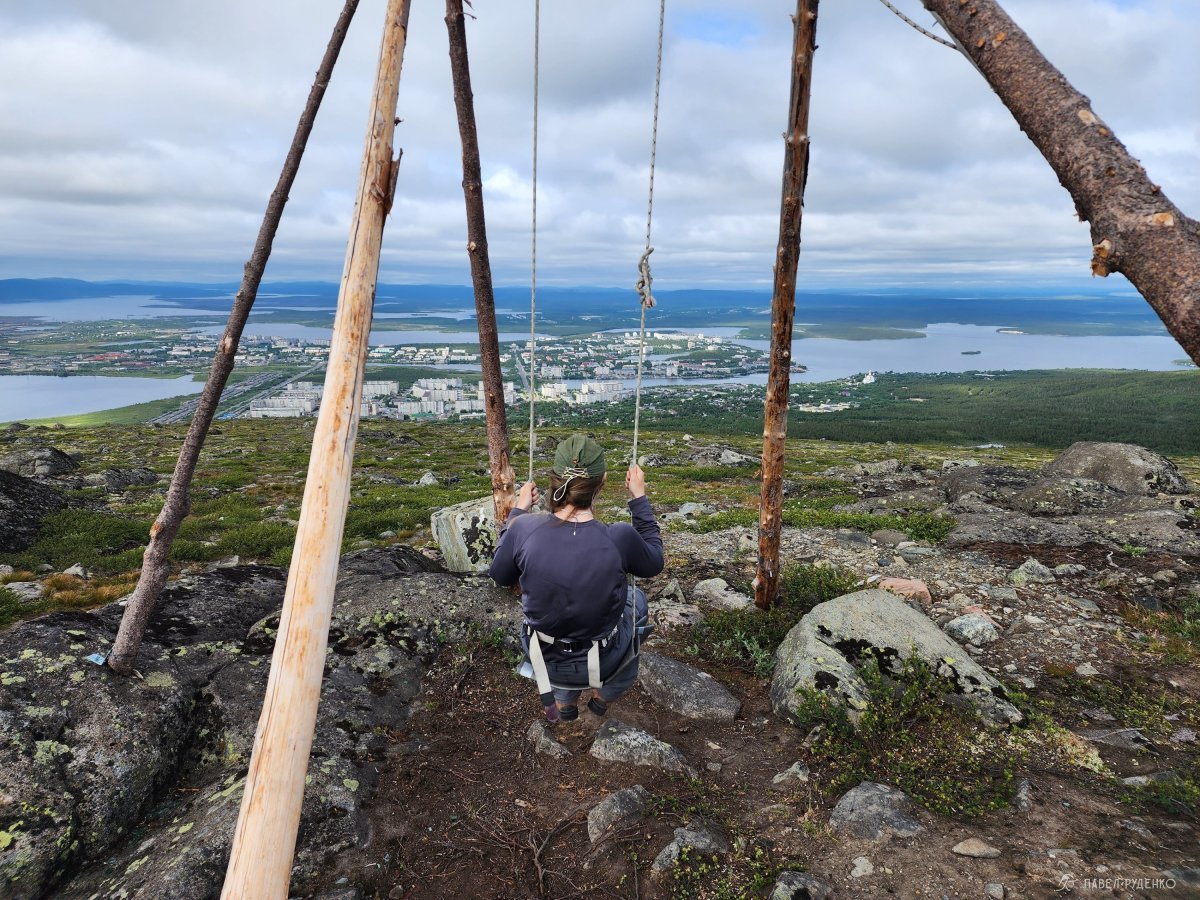
There are swings on the mountain, to prevent the jeep from being crushed, poke up the foam mat)) We move along a beautiful tundra plateau, the northern expanses begin to open up in the east. From an aesthetic point of view, I would set up camp here, there are plenty of flat places, you just need to bring enough water for dinner and breakfast.
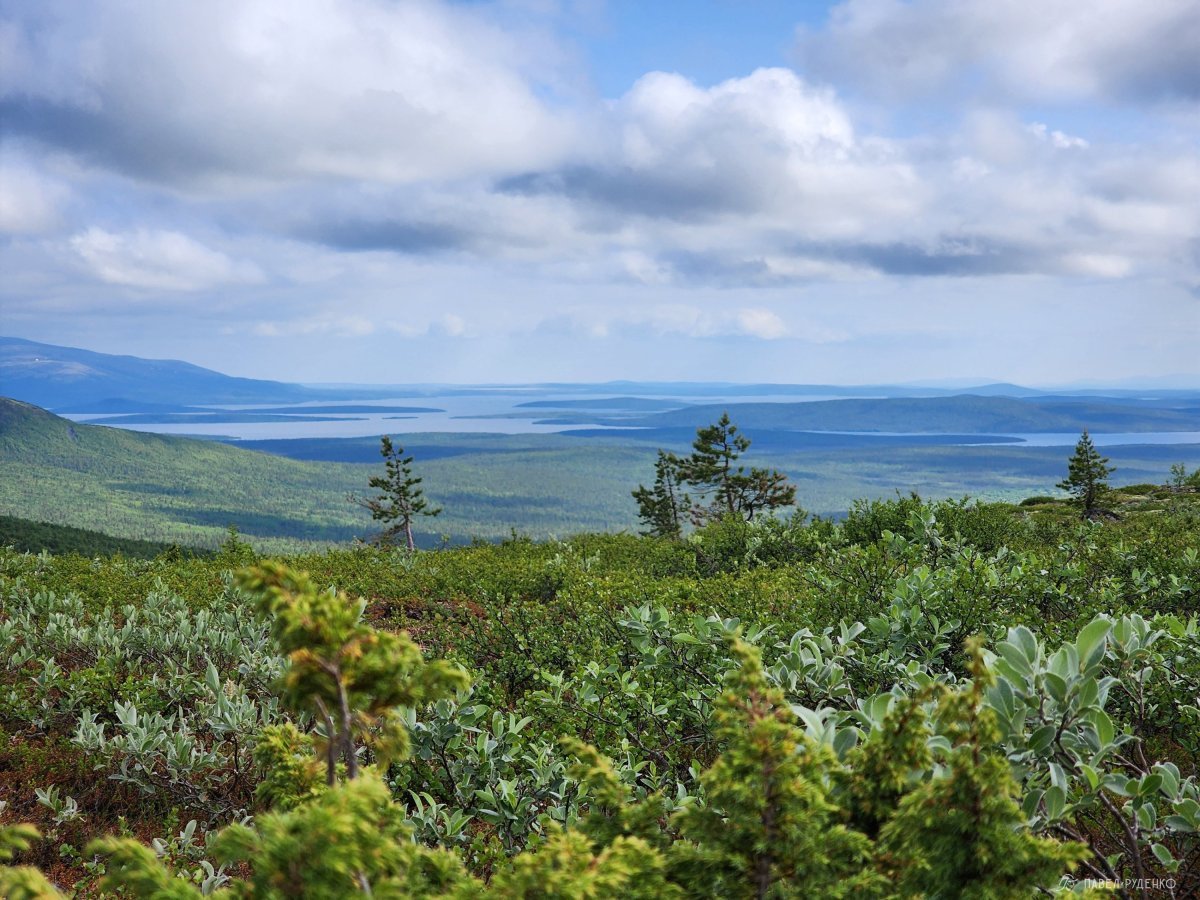

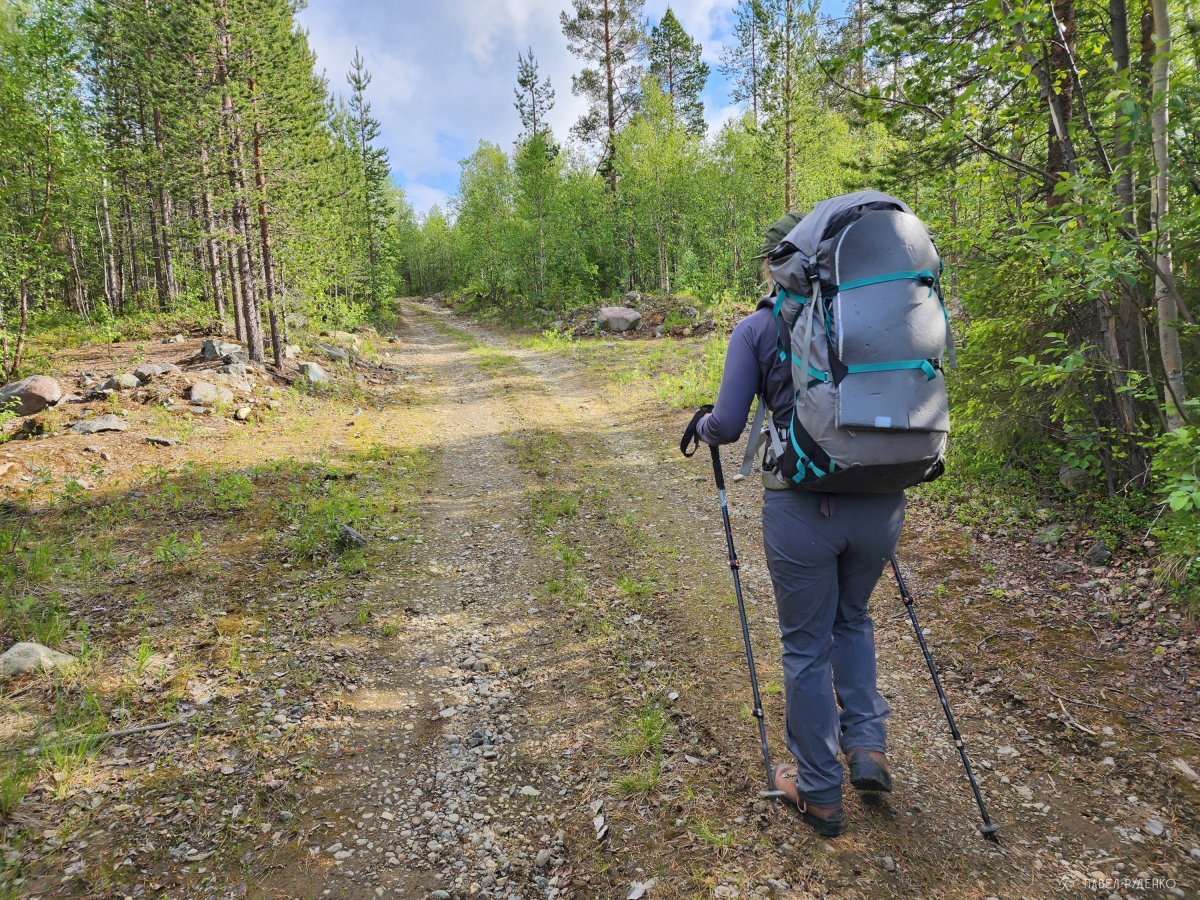
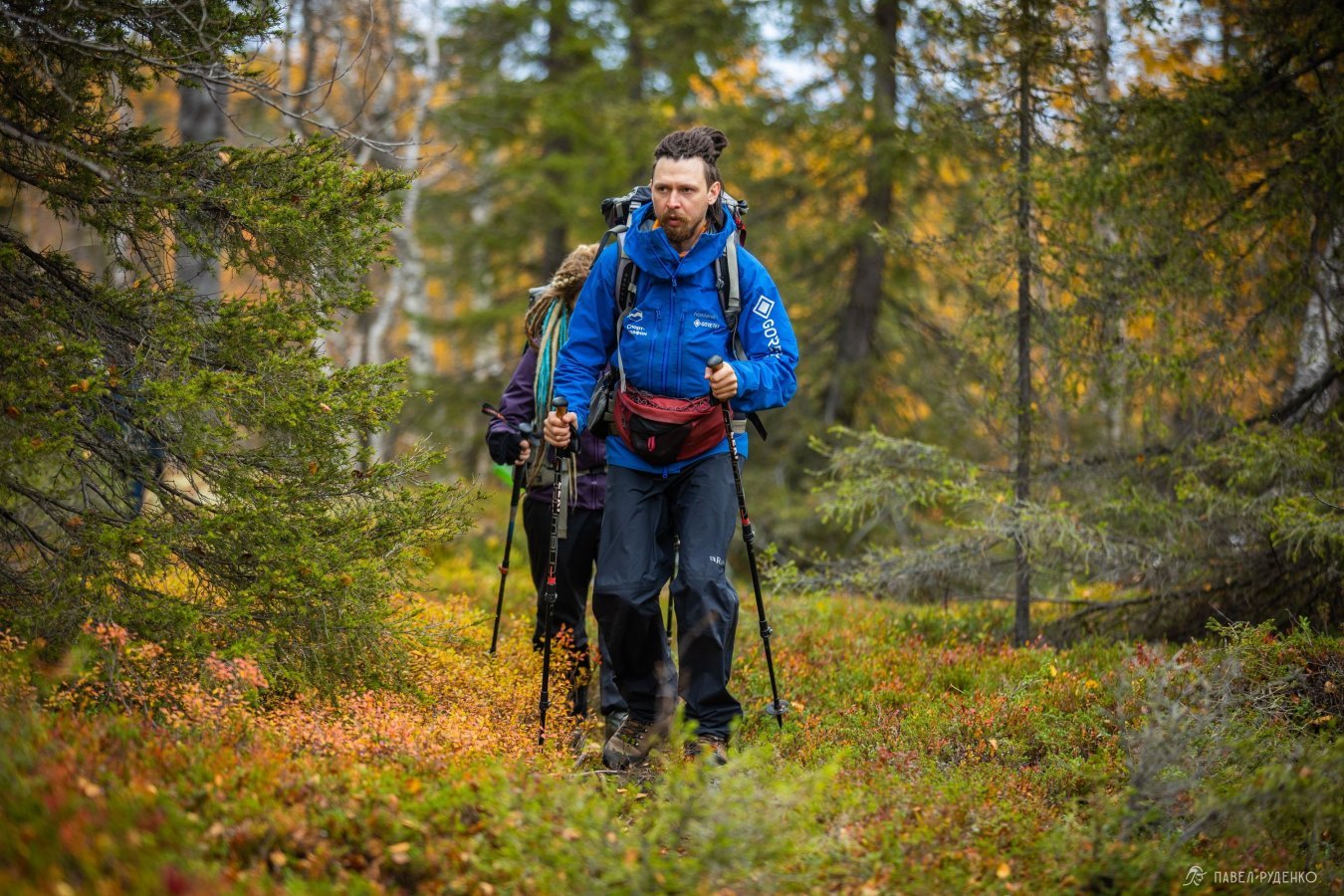
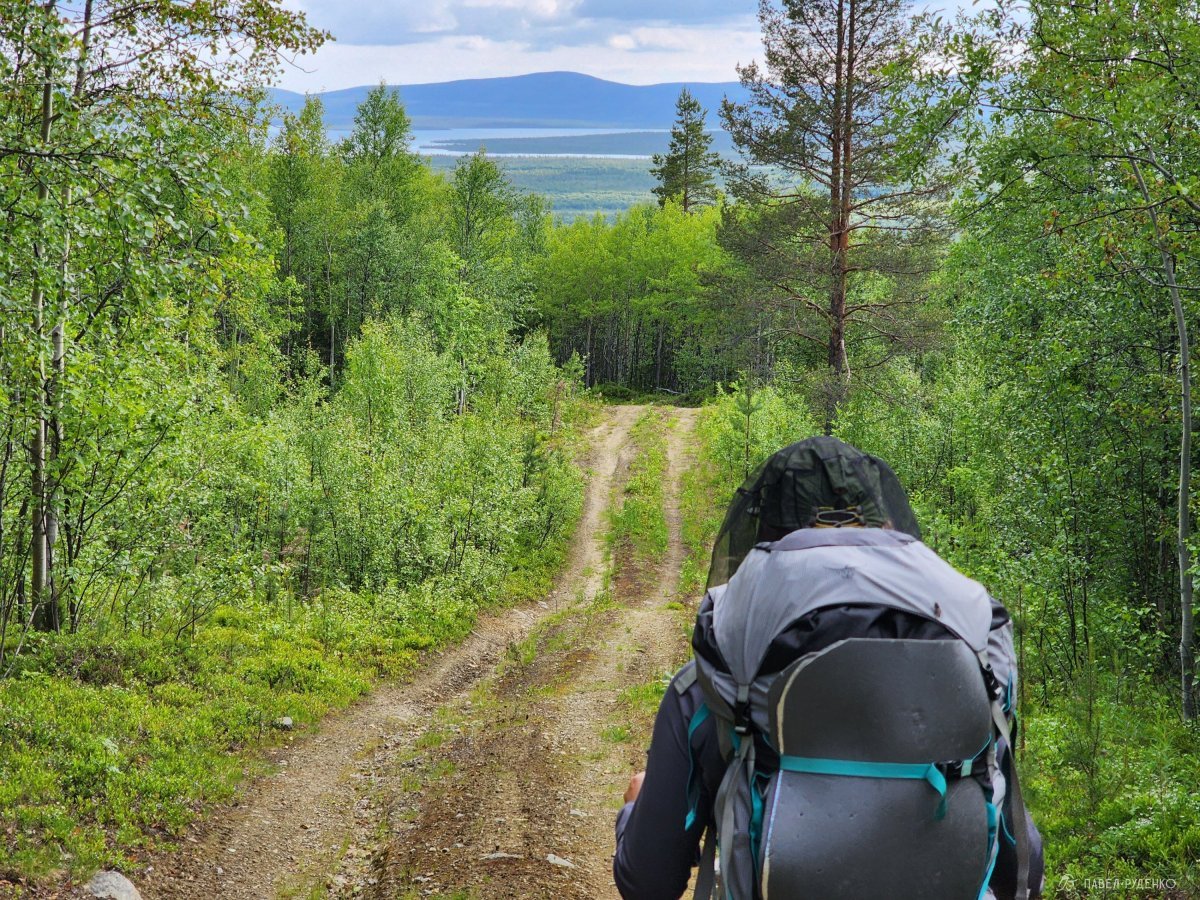
On the descent, a country road begins. We move quickly and comfortably, stopping only to listen to the birds and collect water from the stream. There is not much water, by the end of summer the stream may dry up. The forest here is dense, difficult to pass without trails. I constantly shout, warning bears of our approach, this is the most basic way of protection. 58 bears have been registered in the Monchegorsk area.
At 6 km, there is a fork and the opportunity to leave the route to an asphalt road, where cars pass non-stop, and it is possible to leave in an emergency.
We climb Mount Voruchuayvench. The trail leads out of the forest, bursting out of the dense branches of the northern taiga, revealing breathtaking beauty. In early July, in warm weather, mosquitoes and midges hatch, so it's worth taking insect protection. They don't bite me, and Anya put on a mosquito net, the ideal option is a fine mesh, black, it doesn't blur in the eyes.
At 10.5 km, a plateau between two peaks forms, this is the second most beautiful place for a camp, also without quick access to water, but I'm sure aesthetes won't be stopped.

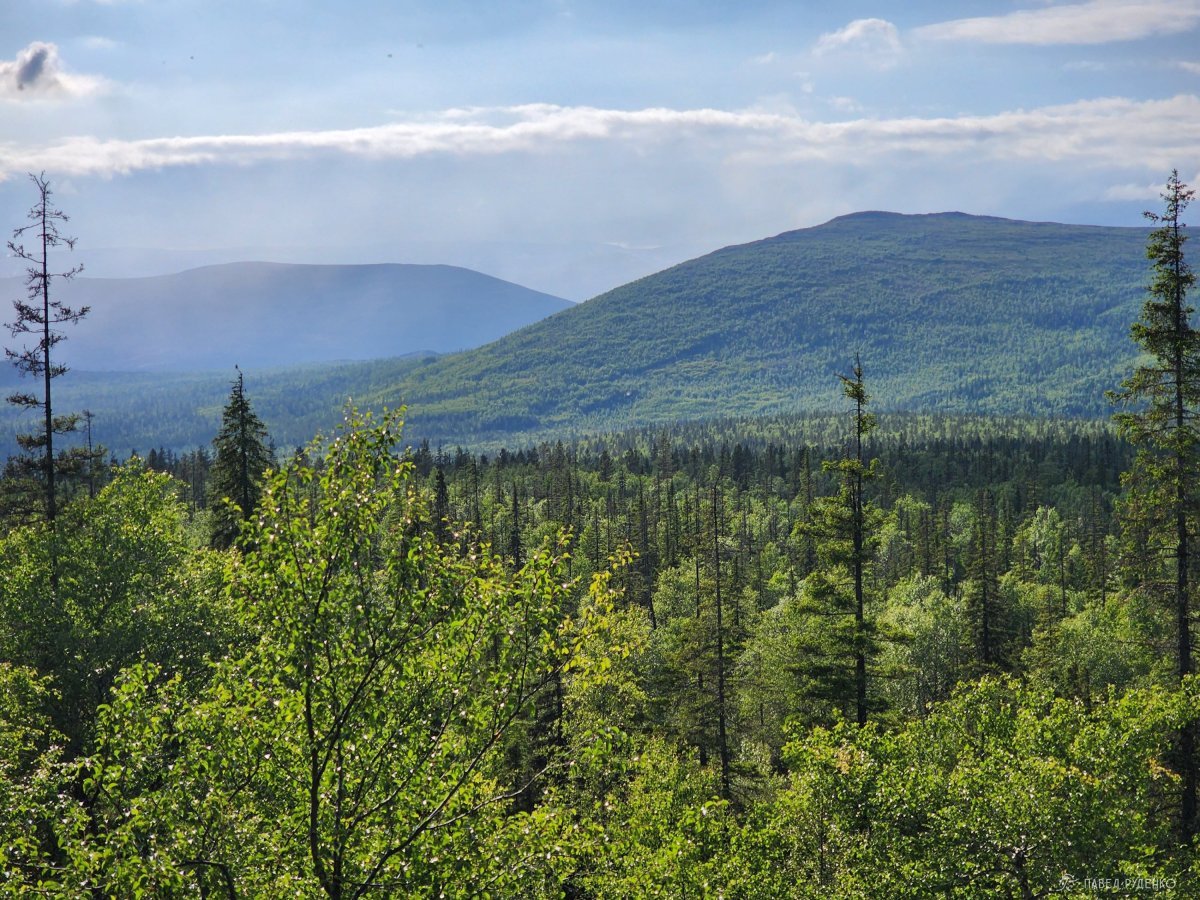

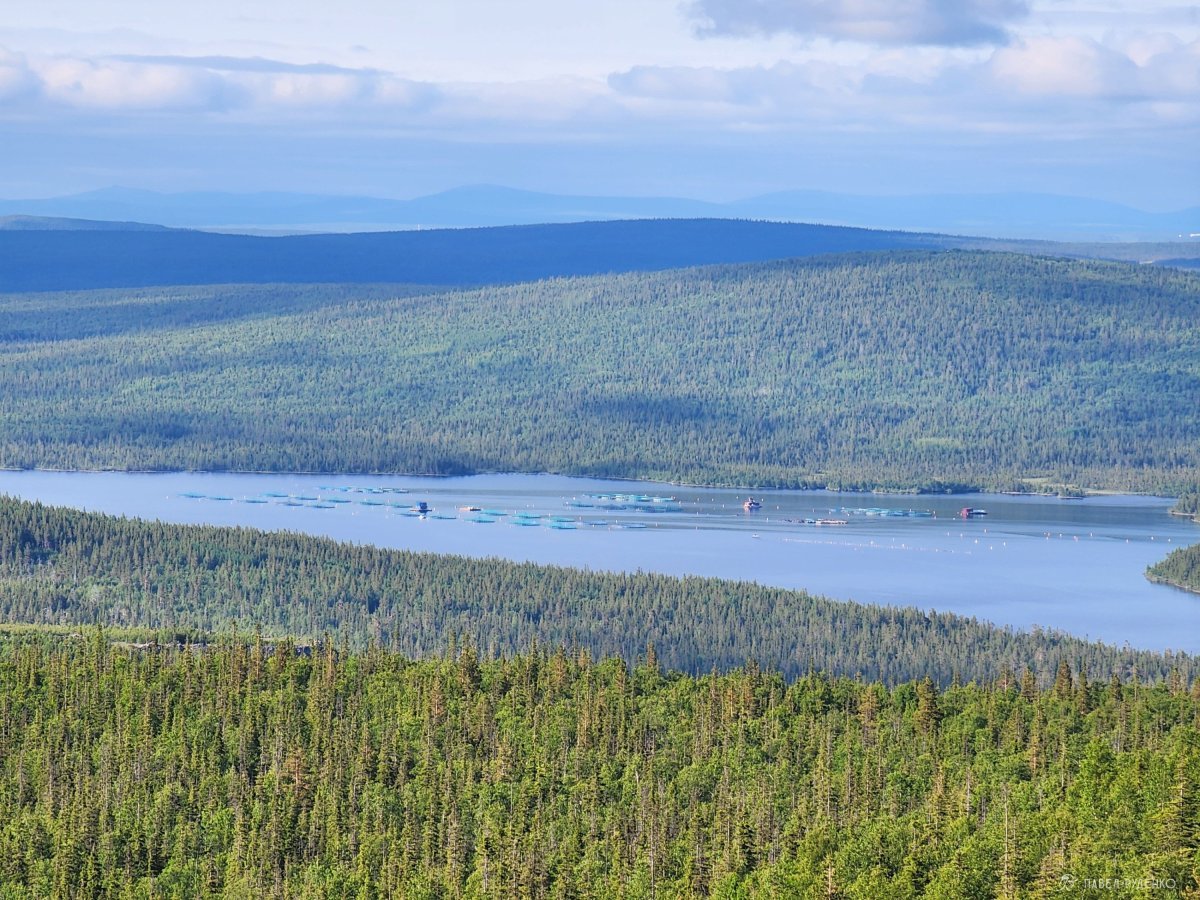
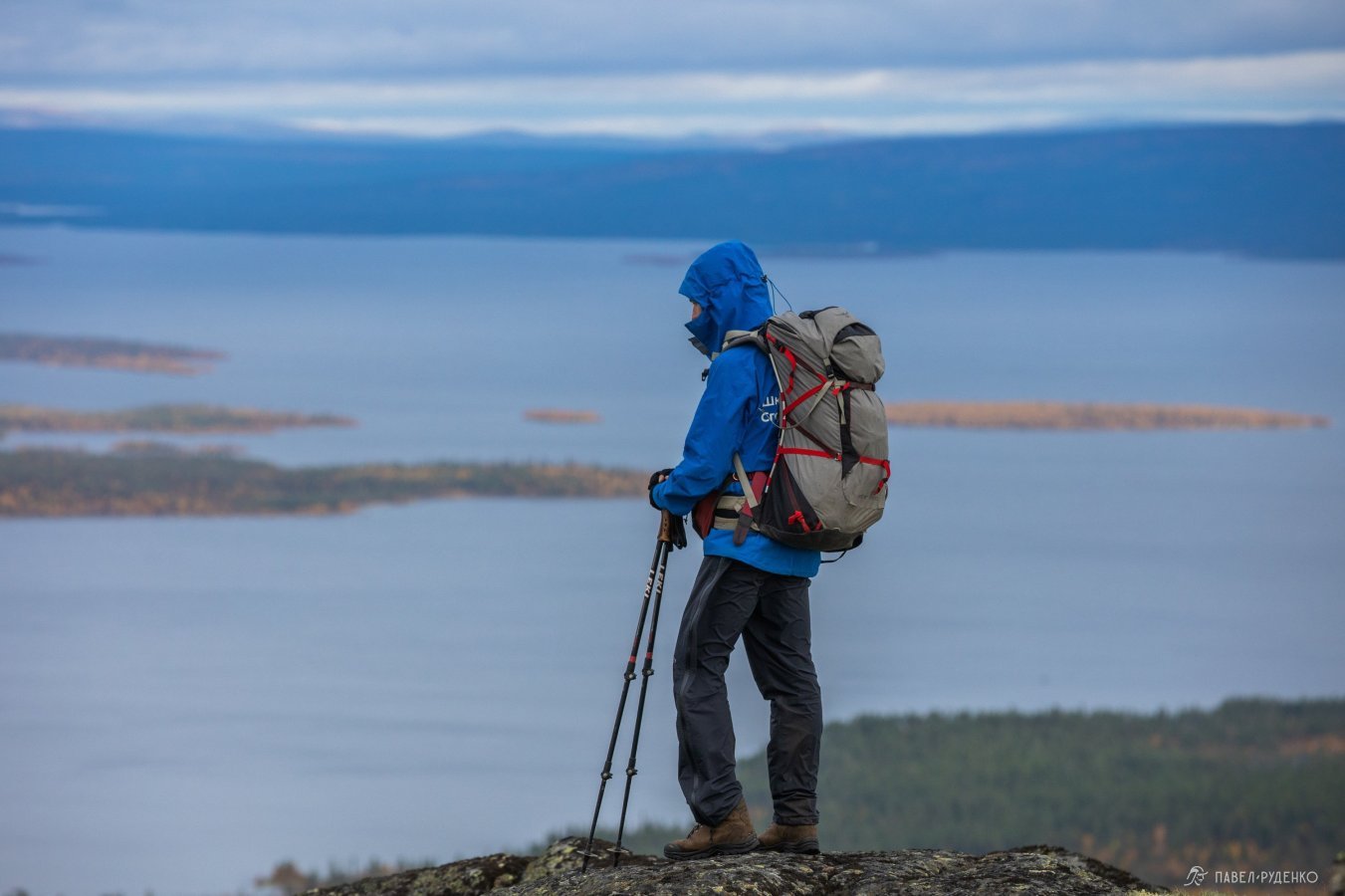
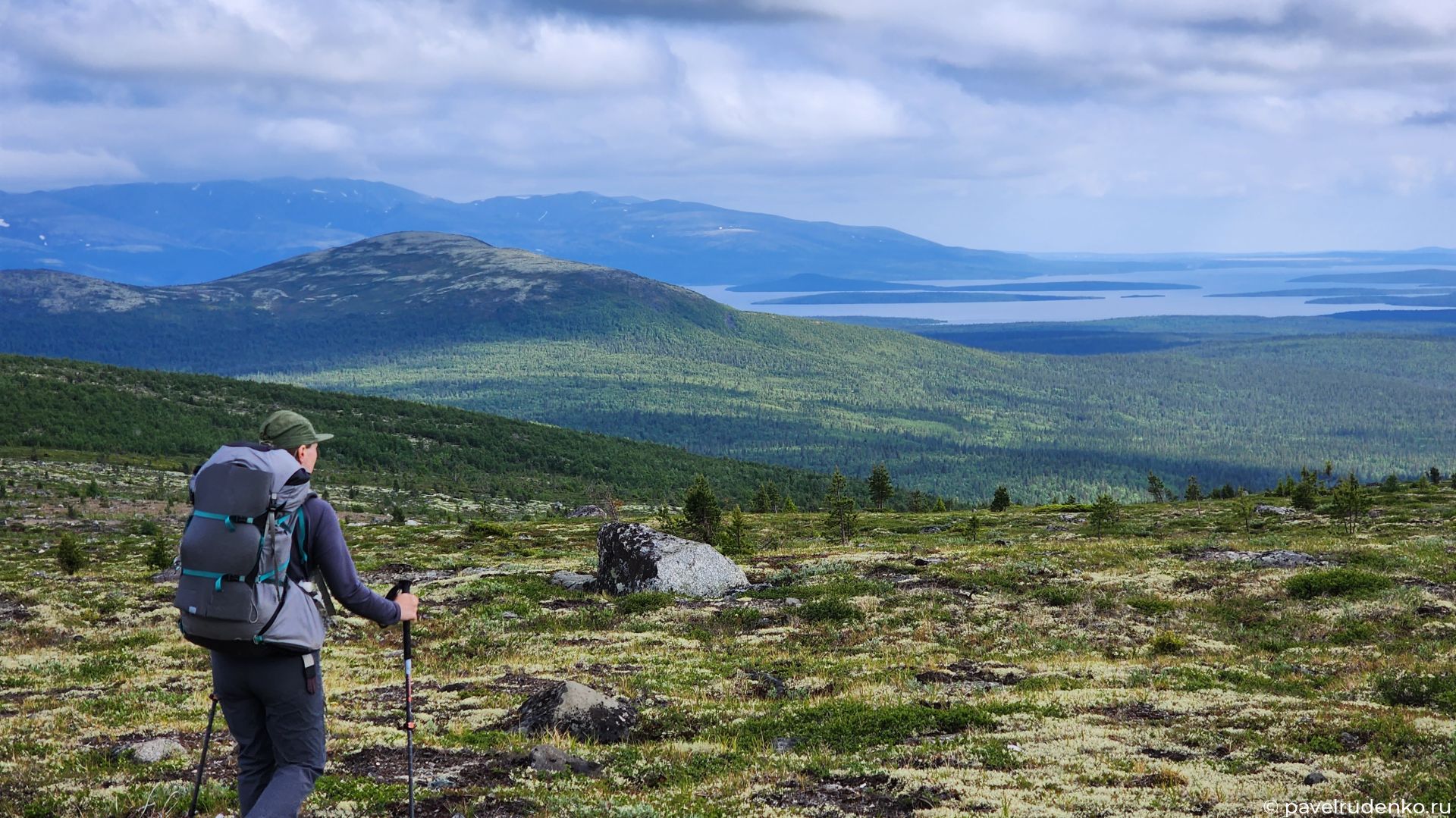
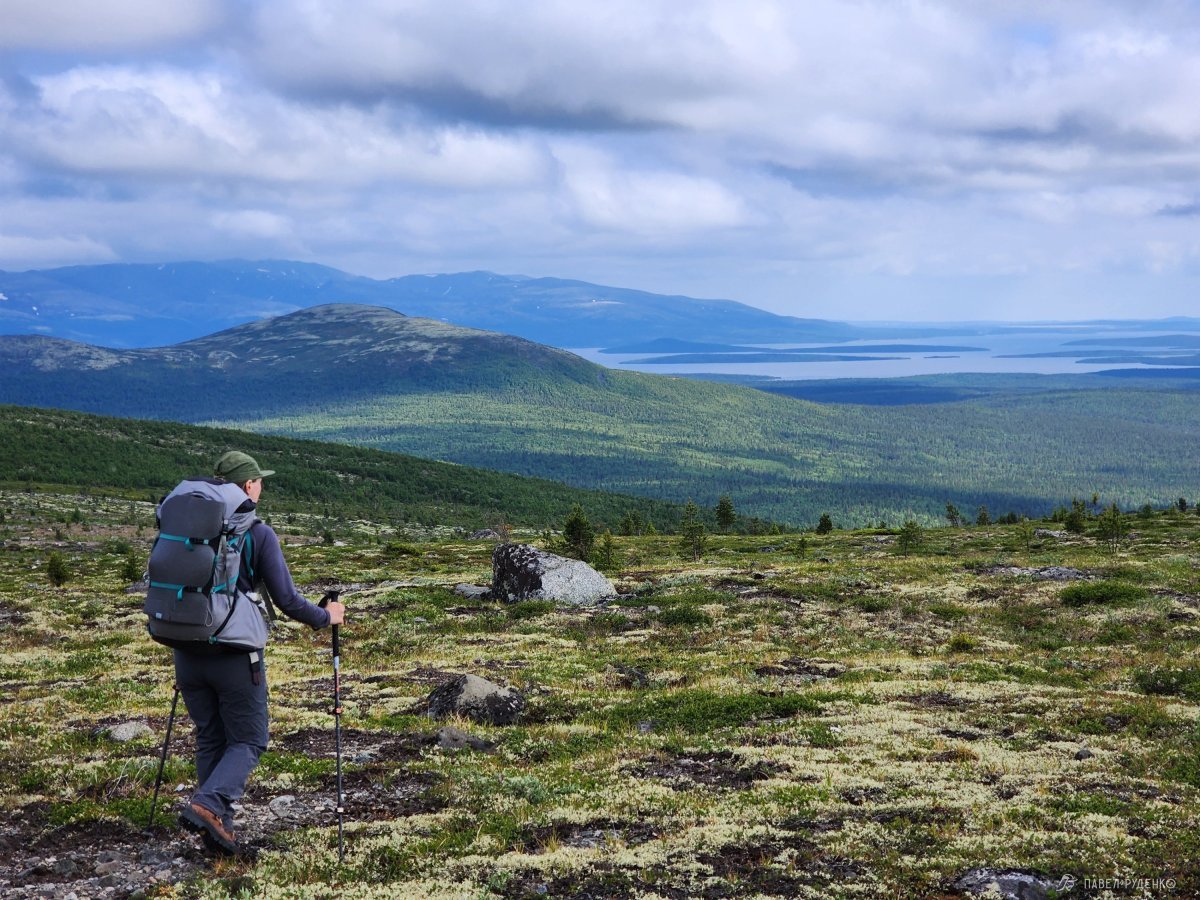
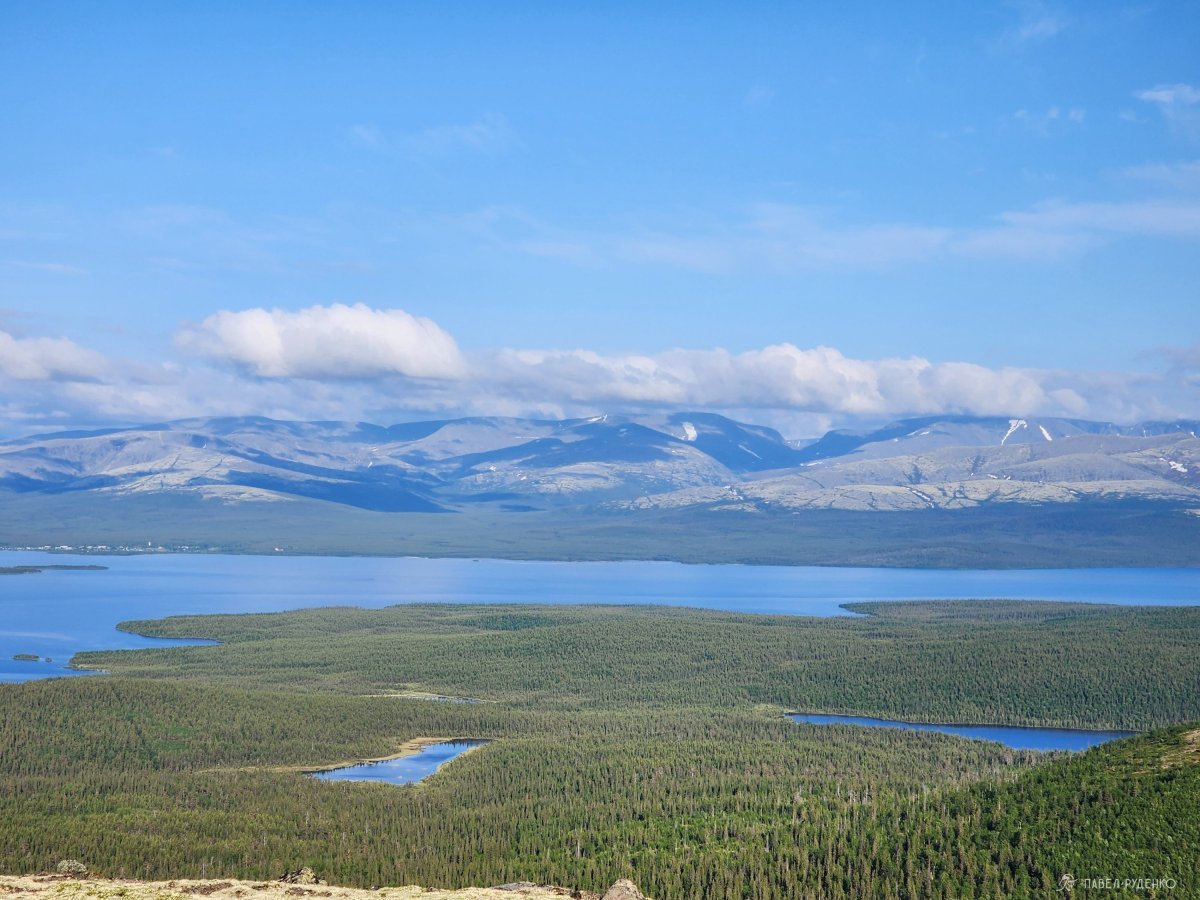
At the top, we throw our backpacks and just lie on the moss, looking at the Khibiny Mountains, Lake Imandra. Something stirs inside when these northern expanses open up to the eyes. A feeling of coziness and home, but in a natural, very broad sense. It's like this is the home for all humanity, the feeling that this is where our species began its journey and an inexplicable ancestral memory makes itself felt on some deep level.
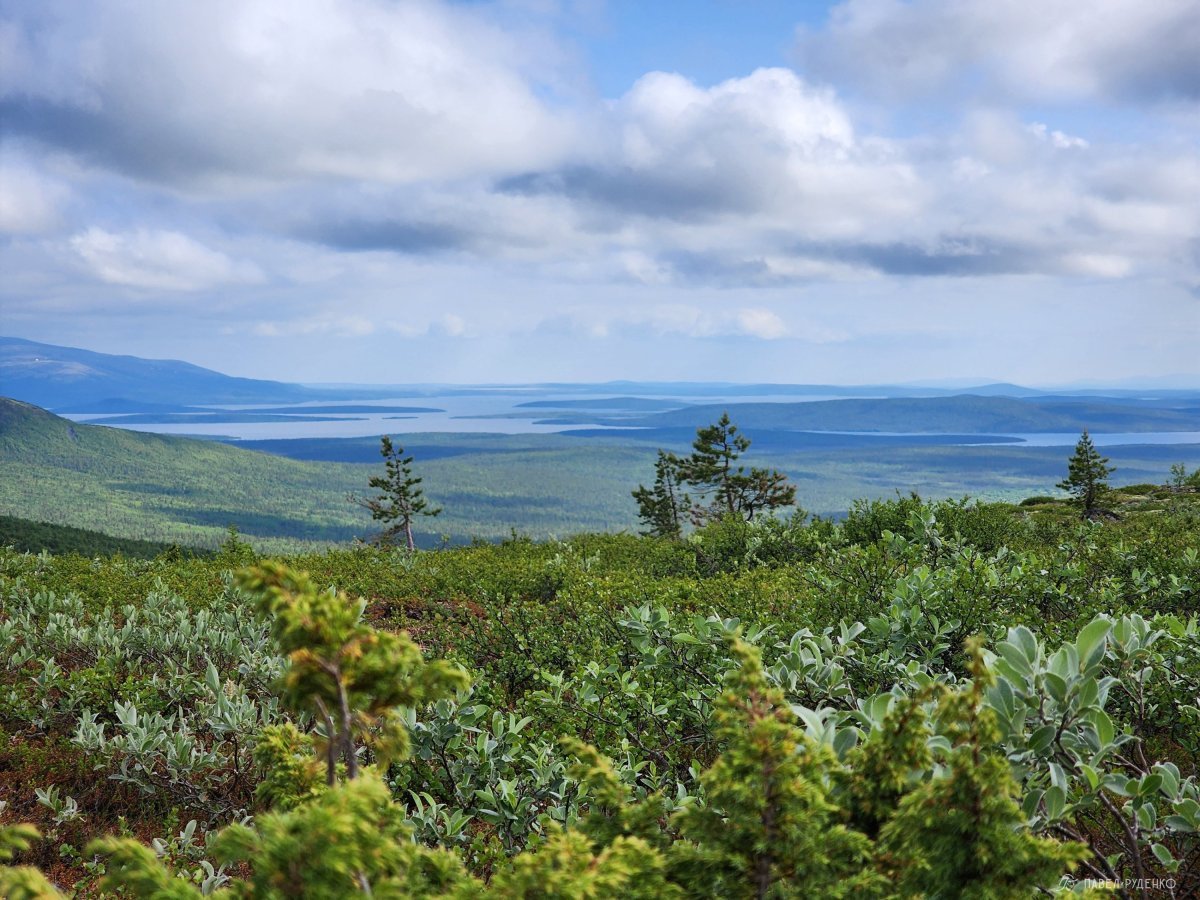
This is the best panoramic point to see the Khibiny Mountains from the side. From here, the massif is visible in all its beauty: compact, homely, cozy with gentle, plush slopes due to the moss. The area of the mountains is only 40 by 40 km, and in front of the mountains, you can see the largest lake in the Kola North, by the way, Imandra ranks 14th in size throughout Mother Russia.


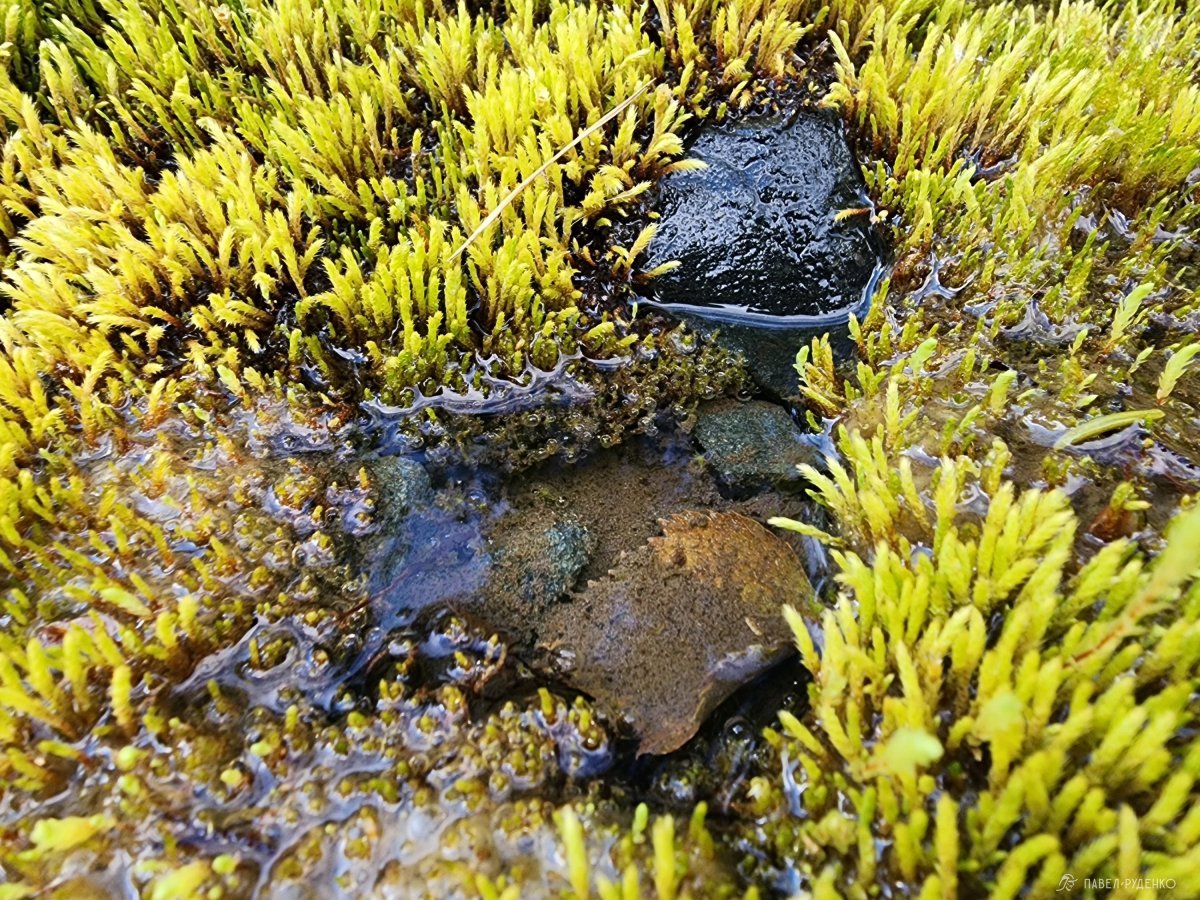
Having examined all the lichens and mosses around, we persuade ourselves to go further, although the feeling is as if it's already meaningless, as the view for hundreds of kilometers around hints that you need to stop here for a couple of days and absorb the freedom of this place.
This is a one-day route of the Raven Trail, to Mount Vuréchuayvench, which I walked in September and made a video.
Walking briskly, we reach the well-equipped spring-well Fortress, and a hundred meters away is the Quartzite. The water in them is clean, no need to filter or boil. Here, at 15 km, there is a marked Rutrail Camp2, with a view of the quartzite quarry, a long and narrow lake with opaque water and steep walls. We go further through the burned and fallen forest. It looks very magical, the first and short section where the trail sometimes gets lost, and the markers are not always visible. I sent information about this, and the guys will clear the path at the first opportunity.
Through the trunks, I see the glimmers of the lake, HOORAY, we've reached Imandra.
Along the shore, there are open cabins, and we are looking for a flat place for a tent, and there are very few flat areas here. Luckily, there are inflatable carpets, they will smooth everything out. I take water from the lake for drinking, the rest is boiled for dinner and tea.

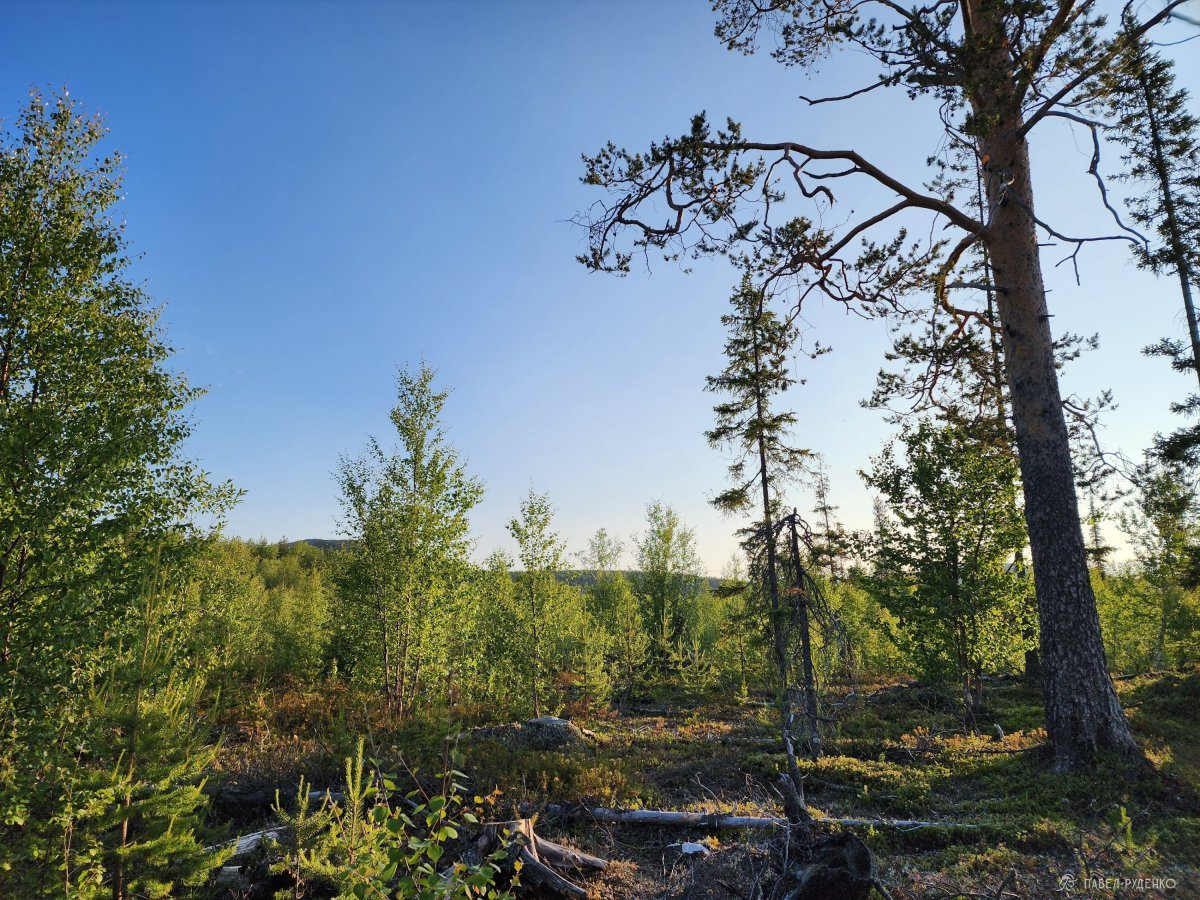

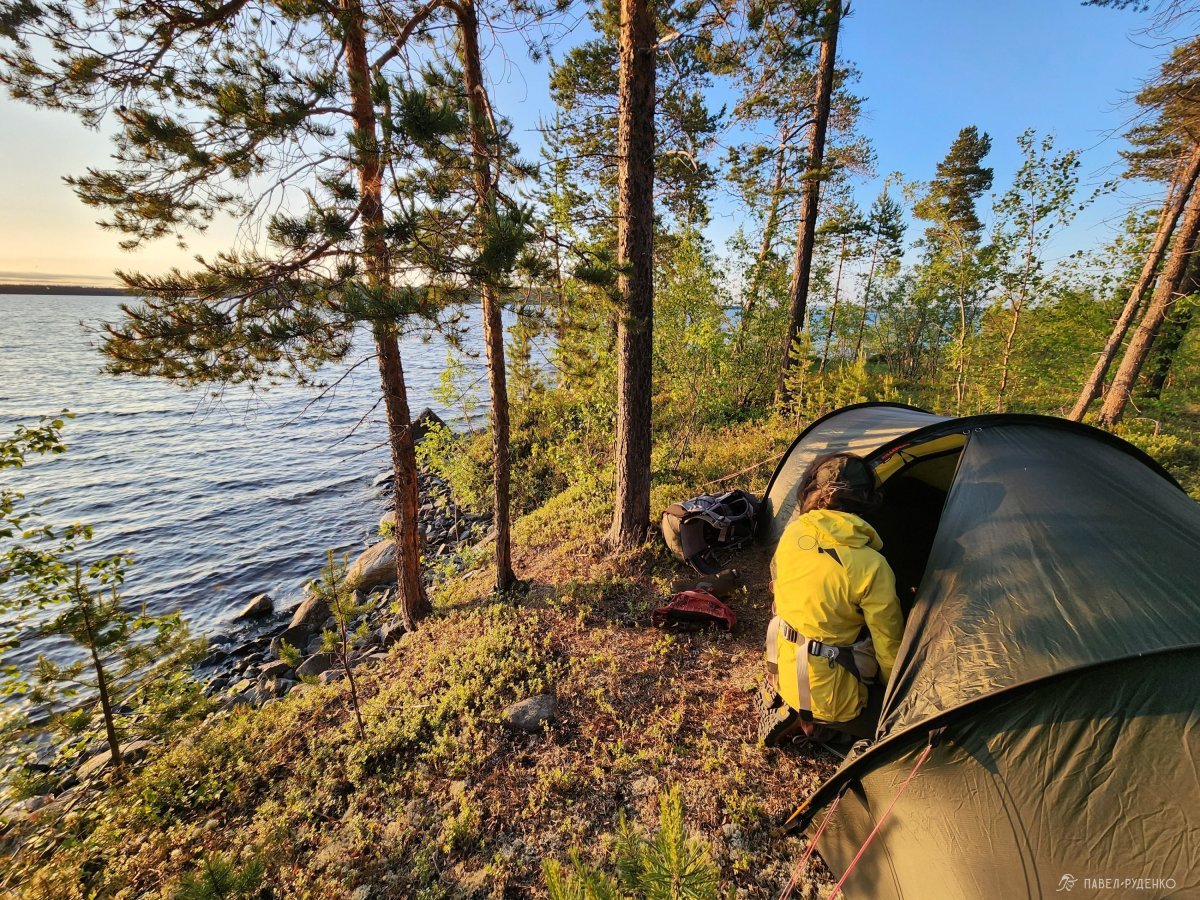
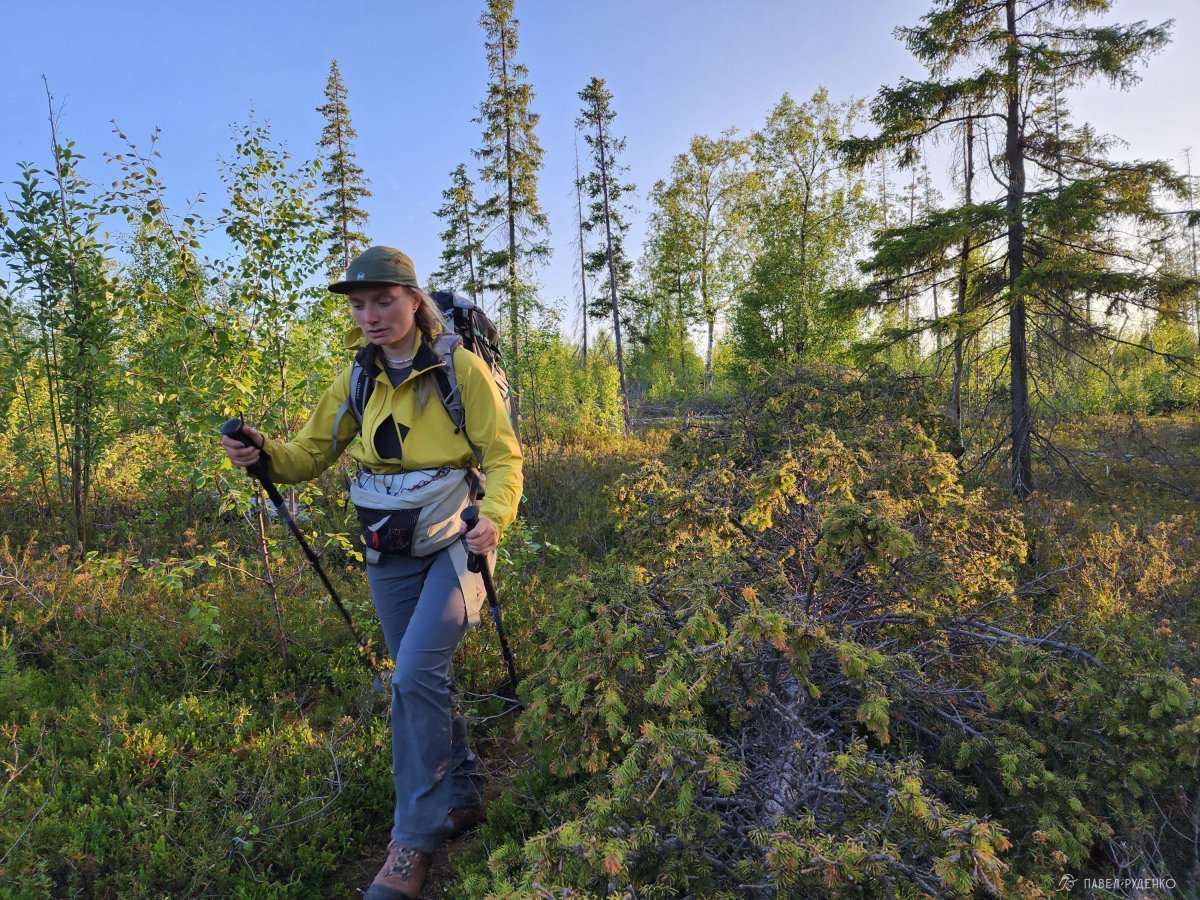
2 day, Viking Trail
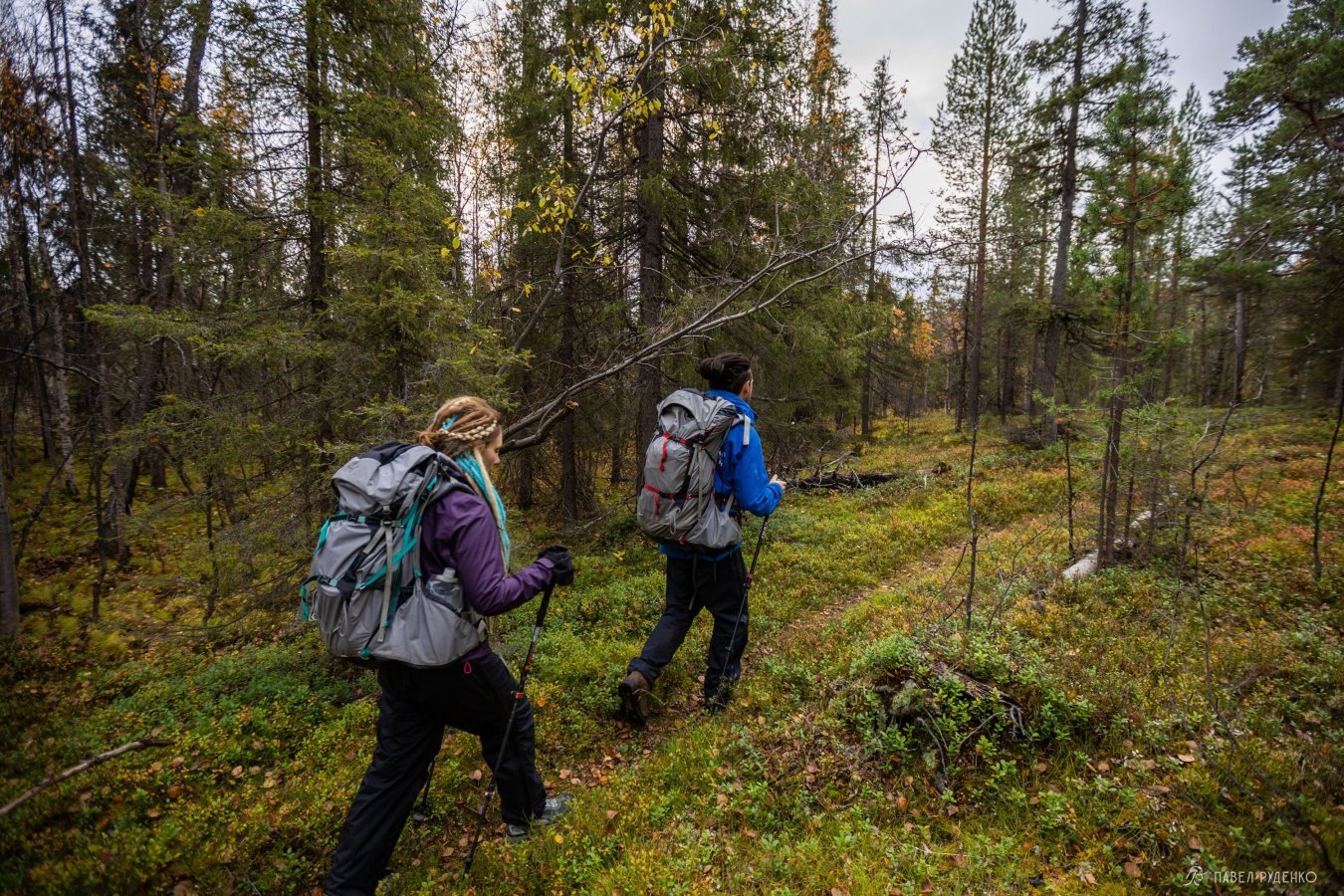
The polar day gently illuminated the tent at night. In the morning, we moved on, the trail in the moss gets lost, sometimes I look at the GPS and look for markers on the trees. The forest is very pleasant, spacious, and wild. Soon after my passage, art objects were organized here, and the стоянку was improved, making a pier, swings, and a platform.


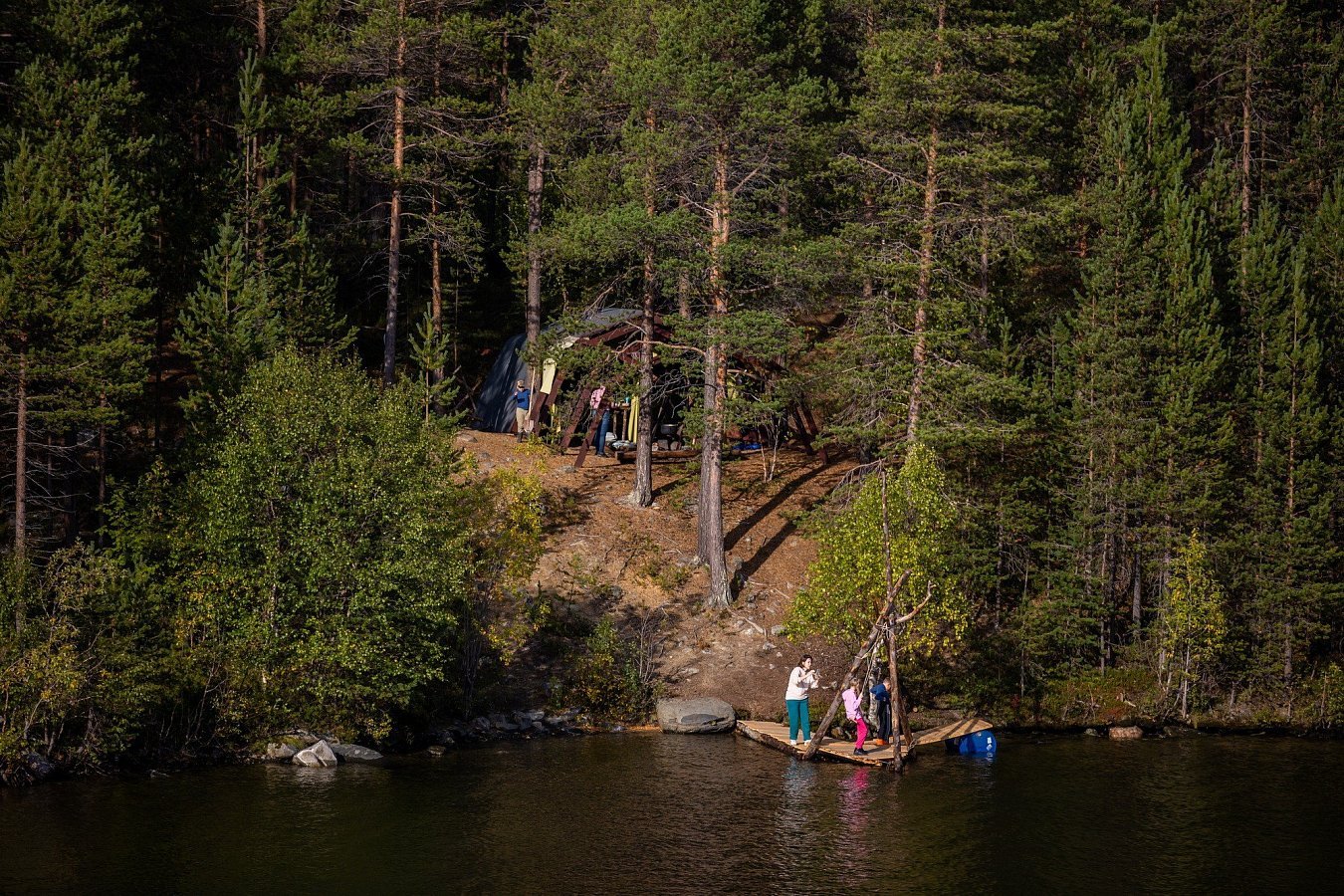
After 20 minutes, we come to Rizh Guba, and suburban settlements begin. Having entered an old-school store for chips and cola, we enjoyed childhood joy and walked on further past water garages, remembering how we passed here on skis just 2 months ago.


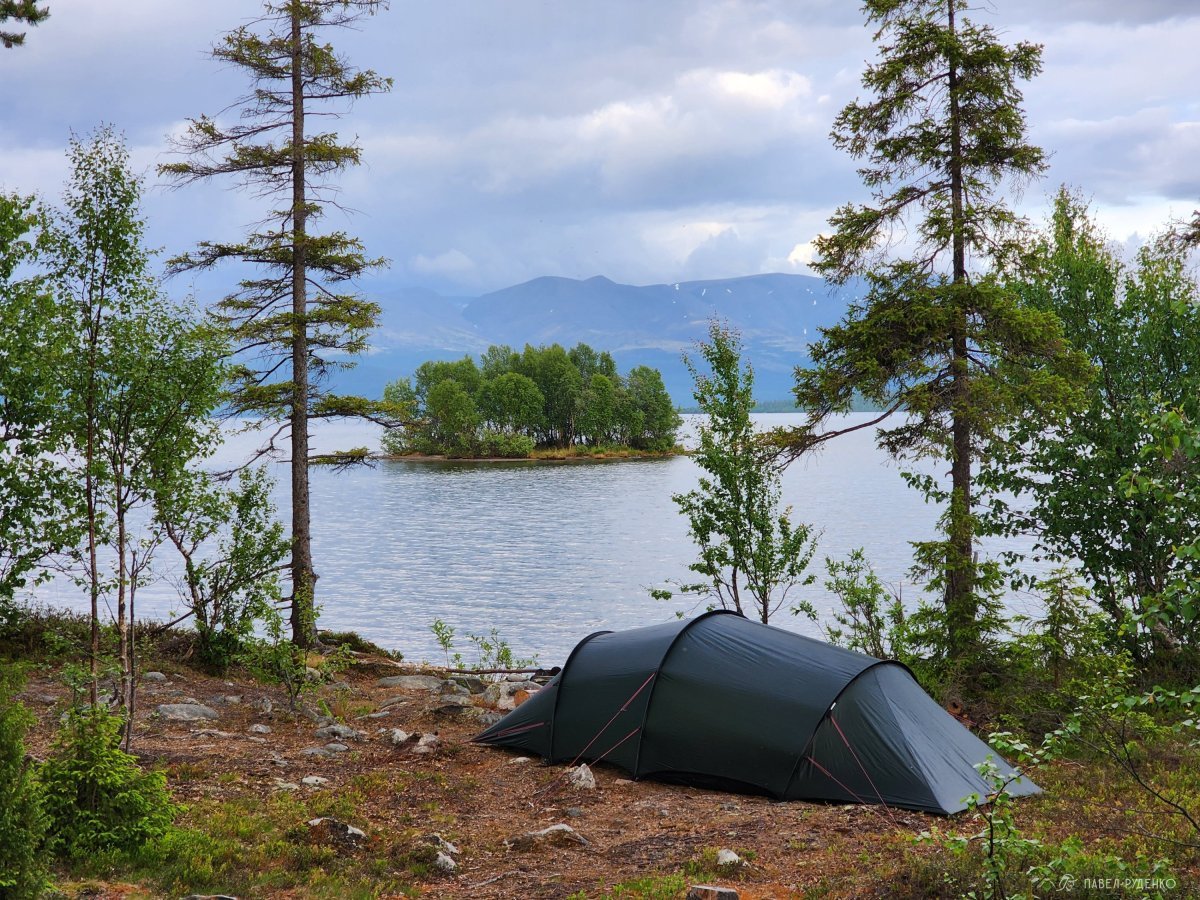
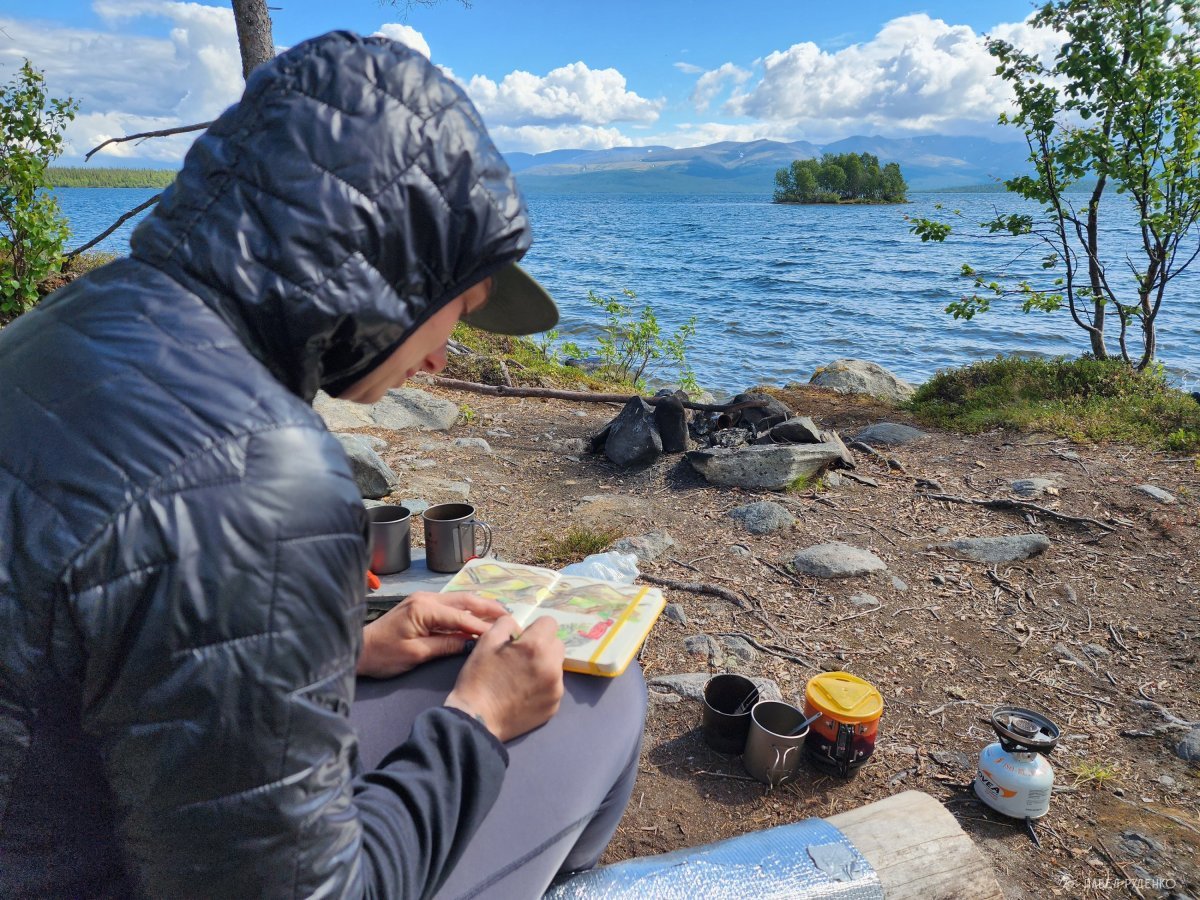
Behind the дач, the trail goes into the forest, and 6 km fly by in conversations about the great, making stops only near the болото and passing by the ручей on logs. Leaves flutter in the eyes, and we rush to stand in the запланированном place by the lake with a view of the mountains. The daily mileage is not significant, but the стоянку here is very nice, and we can't deny ourselves the pleasure of resting. I set up the tent a minute before the rain starts, how kind nature is to us)) We cook food, Anya draws, I take photos, this is life!)


The route is circular, and from here there are 20 km left to the finish in Monchegorsk. If you wish, you can shorten the route by turning onto the 40 km trail to the asphalt road, from where you can take a taxi. This is what makes the route good for beginners, there are many points where you can either turn back or shorten it if you are lucky with the weather and want to spend more time in the camp. I will post such a slightly shortened route with the most beautiful campsites in my opinion.



Trekking season
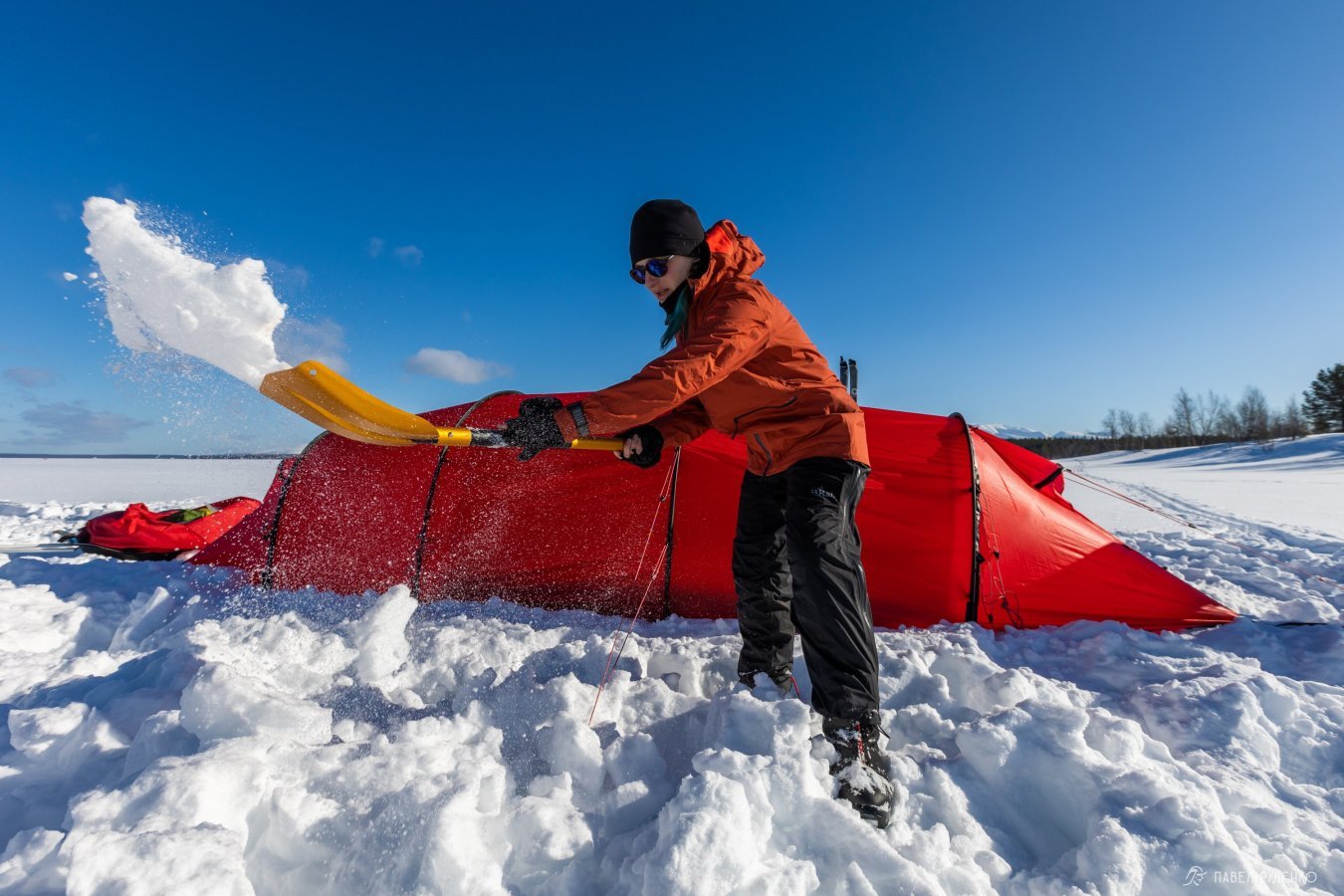
The trails are designed for trekking without snow cover. Usually this is from mid-June to the end of September. But these trails can also be walked in winter, which is what I did at the end of March.
In June and July, it's the height of the polar day, it's light around the clock, and it's a pleasant time to hike. Please note that from July to mid-August there is a peak of mosquitoes and midges, so take a mosquito net, spray and an anti-itch stick with you.
In mid-September, golden autumn begins and the opportunity arises to see the aurora, this is a beauty of a special kind, I highly recommend this time for a hike.