
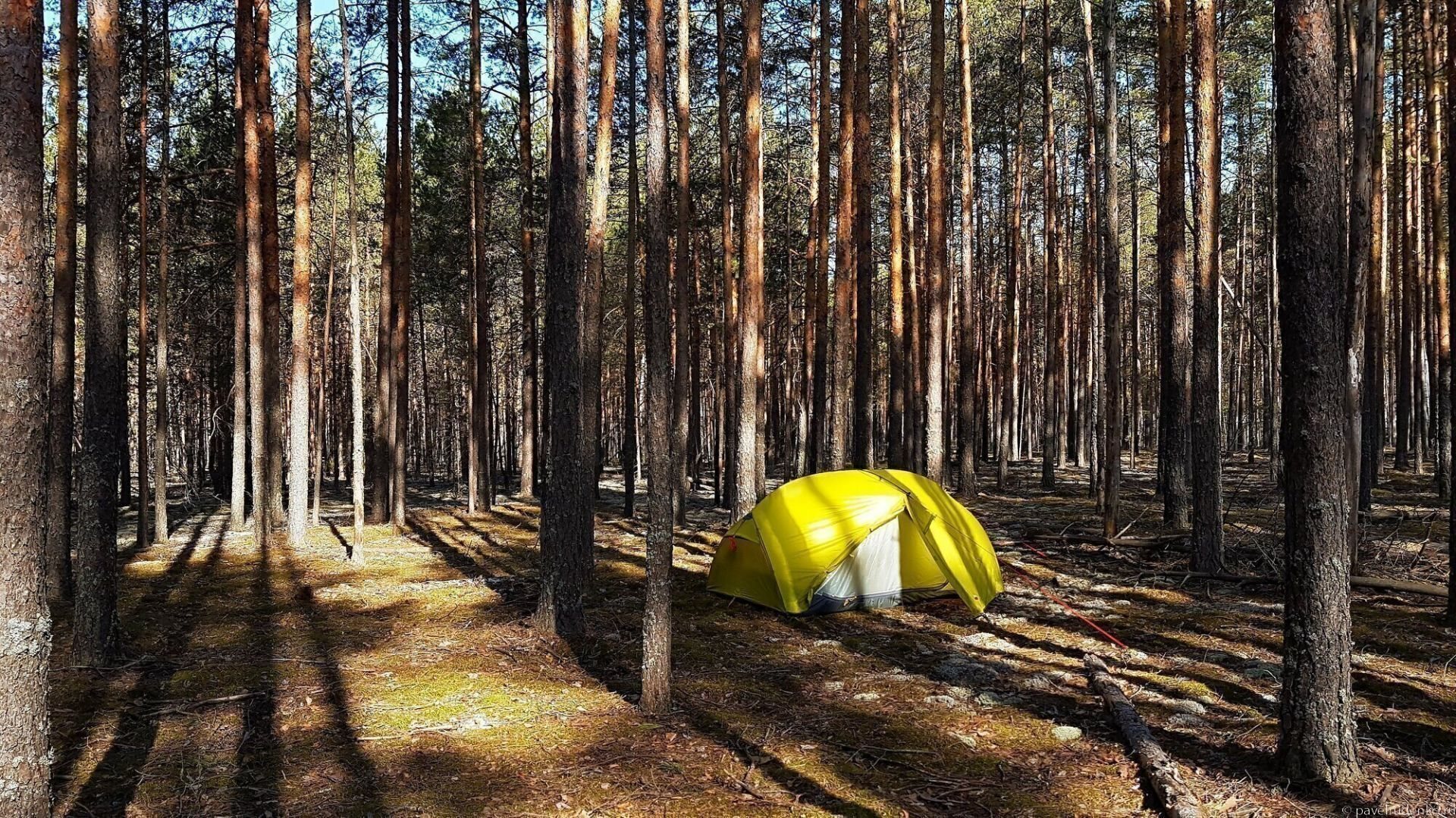
I had the opportunity to test the Bask Pinnate 2 tent in mid-April in the Vladimir forests. Overnight temperature was +2°C during a weekend hike.
Since my experience was limited to a single night, this review covers my immediate first impressions and serves as a helpful reference when choosing a tent.
Additional pros and cons may emerge with longer-term use.
SPECIFICATIONS
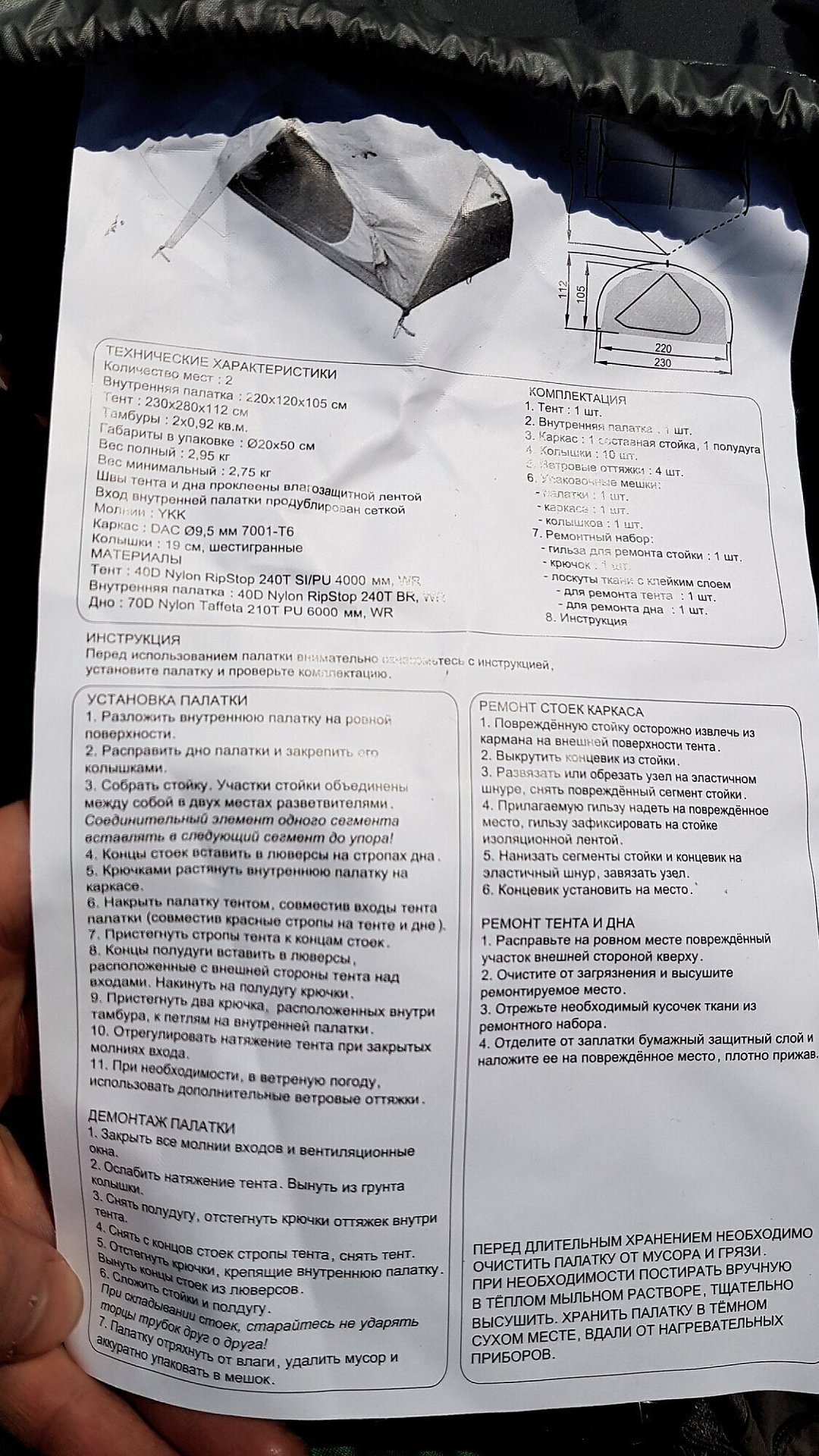
Flysheet material: 40D Nylon RipStop 240T SI/PU 4,000 mm, W/R
Flysheet coating: PU (polyurethane-coated inner surface)
Inner tent material: 40D Nylon Ripstop 240T BR, W/R
Inner tent treatment: Water-repellent finish (W/R), breathable
Floor material: 70D Nylon Taffeta 210T PU 6,000 mm, W/R
Poles: diameter 9.5 mm, DAC AL7001-T6
Number of guylines: 4
Packed weight, kg: 2.95
Minimum weight, kg: 2.75
Flysheet hydrostatic head, mm: 4000
Floor hydrostatic head, mm: 6000
Packed size, cm: 43x19
PROS
- Stable structure with generous living space;
- Modern materials for the Russian tent market;
- Durable poles from DAC, 9.5 mm, 7001-T6;
- Easy to pitch solo;
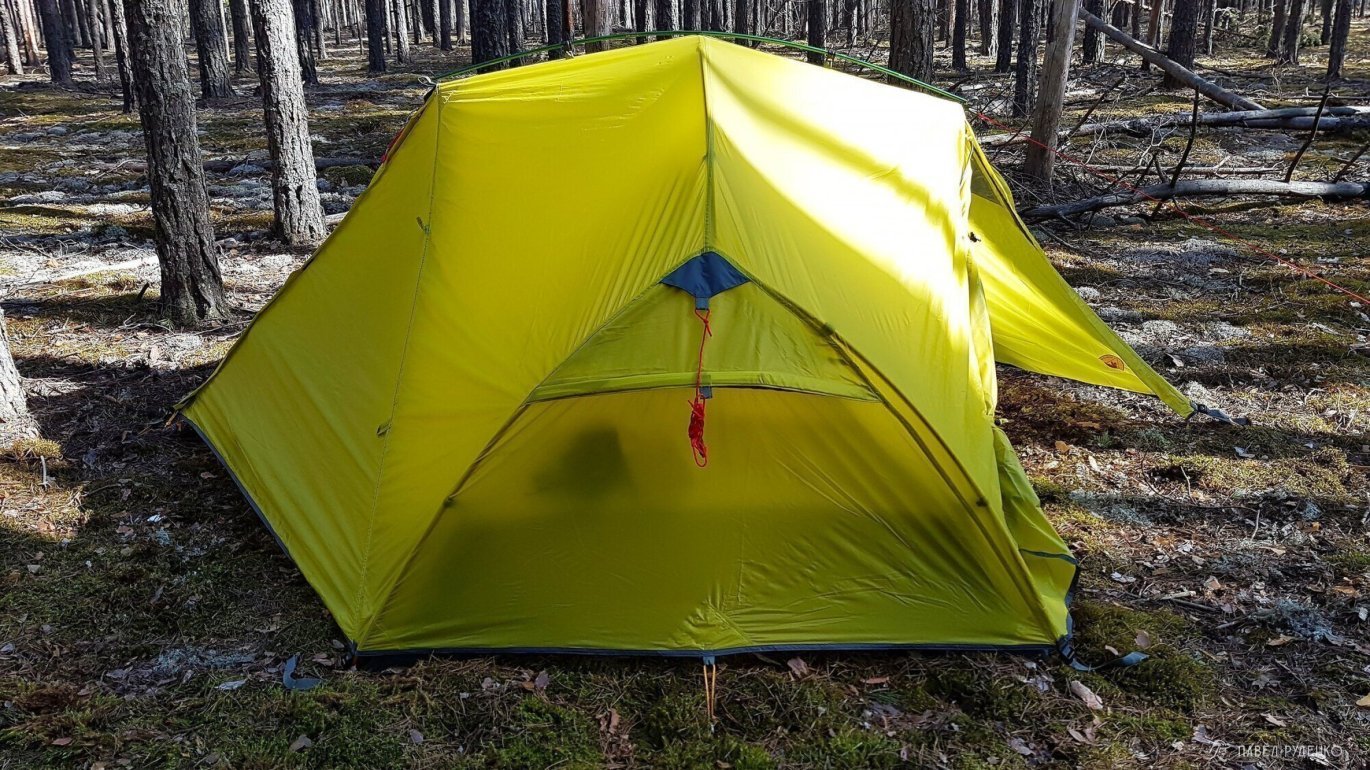
- Sufficient space between the inner and outer tent to prevent them touching in strong winds;
- 4 pockets, 2 each on the head and foot walls. Large ceiling gear loft;
- Very spacious inner tent with vertical sidewalls, allowing you to sit comfortably in the central area. Coming from the Ai-Petri 2 v2, it feels like the grand halls of the Hermitage. Trade-offs are inevitable though: warming up such a volume with your breath isn't easy, even with the ability to fully seal the mesh ventilation with solid nylon;
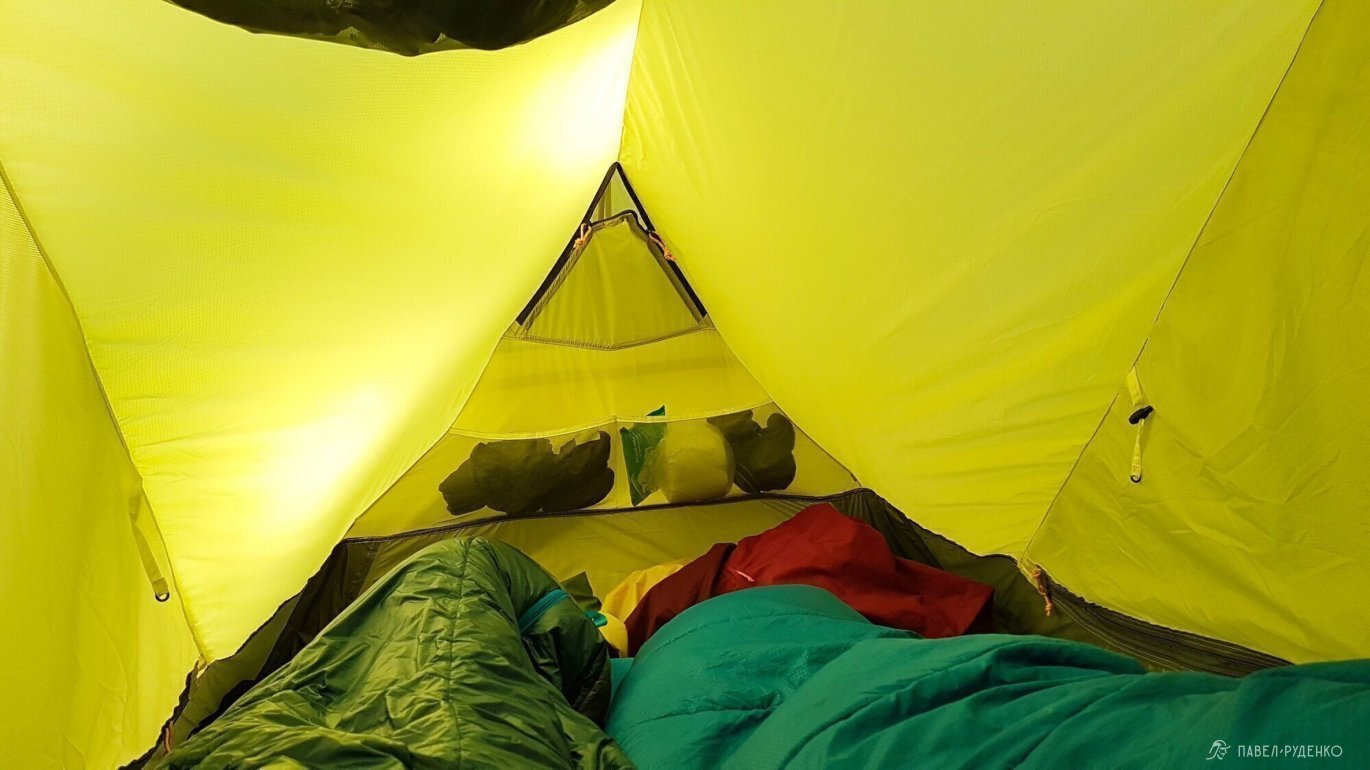
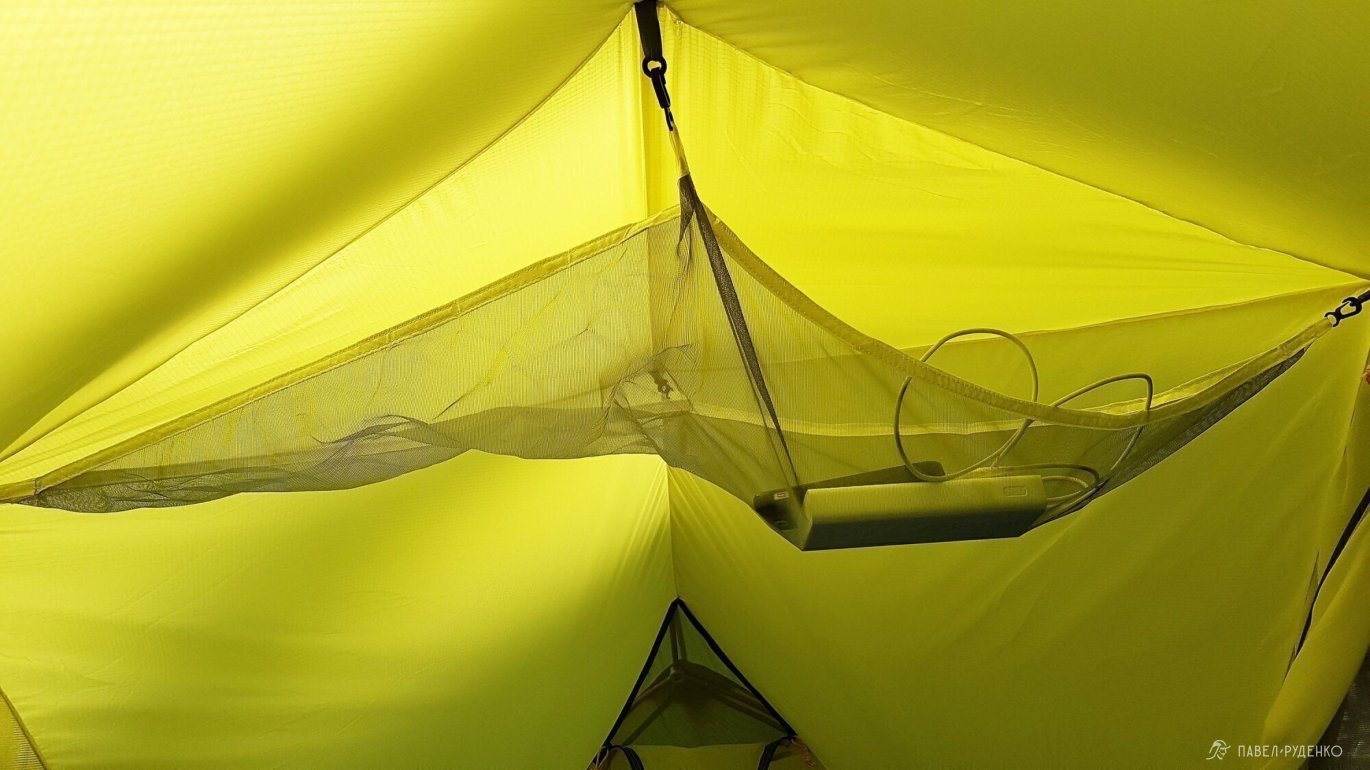
- The entire inner tent is made of durable 40D Nylon Ripstop 240T fabric. Zippered ventilation windows at the head and foot can also be closed off with solid nylon;
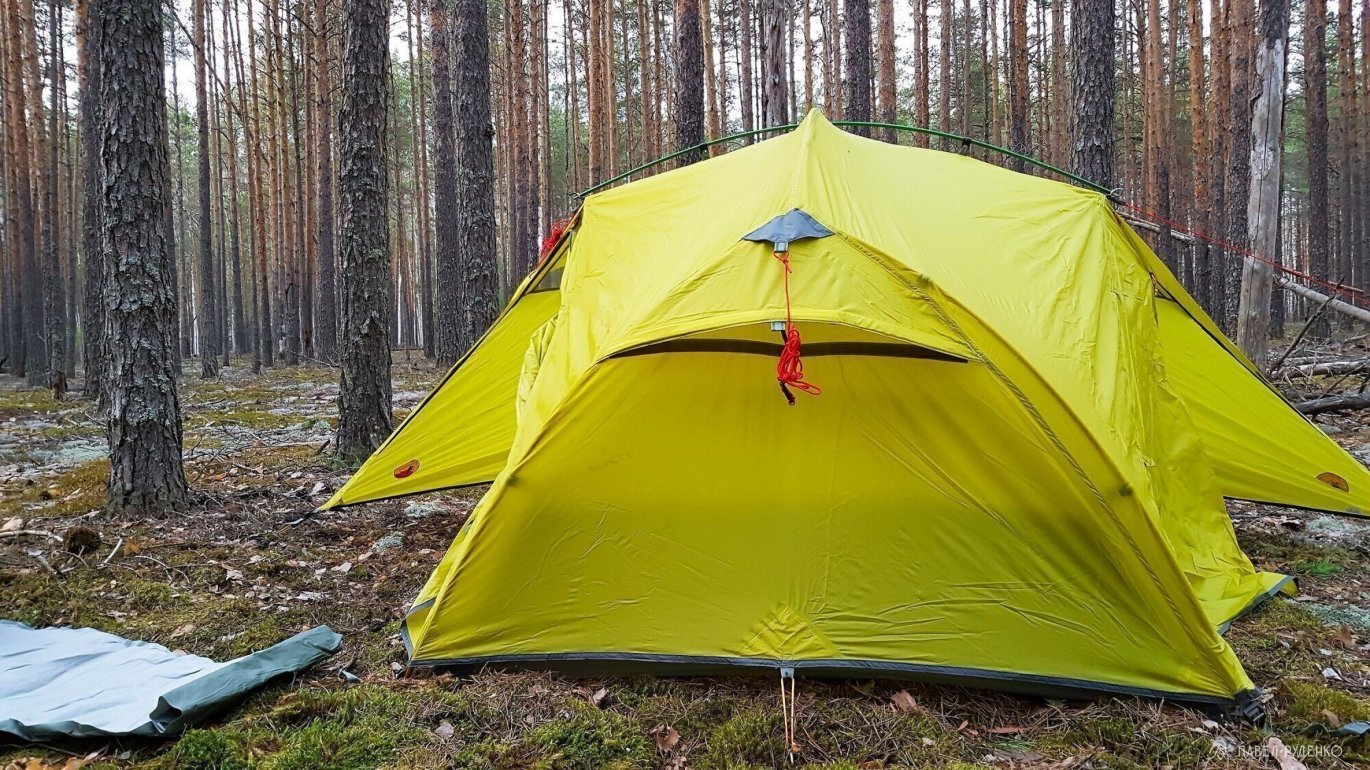
- 2 entrances backed with mosquito mesh, plus additional vestibule ventilation vents on the outer fly;
- All ventilation is covered with mosquito mesh, keeping flying insects out and preventing wind-blown snow from drifting inside during winter trips;

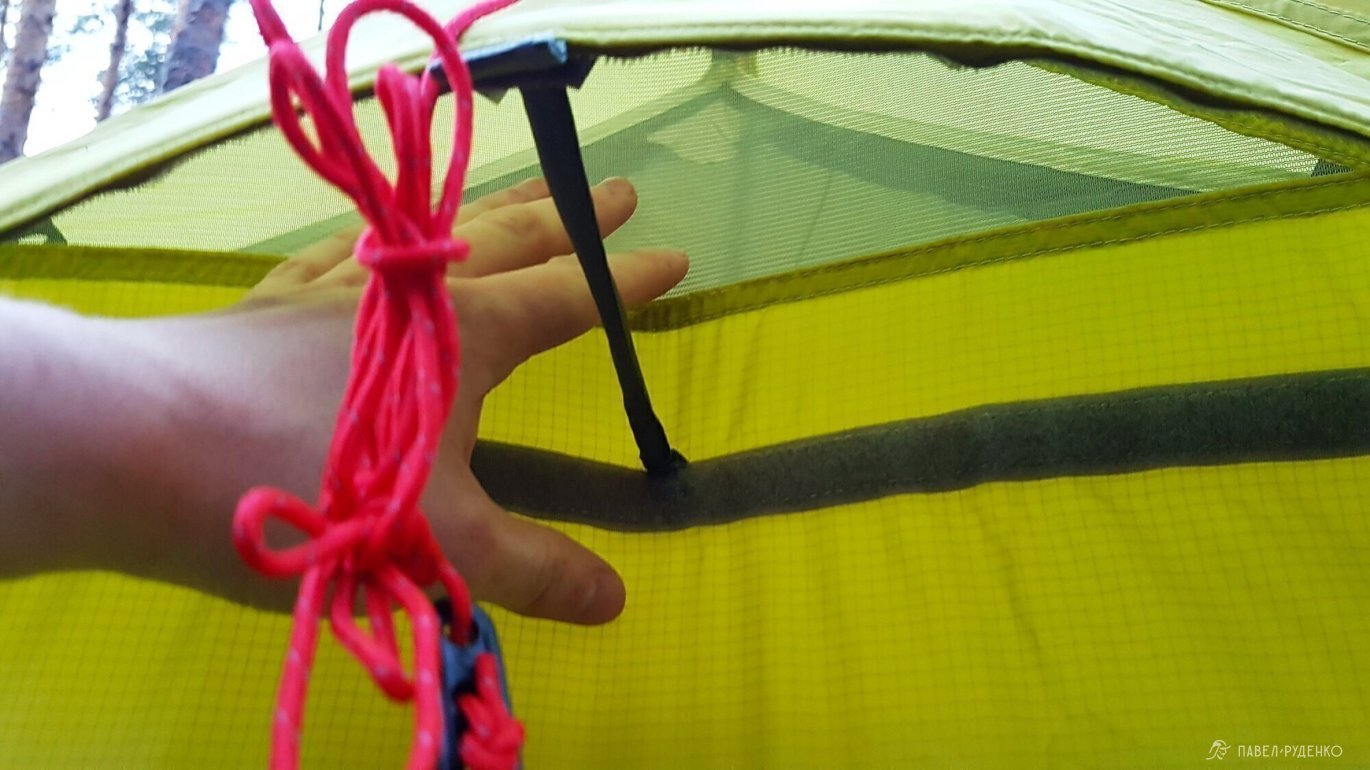
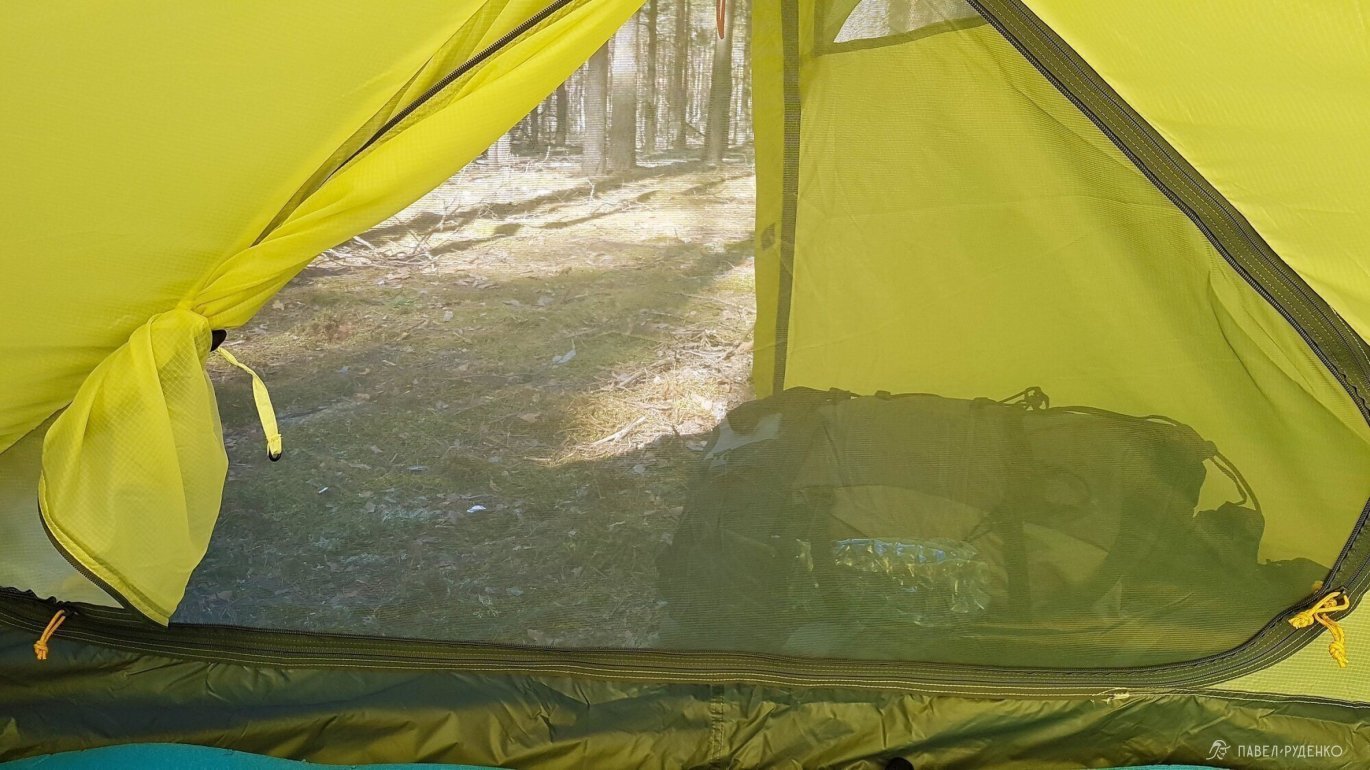
- The large vestibules are convenient for cooking and storing gear. The two-way zipper allows opening the vestibule from the top to look around or increase ventilation;
- Relatively small gap between the flysheet and the ground;
- High bathtub floor walls at the head and foot ends protect the inner tent from splashes and driving rain;
- 4 perimeter guy lines with handy cord tensioners. 2 additional guy lines at the bottom of the flysheet at the head and foot ends;

- Excellent repair kit. A pole repair sleeve for fixing a broken pole and a self-adhesive patch. Very convenient for field repairs;
- Durable hexagonal pegs, 10 pcs.;

CONS
- Short zipper on the triangular inner tent entrance. It runs along the bottom and right side of the triangle, leaving the mesh hanging overhead. While packing up, you constantly move in and out and brush against it; there is no convenient way to stow and secure the open door;
- Both vestibule entrances are on the same side. In my opinion, a staggered entrance placement would be more versatile;
- Both vestibule vents face the same direction;
- No Velcro on the vestibule vent, making it impossible to close. The vent is kept shaped by a sewn-in semi-hoop stiffener;
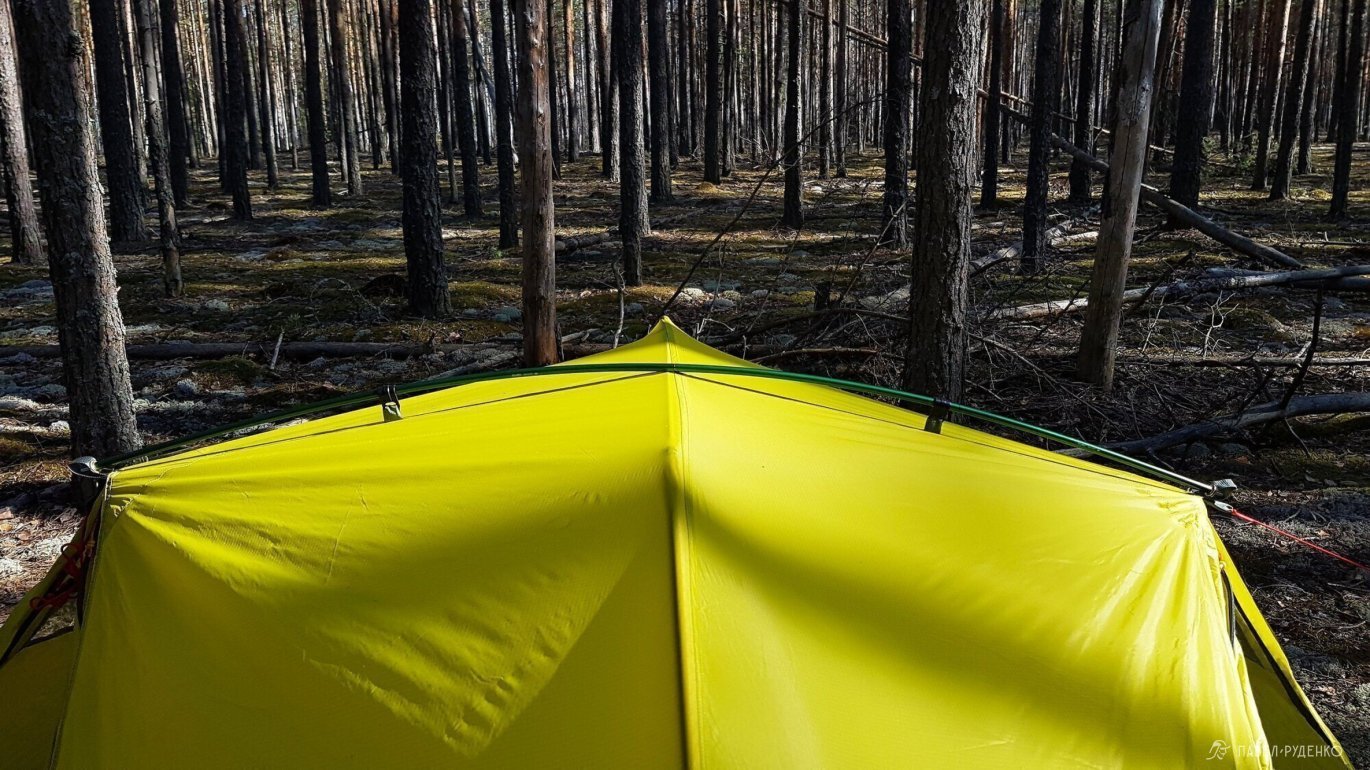
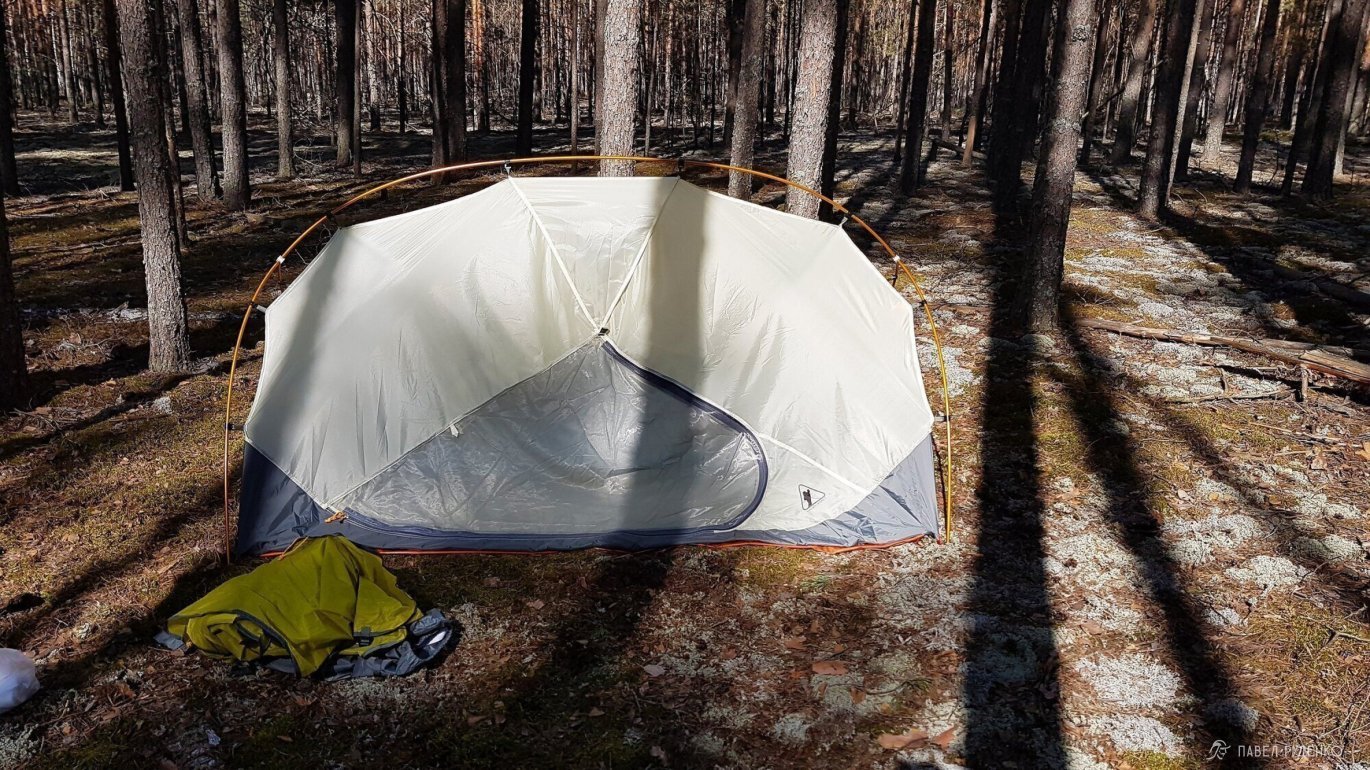
- The cross pole is mounted on top of the flysheet, and in strong winds, friction at the intersection with the main pole underneath could wear through the fabric. Depending on pitch tension, you can leave the necessary gap. I haven't found reports of worn fabric on the Pinnate 2, but similar feedback occurred with Bask Shark Fin Flap and Novatour Ai-Petri 2 v1 featuring a similar design;
- Inconvenient tent stuff sack. No compression straps, pointless shoulder carry strap. Awkward bag for poles and pegs;
- Cannot properly pitch the inner tent standalone without the flysheet. The ridge pole expands the interior space and mounts on top of the outer flysheet. As a result, you can set up the inner tent, but the sidewalls will sag. In rare cases, a solo trekker could sleep in the center, but it is far from ideal;

CONCLUSION
The tent is very spacious; you can sit upright virtually anywhere inside and easily change clothes. All design choices are well thought out, except for the inner entrances and the non-adjustable vestibule vents.
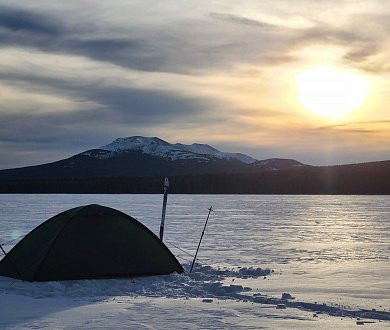
The manufacturer positions the tent as 3-season, intended for moderate climates. In my view, this is spot on. Thanks to the inner tent made of dense nylon, the tent is draft-free and remains comfortable around 0°C; in my opinion, it can even be used on easy winter treks. In warm weather, the mesh-backed doors and ventilation windows provide good airflow.
Materials and seams look high quality. Good weight considering the fabrics used. It is a great-looking tent; the green color is both visible and blends well into nature. A blue version is also available.





Comments (0)