
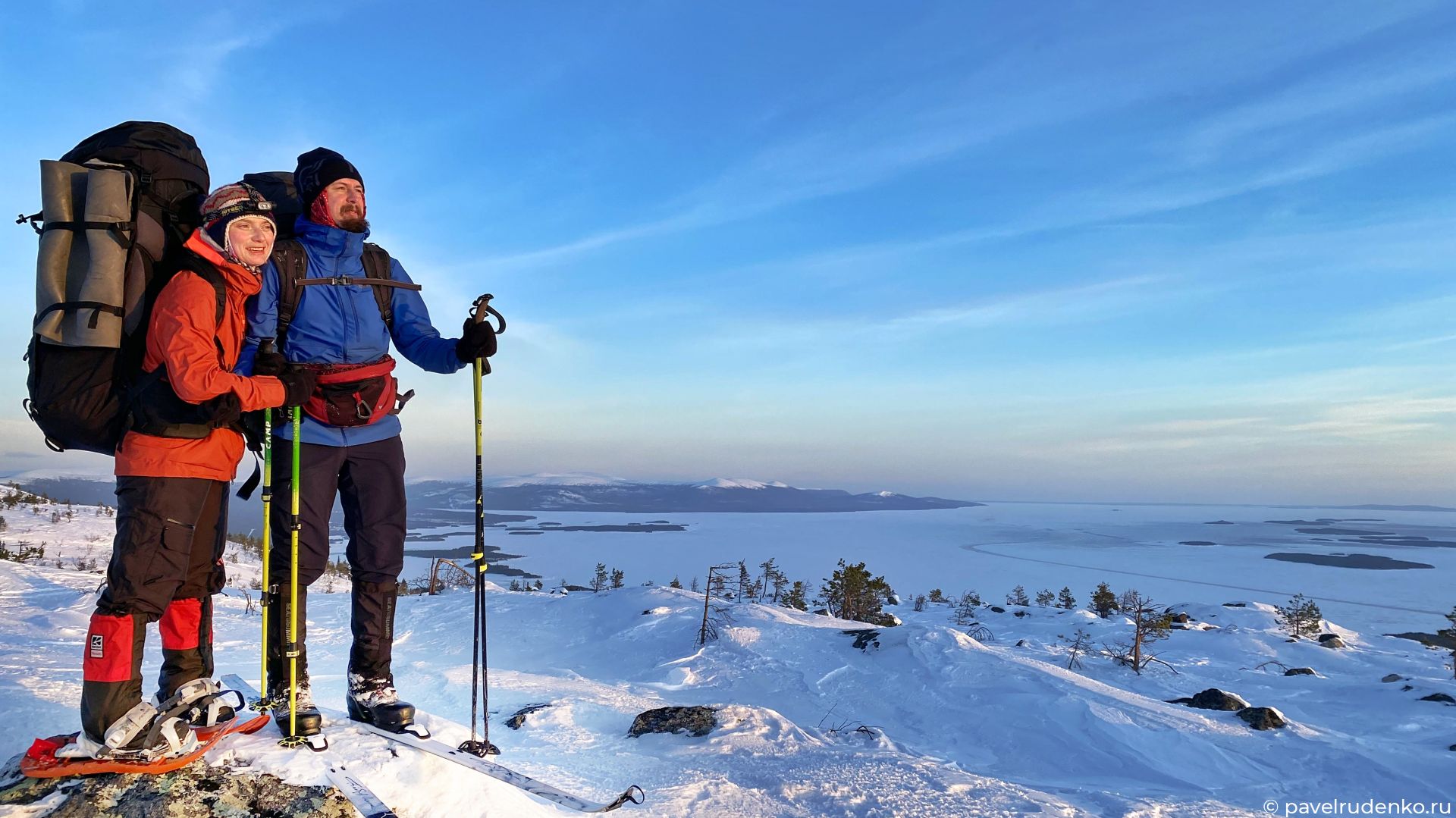
Skis or Snowshoes: What to Choose for a Trek
On a winter trek, the primary challenge is navigating snow of varying depth and density. To move through snowy terrain efficiently and without excessive strain, you need backcountry touring skis or snowshoes. Let’s look at where skis perform best and where snowshoes take the lead. Here is a brief, bullet-point breakdown of the pros and cons of skis and snowshoes.
Snowshoes
Pros:
- Snowshoes are much easier and faster for anyone to learn.
- They can be worn with virtually any winter boots.
- Snowshoes handle moderate to challenging terrain with ease, remain stable on steep descents, make negotiating windfalls simpler, and offer maneuverability in tight spaces.
- Most snowshoes feature heel lifts to relieve calf strain on ascents.
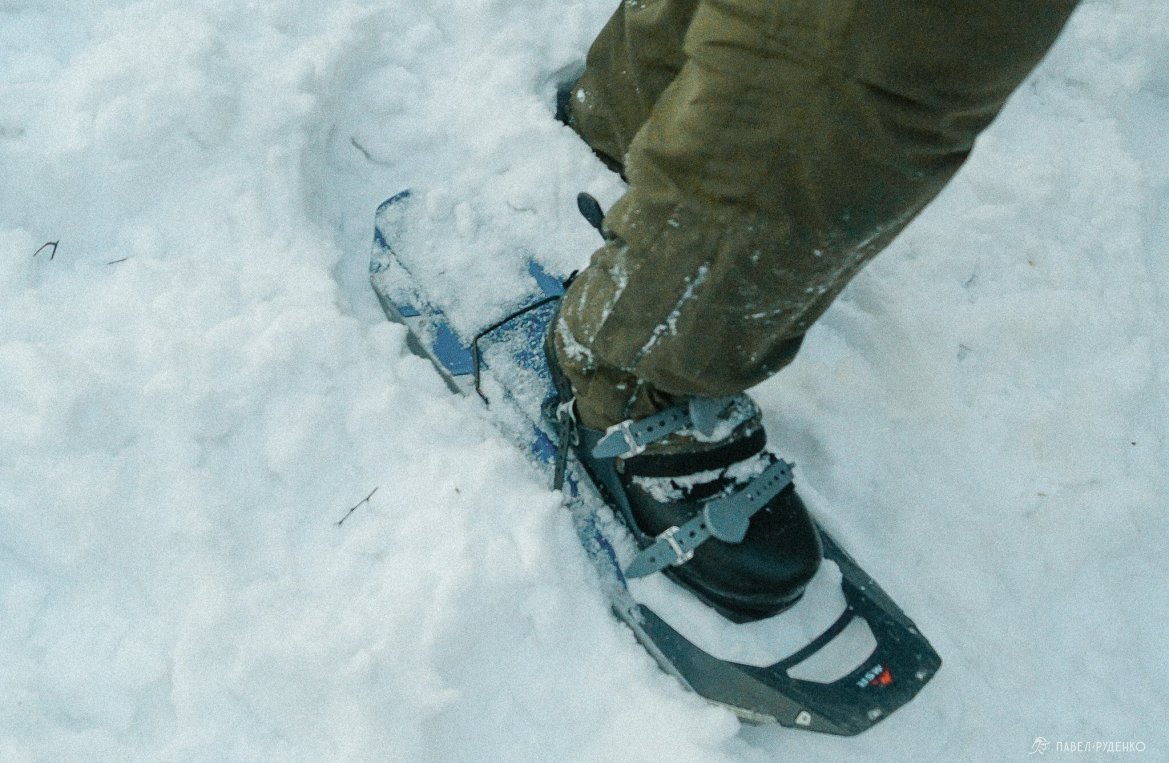
- Compact to transport (average length 35–60 cm) and lightweight (1.5–2.5 kg). No dedicated bag is required, making them easy to take on any transport.
- Snowshoes are generally more affordable, and the only extras you need are poles—standard trekking poles work great.
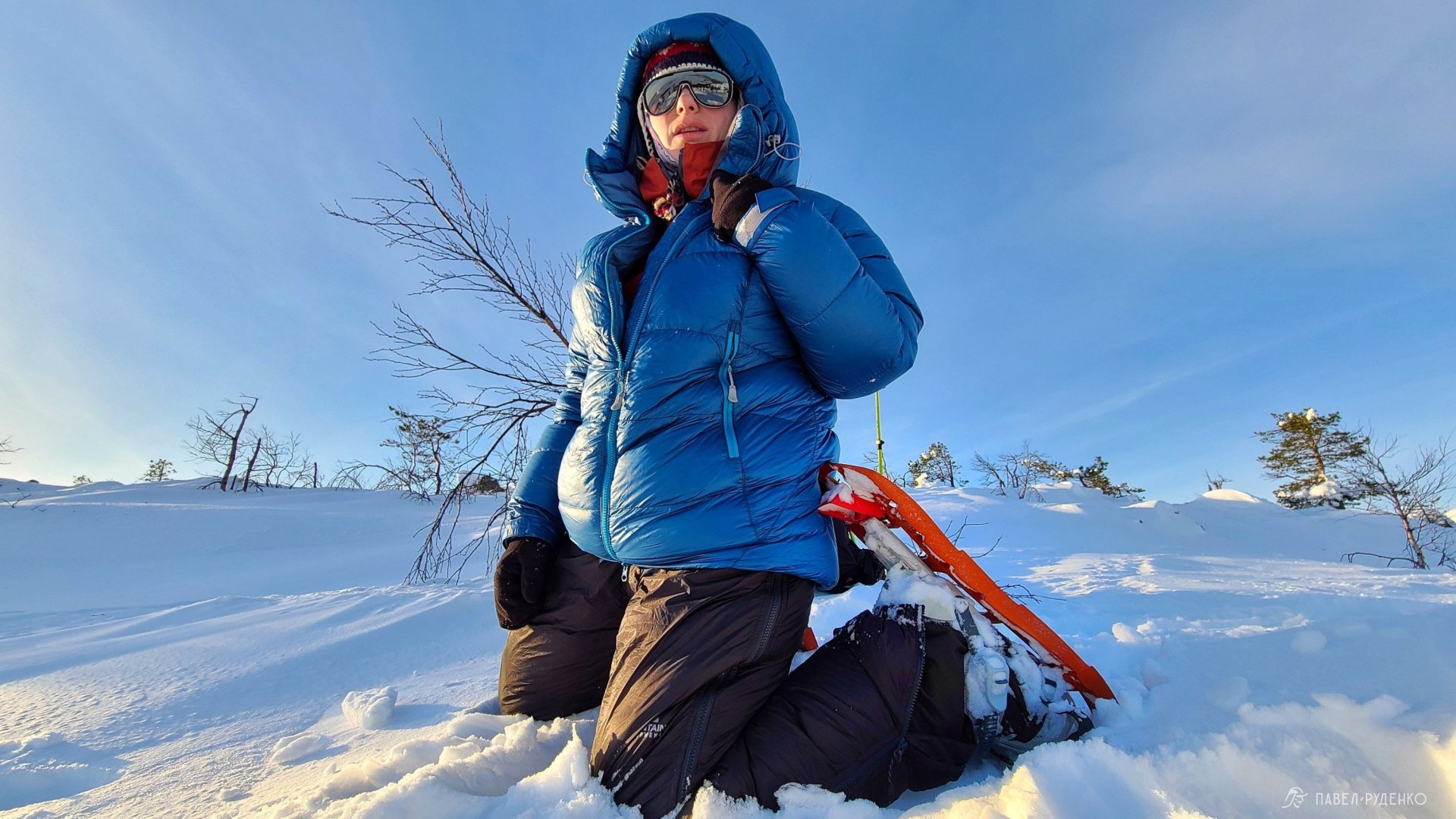
Cons:
- Travel on snowshoes is slower than on skis, especially on flat stretches and descents, which limits daily distance.
- They serve strictly as a means of travel and do not offer the gliding thrill of skis.
- In most conditions, snowshoeing demands more physical effort because their surface area is smaller than skis, making each step heavier.
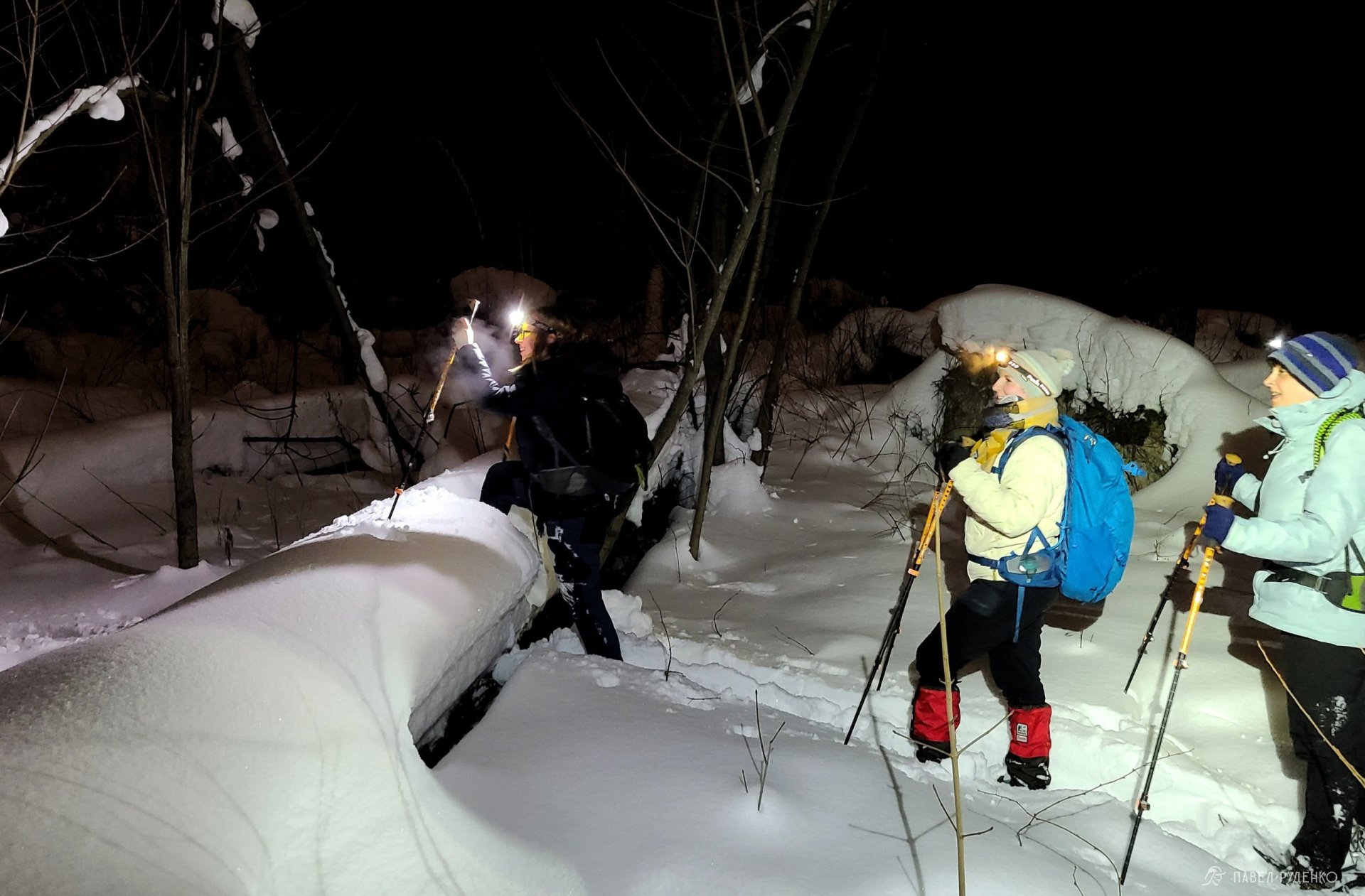
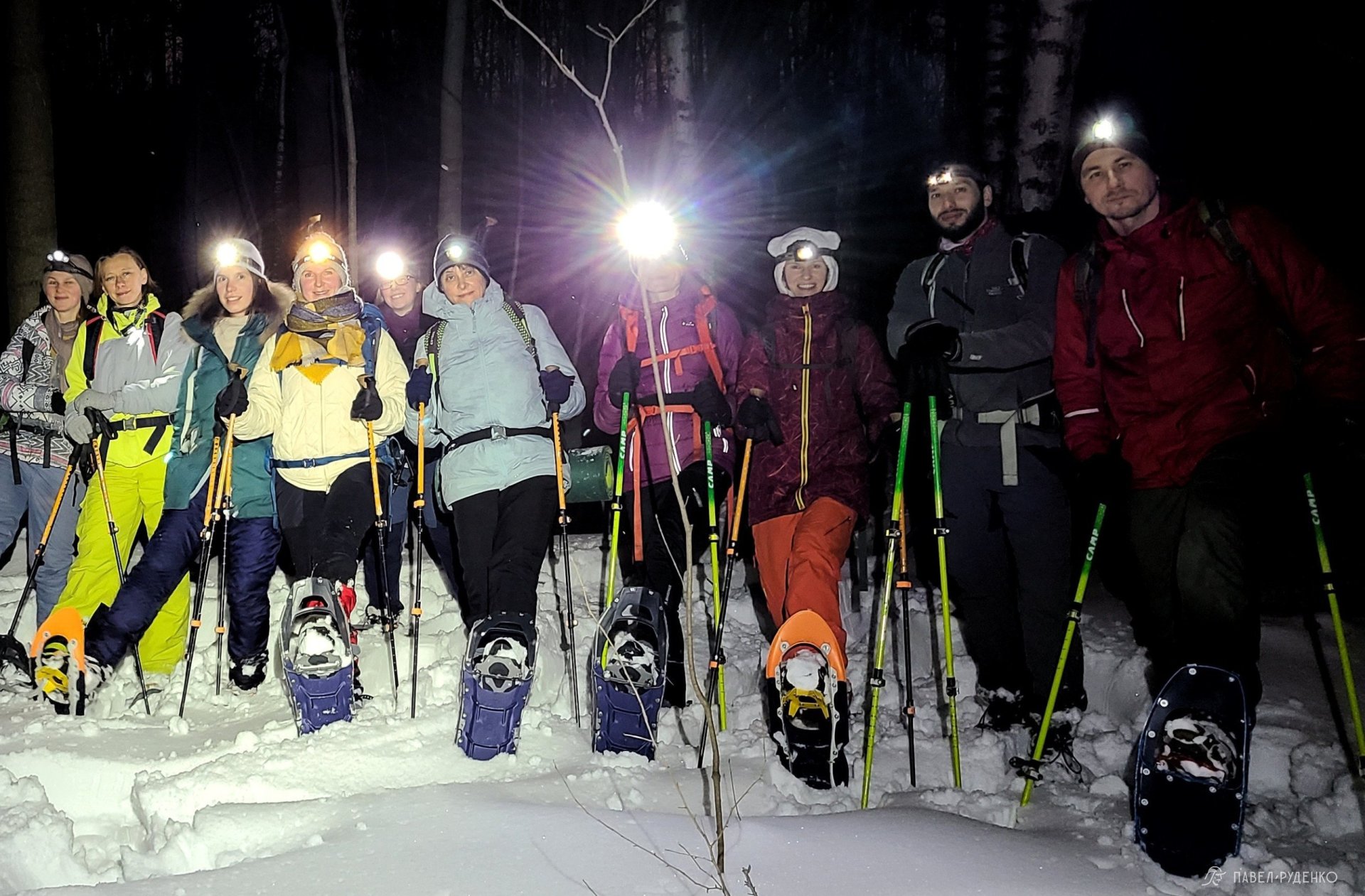
Leading a group on a day hike through Losiny Ostrov. Scrambling through snow-covered windfalls is a lot of fun.
Thanks to their quick learning curve, low price (starting around 5,000 RUB), and minimal gear requirements, snowshoes are ideal for beginners, less conditioned hikers, and easy day trips. That is why commercial trips often rely on snowshoe routes.
Because they are inexpensive and compact, snowshoes are frequently packed as emergency or backup gear. For instance, on ski expeditions in case a ski breaks; by snowmobilers in case of a breakdown; by ice anglers covering short snowy distances to a spot; and by mountaineers for route approaches.
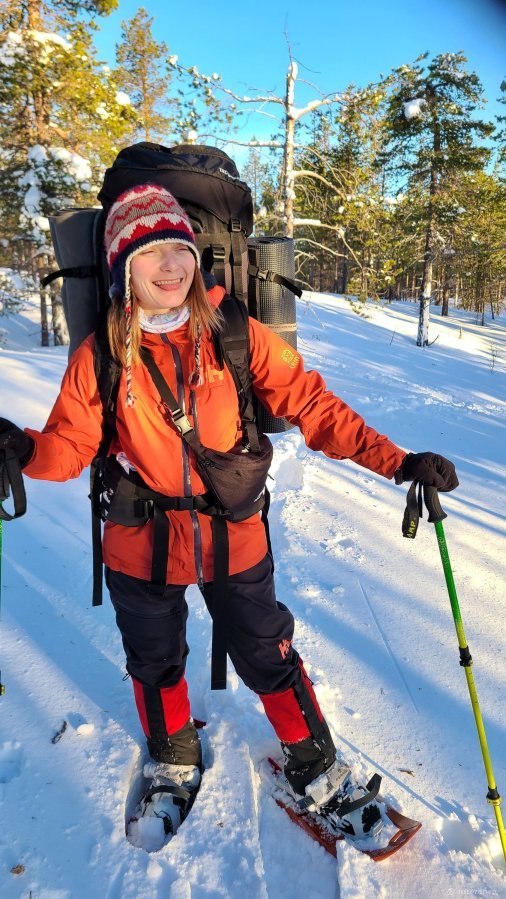
On commercial trips, guests know that even without prior winter trekking experience, they can easily hike on snowshoes, making them a sensible gear investment for guide companies. They are also perfect for camera crews and photographers filming guides such as: "How to Choose Touring Skis", "How to Pitch a Tent on a Winter Trek", "7 Rules for Winter Camping"
Ultimately, snowshoe routes are simpler to plan because even an inexperienced group can negotiate obstacles like deadfall or steep hills—unlike ski routes, which demand much more skill and meticulous planning. The golden rule is simply to keep daily mileage modest.
Skis
Pros:
- Fast travel across gentle terrain, especially on wind-packed flats and descents.
- Easier to navigate through deep snow.
- Ability to cover vast distances.
- Touring skis are built for trekking rather than downhill skiing, but the gliding motion itself brings genuine aesthetic pleasure.
- Ability to tow pulkas comfortably through deep snow.
- Adaptable with fishscales and climbing skins of various materials and lengths.
- Excellent cardio workout, serving as an engaging alternative to running and far more versatile than cross-country skis.
Cons:
- Steeper learning curve; it typically takes 3–5 days to feel confident.
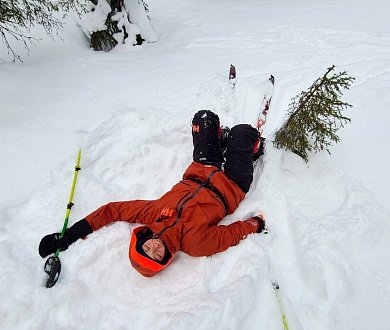
- You fall more often and getting back up is harder.
- A full setup—skis, bindings, boots, and poles—is noticeably more expensive than a snowshoe kit.
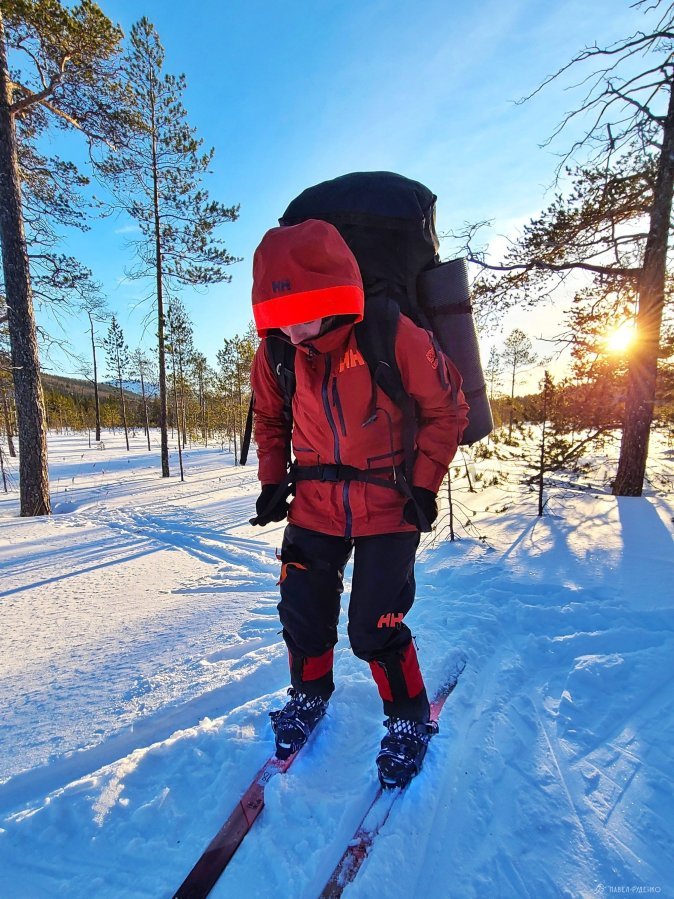
Filming for Sport-Marafon outdoor store.
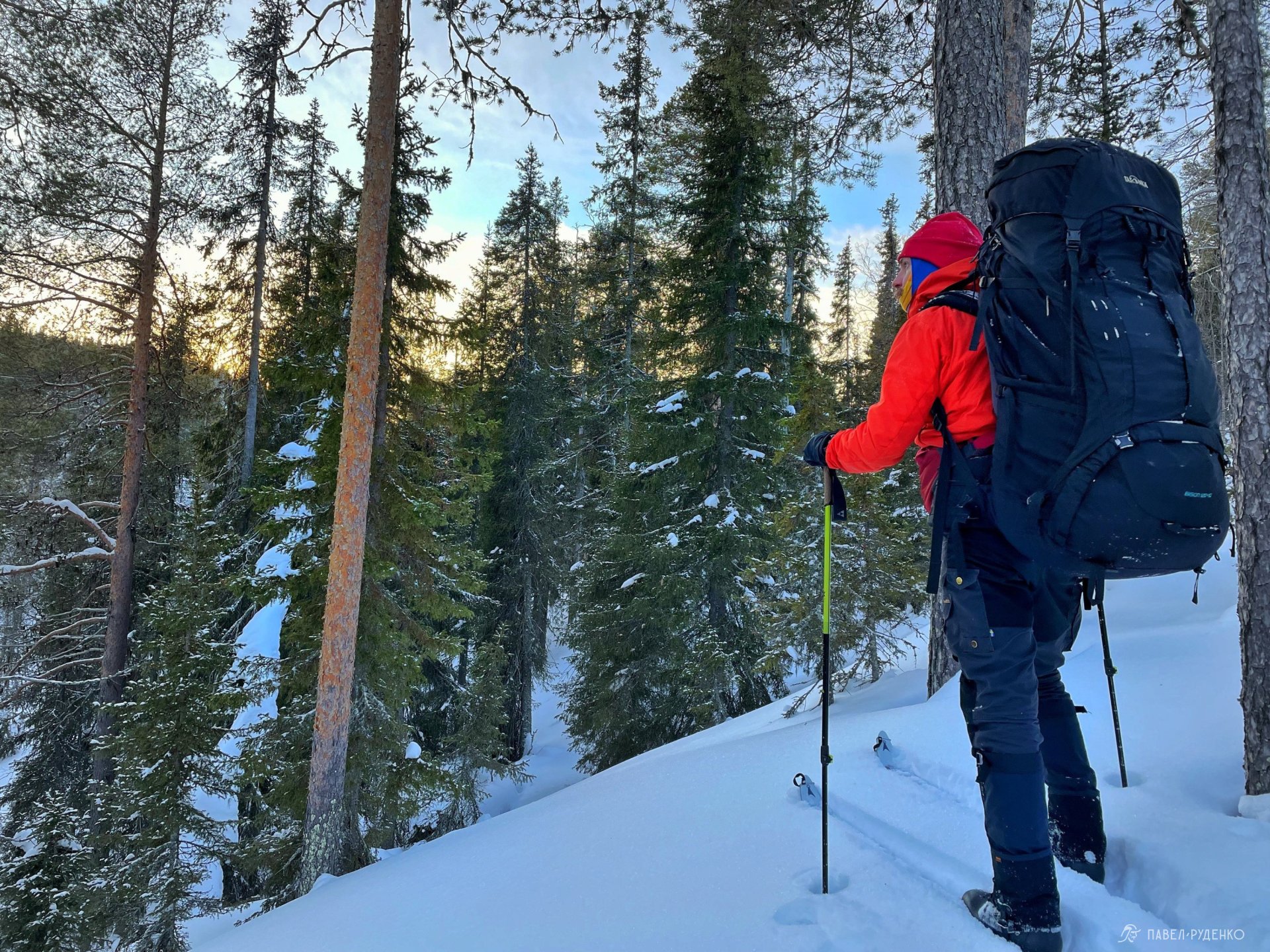
Skis are an exceptional choice for wilderness trekking: they let you tackle ambitious routes, travel swiftly, and enjoy every glide and descent. Ski touring is truly rewarding. By dialing in the right ski model, bindings, boots, climbing skins (length and material), fishscales, and waxes, you can fine-tune your touring skis for any conditions.
However, they require practice: usually 2, 3, or more weekend treks to become reasonably steady. Higher-grade gear also performs noticeably better. For example, traditional Beskid skis with cable bindings are far less forgiving and dependable than modern Fischer skis with NNN BC bindings, and using cords for grip is clumsy compared to dedicated skins.
I love winter treks. If you are planning an adventure, join one of our expeditions on the Kola Peninsula.
Trek Schedule!


Comments (0)