Part 1
Introduction
Many times I've seen hikers with poorly adjusted backpacks struggling. After a minute of assistance, they look at me as if I've turned water into wine, surprised at how easy it became.
To not notice the weight on your back and enjoy the nature on the route, read the rules for choosing and adjusting a backpack. I've tested numerous backpacks, issued gear to groups, and worked for several years in a store where I daily selected and adjusted backpacks for hikers, so I have something to say.
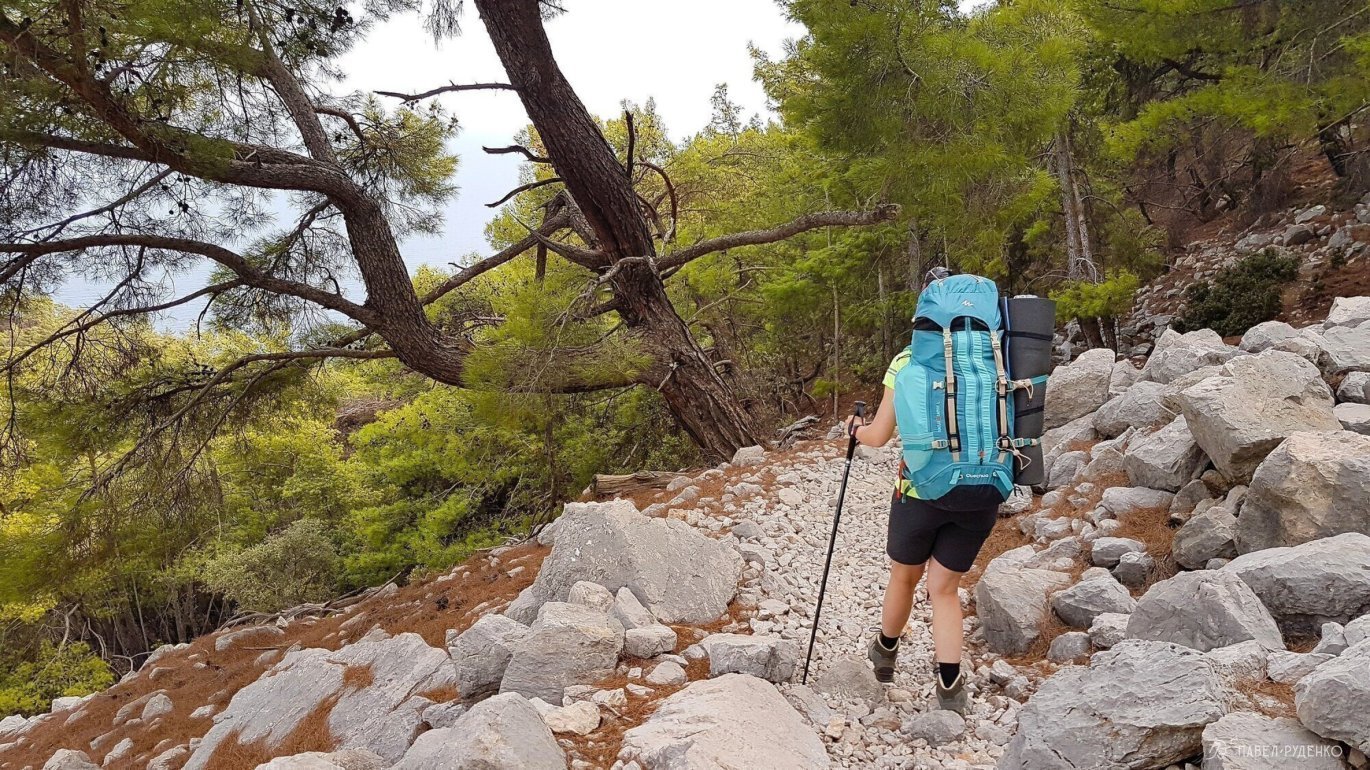
Define goals and objectives
Before choosing a backpack, you need to decide:
- For what purposes? Day hikes, for 5 days or 2 weeks, climbing, trekking through the taiga, on clean marked trails, or maybe all together. For each option, there is a most suitable backpack. To determine, write to me, read reviews, or ask a seller.
- What is the volume of your gear? We determine the liters, usually like this: 1 day - 20-40L, 2-7 days - 70L, 7-14 days - 100L. Winter for 7-14 days - 120 liters.
- How many days do you plan to hike autonomously? The liters and carrying capacity will depend on this. If it's 15 kg in the backpack, then a backpack with a carrying capacity of up to 20 kg will suffice. If it's 25 kg, then these are powerful expedition backpacks. It's difficult to find this information, but it's possible.
- Will you use the backpack for winter hikes? If so, then we look for more liters.
- What would you like to get? Maximum fabric strength, lightweight backpack, or more comfort. Accordingly, we look for the right models.
Don't forget, a good backpack is bought for 10-20 years, so it's worth spending time, trying on different backpacks, and understanding its adjustment. Sometimes it's worth increasing the budget for a backpack so that it doesn't hurt or feel uncomfortable during the hike.

Size
1. The size is chosen not by height, but by torso length. To measure the torso, tilt your head forward, and from the most protruding vertebra on the neck C7, stretch the tape measure along the spine until you reach the iliac center. This is the point in the center of the spine that coincides with the highest point on the side of your pelvic bone. It can be called the iliac crest. Now we can correctly determine the size of the backpack. For example, my back is 48 cm and I use an Osprey Aether pro backpack in size M 46-53 cm.
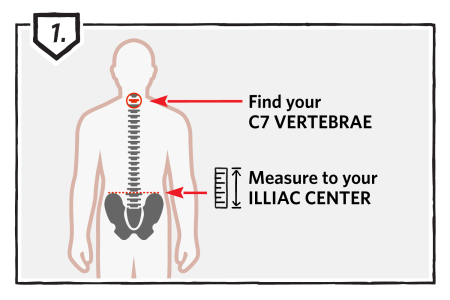
All illustrations are taken from gregorypacks.com. This is one of the most technologically advanced backpack manufacturers in the world. They were the first in the world to make a women's backpack and generally paid a lot of attention to comfort with a backpack.
Backpack back size
There are 4 types of backpack back sizes. Most often, the type can be determined by the country of manufacture, as each country or region has its own traditions.
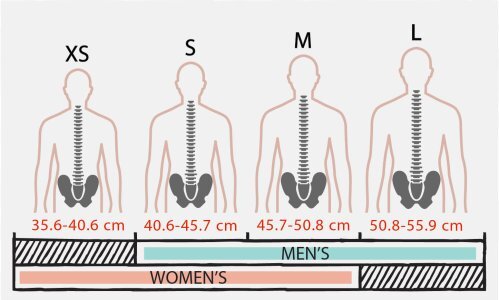
1 type: XS, S, M, L. Found in American manufacturers and designed for the most adapted fit for each "height" of the user. For example, sizes S and M have different waist and shoulder strap lengths, back length.
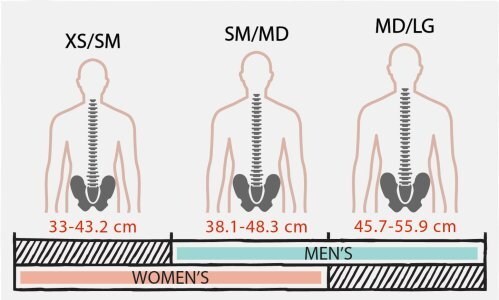
2 type: XS-M, M-L. Also found most often in American manufacturers and is a more universal option where the user can fine-tune the backpack under themselves, adjusting the back, for example, within the M-L size.
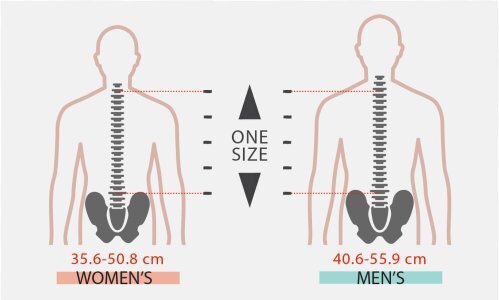
3 type: 1sz (1 size). More common in European and Scandinavian backpacks. Here, the back moves from the smallest XS to the tallest L. Universal fit, but does not take into account height-related features of the user. For the manufacturer, it's the cheapest and simplest option to produce and sell. It's also good for buying online, there's no chance of missing the size.
4 type: Fixed. More common in small-capacity backpacks 15-45 liters. The backpack either fits or doesn't.
Women's models have a smaller back size than men's.

Part 2
Preparing the backpack for fitting
We've figured out the sizes of backpacks, now let's look at the external signs of a proper fit. First of all, it's important to properly load the backpack, let's consider loading a 75L backpack. We put the sleeping bag at the bottom so that the backpack sits softly on the lower back and to simulate real use. Then we load it with weight, at Sport-Marathon I load it like this: heavy 7 kg and two 5 kg. Optimal for trying on for women is 13 kg, for men 17 kg. If necessary, I add more weight.
Next, be sure to tighten the side and front straps so that the weight of the backpack is as close to the back as possible.
It's best to lift the backpack by two points. By the shoulder strap and handle. If the backpack is heavy, first lift it onto the extended knee, then slide under the strap.
Proper fit of the backpack. Waist belt
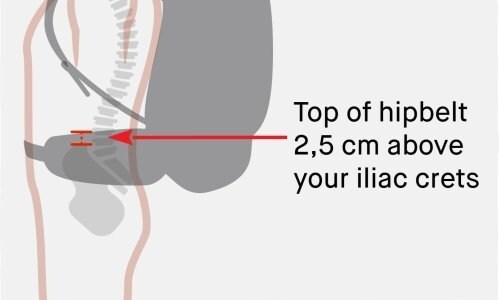
Allows you to carry the weight of the backpack on your hips, not your shoulders. The carrying capacity depends on how rigidly the waist is connected to the lattices of the backpack. For a proper fit, the waist should be positioned 2.5 cm above the iliac crest. This is an important point, feel it once how it should sit and in the future you will put it on correctly without even thinking about it.
If the waist is placed lower than necessary, the backpack will slide down because it's not held by the iliac crest, and the shoulder straps will go up too much and cause discomfort.
If the waist is placed higher than necessary, it will compress the soft tissues, internal organs, impair blood flow to the legs, and shift the straps down.
Shoulder straps
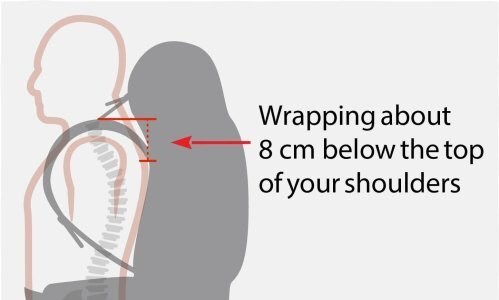
The straps should fit your shoulders completely, without excessive pressure, as the main weight remains on the waist. But they shouldn't hang in the air! The straps are most often anatomically shaped and with proper fit should follow the human anatomy. Otherwise, they can chafe the neck or armpits. From the fixation of the strap to the top of the shoulder blade, it should be about 8 cm as shown in the picture.
Chest strap
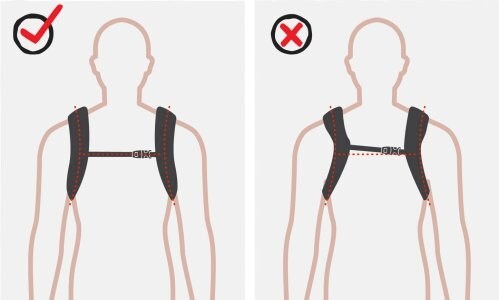
The strap is adjustable in height and fastens on the chest. It's needed to secure the shoulder straps on difficult sections of the route and to prevent them from spreading and pressing on the edges of the shoulders. At the same time, the strap shouldn't distort the shape of the shoulder straps or interfere with breathing as in the picture. By the location of the chest strap adjustment, you can easily understand if the size is chosen and adjusted correctly. Using the strap is optional, most often broad-shouldered, large hikers don't use it.
Anti-tilt
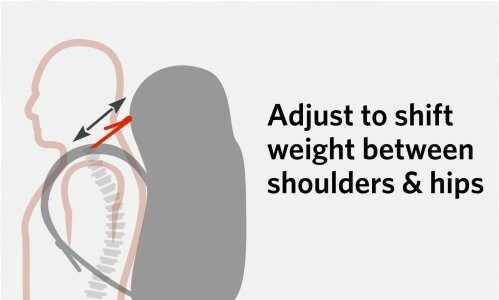
A critically important and often unused adjustment, connects the shoulder strap with the upper supporting structure of the backpack. By attracting the weight of the backpack to your center of gravity, providing stability and energy savings, and also allows you to transfer the weight from the upper body to the hips. The user will feel how the pressure of the weight from the iliac crest is evenly and comfortably distributed along the entire back. Don't tighten it mindlessly to the maximum, instead, gently pull it towards you, determining the best position.
Fine tuning
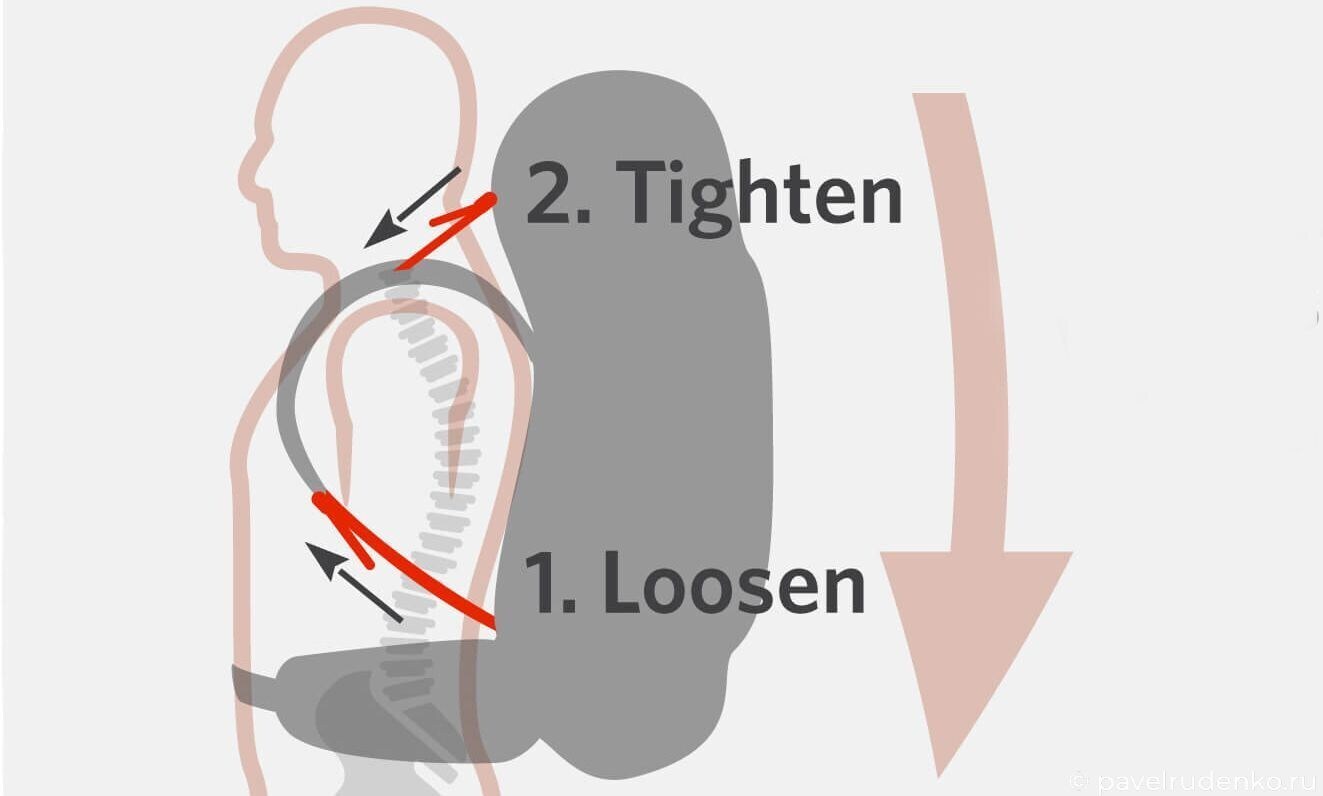
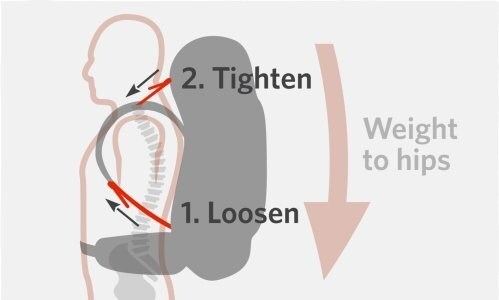
The main thing is done. Now fine-tuning the backpack. To remove the pressure from the shoulders, slightly loosen the shoulder straps, and then tighten the anti-tilt, this way you'll transfer more weight to the waist belt.
How it fits
After we've correctly chosen the size, adjusted the back, loaded it competently, put it on and adjusted it to ourselves. It's necessary to walk for 5-10 minutes, or even more, to feel how the backpack fits. It shouldn't press on the lower back, most often the problem is there. It's better to come for a fitting in hiking clothes, otherwise the belt or rivets from jeans will press. On the shoulder blades, where the shoulder straps begin. To understand if the backpack fits well, measuring one is impossible for a beginner, so be sure to try on 2-4 suitable backpacks and in comparison, it's much easier to understand which backpack will suit you. Ideally, there should be a feeling that it fits like a glove. This is your backpack, take it, go to the cashier))
Remember, the choice of a backpack is primarily about the fit, not the color, pockets, weight, and so on.
If you want to know more about backpacks, watch my video:

