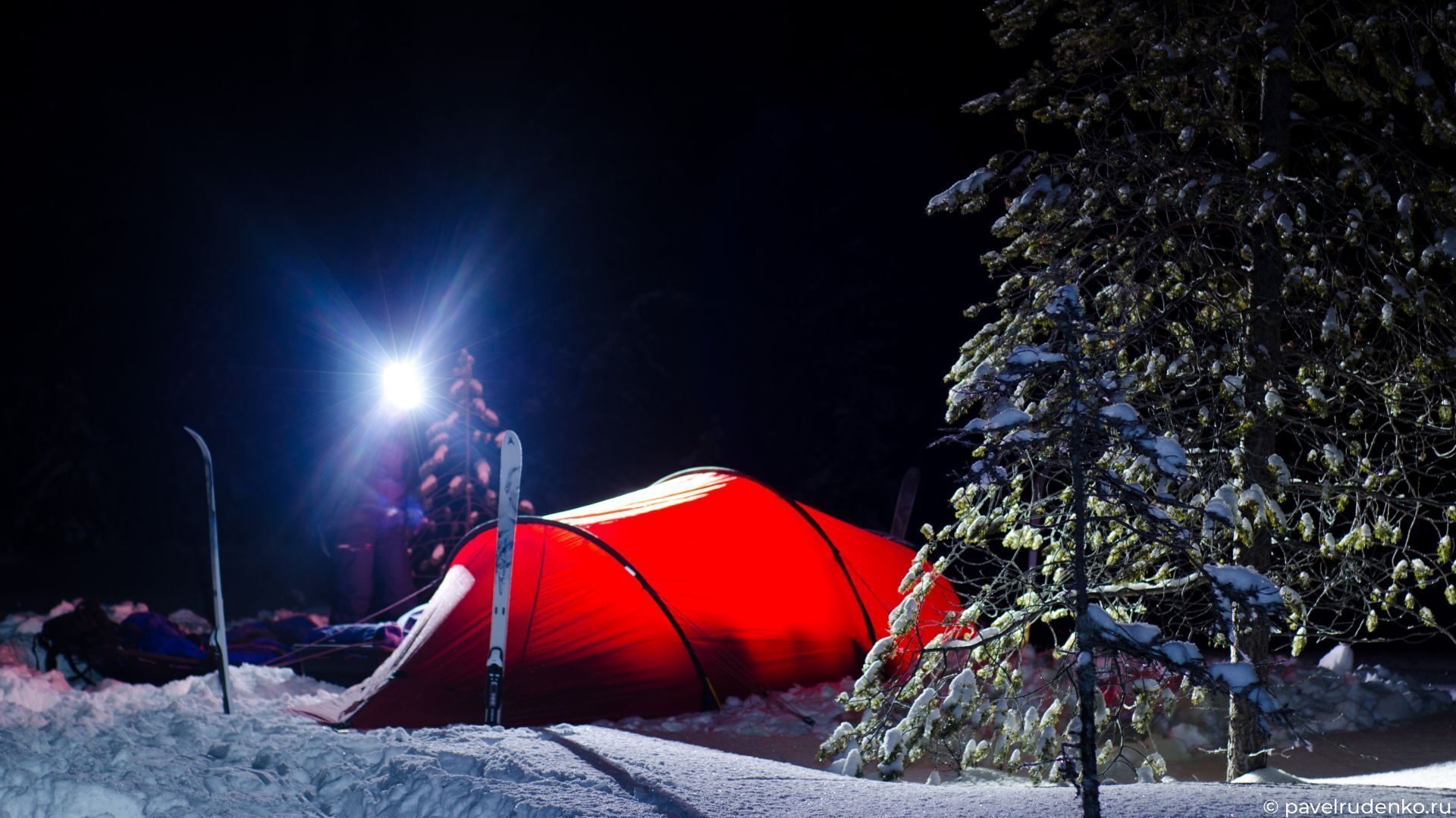
Hilleberg Nallo 2 GT Tent Review
I had the opportunity to test tents from different brands, of different price categories, ranging from Tramp and Decathlon to Fjallraven, Helsport and Hilleberg. In the process of using them, I noticed the maximum simplicity and convenience in all details именно at Hilleberg. These are the most durable and long-lasting tents with external arcs and a groundsheet.
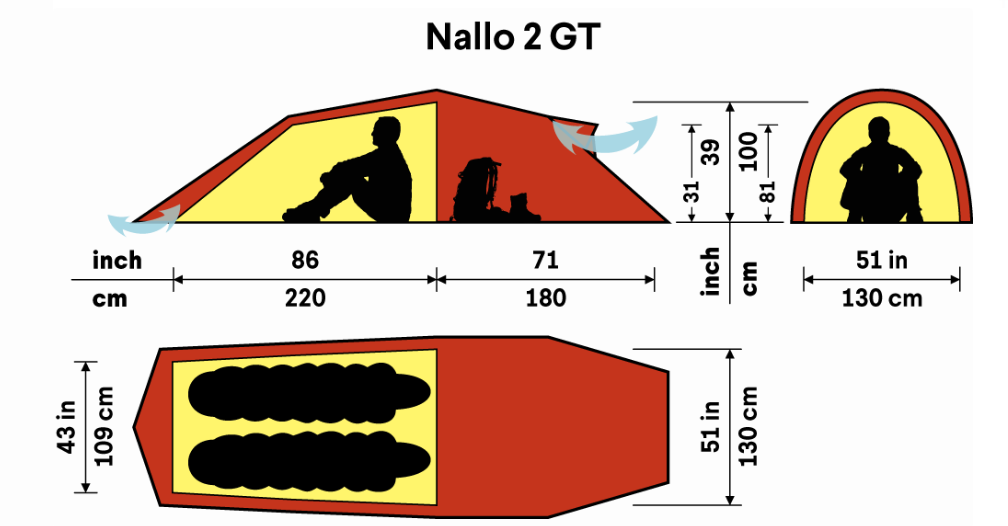
Dimensions
Personal experience of use
The tent has been on two winter hikes in the north. In February, in the Lovozero tundras and in March in the Koltzovo tundras and in a dozen VDAs. I have used Hilleberg Unna, Soulo models and am the owner of Enan and Kaitum 2 GT and enjoy using Hilleberg tents. The Nallo 2 GT is maximally attractive in terms of the ratio of durability and weight, especially in the model without a vestibule. But both versions have a significant disadvantage, which I will discuss further.
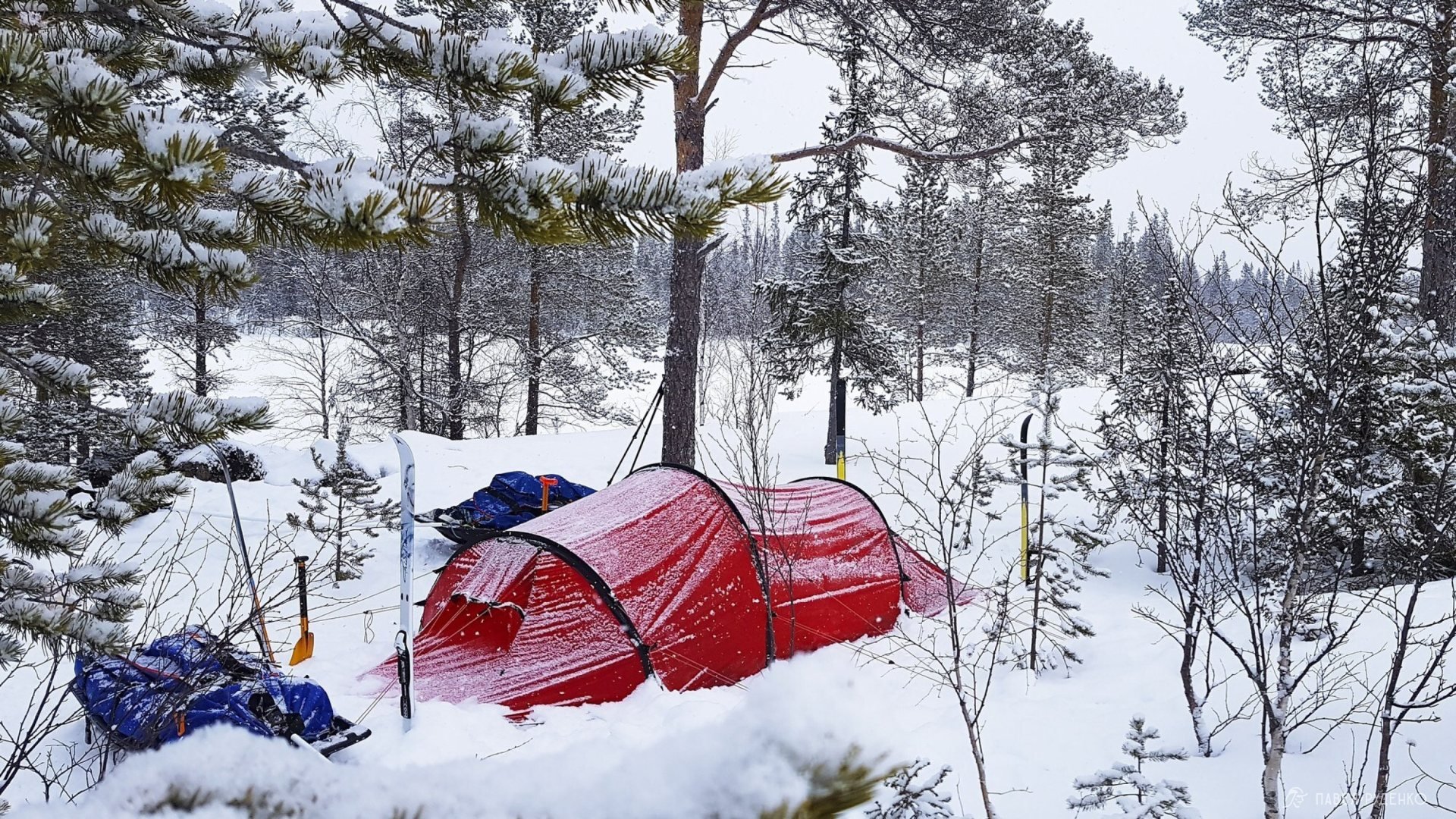
In some photographs, the tent is not stretched in the best possible way and the guy lines are not installed correctly due to the first experience of using a tunnel tent or the need to save time. Hilleberg tunnel tents have a special feature, they are not easy to set up at the first attempt and are much easier to set up than semi-spheres after several hikes.

Purpose of the tent
Hilleberg Nallo 2 GT is a 4-season and the lightest, two-person tent with a vestibule at Hilleberg 2.9 kg, Nallo 2 version without a vestibule 2.4 kg. In terms of durability, in my opinion, it is suitable for everything except the North and South Poles, the windiest areas of Patagonia and altitudes over 7,000 meters. For these places, it is better to use Black Label, this is a more durable series of Hilleberg tents.
Black Label may also be relevant for increasing the service life of the tent, the materials are thicker, the impregnation is greater, and the internal volume is more spacious.
Nallo 2 GT is also suitable for summer hikes, but in northern areas or highlands. Crimea or the Lycian Trail in Turkey in the summer, this is not something that will work perfectly. The tent has a groundsheet and insufficient ventilation, which is why the air under the tent will not be ventilated sufficiently and will heat up. If your hikes are diverse, then ideally have several tents for different tasks.
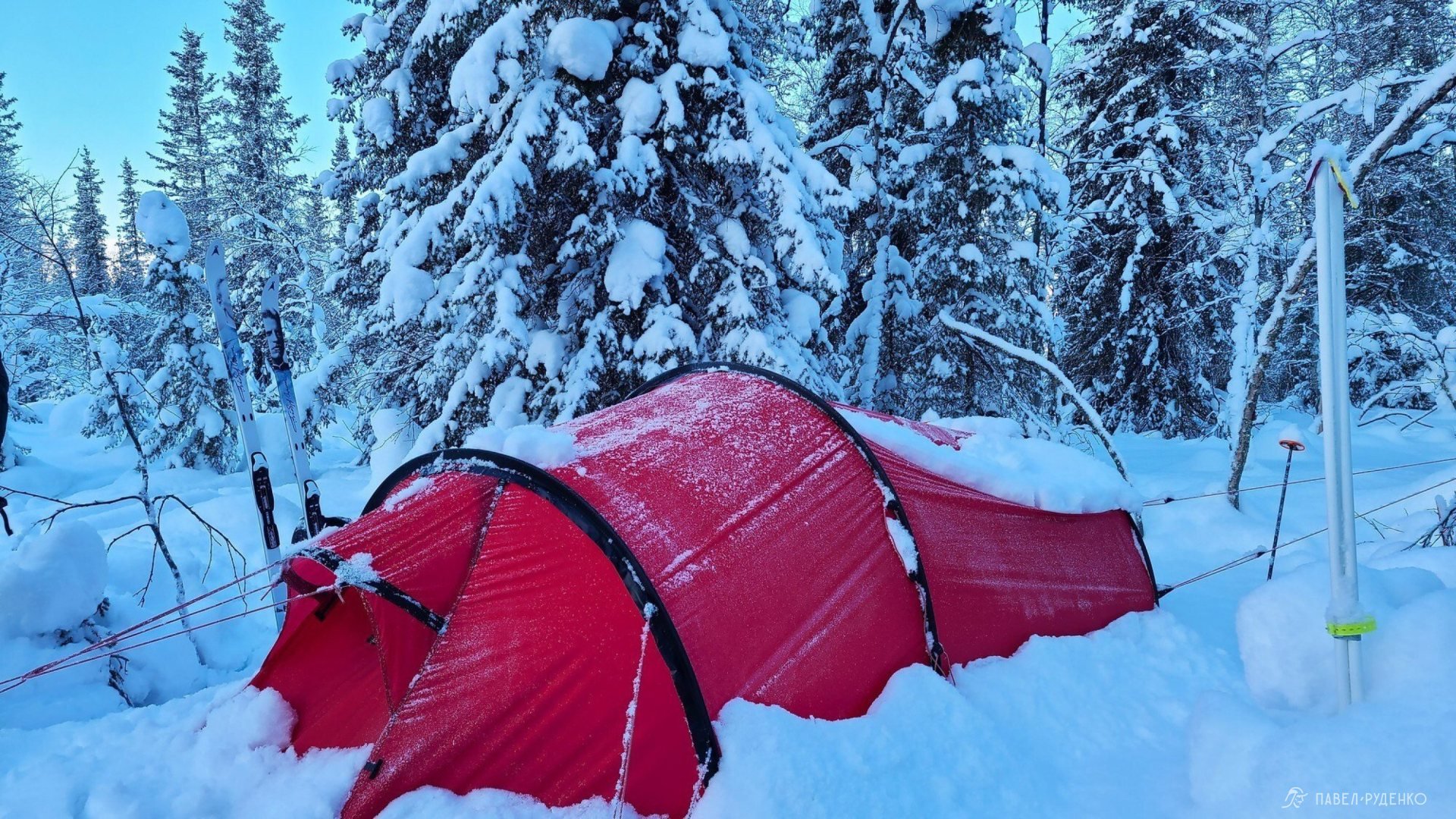
GT Vestibule
GT means the version with a large vestibule. It can only be realized in the form of a tunnel tent design. Therefore, some semi-spheres use this solution, obtaining a hybrid design, for example: Hilleberg Saitaris or Helsport Svalbard. A large vestibule allows you to cook inside and store things, it is convenient in case of rain, wind, snow and cold. In winter, I dig a hole in the vestibule to sit more comfortably and do everyday activities. For hikes in small groups of 1-6 people, this is super convenient. In large groups, cooking usually happens outside the tent and the relevance of the vestibule is somewhat lost.

On a hike in the Lovozero tundras, I put all the food and public gear in the Nallo 2 GT vestibule, since there was only enough space in the BA Copper spur Expedition 2 and Ferrino Piller 2 for necessary things and shoes. The large volume allows you to repair skis inside the tent, which is critical in a blizzard in open space. It is convenient for rafting, bike tourism, motorcycle travel and anywhere where there is a lot of gear.

Hilleberg Nallo without a vestibule
This version has an incredible weight-to-reliability ratio. But the model without a vestibule has a drawback: the entrance is in the center, not on the side. This is not convenient, you have to reach for the ground inside the vestibule to open or close the zipper. It does not allow you to install a guy line from the upper ventilation so that it does not interfere when entering and exiting the tent.

Do not forget about good сквозной ventilation. People die every year from substances released during cooking in the tent vestibule, it happens on average in 5 minutes with poor ventilation, a person just falls asleep, probably thinking that he is just tired. There is also a danger if the burner behaves unstably and can set fire to the tent.

Ventilation
There are only two ventilation points:
- A window at the end of the vestibule. Opens wide, and the visor has a wire that prevents it from collapsing under snow and wind load. The ventilation window itself is done impeccably.
- On the back side, at the bottom of the tent there is a zipper that allows you to lift the tent and it works in open areas. Air from below gets under the tent, pushing out warm and moist fumes through the upper ventilation on the vestibule.
If you are standing in tall grass, or dug in by snow or in a calm, this is not enough. There is a strong lack of additional ventilation from the end at the back and another one on the vestibule. Sometimes you can leave the small entrance to the vestibule open, significantly increasing ventilation, but this is not always possible. It is for this reason that I look more at the Fjallraven Abisko shape 2 model and now go with the Helsport Lofoten SL 2.

Tunnel tent features
I prefer tunnel tents to semi-spheres for the following reasons:
- Ease of installation. When you first deal with a tunnel tent and have not yet learned the subtleties of installation, it seems that the installation is complicated. After all, you cannot carry the tent like a semi-sphere, the dimensions of the tent are not immediately clear, you may not fit in the chosen place. After several hikes, everything changes and you understand the whole point of simplicity)) It's easy to install in the wind, assembling all three arcs on the ground, fixing one side of the end and at the last moment pull against the wind and fix the second end. If there is no wind, you can intentionally install it crookedly, going around a stone or placing a bush inside the vestibule.
- Better weight/living space/wind resistance ratio. A tunnel tent, all other things being equal, is always lighter than a semi-sphere. In my hikes, I want a margin of safety.


Arcs
The Yellow and Red lines use 9 mm DAC Featherlite NSL arcs. This is the top version of the arcs of the South Korean brand DAC. They provide maximum reliability. In models with such arcs, I take a minimal repair kit, just a sleeve.
The arcs are pre-bent, done specially at the bending points to reduce pressure and increase the service life of the arc.

The arcs are fixed in a pocket of durable fabric on the outside of the tent, at the end there is a pocket with a plug. T. e. the installation takes place on one side and you do not need to run to the other side of the tent.
Guy lines and wind resistance
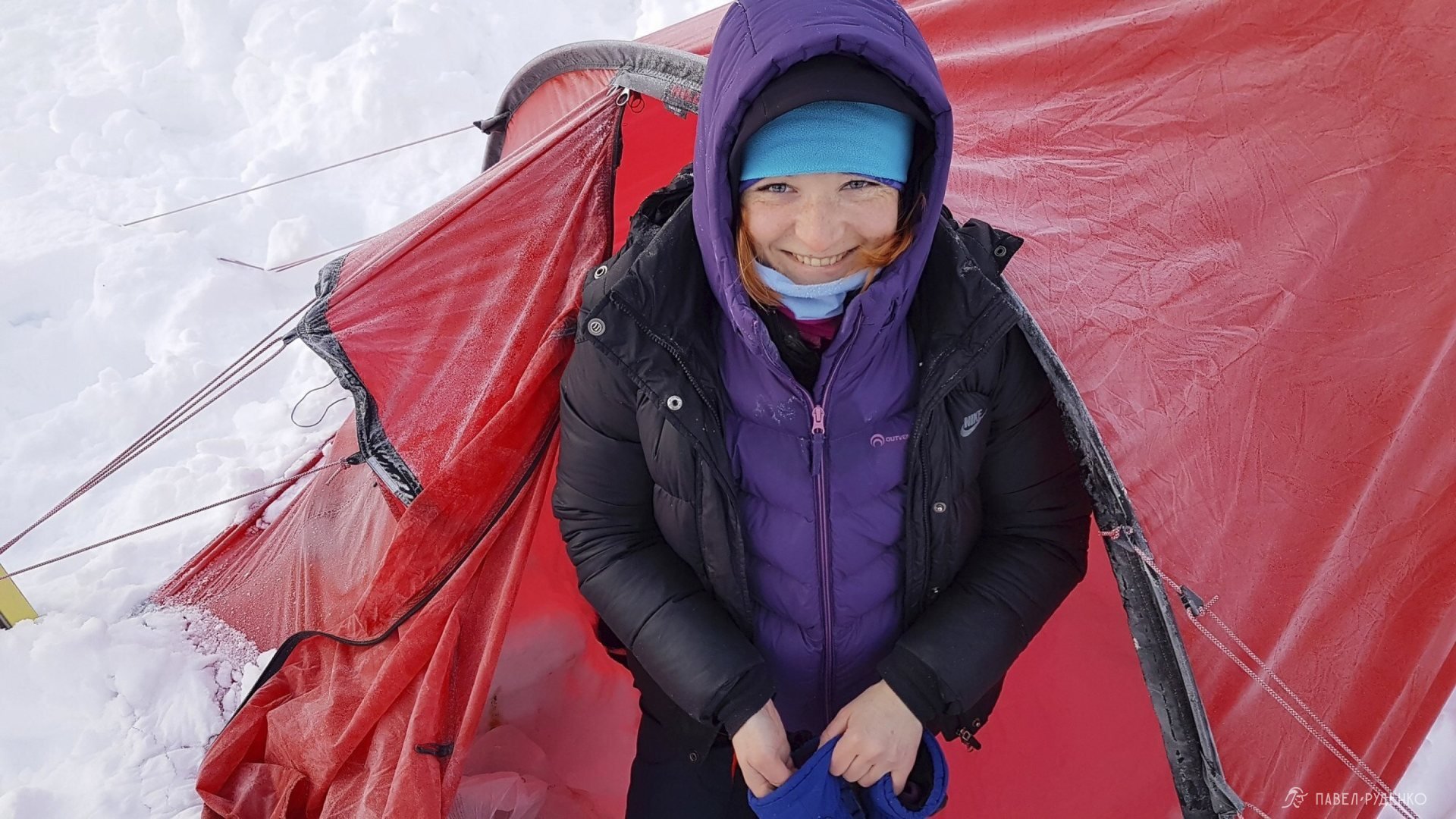
All Hilleberg tents use double guy lines that are attached to the pocket of the arcs. The fixation on the tent is located low, which greatly increases wind resistance. Vectran and polyester repp shoelaces, correctly intertwined, so the braid does not separate from the core. These are not dyneema, but they almost do not absorb water and practically do not stretch. The thickness of the guy lines is 3 mm, which makes it easy to interact with the guy line in mittens and gloves.

Zip
YKK zippers are used. Everything is correctly tailored and the zippers run perfectly. Clean them from sand and dirt, then excellent work will be preserved and they will serve faithfully.
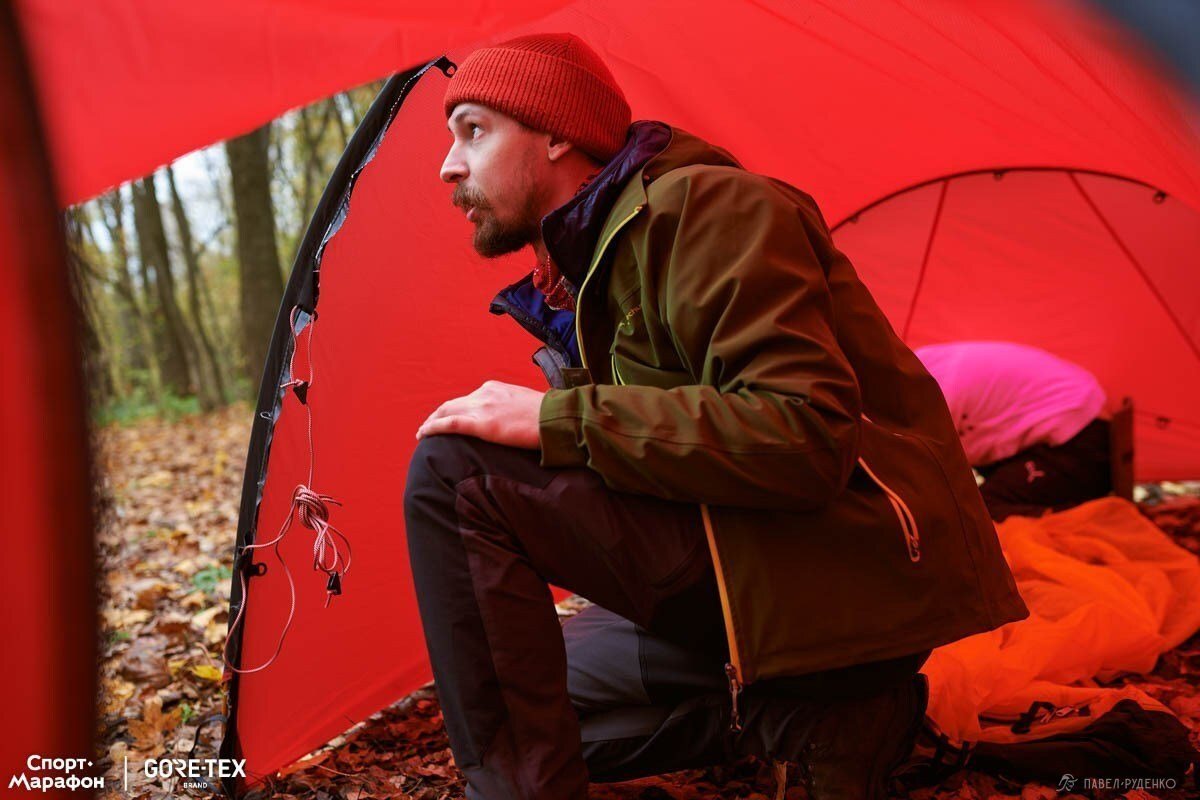
Canopy
Kerlon 1200, 30 D Ripstop Nylon 66 fabric, weight 49 g/m2
tear strength of at least 12 kg according to ISO 13937-4, water resistance 5000 mm/49 kPa according to ISO 811. Covered with 3 layers of 100% silicone on both sides and treated with UV protection during dyeing with natural dyes and coating.
The Nylon 66 used is one of the strongest and most expensive fabrics, together with three layers of silicone, gives incredible tear strength of at least 12 kg, this allows you to have a very large margin of safety. As the description says: it is better to have increased strength and not need it, than not to have it and need it. If a branch falls or you зацепите a cat on the tent, the chance that this will not lead to complete failure of the tent is much lower than with ordinary tents.

The fabric is elastic and after a puncture, rubbing the hole with your fingers completely disappears. Follow me on social media to see more about tents and gear))
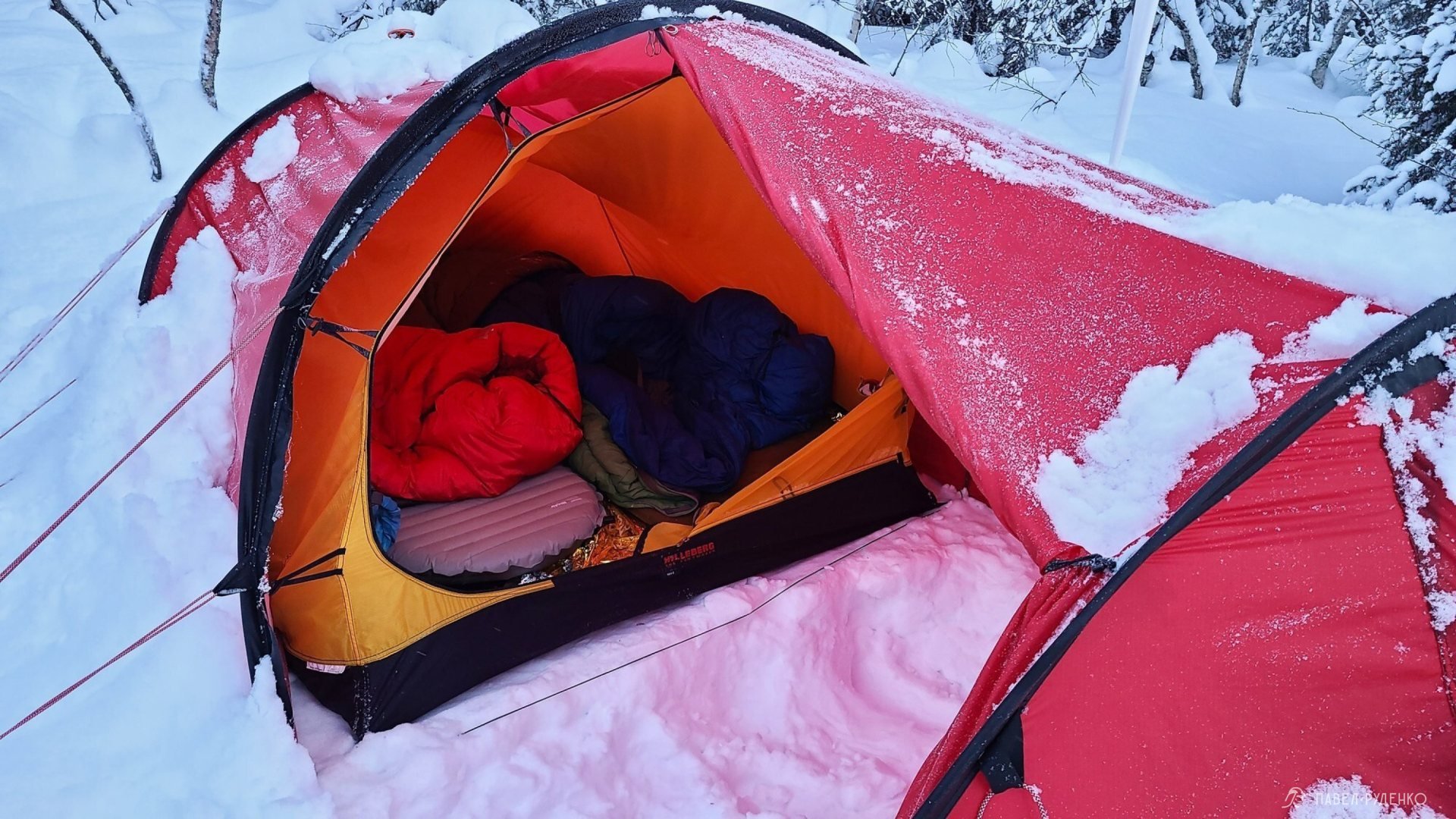
Floor
70 D, Nylon, PU with triple coating, weighing 90 g/m2, water resistance 15000 mm according to standard 147 kPa ISO 811, with high resistance to punctures and abrasion.
Polyurethane treatment is more resistant to abrasion and more durable именно on the bottom of the tent, although it is heavier, Hilleberg prefers reliability and a long service life of the tent. A very thick layer of 15.000mm is not needed for the tent not to let water through. It is needed only for the tent not to let water through after dozens of years, while maintaining a very light weight of 2.9 kg.

Conclusion
The principle of the company's founder, Mr. Bo, “solving specific problems rather than creating something new,” sounds like a simple and meaningless slogan, but in reality it is ingenious. It's an art among tents. Precise, minimalistic solutions. They have come closer to the ideal more than others.
The production is located in Estonia. All components, from the zipper pull to the flysheet, are ordered in advance, well before the tent is created, tested and undergo proper quality control. Each tent is checked before shipment, fully assembled, the inner part is attached to the flysheet, the arches, the correct angle of the guy line, zipper tension, and seams are checked. Afterwards, it is assembled again and undergoes another quality control. The name and surname of the person responsible for the tent is sewn onto the tent. This is a handcrafted assembly of the highest class that anyone in the world of tourism can get.

