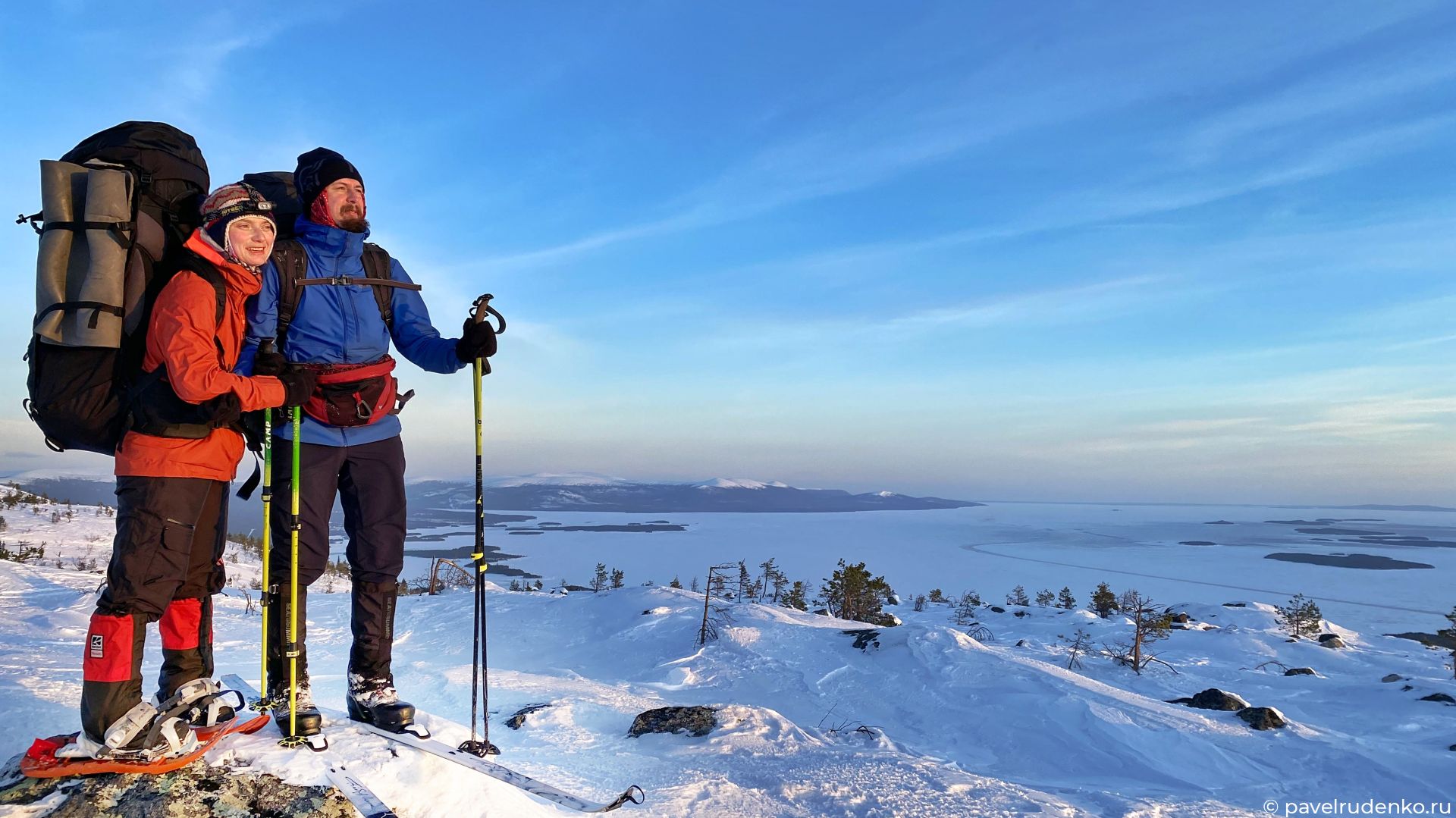
The main feature in winter is the snow-covered terrain. It can be very fluffy and deep, making it impossible to walk, 100 meters of trudging through waist-deep snow and you're out of strength.
To move in snowy conditions without superhuman effort, you need touring skis and snowshoes. To determine where skis work better and where snowshoes are better, I went on hikes with them.
Briefly and succinctly, I will analyze the pros and cons of skis and snowshoes.
Snowshoes
Pros
- Snowshoes are easier and faster to master for any user.
- They can be used with any footwear.
- It's easy to move on average and difficult terrain in snowshoes, they are stable on steep descents, easier to overcome fallen trees, and more mobile in confined spaces.
- Most snowshoes have a heel support to relieve muscle strain on the ascent.
- They are compact in transportation, with an average length of 35-60 cm and weight of 1.5 - 2.5 kg. No special case is needed and they can be easily transported in any vehicle.
- Snowshoes are on average cheaper, and in addition, only poles are needed, and regular trekking poles will do.

Cons
- Moving in snowshoes is slower than on skis, especially on straight sections and descents. They allow you to cover short distances.
- They are a means of transportation, do not allow you to enjoy the process as much as skis.
- In most conditions, they require more effort to move in the snow, as the area of snowshoes is smaller than that of skis and the movement itself is more labor-intensive.


I'm leading a group on a one-day hike through Losiny Island. It's really fun to climb around the snow-covered fallen trees.
Due to their simplicity in learning, low cost, starting from 5,000 rubles, and non-demanding equipment, they are perfect for beginners, physically unprepared users, and simple walks. That's why commercial tours often include hikes using snowshoes.
Due to their low price and compactness, snowshoes are often taken as an emergency or additional item. For example, on ski hikes in case the skis break. Snowmobilers take them for emergency situations if something happens to the snowmobile. Fishermen use them to cover short distances in the snow to get to the fishing spot. Climbers use snowshoes as approach equipment for the route, etc.
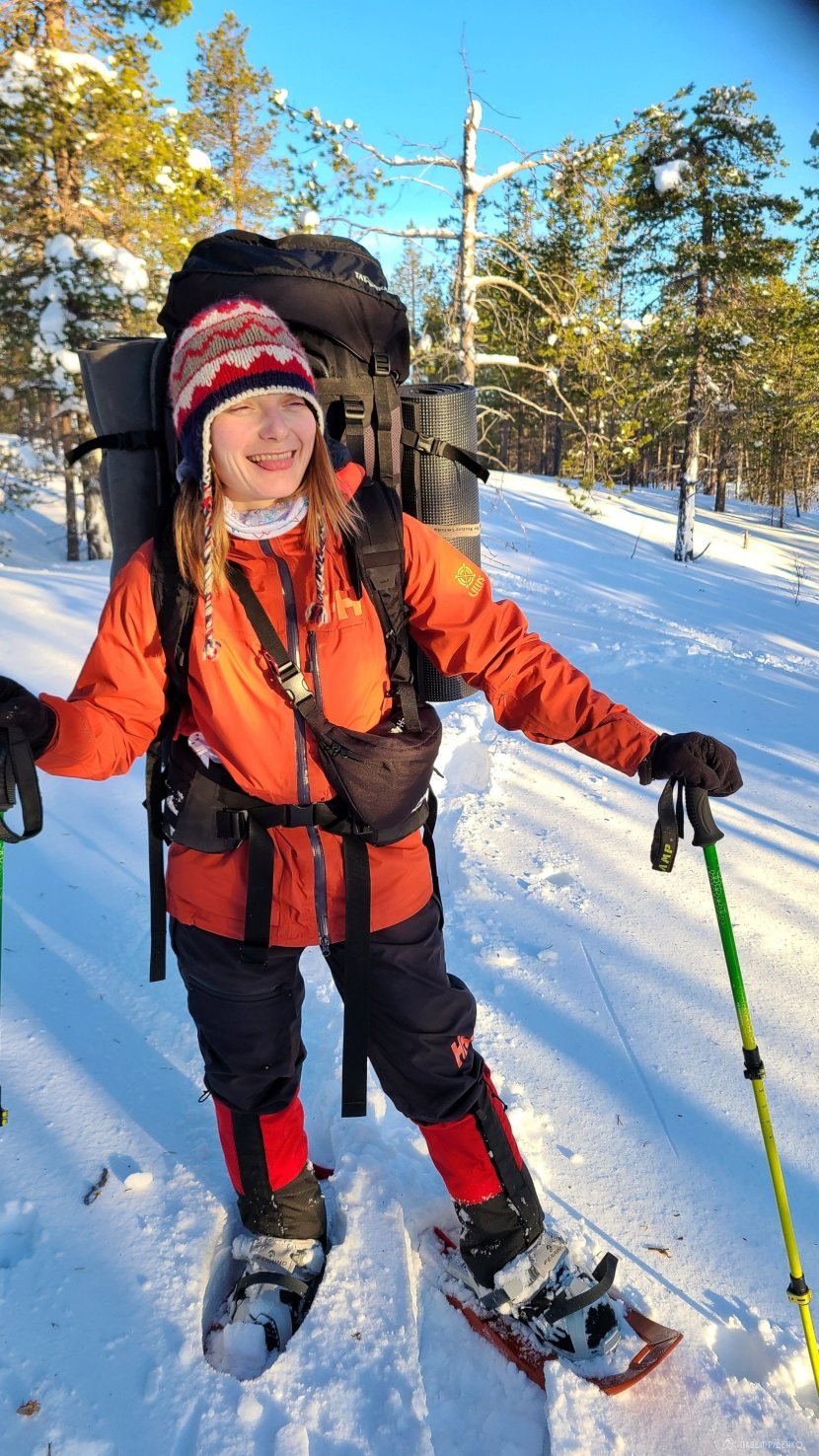
For commercial hikes, participants know for sure that even without experience in winter hikes, they can walk in snowshoes, and for the tour company, it's an acceptable investment in gear. Ideal for videographers and photographers, for example, for shooting videos: "How to choose touring skis", "How to set up a tent on a winter hike", "7 rules for winter camping".
It turns out that it's easier to plan a route using snowshoes, as even an unprepared group can overcome most obstacles such as fallen trees, a steep climb up a mountain, unlike skis, which are much more demanding on the participant and route planning. The main condition is to plan for a low kilometerage on the route.

Skis
Pros:
- Fast movement on easy terrain, especially on straight, wind-blown sections and descents.
- Easier to move in deep snow
- Ability to cover large areas
- On touring skis, you walk, not ride, but the movement itself brings aesthetic pleasure.
- Ability to comfortably pull a sled in deep snow.
- Adaptable due to the notch and different sizes and materials of the camus.
- Suitable as cardio exercise, a substitute for running, and a more diverse experience compared to cross-country skis.

Cons:
- The technique of movement is more complicated, usually it takes 3-5 days to stand confidently enough.
- You fall more, it's harder to get up.
- The cost of the set, skis, bindings, shoes, poles, is more expensive than a set of snowshoes.
Shooting for the Sport-Marathon store.

Skis are a great option for domestic tourism, allowing you to hike long routes, move quickly, and enjoy the movement and descents. Skis are very aesthetically pleasing to use. By choosing the right model, bindings, boot, length, and material of the camus, notches, and wax, you can adapt touring skis to external conditions.
They are difficult to master; as a rule, it will take 2, 3 or even more hikes for more or less stable movement. The more expensive the set, the better it works. For example, Besked skis with combat bindings will be noticeably less simple and reliable than Fisher with NNN BC bindings. And a rope to prevent slipping is less convenient than a special camus.
I love winter hikes; if you're planning to go on a hike, join one of the hikes on the Kola Peninsula.
Hike schedule!

