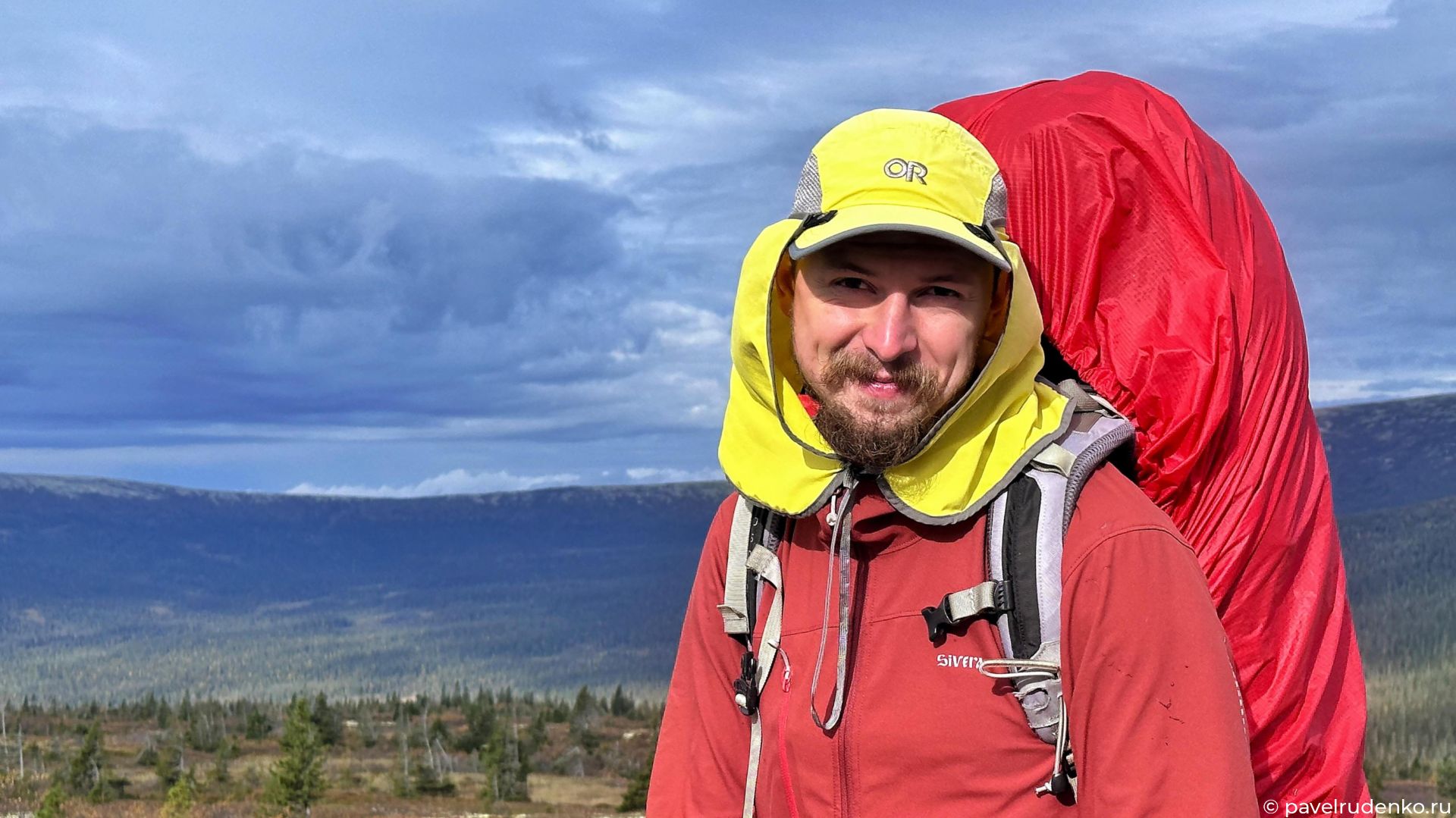
1. To guide. I full team consists of 8–12 participants, there is a tailing guide so that in thick fog in the tundra, in the northern taiga or over the ridge you do not get lost and are under supervision. If it is difficult for you and you are at the end of the group, I will be calm knowing that you will be taken care of and supported at any moment. A small team is limited to 12 participants, thanks to this, cozy communication and mobility on the route are maintained. If necessary, communication is established between the first and second guides via radio. My principle is not to stretch the group.
2. Overnight stay in the hotel on the first and last day. This allows you to choose the most convenient and pleasant ticket on the day of arrival. On the day of arrival, we will hold a team meeting, safety instructions, equipment check, discuss the trekking plan and pack food. After the trek, we will spend the night in the same hotel, so you can leave your city things in the storage room. It is convenient: you do not have to look for a hotel on your own, you can relax before and after the trek, take a shower, see local attractions.
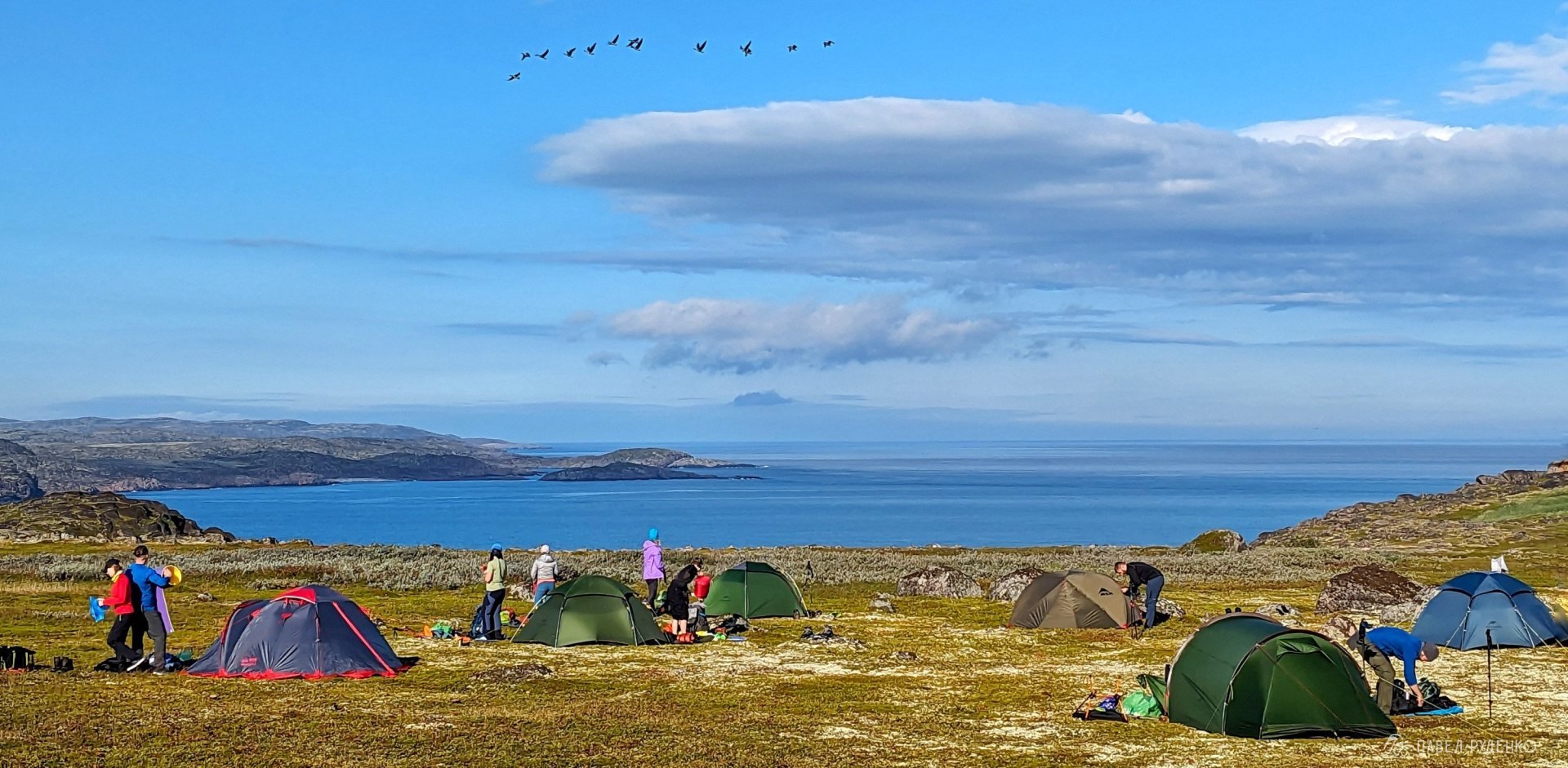
3. Unique routes. The uniqueness lies in the fact that the routes are not widely known and have been explored personally by me. Most of them pass along the coast of the Arctic Barents and White Seas, in mountain tundra conditions without trails. This kind of nature exists only here, these are wild places incredible in their atmosphere and endless space. From the shore we can meet a striped whale, a seal popping up to look at our camp, or a bear passing by. All overnight stays are in a tent, and we will not meet people until our return. One of the treks is distinguished by its location, being in the heart of the Kola North — these are the Arctic Khibiny Mountains. Quirky plateau-like peaks and narrow gorges appeared here due to the massive influence of the glacial epoch 12,000 years ago. Thawing, the glacier up to 2 km high retreated to the northwest, leaving behind landscapes of the north unlike any other, carved by ice.
4. History of places, nature and animals. I love the Kola North, I explore it annually on new routes, on the pages of books and historical notes. I will tell you about the history of the place, expeditions, Russian colonization and the Sami. On the trek, we will study old photographs and maps of the area, nature and animals. And to get a better look at the polar wildlife, I will give you a monocular, lightweight and compact, it will allow you to observe the white-tailed eagle, fox or seal. Love is also shown in good deeds, on one of the routes we will make a mountain library on our own.
5. No duties. I prepare breakfast, lunch and dinner myself, as I understand that it may be uncomfortable for you to cook an unfamiliar dish for the team in unusual conditions on a burner. At the same time, if you want to help, I will be glad. Our common task is to set up the camp, all preparations for meals, and collecting firewood for the fire.
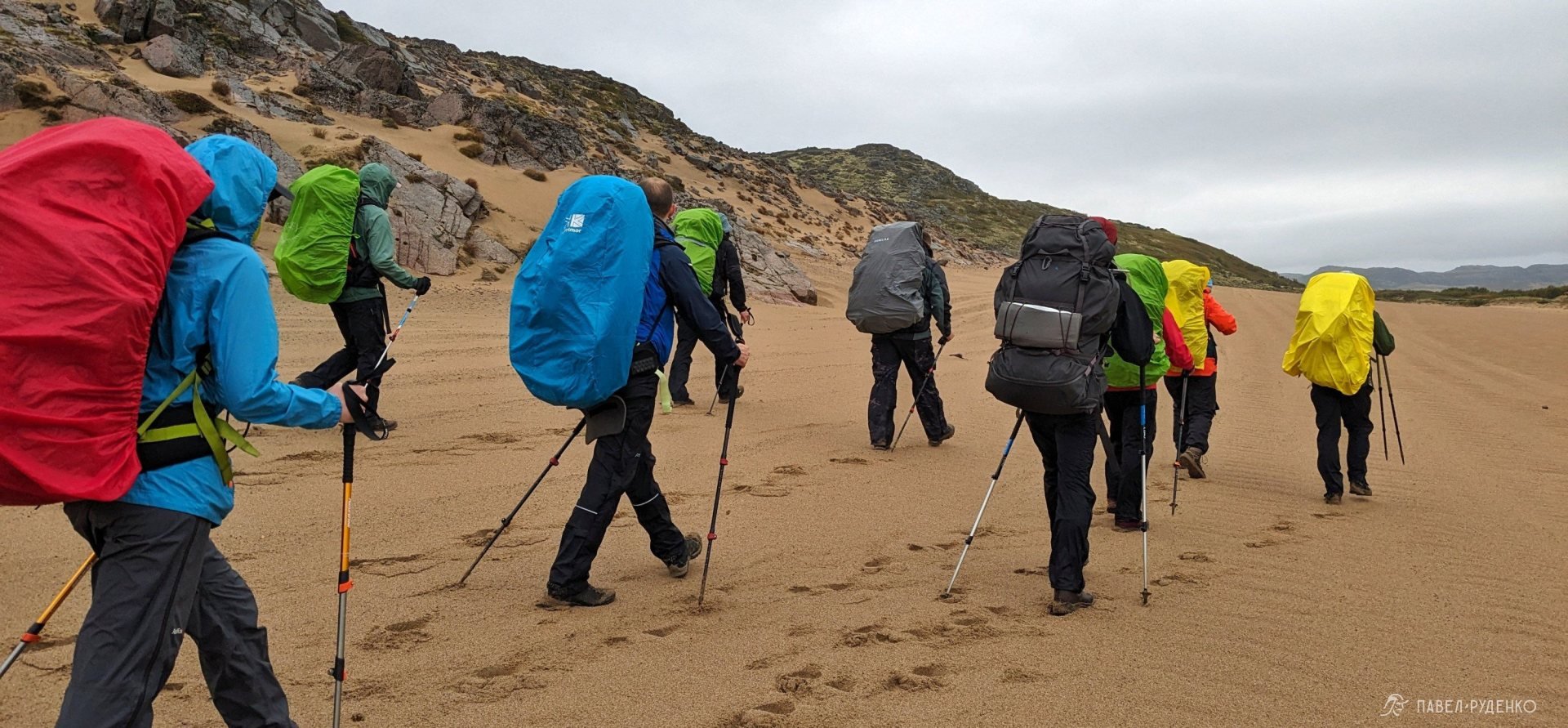
6. Rules on the route. We do not turn on music in the column, preserving the atmosphere of wild nature. We switch phones to airplane or silent mode so that everyone can rest from the sounds of smartphones. We do not drink alcohol on the trek. We do not discuss conflicting topics of religion and politics. Our common goal is to have a great time, become a team and make friends.
7. Sports insurance. Each trek is a trip to the wilderness, where there are no civilization and roads. Everything, from equipment to the route, is thought out and aimed at the highest level of safety. That is why I take out sports insurance for the duration of the trek for each participant.
8. Safety. On the trek, I maintain daily satellite communication with the coordinator to monitor the weather via Iridium. The trek is registered with the Ministry of Emergency Situations. There is a navigator, radio station and signal rockets. Each participant is given a rescue blanket and a personal flare. Before the trek, I help with preparation, and before starting the route, a safety briefing is conducted.
9. Professional consultation on экипировке and gear, high-quality public gear. I am professionally engaged in tourist equipment, so I will tell you what to buy, where, give recommendations on fitting and discounts in tourist stores. I advocate for reasonable equipment lightening without losing comfort and safety. The lighter the backpack, the more enjoyable it is to walk. This leaves more strength to admire the nature. We will discuss all the elements of the equipment, if you do not have a tent or it does not suit the windy conditions of the tundra, I will issue a wind-resistant 2-person tent weighing only 2.3 kg. We cook food on gasoline burners, they are more powerful than gas burners, and the fuel is lighter, which allows you to reduce the weight of each participant's backpack.
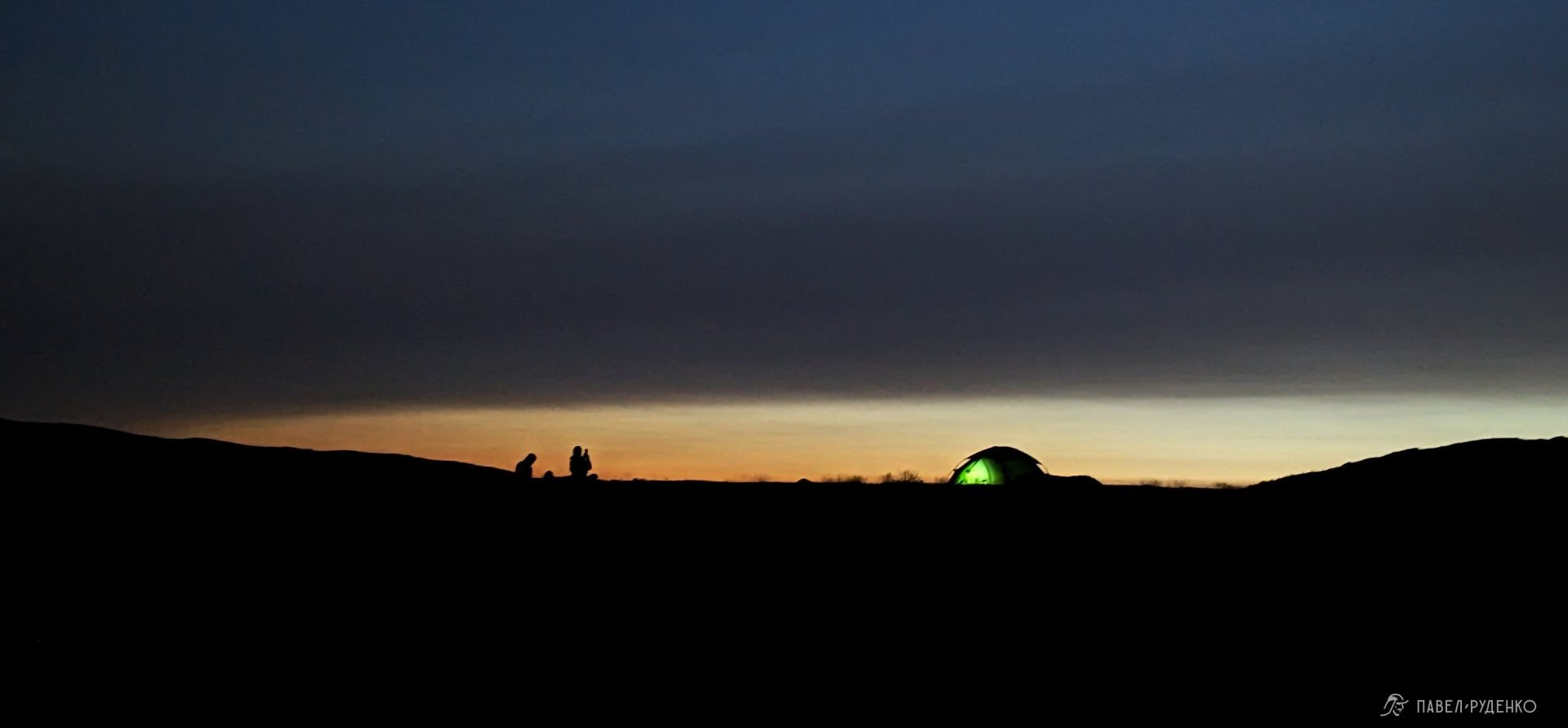
10. The route is always reconnoitered. You will never go on a trek that I have not previously completed. Preliminary reconnaissance and planning of each route takes a lot of time, but this is the principle. It allows us to ensure safety, the absence of surprises and guarantees that we will see the most beautiful places in the north. Choosing the optimal path in the mountain tundra is a special mixture of skill and aesthetics: maneuvering past lowland and upland bogs, searching for a ford in the most convenient places at low tide, overnight stays in incredibly beautiful bays, by lakes and on hills, so that the beauty of the polar region surrounds you 100% of the time and lingers in your memory for a long time.
11. Delicious and high-quality food. We are in one of the most beautiful places on Earth, the food should complement the surroundings, so I cook simple but varied and delicious food: lentil soup with tomatoes and reindeer meat, funchose with shrimp or soba with rabbit meat. All this with natural spices and herbal tea. I know the secret of the correct layout so as not to go hungry, while maintaining a low overall weight and volume. We will have a nutritious snack on the move. Food is pre-weighed, packed and vacuum sealed. And after the route, we usually go to a restaurant to enjoy Arctic cuisine and celebrate our return.

