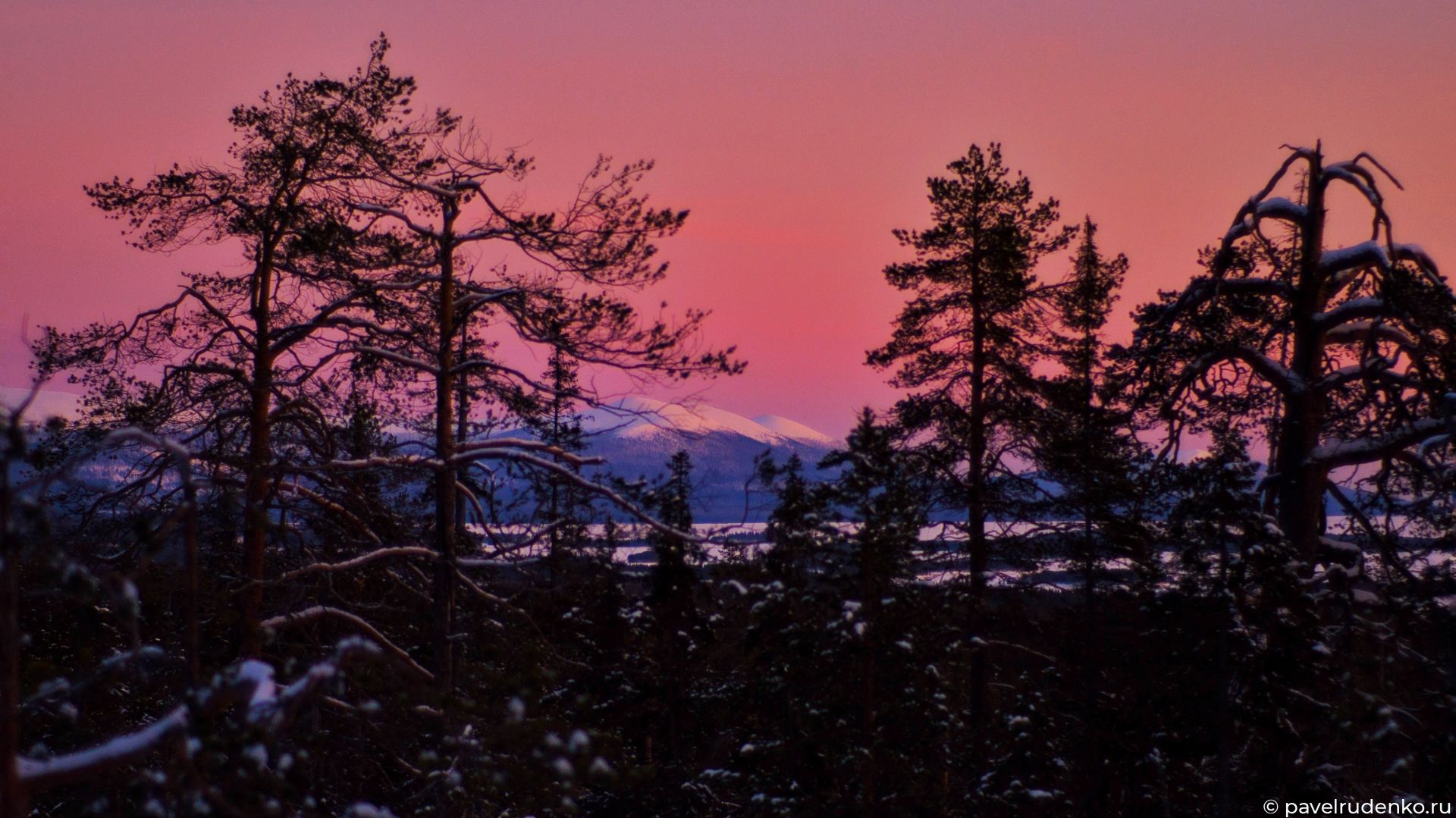
Russian Lapland: why we ski across the White Sea to the White Hills
The southern part of the Kola Peninsula, the Kandalaksha coast, is incredibly rich in beauty per unit of time.
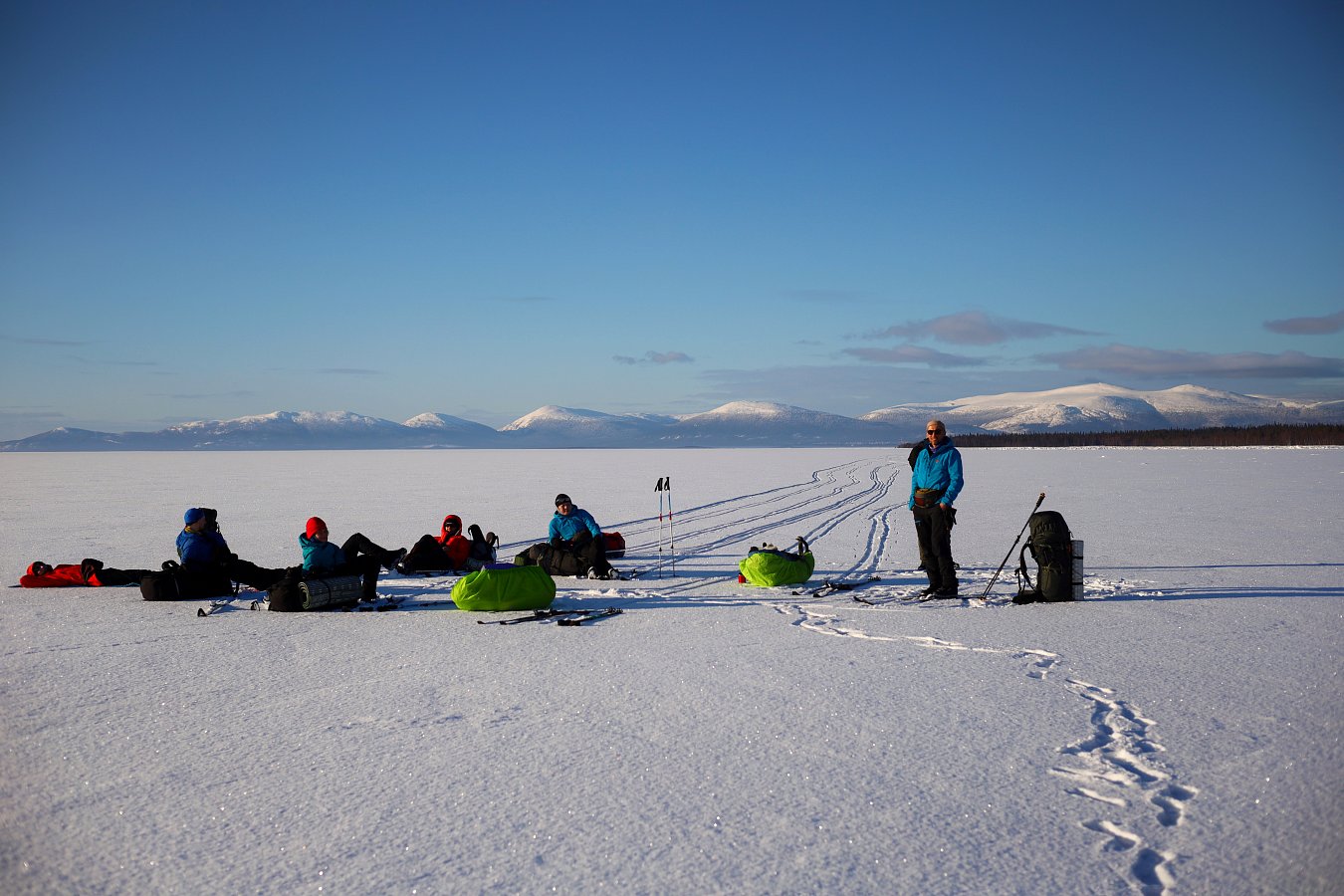
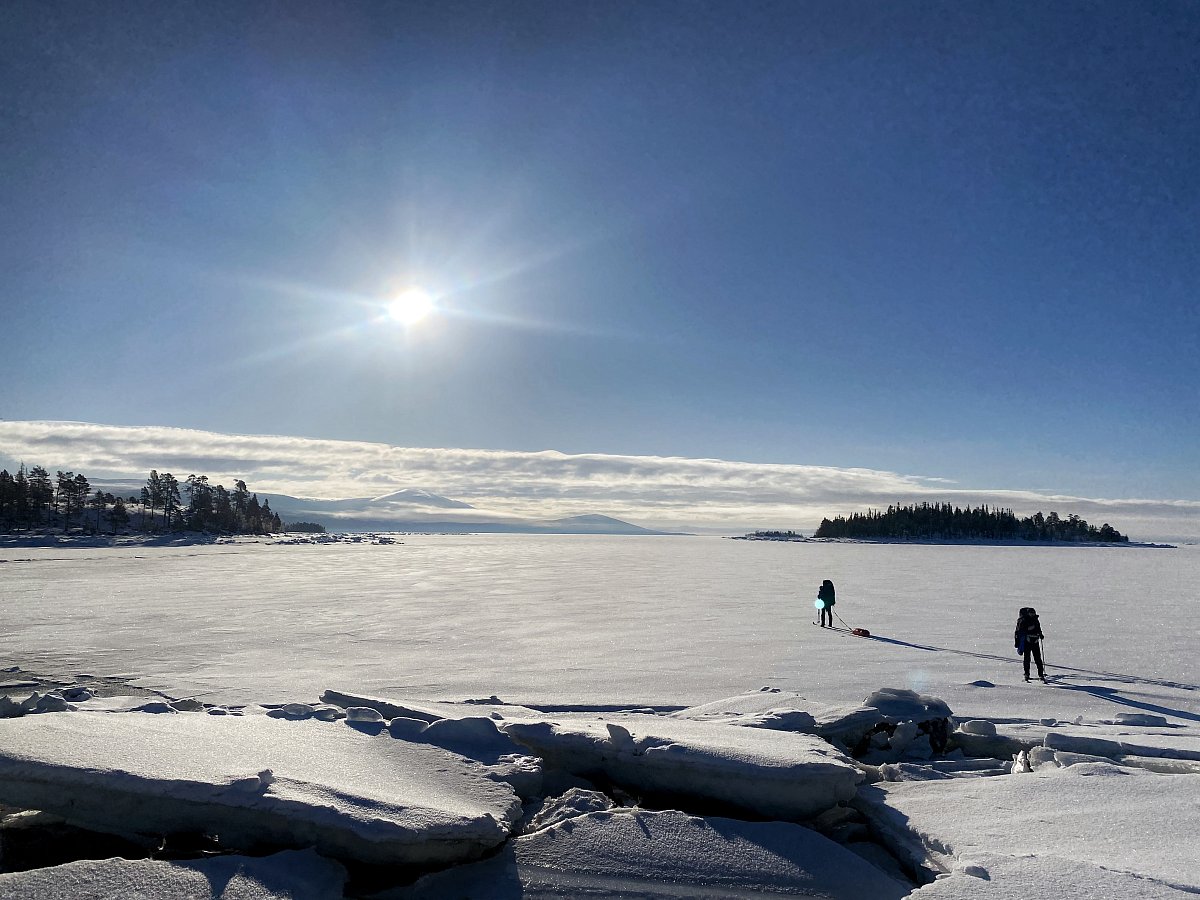
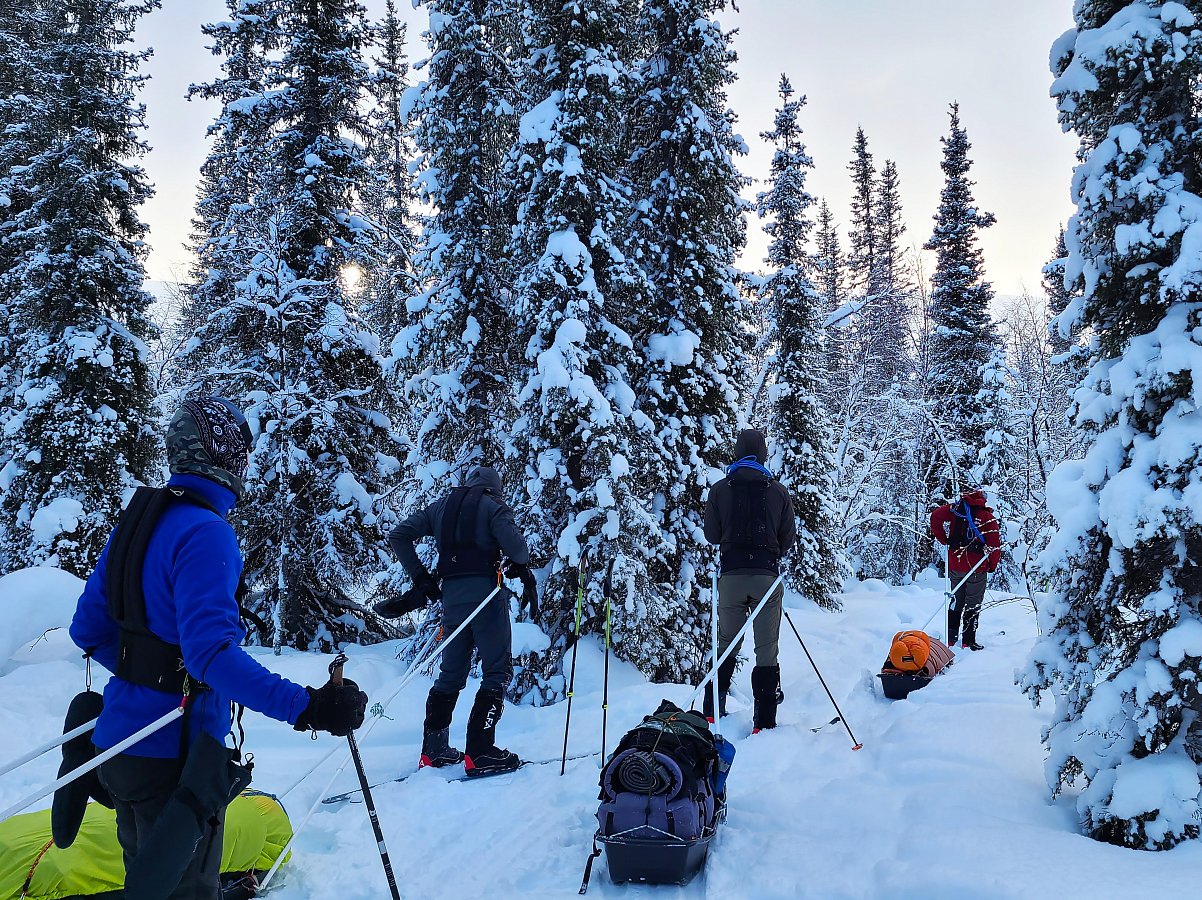
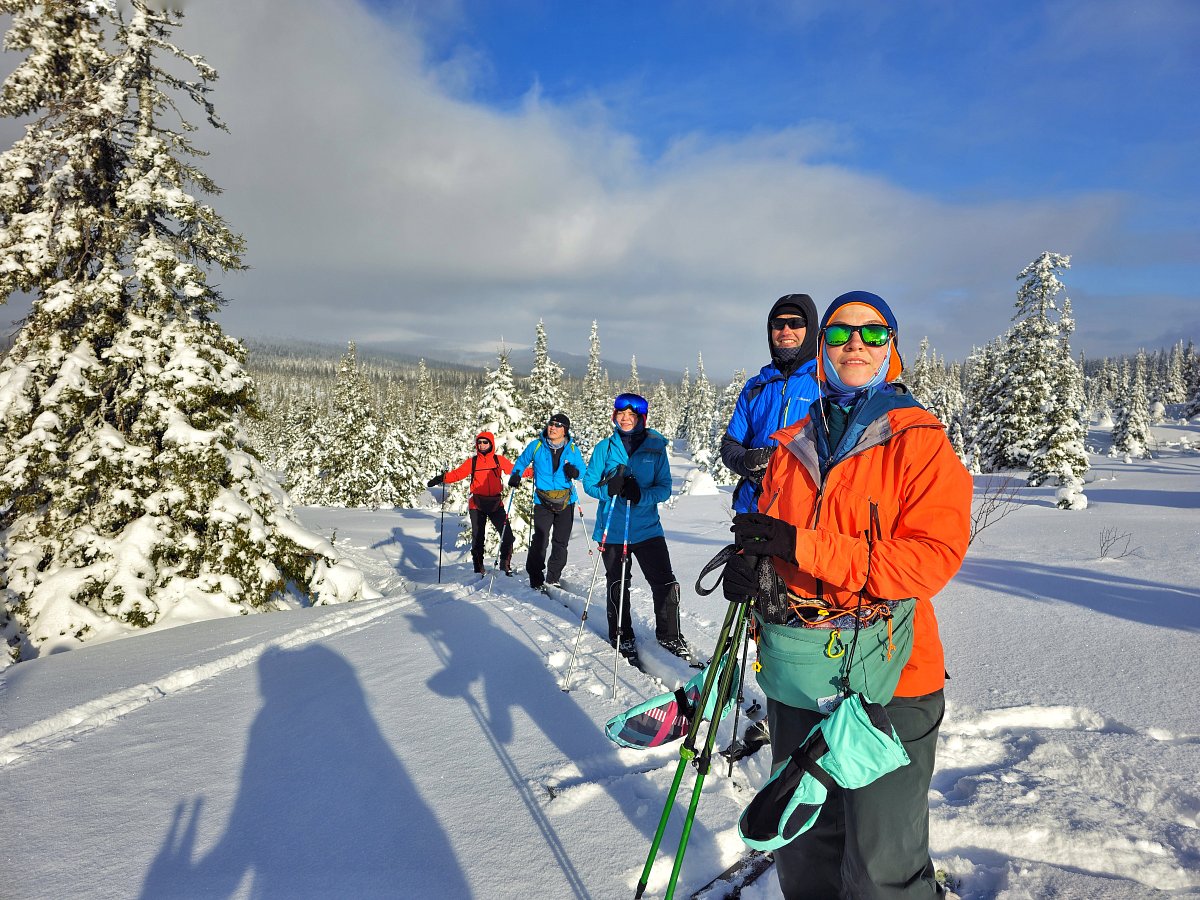
In 5 days of trekking, you will pass directly across the frozen ice of the White Sea, through the northern spruce taiga, with two days of radial trips to climb the hills into the tundra zone at 700 meters, from where a huge panorama of the islands and the entire White Sea opens up.
In my opinion, this is the most beautiful and accessible area for a beginner and advanced ski tourist.
Russian Lapland, Kandalaksha Bay — a place where the sea meets the White Hills so close that you can start the morning on the ice and have lunch already in the tundra at the top.
This area of the Kola Peninsula has not yet gained the deserved fame as a ski mecca, but this will definitely happen. It is safer than the Khibiny thanks to the tall spruces, where you can hide from the wind. There is a low avalanche hazard due to the gentle hills. The weather is more stable, and there is a unique opportunity to safely walk on the ice of the sea in a ski trek.
Kurzhak: the phenomenon of the 'White Hills'
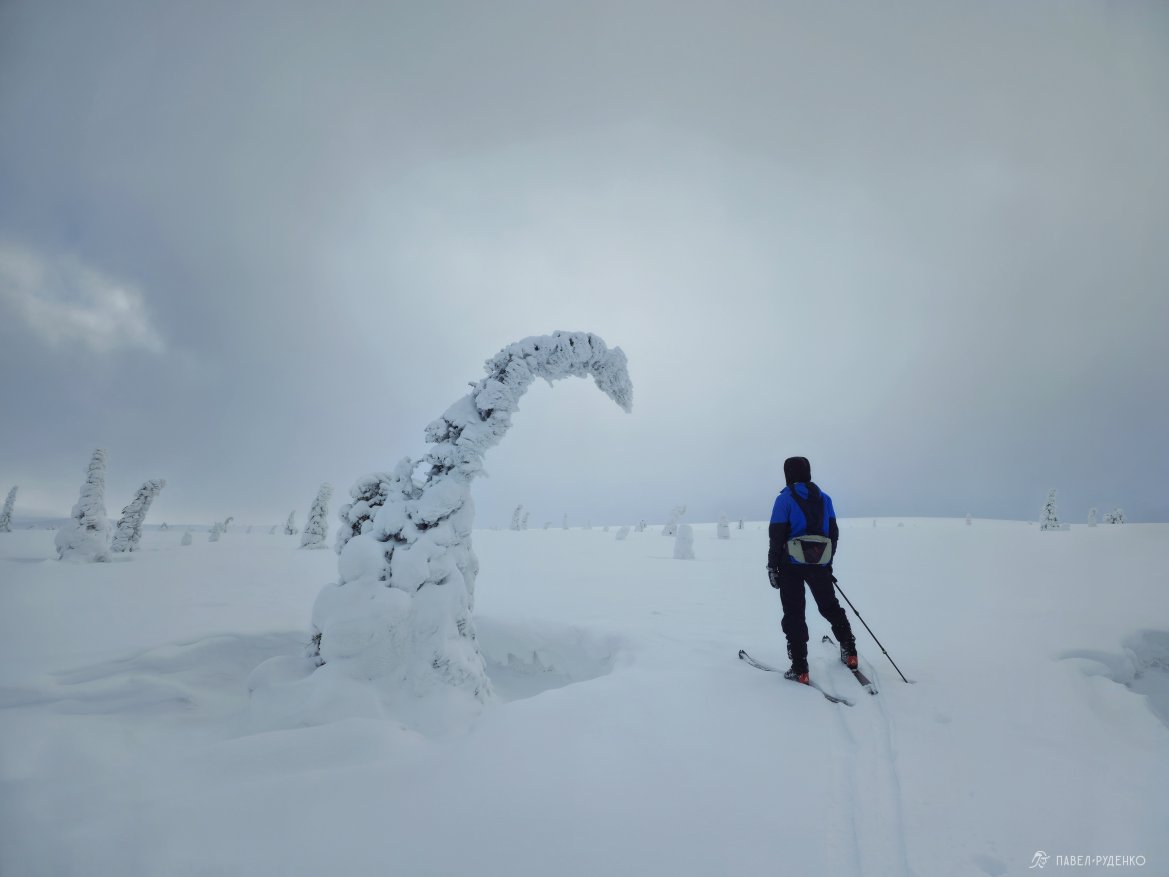
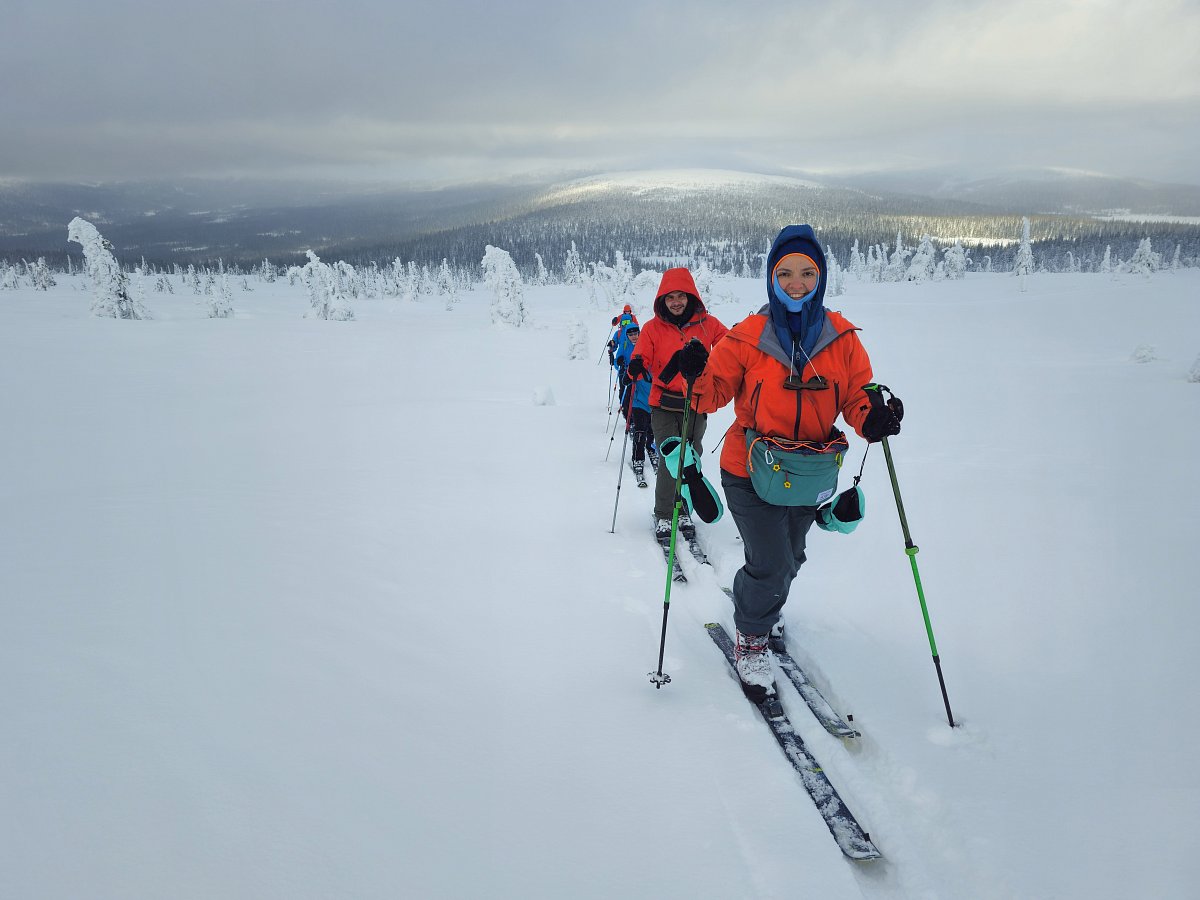
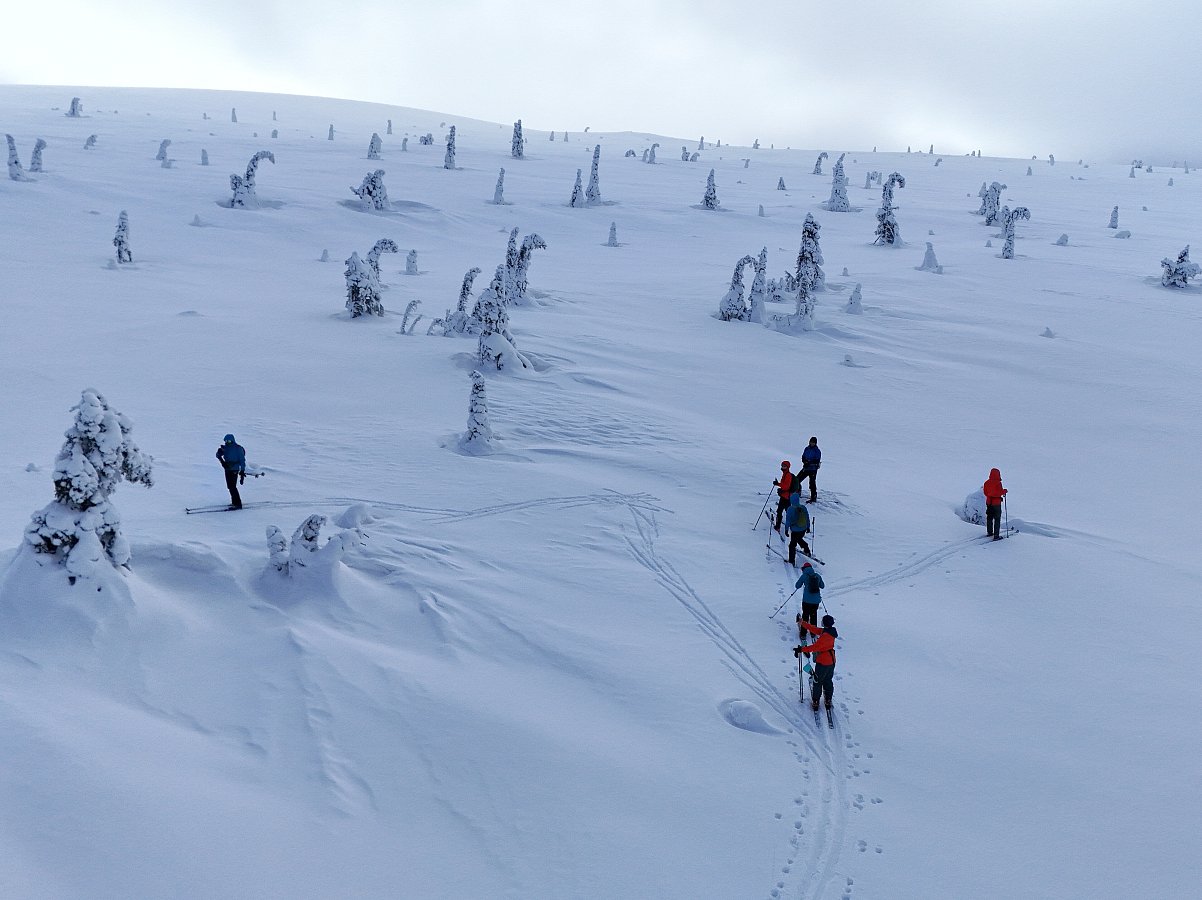
Perhaps you've seen photos where trees have turned into gigantic, surreal snow statues. The phenomenon is called kurzhak, snow crown or snow ghosts. A thick layer of dense icy snow and frost completely envelops the trees. The snow layer can weigh hundreds of kilograms on one tree, bending its branches.
Why does this happen именно here? It's not just 'a lot of snow'. Kandalaksha Bay is a deep tectonic crack, the depth of the sea reaches 340 meters. The huge mass of water works like a battery, warming the air. Moist sea vapor rises, crashes into the hills and instantly freezes on the branches. The wind presses this frost into a hard shell.
Walking among them on skis is an unusual pleasure, symbolizing the beauty of winter nature.
From the Sea to the Tops of the Hills
Russian ski tourism has its own pearls, and here the format is unique.
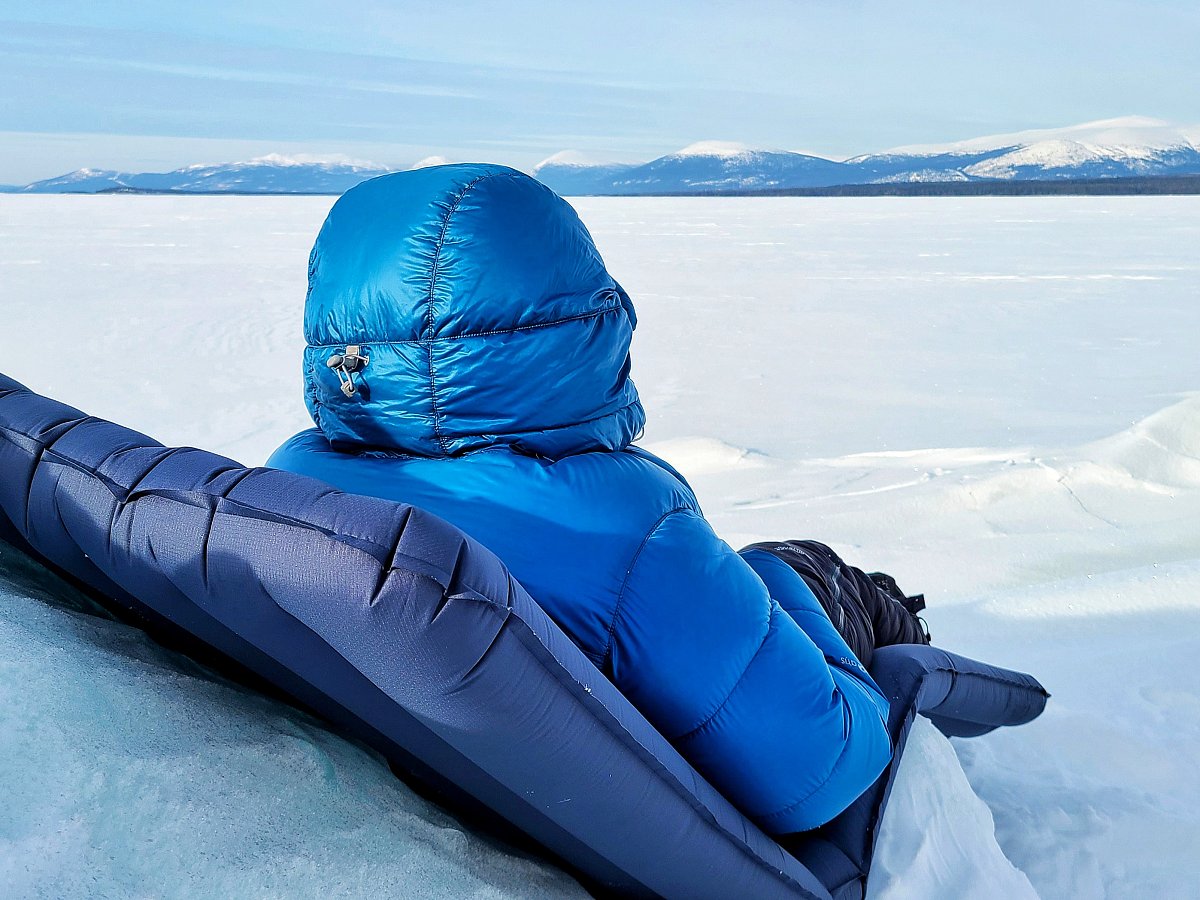
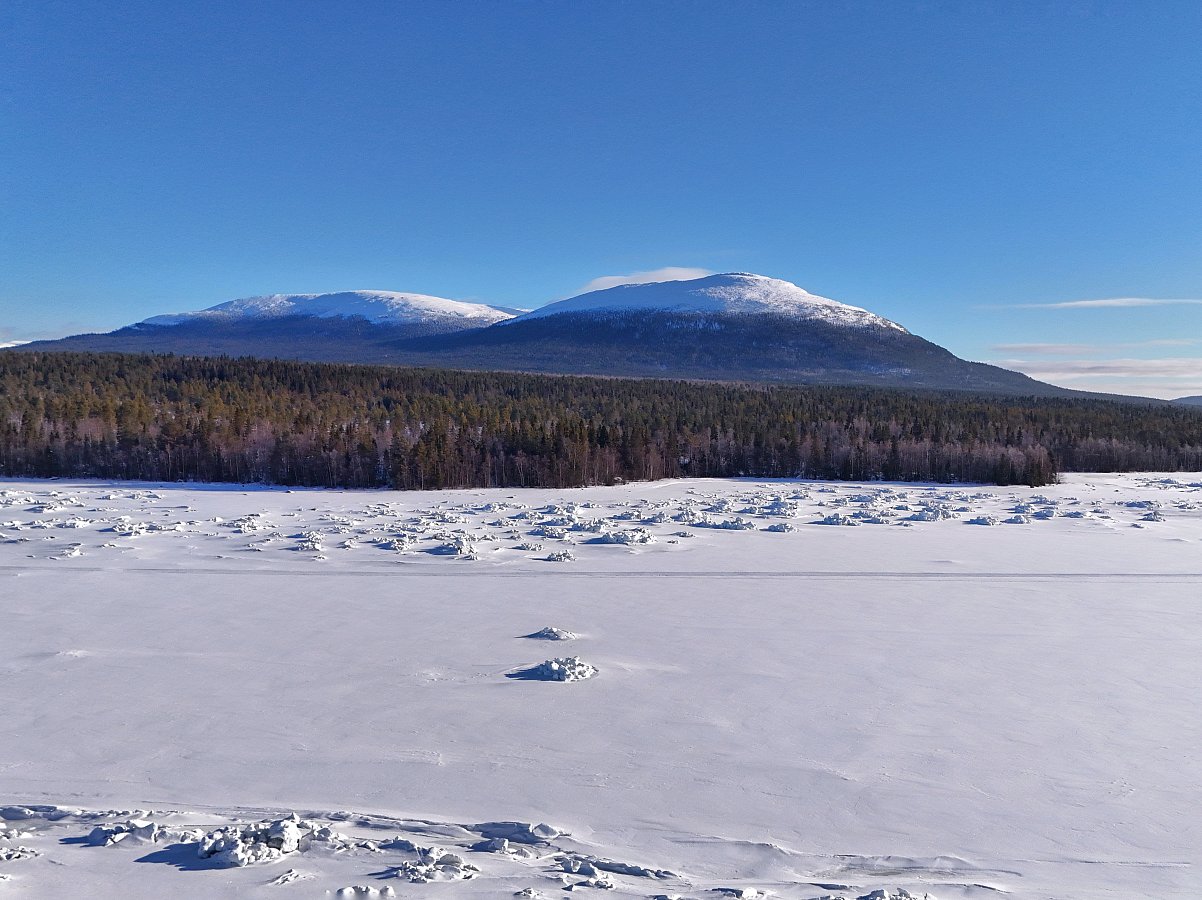
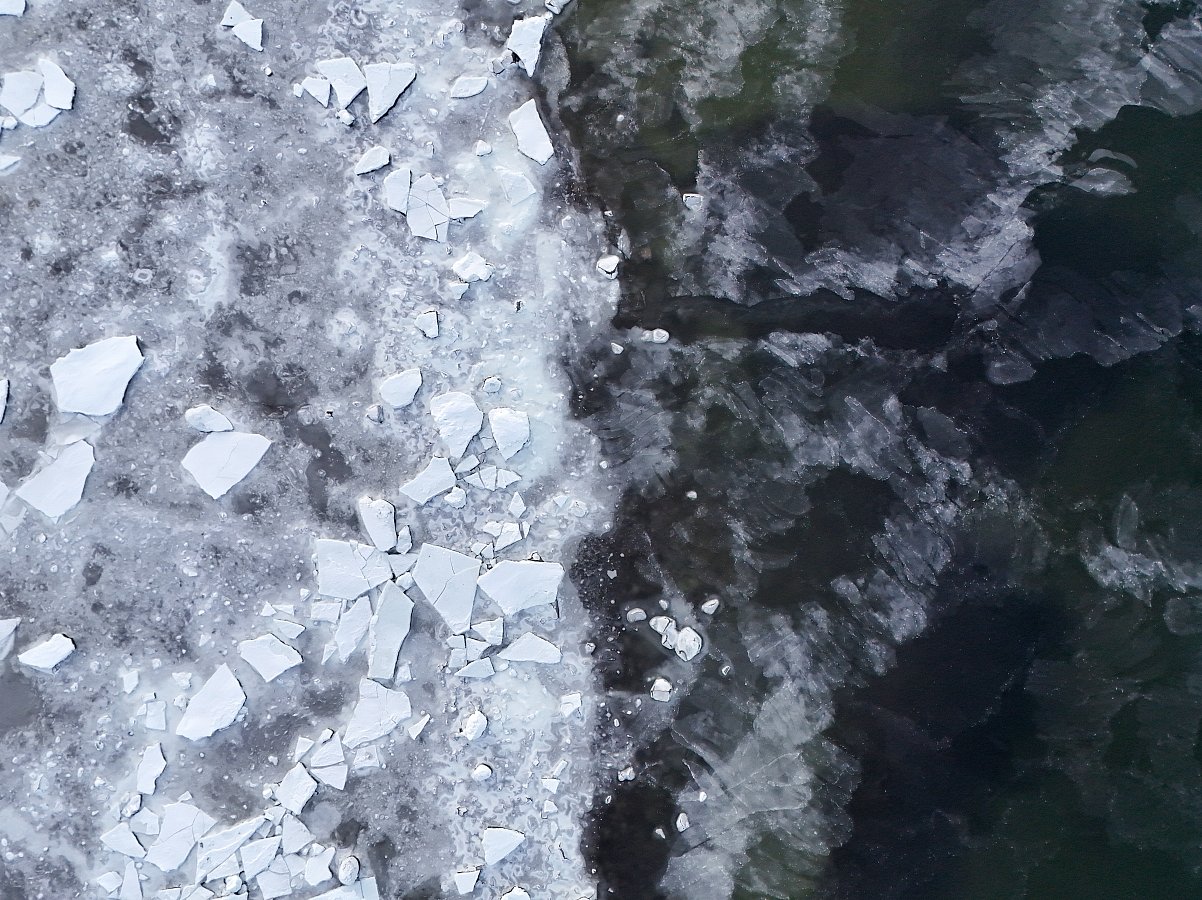
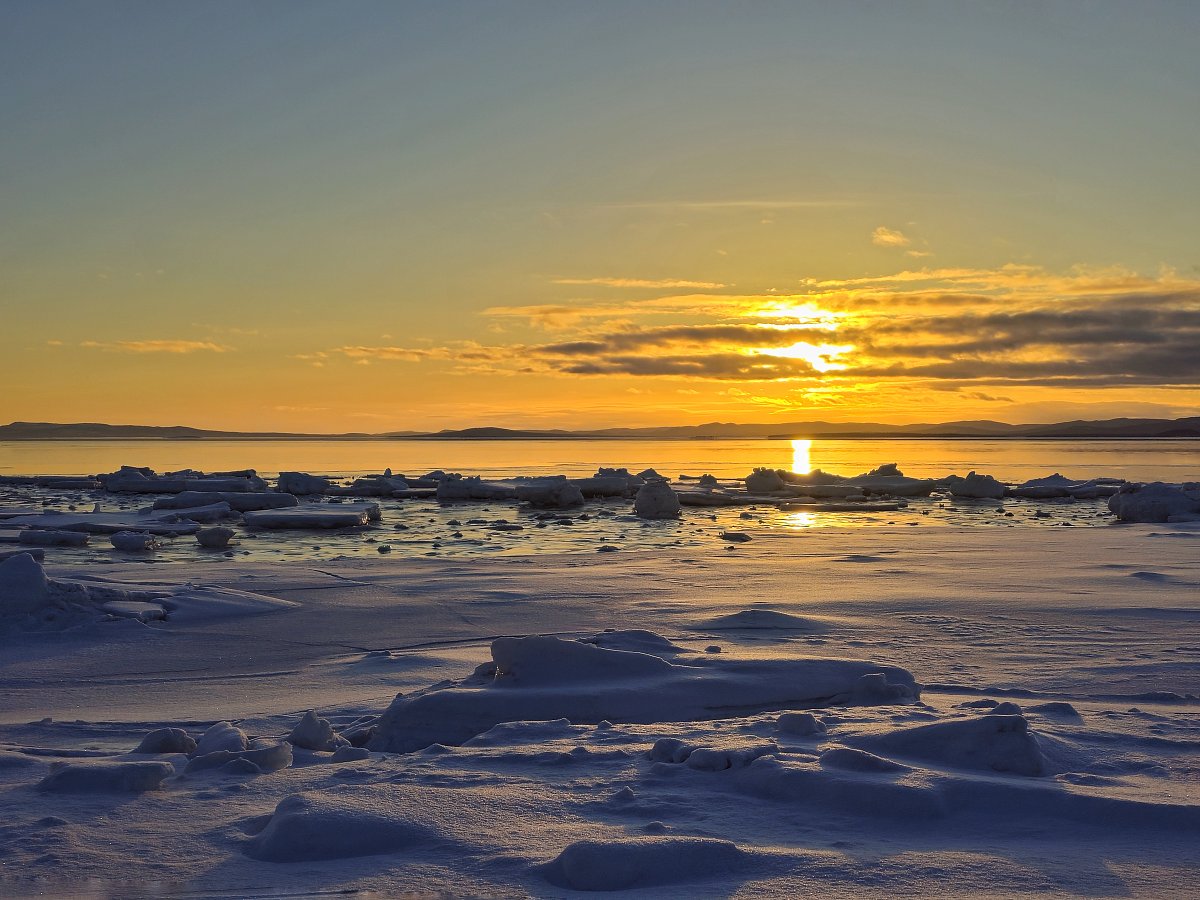
Imagine: we put on skis right at the edge of the shore. Under us — meters of ice and hundreds of meters of black sea abyss. We are walking on the frozen sea. This feeling of space cannot be conveyed in words — the horizon merges with the sky, and you slide in white infinity.
And in the evening, we can already climb the White Hills. Just five kilometers of the path change the climate zone. Below — open spaces of ice, then a cozy coniferous forest, and on the hills, the harsh Arctic beauty reigns. Here it is part of different climate zones, and on the northern coast of the Kola near the Barents Sea, such tundra covers hundreds of kilometers.
Hunting for the Northern Lights on Skis
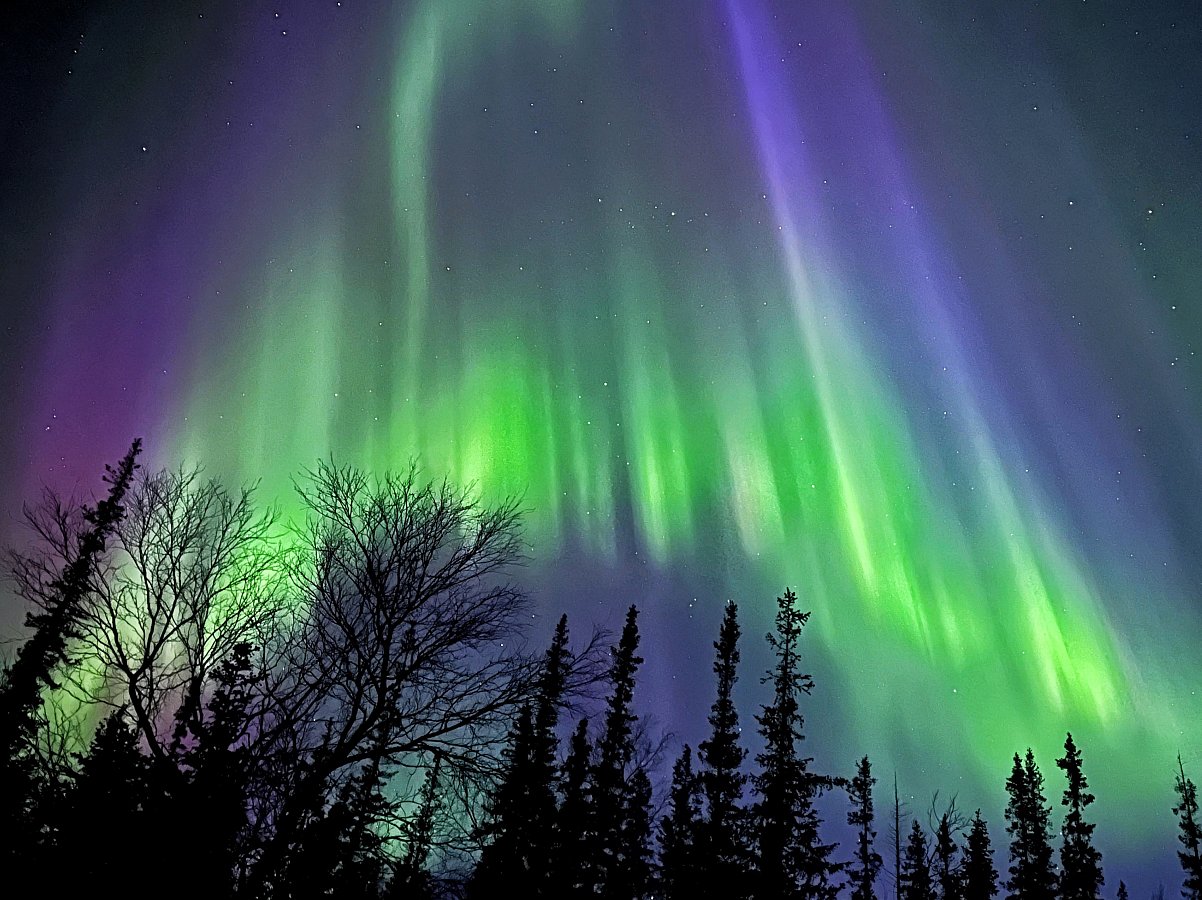
How we usually see the aurora: it gets dark, the tents are set up, and we are preparing dinner. One of the team members is looking at a pale cloud, but after 20 seconds the sky explodes with emerald fire. Green, and sometimes powerful purple, pink ribbons begin their dance, shimmering and pulsating right above the head. This is the Northern Lights.
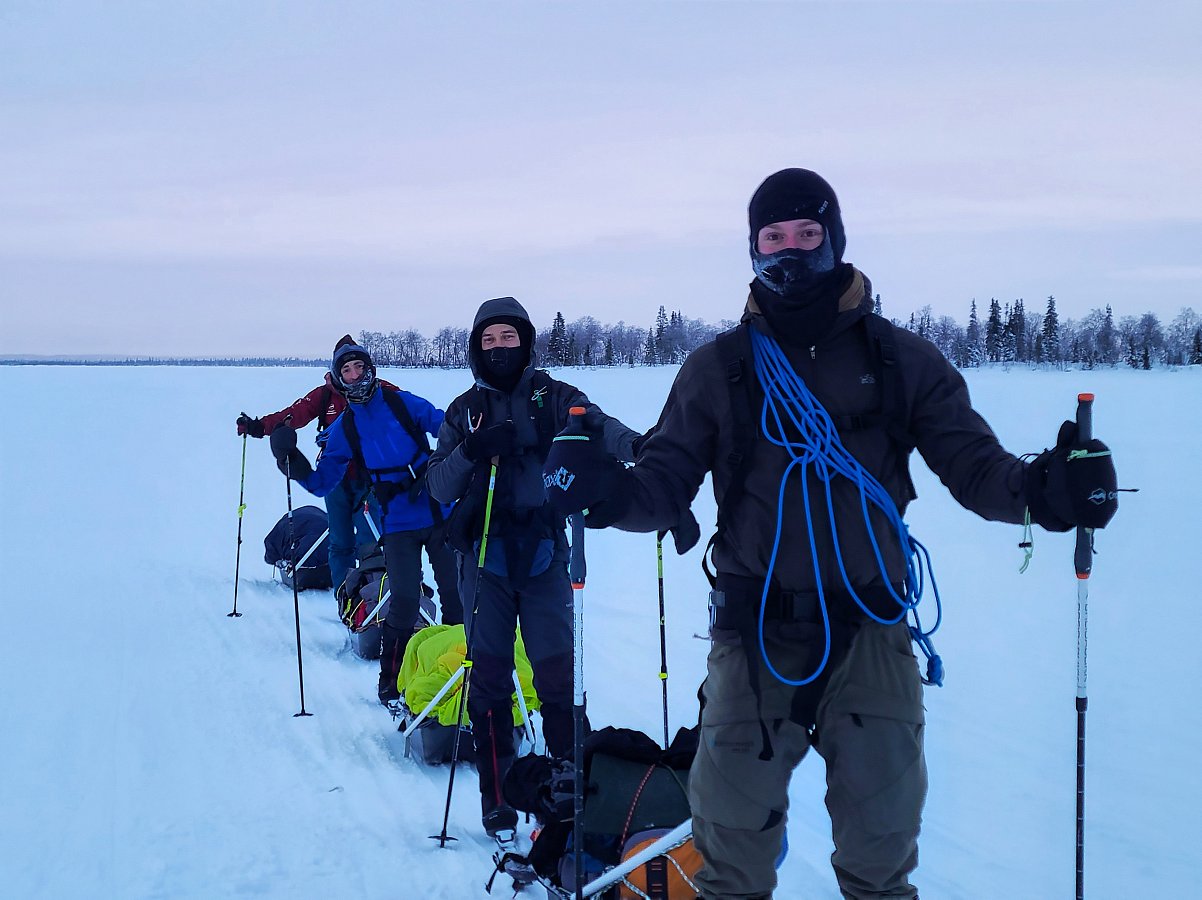
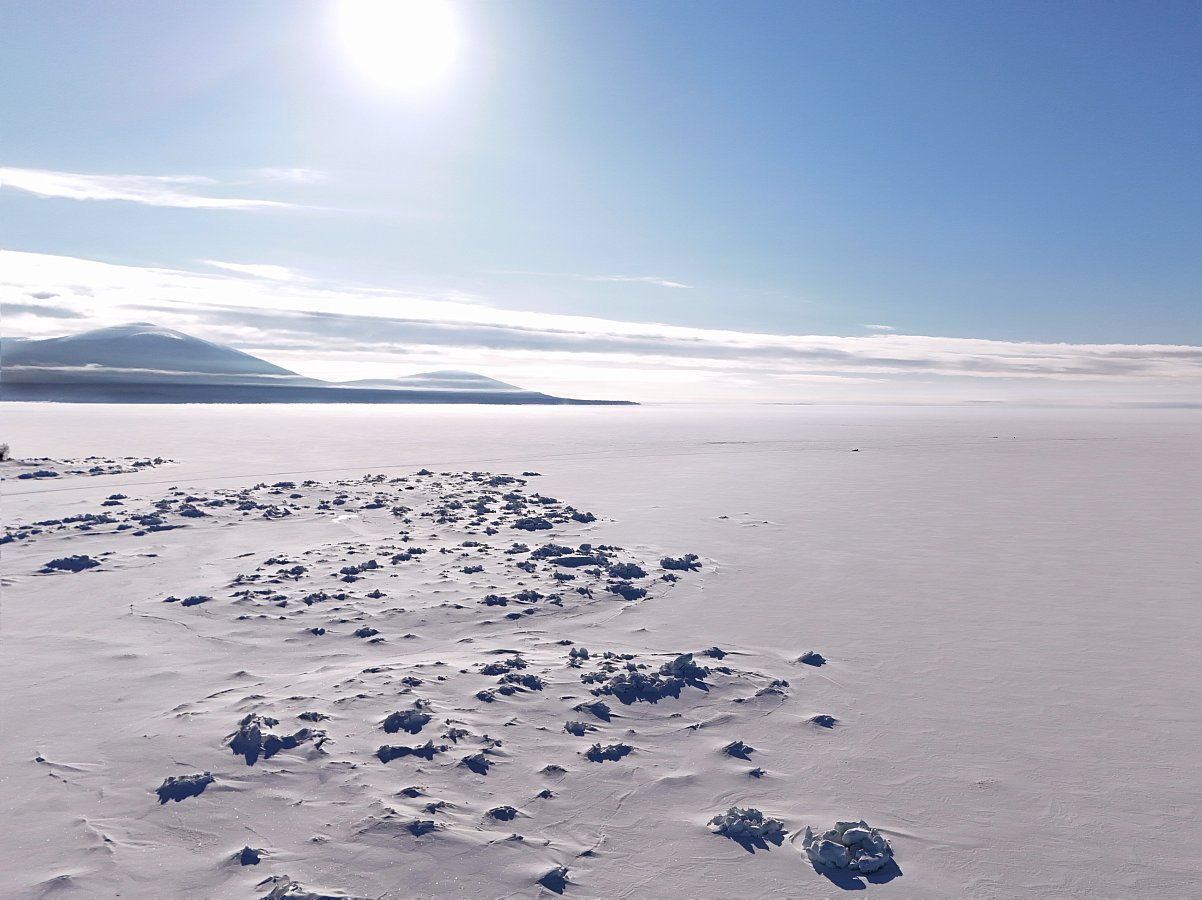
This is a cosmic greeting from the Sun. A powerful stream of charged particles, the solar wind, crashes into the Earth's atmosphere. Colliding with oxygen and nitrogen, they make the sky glow. At the end of February, on the Kola — it's a great time for the aurora. The polar night has receded, and daylight allows you to take a cool ski route, see incredible landscapes of snow-covered forests and ice hummocks. But the nights are still dark and long enough to catch the Aurora at its best.
We go far from the lighting of cities and artificial sources of light — only wild nature and the aurora, which we also see in September, on a hiking trip in the golden autumn.
Ice floating: weightlessness in ice water
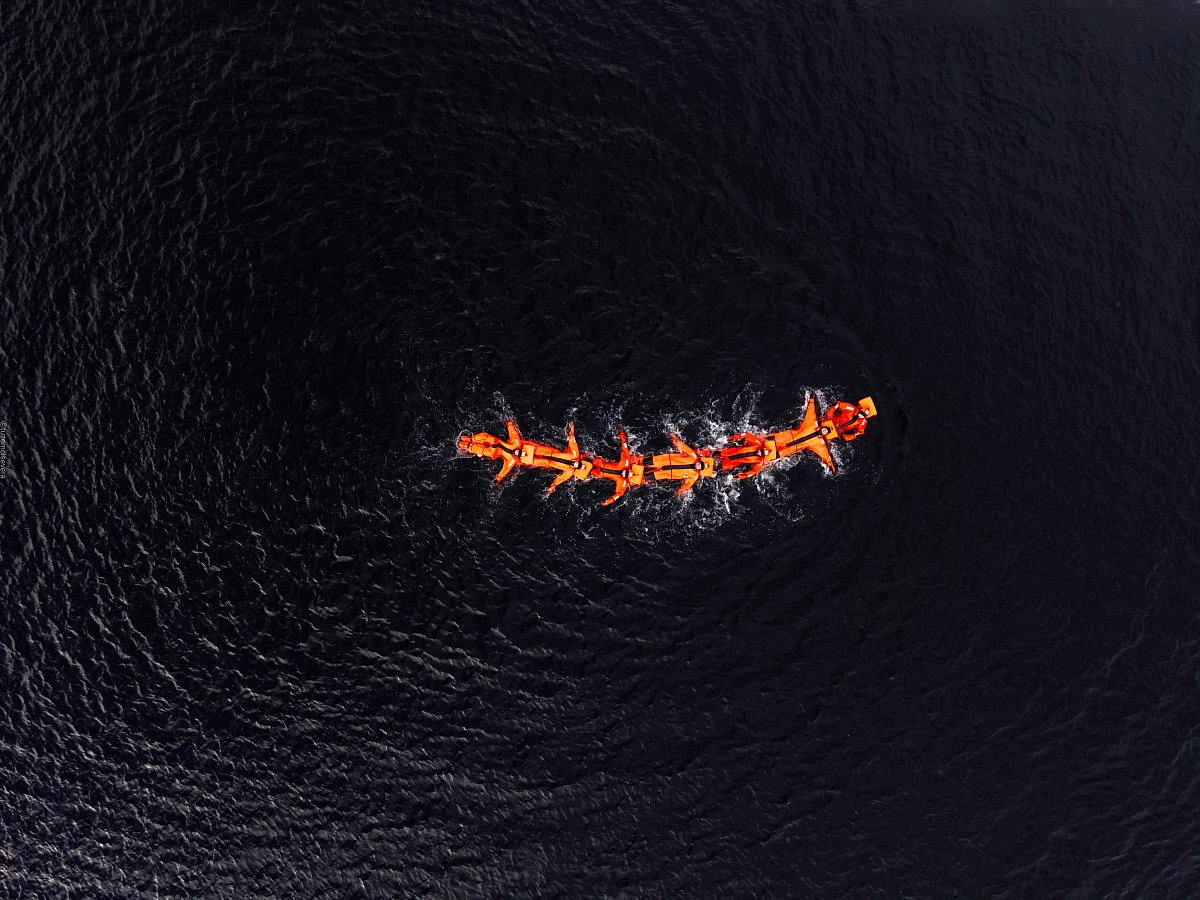
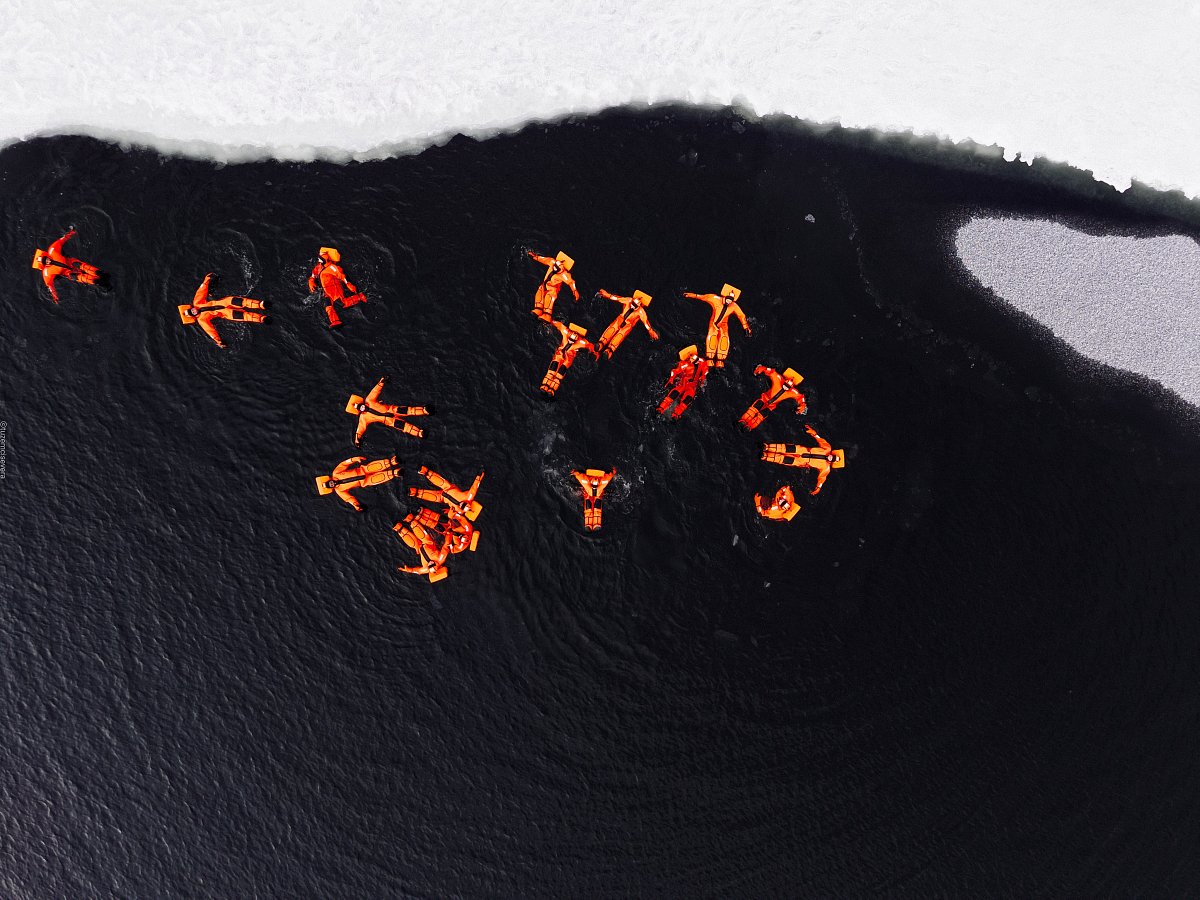
It sounds unusual: swimming in the White Sea in winter. But this is a growing trend of ice floating in Russia, which came to us from Norway, and in Kandalaksha there is the best team organizing this experience.
This experience is interesting to us because in similar, but more lightweight suits, polar explorers in ski expeditions to the North Pole overcome hummocks and open areas of water.
You just lie on the water among the ice floes. The suit keeps you afloat like a float. You feel the icy breath of the sea on your face, but your body is warm and cozy. Lying on your back in the icy slush, watching the clouds fly by and the snow-covered hills — it's a reboot.
«Won't I freeze?»
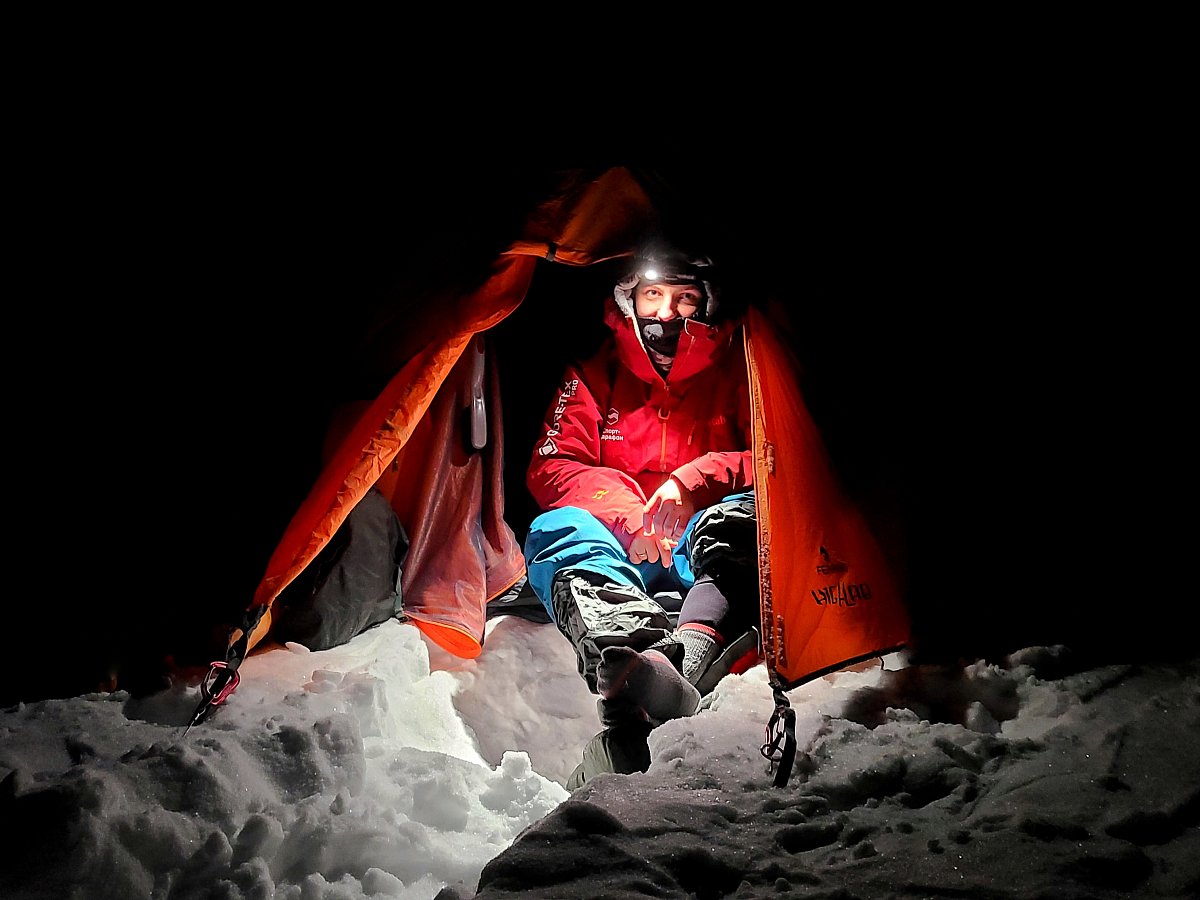
A beginner's main fear: «In winter? In a tent? I'll freeze!».
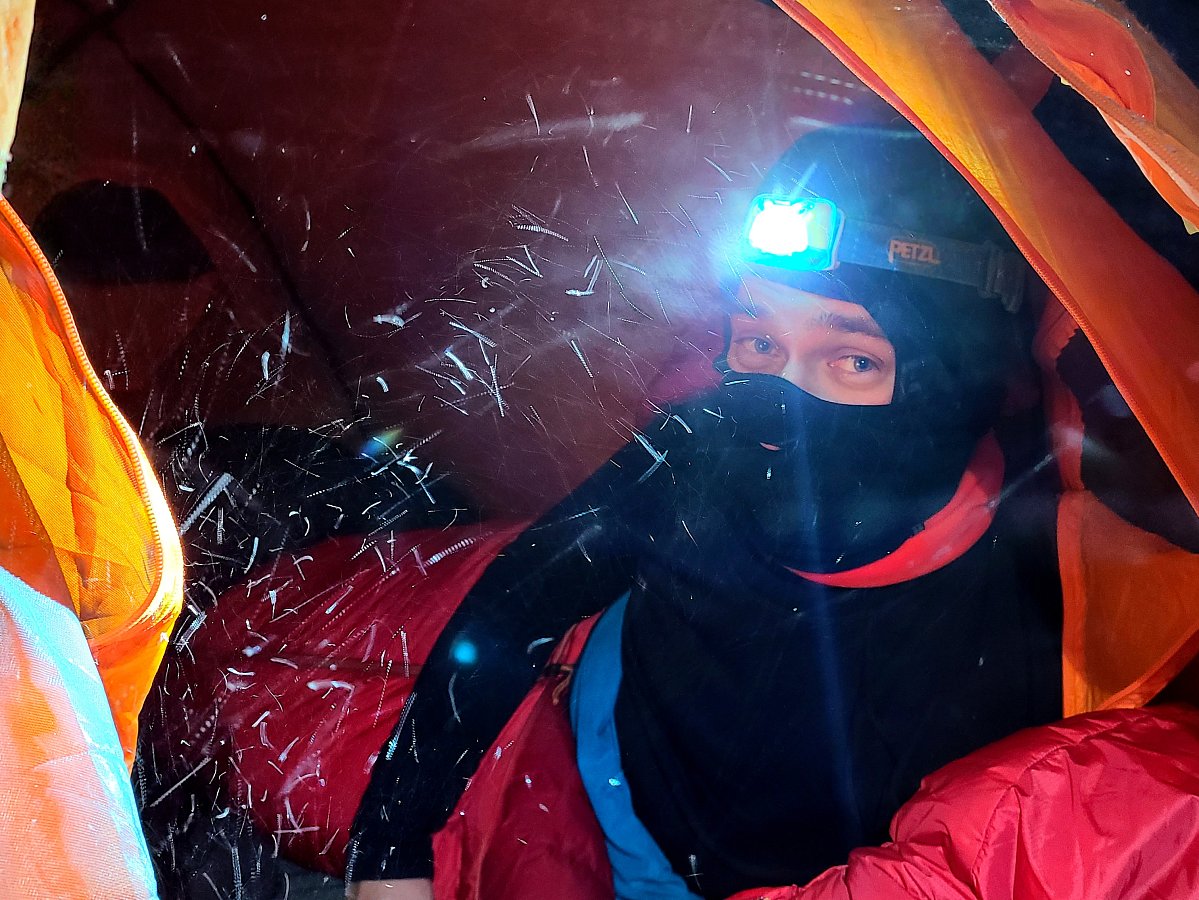
Forget about survival. Modern tourism is about technology.
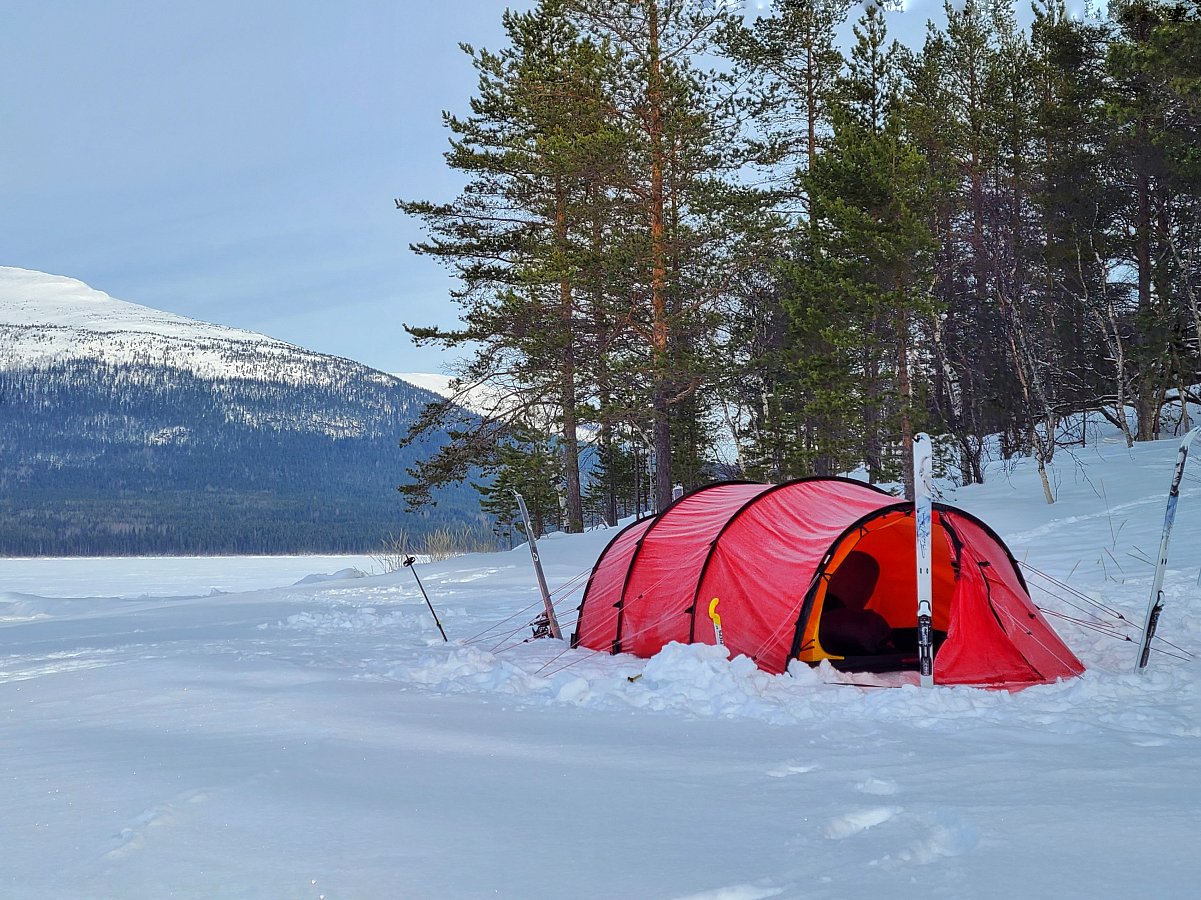
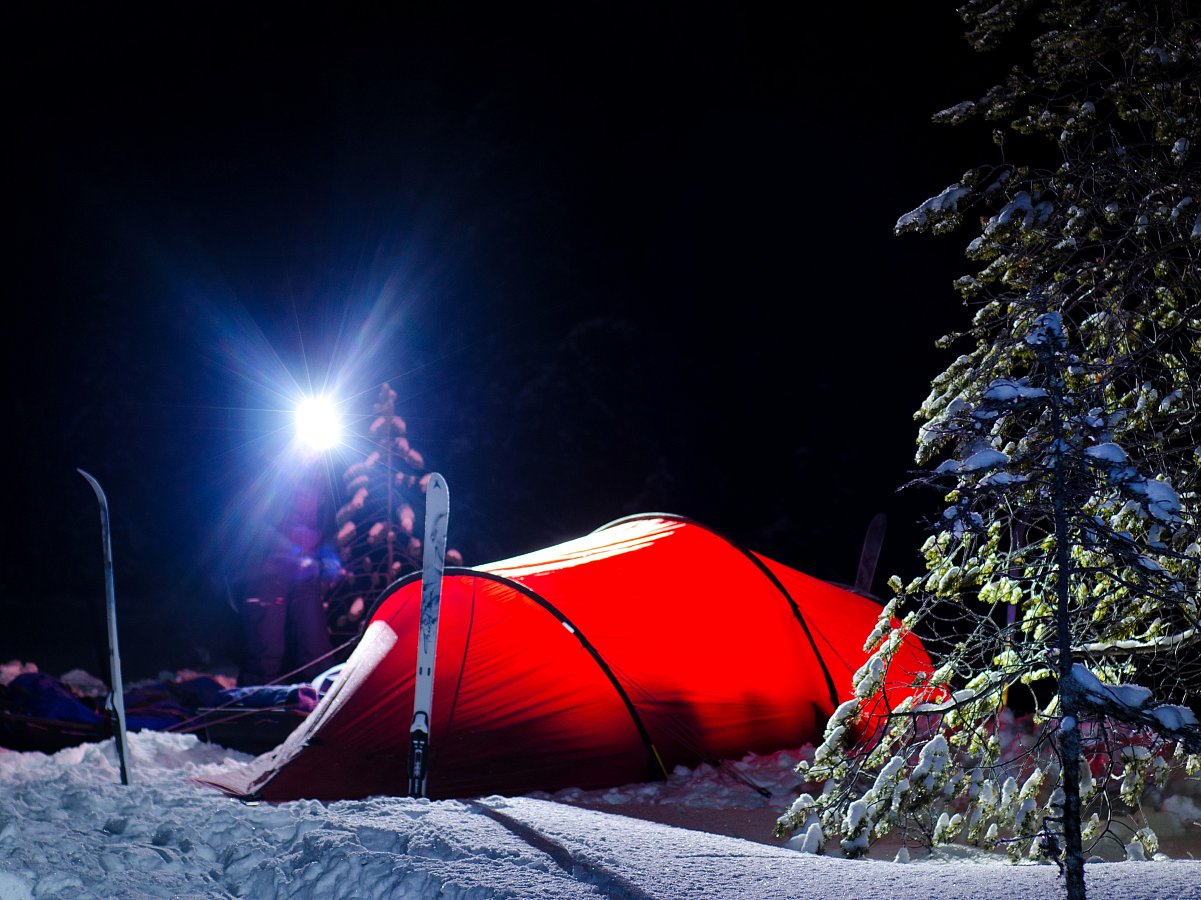
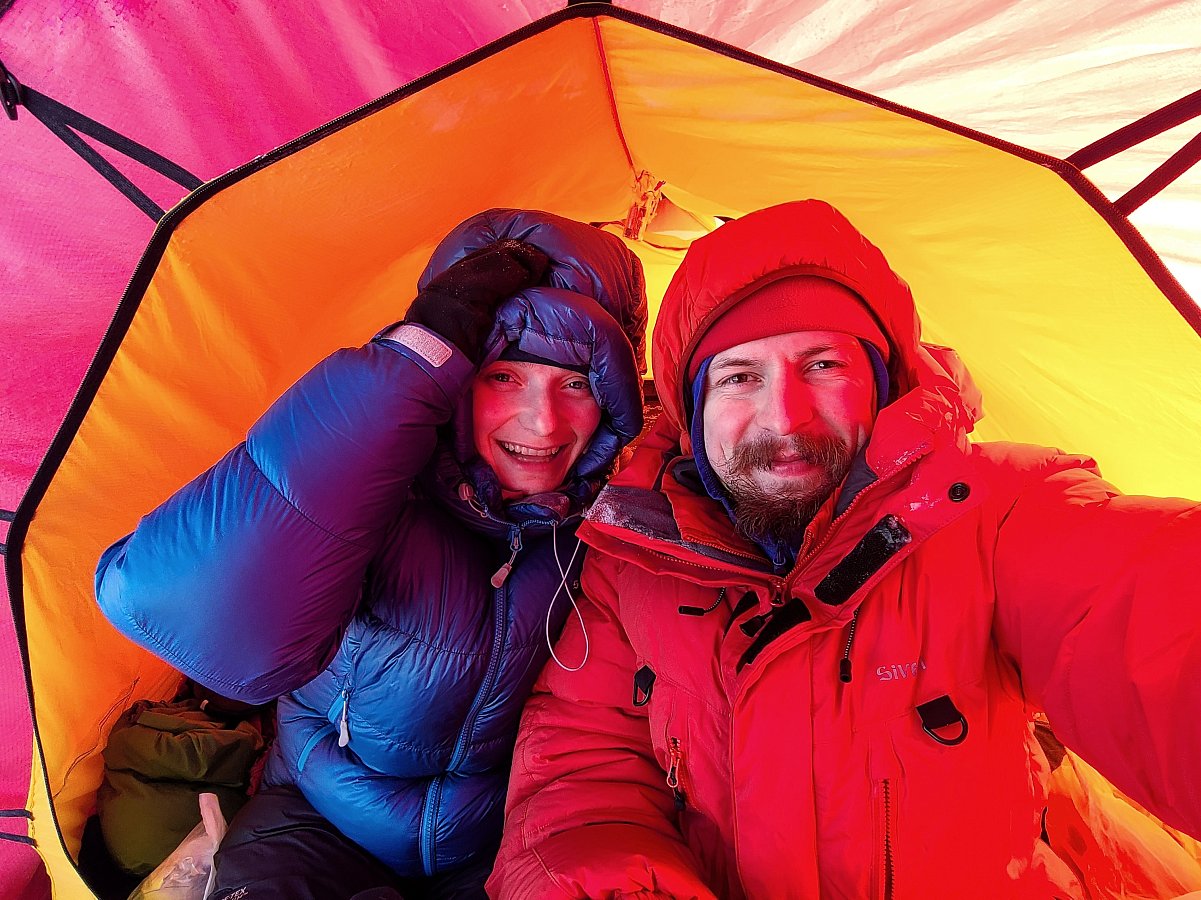
- We live in Hilleberg storm tents — the most reliable equipment in the world for the poles. The wind can't break them.
- For sleeping, we help everyone choose a system of a warm sleeping bag for -30–40°C and two mats (foam + inflatable) with thermal insulation R-value 5+.
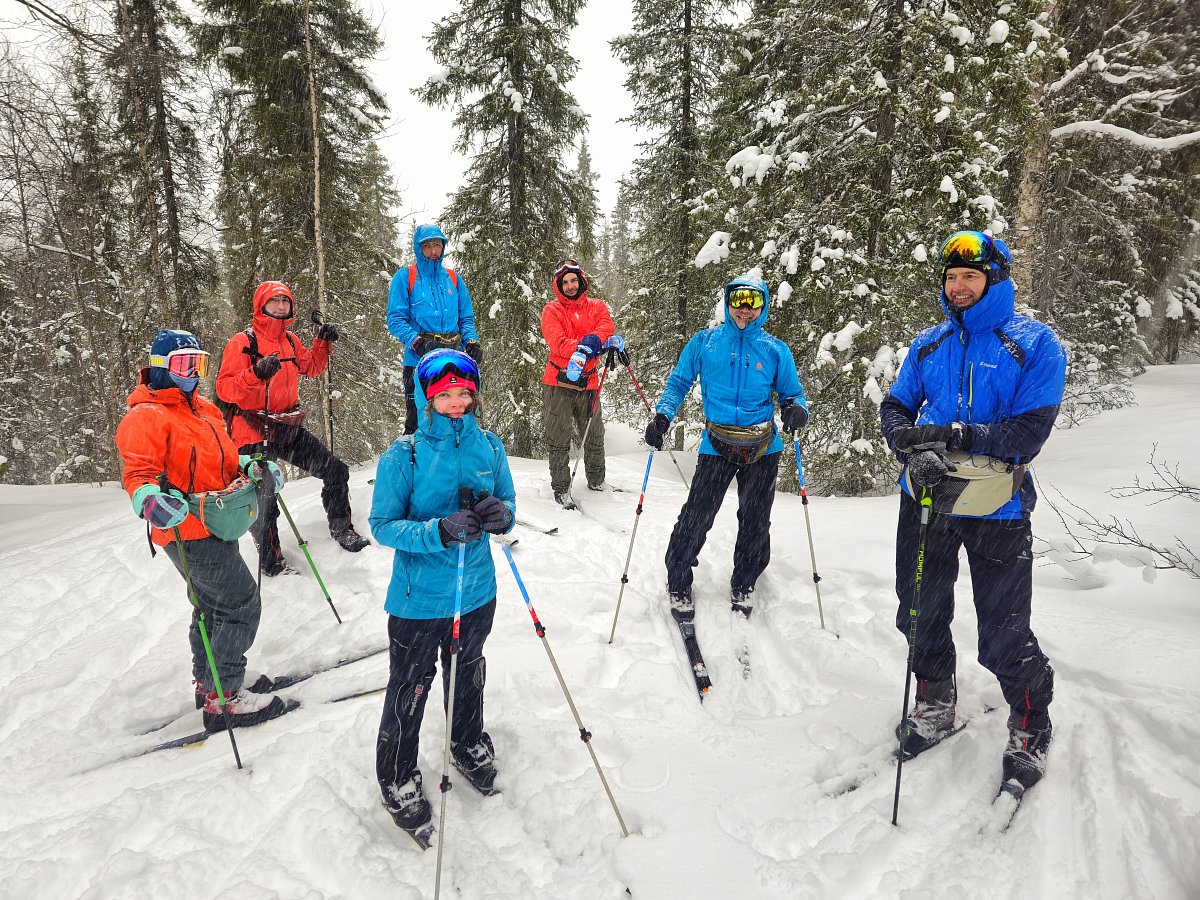
- There are no duties. You don't need to worry about food — the trek leaders cook. But ski treks are a team-building activity, so everyone follows the clear instructions of the leader — Pavel Rudenko. Real high camp kitchen: how about burritos or soba with reindeer meat?
- We have a 'Chum' Hilleberg — a large group tent where we gather in the evening, eat, chat and watch the projector.
- Before and after the trek, we stay in a warm cottage with a shower, fireplace and table tennis.
This is the format of adventure where you get all the emotions of a wild expedition, but return home in warmth and comfort.
Do you want to see the White Hills with your own eyes?
If you are ready to change the gray routine to the скрип снега and cosmic landscapes of the Arctic, go on a real ski trek through the tundra with our team.
We have places in the group for February 2026. The route is checked, the gear is ready, the White Sea is waiting.


