

WILDLIFE
This is a separate topic that might sound alarming, but forewarned is forearmed. I am not a specialist; this information has been gathered from wildlife enthusiast forums and open sources, then compiled into this article. These are not behavioral guidelines for bites or attacks—any decisions in such situations are entirely up to you.
Snakes. The blunt-nosed viper (gyurza) is the only species that poses a direct threat to human life here. In spring and autumn, it tends to hunt near migratory bird roosts, ambushing prey in bushes and vineyards. Most registered bites have occurred in such spots. It is usually active during the day, except in summer when the heat drives it to a nocturnal lifestyle. Its color can be uniform brown, dark brown, or black, often with a purple tint. Sometimes it is covered with dark brown spots. It inhabits areas ranging from desert to mountain-steppe zones, up to 2,000 m. It can be encountered in arid foothills, shrub-covered slopes, rocky gorges with streams, and along cliffs. When attacking, it can instantly strike across the full length of its body. In the event of a bite, immediate evacuation to medical care is critical. The bite can be fatal. Emergency service is 112.
Near the caves north of Tekirova, I spotted a half-meter-long snake. Hearing me from three meters away, it darted off. Snakes fear humans and will slither away once they notice you. Always give them an escape route; if one happens to crawl toward you, its burrow is most likely right behind you. Simply step aside and clear its path.
Scorpions. Like snakes, they do not attack unless disturbed, yet they do not fear humans and can settle nearby. They range from sandy yellow to black—the darker and larger they are, the more venomous. They rest under rocks and branches. Be careful when setting up your tent or gathering firewood. On sandy beaches, they bury themselves under a thin layer of sand, so keeping your shoes on is a wise precaution. They are active at night, so keep your tents zipped and backpacks closed. In the morning, check your boots for any "guests" sheltering in the cool interior. The danger lies in the stinger on the tail, not the pincers. For an adult with a healthy immune system, their venom is not fatal, but the risk increases if the sting is near the head or involves a child.
The sting causes severe pain resembling a burn, which can last up to 12 hours, subsiding and flaring up again. Within 30–40 minutes, redness and swelling with a dark dot appear at the site, sometimes accompanied by clear blisters. Itching develops within 2 hours, followed by decreased skin sensitivity. General symptoms can manifest anywhere from 5 minutes to 24 hours. Common symptoms include agitation, anxiety, headache, chills, chest pain, palpitations, shortness of breath, and nausea. Agitation later gives way to drowsiness and lethargy.
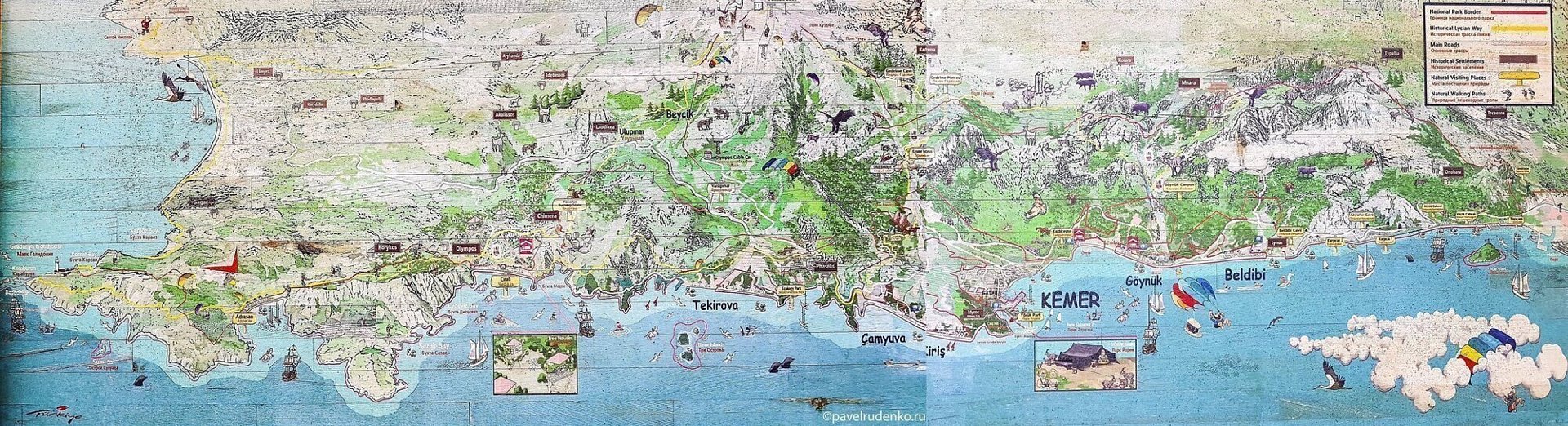
Ticks. Control measures in the 2000s led to a drop in their numbers; populations are now much smaller than in Crimea or Siberia. Tick-borne encephalitis is virtually nonexistent here, but ticks can carry Lyme disease and Crimean-Congo hemorrhagic fever. Statistically, around 500 cases are registered across Turkey each year, with an average mortality rate of 5%. Ticks usually dwell in tall grass, favoring shaded and damp spots. For protection, use repellent spray (it significantly reduces their activity), tuck your pants into your socks, and check yourself thoroughly in the evening.
Wolves. The chance of encountering them on the Lycian Way is very slim, but heading out in winter, I would take a flare pen or a signal flare. They inhabit mountainous areas, usually in packs, less often alone. Winter attack incidents have been recorded when wolves descended into villages in search of food. While hitchhiking, I often heard gunshots, especially in central Turkey. It turns out locals set up automated bird scare cannons that fire every 20 minutes to deter wolves. An attack on a hiker can occur for three reasons: rabies, hunger, or territorial defense. If you encounter a wolf — do not run, back away slowly without turning your back, raise your jacket, backpack, or arms above your head to appear larger, and shout loudly.
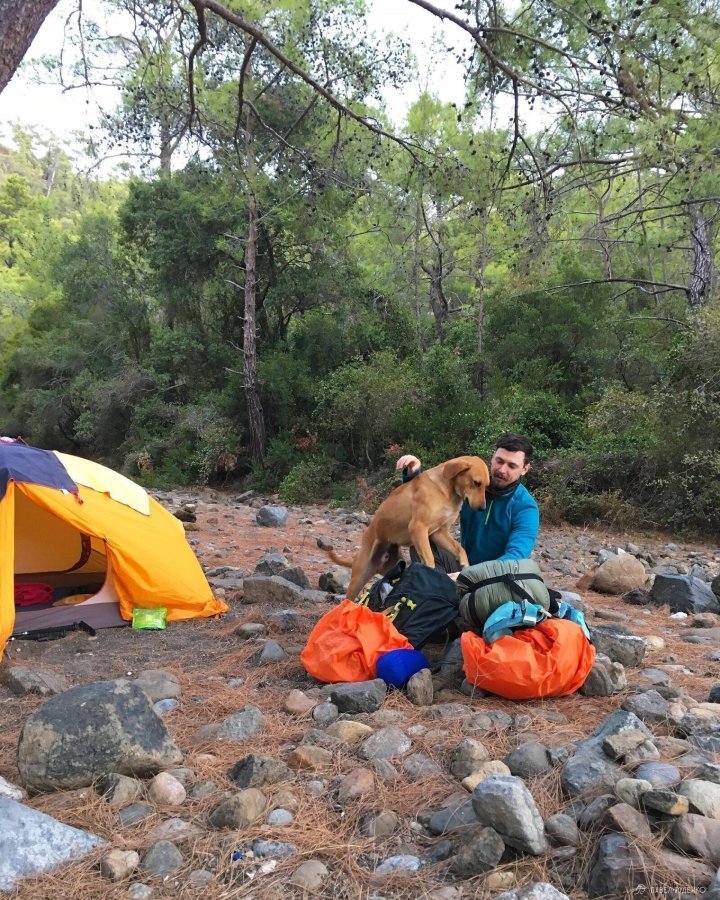
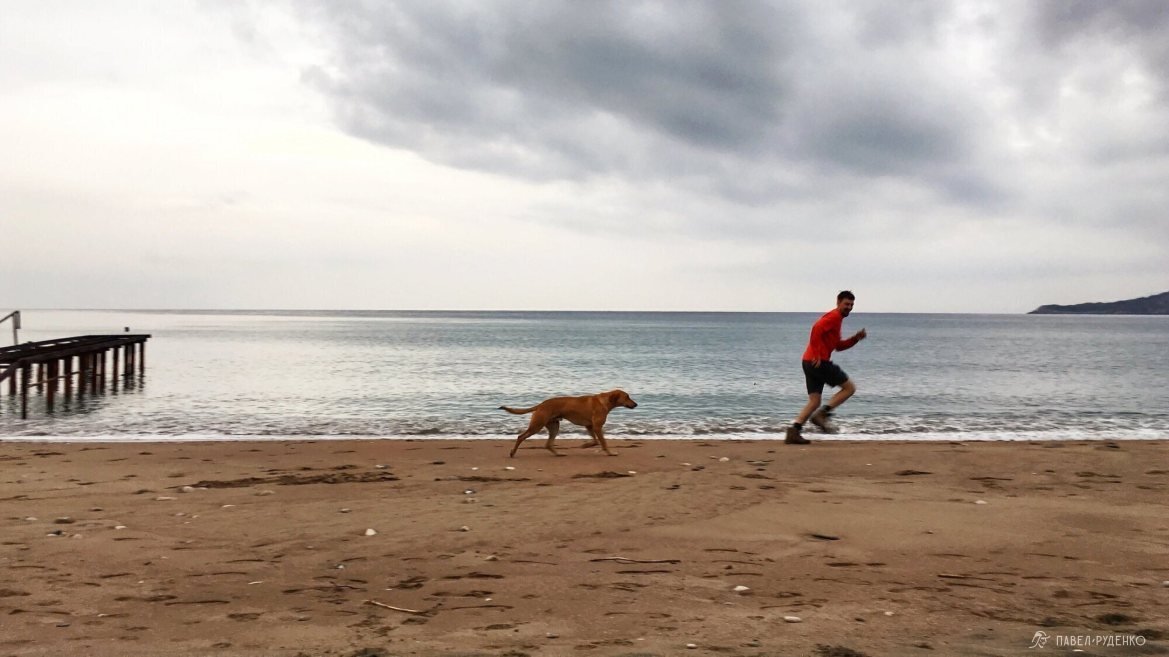
Dogs. There are many strays, very friendly, and they often accompany you along the trail while guarding your tent at night. Just remember that a sweet animal can carry various diseases hazardous to humans.
Owl, tawny owl. Words cannot describe what these owls were doing during our camp at Göynük and on the Tahtalı pass! 3–4 birds called out every minute, creating an incredible atmosphere. One of the most vivid wildlife experiences! Slightly larger than a crow, it can rotate its head 270°. Their plumage is camouflage gray or bark-colored, making them quite difficult to spot.
STORIES FROM THE HIKE
Good stories
Heading from the historic city center to the tram, I found out that tickets cannot be bought at every stop. In Antalya, turnstiles are placed at the entrance to the stop itself. Seeing how puzzled I was looking around for a ticket booth, some local girls gave me their transit card.
In one of the villages, I stopped by a cafe looking for bread. It took a long time to explain what I needed – the owner didn't speak English, so with expressive gestures I showed him the entire life cycle of a loaf of bread, pretty much from wheat cultivation right to his counter. But the owner said he only kept bread for sandwiches and didn't sell it on its own. Naturally, I smiled and was about to leave the cafe when the owner dashed out after me holding a bag filled with almost every baked good he had! He flatly refused to take any money, kind soul.
For Alyona, this was her first trek, and when dividing chores, she took on the cooking. Halfway through, I picked up the gas canister and discovered that there was only enough gas left for a couple of meals. When cooking myself, I used gas sparingly, constantly shutting off the valve and simmering gently to maintain temperature. But here I messed up and didn't explain properly how to adjust the flame. There was nowhere to buy gas, so I considered hiking to the road and making a round trip to Antalya, but the universe is generous: a couple of hours later, a group from Ukraine on the last day of their hike gifted us their gas canister, for which we sent them our deepest gratitude and a hearty handshake.
Unpleasant Stories
The most popular starting point of the trail is on the eastern side, in Göynük, which is where we headed (starting from Geyikbayırı, home to a climbing camp, is less common). Turning off towards the canyon, I made a mistake: a mountain river flows here, and heading toward the trail, you inevitably end up at a ticket booth. We reached the trailhead around 17:00, where a Russian-speaking staff member informed us that admission was paid. Our explanation that we were not going into the canyon, but onto the free trail, was completely ignored. We had to pay simply because we were crossing 30 m of their land! After 20 minutes of useless arguing, I bought a ticket just to avoid wasting more time. But then a man blocked our way, claiming it was already too late and we had to stay overnight there because they were supposedly responsible for us and would have to rush to our rescue like Baywatch lifeguards if anything happened, that the first campsite was 5 km away, and other nonsense. After wasting more time and nerves, we finally pushed through the hustle, and by 17:30 I was on the Lycian Way. By 18:00, I had covered 1.5 km with an elevation gain of 200 m to reach the first campsite.
Descending towards the Flames of Chimaera, we moved past quickly. Before the flames, there was no official entrance or signs. Compared to the surrounding landscapes, this curious natural phenomenon didn't interest us that much, so we passed right by. Near the exit, there were small cafes, from which a man suddenly dashed out shouting "ticket, ticket". Once we clarified what he meant, we explained that we were hiking along the trail, that there was no sign at the entrance about needing a ticket, and even their paper slip only mentioned an entry fee, not an exit fee. Trying to intimidate me, the security guard grabbed my arm and threatened to call the police. We welcomed that; a patrol car arrived in a minute, as they guard this area. We spoke with the officer, explaining that for us it wasn't about the money, but about the attitude and how tourists are treated. We couldn't prove our point, but the officer was very reasonable, so we paid and moved on.
Weather Stories
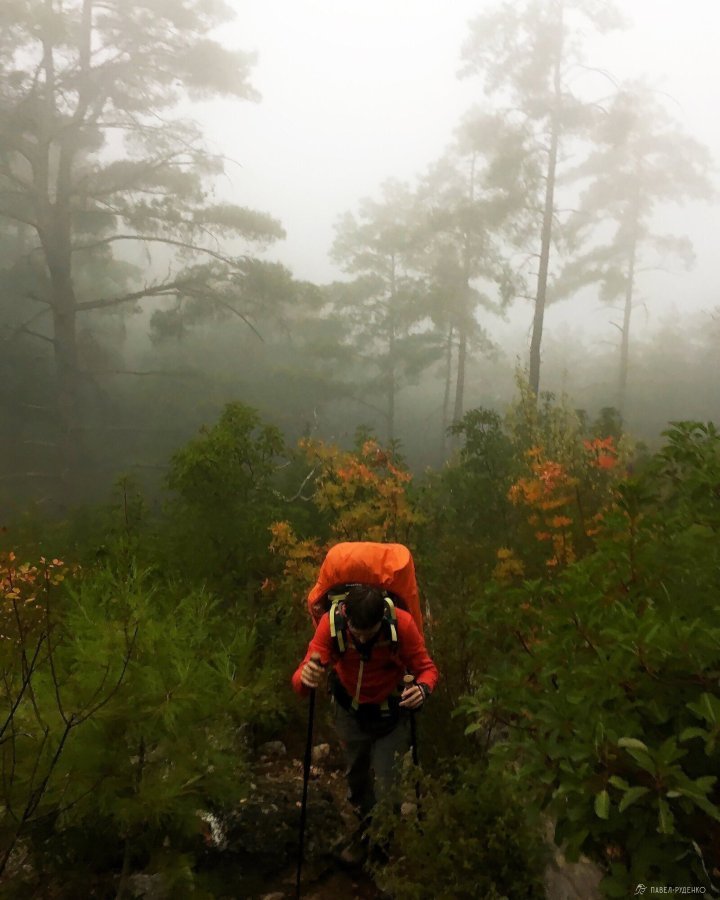
November 15. A low-pressure system rolled in from the northwest, temperatures dropped by 5 degrees, and almost every day turned overcast and rainy. On the very first day of the front, the forecast warned of severe thunderstorms. That evening, I stopped at Çıralı beach; wary of lightning, I pitched my tent well away from the shoreline. The Mediterranean has its quirks: the wind blew all the storm clouds out to sea, and during the night lightning lit up the horizon intensely, while the coast remained quiet with just an occasional drizzle.
September 5. On a previous trip, I camped on a hill with a magnificent view of Pamukkale. The weather was gorgeous and sunny, but hitchhiking had been exhausting, so I decided to pitch my tent during the day to get a couple of hours of sleep. I was awakened by violent winds practically tearing at the leaning rainfly; I unzipped the tent and saw a striking contrast between pitch-black storm clouds and the snow-white travertines of Pamukkale. I had to evacuate the hill immediately into a nearby forest, where the trees sheltered me from the fierce gusts.
September 9. On a previous trip, heading to Cappadocia and hitchhiking across the central region, I was caught in a brutal storm. After waiting for a ride in an open field for a couple of hours, a gale swept in out of nowhere. Around me were only frail stems of newly planted shrubs—and nothing else! I had to resort to "desperate hitchhiking": I ran out to the roadside, waving wildly and gesturing frantically, which thoroughly spooked the passing drivers, who sped up at the sight of me. Five minutes later, another driver whizzed by, slammed on the brakes 300 m ahead, and began reversing toward me. That person spared me serious harm, because barely 10 minutes later the storm intensified so severely that visibility dropped to 5–10 m, bringing all traffic to a halt. Some cars slid into ditches, while others stopped dead in their lanes.
Experience has shown that Turkey, surrounded by four seas, has extremely unpredictable weather. High winds strike fast and can not only make pitching a tent impossible, but even uproot trees or worse, even at sea level—let alone in the mountains. When trekking anywhere in this country, it is always best to keep an eye on the weather forecast.
And finally, friends, don't overthink it—leave some room for the unknown, and let the beauty of the Lycian Way surprise you!
DANGER
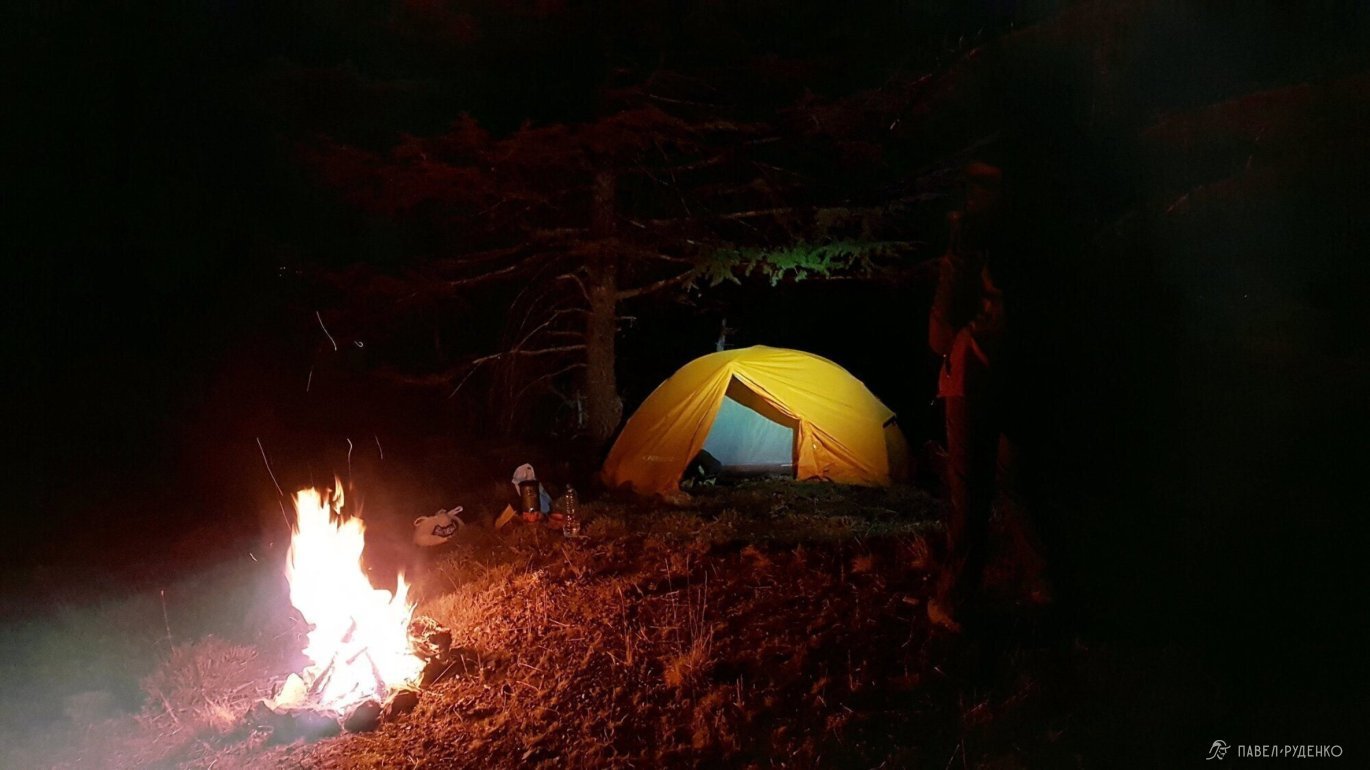
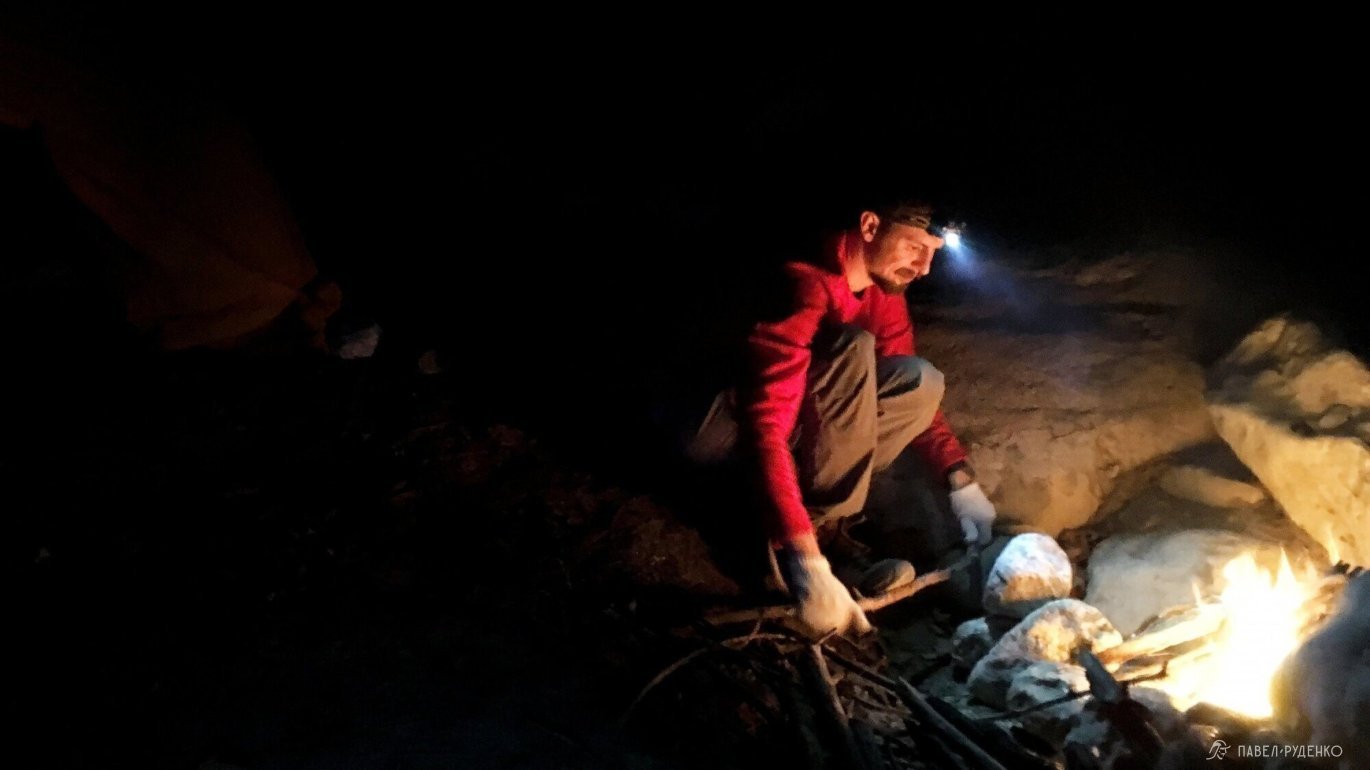
In winter and spring, when there is snow cover, wrap-around glacier glasses with Category 3–4 protection are mandatory. Regular sunglasses will not do: intense sunlight can burn the retina, leading to temporary blindness or spatial disorientation, as snow reflects up to 80% of UV rays. It is wise to carry a spare pair—I managed to lose mine twice on two winter treks!))
Approaching summer, the sun becomes extremely intense, quickly burning your nose and neck. Always pack sunscreen with SPF 40+.
This also brings the risk of heat stroke and heavy sodium loss through sweat, which is vital for fluid regulation in the body. Use electrolyte powders or tablets, or replenish salts with your food.
During snowy winter months, small avalanches are possible on steep sections. You will encounter terrain with sharp gradients, and I have read similar reports in trip accounts from other hikers.
Watch out for thorns—there are plenty of them in all varieties. Stepping off-trail, I frequently stumbled into barbed-wire-like brambles that tore legs to bleeding scratches in seconds.
SAFETY
Embassy of the Russian Federation in Turkey: https://turkey.mid.ru/ru/
Address: Andrey Karlov sokağı, No 5, 06692, Çankaya (P.K. 35 Kavaklıdere), Ankara, Türkiye
Tel: +90-312-439-21-83
rus-ankara@yandex.ru
Turkish Search and Rescue Association (AKUT): https://www.akut.org.tr/ (maintains mountain search-and-rescue teams).
In case of emergency:
Antalya Search and Rescue Head: 0532 256 44 37, yilmazsevgul@akut.org.t
Muğla Search and Rescue Head (covers the trail section around Fethiye): 0532 261 90 23, tolgagozum@akut.org.t
To report your location, make sure you know how to find your GPS coordinates. Only with precise coordinates can rescuers pinpoint where to find lost hikers.
- Police — 155 (many speak English, and along the Antalya coast, Russian as well).
- Ambulance — 112
- Traffic Police — 154
- Fire Department — 110
Most of the route has reliable GSM coverage, with cell towers installed on mountain peaks. Signal may drop in deep gorges and beneath Mt. Tahtalı. There was also no reception near the lighthouse. I used a local Turkcell SIM card, and internet was available almost everywhere. GPS worked reliably.
PEOPLE
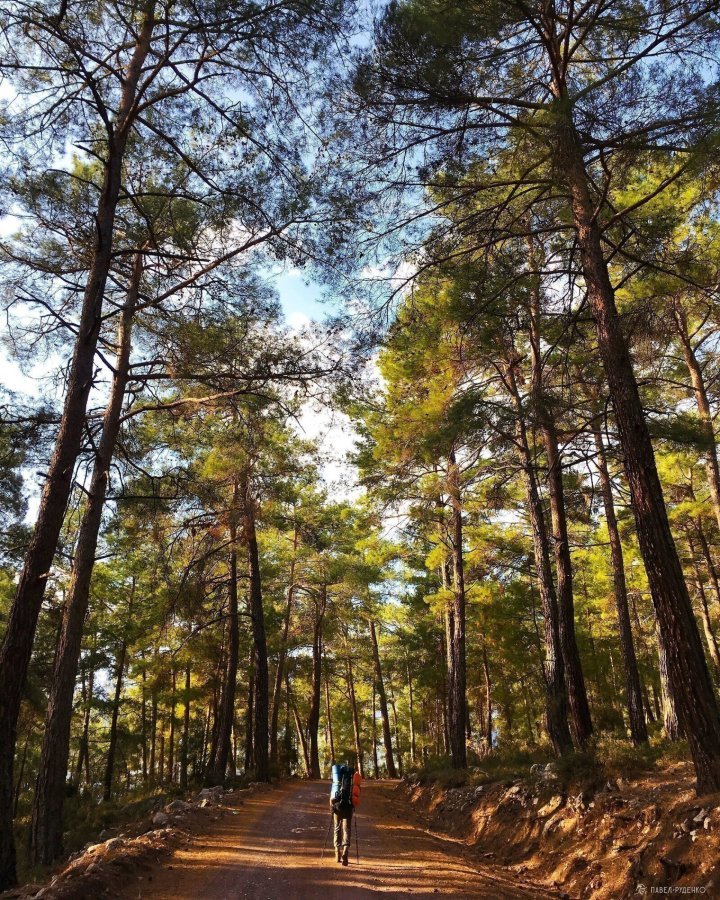
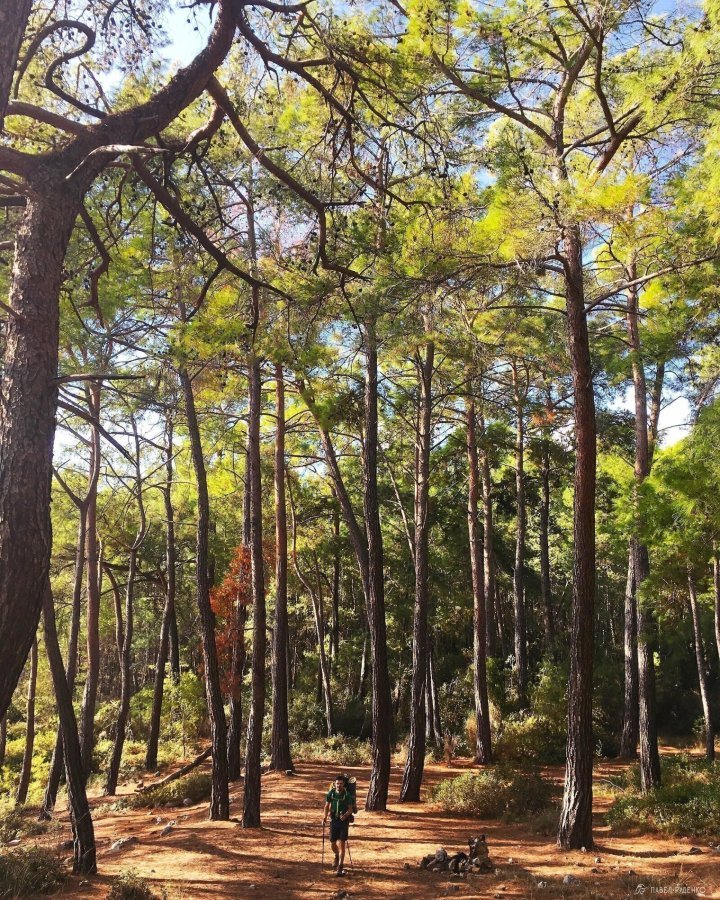
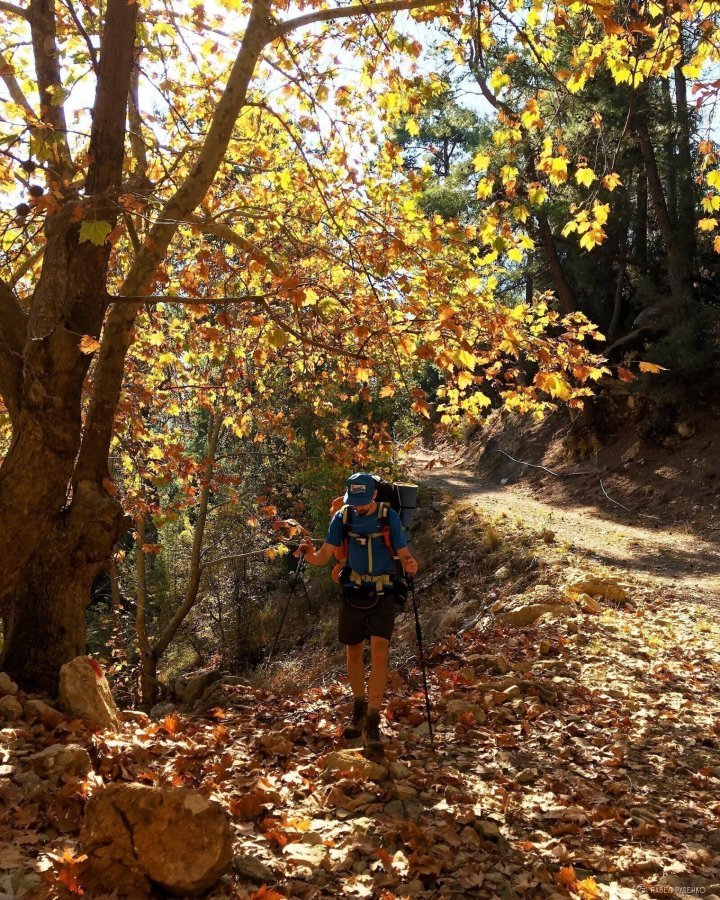
The trail passes through the Antalya region; locals are used to backpackers here, so I consider the route quite safe.
I first got to know the Turkish people during my initial hitchhiking and tent camping trip, covering about 2,500 km in a month from the Georgian border post to Istanbul, then south to Pamukkale, and back to Georgia through Cappadocia. Combining that with two weeks of trekking along the Lycian Way, here are my takeaways.
The locals you meet on the route speak little to no English, but body language works wonders. Unfortunately, in Antalya, people often tried to rip me off: a taxi driver who took the long way around back alleys from the airport even though navigation was on and he knew the way; a minibus driver in Karaöz who quoted a fare 3 times higher; a clerk at a grocery store. I hope you won't have that kind of experience. I felt treated like a naive tourist ripe for the picking, which definitely leaves a bad taste. You have to stay sharp with money matters. I didn't experience this in other regions of the country. Still, safety-wise, I felt comfortable here compared to those same other regions. Hitchhiking can be rated as mediocre. Rides don't come easy—wait times average between 30 and 100 minutes. On the bright side, the bus infrastructure is exceptionally well-developed and cheap.
It is an international trail: I met 1 German, 6 Brits, 1 Turk, 7 Ukrainians, and 3 Russians.
The general vibe on the trail is friendly but guarded. Everyone sticks to their own groups—this isn't Nepal. The guys from Ukraine really helped us out with gas canisters, huge thanks to them!:)
CONNECTIVITY
To monitor the weather, search for information, contact guesthouses, and for emergencies, I got a local SIM card. I found the best option with wide coverage from Turk Telekom. Reception was solid on the trail, except for shadowed sections on the Tahtalı Pass, along the road to the lighthouse, and in Göynük Canyon. You can buy a SIM card with your international passport for 800 RUB; it includes 200 minutes and 4 GB of 4G data. The shop assistant activated it on the spot, and it was working within 15 minutes.
GEAR
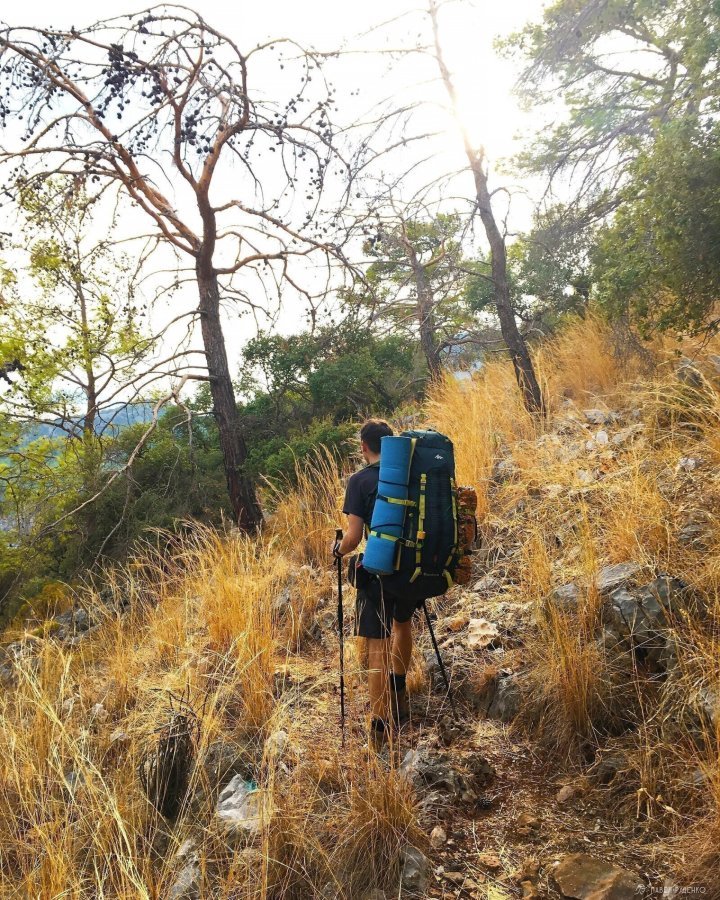
Footwear. For beginners: if your pack is heavier than 10 kg and the hike lasts more than 2 days, mid-cut or high trekking boots are essential. The trail is rocky, putting serious strain on your ankles, so proper support is needed. To stay comfortable in the heat, wear summer trekking socks—they wick moisture very well. Trail running shoes or sneakers are only suitable if you know exactly how your ankles handle such loads.
Sleeping bag. The climate is very dry; in November, there was no condensation or dew anywhere along the trail. Lightweight down sleeping bags are a great choice. For temperature ratings, plan for the coldest night at the highest point. That point is the pass at 1,800 m, where it was –2 °C on November 17. I slept lower down at 1,400 m at +2 °C. In a +6 °C sleeping bag, I felt completely fine, while Alyona was freezing in a –7 °C bag. Everyone's physiology is different.
Sunglasses. In winter and spring, Category 3–4 protection sunglasses are mandatory; otherwise, snow, which reflects up to 80% of sunlight, can easily damage your retinas. Regular sunglasses with plastic lenses will not do—they only make matters worse.
Sunscreen. In all seasons, it is generally best to use SPF 40+.
Microspikes / lightweight crampons. In winter and spring, on certain sections near Tahtalı, you can take microspikes or light crampons for secure footing—they look like small spikes on an elastic harness that slips right over your boot.
Gaiters. In winter, there is a strong chance you will have to break trail yourself. The snow is usually knee-deep or higher.
Dry bag and wading shoes. In winter and spring, the river near Göynük Canyon swells; in other seasons, this is not an issue.
Trekking poles. Mandatory—they make the trek significantly easier.
Trash bags. Leave the trail cleaner than you found it. There are large trash bins in every village, so you can dispose of accumulated trash every two days.
My backpack weight on the trail was about 16 kg without water. A heavy synthetic sleeping bag, a heavy tent, etc.—today my pack weight would be considerably lower.
I work with gear and test it constantly, because the right gear helps you explore the world. Follow me on Instagram. Also, check out my video on gear for the Lycian Way.
EXPENSES
Expenses vary for everyone, but to give you an idea, here is the breakdown from our 2-person hike.
Food, 5,000 RUB: 6 grocery store runs for biscuits, milk, cured meats, grains, cheese, bread, etc., averaging 700 RUB per receipt; we did not eat out at cafes.
Two overnight stays, 3,000 RUB: one in Antalya, one in Adrasan (to wash up and recharge devices).
Buses along the route, 1,000 RUB.
Flights, 8,500 RUB: Moscow – Antalya – Moscow. 17,000 RUB for two.
Total for two: 26,000 RUB.
Back to previous parts:



Comments (0)