SKIRT, LONG OR SHORT AWNING
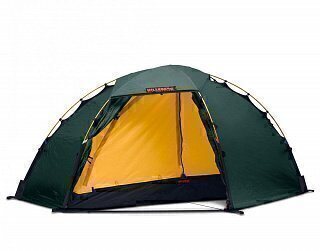
Long awning
Ground-level awning, used in 3 and 4-season tents. It is found in Scandinavian manufacturers: Hilleberg, Nordisk, Fjallraven and Helsport. Ideal for harsh regions: Kola, Polar Urals, Chukotka, Kamchatka, Highlands. Pros: there is no air inside the tent, and a long awning is ideal for winter hikes. Cons: In hot climates, some models are excessively warm, but do not forget that they were made by Scandinavians and they are designed for tundra, forest-tundra and highlands.
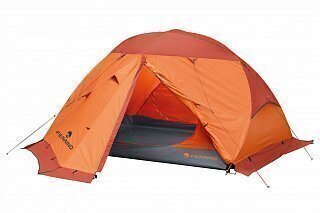
Windproof skirt
A strip around the perimeter of the lower edge of the tent, used in 3 and 4-season tents. Ideal for 3-season use in both harsh and comfortable environments. Pros: in windy and cold weather, it allows you to sprinkle the awning with sand, earth or stones, for maximum wind resistance and increased thermal insulation. Increases the dry space around the perimeter, which allows you to keep things dry in the vestibule. In hot weather, it turns into an ordinary tent with a short awning. Approximate weight of the skirt in the dome of a 2-seater tent: 200 gr. Usually one tent has several versions, with and without a skirt. Cons: oddly enough, it is poorly suited for winter, the skirt freezes in the snow, it is very difficult to dig out with a shovel without tearing.
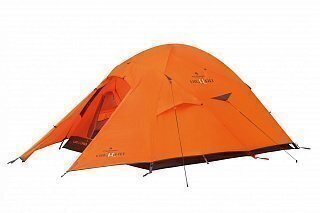
Short awning
The most common option. It is used in 2, 3 and 4-season tents, provides good ventilation. Ideal for a warm climate. If this is a mountain tent, then the absence of a skirt and a long awning suggests that in a strong wind you will build a wind wall out of rocks or snow.
Conclusion: I have a tent with a skirt, I see advantages in high versatility, wind resistance, the ability to regulate condensation and increase the internal temperature of the “breather”. What kind of Tent will be depends directly on the purpose of the tent, the country of manufacture and the price. For example, a domestic manufacturer offers mountain tents with a skirt of 15,000 - 25,000 rubles. Scandinavians sell tents with a long awning for 40,000 - 10,000 rubles. Well, a short awning is beyond price limits and boundaries)))
TENT DIMENSIONS
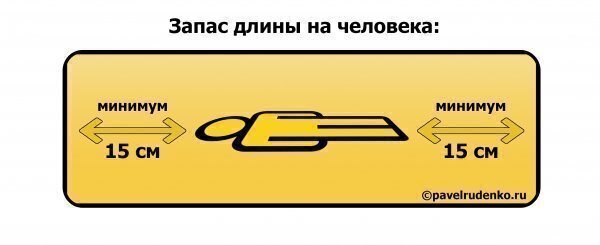
For a comfortable sleep for two people with average data: 175 height, 70 weight, consider the following parameters of the width and length of the inner awning.
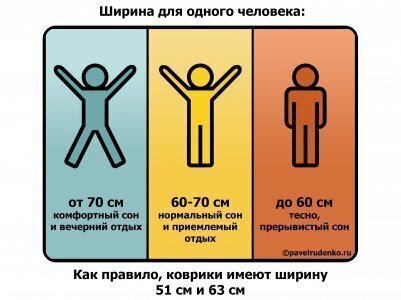
The situation may change if you are two lovers and you sleep in an embrace. But do not forget that you still need to put the necessary things on the side. For a 2-seater tent, the most common widths are 120 and 130 cm, but also pay attention to the design and slope of the wall, if the walls taper to the top, this greatly reduces the living space.
The length reserve of the inner area of the tent is required so that the hood and legs in the sleeping bag do not touch the walls of the inner tent, otherwise they may get wet, absorbing condensation from the outer tent. Keep in mind that you can turn over and slide down when inclining. Also, pockets are often located at the head and foot levels, using them, the space is also reduced.

NUMBER OF PLACES IN THE TENT
Consider the options from single to quadruple. Information about the number of seats is almost always indicated in the name of the tent. For example: "MSR Elixir 1", "Nova Tour Ai Petri 2 V2", "Alexika Tower 3", "Marmot Tungsten 4P".
1-seater, weight 0.6-2.0 kg. Pros: the lightest, most compact when assembled, "egoist's joy". Cons: a small selection of models, the price is almost like that of a 2-seater, specific frame designs, there is often no vestibule, it is too ascetic for multi-day hikes.
2-seater, weight 1.5-3.2 kg. Pros: the most versatile, a huge selection of tents for any task, Convenient for one person. Cons: no
3-seater, weight 2.3-3.6 kg. Pros: cheaper than a 2-bed, in terms of each participant, easier in terms of each, spacious when hiking together, which allows you to store things inside. Cons: heavy when hiking together, not suitable for solo hiking.
4-seater, weight 3.0-4.3 kg. Pros: cheaper per participant, easier to find a place for 1 4-bed tent than 2 2-bed tents, warm and fun to spend the night with four people. Cons: cramped, little personal space, not universal.
Conclusion: A 2-seater is the most versatile option for most situations. A 1-seater is suitable for hikes of no more than 7 days, where preference is given in favor of low weight rather than comfort. A 3-seater can be a good choice for a design with two entrances, but it is more often used for climbing. A 4-seater is a specific solution for a friendly company, or for climbing.
Also watch the video on how to comfortably sleep in a tent:
SINGLE-LAYER OR DOUBLE-LAYER
Only double-layered.* Even if you go to barbecue once a year. The double-layer design provides a greater level of comfort due to better ventilation and condensate drainage. Moreover, the price tag for double-layer starts from 2,000 rubles.
*The exception is high-altitude, assault, and climbing tents.
VENTILATION AND CONDENSATION
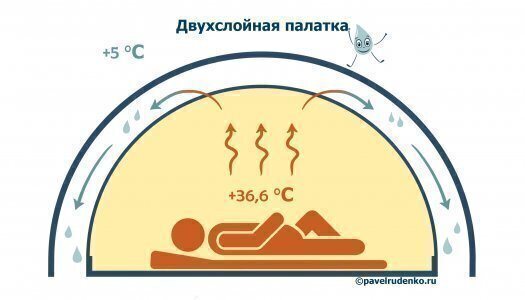
Condensation is formed from human respiration and body heat. In double-layer tents, it exits through the mesh and remains on the inside of the outer awning. If it suddenly forms on the inner tent, it means that ventilation needs to be strengthened, otherwise all the things inside will get wet. To increase ventilation, you need to put up a tent with wind ventilation. So that the wind blows through one ventilation window and blows through the other. The wind direction may change, you need to pay attention to the terrain and, if possible, view the wind forecast on the Internet. If the tent has a skirt, you can raise part or all of it around the perimeter. If there is a duplication of the mosquito net at the entrance, then partially or completely leave the net. If possible, pitch the tent as far away from the water and lowlands as possible.
At near zero and sub-zero temperatures, you can use a kitchen sponge: it absorbs condensation very well.
WATER RESISTANCE
Water resistance is measured in millimeters of a water column (mm in height, hereinafter mm) and determines the maximum water pressure on the surface at which the material does not allow water to pass through (the drop rate when hitting the awning).
Funnily enough, this is one of the most discussed characteristics, but in most cases it is not indicative at all))
At the beginning of operation, all tents do not get wet, it is much more important how many seasons the impregnation will last. This is influenced by the type of impregnation, the quality and manufacturability of the application. But to resolve this issue, tents with a price above 10,000 rubles can be considered waterproof. from domestic RedFox, NovaTour, Bask, Normal, Equipment to foreign ones like The North Face, Marmot, Msr, Vaude, Big Agnes, Hilleberg, Nordisk, etc. – the waterproof index will be sufficient to keep the tent from getting wet in the rain.
Unfortunately, manufacturers specify mm. depending on different international standards and principles of the company. For example, despite the very high-tech materials and high performance of mm. for the top-end Hilleberg, they are somewhat underestimated, as the company wants to guarantee its figures. The Americans have a different story, they are limited by legislation and tests show that tents like Big Agnes cooper spur or MSR Hubba Hubba actually have an index of not 1,500 mm, but 5,000 mm. It is often found on the Internet about 200 overnight stays or 5 years of use, in fact, this is a mistake that has spread throughout the Russian-speaking community.
Details on the types of impregnations will be given below, and here I will indicate a very average estimate of durability, for an average tent, in average conditions, with proper care, without taking into account ultralight and the harshest expedition versions. PU is the simplest, on average it lasts 5-12 years. PU/Si is the best option, it lasts for 8-15 years. Si/Si is the most durable option, it lasts 10-30 years.
The water pressure in normal rain does not exceed 1,000 - 1,500 mm.
The duration of the water resistance period is affected by exposure to the sun, rain, mechanical damage, proper maintenance and storage. Therefore, it is important not to leave the tent in the sun when it is not necessary and use a footprint to protect the bottom.
Conclusion: the most modest 1,200 mm values in ultralight tents will provide the necessary water resistance.
| How do we put pressure on the bottom of the tent | Approximate pressure force, kG | Area, sq. cm. | Pressure on the floor fabric, in mm H2O |
| elbow | 30 | 30 | 10 000 |
| knee | 40 | 75 | 5 333 |
| foot | 90 | 200 | 4 500 |
| buttocks | 80 | 500 | 1 600 |
| The body is lying down | 90 | 1 500 | 600 |
More impregnation is applied to the bottom, because we directly affect it with our weight, and the earth and stones constantly abrasion the surface. A large amount of impregnation is necessary so that the bottom of the tent does not fail before the tent awning.
Everest, north col, 7000m. The wind is tearing up tents.
MATERIALS AND IMPREGNATION (nylon, polyester and PU, PU/Si, Si/Si)
Basic concepts:
Nylon is nylon, a fabric made of polyamide fibers.
Polyester – polyester, a fabric made of polyester fibers.
Tex (190T, 210T, 340T, 450T, etc.) – tex. It means the density (quantity) of yarn weaving per square inch. The higher the number, the denser the fabric.
Den (10D, 40D, 70D, 150D, etc.) – denier. It means the thickness of the threads in the weave of the fabric, the thicker, the heavier.
RipStop – ripstop. The fabric is woven with thicker thread to increase strength, increases the tensile strength index.
W/R is a water repellent, water–repellent coating on the outside of the fabric. It is used only for PU treatment to protect the awning from absorption and weighting, as well as from ultraviolet radiation. During prolonged use, it can be washed off, but it is easily restored by special means at home.
3 000/6 000 – water resistance in mm of water column.
Understanding the materials and impregnations, I came to the following pros and cons:
PU (polyurethane) is an impregnation applied only to the inside of the awning by applying layers one after the other. It interacts best with Polyester fabrics, but it can occur with Nylon. In the pure video, PU impregnation is used in the cheap segment of tents relative to the general price range from 10,000rubles to 80,000rubles. and it is more common among manufacturers in the CIS and Russia (Bask, RedFox, Normal, NovaTour, Gear, Trump). In Europe, these are old-school Italians (Ferrino). The impregnation weighs quite a lot and has a dry, brittle structure, so manufacturers use thick 30D-70D threads and 170T-230T weaving for strength. That is why you will not see lightweight tents with PU impregnation.
Advantages:
- Cheap to manufacture, and therefore on sale.
- Just seal the seams with tape.
- The tent can be impregnated with fire-resistant impregnation, which increases the safety of using the burner in the tent. (Si/Si cannot be processed)
- It has greater breathability, due to which less condensation accumulates in the tent compared to Si/Si.
- It has a good abrasion resistance and durability when used at the bottom of the tent.
- The awning does not stretch when it rains. This is both a plus - you do not need to pull up the awning in the rain, and the cons - I will describe below)
Cons:
- It has the lowest tensile strength, especially when cut, at least 1 cm. If you saw tents torn to shreds due to the wind, it was most likely Polyester or Nylon with PU impregnation. The point is precisely in the characteristics of PU, it does not penetrate into the structure of Polyester and Nylon fabric, and has no elasticity at all. Therefore, the advantage that the awning does not stretch is more of a disadvantage. Manufacturers rarely indicate the indicator of the awning on the gap, who will haunt their goods. But a careful study revealed: 1-2 kg per tear. I did a test, it breaks easily with my hands.
- The heavy weight is due to the fact that it is difficult to apply a uniform layer of impregnation, so the manufacturer often applies more than 5,000-7,000mm layers for the awning. If the wallet allows, then PU/Si and Si/Si, all other things being equal, will be easier.
- It is not durable when exposed to the sun for a long time, flakes off in pieces and completely loses its waterproof properties.
Conclusion:
PU-impregnated awnings are a good solution due to their low cost, but they have more disadvantages than competitors. The PU-treated bottom is an excellent solution, because it is reliable and durable, therefore it is used even in the most expensive tents, for example in Hilleberg.
PU/SI – (polyurethane/silicone). The use of both types of impregnation, PU on the bottom of the awning, Si on top. It interacts best with Nylon fabrics. It partially eliminates the disadvantages of "bare" PU. PU/Si is a more technologically advanced and common option for European and American brands (Big Agnes, MSR, Nemo, Rei). In the USA, this is due to the fact that manufacturers are legally required to apply fire-resistant impregnation, and this is only possible by using PU impregnation on the inside.
Advantages:
- Average cost of production, good price / quality ratio.
- Just seal the seams with tape.
- The tent can be impregnated with fire-resistant impregnation, which increases the safety of using the burner in the tent. (Si/Si cannot be processed)
- It has greater breathability, due to which less condensation accumulates on the tent in comparison with Si/Si.
- It allows to significantly reduce the thickness of the threads, which means to reduce weight, while maintaining the necessary water resistance.
- If you do not take into account super ultra-light models, then the PU/Si combination makes the awning more durable in comparison with PU.
Cons:
- It has low tensile strength, especially with a cut of at least 1 cm. Si penetrates deeply into the Nylon fibers and adds tensile strength, which increases the index and gives us: 2-3 kg. This is about twice as strong as bare PU, but it doesn't change the overall picture. I did a test, it tears easily with my hands.
Conclusion:
A universal option. Average cost with a good ratio of lightness, strength and durability.
SI/SI – (silicone/silicone). The most technologically advanced and most expensive way to process an awning. Triple impregnation, the Nylona threads themselves are processed, then the awning from the outside and inside. It is a technically difficult process, because it is impossible to seal the seams with tape here, it simply will not hold. Progress has led to the fact that at the junction of the two parts, the fabric is wrapped and a seam is formed in 4 layers of fabric, which is stitched with a strong nylon thread with a cotton component, a very thin needle. When it rains, the cotton component of the thread swells and prevents leakage. It is most often found in Scandinavian brands (Hilleberg, HelSport, Nordisk, Fjallraven), less often in European (Vaude), in Russia (Sivera).
Advantages:
- Lightweight and compact. It allows you to lighten the weight of the tent as much as possible without losing strength in comparison with PU and PU/Si, therefore, when packed, the tent occupies a smaller volume than PU and PU/Si.
- It is very durable, depending on the purpose of the tent, it is 8-20 kg. per tear. For example, in the ultra-light Helsport Ringstind Superlight 1 weighing 1.040 gr., the weave thickness is 10D, and the density is about 450T, it has an index of 10 kg. per break! On average, it is 6 times stronger than most PU and PU/Si awnings. I conducted a test, it is impossible to tear with my hands.
- It makes the awning as durable as possible, all other things being equal, it will last longer than PU and PU/Si.
Cons:
- As a result of its high strength, the material has greater elasticity and stretches more when wet than PU and PU/Si.
- Due to its lower breathability, it collects slightly more condensation than PU and PU/Si.
- It cannot be treated with fire-resistant impregnation.
- High price.
Conclusion:
It is a leader in terms of lightness, reliability and durability. It is used both in the lightest tents in the world and in the most reliable ones for Poles and Patagonia.
GENERAL CONCLUSION: Most often, the choice of fabric and impregnation will be a consequence of the price you want to spend on the tent. For PU, this is 2,000-30,000 rubles, for PU/Si 20,000-60,000 rubles, for Si/Si 40,000-100,000 rubles.
I also want to note that fabric and impregnation lose their properties from long-term storage in compressed form or prolonged exposure to ultraviolet radiation. Pay attention to the production date of the tent: if it has been in stock for 5 years, or is displayed in the hall by the window, this is not the best purchase.
A good example of how Polyester PU/SI behaves on the left and Nylon SI/SI on the right, after 10 minutes of rain. Stretching is the downside of high tensile strength, manufacturers make a bigger gap between the outer tent and the inner tent. The user is required to tighten the drawstrings after the precipitation begins.
the details
It is advisable to have internal pockets, reflective wind braces, fluorescent runners, a packing bag and a repair kit included. Tent zippers – ideally, made by YKK with double runners.
colour
There are two types of color scheme for the exterior awning of tents. When choosing, you need to proceed from what tasks your company should solve.: to hide or, conversely, to declare themselves.
Green and other camouflage – for inconspicuousness on the ground. They may be relevant for overnight stays near civilization, hitchhiking, and parking near highways, towns, and cities. It provides concealment from both other people and animals. Yes, they can distinguish colors too.
Bright colors provide passive safety in poor visibility, snowfall, fog, and forest, and make it easier to find a tent after a radial exit. High visibility in case of a possible emergency. Naturally, with bright tents, beautiful shots are obtained against the background of greenery and mountains.
As for the color of the inner awning. Dark colors are psychologically oppressive and create an oppressive atmosphere, so most often the inner tent has bright colors or light gray.
PEGS
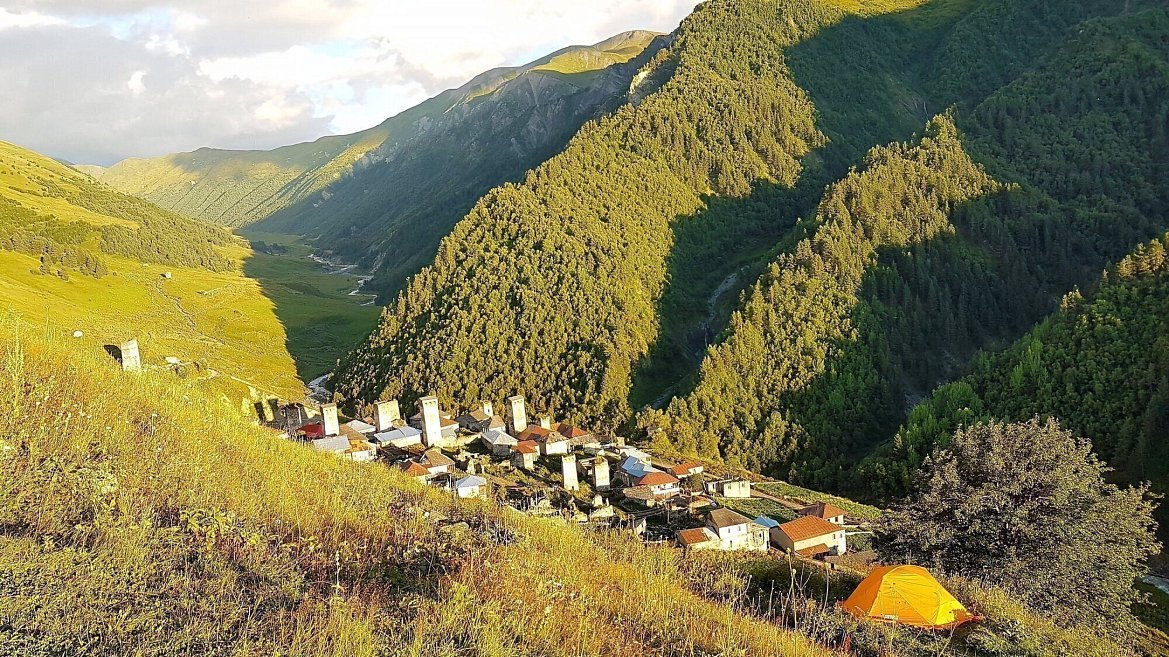
The most convenient are pegs in the shape of the letters V, Y: they do not rotate in the ground like round ones. I use pegs less and less often, tied a 2 mm turnip to the attachment points and cling to the stones in rocky areas. For example, in the tundra of the Kola Peninsula, the Khibiny Mountains, Svaneti (Georgia), the Lycian Trail (Turkey), the Caucasus, and the Trans-Ili Alatau (Kazakhstan), there were enough stones not to carry pegs at all. Somewhere, turnip loops are a direct necessity, since it is not possible to drive a peg into the ground at all because of the rocky rocks.
The heavy weight of 1 peg is 20g.
The good weight of 1 peg is 15g.
Ultralight weight of 1 peg - up to 10g.
REPAIR KIT
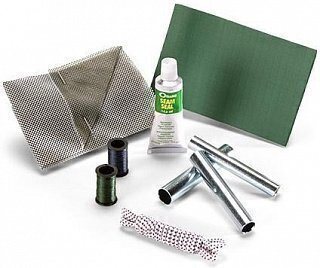
It is mandatory to take on every camping trip: a small skein of reinforced tape, thread and needle, a self-adhesive patch, a fixing tube (attached over the place of the fracture of the arch), or a spare knee of the arch. So if anything happens, you can fix a broken arch or a torn awning, rather than worrying about how to patch a hole out of shit and sticks.
The arc at the Sapa Freetime 2 tent is broken. This can happen to any tent, at any time.
weight
I placed the weight of the tent at the very end, because I believe that this is a consequence of all the characteristics and tasks for which we choose a tent, and not the other way around. It is worth comparing tents by weight only among those similar in purpose, reliability and comfort. In this case, we will get the equipment that meets our requirements and avoid the disappointment that we had to keep the tent inside all night in a strong wind, or it tore, the arches broke, it was cold inside, there was nowhere to place the equipment, etc.
A big demand from consumers, you and me, is pushing manufacturers to reduce the weight of tents in all possible ways. Naturally, the reduction occurs by reducing, thinning, and trimming, and in order for the tent to meet the requirements, this happens with the use and improvement of technology. Sometimes this balance is in balance, sometimes it is not. In expensive tents like Hilleberg, Big agnes, it is more common than, for example, in NatureHike or Normal. In the pursuit of weight, do not forget that a tent is sometimes the only shelter in the wild, beautiful, but sometimes very harsh nature. Use equipment that meets the conditions and requirements. Weight loss occurs with the accumulation of experience, because you know what exactly, in what situations and how you can save money. But if you don't have much experience, don't chase after extra light weight, it's better to take it with a margin and take care of yourself.

LIST OF STORES
To make it easier to find your favorite tent, I attach links to the websites of manufacturers, dealers and stores in Russia.


