
INTRODUCTION
«We are not rich enough to buy cheap things».
The purpose of the article is to understand the characteristics and find the optimal tent for the required tasks at a reasonable price.
Due to the format of solo hikes, I strive for high reliability of tents, perceiving them as the only shelter that protects from bad weather and compensates for possible mistakes on the route. The goal of the hikes is to admire nature, so I often set up a tent on hills, cliffs, open spaces to enjoy the evening views and beauty. Working at Sport-Marathon contributes to the formation of knowledge about the design, details, and materials of tents. Having assembled and studied about 200 tents and tested more than 20 in summer and winter hikes, from cheap domestic and Chinese to European, American, and top Scandinavian ones.
In the term tent, I include purposes for hiking in flat areas, mountain hikes, mountaineering, cycling, and water hikes.
Together with boots, a backpack, and a sleeping bag, the tent is included in the list of basic gear that directly affects safety and comfort on the route. If you are passionate about hiking, their complexity and diversity of regions will inevitably grow. Perhaps it is worth looking at the future and choosing those models that will meet your requirements in the future.
The article does not consider camping tents — those designed for stationary recreation and road trips, as I do not use them in my travels and do not have practical experience with them. But you will find a lot of useful information for choosing.

Thank Nadezhda Chekhova for the illustrations for the article, with them it is clearer and nicer. You can order illustrations from Nadezhda here: ndzd.chekhova
TENT PURPOSE AND SEASONALITY
The division into seasons is a conditional concept, as July in the north in the Khibiny with possible frosts and in Crimea is a different July.
And if we consider that tent manufacturers are based in different countries and test their creations in different climatic zones, have differences in tourism styles, then the understanding of seasonality for each manufacturer turns out to be different. For example, American brands MSR and Big Agnes develop tents for the условной Pacific Crest Trail (PCT) 4,230 km long, which passes through California and Oregon, where the climate is quite warm, with good infrastructure and safety, priority is given to minimal weight, as long routes cannot be completed with a 100-liter backpack weighing 25 kg. And Scandinavian brands Hilleberg and Helsport make them taking into account the features of the northern location, where the summer is cold and windy, even in the most «summer» models there is no mesh on the inner layer.
Seasonality must be considered in conjunction with the purpose of the tent. Let's try to feel the conditional division:
1. Time of year:
Spring-summer-autumn-winter. Where summer is a warm time without prolonged precipitation. Spring-autumn — temperature up to slight minus, strong wind, prolonged rain, some snow. Winter — subzero temperatures, heavy snowfall and pressure on the tent, very strong wind.
If the tent indicates:
2-season: essentially this is a summer option, for use on the plain in plus temperatures.
3-season: it's the most complicated and to understand, you need to look at the purpose of the tent and the brand manufacturer.
4-season: primarily designed for winter and subzero temperatures. Maximally durable, for various tasks from highlands to tundra areas. Spring-summer-autumn-winter, where summer can be the most uncomfortable for these tents due to insufficient ventilation, excessive reliability, and weight.
2. Purpose:
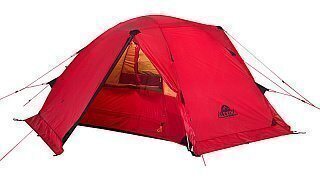
extreme, sports, expedition, 4-season.
\n\n
Reliable. Designed for use in difficult weather conditions for a long time. Allow to withstand strong winds and heavy precipitation, resistant to snow pressure and low temperatures, used in highlands in mountain tourism and mountaineering.
Distinctive feature — a long groundsheet or skirt, an inner tent made of dense fabric with a minimum of mesh. Three or more full arcs. Larger arc diameter. More wind stakes. Made of the most durable and long-lasting materials. Average weight of a 2-person tent — 2.7-3.5 kg. Arcs 9mm or more, groundsheet density about 40D, bottom 70D and 190T. The meaning of D and T in the «CANVAS AND IMPREGNATION» chapter below.
They can be used in summer, models with two entrances, ideally with duplicated mosquito netting. This will provide sufficient ventilation with a night temperature of about +20. In single-entry models, it can be stuffy.
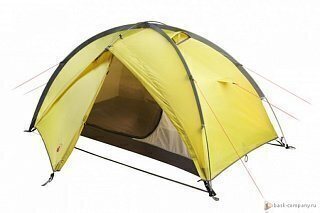
trekking, 3-season.
Universal. Designed for use in the mountains and on the plain. Withstand strong winds, prolonged rain, light snow. Used in mountain tourism, rafting, cycling.
Distinctive feature — short groundsheet or long to the ground, skirt. On the inner tent, more or half as much dense fabric than mesh. Two full arcs with a single or double overlap. Can have a large number of stakes. Made of reliable materials. Average weight of a 2-person tent — 2.2-3 kg. Groundsheet density about 30D, bottom 60D, 190T.
The most universal and popular option for hikes with altitudes up to 3,000m.
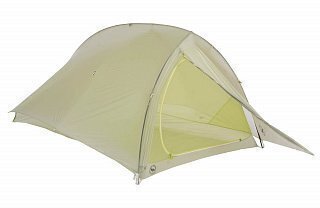
Ultralight, superlight, 2-season, 3-season.
Light. Designed for use in lowlands and foothills with a temperate climate. Can withstand moderate wind, prolonged rain, but the water resistance resource is less. Used in sports races, hiking, rafting, cycling.
Distinctive feature — short groundsheet, mesh on the inner tent. Strange arc designs, usually hub system. No or one full arc. Made of ultralight, thin materials. Average weight of a 2-person tent 700-2 kg. Thin groundsheet materials 7D-20D, bottom 15D-20D.
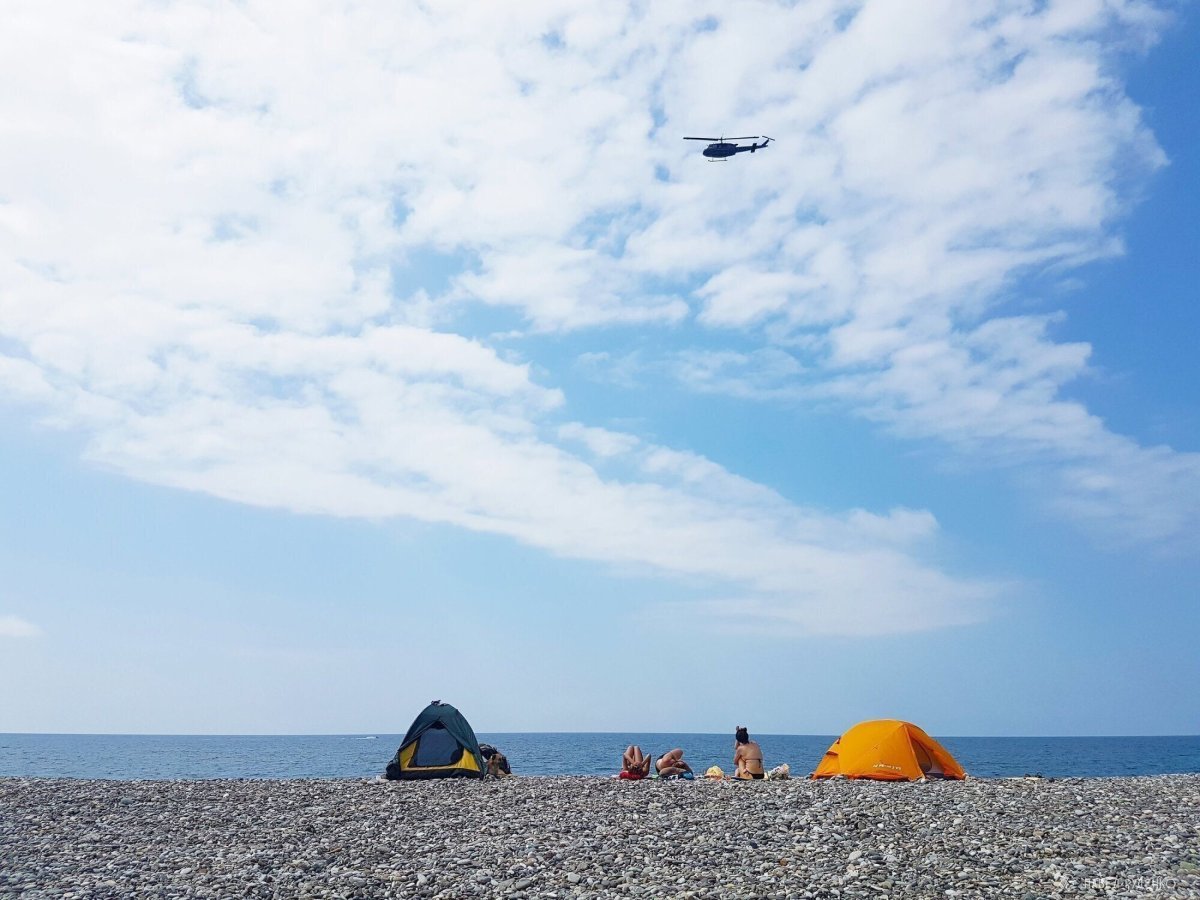
You need to understand that weight reduction occurs due to a decrease in the number of arc joints and the use of thin materials. As a result, less wind-resistant design and shorter service life. Due to the mosquito net covering the entire inner tent, it is blown through and does not retain heat at all. All these factors, combined with the use of thin materials, cannot provide adequate safety in unstable mountain weather. In the photo, the tent is Big Agnes Fly Creek HV2, weight 907g.
Using ultralight materials reduces the durability of the tent. For example, tent manufacturer MSR warns that the seams of ultralight groundsheets decompose faster https://www.msrgear.com/blog/tents-101-seam-taping-vs-seam-sealing/
Less reliability means that you need to choose a place to spend the night. That is, in unstable weather, do not set up on a beautiful hill or bank, but look for a windless, closed location in the lowlands. If strong wind catches you, then instead of a sound sleep, hold the tent from the inside so that it does not collapse.
Conclusion: the described features are guidelines, as the choice of tents is huge and there is no single rule. If a tent is needed for the summer on the plains or beaches, easy hikes, then we choose a lightweight, ultralight tent. The use of such tents in relatively complex and winter hikes is acceptable for experienced hikers when the rest of the equipment and knowledge compensate for the low reliability of the tent.
For mountain and plain hikes away from civilization, we choose a trekking or extreme 3-season/4-season tent. Such a tent will last longer, you will be able to progress in the complexity of hikes, explore new regions, and at the same time, in a couple of years, when your level increases, you will not face the need to buy a new tent.
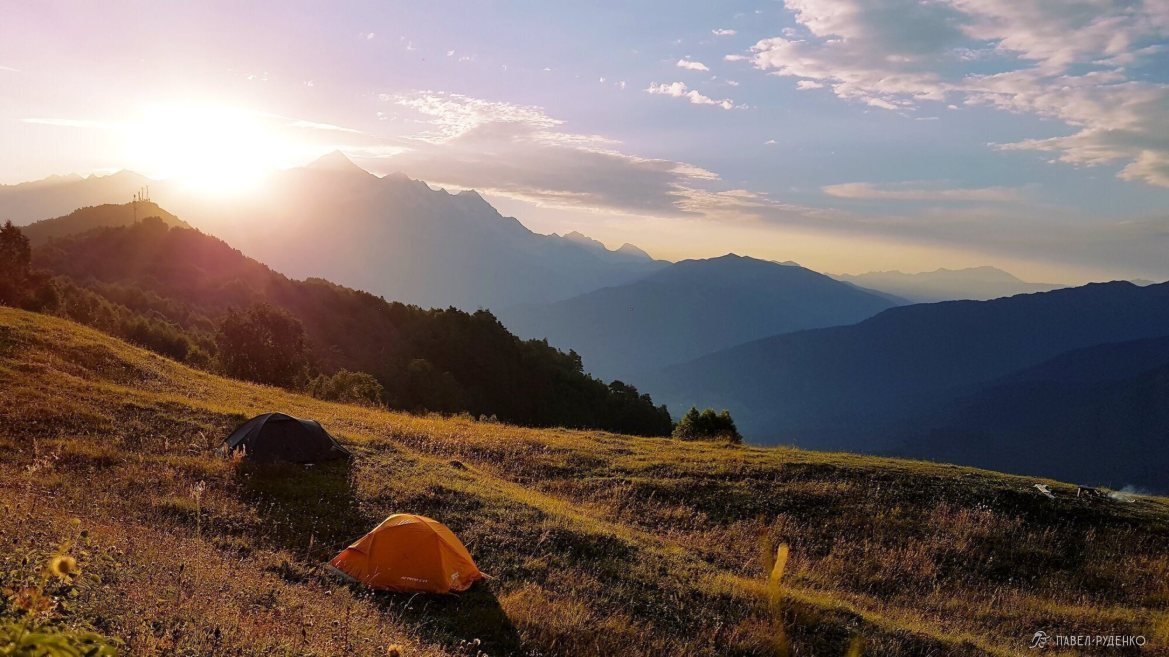
FRAME SHAPE
Y-shape and its variations. Cut-down, not full arcs allow to reduce weight and, together with a transverse arc, expand the internal space. Used in ultralight tents. Has less strength and wind resistance. Due to non-standard arcs and hubs, this shape is more difficult to repair.
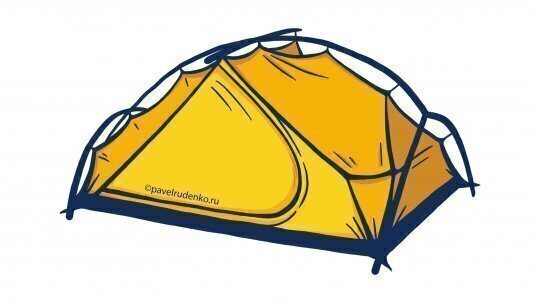
Hemisphere, single overlap. Classic shape, often with an upper additional arc for the vestibule or a half-arc for an extended entrance. Self-supporting structure, durable and spacious inside, best cope with snow load.
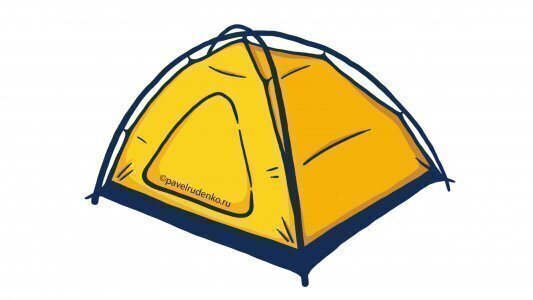
Hemisphere, double overlap. There are those with an additional transverse arc, it expands either the vestibule or the internal space. Due to this intersection in models without an additional arc, the space inside is noticeably less, this makes the tent warmer, it's easier to «breathe» it. Due to the smaller dimensions, it is lighter than a hemisphere.
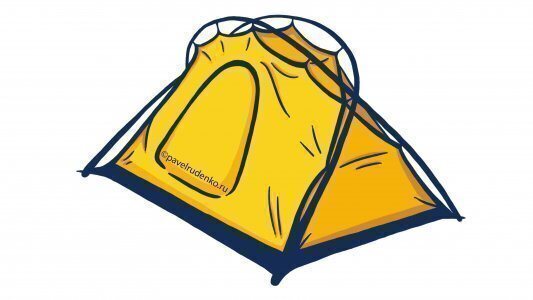
Conclusion: non-standard Y shapes are used in lightweight and ultralight tents to reduce the weight of the tent. For mountain hikes and good wind resistance, classic shapes with two or more full arcs, having one or two overlaps are more suitable.
More serious tents use 3-4 full arcs, they are very wind resistant and reliable. We also haven't considered tunnel tents yet, they are best suited for winter hikes, I will add information about them later.
METHOD OF ATTACHING ARCS
It can be attached to the inner or outer tent. Into fixing pockets or on clips/hooks. Each option has its pros and cons. Their features:
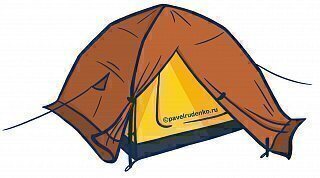
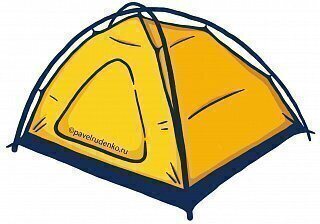
Arcs are attached to the inner tent
This method is more suitable for hiking on the plain, with a warm, relatively dry climate. Of course, it can also be used in high mountains and in winter, but the main purpose is the ability to install only the inner tent.
- + you can install only the inner tent and admire the night sky, especially in hot and dry weather;
- + after the rain, when packing, it's easy to remove the outer tent for drying. All things will remain in the inner tent, and by the time of packing in the backpack, the tent will be dry;
- - the outer tent cannot be installed separately from the inner one. I've never needed this in any hike, but it might be useful for some;
- - when installing in the rain, the inner tent gets wet. In such cases, I quickly pack up in light rain, in heavy rain I put the outer tent on top and crawl under it. This can be a problem in very rainy regions and seasons.
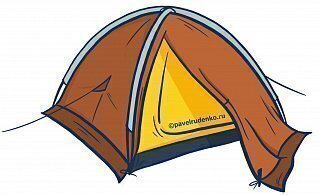
Arcs are attached to the outer tent
This method is more oriented towards rainy regions with bad weather, winter tourism. The main advantage is quick and easy installation.
- + during the rain, the outer tent is installed first, thanks to this the inner tent stays dry;
- + you don't have to unfasten the inner layer, which speeds up and simplifies the assembly of the tent. This will save 2-4 minutes;
- - to dry after the rain, you have to unfasten the inner layer and take longer to pack;
- - it's inconvenient to fasten the inner layer of the tent.
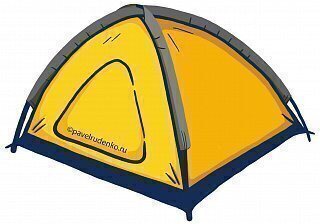
Clips/hooks
- + With the right amount of hooks, it assembles quickly. Some tents have 18-20 hooks, which is excessive and complicates the installation.
- + If the hooks for the inner tent are attached to elastic bands, it greatly reduces the chance of accidentally damaging the arcs from the inside by leaning on the walls.
- - If the arcs are attached to the inner tent, if the arc breaks, there is a high probability of tearing the tent with the broken arc, which will press against the outer tent under pressure. Mine broke 3 times, fortunately they were in fixing pockets, not on hooks. A torn tent is a very sad sight.
Fixing pockets
- + If it breaks, the arc remains clamped in the pocket, which allows you to withstand bad weather without tearing the outer tent;
- + Robust design, wind and snow pressure is distributed evenly. The inner tent is more stable, easy to move and evenly stretched;
- + In models where the fixing pocket is on the outer tent, it gives the same advantages, plus quick installation together with the inner one, plus the inner one is often attached with elastic bands;
- - With excessive user load on the walls of the tent from the inside, strong pressure is transmitted to the arcs. There is no stabilizing elastic band like clips/hooks.
Conclusion:
For rainy regions, highlands with wind, winter hikes, it's more convenient to attach the arcs to the outer tent. For warm regions, to the inner tent, this will allow you to install only the inner layer and protect against insects.
Attachment to clips/hooks is more convenient when packing. Fixing in fixing pockets is more reliable.
FRAME ARCS MATERIAL
The main solution is aluminum. It is used in the vast majority of tents and is optimal.
Briefly about the materials:
Aluminum. Lightweight, reliable, elastic, repairable. The most universal and common solution.
Arcs in the segment of tents up to 15,000 rubles are usually of Chinese production, no-name, they are inferior in performance and break more often, but this is not so critical. More expensive and proven manufacturers: DAC South Korea, Yunan South Korea, Easton USA. DAC is the best producer of arcs today!
There are two types of alloys:
- Alu 7001-T6. Flexible, bends slightly without breaking, while being lightweight and reliable. Used in 3-season and partially 4-season tents.
- Alu 7075-T9. Stiff, does not deform, withstands wind and snow loads well, a bit more expensive and a bit heavier. Used for 4-season tents.
Fiberglass (fiberglass, fiberglass, duralpol). Cheap, heavier than aluminum by one and a half times, afraid of temperature changes, unreliable, poorly repaired in trekking conditions. Used in budget tents up to 10,000 rubles or in camping tents, suitable only for use near civilization on the plain. NOT SUITABLE for mountains.
Easton Syclone, a new composite material. This is the future, which is very close. More flexible and durable than aluminum, 80% less prone to deformation under load. During tests, it retained its shape under a load of up to 136 km/h, unlike aluminum 7075-T9. But both materials did not break. More expensive and less commonly used.
Carbon is twice as light as aluminum, very stiff, requires high-tech production, otherwise it can be brittle. It is very rare.
Titanium is lightweight, strong and elastic, the only disadvantage is the price, which is why it is rarely used.
Steel is too heavy, can only be relevant for camping tents. It is very rare.
Conclusion: for hikes of more than two days, away from civilization, we choose aluminum arcs for reliability. The cost of the cheapest tent with aluminum arcs that I found is 7,000 rubles. In tents over 15,000 rubles, you can find DAC arcs, which is good for reliability. The use of fiberglass in a tent is a direct indicator of the tent's purpose for несложные hikes with one overnight stay in mild climatic conditions. Where in case of tent breakdown, you can reach civilization within a day.
Video lecture
I shared my knowledge at a lecture in the travelers' club, for additional visuals you can watch it.
ENTRANCE AND PORCH
For 2-, 3- and 4-person tents, two entrances and two porches are needed
1 porch and 1 entrance are used to lighten the tent, usually in ultralight tents or in mountaineering. If the tent is designed for two or more people, this reduces living comfort and ventilation.
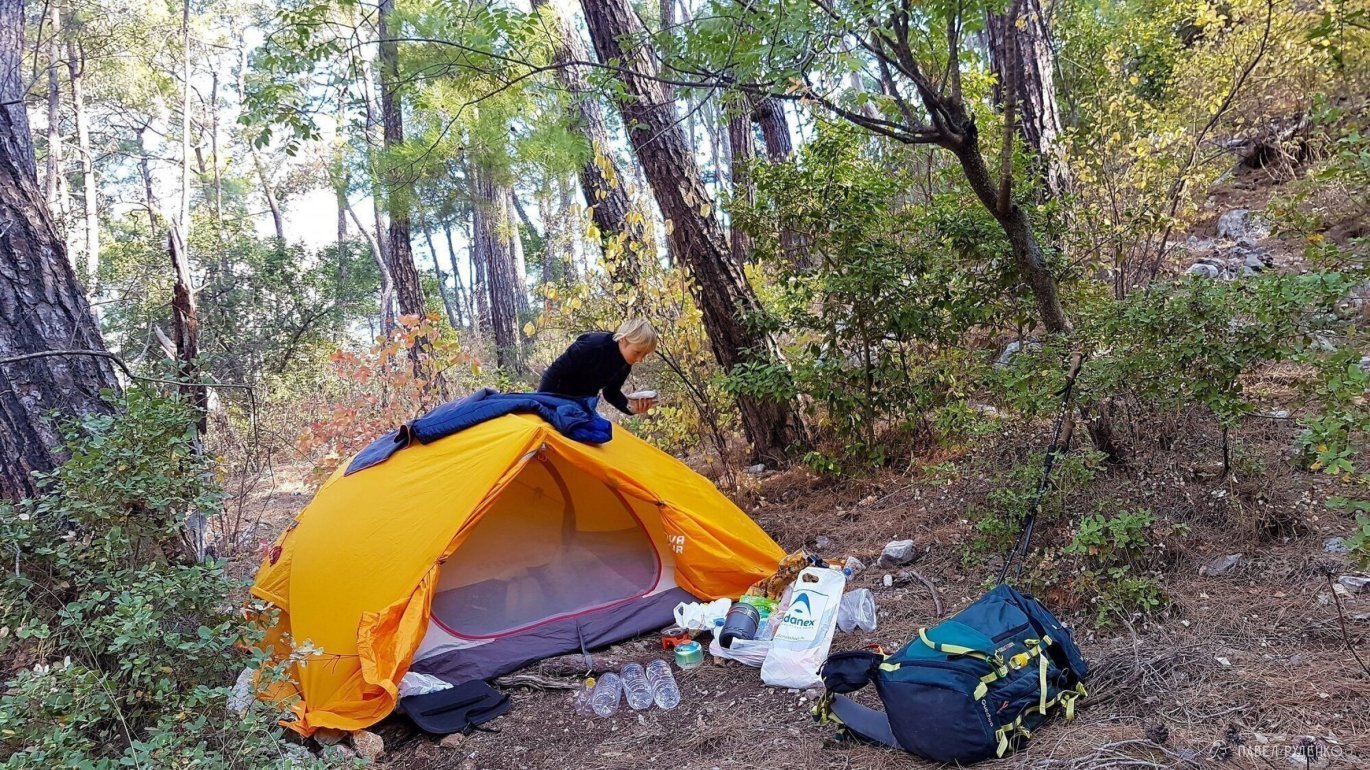
2 porches and 2 entrances. In one porch you can cook on a burner in the rain, snow, wind, morning laziness and evening fatigue, without getting out of your sleeping bag, use the second porch for entering and exiting or storing things. You won't bother your partner when packing, and most importantly, the double entrance will provide good ventilation in the heat.



Continued in the second part of the article:


